


Erhalten Sie Zugang zu diesem und mehr als 300000 Büchern ab EUR 5,99 monatlich.
- Herausgeber: The Emma Press
- Kategorie: Für Kinder und Jugendliche
- Serie: Emma Press Children's Fiction Books
- Sprache: Englisch
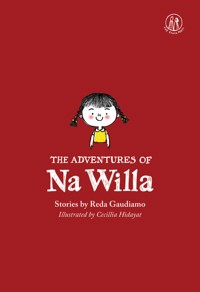
Na Willa is a bright, adventurous girl living in Surabaya's suburbs, her home in the middle of an alley surrounded by cypress trees. She spends her days running after trains, going down to the market, and thinking about how people can sing through radios. Indonesian author Reda Gaudiamo has created a collection of stories of curious adventures and musings of a multicultural girl growing up in Indonesia with an East Indonesian mother and a Chinese-Indonesian father. Set in a time when children spent the day outside, listening to Lilis Suryani's songs on the radio, and when race and gender would still go undiscussed, this is Na Willa's story as she grows up unafraid to ask the big questions.
Sie lesen das E-Book in den Legimi-Apps auf:
Seitenzahl: 127
Veröffentlichungsjahr: 2019
Das E-Book (TTS) können Sie hören im Abo „Legimi Premium” in Legimi-Apps auf:
Ähnliche








![Tintenherz [Tintenwelt-Reihe, Band 1 (Ungekürzt)] - Cornelia Funke - Hörbuch](https://legimifiles.blob.core.windows.net/images/2830629ec0fd3fd8c1f122134ba4a884/w200_u90.jpg)




THEADVENTURESOFNAWILLA
AUTHOR’S NOTE
When Na Willa was published for the first time, in 2012, I was happy just knowing that some friends had read it.
Thanks to Maesy Ang and Teddy W. Kusuma from POST Press, who re-published it in 2017, Na Willa made many more new friends. And one of these is the Emma Press.
I never imagined that children on the other side of the world would read about Na Willa! Thank you to Emma Wright for picking up Na Willa at London Book Fair 2018 and deciding to publish the English version. I think it was brave of you to do it.
Thank you to Ikhda and Kate, for the translation that I know for sure was not an easy undertaking; to Maesy and Teddy, for believing in this book; and to all of the others, here and there, who made this project possible.
And thank you to you, the reader – the newest friend of Na Willa!
For Mak and Pak
Quand je me tourne vers mes souvenirs,
je revois la maison où j’ai grandi.
Il me revient des tas des choses.
Françoise Hardy,
‘La Maison Où J’ai Grandi’
THEEMMAPRESS
First published in the UK in 2019 by the Emma Press Ltd
Originally published in 2012 as Na Willa by Aikon in Indonesia. This translation is based on the second edition, published by POST Press in 2017.
All rights reserved.
Text © Reda Gaudiamo 2012
Illustrations © Cecillia Hidayat 2012
English-language translation © Ikhda Ayuning Maharsi Degoul and Kate Wakeling 2019
All rights reserved.
ISBN 978-1-910139-59-2
A CIP catalogue record of this book is available from the British Library.
Printed and bound in the UK by TJ International, Padstow.
theemmapress.com
Jewellery Quarter, Birmingham, UK
Publication of this book was made possible, in part, with assistance from the LitRI Translation Funding Program of the National Book Committee and Ministry of Education and Culture of the Republic of Indonesia.
Contents
Just like Mak
Home
Farida
Gus Salim
Dul
Bud
Warno
Fish
Pak
Presents
A E I O U
Chinese
Going to the market
Passing trains
Dul’s leg
Waiting
A new friend
Visiting Dul
Radio #1
Radio #2
Sunday
This evening
Party
The bride
The night of the party
Going to school
School
Ibu Tini
In the classroom
Quitting school
The search
Juwita
The first morning (1)
The first morning (2)
About the author
About the illustrator
About the translators
Write your own stories
Just like Mak
When I grow up, I want to be as tall as Pak.1 So I don’t have to get on a chair if I want to reach a toy on the highest shelf. So I don’t need a stepladder if I want to hang a picture. I want to be as tall as Pak but I want my hair to grow like Mak’s.2 Wavy and twisty. Not like Pak’s straight, stiff hair. When I try to say this to Mbok,3 she laughs out loud. She tells me that when I grow up I’ll have light skin and narrow eyes, and my hair will grow straight and stiff.
I don’t like that.
I say, ‘I’m Mak’s daughter and I’m going to look just like Mak when I grow up. I’ll have brown skin and wavy, twisty hair.’
Then Mbok tells me that since the days of ‘Pebruari’ (she always says ‘the days of Pebruari’ for anything related to the OLDEN DAYS) all girls have grown up like their fathers and all boys have grown up like their mothers.
‘If I were a boy, could I be like Mak?’
‘Yes, you could,’ says Mbok.
‘Then I want to be a boy,’ I say.
‘How? You’re a girl. You’ll always be a girl!’
‘I’ll keep my trousers on.’
‘That’s impossible, Noni.4 You’re a girl. A girl!’
‘But I want to be like Mak!’ I say. And I start getting annoyed.
‘Ora iso! Ora iso! Wedhok, yo wedhok!’ says Mbok (which means No! You can’t! You are a girl and will forever be a girl!).
Then she goes off to the kitchen. And I start shouting and crying. Mbok comes back right away and tells me to SHUSH. But I don’t want to be quiet. Not a little bit. I am annoyed. Actually, I am properly furious.
I cry for a long time. When Mak comes home from the market, I’m still crying. Very hard. Legs, hands, clothes, face: all dirty. I’m crying and I’m rolling around.
Mak immediately puts her groceries down. She comes and kneels in front of me: ‘What is it, Willa?’
‘Mboooooooooook!’ I scream.
Mak gets up and calls Mbok, who’s been standing nearby.
‘What’s going on?’ Mak asks Mbok, pointing at me.
Mbok sits down and tells her what has happened.
Mak asks some questions.
Mbok gives some answers.
Then Mak stops asking questions. And Mbok stops giving answers.
(And I carry on crying.)
Mak approaches me. She touches my shoulder.
‘Willa, please stop crying. Now listen: you are the daughter of Mak and Pak. You’ll be as tall as Pak and your hair will grow as wavy as mine.’
‘But Mbok said…’
‘Forget all that. She doesn’t know what she’s talking about. Calm down and be quiet now,’ Mak says.
Mbok is there standing at the door, waiting for Mak and me.
‘I’m so sorry, Non,’ she says.
I nod.
And I stop crying.
And I start singing.
Mak sighs. A long, deep breath. I go with Mak to the kitchen. Inside a plastic shopping bag, some sawo5 fruits are poking out. And I know they are just for me.
Notes
1Pak – dad
2Mak – mum
3Mbok – a household assistant
4Noni/Non – an affectionate way of addressing a young girl
5sawo – a kind of yellow-brown berry fruit, about the size and shape of a kiwi fruit, that has the texture of a pear and is deliciously sweet
Home
I like my house.
My house is the one that’s bang in the middle of the alley. So if you come from one end of the alley or the other, you’ll pass eight houses. My house is the one with white walls and a dark green door. Out front there’s a cypress tree, and when Christmas comes Mak snips off the littlest stem from the top of the tree.
Yes, so this is my house.
Ages ago, when I was a baby (I don’t remember when it was exactly), Mak said our house was super-tiny. There was just one big room for Mak and Pak, and then a super-tiny room for me. But then Pak saved up and bought us the house next door (the one that was Pak Manan’s house).
Since then, our house has grown a whole lot bigger. My room is properly spacious now and also I have a playroom next to the living room. The windows to the playroom don’t have shutters, just these pieces of loosely crisscrossed wood. On the inside, these pieces of wood are covered in wire full of big holes – Mak says it’s called chicken wire. These big holes are then covered with some cloth that Mak dyed bright red. When the wind blows, this red cloth waves about.
My doll lives in the playroom. She’s made out of plastic and her hands won’t move. Once I spun her round-and-around and her arms came off. If I try and move her feet, they feel like they’re about to come off too. Only Mak can fix her. But even though my doll’s hands and feet won’t move, I dress her in fresh new clothes every day. Mak has made her (my lovely doll) lots of clothes from leftover curtains.
My doll’s name is Melly and she came with a toy gorilla. Mak says this gorilla was a present from Tante Lan, Pak’s sister who lives in Jakarta. While Melly can’t open her mouth, this gorilla simply cannot shut his. He yawns on and on from dawn to dusk. Mak says that even if the gorilla’s mouth is open the whole time and he looks like he’s asking for some food, I shouldn’t feed him or even give him a glass of water. If I do that, he’ll be ruined.
There are lots of cooking things in my playroom, all mostly made of clay. There are pots and pans, and a pestle and mortar too – each one in miniature. I keep them in a wooden box that won’t quite shut. Farida and I play all sorts of cooking games with these pots and pans. For instance, we might cut up hibiscus leaves, mash them and then add some water and oil. Or we cut up some hibiscus petals and squish them into sambal. 1 Or we might take pine needles and cut them into little pieces so they’re like small green beans. Sometimes we make pecel2 with these fine ingredients. We make the spices for the pecel by grinding up bits of red brick into a dusty powder. And for the crackers, we use those little white seashells that you can find down by the sand dunes.
Then there’s the books. Mak is always buying me books, so I have new ones each week. Mak usually gets them from bookshops or from the little kiosk next to the church. Some of my books are presents from Pak when he gets back from being on the ship.
When I hadn’t yet learnt to read, every night before I went to bed Mak would read me stories. We would sit in the dining room. The tables and chairs would be pushed up against the wall and there was a mat on the floor. I loved hearing Mak reading stories. Sometimes she whispered. Sometimes she roared. She would even sing. I never ever got bored. Now I often read stories to Mak. We have a lot of fun with books.
Behind my playroom is an empty space. It’s huge and has absolutely nothing in it. Mak says we’ll use it as a room for Pak to work in one day if we get a bit more money. But at the moment, the room has a swing in it. That’s right: a swing! Pak made it especially for me. He brought the rope for it from the ship he works on. The seat is made from thick slabs of wood that also came from this ship. The ends of the rope are then tied to the slats of wood that run across the ceiling.
When Farida (I call her Ida) is at school and I’m tired of playing, and when Mak isn’t around to read to me, I play on this swing. I just love to sit in this empty room. And when we’re playing hide and seek, it’s also my absolutely favourite place to hide. I always win when I hide there. Why? Because Ida never wants to go into this room. She’s afraid. It’s the darkness, she says. The darkness? Now, you might wonder: is this room even really very dark? Well, it’s true! There’s absolutely no light in there. The only light in that room comes in from the door leading to the kitchen. And if the door’s closed, it’s black in there. Totally, totally dark.
Now, Mak also has an indoor kitchen at the end of the garden. It’s surrounded by banana trees and cassava plants. There’s a bathroom behind this kitchen. And the thing I like best of all is having a shower under the kitchen roof. Because when it rains, the water splashes down from this roof. Sometimes when it’s raining Mak will appear and we’ll play together in the water. She makes amazing sounds using the palms of her hands on the puddles. And she likes flicking water into my face. She also loves singing very loudly in the rain. She has such a funny voice. It wobbles and rings.
Mbok is not like Mak. She never wants to play in the rain. If the rain starts pouring down, she just sits at the edge of the kitchen on a stool and watches us. But when we’ve finished playing, she’ll get some hot water ready so we can have a bath (so I won’t catch a cold). After our baths, Mak and I have a cup of tea. Thick. Sweet. And after drinking this tea, I feel deliciously worn out.
And after that? Sleep.
Notes
1sambal – a delicious spicy relish served alongside savoury foods
2pecel – a Javanese vegetable stew served with a spicy peanut sauce
Farida
For as long as I can remember, Farida has always lived in the house opposite to mine. Her house is absolutely enormous: it’s about the same size as four of my houses all lined up together.
Farida has lots and lots of older sisters and brothers. Here are their names: Ahmadi, Salim, Martini, Maryati, Suryani, Fadli and Rahman. Farida doesn’t have a single younger brother or sister.
Farida’s mum always wears kain1 and selendang2 draped over her head. While Farida’s dad always wears a sarung3 (instead of trousers) held up with a big belt. He also never forgets to put kopiah 4 on his head. He wears a black or stripey shirt every day. Farida’s dad has never once (really, not ever) laughed. His eyebrows are merged into one big furrow. His face is always the face of an angry person. Farida tells me that her dad is so fierce. He’s always, always angry. Farida says he likes shouting and walloping naughty children.
And this is why, even though Farida’s house is much bigger than mine and has a huge yard, I’d always rather play at my own house. And Farida prefers to play at my house too. Farida already goes to school. Every day, she goes to school with Fadli and Rahman. They go there by bike. Farida is always balanced on the back of Fadli’s bike. Rahman has his own bike, but it doesn’t have an extra perch on the back. The three of them go to a public school next to the women’s health hospital that’s actually pretty far from their house.
Every day after school, Farida stops by at my house. Mak gives her a glass of water along with some watermelon, cupcakes, or gethuk.5 We have snack-time together before Farida heads home. Farida is free to go anywhere at all. She can play at any time with any of her friends. Her mum never wonders where she is, or comes and looks for her. It must be fun to be Farida.
Farida can’t say the letter ‘R’ very well.
When her brother Dul calls her ‘Falidaaaaa... Falidaaaaa!’, Farida goes berserk and chases after him. She tries and tries to hit him, but she never manages it.
Farida prefers just to be called just ‘Ida’.
So that’s what I call her.
Notes
1 kain – the word kain simply means ‘cloth’, but here it is used to describe a length of cloth wrapped round the waist like a sort of skirt
2 selendang – a long scarf worn around the waist or over the head
3




