


Erhalten Sie Zugang zu diesem und mehr als 300000 Büchern ab EUR 5,99 monatlich.
- Herausgeber: Garnet Publishing
- Kategorie: Religion und Spiritualität
- Sprache: Englisch
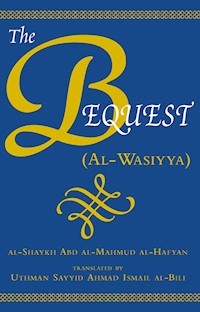
A great Sufi leader, an accomplished Maliki scholar, a poet and an erudite, spirited writer, the late al-Shaykh Abd al-Mahmud al-Hafyan of Tabat (1919-1973), author of "The Bequest" (Al-Wasiyya), left a great legacy of scholarly works in all fields of the traditional Islamic sciences. Yet although his contributions to the science of the sharia are outstanding, it is his contributions in the field of haqiqa that most highly rank him amongst the most distinguished of Sufi Muslims. Sharia for Sufi Muslims is the base of their belief, laws and practice. Haqiqa is the essence, the fundamental truth that leads, through worship, devotion and the love and fear of Allah, to the knowledge and recognition of the Divine, Allah. It paves the way to harmonious living in this world and to eternal bliss in Paradise. Thus to describe Sufism simply as mysticism and Sufis only as mystics is to deny both their base and their legitimacy. The haqiqa of the Sufi Muslim cannot exist without the Qur'an and the Sunna (Prophetic traditions). This translation of the "Wasiyya", "The Bequest", is but an approximation of the deep yet elegantly and lucidly stated meanings of the sharia and the haqiqa of Islam. It addresses not only the followers of the Samaniyya Order, or even all Muslims, but all men and women, young and old, who care to listen to the advice of a noble spirit and a great Sufi Muslim, whose influence transcends his time and place.
Sie lesen das E-Book in den Legimi-Apps auf:
Seitenzahl: 176
Veröffentlichungsjahr: 2007
Das E-Book (TTS) können Sie hören im Abo „Legimi Premium” in Legimi-Apps auf:
Ähnliche













THE BEQUEST (AL-WASIYYA)
Garnet Publishing
The Bequest(Al-Wasiyya)
Published by
In the name of Allah, most Gracious, most Merciful
FOREWORD: SUFISM AND THE SUDAN
Sufism has been expressed in different Muslim communities throughout the world, among them Sudan, and it has been the subject of many studies and many controversies. The Sudan today consists of the territories of the old kingdom of Sennar (also known as the Black Sultanate of Sennar) and, as a result of Anglo-Egyptian expansion and occupation (1820–82 and 1898–1956), the Sultanate of Darfur, the southern regions and the Nuba Mountains. Islam was present in the northernmost parts of Sudan as early as the seventh century AD, but its great spread took place in the period preceding the rise of the Sultanate of Sennar c. AD 1500 and after it. Especially in the central regions, this was for the most part a result of the work of Sufi shaykhs, Sufi orders, Sufi fraternities and Sufi devotees. Even the Mahdiyya (1882–98), which succeeded in freeing the country for 16 years and stood against the Sufi Tariqas, owed much of its spirit and organization to the puritanical and militant nature of Sufism in the Sudan. The Ansar, followers of the Mahdi, now have their book of prayer, the Ratib of Imam al-Mahdi. This shows how much he was, as they are now under their present imam, a part of the Sufi orders.
During the Condominium period of the Anglo-Egyptian Sudan (1898–1956), the British, who were the actual rulers of the country, both recognized the Sufis and included them in their scheme of things to develop and administer the large country and its dignified and deeply religious people. The three leading Tariqa shaykhs at the time, Allah bless their souls, who wrote a letter of allegiance to the British monarch during the First World War, were knighted to become Sir Sayyid Ali al-Mirghani (the Khatmiyya Order), Sir Sayyid Abd al-Rahman al-Mahdi (the Ansar) and Sir al-Shareef Yusuf al-Hindi (the Hindiyya). Nothing could have been more wise and practical of the two sides at the time. After independence, in the struggle for which the three leaders and their orders played a decisive part, all attempts to ignore the presence, influence and spread of Sufism failed. Indeed, attempts throughout the Muslim world failed to replace Sufism by political Muslim organizations, be they the Inqadh of Sudan, the Wahhabis of Saudi Arabia or the Muslim Brothers of the Arab world and South-East Asia. Instead, they are more or less retracing their steps and working for a modus vivendi with Sufism and Sufi orders, which are on the rise throughout the Muslim world. Now the question is, why is this so?
To this writer and translator of this very important Sufi text, the answer is that true, pure Sufism represents the essence of Islam. The Sharia (the law and practices) and the Haqiqa (the reality) are so happily and practically entwined that the real challenge becomes not to defeat, denounce or blame Sufism but to take it from its true source, to understand it and to do the best to follow it. The Quran 2:177 reads:
It is not righteousness that you turn your faces Towards East or West; but it is righteousness to Believe in Allah, and the Last Day, and the Angels, and the Book, and the Messengers; To Spend of your substance out of love for Him, For your kin, for orphans, for the needy, for the Wayfarer, for those who ask, and for the ransom Of slaves; to be steadfast in prayer, and give zakat, To fulfil the contracts which you have made; and to Be firm and patient in pain (or suffering) and Adversity and throughout all periods of panic. Such are the people of truth, the God-fearing.
This writer, who has age-long contacts with the Khatmiyya, the Ahmadiyya and the Qadriyya, all in the Sudan, was most happy to get in touch with the Sammaniyya of Tabat through members and devotees of al-Shaykh Abd al-Mahmud al-Hafyan bin al-Shaykh al-Jaili of Tabat, the author of the Bequest, notably al-Shaykh al-Tayyib al-Shaykh al-Hafyan, al-Shaykh Abd al-Jabbar al-Mubarak, Allah bless his soul, and Sayyid Hashim al-Hadi. But this was not my first contact with or knowledge of the Sammaniyya, with which al-Mahdi, Allah bless his soul, was associated before his successful movement, for I am a friend of many members of the family of al-Shaykh al-Fatih al-Shaykh Qarib Allah of Omdurman, Allah bless his soul.
The nature and contents of the Bequest, here translated, indicate what Muslim Sufism is and also what Islam is.In the name of Allah, most Gracious, most Merciful
ACKNOWLEDGEMENT
It is a very great debt that I owe to Shaykh Abd al-Karim al-Khalidi and his circle of friends. For years while in Doha, Qatar we attended the Friday prayer in the mosque where Shaykh Abd al-Karim delivered his very learned and very moving sermons with clear diction and conviction. After food for the mind and the spirit, we all assembled at his home to have the midday meal and to discuss the sermons and the subjects they addressed. His piety and eloquence were matched by his intellect, and all were crowned by his generosity and his humane and humble demeanour.
It was within this milieu that I came to know Shaykh al-Tayyib Abd al-Mahmud al-Hafyan and Sayyid Hashim al-Hadi, who introduced me to the many works of Shaykh al-Hafyan’s illustrious Sufi family; may Allah be pleased with them all. First among these works was the Bequest, which I have translated here.
Knowing of my commitment to translate the Bequest (al-Wasiyya), Shaykh Abd al-Karim often asked about the progress of the work, and gave me much-needed encouragement and confidence. In the meantime, Shaykh al-Tayyib and Sayyid Hashim passed the drafts to those in Khartoum and Tabat in the Sudan for their comments and approval. My cherished friend Mawlana Bashir Muhammad Salih was the first to see the first and last pages of the translation, which he read and comment on. It was all a work of love and devotion for the sake of Allah.
To all these I am very thankful. To Ms Manal al-Shaykh Digno, who patiently went through the scribble of the manuscript and turned it into readable, typewritten text, my thanks and applause. I am also grateful to Mrs Intisar Singabi and Mr Eihab al-Masri for their help in working on the final draft of this work.
U.S.A. I. al-Bili
NOTE ON THE TEXT HERE TRANSLATED
When I got a copy of the Bequest, edited and introduced by Shaykh Abd al-Jabbar al-Mubarak, I was keen to know whether the text had been published before. Thanks to Sayyid Hashim al-Hadi, I was supplied with three editions, printed in the Sudan and outside. The first of these, printed by al-Tamaddun Press in Khartoum, came out in 1974. It has 130 pages of text and one page of titles of unpublished books by the author. This was a hardback edition with a photograph of al-Shaykh Abd al-Mahmud al-Shaykh al-Jayli al-Hafyan and his sons al-Shaykh al-Jayli and al-Shaykh al-Sammani. Page 133 of this edition has a photograph of al-Shaykh Abd al-Mahmud, and on page 132 there is a picture of the mosque and the tomb at Tabat. This was indicated as the first edition. A second, identical edition was published in 1988 by al-Jazira Press, Abu Dhabi. These two editions have no introduction.
It is in the third, undated edition, by the Shaykhdom of Sammaniyya Order of Tabat, that we have an introduction by al-Shaykh Abd al-Jabbar al-Mubarak, along with the same text as the first two editions. This edition comes as number 11 in the series of publications by the Order, which indicates that at least 10 other titles have been published.
The present translation, however, is from a typewritten manuscript, without photographs or pictures, and is edited and introduced by al-Shaykh Abd al-Jabbar al-Mubarak.
U.S.A. I. al-Bili TranslatorA NEW EDITION
Before committing my translation to the printers, I had in February 2004 the good of fortune to visit al-Shaykh al-Jayli bin al-Shaykh Abd al-Mahmud al-Hafyan at his home in Tabat in Gezira Province, Central State of the Sudan. This was arranged by a close devotee of the shaykh, Sayyid Ahmad Bayan. Sayyid Ahmad Bayan, together with others, is in charge of the editing and publication of the works of the Sammaniyya Order, Tabat branch. This is done under the close supervision of al-Shaykh al-Jayli himself. A graduate of the English Department, Faculty of Arts, University of Khartoum, al-Shaykh al-Jayli is a great Islamic scholar and a leading Sufi in a class of his own.
It was quite a pleasure and honour to shake the hand of the shaykh, to listen to him talk and to share a meal with him. His presence and eminence were there for all to see and feel. In his kindness he encouraged me to finish the translation and promised to follow its progress to publication. Sayyid Ahmad was to be the contact in this process. I had the chance to mention to the shaykh that I was waiting to receive the reviewed copy by my friend Mawlana Bashir Muhammad Salih and make the finishing touches to my manuscript. This was late in coming, but I benefited much from his many deeply studied and careful corrections. I was blessed with another opportunity to meet the shaykh when, in March 2004, he came to Khartoum.
My meetings continued with Sayyid Ahmad Bayan, a humble and likeable person who is very knowledgeable about the literature of the Order in particular and Sufism in general. I conveyed to him some thoughts about the structuring and punctuation of the present edition of the Bequest and about explaining some of the more obscure Arabic words and Sufi terms, which would greatly enhance the text and clarify its meaning. Happily, these observations were considered carefully.
The result is a virtually new edition of the Bequest. Editors have arranged the text into sections and added titles to the sections. Sayyid Ahmad Bayan was quick to work on this new edition. A disk of it was sent to me in Doha through al-Shaykh al-Tayyib Abd al-Mahmud al-Hafyan and Sayyid Hashim al-Hadi. It was my good luck to have this new edition edited under the supervision of the incumbent shaykh of the Sammaniyya of Tabat, al-Shaykh al-Jayli al-Shaykh Abd al-Mahmud al-Hafyan, son and heir of the author.
Again, I ask Allah His blessing and forgiveness and crave the indulgence of all the shaykhs living in eternity or alive in this world for venturing to translate this most outstanding piece of work.
U.S.A. I. al-BiliABOUT THIS TRANSLATION
The Bequest is no ordinary text, nor is it an ordinary bequest of the worldly chattels of a deceased person. And for that matter, it is not addressed to ordinary people but to the beloved, the sons and devotees of al-Shaykh Abd al-Mahmud bin al-Shaykh al-Jayli al-Hafyan. Although dead in body, he is very much alive in spirit and in the teachings he has left behind in the Bequest, which the beloved much adore and respect.
The text is clear, compact, lucid, subtle, captivating and compelling; it flows like sweet clear nectar that the reader almost tastes and it is easy to read. Even so, it is the work of a very learned Muslim scholar as well as a very unique and eminent spiritual leader, and it is very difficult to comprehend the endless hidden meanings of Sufi words in the Arabic because there is much that is beyond the simple dictionary meaning of the words. It was my desire to study the text word by word, sentence by sentence and paragraph by paragraph with the late al-Shaykh Abd al-Jabbar al-Mubarak, may Allah bless his soul, whose introduction does much to help our understanding of the author and the text. But death took him, leaving us his spirit, whose leave I ask and whose forgiveness I beg for venturing to translate the Bequest. However, I did receive his permission, and that of the khalifa, al-Shaykh al-Jayli al-Shaykh abd al-Mahmud al-Hafyan to carry on with the translation.
May Allah bless their souls and their memory. May Allah bless this work and forgive me my sins and my shortcomings in the translation. For all those who want to get the meaning and the real effect of the Bequest, studying the text in its original language Arabic, the language of the Quran and of the Traditions, is necessary. Deeply imbued with the spirit of the Quran and the Traditions, the text is based on sundry quotations from those two sources.
U.S.A. I. al-Bili Mansourkotti, SudanBIOGRAPHY OF THE AUTHOR
The author is al-Shaykh Abd al-Mahmud al-Hafyan (the Bare-footed) bin al-Shaykh Abd al-Qadir al-Jayli bin al-Ustadh al-Shaykh Abd al-Mahmud bin al-Shaykh Nur al-Dayim bin (the great Sufi magnate (Qutb)) al-Shaykh Ahmad al-Tayyib bin al-Shaykh al-Bashir. Al-Shaykh Abd al-Mahmud al-Hafyan, may Allah be pleased with him, was born in the town of Tabat al-Shaykh Abd al-Mahmud, Gezira, central Sudan, on Wednesday, 28th Rabi Awwal 1337 / 1 January 1919).
He learnt the Quran by heart before the age of 15, following the reciting of Abi Amr bin al-Ala, based on the reading of Hafs bin Amr al-Duri, under the tutorship of al-Shaykh Fadl al-Mawla bin Khalifa al-Jammui al-Muqdabi. He joined the Tabat Islamic Sciences Institute when it was established in 1355/1937 by his father, the most learned scholar al-Shaykh Abd al-Qadir al-Jayli bin al-Shaykh Abd al-Mahmud bin al-Shaykh Nur al-Dayim. He also attended his father’s study circle, which met daily in the late afternoon. He graduated in the sciences of jurisprudence, Traditions and the Arabic language.
He had occasion to sit with the great Egyptian Sufi scholar, the cognizant of Allah al-Shaykh Muhammad al-Hafiz bin Salim of the Tiganiyya Order, when he visited Tabat in 1948. Al-Shaykh Muhammad al-Hafiz authorized him to transmit his narrations in the sciences of jurisprudence and the Traditions. Also in 1948, al-Shaykh Muhammad Mustafa al-Maragi, the head of al-Azhar University in Cairo, authorized him to transmit all that had been sanctioned to him by his teachers. The Two Niles University of Khartoum conferred on him the honorary degree of Doctor of Philosophy for his notable contributions to Islamic culture.
He was a teacher at the Tabat Intermediate Institute from 1949 to 1965, teaching comparative jurisprudence, the fundamentals of jurisprudence and the Traditions. He occupied the position of his father, the great learned scholar al-Shaykh al-Jayli, in the study circle from 1959. He continued in that position helping the students until 1972, only one year before his death. In the study circle, he taught comparative jurisprudence, the Traditions and Sufism.
The caliphate (the shaykhdom) of the Sammaniyya Order (of Tabat) passed to him after the death of his father, my lord Imamu al-Din al-Shaykh Abd al-Qadir al-Jayli, in 1965.
My lord al-Shaykh al-Hafyan was, as described by his son and successor al-Shaykh al-Jayli, a fresh melody sung by the tongue of time in joy and cheerfulness, a new dawn breaking in with the light of knowledge and clothing the meadows of the heart with a magnificent sight and a fragrant scent that foretells of soon-to-come fruits and a noble crop from the gardens of eternity to feed the soul and to revive the heart.
Noble deeds bore witness that after Allah, he is their lord. Pride is proud of him, by him and to him it increased when it reached the loft height. When minds are boggled in uncertainty, he would come with the most sound of opinion. A man whose light filled the firmament, as bright as a white pearl. He makes people forget their difficulties when those befall on them, as he is the sure cure for the most serious illnesses. The mind would smile like a flower fresh with early dew. He journeyed with a star very much like his; Darkness was wiped out as Venus arose. He inherited generosity, possessed intelligence, built greatness, cleared the darkness and met fate with resolution. Those, my questioner, are his qualities. To those are added the inheritance of the fathers and the grandfathers.
This inheritance was evidenced in different fields, and its manifestations were seen in many ways. Those fields and manifestations the shaykh used to guard in complete secrecy, in fondness and protection from those who knew al-Hafyan only as one who overflows with amiability, cheerfulness and goodness, from those not imagining the great mind, the sharp pen and the high spirit possessed by this shaykh. He left behind so much in the different fields of knowledge in prose and verse, in great breadth and in a style that is unique, well-knit and eloquent.
Al-Shaykh Abd al-Mahmud al-Hafyan passed away to the neighbourhood of his Lord on Friday, 9th of Shaban 1393 / 7 September 1973. He was succeeded by his son and heir al-Shaykh al-Jayli. May Allah give him a long life and make him of benefit to the servants of Allah.
Al-Shaykh Abd al-Mahmud al-Hafyan wrote many works in different fields. Some of them, in Arabic, are:INTRODUCTION
Praise to Allah from whose bounty righteous deeds are achieved. Blessing from Allah on our Master, our most honourable Messenger Muhammad, Prophet of guidance, good tidings and mercy, with greetings that last as long as the Source of Peace and the Guardian of Faith bestows on His beloved, the most honourable ranks.
In the firmament of glory a ray glittered, A ray that is protected by divine providence, Its light delighted life with a world of purity and a Joy of security.
A luminous planet shone in the sky of Sufism to become
A rare light that dimmed the sun And made it retreat with downcast eyes, Amazing the absent hosts who rejoiced in intimate discourse with him; Minds wondered and consciences were stirred. His movements are mercy; meeting him is good fortune: He rekindled in the innermost a light That guided the pure souls.
And no wonder, for al-Shaykh Abd al-Mahmoud al-Hafyan bin al-Shaykh al-Jayli of Tabat was a blazing sun of truth who rose in the late afternoon in the sky of nearness to Allah, an ethereal melody of the essence of existence that bedecked the hearts, the divine tune flowing therein as water flows in roses to give them life, vitality and elegance, and a spark of divine light that illuminated souls and minds. He was a spirit from the True carrying in its fold the dew of mercy, tending with it the seeds of the tree of knowledge planted in the heart of the devotees, which tree he nurses until it rests firmly on the solid plane of Truth, its roots fixed in their hearts, its branches reaching out for the heavens, its fruits offering all the time, by leave of Allah, subtle knowledge and intricate truth to those of true faith who fear Allah most.
He was the refuge. He was the centre of the assembly of those near to Allah whose circle orbits around the Truth. From him emanated all tastes and to him all ranks came to an end. He was the source of inner bliss, the sea of divine truth, the elixir of those who know of the concealed signs and the secret of omnipotence. He was the sum of all in emulation of our Prophet Muhammad, peace and blessings be upon him. It was he who dimmed the sun that encompasses the world of being of his time, my master whose coming was praised, whose memory is cherished, the one who had the support and the proof, who is known among the circle of the Order as al-Hafyan, the Barefooted.
He, may Allah be pleased with him, was born on Wednesday, 28th Rabi Awwal 1337 / 1 January 1919. He passed away to the side of his Lord on Friday, 9th Shawwal 1393 / 7 September 1973. He spent his years in the accomplishment of good deeds. He was buried at Tabat in the dome of his father, my master al-Shaykh Abd al-Gadir al-Jayli, successor of his father, my master al-Shaykh Abd al-Mahmud al-Shaykh Nur al-Dayim, may Allah be pleased with them and us all.




