


2,99 €
Mehr erfahren.
- Herausgeber: RWG Publishing
- Kategorie: Religion und Spiritualität
- Sprache: Englisch
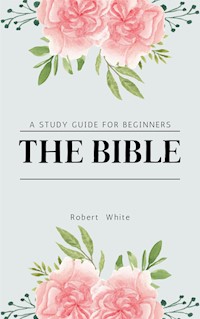
"The Bible: A Study Guide for Beginners" is an in-depth exploration of the world's most widely read and influential book. Written for those who are new to the Bible or who want to gain a deeper understanding of its contents, this guide provides a comprehensive overview of the Bible's history, themes, and significance.
The book begins with an introduction to the Bible, including its origins and the different versions and translations available. It then delves into the Old Testament, including the Pentateuch, the history books, the wisdom books, and the prophets. The New Testament is also covered in depth, with chapters on the Gospels, the Acts of the Apostles, the Epistles, and the Book of Revelation.
The guide also explores the themes and symbols found throughout the Bible, as well as the historical context in which it was written. The canonization of the Bible, its interpretation, and various study methods are also discussed. The book concludes with chapters on the Bible's influence on Christianity, Judaism, Islam, and other religions, as well as its impact on science, ethics, politics, literature, art, and the media.
Throughout the book, the author provides insights and perspectives from scholars, theologians, and other experts, while also offering practical tips and guidance for studying the Bible on your own. With its comprehensive coverage and easy-to-understand language, "The Bible: A Study Guide for Beginners" is an essential resource for anyone interested in gaining a deeper understanding of this ancient and enduring text.
Das E-Book können Sie in Legimi-Apps oder einer beliebigen App lesen, die das folgende Format unterstützen:
Veröffentlichungsjahr: 2023
Ähnliche










The Bible: A Study Guide for Beginners
Robert White
Published by RWG Publishing, 2023.
While every precaution has been taken in the preparation of this book, the publisher assumes no responsibility for errors or omissions, or for damages resulting from the use of the information contained herein.
THE BIBLE: A STUDY GUIDE FOR BEGINNERS
First edition. January 27, 2023.
Copyright © 2023 Robert White.
Written by Robert White.
10 9 8 7 6 5 4 3 2 1
Table of Contents
Title Page
Copyright Page
Introduction to the Bible
The Old Testament
The Pentateuch
The History Books
The Wisdom Books
The Prophets
The New Testament
The Gospels
The Acts of the Apostles
The Epistles
The Book of Revelation
Themes and Symbols in the Bible
The Historical Context of the Bible
The Canonization of the Bible
The Interpretation of the Bible
Write a full chapter on
The Bible and Christianity
The Bible and Judaism
The Bible and Islam
The Bible and Other Religions
The Bible and Science
The Bible and Ethics
The Bible and Politics
The Bible in Literature and Art
The Bible in Film and Media
The Bible and Women
The Bible and Social Justice
The Bible and Environmentalism
The Bible and Interfaith Dialogue
Conclusion: The Ongoing Significance of the Bible
Introduction to the Bible
The Bible is a collection of sacred texts that are central to the Christian religion. It is also considered to be an important religious text for Jews and is considered to be a source of inspiration for many other religions. The Bible is made up of two main parts: the Old Testament and the New Testament.
The Old Testament, also known as the Hebrew Bible, is a collection of texts that were written between the 12th and 2nd centuries BCE. It is divided into four main sections: the Pentateuch, the History Books, the Wisdom Books, and the Prophets. The Pentateuch, also known as the Torah, is made up of the first five books of the Old Testament and is considered to be the foundation of Jewish law. The History Books chronicle the history of the Israelites from their origins to the Babylonian exile. The Wisdom Books contain teachings on ethics, wisdom, and poetry. The Prophets, including Isaiah, Jeremiah, and Ezekiel, contain messages from God to the Israelites.
The New Testament, written between the 1st and 2nd centuries CE, is a collection of texts that are considered to be the foundation of the Christian religion. It is divided into four main sections: the Gospels, the Acts of the Apostles, the Epistles, and the Book of Revelation. The Gospels, including Matthew, Mark, Luke, and John, contain the story of Jesus' life, teachings, and death. The Acts of the Apostles is a history of the early Christian church. The Epistles, written by Paul and other early Christian leaders, contain letters that were sent to various Christian communities. The Book of Revelation is a highly symbolic and apocalyptic text that is believed to contain prophecies about the end of the world.
The Bible has had a profound impact on the world throughout history. It has been used as a source of inspiration for literature, art, music, and film. It has also been used to justify social, political, and moral positions, both positive and negative. The Bible has been translated into many languages, and it is one of the most widely read and studied texts in the world.
The Bible is a complex text that can be interpreted in many ways. Different religious traditions and scholars have different approaches to interpreting the Bible. Some interpret it literally, while others interpret it symbolically. Some focus on the historical context of the texts, while others focus on their spiritual or moral teachings. The study of the Bible is ongoing, and new insights and perspectives are constantly being discovered.
In conclusion, the Bible is a collection of sacred texts that are central to the Christian religion. It is divided into two main parts: the Old Testament and the New Testament. The Old Testament contains texts written between the 12th and 2nd centuries BCE, while the New Testament contains texts written between the 1st and 2nd centuries CE. The Bible has had a profound impact on the world throughout history and continues to be widely read and studied. The interpretation of the Bible is ongoing and new insights and perspectives are constantly being discovered.
The Old Testament
The Old Testament, also known as the Hebrew Bible, is a collection of texts that are considered to be sacred by Jews and Christians. It is divided into four main sections: the Pentateuch, the History Books, the Wisdom Books, and the Prophets.
The Pentateuch, also known as the Torah, is made up of the first five books of the Old Testament: Genesis, Exodus, Leviticus, Numbers, and Deuteronomy. These books are considered to be the foundation of Jewish law and contain stories of the creation of the world, the origins of the Israelites, and the giving of the Ten Commandments to Moses at Mount Sinai. They also contain laws and regulations for the Israelites to follow in their daily lives and in their worship of God.
The History Books chronicle the history of the Israelites from their origins to the Babylonian exile. These books include Joshua, Judges, Ruth, 1 and 2 Samuel, 1 and 2 Kings, 1 and 2 Chronicles, Ezra, and Nehemiah. They contain stories of the Israelites' conquest of Canaan, the rise and fall of their kings, and their relationship with other nations. They also contain prophecies about the coming of a savior and the restoration of Israel.
The Wisdom Books contain teachings on ethics, wisdom, and poetry. These books include Job, Psalms, Proverbs, Ecclesiastes, and the Song of Solomon. They contain wisdom literature that offer advice on how to live a good life and how to find meaning in suffering. They also contain poetry that expresses the Israelites' love and devotion to God.
The Prophets, including Isaiah, Jeremiah, Ezekiel, and the twelve minor prophets, contain messages from God to the Israelites. They contain warnings of judgment for the Israelites' sins and promises of salvation and restoration. They also contain prophecies about the coming of a savior and the restoration of Israel.
The Old Testament is a rich and diverse collection of texts that provide insight into the history, beliefs, and practices of the ancient Israelites. It is an important source of religious and cultural heritage for Jews and Christians, and it continues to be widely read and studied.
In conclusion, The Old Testament is a collection of texts that are considered to be sacred by Jews and Christians. It is divided into four main sections: the Pentateuch, the History Books, the Wisdom Books, and the Prophets. The Pentateuch contains the first five books of the Old Testament and is considered the foundation of Jewish law. The History Books chronicle the history of the Israelites from their origins to the Babylonian exile. The Wisdom Books contain teachings on ethics, wisdom, and poetry. The Prophets contain messages from God to the Israelites. The Old Testament is a rich and diverse collection of texts that provide insight into the history, beliefs, and practices of the ancient Israelites, it is an important source of religious and cultural heritage for Jews and Christians and continues to be widely read and studied.
The Pentateuch
The Pentateuch, also known as the Torah, is the first five books of the Old Testament: Genesis, Exodus, Leviticus, Numbers, and Deuteronomy. These books are considered to be the foundation of Jewish law and contain some of the most important stories and teachings in the Bible.
Genesis, the first book of the Pentateuch, tells the story of the creation of the world, the first humans, and the history of the Israelite people from Adam and Eve to the patriarchs Abraham, Isaac, and Jacob. It also includes the story of the great flood, the tower of Babel and the origin of different languages, and the story of God's covenant with Abraham, through which the Israelites became God's chosen people.
Exodus, the second book of the Pentateuch, tells the story of the Israelites' enslavement in Egypt and their liberation by God through Moses. It also includes the story of the Ten Commandments being given to Moses at Mount Sinai, and the construction of the Ark of the Covenant, and the Tabernacle. Additionally, it has the detailed instructions for the Israelites on how to worship God, including the laws and regulations for the Israelites to follow in their daily lives and in their worship of God.
Leviticus, the third book of the Pentateuch, is primarily concerned with the laws and regulations for the Israelites to follow in their worship of God. It contains detailed instructions for the priests and the people on how to offer sacrifices, how to observe festivals and holy days, and how to handle uncleanness and impurities.
Numbers, the fourth book of the Pentateuch, tells the story of the Israelites' journey from Egypt to the Promised Land. It includes the story of the Israelites' rebellion against God and Moses, and their wandering in the wilderness for 40 years. It also includes the story of the Israelites' census and organization as a community, as well as their encounters with other nations and their preparation for entering the Promised Land.
Deuteronomy, the fifth and final book of the Pentateuch, is a summary and reiteration of the laws and regulations given in the previous books, as well as a call for the Israelites to remain faithful to God as they enter the Promised Land. It also includes Moses' speeches to the Israelites, in which he reminds them of their history and God's faithfulness, and urges them to follow God's commandments.
The Pentateuch is considered to be the foundation of Jewish law and is considered to be one of the most important texts in the Bible. It contains some of the most well-known and enduring stories in the Bible, such as the creation of the world, the Ten Commandments, and the Israelites' liberation from Egypt. These stories have had a profound impact on the religious and cultural heritage of Jews and Christians throughout history, and continue to be widely read and studied today.




