



0,99 €
Mehr erfahren.
- Herausgeber: Booksell-Verlag
- Kategorie: Gesellschafts- und Liebesromane
- Sprache: Englisch
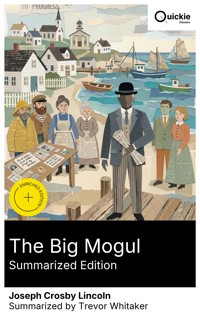
In Joseph Crosby Lincoln's novel, "The Big Mogul," readers are immersed in a captivating narrative set against the backdrop of early 20th-century America. The text is characterized by Lincoln's signature blend of humor and pathos, illustrating the complexities of human relationships amidst the burgeoning influences of wealth and ambition. Through the protagonist's journey, the story delves into the moral dilemmas faced by individuals entangled in the corporate machinations of the time, all while showcasing Lincoln's adept use of colloquial dialogue and vivid descriptions that breath life into the coastal New England setting. Joseph Crosby Lincoln, a prolific writer and native of Massachusetts, draws heavily from his experiences in the maritime culture and the socio-economic changes of his era. His deep-seated understanding of local life and character infuses the narrative with authenticity. Lincoln's keen observations on human nature and societal norms reflect a broader commentary on the American Dream, as well as the trials faced by those seeking prosperity in a rapidly evolving world. I highly recommend "The Big Mogul" to readers interested in early American literature or those seeking a thought-provoking exploration of ambition and integrity. Lincoln's astute social commentary and engaging storytelling provide a delightful yet stirring reading experience that resonates with the timeless struggles of human aspiration. In this enriched edition, we have carefully created added value for your reading experience: - A succinct Introduction situates the work's timeless appeal and themes. - The Synopsis outlines the central plot, highlighting key developments without spoiling critical twists. - A detailed Historical Context immerses you in the era's events and influences that shaped the writing. - A thorough Analysis dissects symbols, motifs, and character arcs to unearth underlying meanings. - Reflection questions prompt you to engage personally with the work's messages, connecting them to modern life. - Hand‐picked Memorable Quotes shine a spotlight on moments of literary brilliance. - Interactive footnotes clarify unusual references, historical allusions, and archaic phrases for an effortless, more informed read.
Das E-Book können Sie in Legimi-Apps oder einer beliebigen App lesen, die das folgende Format unterstützen:
Veröffentlichungsjahr: 2022
Ähnliche
















The Big Mogul
Table of Contents
Introduction
At its core, The Big Mogul contemplates how the magnetism of influence—whether born of wealth, position, or sheer force of personality—can steady, strain, and ultimately redefine the loyalties, ambitions, and quiet moral compasses of the people who orbit it, tracing the subtle negotiations, the favors asked and returned, the pride that builds a public self and the doubt that shadows it, and inviting readers to witness character under pressure rather than spectacle, to weigh comfort against conscience, and to consider what success costs when the currency is trust, reputation, and the fragile, necessary ties of everyday community.
The Big Mogul is a novel by Joseph Crosby Lincoln (1870–1944), an American writer widely associated with popular early-twentieth-century fiction and portraits of New England life. Appearing in the early decades of the 1900s, the book belongs to the accessible, character-driven tradition that made Lincoln a familiar name to magazine and book readers of his era. Many of his works reached audiences through serialization before appearing in volume, and they share a commitment to readability and humane observation. In genre terms, this is American popular fiction with social and domestic concerns, attentive to personality, manners, and the consequences of everyday decisions.
Without venturing beyond the opening setup, the narrative turns on the gravitational pull of a prominent figure—the “mogul” signaled by the title—and the ripples that presence sends through a surrounding circle. Early chapters establish relationships and expectations, sketch points of friction and allegiance, and suggest how public standing can complicate private feeling. Rather than hinging on outlandish twists, the novel builds interest from the incremental revelation of motives and the social choreography of favors, obligations, and pride. Readers are invited to observe how choices made at the center reverberate outward, quietly shaping the lives of those who must respond to them.
Lincoln’s prose is plainspoken and steady, favoring clear scenes, concrete detail, and dialogue that carries both humor and subtext. He is known for a gentle comic touch that softens critique without obscuring it, and for pacing that grants room to character, routine, and reflection. The mood balances warmth with sobriety: amiable, often wry, yet attentive to the ways pride, vanity, or stubbornness can harden into conflict. Expect an observational voice that trusts everyday speech and situational irony more than bravura effects, crafting a lived-in world where tone and cadence matter and where small adjustments in behavior can reframe the whole.
Among the questions the book raises are how leadership defines itself, what responsibility accompanies success, and how communities negotiate status—who belongs, who decides, and on what terms. It probes the gap between reputation and reality, between the stories people tell about a powerful person and the truths disclosed by action. It also examines the ethics of patronage and reciprocity: when help becomes leverage, when gratitude shades into dependence, and how pride complicates generosity. The result is a study of social capital as much as financial capital, attentive to the moral arithmetic by which people justify choices to themselves and to others.
Those concerns remain timely. Contemporary readers will recognize the dynamics of influence we live with—corporate leadership, celebrity culture, institutional authority—and the intimate negotiations that unfold wherever power meets need. The book offers a framework for thinking about accountability without cynicism, and about ambition without romanticization. It invites reflection on how public narratives form and shift, how communities protect or challenge their own, and what it means to succeed without forfeiting solidarity. For readers seeking substance with civility, it offers a measured exploration of status in human terms rather than headlines, as attentive to private consequence as to public display.
Approached as an entry to Lincoln’s broader oeuvre or as a continuation for longtime admirers, The Big Mogul promises a lucid, humane engagement with character and consequence. It does not demand specialist knowledge or historical excavation; instead, it rewards patience with a textured social world and a quietly cumulative dramatic arc. Read for the pleasure of voice and observation, for the steady accretion of pressure rather than shock, and for the questions it places in your hands. It is a novel that meets readers where they are and nudges them to look more closely at how power moves among us.
Synopsis
Set on the outer edge of Cape Cod, The Big Mogul opens with a quiet seaside town whose rhythm is ruled by tides, gossip, and the dependable routines of fishing and small trade. Into this setting comes a celebrated motion-picture magnate seeking a fresh backdrop for a new picture and a brief escape from metropolitan pressures. His arrival, preceded by rumors and embellished by local imagination, unsettles the customary calm. Shopkeepers, skippers, and selectmen weigh the promise of brisk business and notoriety against an instinctive caution about outsiders. The stage is set for a meeting of worlds: coastal conservatism and the restless modernity of the movies.
The producer’s advance team secures lodging and scouting access, and the mogul himself quickly assesses the harbor, dunes, and weathered houses as potential locations. Crew members bring equipment that astonishes onlookers, and the town’s informal leaders organize introductions, permissions, and schedules. Early scenes depict small misunderstandings about contracts, meal hours, and the use of the wharf, handled with humor and a firm Cape Cod practicality. The mogul proves shrewd but personable, adapting to local speech and custom when it suits the work. As the company settles in, the townspeople begin to see the film not as novelty but as an enterprise with real stakes.
Extras are recruited from among fishermen and clerks, and a few local spots are refitted to serve as backdrop and studio. The leading lady’s presence draws curious crowds, while the cinematographer battles fog and shifting light. A local young man—steady, capable, and known to the community—finds himself drawn into the production’s daily mechanics, bridging the gap between crew demands and town expectations. His competence attracts the notice of the mogul’s trusted assistant and prompts a tentative connection with a visiting performer. With routines established, the operation gains momentum, even as whispers about money, property, and propriety begin to ripple through the village.
Attention turns to a key shoreline parcel essential for the film’s signature scenes. Securing it requires navigating a maze of ownership records, unrecorded agreements, and tacit customs about access. The mogul’s representatives offer fair terms, but a local speculator hints at alternative plans and inflated values, raising tensions at the town office and the post-supper gatherings where opinions are formed. The selectmen must balance public sentiment, income for residents, and the long-term consequences of publicity. Without settling the matter, the narrative underscores how a simple location request presses against deeper issues: who speaks for the shore and what price attaches to a community’s way of life.
As the shoot expands, a cultural clash intensifies. The crew’s speed and appetite for spectacle jar with local habits of thrift and deliberation. A minor incident, magnified by rumor and an out-of-town newspaper, stirs anxiety about the village’s reputation. The mogul, versed in steering narratives, moves to contain disruptions, while older residents urge calm and recollection of earlier visiting frenzies tied to summer boarders and fishing booms. The young intermediary is asked to translate between temperaments, discovering that trust depends as much on tone and timing as on written agreements. The production continues, but under a growing awareness that goodwill can pivot quickly.
Weather and logistics introduce a pivotal challenge. A fogbound day or squall disrupts a complex scene on the water, testing seamanship, scheduling grit, and the budget’s elasticity. In the scramble, practical wisdom from veteran boatmen becomes indispensable, and the mogul is reminded that authenticity carries risks that cannot be offset by studio controls. Key characters show their measure under pressure, and small acts of steadiness defuse larger dangers. When the wind sets down, the company tallies cost against captured footage, and the town measures disturbance against pride in having met difficulty capably. The episode reshapes the balance of respect between crew and community.
Consequences of the setback surface in ledgers and in negotiations over the shore tract. A clause or claim long overlooked complicates the purchase, and the local speculator redoubles efforts to profit from delay. The mogul, facing timelines and investors, must decide whether to compromise, contest, or relocate. Private conversations reveal what each party values: publicity, livelihood, and a sense of belonging not easily priced. The young intermediary confronts a choice between expedience and fair dealing, while friendships born of convenience are tested for durability. The story presses toward decision points, framing legalities as expressions of character rather than mere technicalities.
The production advances toward its defining scenes, carefully aligning tides, sunlight, and permissions. Crowds thin as novelty fades, leaving those committed to the finish. Misunderstandings that once threatened to widen into rifts narrow through frank talk and visible good faith. Reputation, a recurring concern, begins to shift from fear of scandal to regard for competence. Without disclosing outcomes, the narrative draws close to its climax: contracts near signature, a creative vision seeks completion on location, and personal bonds take clearer shape. The resolution promises to hinge on whether promises are kept, whether patience outlasts pressure, and whether place can accommodate change without surrendering identity.
In closing movement, The Big Mogul underscores themes consistent with its setting and era: the friction and possibility at the meeting point of local rootedness and modern enterprise; the value of plain dealing amid publicity’s distortions; and the quiet authority of communities that understand their coast, weather, and one another. The book’s message is not an indictment or celebration of the film world, but a study in mutual adjustment. By tracing workdays rather than grand pronouncements, it suggests that influence flows both ways: spectacle learns limits from shore wisdom, and the village tests what parts of novelty can be woven into the fabric of daily life.
Historical Context
Set in the first half of the 1920s, The Big Mogul unfolds in a Cape Cod community modeled on the small towns of Barnstable County, Massachusetts, that Joseph Crosby Lincoln knew from childhood. Fishing, small coasting trades, and salt marsh agriculture persisted, but seasonal tourism and summer cottages had begun to dominate local economies. After World War I, roads improved, telephones and electricity spread, and automobiles altered distance and tempo. The recently opened Cape Cod Canal shortened sea routes and symbolized change. Within this postwar, Prohibition-era landscape, Lincoln situates townspeople governed by town meeting, Congregational habit, and Yankee thrift as they confront a brash, big-city power broker and his entourage, dramatizing a collision between tradition and modern mass culture.
The rapid rise of the American motion-picture industry from the 1910s to the mid 1920s is a central historical backdrop. Universal formed in 1912, Paramount in 1914, Fox in 1915, United Artists in 1919, Warner Bros. in 1923, and MGM in 1924, while the Motion Picture Producers and Distributors of America was created in 1922 under Will Hays amid censorship pressures after the 1915 Mutual Film decision. By the mid 1920s, studios released hundreds of features annually, with location shooting increasingly used to lend realism. Lincoln’s Big Mogul evokes the era’s tycoons and the cultural reach of studios. The novel’s arrival of film people in a conservative Cape town mirrors the industry’s expansion and the tensions it generated beyond urban centers.
Tourism’s transformation of Cape Cod from the late nineteenth century into the 1920s reshaped livelihoods. The Old Colony Railroad reached Provincetown by 1873, making seaside villages accessible to Boston and New York visitors. The Cape Cod Canal opened to traffic in 1914 and was purchased by the federal government in 1928, while automobile travel surged after the Model T’s 1908 debut; U.S. Route 6 was designated across the Cape in 1926. Provincetown’s art colony flourished after 1916, and summer colonies spread in Chatham, Barnstable, and Falmouth. In the novel, the ease with which an urban magnate descends upon a Cape village to stage a production reflects these new conduits of access and the economic pivot from fisheries to service and spectacle.
Prohibition, launched when the Volstead Act took effect on 17 January 1920 after ratification of the Eighteenth Amendment in 1919, profoundly affected Atlantic coastal communities. Rum Row developed just beyond the three-mile territorial limit, supplied by figures like Bill McCoy, while Coast Guard bases at Woods Hole and Chatham intensified patrols; by 1924 treaties extended effective enforcement to twelve miles offshore. Cape Cod’s inlets and shoals became corridors for clandestine landings, and local attitudes toward enforcement were mixed. Lincoln’s story registers this climate: the presence of wealthy outsiders, errand runners, and lawmen in a tight-knit village offers comic and pointed opportunities to show how Prohibition-era hypocrisies and opportunism rubbed against New England communal norms.
World War I left vivid local marks. The Chatham Naval Air Station opened in 1917 to fly antisubmarine patrols, and on 21 July 1918 the German U-boat U-156 shelled Orleans, Massachusetts, in the only enemy attack on the U.S. mainland during the war, shocking the region. Demobilization in 1919 brought veterans home to modest wages and frugal towns, even as war memories lingered in civic ritual and suspicion of outsiders. Lincoln’s Cape villagers carry the imprint of wartime vigilance and small-town solidarity. The novel’s wary, sometimes patriotic scrutiny of a powerful stranger and his bustling crew resonates with a population recently mobilized for defense, proud of local autonomy, and alert to the costs of distant decisions.
The sharp postwar downturn of 1920 to 1921 hit New England hard. U.S. wholesale prices fell roughly 37 percent from 1920 to 1921, and unemployment estimates climbed into double digits. Maritime trades and shore industries tightened, while small merchants and fishermen saw credit constrict. On Cape Cod, families diversified by taking boarders, guiding anglers, or selling shorefront services to visitors. Such constraints make the cash infusions and promises brought by a metropolitan impresario particularly potent in Lincoln’s plot. The community’s negotiations over wages, permissions, and public order reflect how towns balanced immediate economic relief against the long-term costs of ceding control to outside capital.
Massachusetts politics and social tensions in the 1919 to 1927 period form another crucial context. The 1919 Boston Police Strike and the Sacco and Vanzetti case (arrests in 1920, executions in 1927) heightened debates over authority, class, and nativism. Nationally, the 1924 Immigration Act codified restrictionist sentiment, even as many studio leaders were immigrants or the children of immigrants, such as Adolph Zukor and Louis B. Mayer. In this climate, Lincoln’s portrait of a cosmopolitan magnate encountering a Yankee town captures anxieties about urban power, perceived moral laxity, and cultural outsiders. The frictions and accommodations he depicts mirror the state’s contested mix of tradition, reform, and suspicion.
The Big Mogul operates as a social and political critique by staging the encounter of concentrated, media-driven power with town-meeting democracy, communal custom, and modest livelihoods. Lincoln exposes the era’s inequities by showing how moneyed influence seeks to purchase consent, redefine public space, and convert heritage into commodity, while locals negotiate dignity, fair pay, and control. The Prohibition backdrop underscores legal hypocrisy and selective enforcement. References to wartime vigilance and hard-times bargaining illuminate class divides and the vulnerability of peripheral economies to metropolitan dictates. In dramatizing these pressures without romanticizing either side, the book interrogates boosterism, celebrity culture, and the coercive charm of modern spectacle.
The Big Mogul
CHAPTER I
THIS was the library of the Townsend mansion in Harniss[1]. Mrs. Townsend had so christened it when the mansion was built; or, to be more explicit, the Boston architect who drew the plans had lettered the word “Library” inside the rectangle indicating the big room, just as he had lettered “Drawing-Room” in the adjoining, and still larger, rectangle, and Mrs. Townsend had approved both plans and lettering. In the former, and much smaller, home of the Townsends there had been neither library nor drawing-room, the apartments corresponding to them were known respectively as the “sitting-room” and the “parlor.” When the little house was partially demolished and the mansion took its place the rechristened sitting-room acquired two black walnut bookcases and a dozen “sets,” the latter resplendent in morocco and gilt. Now the gilt letters gleamed dimly behind the glass in the light from the student lamp upon the marble-topped center table beside which Foster Townsend was sitting, reading a Boston morning newspaper. It was six o’clock in the afternoon of a dark day in the fall of a year late in the seventies.
The student lamp was a large one and the light from beneath its green shade fell upon his head and shoulders as he sat there in the huge leather easy-chair. Most of the furniture in the library was stiff and expensive and uncomfortable. The easy-chair was expensive also, but it was comfortable. Foster Townsend had chosen it himself when the mansion was furnished and it was the one item upon which his choice remained fixed and irrevocable.
“But it is so big and—and homely, dear,” remonstrated his wife. “It doesn’t look—well, genteel enough for a room in a house like ours. Now, truly, do you think it does?”
Her husband, his hat on the back of his head and his hands in his trousers’ pockets, smiled.
“Maybe not, Bella,” he replied. “It is big, I’ll grant you that, and I shouldn’t wonder if it was homely. But so far as that goes I’m big and homely myself. It fits me and I like it. You can have all the fun you want with the rest of the house; buy all the doodads and pictures and images and story-books and trash that you’ve a mind to, but I want that chair and I’m going to have it. A sitting-room is a place to sit in and I mean to sit in comfort.[1q]”
“But it isn’t a sitting-room, Father,” urged Arabella. “It is a library. I do wish you wouldn’t forget that.”
“All right. I don’t care what you call it, so long as you let me sit in it the way I want to. That chair’s sold, young man,” he added, addressing the attentive representative of the furniture house. “Now, Mother, what’s the next item on the bill of lading?”
The leather chair came to the library of the Townsend mansion and its purchaser had occupied it many, many afternoons and evenings since. He was occupying it now, his bulky figure filling it to repletion and his feet, of a size commensurate to the rest of him, resting upon an upholstered foot-stool—a “cricket[2]” he would have called it. A pair of gold-rimmed spectacles were perched upon the big nose before his gray eyes and the stump of a cigar was held tightly in the corner of his wide, thin lipped, grimly humorous mouth. He was dressed in a dark blue suit, wore a stiff-bosomed white shirt, a low “turn down” collar and a black, ready-made bow tie. Below the tie, a diamond stud glittered in the shirt bosom. His boots—he had them made for him by the village shoe-maker—were of the, even then, old-fashioned, long-legged variety, but their leather was of the softest and best obtainable. Upon the third finger of his left hand—stubby, thick hands they were—another diamond, set in a heavy gold ring, flashed as he turned the pages of the paper. His hair was a dark brown and it and his shaggy brows and clipped chin beard were sprinkled with gray.
There was another chair at the other side of the table, a rocking-chair, upholstered in fashionable black haircloth and with a lace “tidy” upon its back. That chair was empty. It had been empty for nearly a month, since the day when Arabella Townsend was taken ill. It was pathetically, hauntingly empty now, for she who had been accustomed to occupy it was dead. A little more than a week had elapsed since her funeral, an event concerning which Eben Wixon, the undertaker, has been vaingloriously eloquent[3] ever since.
“Yes, sir-ee!” Mr. Wixon was wont to proclaim with the pride of an artist. “That was about the most luxurious funeral ever held in this county, if I do say it. I can’t think of anything to make it more perfect, unless, maybe, to have four horses instead of two haulin’ the hearse. That would have put in what you might call the finishin’ touch. Yes, sir, ’twould! Still, I ain’t findin’ fault. I’m satisfied. The music—and the flowers! And the high-toned set of folks sittin’ around all over the lower floor of that big house! Some of ’em was out in the dinin’ room, they was. If I had half the cash represented at that Townsend funeral I’d never need to bury anybody else in this world. I bet you I wouldn’t, I’d have enough.”
Foster Townsend read his paper, became interested in a news item, smiled, raised his head and, turning toward the vacant rocker, opened his lips to speak. Then he remembered and sank back again into his own chair. The paper lay unheeded upon his knees and he stared absently at a figure in the Brussels carpet on the floor of the library.
A door in the adjoining room—the dining room—opened and Nabby Gifford, the Townsend housekeeper, entered from the kitchen. She lit the hanging lamp above the dining room table and came forward to draw the portières between that room and the library. Standing with the edge of a curtain in each hand, she addressed her employer.
“Kind of a hard old evenin’, ain’t it, Cap’n Townsend,” she observed. “It’s rainin’ now but I declare if it don’t feel as if it might snow afore it gets through.”
Foster Townsend did not answer, nor did he look up. Mrs. Gifford tried again.
“Anything ’special in the paper?” she inquired. “Ain’t found out who murdered that woman up to Watertown yet, I presume likely?”
He heard her this time.
“Eh?” he grunted, raising his eyes. “No, I guess not. I don’t know. I didn’t notice. What are you doing in the dining room, Nabby? Where’s Ellen?”
“She’s out. It’s her night off. She was all dressed up in her best bib and tucker and so I judged she was goin’ somewheres. I asked her where, but she never said nothin’, made believe she didn’t hear me. Don’t make much odds; I can ’most generally guess a riddle when I’ve got the answer aforehand. There’s an Odd Fellers’ ball over to Bayport to-night and that Georgie D.’s home from fishin’, so I cal’late—”
Townsend interrupted. “All right, all right,” he put in, gruffly. “I don’t care where she’s gone. Pull those curtains, will you, Nabby.”
“I was just a-goin’ to.... Say, Cap’n Townsend, don’t you think it’s kind of funny the way that woman’s husband is actin’—that Watertown woman’s, I mean? He says he wan’t to home the night she was murdered but he don’t say where he was. Now, ’cordin’ to what I read in yesterday’s Advertiser—”
“All right, all right! Pull those curtains.... Here! Wait a minute. Where’s Varunas?”
“He’s out to the barn, same as he usually is, I guess likely. He spends more time with them horses than he does with me, I know that. I say to him sometimes, I say: ‘Anybody’d think a horse could talk the way you keep company with ’em. Seems as if you liked to be with critters that can’t talk.’”
“Perhaps he does—for a change. Well, if he comes in tell him I want to see him. You can call me when supper’s ready. Now, if you’ll pull those curtains—”
The curtains were snatched together with a jerk and a rattle of rings on the pole. From behind them sounded the click of dishes and the jingle of silver. Foster Townsend sank back into the leather chair. His cigar had gone out, but he did not relight it. He sat there, gazing at nothing in particular, a gloomy frown upon his face.
The door leading from the rear of the front hall opened just a crack. Through the crack came a whisper in a hoarse masculine voice.
“Cap’n Foster!” whispered the voice. “Cap’n Foster!... Ssst! Look here!”
Townsend turned, looked and saw a hand with a beckoning forefinger thrust from behind the door. He recognized the hand and lifting his big body from the chair, walked slowly across the room.
“Well, Varunas,” he asked, “what’s the matter now? What are you sneaking in through the skipper’s companion for?”
A head followed the hand around the edge of the door, the head of Varunas Gifford. Varunas was Nabby Gifford’s husband. He was stableman on the Townsend estate, took care of the Townsend horses, and drove his employer’s trotters and pacers in the races at the county fairs and elsewhere. He was a little, wizened man, with stooped shoulders and legs bowed like barrel hoops. His thin, puckered face puckered still more as he whispered a cautious reply.
“Cap’n Foster,” he whispered, “can you just step out in the hall here a minute? I’ve got somethin’ to tell ye and if I come in there Nabby’s liable to hear us talkin’ and want to know what it’s all about. Come out just a minute, can ye?”
Townsend motioned him back, followed him into the dimly lighted hall and closed the door behind them.
“Well, here I am,” he said. “What’s the matter?”
Varunas rubbed his unshaven chin. His fingers among the bristles sounded like the rasp of sandpaper.
“You know Claribel?” he began anxiously.
Claribel was the fastest mare in the Townsend stable. The question, therefore, was rather superfluous. Claribel’s owner seemed to consider it so.
“Don’t waste your breath,” he ordered. “What’s the matter with her?”
Varunas shook his head violently. “Ain’t nothin’ the matter with her,” he declared. “She’s fine. Only—well, you see—”
“Come, come! Throw it overboard!”
“Well, I was cal’latin’ to take her down to the Circle to-morrow mornin’ early—about six or so; afore anybody was up, you know—and try her out. Them was your orders, Cap’n, you remember.”
“Of course I remember. I was going to remind you of it. You’re going to do it, aren’t you?”
“I was cal’latin’ to, but—well, I heard somethin’ a spell ago that made me think maybe I hadn’t better. I’ve been give to understand that—” he leaned forward to whisper once more—“that there’d be somebody else there at the same time me and Claribel was. Um-hum. Somebody that’s cal’latin’ to find out somethin’.”
Foster Townsend’s big hands, pushed into his trousers pockets, jingled the loose change there. He nodded.
“I see,” he said, slowly. “Yes, yes, I see. Somebody named Baker, I shouldn’t wonder. Eh?”
Varunas nodded. “Somebody that works for somebody named somethin’ like that,” he admitted. “You see, Cap’n, I was down to the blacksmith shop a couple of hours ago—got to have Flyaway shod pretty soon—and me and Joe Ellis was talkin’ about one thing or ’nother, and says he: ‘Varunas,’ he says, ‘when is the old man and Sam Baker goin’ to pull off that private horse trot of theirs?’ he says. Course everybody knows that us and Sam have fixed up that match and it’s the general notion that there’s consider’ble money up on it. Some folks say it’s a hundred dollars and some says it’s five hundred. I never tell ’em how much ’tis, because—”
“Because you don’t know. Well, never mind that. Go on.”
“Yup.... Um-hum.... Well, anyhow, all hands knows that our Claribel and his Rattler is goin’ to have it out and Joe he wanted to know when ’twas goin’ to be. I told him next week some day and then he says: ‘I understand you’ve been takin’ the mare down to the Circle and givin’ her time trials in the mornin’s afore anybody else is up.’ Well, that kind of knocked me. I never suspicioned anybody did know, did you, Cap’n?”
“I told you to take pains that they didn’t. You haven’t done it but once. Who saw you then?”
“Why, nobody, so I’d have been willin’ to bet. I never see anybody around. Lonesome’s all git out ’tis down there that time in the mornin’. And dark, too. How Joe or anybody else knew I had Claribel down there yesterday was more’n I could make out.”
“Well, never mind. It looks as if they did know. Did Ellis tell you what time the mare made?”
“No. But he give me to understand that Seth Emmons, Baker’s man, was figgerin’ to come over from Bayport and be somewheres in that neighborhood to-morrer mornin’, and every mornin’, till he found out. Joe wouldn’t tell me who told him, but he said ’twas a fact. Now what had I better do? It’s the story ’round town that Rattler has made 2:20 or better and that the best Claribel can do is in the neighborhood of 2:35. If folks knew she’d made 2:18½ around that Circle Baker might have Rattler took sick or somethin’ and the whole business would be called off. I’ve known his horses to be took down in a hurry afore, when he was toler’ble sure to lose. When you’re dealin’ with Sam Baker you’re up against a slick article, and that man of his, Seth Emmons, is just as up and comin’. I better not show up at that Circle to-morrow mornin’, had I, Cap’n Foster?”
Townsend, hands in pockets, took a turn up and down the hall. His horses were his pet hobbies. Besides the span of blacks which he was accustomed to drive about town and which, with the nobby brougham or carryall or dog-cart which they drew, were the admiration and boastful pride of Harniss, he owned a half dozen racers. At the Ostable County Fair and Cattle Show in October the Townsend entries usually carried off the majority of first prizes. They were entered, also, at the fair in New Bedford and sometimes as far away as Taunton. Between fairs there were numbers of by-races with other horse owners in neighboring towns. A good trotter was a joy to Foster Townsend and a sharply contested trotting match his keenest enjoyment. The Townsend trotters were as much talked about as the famous and long-drawn-out Townsend-Cook lawsuit. The suit was won, or seemed to be. The highest court in Massachusetts had recently decided it in Foster Townsend’s favor. Bangs Cook’s lawyers were reported to have entered motion of appeal and it was said that they intended carrying it to the Supreme Court at Washington, but few believed their appeal would be granted.
Sam Baker was an old rival of his on the tracks. Baker was the hotel keeper and livery man at Bayport, ten miles away. He was not accounted rich, like Townsend, but he was well to do, a shrewd Yankee and a “sport.” The trotter Rattler was a recent acquisition of his and a fast one, so it was said. He had challenged Townsend’s mare Claribel to a mile trot on the “Circle,” the track which Townsend had built and presented to the town. It was a quarter mile round of hard clay road constructed on the salt meadows near the beach at South Harniss. A lonely spot with no houses near it, it was then. Now a summer hotel and an array of cottages stand on or near it. Foster Townsend used it as an exercise ground for his trotters, but any one else was accorded the same privilege. In the winter, when the snow was packed hard, it was the spot where the dashing young fellow in a smart cutter behind a smart horse took his best girl for a ride and the hope of an impromptu race with some other dashing young fellow similarly equipped.
Varunas Gifford watched his employer pace up and down the hall, watched him adoringly but anxiously. After a moment he returned to repeat his question.
“Better not be down to the Circle to-morrow mornin’, had I, Cap’n?” he suggested.
Townsend stopped in his stride. “Yes,” he said, with decision. “I want you to be there.”
“Eh? Why, good land! If that Seth Emmons is there spyin’ and keepin’ time on Claribel, why—”
“Sshh! Wait! I want you to be there, but I don’t want the mare to be there. Is Hornet all right for a workout?”
“Sartin sure he’s all right. But Hornet can’t do better’n 2:40 if he spreads himself, not on that Circle track anyhow. You ain’t cal’latin’ to haul out Claribel and put in Hornet, be you? There wouldn’t be no sense in that, Cap’n, not a mite. Why—”
“Oh, be quiet! If he does 2:45 it will suit me just as well, provided that is the best you can make him do. You say it’s dark down there at six o’clock?”
“Dark enough, even if it’s a fine mornin’, this time of year. A mornin’ like to-day’s—yes, and the way it looks as if to-morrow’s would be—it’s so dark you can’t much more’n see to keep in the road.”
“All right. The darker the better. If it’s dark to-morrow morning you hitch Hornet in the gig and go down there and send him a mile as fast as he can travel. He is the same build and size as Claribel, about, and the same color.”
“Eh?... Gosh!” Varunas’ leathery face split with a broad grin. “Yus—yus,” he observed, “I see what you’re up to, Cap’n Foster. You figger that Sam Emmons’ll see me sendin’ Hornet around the Circle and he’ll take it for granted—Eh! But no, I’m afraid ’twon’t be dark enough for that. Hornet is the same size and color as Claribel but he ain’t marked the same. Claribel’s got that white splash between her eyes and that white stockin’ on her left hind laig. Hornet he ain’t got no white on him nowheres. If ’twas the middle of the night Sam might be fooled, but—”
“Sshh! You’ve been whitewashing the henhouses this week, haven’t you? And as the job isn’t finished, I imagine you’ve got some of the whitewash left. If you have, and if you’ve got any gumption at all, I should think you could splash a horse white wherever he needed to be white and do it well enough to fool anybody on a dark morning, particularly if he wasn’t on the lookout for a trick. You could do that on a pinch, couldn’t you?”
Mr. Gifford’s grin, which had disappeared, came back again, broader than ever.
“I shouldn’t be surprised to death if I could,” he chuckled. “I see—yus, yus, I see! Sam he’ll see Hornet all whitewashed up like a cellar door and he won’t be suspicionin’ nothin’ but Claribel, and so when Hornet can’t do no better than 2:40 or 2:45 he’ll naturally—Hi! that’s cute, that is! Yes, yes, I see now.”
“Well, I’m glad you do. Go ahead and do your whitewashing. Whitewash isn’t like paint, it comes off easy.”
From behind the closed door of the library a sharp voice called: “Cap’n Townsend! Cap’n Townsend! Supper’s ready!”
Varunas started. “I must be goin’,” he whispered. “Don’t tell her about it, Cap’n Foster, will ye. She’ll pester me to death to find out what’s up and if I don’t tell her, she— But say!” he added admiringly, “that is about as slick a trick as ever I heard of, that whitewashin’ is. How did you ever come to think that up all by yourself?”
Foster Townsend, his hand on the knob of the dining room door, grunted.
“I didn’t think it up all by myself,” he said, curtly. “There’s nothing new about it. It’s an old trick, as old as horse racing. I remembered it, that’s all, and I guess it is good enough to fool any of Sam Baker’s gang. You can tell me to-morrow how it worked.”
He opened the door, crossed the library and sat down in his chair at the lonely supper table. Nabby Gifford brought in the eatables and set them before him.
“I made you a fish chowder to-night, Cap’n Foster,” she said. “I know you always liked it and we ain’t had one for a long time. Ezra Nickerson had some real nice tautog that his boy had just caught out by the spar buoy and there’s no kind of fish makes as good chowder as a tautog. Now I do hope you’ll eat some of it. You ain’t ate enough the last week to keep a canary bird goin’. You’ll be sick fust thing you know.”
Townsend dipped his spoon in the chowder and tasted approvingly.
“Good enough!” he declared. “Tastes like old times. Seems like old times to have you waiting on table, too, Nabby. Mother always liked your fish chowders.”
Mrs. Gifford nodded. “I know she did,” she agreed. “Time and time again I’ve heard her say there was nobody could make a chowder like me. Um-hum. Oh, well! We’re here to-day and to-morrow the place thereof don’t know us, as it says in the Bible. Ah, hum-a-day!... Speakin’ of waitin’ on table,” she added, noting the expression on his face, “I wanted to talk to you about that, Cap’n Townsend. There ain’t any reasons why I shouldn’t do it all the time. You don’t need two hired help in that kitchen now any more than a codfish needs wings. Ellen, she and that Georgie D. of hers will be gettin’ married pretty soon—leastways all hands says they will—and when she quits you mustn’t hire anybody in her place. If I can’t get meals for one lone man then I’d better be sent to the old woman’s home. You might just as well let me do it, and save your money—not that you need to save any more, land knows!”
Foster Townsend shook his head. “A pretty big house for one pair of hands to take care of,” he observed. “When Ellen goes—or if she goes—you better hire some one else, Nabby.”
“Now, Cap’n Foster, what’s the use? What for?”
“Because I want you to, for one reason.... There, there, Nabby! don’t argue about it. I know what I’m doing. At any rate I guess I can spend my own money, if I want to.”
“I guess you can. I don’t know who’s liable to stop you doin’ anything you want to, far’s that goes. Nobody has done it yet, though there’s a good many tried.... But while I’m talkin’ I might just as well talk a little mite more. I don’t see why you keep on livin’ in this great ark of a place. ’Tain’t a bit of my business, but if I was you I’d sell—or rent it, or somethin’—and have a little house that I wouldn’t get lost in every time I went upstairs.”
Her employer shook his head. “This is my house and I stay in it,” he said, crisply.
“Well, if you will you will, of course. When you bark at a body that way there ain’t a mite of use barkin’ back, I know that. And I realize that you and—and her that’s gone had the best time in the world buildin’ over this house and riggin’ it up. It’s just that I know how lonesome you are—a blind person could see that.... Here, here! You mustn’t get up from that table yet, Cap’n Foster. You’ve got to have some more of my tautog chowder.”
“No. Had enough, Nabby.”
“My soul! Well, then you must have a helpin’ of baked indian puddin’. I made it ’special, because I knew how you liked it. Don’t tell me you won’t touch that puddin’!”
“All right, all right. Bring it along. And I’ll have another cup of tea, if you’ve got it.”
“Got it! I’ve got a gallon. That Varunas man of mine would drink a hogshead of strong tea all to himself any time if I’d let him. I tell him no wonder he’s all shriveled up like a wet leather apron.”
She disappeared into the kitchen to return, a moment later, with the refilled cup. She was talking when she went out and talking when she came back.
“You hadn’t ought to keep on livin’ in this house all alone,” she declared, with emphasis. “I said it afore and now I say it again. It ain’t natural to live that way. It ain’t good for man to be alone, that’s what the Good Book says. Land sakes! afore I’d do that I’d—I’d do the way the rich man in the—what-d’ye-call-it—parallel done. I’d go out into the highways and byways and fetch in the lame and the halt and the blind. Yes, indeed I would! I’d do it for company and I wouldn’t care how halt they was, neither; they’d be better’n nobody. Speakin’ about that parallel,” she added, reflectively. “I’ve never been real sure just what ailed a person when he was a ‘halt.’ A horse—mercy knows I hear horse talk enough from Varunas!—has somethin’ sometimes that’s called the ‘spring halt,’ but that, so he tells me, is a kind of lameness. Now the parallel tells about the lame and the halt, so— Good gracious! Why, you ain’t through, be you, Cap’n Foster? You ain’t hardly touched your puddin’.”
The captain had risen and pushed back his chair. “I’ve eaten all I can to-night, Nabby,” he said. “My appetite seems to have gone on a voyage these days and left me ashore.... Humph! So you think I’d better have somebody come and live here with me, do you? That’s funny.”
“Why is it funny? Sounds like sense to me.”
“It’s funny because I had just about made up my mind— Oh, well, never mind that, I’m going out pretty soon. If any one comes to see me you can tell them I’ve gone.”
“Where shall I say you’ve gone?”
“If you don’t know you won’t have to say it.... Good-night.”
“Shall I tell Varunas to have the carriage and team ready for you?”
“No, I’m going to walk.”
“Walk! What’ll people think if they see you out a-walkin’ on your own feet like—like common folks? The idea!”
“Good-night. One thing more: If the minister comes tell him I’ll keep up Bella’s subscription to the church the same as she did when she was here—that is, for the present, anyhow. If he says anything about my giving money toward the new steeple tell him I haven’t made up my mind whether or not the steeple is going to be rebuilt. When I do I’ll let him know.... That’s all, I guess.”
He went into the library, drawing the curtains with his own hands this time. He glanced at the ornate marble and gold clock upon the mantel, decided that it was too early for his contemplated walk, and sank heavily into the leather chair. He picked up the paper from the floor, adjusted his spectacles and attempted to read. The attempt was a failure. Nothing in the closely printed pages aroused his interest sufficiently to distract his thoughts from the empty rocker at the other side of the table. He tossed the paper upon the floor again and sat there, pulling at his beard and glancing impatiently at the clock. Its gold plated hands crept from seven to seven-thirty and, at last, to ten minutes to eight. Then he rose and moved toward the front hall.
In that hall he took from the carved walnut hatstand a long ulster and a black soft hat. He had donned the ulster and was about to put on the hat when he heard Mrs. Gifford’s step in the library. She was calling his name.
“Well, here I am,” he answered, impatiently. “Now what?”
Nabby was out of breath, and this, together with the consciousness of the importance of her errand, did not help her toward coherence.
“I—I’m awful sorry to stop you, Cap’n Foster,” she panted, “and—and of course I know you didn’t want to see nobody to-night. But—but he said ’twas serious and he’d come all the way from Trumet a-purpose—and it’s rainin’ like all fire, too—and bein’ as ’twas him, I—well, you see, I just didn’t know’s I’d ought to say no—so—”
Townsend interrupted. “Who is it?” he demanded.
Nabby’s tone was awe-stricken. “It’s Honorable Mooney[4],” she whispered. “Representive Mooney, that’s who ’tis. He’s drove all the way from Trumet, rain and all, to see you, Cap’n Foster, and he says it’s dreadful important. If it had been any one else I wouldn’t have let him in, but honest, when I see him standin’ on the steps to the side door, lookin’ just as big and—and noble as he done when Varunas took me to that Republican rally and he made such a grand speech, I—well, I—”
Again her employer broke in.
“You have let him in, I take it,” he said, curtly. “And of course you told him I was in.... Well, I’ll give him five minutes. Send him into the sitting-room.”
The Honorable Alpheus Mooney was a young man serving his first term in the Massachusetts Legislature as Representative for the Ostable County district. He was extremely anxious to continue his service there, had been renominated and was now facing the ordeal of the election which would take place early in November. His manner as he entered the library was a curious mixture of importance, deference and a slight uneasiness.
“How do you do, Cap’n Townsend?” he gushed, changing his hat from his right hand to his left and extending the former. “How do you do, sir?”
He seized the Townsend hand and shook it heartily. The captain endured the shaking rather than shared in it. He did not ask his caller to be seated.
“How are you, Mooney?” he said. “Well, what brought you over here this wet night?”
Mr. Mooney sat without waiting for an invitation. He placed his hat upon the floor, clasped his hands in his lap, unclasped them again, crossed his knees, cleared his throat, and agreed that the evening was a wet one. Townsend, still standing, thrust his own hands into his trousers pockets.
“Well, what’s the matter?” he asked, dismissing the subject of the weather.
Mooney once more cleared his throat. “Oh—er—oh, nothing in particular, Cap’n,” he said. “Nothing much. I was over here in Harniss and—and I thought I would drop in for a minute, that’s all. I haven’t seen you since your—er—sad loss—and I—er—I can’t tell you how sorry I was to learn of your bereavement. It was a great shock to me, a dreadful shock.”
Townsend’s face was quite expressionless. “All right,” he observed. “Nabby said you wanted to see me about something important. Well?”
“Well—well, I—er—I did. Not so very important, perhaps—but ... you were going out, weren’t you, Cap’n Townsend?”
“Yes. I am going out in five minutes. Perhaps a little less.”
“I wouldn’t think of keeping you, Cap’n, of course not.”
“All right.”
“Cap’n Townsend, I—er—well, I am going to be—I am going to speak right out, as man to man. I know you would rather have me speak that way.”
Townsend nodded. “There aren’t any women here, as I know of,” he agreed. “Go ahead and speak.”
“Yes.” Mr. Mooney seemed to find the “man to man” speaking difficult. “Well,” he began, “it has come to my ears—far be it from me to say it is true; I don’t believe it is, Cap’n Townsend—but I have heard that you weren’t so very—well, anxious to see me reëlected Representative. I have heard stories that you said you didn’t care whether they reëlected me or not. Now, as I say, I don’t believe you ever said anything of the kind. In fact, I as good as know you didn’t.”
He paused and looked up eagerly, seeking confirmation of the expressed disbelief. The Townsend face was still quite expressionless, nor was the reply altogether satisfactory.
“All right,” said the captain again. “If you know it, then you don’t need to worry, do you?”
“No. No-o; but—you haven’t said any such thing, have you, Cap’n Townsend?”
Townsend did not answer the question. He regarded his visitor with a disquieting lack of interest.
“I was given to understand that you said you were as good as reëlected already,” he observed. “If you said that, and believe it, then what I said or what anybody else said isn’t worth fretting about, let alone cruising twelve miles in a rainstorm to find out about.”
“Well, but, Cap’n Townsend—”
“Heave to a minute. See here, Mooney, you’ve got the Republican nomination.”
“Yes. Of course I have, but—”
“Wait. And there hasn’t been a Democratic Representative from this district at the state house since the sixties, has there?”
“No, but—”
“All right. Then you don’t need to talk to me. If you’re a Republican, ready to vote every time with your party and for the district, you are safe enough. Especially,” with a slight twitch of the lip, “when you say yourself you’re as good as reëlected.”
This, perhaps, should have been reassuring, but apparently it was not. The Honorable Mr. Mooney shifted uneasily in his chair.
“Yes, yes, I know,” he admitted. “That’s all right, so far as it goes.... But, Cap’n Townsend, I—well, I know you aren’t as—well, as strong for me as you were when I ran before. You thought, I suppose—like a good many other folks who didn’t know—that I ought to have voted for that cranberry bill. You, nor they, didn’t understand about that bill. That bill—well, it read all right enough, but—well, there was more to it than just reading. There were influences behind that bill that I didn’t like, that’s all. No honest man could like them.”
“Um-hum. I see. Well, what was it that honest men like you didn’t like about that bill? I was one of those ‘influences,’ behind it, I guess. It protected the cranberry growers of the Cape, didn’t it? Looked out for their interests pretty well? I thought it did, and I read it before you ever saw it.”
“Yes. Yes, it protected them all right. But there are other sections than the Cape, Cap’n Townsend. They’re beginning to raise cranberries up around Plymouth and—and—”
“I know. And there are influences up there, too. Well, what has that cranberry bill got to do with you? You didn’t vote against it. Of course you told me and a few others, before you were elected the first time, that you would vote for it, but you didn’t do that, either. You weren’t in the House when that bill came up to a vote. You’d gone fishing, I understand.”
Mr. Mooney was indignant. “No such thing;” he declared, springing to his feet. “I hadn’t gone fishing. I was sick. That’s what I was—sick.”
“Yes?” dryly. “Well, some of the rest of us were sick when we heard about it. Never mind that. The bill was defeated. Of course,” he added, after a momentary interval, “it may come up again this session and Jim Needham, the Democratic candidate, says he shall vote for it, provided he’s elected. But you say you’re going to be elected, so what he may or may not do won’t make any difference.... There! my five minutes are up, and more than up. I’ve got to go. Honest men are scarce in politics, Mooney. Maybe all hands around here will remember that on election day and forget their cranberry swamps. Maybe they will. Sorry I’ve got to hurry. Good-night.”
He was on his way to the hall door, but his visitor hurried after him and caught his arm.
“Hold on, Cap’n Townsend,” he begged. “Hold on just a minute. I—I came here to tell you that—that I’d changed my mind about that bill. I—I’m going to vote for it. Yes, and I am going to work for it, too.”
“Oh!... Well, speaking as one of those ‘influences’ you were talking about, I’m glad to hear you say so, of course. But you said so before. What makes you change your mind this time—change it back again, I mean? Has that honesty of yours had a relapse?”
The Honorable Mooney ignored the sarcasm. He had journeyed from Trumet in the rain to say one thing in particular and now he said it.
“Cap’n Townsend,” he pleaded desperately, “you aren’t going to use your influence against me, are you? There’s no use beating around the bush. Everybody that knows anything knows that a word from you will change more votes than anybody else’s in the county. If you say you’re going to vote for Needham—well, this is a four to one Republican district, but I guess you can lick me if you want to. You won’t do that, will you? I’m going to work hard to get that cranberry bill through the House; honest, I am. I was a fool last session. I realize it now. If that bill can be shoved through I’ll help do it. That’s the honest God’s truth.”
Foster Townsend regarded him in silence. Mooney’s eyes met the grim intentness of the gaze for a moment, then faltered and fell. The Townsend lip twitched.
“You’re goin’ to make a speech here in Harniss sometime this week, aren’t you?” the captain asked.
“Yes. Next week, Tuesday night, at the town hall.”
“Um-hum. Going to say anything about that cranberry bill?”
“Yes, yes, I am. I am going to come out for it hard. I am going to tell everybody that I was wrong about it, that I’ve seen my mistake and they can count on me as being strong for it. That’s what I am going to tell them.... Say,” he added, eagerly, “I’ve got my speech all written out. It’s in my pocket now. Don’t you want to read it, Cap’n? I brought it hoping you would.”
Townsend shook his head.
“I can wait until Tuesday, I guess,” he replied. “I was planning to go to the rally. I’ll be there, along with some more of the dishonest influences. They will all want to hear you.”
“And you won’t work against me, Cap’n Townsend? I can’t tell you how sorry I am about—about this whole business.”
“Never mind. You can tell it all at the rally. It ought to be interesting to hear and, if it is interesting enough, it may bring some votes into port that have been hanging in the wind. I can’t say for sure, but it may.... There! I can’t spare any more time just now.... Nabby!” raising his voice. “Nabby!”
Mrs. Gifford appeared between the curtains. Her employer waved a hand toward his visitor.
“Nabby,” he said, “just see that Mr. Mooney finds his way out to his buggy, will you.... Good-night, Mooney.”
The honorable representative of an ungrateful constituency, thus unceremoniously dismissed, followed Mrs. Gifford to the dining room and from there to the side entrance to the mansion. Foster Townsend watched him go. Then he shrugged, sniffed disgustedly, and, pulling the soft hat down upon his forehead, strode through the hall, stopped to take an umbrella from the rack, and stepped out through the front door into the rainy blackness of the night.
The few who met and recognized him as he tramped the muddy sidewalks bowed reverentially and then stopped to stare. For Captain Foster Townsend, greatest among Ostable County’s great men, to be walking on an evening such as this—walking, instead of riding in state behind his span of blacks—was an unheard-of departure from the ordinary. Why was he doing it? Where was he bound? What important happenings hung upon his footsteps?
They could not guess, nor could their wives or sons and daughters when the story was told them. They were right, however, when they surmised that the magnate’s errand must be freighted with importance. It was—vastly important to him and no less so to the members of another household in the village of Harniss.
CHAPTER II
IN the Harniss post office Reliance Clark[5] was sorting the evening mail. The post office was a small building on the Main Road. It sat back fifteen or twenty feet from that road and a white picket fence separated the Clark property from the strip of sidewalk before it. A boardwalk, some of its boards in the last stages of bearability, led from the gap in that fence to the door. Over the door a sign, black letters on a white ground, displayed the words “POST OFFICE.” On the inner side of that door was a room of perhaps fifteen by ten feet, lighted in the daytime by two windows and at night by three kerosene lamps in brackets. There was a settee at either end of the room, a stove in the middle, and a wooden box filled with beach sand beside the stove. The plastered walls were covered with handbills and printed placards. The advertisement of the most recent entertainment at the town hall, that furnished by “Professor Megenti, the World Famous Ventriloquist and Necromancer[8],” was prominently displayed, partially obscuring the broadside of “The Spalding Bell Ringers” who had visited Harniss two weeks earlier. Beneath these were other announcements still more passé, dating back even as far as the red, white and blue placards of the Centennial Exhibition in Philadelphia in ’76. The room was crowded with men and boys, dressed as befitted the weather, and the atmosphere was thick with tobacco smoke and the smells of wet clothing, fishy oilskins and damp humanity.
Across the side of the room opposite the door was a wooden partition, divided by another door into two sections. On the left was a glass showcase displaying boxes of stick candy, spools of thread, papers of pins and needles, and various oddments of the sort known as “Notions.” Behind the showcase was standing room for the person who waited upon purchasers of these; behind this a blank wall.
At the right of the door, and extending from floor to ceiling, was a wooden frame of letter boxes with a sliding, ground-glass window in the center. This window was closed while the mail was in process of sorting and opened when it was ready for distribution. In the apartment on the inner side of the letter boxes and window, an apartment little bigger than a good-sized closet, Reliance Clark, postmistress of the village of Harniss, was busy, and Millard Fillmore Clark[7], her half-brother, was making his usual pretense of being so.
Reliance was plump, quick-moving, sharp-eyed. Her hair had scarcely a trace of gray, although she was nearly fifty. The emptied leather mail bag was on the floor by her feet, packages of first and second class mail matter lay upon the pine counter before her and her fingers flew as she shot each letter or postal into the box rented by the person whose name she read.
Millard Fillmore Clark was older by five years. He was short, thin and inclined to be round-shouldered. He was supposed to be sorting also, but his fingers did not fly. They lingered over each envelope or post card they touched. Certain of the envelopes he held, after a precautionary glance at his half-sister, between his eyes and the hanging lamp, and the postal cards he invariably read.




