


0,49 €
Niedrigster Preis in 30 Tagen: 1,99 €
Niedrigster Preis in 30 Tagen: 1,99 €
Mehr erfahren.
- Herausgeber: Booksell-Verlag
- Kategorie: Poesie und Drama
- Sprache: Englisch
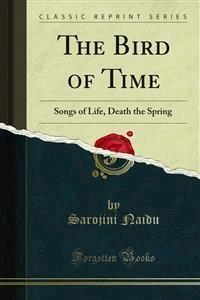
In "The Bird of Time," Sarojini Naidu masterfully weaves a tapestry of lyrical poetry that captures the essence of life, love, and the ephemeral nature of time. With a deft command of imagery and rhythm, Naidu explores themes of beauty, nostalgia, and mortality, situating her work within the broader context of Indian sensibilities in the early 20th century. The collection is notable for its fusion of traditional Indian poetic forms with Western influences, marking Naidu's contribution to modernist literature while also affirming her Indian heritage. Her use of vibrant natural imagery and emotional depth invites readers into a contemplative space, reminiscent of a bird in flight, symbolizing both freedom and the transient passage of time. Sarojini Naidu, often dubbed the 'Nightingale of India,' was a prominent poet, political activist, and the first woman governor in India. Her rich background in literature, combined with her social activism and experiences in the independence movement, heavily influenced her writing. Naidu's ability to convey complex emotions and social commentary in her poetry was rooted in her profound understanding of both Indian culture and the struggles of her time. 'ÄúThe Bird of Time'Äù is an essential read for those who appreciate evocative poetry that resonates with the human experience. Naidu's unique voice and her exploration of universal themes make this collection not just a reflection of her own emotions but also a mirror to the readers' journeys. This book will captivate anyone looking to delve into the confluence of cultural heritage and poetic innovation. In this enriched edition, we have carefully created added value for your reading experience: - A succinct Introduction situates the work's timeless appeal and themes. - The Synopsis outlines the central plot, highlighting key developments without spoiling critical twists. - A detailed Historical Context immerses you in the era's events and influences that shaped the writing. - A thorough Analysis dissects symbols, motifs, and character arcs to unearth underlying meanings. - Reflection questions prompt you to engage personally with the work's messages, connecting them to modern life. - Hand‐picked Memorable Quotes shine a spotlight on moments of literary brilliance. - Interactive footnotes clarify unusual references, historical allusions, and archaic phrases for an effortless, more informed read.
Das E-Book können Sie in Legimi-Apps oder einer beliebigen App lesen, die das folgende Format unterstützen:
Veröffentlichungsjahr: 2020
Ähnliche













The Bird of Time
Table of Contents
Introduction
At once celebratory and elegiac, The Bird of Time traces the human yearning to hold what slips away, finding meaning in the fleeting music of life, death, and returning spring.
The Bird of Time is a lyric poetry collection by the Indian poet Sarojini Naidu, first published in 1912 during the early twentieth century. Written in English yet rooted in the sensibilities of the Indian subcontinent, it belongs to a tradition of intimate, musical verse that foregrounds mood and image. As Naidu’s second volume, it arrives after the promise of her debut and showcases a more layered voice shaped by the pressures and possibilities of the period. Readers encounter poems that meditate on time and transience while evoking landscapes, seasons, and rituals familiar to a colonial-era Indian context.
Approached as an experience, the collection offers a tapestry of lyrical moments rather than a narrative, inviting readers to dwell in its textures of sound and color. The voice is supple and melodic, favoring compressed lines and vivid imagery that move from tender introspection to expansive, public feeling. Nature scenes sit alongside urban impressions and devotional atmospheres, all presented with a sensibility attentive to both personal emotion and the larger rhythms of the world. The mood shifts between rapture and restraint, suggesting a poet carefully tuning cadence and image to mirror the passage of time the book contemplates.
Thematically, the collection orbits the triad signaled by its subtitle—life, death, and spring—using the seasons’ cycle to frame human desire, memory, and renewal. Time is the prevailing horizon: it measures love’s intensity, dignifies grief, and turns the ordinary into the luminous. Mortality is not treated as a final negation but as an organizing principle that heightens attention to the present. Spring, in this scheme, is less a calendar moment than a figure for return, reinvention, and hope. Together, these motifs produce a contemplative balance, where joy and loss converse rather than compete.
Naidu’s craft reveals a characteristic fusion of Indian imagery with the cadences of English lyric traditions, yielding poems that feel at once intimate and ceremonious. Her diction tends toward sensuous detail—color, fragrance, music—without losing clarity, and her rhythmic control grants the lines a songlike lift. Refrains and recurring symbols cultivate cohesion across the volume, while subtle shifts of register allow the poems to move between public and private address. This blending of cultural texture and formal grace created a distinctive idiom for early Indian writing in English, one that remains notable for its accessibility and musical poise.
For contemporary readers, the collection matters because it articulates universal questions—How do we face impermanence? Where do we locate beauty amid change?—through a specific cultural lens. Its attention to cycle and return speaks to ecological and emotional concerns that feel immediate today, while its cross-cultural poetics model how traditions can meet without erasing difference. The voice’s tenderness offers solace, yet the poems never retreat from complexity; they invite reflection rather than command assent. In engaging with these lyrics, readers encounter an early twentieth-century sensibility that still illuminates present conversations about identity, belonging, and the ethics of remembrance.
Taken as a whole, The Bird of Time promises a rich, contemplative reading experience shaped by musical language, vivid images, and a steady meditation on transience. It asks for unhurried attention—an openness to cadence and echo—rewarding the patient reader with resonant insights rather than dramatic revelations. Without depending on narrative suspense, the book builds emotional momentum through pattern, contrast, and return, leaving impressions that linger beyond individual poems. As an introduction to Naidu’s art and to a formative moment in Indian English poetry, it remains an inviting point of entry: graceful, humane, and alert to the ways beauty and time continually braid together.
Synopsis (Selection)
The Bird of Time is a 1912 poetry collection by Sarojini Naidu that brings together lyrics composed over several years and arranged in thematic sequences. Written in English yet drawing on Indian settings, seasons, and cadences, the book surveys love, mortality, nature, folk life, and spiritual reflection. Its title frames time as a swift, elusive presence linking private emotion to public custom and landscape. Naidu’s poems present scenes, addresses, and songs that move from intimate feeling to communal voice, from city squares to sacred spaces. Without a linear plot, the collection follows a deliberate progression of moods, shaping a composite portrait of life’s beauty and transience.
The opening sequence establishes the governing motif of time and impermanence. Poems contemplate the brevity of youth and the certainty of change, setting an elegiac yet poised tone. Images of wings, tides, and stars underline movement and recurrence, while the speaker balances celebration and restraint. The language favors musical phrasing and recurring refrains, anchoring philosophical observations in concrete images of dusk, riverbanks, and gardens. This first movement positions the reader to notice cycles rather than events, so that later scenes of festival, courtship, and labor are read against a quiet awareness of passing hours. The section’s restraint gives the book a reflective, measured start.
A subsequent group of lyrics explores love alongside the shadow of parting and death. These poems adopt addresses to a beloved, invocations to night, and laments for distance, linking desire to season and scent. Symbols such as jasmine, sandalwood, and temple bells recur, giving emotional states a recognizable cultural setting. The tone alternates between rapture and farewell, treating promise and loss as neighboring moments. Death appears less as catastrophe than as a final, intimate companion, prompting vows, renunciations, and remembered vows. Through brief stanzas and chantlike cadence, the sequence connects private affection to larger rhythms, letting love’s urgency echo within time’s measured wingbeat.
The next movement turns toward springtime and renewal. Here the poems linger on color, fragrance, and sound, tracing the earth’s revival after austerity. Blossoming trees, returning birds, and lengthening light provide occasions to praise abundance while acknowledging its limits. Scenes of gardens, river breeze, and festival lamps suggest communal joy rising from seasonal change. The tempo quickens, lines brighten with simple catalogues of flowers, dyes, and ornaments, and words for music and dance proliferate. Spring does not cancel the earlier meditation on impermanence; instead, it tilts the balance toward vitality. The result is a sustained celebration of growth, fertility, and hope in the midst of flux.
A prominent section of folk songs introduces artisans, vendors, and workers whose refrains shape the collection’s public voice. The poems present sellers, spinners, boatmen, and other figures who speak about their crafts, customers, and the life stages they serve. Catalogues of wares pair beauty with function, while repeated lines create the cadence of oral performance. Through these choruses, the book shows how love, birth, marriage, and mourning are woven into daily labor. The voices are distinct yet communal, emphasizing skill, pride, and continuity. This portion broadens the canvas from personal lyricism to shared livelihood, placing social roles and seasonal work within the larger movement of time.
Urban scenes, especially those associated with Hyderabad, widen the book’s geography. Markets, courtyards, and minarets appear as settings where light, fabric, spice, and metal are displayed and exchanged. In the poem In the Bazaars of Hyderabad, the enumerative method gathers textures, colors, and sounds into a lively tableau that implies both commerce and ceremony. Domestic objects are shown alongside ornaments for festivals and rites, linking everyday purchase to tradition. The city’s bustle complements the earlier rural and garden imagery, presenting a complete social field. Here time is heard as pulse and rhythm, measured by bells and bargaining voices rather than tides or stars.
Another set of poems invokes historical and legendary memory, drawing on India’s mixed traditions of courtly love, devotion, and valor. Palace and camp appear in brief vignettes that hold exchanges between rulers and beloveds, or between past victories and present recollection. Rather than narrating full episodes, the poems crystallize moments of recognition and promise. This historical register situates contemporary feeling against a deep background of dynasty and myth, suggesting continuity across generations. Names and symbols work less as chronicles than as emblems, allowing the lyric voice to move between household, marketplace, and court. Time, here, is inheritance, carried by song, lineage, and ceremonial gesture.
Devotional pieces and prayers provide a contemplative counterpoint. The poems address the divine with requests for mercy, peace, or surrender, linking human restlessness to a quest for order. Temple lamps, pilgrim roads, and quiet thresholds recur, anchoring spiritual aspiration in familiar ritual scenes. The tone is intimate rather than doctrinal, with short lines that breathe between invocation and acceptance. Fate and free will are treated as intertwined, with the poet’s voice yielding to a larger cadence. These lyrics bring the themes of love, loss, and renewal into a spiritual frame, suggesting that time’s swift passage can be met through remembrance, praise, and patience.
The collection closes by returning to the central image of time’s bird, emphasizing both flight and song. Earlier motifs reappear—spring’s brightness, market chorus, whispered vows—now seen as episodes within a single current. The tone resolves toward calm acknowledgment rather than final pronouncement. Across its sequences, The Bird of Time presents a layered portrait of early twentieth century Indian life, composed through music, image, and refrain. Its overall message is clear: human passions and labors gain shape within cycles of season, custom, and faith, and their beauty is inseparable from transience. The book ends by releasing its images back into motion, leaving a lucid afterglow.
Historical Context
The Bird of Time (1912) emerges from the late-colonial British Raj, roughly the 1890s–1912. Its sensibility straddles princely Hyderabad, where Sarojini Naidu was born and to which many poems return, and the Presidencies and port cities—Bombay, Madras, Calcutta—linked by expanding railways and imperial trade. The collection’s bazaars, festivals, and shrines evoke Deccan and North Indian locales under layered sovereignties: the Nizam’s dominion in Hyderabad alongside districts under direct Crown rule after 1858. Industrial imports from Lancashire and Manchester pressed Indian artisans, while municipal modernity—electric lights, telegraphs, cantonments—coexisted with feudal courts and religious processions. Composed in English yet saturated with Urdu, Persian, and vernacular motifs, the poems frame a society negotiating empire and tradition.




