


6,99 €
Mehr erfahren.
- Herausgeber: No Exit Press
- Kategorie: Krimi
- Sprache: Englisch
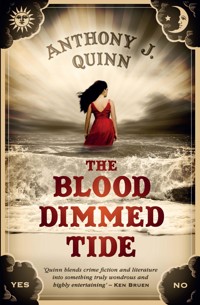
London at the dawn of 1918 and Ireland's most famous literary figure, WB Yeats, is immersed in supernatural investigations at his Bloomsbury rooms. Haunted by the restless spirit of an Irish girl whose body is mysteriously washed ashore in a coffin, Yeats undertakes a perilous journey back to Ireland with his apprentice ghost-catcher Charles Adams to piece together the killer's identity. Surrounded by spies, occultists and Irish rebels, the two are led on a gripping journey along Ireland's wild Atlantic coast, through the ruins of its abandoned estates, and into its darkest, most haunted corners. Falling under the spell of dark forces, Yeats and his novice ghost-catcher come dangerously close to crossing the invisible line that divides the living from the dead.
Das E-Book können Sie in Legimi-Apps oder einer beliebigen App lesen, die das folgende Format unterstützen:
Veröffentlichungsjahr: 2014
Ähnliche
















THE BLOOD-DIMMED TIDE
London at the dawn of 1918 and Ireland’s most famous literary figure, WB Yeats, is immersed in supernatural investigations at his Bloomsbury rooms.
Haunted by the restless spirit of an Irish girl whose body is mysteriously washed ashore in a coffin, Yeats undertakes a perilous journey back to Ireland with his apprentice ghost-catcher Charles Adams to piece together the killer’s identity.
Surrounded by spies, occultists and Republican rebels, the two are led on a gripping journey along Ireland’s wild Atlantic coast, through the ruins of its abandoned estates, and into its darkest, most haunted corners. Falling under the spell of dark forces, Yeats and his novice ghost-catcher come dangerously close to crossing the invisible line that divides the living from the dead.
Author
Anthony Quinn is an Irish writer and journalist. His debut novel Disappeared was shortlisted for a Strand Literary Award by the book critics of the Guardian, LA Times, Washington Post, San Francisco Chronicle, and other US newspapers. It was also listed by Kirkus Reviews as one of the top ten thrillers of 2012. His short stories have twice been shortlisted for a Hennessy/New Irish Writing award. The Blood-Dimmed Tide is the first in a series of three historical novels set in Ireland during WWI and the War of Independence. He lives in County Tyrone, Northern Ireland.
Critical Acclaim
Praise for Anthony Quinn’s Disappeared
‘A major piece of work. Eerily tender, a wonderfully wrought classic that is a landmark in the fiction of Northern Ireland… Line up the glittering prizes of mystery. This one is going to take ’em all’ – Ken Bruen
Other Books by Anthony Quinn
Disappeared
An Inspector Celcius Daly Mystery
Title
The Blood-Dimmed Tide
ANTHONY QUINN
NO EXIT PRESS
DEDICATION
For John Paul and Kerri-Louise Quinn –
Little brother, shining bright,
Now I look up to you
‘The hills shall be torn down, and the sea shall have red waves, and blood shall be spilled, and every mountain valley and every moor shall be on high, before you shall perish, my little black rose’
Anonymous Gaelic Poet
Upon Attending a Séance
IF it is your wish to mingle with the denizens of the spirit world, you must begin by discarding any preconceived notions you might have about our ghostly companions. Firstly, it is incorrect to believe that they float in a state of radiant enchantment, or that they experience no suffering in their ethereal realms. Their world is riddled with just as many labyrinths of love and hate as ours, and is governed by the same unfulfilled longings and restless fears that afflict the world of the living.
More importantly than this, to make contact with a ghost you must be prepared to relinquish the very idea of your own existence. For most seekers, everything exists because they exist. They believe that whatever they see and whatever they hear must be real, and thus, conversely, that what they cannot see or hear must not be real.
Instead, you should adopt a view of the world based upon your non-existence. Then you might hear or see things as surprising as a field of rainbows bursting from a darkened sky.
In fact, with the correct training in the rituals of the occult, it is possible to guide your mind through the gates of forgetting that separate this realm from the next. Only then will you see that we are all wandering spirits, overcrowding a dark continent of emptiness, and that our fears and longings are so numerous they intermingle with those of the dead.
1
Ireland, November 1917
Ace of Pentacles
A ROUGH hand grabbed the captain’s shoulder and shook him from a sleep so disturbed it was worse than no sleep at all. The sentry shone a lamp in his eyes and urged him to get dressed at once. He jerked awake with a gasp and cursed, but right away sensed there was danger. The night terror he had tried to shake off had left his reflexes jagged and tense, but his mind felt sharp. Beyond the round flare of the lamp, he detected the sentry’s presence, a pool of interrogating watchfulness in the dark.
He shielded his raw eyes. ‘Damn it, man. I can’t see a thing.’
The lamp swung away from his face, and its holder became a single reeling shadow moving about the room. He swung his legs out of the narrow bunk with a grunt. The sentry’s stench of sweat and stale alcohol climbed up his nose and distracted him as he fumbled putting on the uniform. He cursed again. In his haste, he had poked his big toe right through a hole in one of the socks, tearing the darned patch he had sewn on the previous night. Breathing heavily, he fumbled in a drawer for a fresh pair.
‘You haven’t got time’, warned the sentry.
‘Of course I have time’, he replied, but he hurried as quickly as he could.
When fully dressed, he searched out his revolver and thrust it under his shirt. The cold press of its muzzle against his flesh made his heart gulp. It had been months since he had experienced the chilling sensation that someone might soon try to kill him.
The sentry held the lamp before him as they made their way down the steps of the lighthouse, the boards creaking beneath their boots. In the courtyard, horses and men were hurtling back and forth in the darkness. At first, the captain thought the encampment itself was under attack but then he heard a soldier shouting about gun smugglers on the beach at Blind Sound. A look-out posted to the beach had spotted the hulk of a dark object that might have been a German submarine breaking through the waves.
Without hesitation, he took the lead, checking the men had their weapons and bayonets drawn. He waved his revolver confidently in the air and marched them along his preferred route to the beach, avoiding roads or laneways. He tried to show them how fearless he was, and he hoped they believed him. In reality, he walked with great wariness, worried that an ambush might spring out of the darkness at any moment.
They felt the Atlantic before they saw it. After the storm, the air was surprisingly quiet, and so still that a thick mist formed around them, soaking their faces and uniforms. Through this aerial sea, they crouched forward. Dogs barked at them from nearby farms, but soon the deafening roar of the Atlantic drowned out all other sounds. By the time their boots sank into the soft sand at Blind Sound, the fog had soaked their tunics, their trousers, even their socks.
Crawling to the top of a dune, the captain stared into the darkness but was unable to see anything. Hesitation now could get him and his men killed, he thought. However, he stayed there, proposing and rejecting various scenarios that might be occurring along the enshrouded coast, waiting for the fog and darkness to peel away and reveal God only knew what. The slow fury of the crashing waves sent shivers down his spine.
In many ways, Captain Thomas Oates felt as though he had run aground on this remote shoreline, marooned for more than a month in a spooky lighthouse with restricted sunshine, food and company and a ramshackle band of men under his command − an unpleasant interlude in his soldierly career. Withdrawn on health grounds from the front line in France, his new posting consisted of inspecting coastal defences and studying sea-charts and timetables to ascertain when and where an invasion or a gun-smuggling operation might occur. There was an added urgency to his work since the interception of Sir Roger Casement the year before on a U-boat stocked with weapons intended for the Easter Rising. Casement, a British consular officer turned Irish Republican, had been subsequently stripped of his knighthood and hanged for attempting to organise aid for the Irish rebellion.
The Admiralty had billeted him to the lighthouse and assigned him a reserve force drawn from the local fishing families. They had not known he was afraid of the sea. Not once had his commanders asked him about his relationship with open water. Ever since his childhood, the sea had been a place of wild creatures, whirlpools and treacherous currents, the coast a final frontier bordering a continual shifting of directionless masses of water. Land was solid, safe, negotiable, while the sea was everything else.
At first, he spent his days in the upper room of the lighthouse poring over sea charts and coastal maps, rather than face the reality of nature. Sometimes he played bridge or wrote letters home. Through the window, he watched the distant sea, the gun-grey waves rising and falling, the surf forming on the strand like the heavy, curling moustaches of the warmongering generals he’d left behind in France, but who still invaded his dreams.
The autumnal storms came, and the sea turned black as tar, flecked with steepening eddies of white. On the clear mornings after the storms had spent themselves, it shone with an exuberant bottle green colour, the breaking waves mutating into sparkling crystals of light.
Eventually loneliness drove him to explore the coast, but despite his best efforts, his solitary trips were always inconclusive. The mist or the rain, the steep cliff precipices and tumbling rock, or the irregular tidal currents would eventually drive him back to the comforts of the lighthouse.
He doubted that if the Germans did arrive in a U-boat he would be able to catch them in time. There was too much sea, and it was always on the move. Keeping even a small patch of the coast under observation was like trying to hold in the mind’s eye the twirling movements of a large flock of agitated birds. Nor did he trust the local men in his battalion, the sullen-eyed fishermen and sailors who looked prepared to abandon the lighthouse camp at any moment for a hazardous boating adventure. It was true that they obeyed his orders; they also acknowledged his professional expertise in handling guns and organising patrols, but that was as far as they seemed to trust him. Whenever he joined them for tea or cigarettes, their eyes would fill with suspicion and coldness. Deep down he had the unshakeable conviction that if he went out to sea with them, they would tie him up and tip his struggling body overboard.
His band of men melted in and out of the mist; in the stillness, their disembodied eyes waited, watching his every move. He listened carefully to the Atlantic, fearful of missing a telltale sound amid the booming of the waves. Although last night’s squall had long since expended itself, the swell at Blind Sound might continue stubbornly for days. He had learned from his observations that the sea was at its most fickle along this particular part of the coast. Even the fishermen refused to row their boats there, believing that witches and malign spirits haunted the waves.
He had studied the sea’s movements in the bay for weeks, and been baffled by the behaviour of the waves. He had walked the beach from end to end, marking the tide levels at different phases of the moon, and following the passage of seaweed on the currents. The closer he observed the sea’s behaviour the more confused he became. Sailors and fishermen knew that time and tide were synonymous, and that the year’s calendar could be plotted by the familiar rhythm of tidal stages and currents. However, the tides at Blind Sound were labyrinthine in their complexity. At certain times of the day, they seemed to fall under a spell and flow against the direction in which they normally travelled. Sometimes in barely perceptible currents, at other times in very rapid ones. He also noted that when the wind blew from the north, the water in the bay emptied, like bath water suddenly going down a drain. Equally, the time of high-water was vague and changeable, suggesting that the fundamental routines of nature had somehow come unstuck.
One evening his observations were interrupted by the sight of a servant girl from Lissadell House wading out half-naked into the cold sea. He noted how her dark hair unfurled in the water behind her, and that she strode into the waves with an air of confidence rather than discomfort. After half an hour in the water, she returned to the beach, dressed, took out a pocket watch, and wrote for a while in some sort of book, before making her way back along the coast to the winking lights of the estate.
On successive nights, he kept finding her in the same bay, waist deep in the sea, as though trapped in the maze of shifting currents. It sparked his curiosity to see that she, too, seemed fixated by the movement of the tides, exploring their changing ebb and flow, searching for their withheld secret. He watched her make notes and record the time after each of her swims.
He felt a strange sense of ownership over Blind Sound’s shifting tides. They were his puzzle, not the servant girl’s. What was the reason behind her curiosity? What made her wade out so fearlessly night after night?
It seemed the bay held a mystery neither of them could escape.
A silvery plume rose over the sea, not more mist but the breaking of day. For a few moments, the fog dissolved and the captain had a clear view of the beach, the broad sweep of silver sand, empty of life, and a chain of breaking waves. He took out his field glasses and spied a dark, rectangular object, strangely still in the long swells. It might have been a basking shark, exhausted by its long journey north, or a capsized boat, but an undertow of fear made him worry that he was mistaken and that it was indeed an enemy submarine. He waited for something to happen, but the panorama of ever-breaking surf remained unchanged.
‘Have we any reports about a boat sinking?’ he asked the sentry.
‘No. None at all.’
‘The weather has been hellish, and the currents in the bay erratic. It could be an old wreck dredged from the sea-bottom.’
‘What shall we do?’
Abruptly, the fog sneaked up behind them again, enclosing them in its frog-spawn greyness. The beach became a hazy blur, and then vanished.
An invisible sense of churning chaos floated before them.
‘Let’s wait for the fog to clear.’
However, uncertainty gnawed at the captain. He stared at the men but they seemed patient, content to wait. After all, they were fishermen and used to long lonely nights. Through the suspended moisture, their faces looked pale and bloated, like near drownings.
‘Are you a reader of poetry, sir?’ the sentry asked him.
He hesitated. The literary question had wrong-footed him.
‘Yes,’ he replied, eventually.
‘Then you will have heard of William Butler Yeats. His mother’s people were the Pollexfens of Sligo. He used to frequent this beach to compose his poems.’
‘I’ve read TheLake Isle of Innisfree.’
One of the younger men spoke up. ‘They say Mr Yeats is a magician as well as a poet. And that he can be carried five miles in the winking of an eye.’
Another replied, ‘It’s also said the Pollexfens’ blood is infected with madness.’
‘I’d call into question his magical powers,’ said the sentry. ‘The last time Yeats visited Sligo he took a rowing boat to search for his beloved isle of Innisfree. He rowed the entire day and half the night, but couldn’t find any trace of it.’
The men laughed mirthlessly.
The captain turned away and stared at the mist. At first, it seemed to swallow up the daylight, but then the rising sun won through. He lifted his field glasses and surveyed the beach. He watched the sea flicker with breaking surf. It was a view of intensely flickering moments, but at the same time oddly peaceful. The dark outline he could not make out in the fog was now revealed in daylight. It was a black hexagonal shape that could only be a coffin, strangely riding the breaking waves. He paused and saw the men glance anxiously at each other.
‘It’s going out again,’ shouted the sentry. ‘The storm must have lifted it from an old wreck.’
The coffin slid back into the waves, a black diamond disappearing from view.
Following the captain’s command, the men spilled down the dune and clambered into the sea. They waited for the gathering surge of the next wave to wash over the coffin, and then they circled it. In the slack water it floated towards them, battered and leaking, the dark wood decaying in places. On a heavily rusted brass plate the captain made out some words and a date: Body Unknown, Died at Sea, 1889.
The men began hauling the coffin, but the sea seemed to grow angry at their efforts. It sent a huge wave sweeping over them, dragging the coffin back into its hungry mouth. The men struggled to keep their footing against the pull of the retreating water.
After a few minutes, the coffin broke the surface again as if coming up for air. Unexpectedly, the life went out of the sea. The waves collapsed into a sizzling froth, leaving the coffin floating in a pocket of calm jade. The men waded in, grabbing the coffin and rising as one, heaving it up the beach.
They were barely halfway across the sand when a shout of pain rose from one of the men in front. His boot had caught against a rock. He went down like a sack of spilled rice, tipping his corner of the coffin onto a jagged reef. The worn wood creaked and groaned but held together. The men raised the coffin again, and this time the captain walked behind, checking their progress.
After a few yards, he made them stop. A strange sound came from within the coffin, as though a set of fingernails were scratching the wood. Now that they were beyond the roar of the sea, the sound grew more distinct. He leaned closer to the coffin’s damaged corner and listened carefully. He realised the sound was too regular to be that of a living thing. Something mechanical and frail, a gadget of some description, constantly scraping out a message, a code, with the same two sounds. He paused, realising what it was. An icy finger of fear touched his heart. A clock or a pocket watch, he thought. Still ticking, still telling the time. But what was it doing inside a twenty-year-old coffin?
‘Set it down and open the lid,’ he ordered the men.
Their rifle butts made a dull, sickening noise colliding against the metal clasps, gouging the wood. They kept hitting, harder and harder, until the clasps clattered free. The sentry lifted off the lid and they all stood back in surprise.
The captain smelled a combination of the ocean’s salt, rotting sea creatures and a stench of death that drove deep into his nasal passages. The chamber within was lined with disintegrating velvet upon which lay the slim body of a woman in a dress, her face covered in a black hood decorated with a hem of red and black roses. He removed the hood. It was a real face staring lifelessly upwards. Not the face of a nightmare or a decomposed corpse but that of a pretty young woman. From a fold in her dress, a pocket watch slipped out. It had Roman numerals and a moon face on the front. The captain checked his own watch and noted that its time was accurate.
‘Dear God,’ said one of the men. ‘It looks like Rosemary O’Grady. I danced with her two nights ago.’
The sea seemed to move far away, stunned by the sight of the dead girl. The roar of the waves receded. The captain’s eyes swam over her body. Blood had seeped from wounds to her hands, dark red rents in her translucent skin. He had also seen her, a few nights previously, wading out with strong strides into the sea. It was the servant girl from Lissadell House. A feeling of deep unease made his stomach queasy. What was he to do now?
Minutes passed. No one moved. The sound of the pocket watch filled the air.
‘Suffocated in the coffin or murdered first?’ asked the sentry, lifting a perplexed expression to the captain.
‘The slash marks to her hands might suggest suicide,’ he replied, avoiding looking at the girl’s face.
‘Suicide or signs of resistance?’ The sentry squinted at her bloated hands.
‘Suicides and murder victims aren’t generally found in coffins.’
‘Coffins aren’t generally found washed up on beaches.’ He glanced at the captain. ‘An inexplicable tragedy.’
‘We’ll have to leave the body here for the police.’
‘We can’t leave it here like a piece of driftwood.’ This time he stared into the captain’s eyes. ‘We should take her to the priest and have her body blessed.’ Gone was any trace of the deference he should show to a superior officer.
‘You shall do whatever I say.’
The sentry’s dark eyes emptied as the captain pulled out his revolver and levelled it at him.
2
Ace of Rods
IT was because of an eccentric Irish poet residing in London during the third year of the Great War that I became a ghost-catcher, a post that had me alternating my evenings between titled hostesses’ dinner parties in Mayfair and Chelsea, and hushed séances in the grimy parlours of the capital’s more humble streets. Both worlds had their own ingrained horror. At that time, London was in the throes of a supernatural paroxysm. While gigantic towers called skyscrapers soared into the air one after another in bright cities on the other side of the Atlantic, across the English capital fantastic energies were equally at work, only on a more ethereal plane. After more than one thousand days of war, grieving wives and mothers were turning in their droves to séances and a host of different spiritualist movements, searching for messages from their lost husbands and sons.
Less than seventy miles away in France, men with grimy uniforms exhaled their final breaths in foxholes and filthy burrows, while back home lights were dimmed in sitting rooms as anxious relatives took up their listening posts. Mediums, mesmerisers and hypnotists emerged from the back-streets with all manner of theatrical props: Ouija boards, moving tables, listening trumpets, mysterious lights, magic lanterns and crystal balls, all to help the population confront its grief and feed an insatiable desire for contact with the otherworld.
London at the dawn of 1918 was a city burdened with grief, while I was a twenty-four-year-old medical student given that rare chance afforded to unhappy youth, the opportunity to follow someone who believed in the extraordinary. After studying the human body and all its known diseases for three years at the city’s University College Hospital, I longed for the magical simplicity with which I had seen things at the age of five. I mourned the ignorance I had left behind and all that I had barely understood before my world had been blinded by the rigours of science and all its enshrined explanations of the universe.
The object of my devotion, my leader in this spiritual quest, was a celebrated poet and mystic, who at that time presided over a shambling crowd of artists, spiritualists and mediums that congregated in the dusty halls of the British Library and drab clubs along Kingsway.
I had grown tired of my fellow students and their indifference to the mysteries of life, heartless men who would never learn to see that life was magical, so obsessed were they with their material possessions, their occupations and their expectations of city life. So when this free-thinking genius of an Irishman spoke one evening in a university reading room and described how it was possible for the mind to travel through space without leaving the body, that he had observed dark towers and the bodies of holy men and women adrift in the air, that the stars and the phases of the moon told secret stories of the human heart, and that our spiritual companions floated beside us in an aquamarine sea of ether, I seized the chance to pledge myself to his secret society devoted to the occult. I had witnessed enough bodily suffering. Instead, I wished to feast on the beautiful terrors of the invisible world.
My days at University College had been numbered since the death of my close friend, Issac Wilson, during an end-of-term examination. He had complained to me of nausea beforehand but had dismissed it as indigestion, utterly unaware that it was a warning sign of a heart attack, and that he was about to die. His last memory of this life was of a stuffy university hall, the afternoon light shuttered by heavy curtains, the scratch of pens churning out the lurid horrors of human disease and decay. I wondered how unhappy his dying senses must have felt with what he could still see and hear, and then it struck me that perhaps he had felt the opposite, perhaps he had experienced happiness at his release from this silent suffocation.
For several nights after Issac’s funeral, I awoke in a cold sweat to see the figure of my dead friend standing at the foot of my bed, gazing at me with a melancholic smile. In each of the visitations, he raised a glass of wine and toasted the disappointments and defeats of the life that lay ahead of me, the mistakes I would make, and the ignorance of my heart. The note of tenderness in his ghostly voice did not reassure me; in fact, it terrified me. In the weeks that followed, I was afflicted by fainting fits and night terrors. I tried to get a grip on myself, but found it impossible.
I saw the tragedy of the professional life Issac had managed to escape, where everything loses its originality and repeats itself from day to day. From that point on, I began to regard my professors as men who had lost their vitality and curiosity, a school of scientific fanatics, who made their students’ lives unnecessarily tedious and dry in the name of intellectual advancement while secretly serving their own vanity and conformity. I began to labour against the taboos that restricted the range of permissible enquiries within their laboratories and tutorial rooms, the institutional inertia that imprisoned our imaginations and stifled creativity.
I stopped going to my lectures and began researching the existence of ghosts, and the possibilities of the human spirit travelling on astral planes. One day in the British Library, I stumbled upon the vast literature that underpinned occult societies such as the Order of the Golden Dawn. My reading of how the Christian Cabbala and Eastern religions had traced the pathways between the individual consciousness and the cosmos appeared to support the ideas that I was developing through my own private experiences. The hunger to explore life’s greater mysteries became so intense that it gnawed at my insides, but my professors dismissed my interest in the spiritual world as an excess of youthful morbidity, and an unfortunate waste of my intellectual talent.
‘Why do you want to study ghosts, Mr Adams?’ they asked. ‘Is it to evoke the memories of those you mourn?’
I told them it was to help formulate a theory of life and death, one that might marry scientific research with the latest discoveries of psychic phenomena, but secretly, in my heart, I carried a more selfish desire. I wanted a great adventure, to take a gamble in life, to gain secret knowledge of the universe and the human heart, not by the well-worn path of scientific study, but by walking the bridge that joins the visible world to the invisible.
This was how on the 12 February 1918, I and Edmund Dulac, the painter and fairy tale illustrator, came to be hurrying after the tall, animated figure of William Butler Yeats, as he dissolved into the murky vapours of a freezing London evening. Perhaps it was my overheated imagination, but I believed I could detect the sound of invisible wings beating around us as we hastened along Holborn Street.
A thick fog had descended over the city’s great river and its environs. Dimly lit lamp posts loomed before us like the blackened stumps of trees in no-man’s-land. The clatter of cantering hooves sounded close by on cobbles, but their source was invisible. Even the dogs we met were huddled together for comfort. I ran ahead of Dulac, anxious that the poet might disappear through a door into a mystical world and leave us behind in a city that in its grief had succumbed not just to fog but to a collective blindness.
However, Yeats walked faster than I had ever seen any person walk, so fast he seemed more a wraith than a man. He did not need to consult a map. He seemed to know the murky side streets of the city the way a boat’s navigator knows the backwaters of a river. He knew by instinct where the dark banks of houses twisted left or right or plunged completely from view into rubbled wasteland or rat-infested marsh. For him there was no fog, just a bright sense of his own elation as he hurried towards his destination.
We struggled desperately to stay up with him, especially Dulac, who was neither lean nor tall, but the mist kept congealing around Yeats’ shadowy figure.
He stopped repeatedly, but as soon as we caught up with him, he would take off before we had time to catch our breath.
‘Stay with me, Charles and Edward,’ he shouted.
The frenzy of the supernatural pursuit had entirely consumed his patience. He had the look of a man prepared to knock on every door in the city in search of a portal to the otherworld.
Our eyes led us towards the myriad lights of Regent Street, but out of the darkness, Yeats shouted ‘no, not that way’, guiding us down through Edgware Road and its rows of trees coiled with fog. He stopped and regarded us with his elegant, gaunt features. Spidery shadows of twigs and branches formed a tapestry on his face. I realised he had left the house in such a haste he had forgotten his hat.
‘This is not the time or place for a leisurely stroll’, he said, his face wearing a wounded look, as though we had disappointed him.
Dulac complained that Yeats was moving too quickly for his less athletic companions. ‘One who is born in mist always feels most at home in it,’ he grumbled, referring to the poet’s cherished Sligo childhood.
Instantly, Yeats’ scowl vanished, and a smile returned to his soft mouth. He stared at us with amusement.
Dulac pleaded with him. ‘Talk to us about the joys of married life and give us half a chance to get a breath.’
A few months previously, the poet had married Georgie Hyde-Lees, after a whirlwind romance spurred on by the rejections of his lifelong love and muse Maud Gonne and her twenty-three-year-old French daughter, Iseult Gonne.
‘A case of young love,’ said Yeats with a glint in his eye. ‘Georgie has miraculously helped me recover my youthful bloom.’
A foggy London night can make acquaintances feel as though they have been known to each other since boyhood. The open look in Yeats’ eyes gave me courage to pry further.
‘But what of your greatest muse, Maud Gonne?’
‘Sadly our paths diverged the more I became involved with the occult.’
Something in Yeats’ soul seemed to have opened. His face looked suddenly vulnerable, in spite of his superior age and position in society.
Dulac pressed further. ‘If it had not been for your spiritual investigations, would she have agreed to marry you?’
‘I’m not sure,’ replied Yeats. His shoulders slumped a little and his chest shook slightly. ‘My worst failing in life has been my timing. When I finally gathered the boldness to propose to Maud, it was already too late. For three decades, I have kept my passions fixated on her classical beauty, in the belief that by limiting the number of women who arouse me, I might eliminate the potential sources of frustration. But Maud’s charms have weighed heavily on me, trapping me in a trance of longing. Now I look back on all those years of restraint and wonder why? At the age of fifty-two, am I finally discovering the excesses of youth?’ He waved his hands helplessly. ‘Maud was right. If we had married, it would never have worked for either of us. We only understand life when we find our true spiritual soulmate.’ A volume of condensed air erupted from his mouth in a sigh of frustration. ‘Anything can be endured if that is the case.’
‘And have you found yours in Georgie?’
‘That is a question I mean to ask the spirits tonight,’ he said, and then he was off again, lurching into the fog, leaving Dulac and myself surrounded by closing walls of opalescent grey and our own muffled breathing.
The fog instantly absorbed the poet’s retreating footsteps. Unable to distinguish much in our surroundings we ran blindly after him.
A few minutes later, the sharp sound of someone knocking at a door brought us back to our bearings and senses. We were at a rundown terrace in a side street somewhere behind the culverts and warehouses of Spitalfields, the sort of street where no gentleman should allow himself to be seen, especially at night. The fog cleared just enough to reveal Yeats’ tall figure standing at a door, a light from within illuminating his face.
‘Where is the spirit room?’ we heard him ask in an urgent whisper.
‘Follow me,’ replied a woman standing in the hallway. She was tall, and dressed in a simple black gown. We followed the poet into a hall dominated by a wrought iron stairway. The shadows inside were different from those on the fog-bound streets. Unattached. Transient in the flickering gaslight. They appeared to have a life of their own as we followed the woman up the stairs. The rooms we passed were empty of human life and so quiet we could eavesdrop on the rest of the terrace. Through the walls we heard the voices of defiant children and scolding women running their impoverished households with shouts and slammed doors.
The woman led us into a room on the third floor and sat us at a table lit with candles. She wore no make-up and no jewellery apart from a metal cross with a cluster of red gems in the shape of a rose. Her hair was the colour of polished silver and tied up without a single loose strand.
We followed the sceptic’s precautions of not giving our names or asking for any particular spirit. Yeats offered to use his set of mystical cards to clear the room of any negative influences, but the woman declined.
On the table before us lay a case made of Moroccan leather. A set of small phials nestled within, containing, I suspected, laudanum. Dulac leaned forward enthusiastically and drank from one of the bottles.
‘You’ll find that incense is not the only ingredient essential to supernatural evocations,’ he whispered, handing me the phial. I accepted it only because of a hidden fear that if I declined I would somehow reveal myself as an impostor. I tasted a drop before handing it back to Dulac, who looked pleased to be reunited with it.
Yeats sipped from the remaining bottle, and then dabbed his lips with a silk handkerchief, as if feeling for blood. ‘My Dublin doctor has advised me to avoid liquid opium,’ he explained. ‘It brings me out in spots.’
The medium watched us in a direct manner that was not without a measure of scorn. She reminded me of a schoolmistress from my early school days, sitting ready with a ruler to rap the knuckles of a misbehaving attendee.
‘It is best not to react to the spirits in any visible way, especially by flinching,’ she instructed us. ‘If possible keep your face blank and stiff. There is nothing they like more than inflicting fear, and we should deny them that pleasure, whenever possible.’
We stared at her still, sombre face.
She continued: ‘Don’t be afraid. The spirits may be unpredictable but they possess such a limited range of behaviours they are easy to control and dismiss.’
‘I hope you don’t mean to toy with our ghostly companions,’ complained Yeats. The note of annoyance in his voice stopped her in her tracks.
‘Why not? Don’t they toy with the living?’
‘How do we know you’re not toying with us?’
‘For the séance to work you must assume the medium is honest.’
‘As a psychic investigator I must assume the spirits are telling the truth, but that mediums are prone to lying and fabrication.’
What Yeats said was sadly true. Every new medium was a thorn bush he approached with caution. Drawing on three decades of research into the paranormal, he had concluded that many mediums were charlatans, witting, or not, and that most of the messages they conveyed belonged to the meaningless babble of the subconscious.
‘If you are here as an investigator then I have to ask permission,’ said the medium. Anger had crept into her voice.
‘Permission?’ repeated Yeats.
‘You will need permission to ask your questions. If you wish to open doors that are not normally opened at séances.’
Yeats acquiesced. ‘I thought that was the whole purpose of séances – to ask questions of the dead, but go ahead, if you must.’
Carefully, the woman settled her hands on the table as though they were ears pressed to the chest of a loved one. A rumbling voice began not in her throat, but in her body, a humming growl, like a voice buried deep underground, like the blood I could hear thumping through my veins. All the time she stared straight ahead with eyes so lifeless they looked as though they had been painted on her lids. Yeats lit a cigarette and found an ashtray. He conveyed the impression that he was bored to distraction.
After ten minutes the mumbling stopped.




