


Erhalten Sie Zugang zu diesem und mehr als 300000 Büchern ab EUR 5,99 monatlich.
- Herausgeber: One Media iP Group
- Kategorie: Geisteswissenschaft
- Sprache: Englisch
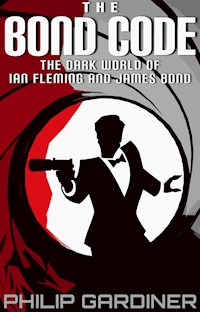
The Bond Code is the remarkable story of how Fleming's association with the occult world led him to create a masterful series of clever clues, cyphers, and codes within his books. Philip Gardiner finally unravels the secret of James Bond piece by piece from the novels and films used to create his aura of mystique. This book not only introduces new material but also radically reappraises everything we thought we knew about Bond - and his creator.
Sie lesen das E-Book in den Legimi-Apps auf:
Seitenzahl: 350
Veröffentlichungsjahr: 2023
Das E-Book (TTS) können Sie hören im Abo „Legimi Premium” in Legimi-Apps auf:
Ähnliche






The Bond Code
The Dark World of Ian Fleming and James Bond
by Philip Gardiner
Table Of Contents
Introduction 6
Alchemy 7
The Influences: 8
The Bond Code: 9
Notes 11
Chapter 1 – Ian Fleming 13
Chapter 2 – The Bond Novels 17
Casino Royale 17
Live and Let Die 18
Moonraker 20
Diamonds Are Forever 21
From Russia with Love 22
Dr. No 22
Goldfinger 23
For Your Eyes Only 23
Thunderball 23
The Spy Who Loved Me 24
On Her Majesty’s Secret Service 24
You Only Live Twice 25
The Man with the Golden Gun 26
Notes 27
Chapter 3 – Early Days Influence 28
Notes 32
Chapter 4 – Paracelsus and Gnosis 33
Chapter 5 – The Lecture 38
Carl Jung 38
The Gnosis of Sophia 39
The Lecture 42
Chapter 6 – The Occult – That Which is Hidden 45
Goldeneye 47
Dame Edith Sitwell 50
Notes 59
Chapter 7 – Influences 61
Mani 61
The Name – James Bond 62
The Serpent 63
Collections 64
The Prisoner 66
Notes 69
Chapter 8 – Bond Holiday 70
Notes 72
Chapter 9 – More Influences - Spirit 73
Sex 76
Notes 78
Chapter 10 – People 79
Carl Jung 79
Paracelsus 81
Dame Edith Sitwell (1887-1964) 81
Sybil Leek (1922-1982) 82
Dr John Dee (1527-1608) 83
Sax Rohmer (1883-1979) 85
Aleister Crowley 87
Maxwell Knight 88
Other Influences 89
Notes 90
Chapter 11 – The Bond Code in Names 91
Mr Big 91
Baron Samedi 91
Hugo Drax 92
Auric Goldfinger 92
Ernst Stavro Blofeld 92
Marc-ange Draco 93
Scaramanga 93
Miss Solitaire 93
Felix Leiter 94
Vesper Lynd 94
Gettler 94
Tiffany Case 94
Pussy Galore 94
Darko Kerim Bey 94
James Bond 94
Mark of Cain and Shaman 95
Q and 007 95
Universal Exports 97
Notes 97
Conclusion 98
Didymus 98
Appendix 100
Terms and Titles 100
Notes 109
Appendix 2 110
The Secret Code of Da Vinci 110
The Da Vinci Code Fiasco 110
Priory of Sion 110
Sang Real 111
Leonardo da Vinci 111
Did Jesus and Mary marry and have children? 112
Bildebergers 115
Appendix 3 119
Snakes and Serpents – the Historical Role 119
Ankh 119
Sistrum 121
Birds 121
Dove 122
Celtic Knotwork and Other Symbols 123
Spirals and other Rock Art 124
Swastika 125
Taautus (Taut) 126
Appendix 4 128
Sir Arthur Conan Doyle 128
Notes 129
Appendix 5 130
Seven and More Codes 130
Notes 135
Bibliography 136
Introduction
“When you make the two one, and when you make the outside like the inside, and the above like the below; when you make the male and female as one, then you will enter the kingdom of God.” Gospel of Thomas.
It was winter and the nights were long, dark and cold. There was nothing better to do on this particular night than to escape into the world of film with a cup of tea and a biscuit. There was a revival of all things James Bond on the television and in the newspapers, and being a child of the Bond period I sat back and enjoyed a couple of back to back films.
I rarely watch television, but sometimes, regardless of what one may think about mind manipulation, commercials and propaganda, it’s nice to relax. At the time I had just finished writing The Ark, The Shroud and Mary and my mind was once again full of the world of the esoteric, Gnosticism and the occult. For those who know nothing on the subject, let me explain:
The word esoteric is simply that knowledge or enlightenment gained by the initiated or educated. It is most often used in relation to secret societies or metaphysical subjects, where a special or different kind of knowledge is implied – the knowledge of truth, of self and of balance. The knowledge passed from adept to initiate, from master to pupil, or even as some would believe from higher beings to humans, is that of the esoteric. In Greek it is eis, meaning ‘into’ or ‘within’ and so the knowledge is that which is gained from within oneself. In this way it is the knowledge or gnosis spoken of by our ancestors and is at the heart of all mystery religions.
Again, with the word occult we have a knowledge hidden from the profane. Strictly speaking it is not the knowledge of the supernatural as popularly believed, instead it is simply a knowledge that is hidden, because most cannot see it. Generally this was a knowledge base kept from public view because the Church would use terms such as heretic for those who followed the belief that God was within oneself. It was not so long ago that the adept, Eliphas Levi (19th century) was imprisoned for stating such things and so the freedom we have today is a precious and valuable commodity not often known in the history of man. If the masses were to come to the understanding that all they really needed to do in their spiritual life was discover their own self, the intuitive connection to nature and therefore the Divine within each one of us, then the tithes and will offerings would cease and the power of the Church would crumble. As it was, and still is to a large extent, the Roman Empire was reborn within the Catholic Church and so the religion was more about maintaining and growing a power base, rather than liberating the mind and soul of man - it was more about controlling and trapping.
There is a great deal more in my other books about these ancient thought processes and I do not wish to repeat myself unnecessarily, but the golden seed of thought has been planted in our minds at the outset of this book, as it needed to be. For what we are about to embark upon is a tale of profound modern occult thought. It is occult, because everybody has missed it, and yet the words and images were placed before us – seen and yet unseen.
These tales of esoteric knowledge were in the past placed firmly into fictions such as those surrounding the search for the Holy Grail, or Robin Hood. Fiction was a wonderful device for hiding truth from those who would kill heretics, and it remains so today. There are a great many statements made in modern fiction. The (Wonderful) Wizard of Oz, the book and to a large extent the film, was a statement about the power politics of the world and was released in the same period Eliphas Levi was being imprisoned. It may also be said that the silver slippers (changed to ruby in the film) and the yellow/golden brick road journey could be allegories for the alchemical journey.
It was into the world of this early twentieth century that Ian Fleming, the creator of James Bond and the child’s book, Chitty Chitty Bang Bang was born. And this leads me back to that dark winter’s night coiled up on the sofa with a cup of tea and my wife. I was watching Live and Let Die with Roger Moore as the famous spy and Jane Seymour as the beautiful Bond girl.
The story struck me as very occult indeed and started a chain reaction inside my mind – creating a kind of cascade that I simply could not avoid. The story in the film goes that Bond is sent to discover the reason for the murders of three secret service agents in the south of America. Whilst doing so he uncovers a dastardly plot to flood the USA with heroin and thus create millions of ready-made addicts all needing their daily fix and thus inflating the price. The evildoer is a man by the name of Kananga [1], a voodoo-practising gangster who just happens to be the Prime Minister of St Monique in disguise. His weakness becomes Bond’s strength and her name is Solitaire – a Tarot reading adept who can read a man’s soul and predict the future. These two join forces to bring this dualistic madman down and save the world. It struck me that apart from the myriad occult references in this film (from the book) that there was an underlying modern day fairy tale being played out. Bond was the archetypal hero, the knight in shining armour riding in and saving the damsel in distress.
The plot is a remaking of all the other Bond novels and follows a standard and age-old pattern. As the novelist Umberto Eco [2] pointed out the plot goes something like this:
M, the man in charge of MI6 gives a task to James Bond. The villain then makes a move and appears to Bond who then makes his move and so on. Following this the woman (Bond girl) makes her move and is revealed to Bond, who then takes the girl or possesses her. Next the villain captures Bond and tortures him. Our hero then escapes and beats the villain and unites with the Bond girl.
This underlying plot exists in various forms in all the Bond novels and films and is the standard upon which Ian Fleming set his character. It is, in effect, the story of a journey and meets headlong the magnum opus or “great work” of the alchemist – the work upon the self.
Alchemy
To many alchemy is a work to transform or transmute a base substance such as lead into gold. To others it is the work to discover the elixir of life. To yet more it is the work of self-diagnosis – the road we must travel in-order to be reborn, resurrected or renewed. All of these explanations are true, for the alchemists of the past did indeed try to procure both the physical and metaphysical ultimate prize. But whether we take the symbolism of the great work literally or metaphorically the route seems to be the same. It starts with the discovery that the Master (M) reveals to the adept (Bond). The Master passes on certain levels of information for the adept or initiate to work upon and in so doing the adept will find his own path to the truth. On the metaphysical side in searching for the truth the adept follows the clue laid before him by the Master and this reveals the darker side of his self – the villain. This is the revelation of Mani as we shall learn – the dual nature of the self. In-order to proceed the adept must reduce (torture) and be remade or unite his male and female, positive and negative aspects – the alchemical conjunction. The logical and the emotional must be in unison for the great work of salvation to come to fruition. The reduction or torture may happen more than once, and in fact it is said to be a repetitive process of forming and reducing. James Bond as the alter ego of Ian Fleming is playing out the role of the alchemist on the very screen before us. The reason we do not see this is because it is set in the modern world and not the 16th century.
As I had spent many years reading texts on alchemy and as I had already written extensively on the work upon the self, it was no surprise that I saw these elements within the Bond character and plots. Nevertheless, when I decided to embark upon the research behind Ian Fleming himself I was not prepared for what I was to discover.
The stories of James Bond are not just popular spy thrillers. This is the remarkable tale of how Ian Fleming and his associations with the world of the occult actually led him to create a masterful series of clever clues, ciphers and codes within his novels, revealing a sacred truth discovered whilst searching for his own inner harmony.
The words and concepts may sound strange to the reader, such as alchemy and gnosis, but in this book we will reveal their truths in a simple and step-by-step approach. In fact, the codes within this book will make people radically reappraise books such as The Da Vinci Code.
We will outline the untold story of Ian Fleming and just why he wrote the James Bond stories. This story must begin with the influences upon the man:
The Influences:
During his youth, Ian Fleming was sent to “special” schools in Austria in-order to overcome his issues – issues created because of a domineering mother, a dead father and a successful elder brother. In fact Fleming simply fooled everyone, including the doctors.
Ian Fleming explicitly said that Bond was Manichean [3] – a concept perfectly in-line with the supposed secrets of certain societies to which Fleming was associated. These are the very same secrets held sacred by secret societies throughout time.
Relatively unknown to the wider world, Ian Fleming actually translated a lecture given by psychoanalyst Carl Jung on the alchemist, physician and magician, Paracelsus, and we shall run through this text for the first time. .
James Bond, as the dragon-slayer of these modern myths must unite with the feminine principle in-order to save the world. This is the secret of the art of alchemy at play and along with yet more patterns within the novels, reveals Fleming’s understanding of the concepts. Alchemy was the process of self-improvement and self-knowledge, steeped in hidden language and codes.
We will show how Ian Fleming associated with or was influenced by mystics and spiritually inclined individuals, which reveal his inner and hidden thoughts. People such as Rosamond Lehmann, Dame Edith Sitwell (with whom Fleming was going to write a book on the mystic Paracelsus, but it never happened), Aleister Crowley [4], Sybil Leek, Sefton Delmer, Dennis Wheatley, Sax Rohmer, Dr John Dee, Carl Jung. In fact it is well known that Fleming kept his “groups” quite separate from each other for secrecy and with the unravelling of the Bond Code and influences we will reveal how deep this web of the occult truly went.
The Bond Code:
We will reveal how the code 007 [5] (a sacred numerological code) was that of the magician and occultist Dr John Dee from the 16
th
century – the infamous mystic and spy of the realm to Queen Elizabeth I. The Queen herself signed her letters to Dee as “M”. Dee was thrown out of university for creating a flying machine – and Fleming wrote the very alchemical
Chitty Chitty Bang Bang
. We do know that he was reading a biography of Dee at the time of writing
Casino Royale
the first Bond novel!
We will also reveal that the other number given to Bond, 7777 [6], by Ian Fleming also has a numerological meaning. Other numerological codes exist such as Magic 44.
We will even show how he named his own retreat,
Goldeneye
, after certain occult terms. The location was known as Oracabessa – the golden head - and is a symbol well known in alchemical and mystical circles to be the perfected man. Naming the site Goldeneye was also symbolic of the all-seeing eye.
Unravelling the Bond Code we will look into the etymology of the very names and words used. In alchemy the serpent is a symbol of regeneration and wisdom, but also of negative energy. It is the symbol of the dualism, which so confronted Fleming throughout his life. In the Bond Code we will show how the alchemical terms and references to the serpent are used. The Ouroboros Fish and Bait Company (an ouroboros is a serpent eating its own tail), Hugo Drax (Drax is dragon, the winged serpent and Hugo is “mind, spirit or heart”) is the
mind of the serpent
. Auric Goldfinger is an alchemical term – auric is an alchemical term for gold and the golden finger indicates the alchemist himself whose finger turns gold through the great work – which is actually known as cheating, something Goldfinger is caught out on a lot. Mr Big was known as “Gallia”, which is an alchemical metallic substance. He was also known as Kananga, a voodoo and Angolan term for water used to purify. Blofeld has a network of spies in Tartar – the Greek reference to Hell. Scaramanga
is a ‘caricature of what is within.’ I
n
Casino Royale
we have the rival Le Chiffre who in fact claimed that he was once a Jewish prisoner of Dachau who suffered amnesia and so could only remember the number on his passport. Fleming is telling us quite blatantly that there is a code in the book. In fact there are depths in the very name he chose, for in Hindi and Sanskrit – the languages of the eastern philosophers and which Fleming had read about extensively – Chiffre is Shunya. This word Shunya or Sunya is a Sanskrit term for the Void or Nothingness. This is not the same as that perceived by Western eyes, instead it is a distinct metaphysical reality and from where everything comes. In fact it is the source of the true self and here Fleming is pointing out that the code with Bond is the source of everything. In fact if one looks deeper into the word one finds that it means the absolute, attainment, realisation and of course enlightenment and is often imaged with the “third eye.” Now take a look at how this nemesis of Fleming/Bond dies in the actual book when shot in the head:
“… and suddenly Le Chiffre had grown another eye, a third eye on a level with the other two, right where the thick nose started to jut out below the forehead. It was a small black eye, with eyelashes or eyebrows.” Casino Royale, Ian Fleming. Signet, 1964, P100
Bond himself is related to the serpent. His wife, Tracey was known as Draco (the dragon or winged serpent) – there is much more to the very name for Bond as well as we shall unravel.
We will show how the Bond books and films are modern day fairy tales working in the same way as the medieval tales of the Holy Grail or Robin Hood and which contain gnostic codes picked up and understood by Ian Fleming.
In short, Fleming lived in a fantasy world in-order to escape his own inner turmoil – something, which lead him into his own death through smoking 70 cigarettes a day and drinking copious amounts of alcohol. This fantasy world led him into the land of the occult and gnostic thought. He created his fantasy alter-ego as a great alchemical work to fulfil his own tumultuous and chaotic mind, just as many before have done. But he left behind a set of clues and codes for us to decipher – just as our medieval friends did hundreds of years ago.
However, we shall also discover that Fleming associated with radical secret societies both whilst within the secret service and in post-war Britain. The very codes left by Ian Fleming within his work, are the codes to the secret of the societies.
Some of the occult “links” within the pages of this book are proven or provable, others are conjecture, based upon the many references and influences. The problem is that Ian Fleming kept his friends quite apart from each other - keeping his secrets well-guarded. Another thing Fleming did was to give several reasons for his characters names and actions, often changing his mind or finding some new place that he could divert attention to. This is well documented by all biographers, but nobody has asked the question why? What purpose did Fleming have in this diversion? What was he hiding? Because some of these conjectures may seem a little far-fetched on occasion I have marked the “long-shots” with an * to show where new evidence is needed if this element of the story is to be fully proven, or where I believe this may be a little difficult to prove. I left them in for the reader to consider as new evidence may come to light in the future.
Notes
1 *Kananga is the name of an underworld deity or a special holy water used in purification rituals, developing from African (Angolan) lore into voodoo culture. This was only the name in the film however and NOT the book and is believed to be named after an individual where filming took place.
2 The Rough Guide to James Bond, Haymarket Publishing, London, 2002, page 30
3 The name itself derives from the Persian prophet Mani (210-276AD), although little or no writings of the man are still in existence his legacy continued. In fact even the name isn’t real; it is instead a title assumed by the founder himself. Many scholars believe that St. Augustine carried on many of the Manichean thoughts into Christianity, as he himself was a convert from the Manichean faith. From the Persian province of Babylon in the 3rd century this new way spread far and wide, reaching as far as China and North Africa. Over the course of ten centuries the original angels or deities adapted and changed according to location, but the one source centre or the Father of Light remained virtually the same as the original man. The call to mankind was to step from darkness into the light of the original man and so it has been seen, and was, dualistic. Mani claimed to have received a revelation when only young from a spirit guide he called the twin. This spirit taught him divine truths, which he wrote down and taught to others. This twin or true self enabled Mani to self-realise. This is known as gnosticus or gnosis – the knowledge of divine truths. And so Manichean, as spoken of by Ian Fleming is gnosis. It is the mystical experience of the Divine in the Self and this true Self is the original man of light. If Ian Fleming is telling us that James Bond is Manichean, then is he depicting him as a gnostic man of light?
4 During the 2nd World War Ian Fleming was involved with the escape of Rudolf Hess – the infamous occultist of the Nazi party and was asked to resolve the fact that Hess was talking gibberish. He pulled upon the knowledge of Aleister Crowley, known as the Beast, but the deal never went through. “For many years he [Fleming] had been fascinated by the legend of wickedness which had attached itself to the name of Aleister Crowley, necromancer, black magician and the Great Beast 666. This immensely ugly diabolist and self-advertiser had thrown himself into certain more unsavoury areas of the occult with a gusto that must have appealed to Fleming.” The Life of Ian Fleming
5 According to the writer Donald McCormick (alias Richard Deacon) Dee signed his memo’s 007 or 2 eyes followed by the occult number 7, meaning he offered his sight and his occult sight. Making Bond an occult agent. Ian Fleming amazingly worked with Donald McCormick in the secret service during the 2nd World War!
6 In You Only Live Twice Bond’s career is dwindling fast. He has lost his wife – his feminine principle and is starting to fall apart. M even considers taking him out of the service altogether, but instead decides to “promote” him to the diplomatic side of the secret service. Bond is even given a new number, 7777. To understand this number we have to delve a little deeper. The last entry in the New Testament is Revelation 22:21, “The grace of our Lord Jesus Christ be with you all. Amen.” Each letter has a number and this is known as numerology or Gematria. The number of the characters just happens to work out at 7777 with a very peculiar meaning, “It is done” and this happens to be the final Bond novel published while Fleming was still alive. However, in this novel Fleming has a very Japanese flavour and so if we look at eastern numerology we find that the four sevens are very significant. They represent the absolute limit, like the end, more than we can know. This knowledge of numbers or Gematria is without doubt part of the Bond Code and reveals that Fleming’s great work, like that of the alchemist was coming to an end. The influences gathered by Fleming throughout his life will show that he could have gained this knowledge from a number of people, not least of whom may have been Aleister Crowley.
Chapter 1 – Ian Fleming
Ian Lancaster Fleming was born in Mayfair, London, to Valentine Fleming and Evelyn St. Croix-Rose Fleming on May 28th 1908. He died on August 12th 1964. His father was once a Member of the British Parliament who died in action in the Great War and his mother descended from Royal blood. His elder brother, Peter Fleming, would go on to become one of the worlds most famous travel writers and before Bond took off for Ian, Peter unintentionally eclipsed everything Ian did.
Peter Fleming retired to squiredom at Nettlebed, Oxfordshire. He is buried in Nettlebed churchyard. The gravestone reads:
He travelled widely in far places;
Wrote, and was widely read.
Soldiered, saw some of danger's faces,
Came home to Nettlebed.
The squire lies here, his journeys ended -
Dust, and a name on a stone -
Content, amid the lands he tended,
To keep this rendezvous alone.
Ian Fleming was born into the class of Englishmen for whom every option is open and yet he managed to be able to close them down single-handedly. The family was wealthy, not least because his grandfather, Robert Fleming, was a successful Scottish banker – the family company being sold for seven billion dollars. However, Valentine Fleming’s Will and Testament stipulated that Evelyn would only retain the family wealth so long as she never remarried and this caused ongoing family issues throughout Ian’s life. Another issue, which would cause problems, was the ghost of his father as the erudite parliamentarian and war hero. Ian Fleming grew from the age of eight without his father and under the dominance of his overbearing mother. The children used to say prayers and ask God that they be as good as their father. Unfortunately Ian Fleming could not live up to these ideals and failed to be both a parliamentarian, which he did once run for, and an action war hero. On the other hand, his brother, Peter, succeeded and indeed excelled in everything he did, from sports to writing and even the role of all-action war hero.
Ian Fleming’s education at Eton didn’t go so well as his elders brothers huge success and so he was moved to ‘a more convenient’ situation at the Royal Military Academy at Sandhurst, although he did win Victor Ludorum (Latin for Winner of Games) at Eton two years running. To the annoyance of his mother, ‘Val,’ he didn’t much take to Sandhurst and so she sent him abroad to ‘learn languages’ – a distinct cover story for failure. He went to Austria where he spent time at Kitzbuhel with the Adlerian disciple Forbes Dennis and his American wife, Phyllis Bottome. The cover story was to improve his German and other languages, but the truth was to try and fix this troublesome teenager. Following his time here he moved on and eventually disappointed everybody by finding a job as a sub-editor and journalist at the Reuters news agency. Later on he also worked as a stockbroker with Rowe and Pitman in Bishopsgate. At this time he took up residence in Belgravia, 22B Ebury Street, where he spent his time entertaining friends over dinner parties. He attempted to live the high life without the complete financial means and yet he always seemed to scrape by and offer up a façade that fooled everybody. Inside himself he was bored. The stock market offered no great excitement and he obviously envied his globe-trotting journalistic brother. Nevertheless he collected books and started to grow an extensive network of friends that would be useful for his future life as a novelist, not least because they gave him a list of characters to choose from.
Friends in the Foreign Office arranged for an exciting excursion for the young Fleming in 1939 and sent him off to Russia under the auspices of reporting for the Times newspaper. In fact he was spying for the Foreign Office the whole time and other journalists spotted the ruse but remained quiet.
By May 1939 war had broken out across Europe and Britain was set in motion for some of the bloodiest battles in its history. Ian Fleming needed a role and was soon to find himself recruited by Rear Admiral John Godfrey, Director of Naval Intelligence, as his personal assistant. He moved from Royal Naval Volunteer Reserve Lieutenant to Lieutenant Commander and then finally to Commander – the rank he would eventually give to James Bond. It seemed that the peculiar, arrogant, imaginative and forthright nature that was Ian Fleming, worked well for military intelligence just so long as it was kept on a leash. He worked tirelessly throughout the whole war and got to know every section well. Personal assistant to the Rear Admiral was a huge responsibility and Fleming took to the role well and made sure he knew everything he possibly could, soaking it up like a sponge and storing it all unwittingly for later Bond novels. It was even at this time that Fleming managed to develop his literary skill by producing daily situation reports and regular memo’s – many of which read like Bond novels. He eventually contributed work to the Political Warfare Executive, Joint Intelligence Committee, Special Operations Executive and the Secret Intelligence Service.
Between 1941 and 1942 Rear Admiral Godfrey along with Fleming made secret trips to the USA in-order to open and maintain dialogues between the various and newly formed intelligence agencies, meeting such classic figures as J. Edgar Hoover and William Stephenson. In 1941 the American General, William Donovan asked Fleming to write a memorandum outlining the structure of a proposed secret service. This set Fleming’s mind racing and his imagination on overdrive. He completed the task and was awarded a .38 Police Positive Colt pistol for his services inscribed “For Special Services.” The memorandum Fleming penned was actually used in part when the OSS was organised. The OSS or the Office of Strategic Services was the USA Intelligence agency formed during the Second World War and would later help to create the CIA.
Fleming also travelled to Ceylon, Jamaica, Australia, France, Spain and North Africa, visiting embassies and setting up Operation Goldeneye, which importantly he named, to defend Gibralter.
By 1942 Ian Fleming had secured authority to set up his own elite spy-commando unit known as 30 AU (30 Auxiliary Unit) and which he nicknamed “Red Indians.” The men were trained very much like the later James Bond, with lock picking, explosives, firearms and combat training. They were all-round intelligent and brave men and were in fact the real and original James Bond characters, being sent in to enemy territory in-order to extricate ciphers and weapons of interest. They were so successful that Fleming managed to grow them in size and strength, so much so that by the end of the war they were almost too powerful a group to be led by a mere Commander and Fleming began to lose his grip of them to higher ranking officers.
After the war Fleming didn’t begin to write books. Instead he moved back into journalism and ended up at the Times. He spent the time socialising with various groups that he kept quite separate and some secret; continued collecting books, including first editions of Mein Kampf and On the Origin of Species and finding a new part-time home in Jamaica which he renamed Goldeneye – both the operation and the home being named by the same man and indicating a deep liking for the name as we shall discover. By 1953 however he plucked up the courage to finally write his first novel and published Casino Royale. Ever since, people have fought over who the real James Bond was. It was a slow start however, with Fleming wondering if the books would ever take-off. In fact he did what all good authors have to do – he hustled. His constant hustling eventually paid off and the US market opened up for him and sales soared. With the backing it seemed of Kennedy in the USA there was now no stopping Ian Fleming using every ladder he could to climb to the top. His skills were multi-purpose.
He now began a routine that was to stay with him for the rest of his short life. In January each year he flew to Jamaica to avoid the bitter English weather and write his novels. He remained there with all his daily rituals until March when he would return and take up his normal day job at the Kemsley newspaper empire. Then he met Lady Anne Rothermere and they fell in love and were indeed lovers for several years. Anne eventually became pregnant with Fleming’s child and so she divorced Lord Rothermere and married Ian Fleming. She gave birth to Caspar, Ian’s only son, who himself died in 1975.
Fleming’s circle of friends was incredible and nobody has really ever written them all down, for Ian Fleming kept them all quite separate from one another in individual groups. Such great names as Noel Coward, Cyril Connolly, Edith Sitwell, William Plomer, Peter Quennell, Raymond Chandler, Kingsley Amis and even the American ‘royals’, the Kennedy’s. At one time his home on Jamaica was used by the Prime Minister of Great Britain, Anthony Eden, to recover from an illness.
Fleming wrote in total twelve novels and nine short stories, all featuring the infamous suave and sophisticated super spy. Many people are in fact then surprised to discover that Fleming also wrote the children’s novel, Chitty Chitty Bang Bang because the film was adapted by Roald Dahl and is quite different to the book.
By 1961 Ian Fleming had sold the film rights for all his Bond books, present and future to Harry Saltzman. With Albert R. Broccoli or “Cubby” for short, Saltzman made the first Bond film, Dr. No in 1962 with Sean Connery in the lead. Fleming had actually wanted David Niven his close friend and had also asked that his second-cousin Christopher Lee be considered for the part of Dr. No.
“He said to me, ‘One of my books is to be filmed. Have you ever read Dr No?’ I said that was good news and, yes, I had. ‘I want you to play Dr No, if you will. You’d suit the part,’ he said. Well, Dr No at six foot six tops me by a couple of inches, but then he wore lifts. Dr No had steel hands, possibly inspired by the hands I wore in Hands of Orlac, and he was a sinister Oriental, as I had been often enough. So it all seemed quite logical, not merely the idle fancy of a cousin, to pick me for Dr No. ‘Great,’ I said, ‘wonderful!’ ‘I’ve asked them to offer you the part,’ he said” Lord of Misrule: The Autobiography of Christopher Lee, Orion, 1997, London.
Of course, everybody who has seen the films will know that Christopher Lee did not in fact get the part of Dr No, but sometime after the death of Ian Fleming he was asked to play Scaramanga in The Man with the Golden Gun.
Ian Fleming only lived just long enough to see the second Bond film, From Russia with Love, released in 1963. For decades he had smoked over sixty cigarettes a day and drank all-manner of alcohol. His doctor once insisted that he reduce the daily intake and cut the cigarettes by ten, from seventy.
“I would rather that my spark should burn out in a brilliant blaze than it should be stifled by dry rot. I would rather be a superb meteor, every atom of me in a magnificent glow, than a sleeping and permanent planet. The proper function of life is to live, not to exist. I shall not waste my days in trying to prolong them. I shall use the time.” The Life of Ian Fleming, John Pearson, Aurum, 2003, London.
He suffered a severe chest cold combined with pleurisy and this forced him to consider a slow recovery. This was beyond his mind, in the same way that a speedy recovery was beyond his body. Instead he slowed down a little, but still went to meetings.
“On August 11th he forced himself to attend a committee meeting at the club [Royal St George’s golf club at Sandwich, Kent] and to stay on to lunch afterwards. It was too much for his heart. ‘That night,’ says Anne, ‘he was in great despair,’ and by the following evening the haemorrhage was so severe that he had to be taken to Canterbury Hospital.” The Life of Ian Fleming, John Pearson, Aurum, 2003, London. P409
Ian Fleming died on August 12th 1964 of heart attack in Canterbury Hospital, Kent at the all-too-young age of 56. He was buried in the churchyard cemetery of Sevenhampton village near Swindon, England. In 1975 his son Caspar joined his father and in 1981 his widow Anne did the same.
At the Times he called himself ‘Atticus’ meaning, simplicity, purity and elegant wit. He was witty, he alluded to simplicity at Goldeneye, but he was far from pure.
Chapter 2 – The Bond Novels
“James Bond, with two double bourbons inside him, sat in the final departure lounge of Miami Airport and thought about life and death.” Opening line from Goldfinger, Ian Fleming.
Now we know a little about Ian Fleming and we understand a little about the role of fairy tales and the esoteric world, it is time to just take a brief walk through the Bond novels and short stories to garner an overall feeling of the theme. That theme we shall discover to be one of stark and yet hidden realities from within the mind of a divided and yet intelligent man.
As we have already discovered, there is a constant thread or pattern running through the Bond stories of awakening or interest piqued, confrontation with the darkest fear, union and resolution. Understanding and being aware of these patterns will open up a new world before us as we unravel The Bond Code. In the following paragraphs I will include some hints following various characters, with the etymological meaning of the name being given in brackets.
Most people will be aware of James Bond purely from the films. They will have grown up with Roger Moore, George Lazenby, Sean Connery, Pierce Brosnan, and of course, Daniel Craig who began his Bond career with Casino Royale – the very first Bond novel.
Casino Royale
Released on April 13th 1953 in the United Kingdom and in 1955 in the USA this was the first Bond novel written by Ian Fleming and the second Bond film directed by Martin Campbell who also directed Pierce Brosnan’s first Bond film Goldeneye. Fleming’s first titles for the book were The Double-O Agent and The Deadly Gamble, but were disregarded in favour of You Asked for It and subtitled Casino Royale. By 1960 the subtitle had replaced You Asked for It.
The plot sees the Soviet assassination bureau SMERSH raising funds at the baccarat table at a French casino with the villain Le Chiffre doing all the playing. Bond as the double-o agent and expert baccarat player is sent in to put a stop to the fund raising efforts by beating Le Chiffre. With the aid of US money and CIA agent Felix Leiter, Bond manages to ruin Le Chiffre (the cipher or code). However he also has a female assistant by the name of Vesper Lynd (birth of night) who also just happens to be a Russian agent who betrays her loyalty to the Soviet Union in-order to help Bond. However, Bond is captured by Le Chiffre and tortured, only to be saved by SMERSH agents who are called in to kill Le Chiffre. They set Bond free after marking him with an S for Spy on his left hand. The S we are told is Cyrillic, from the language of St Cyril, a devoted Christian who gave himself up to the pursuit of heavenly wisdom at the age of seven.
Bond then spends three weeks in convalescence with Vesper Lynd where he expresses his wish to leave the service. However, Lynd’s past catches up with her as SMERSH agent Gettler (Germanic for God from “got”) is seen prowling and she commits suicide. Bond, having overcome so much in union with this feminine principle then has to suffer the consequences of what is sown and so must begin the process again. It seems nobody can escape their past, for God will catch up with you. All we can do is purge the soul. This is at the heart of the Bond Code.
According to Fleming’s famous understatements and off the cuff explanations, he wrote Casino Royale to take his mind off the forthcoming marriage to Lady Rothermere. Fleming was well-known for explaining reasoning’s away with simple statements and often contradicted himself and others. It may be that the book was written during the period before his marriage and that the success of this union was playing upon his mind, but the fact remains that his (and others) statements reveal that he had been piecing together the elements of




