


1,99 €
Mehr erfahren.
- Herausgeber: Quickie Classics
- Kategorie: Gesellschafts- und Liebesromane
- Sprache: Englisch
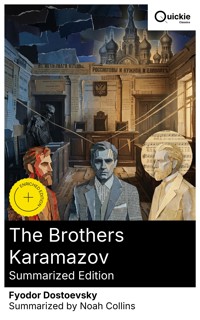
THE BROTHERS KARAMAZOV unfolds around the turbulent Karamazov household and the patricide of the licentious Fyodor Pavlovich, drawing Dmitri, Ivan, and the novice Alyosha—and the shadowy Smerdyakov—into a moral and judicial crucible. A courtroom drama frames debates on faith, freedom, and guilt, while the counsel of Elder Zosima and Ivan's 'Grand Inquisitor' distill theological and political polemic. Dostoevsky's polyphonic, psychologically exact prose fuses tragic farce with metaphysical inquiry, situating the novel within late Russian realism and the spiritual crises of the 1870s. Composed near the end of Dostoevsky's life and serialized in 1879–80, the novel distills experiences that shaped him: the trauma of a mock execution and Siberian penal exile, lifelong epilepsy, crushing debts, and the grief for his young son Alyosha. His Orthodox faith, sharpened against European rationalism and Russian nihilism, animates the book's polemical energy and its humane, confessional candor. Readers seeking a novel that tests the limits of the modern conscience will find this an inexhaustible companion—equally a gripping mystery, a philosophical disputation, and a study of love's redemptive possibility. It rewards patient, reflective reading, and is essential for students of law, theology, psychology, and anyone curious about the spiritual foundations of modern literature. Quickie Classics summarizes timeless works with precision, preserving the author's voice and keeping the prose clear, fast, and readable—distilled, never diluted. Enriched Edition extras: Introduction · Synopsis · Historical Context · Author Biography · Brief Analysis · 4 Reflection Q&As · Editorial Footnotes.
Das E-Book können Sie in Legimi-Apps oder einer beliebigen App lesen, die das folgende Format unterstützen:
Veröffentlichungsjahr: 2026
Ähnliche





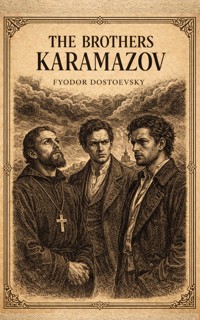

The Brothers Karamazov (Summarized Edition)
Table of Contents
Introduction
At the explosive crossroads of faith and doubt, freedom and responsibility, The Brothers Karamazov interrogates what it means to be human when desire collides with conscience. Fyodor Dostoevsky’s final novel, first serialized in 1879–1880, unfolds in a provincial Russian town in the late nineteenth century. Often described as a philosophical psychological drama that incorporates elements of crime and courtroom narrative, it balances intimate family conflict with searching ideas about belief, justice, and love. This introduction situates the work’s scope and stakes without trespassing beyond its opening movements, guiding new readers toward the questions that animate its characters and the ethical weight of their choices.
The story centers on the dissolute patriarch Fyodor Pavlovich Karamazov and his sons—Dmitri, Ivan, and Alexei (Alyosha)—alongside a fourth figure raised in the household, the quiet servant Smerdyakov. Inheritance disputes, romantic jealousy, and spiritual disillusion intensify the fractures among them. Early chapters trace arguments that expose each man’s commitments and evasions, while a nearby monastery and a skeptical intelligentsia cast contrasting lights on faith and reason. As tensions crest, a violent act shatters the fragile order, and the town’s institutions respond. The narrative then follows the consequences through confrontations, investigations, and moral reckonings that test loyalties without resolving them simplistically.
Dostoevsky deploys an omniscient yet personable narrator who addresses readers directly, digresses, and frames scenes with ironic poise. The prose oscillates between slapstick energy and grave meditation, producing a rhythm in which heated quarrels give way to prayerful silence or philosophical debate. Dialogues carry much of the action, allowing competing worldviews to collide in voices that feel autonomous rather than subordinate to a single thesis. Alongside these debates, he renders lodgings, taverns, and courtyards with tactile detail, keeping abstractions anchored in sweat, money, hunger, and shame. The result is a reading experience both suspenseful and reflective, culminating in courtroom scenes that dramatize the chasm between legal truth and lived truth.
At its core the book probes whether moral freedom requires faith, and what responsibility follows if God is doubted or denied. It asks how love can survive humiliation, whether suffering can educate the heart, and where justice lies when the law meets conscience. Generational conflict and the lure of degradation expose a society in transition, buffeted by new philosophies and old miseries. Dostoevsky refuses tidy solutions: guilt shades into innocence, pity into pride, and rational defense into self-betrayal. The novel insists that ideas are not abstractions but forces that shape choices, and that the drama of the soul is inseparable from economic want, class tension, and communal rumor.
Each brother embodies a distinctive path through the moral labyrinth. Dmitri moves with impulsive, sensual urgency, yearning for honor while sabotaging himself. Ivan argues with intellectual rigor, pressing the problem of evil to its limits and wrestling with the burden of consequence. Alyosha, a novice linked to the monastery, seeks a practical charity that can withstand scandal and grief. Around them stands their father, a cynical voluptuary who mocks restraint, and Smerdyakov, an enigmatic presence whose passivity conceals unsettled questions about agency and recognition. Together they form a prism through which the novel refracts the pressures of family, society, and belief.
The Brothers Karamazov remains urgent for contemporary readers because it dramatizes dilemmas that outlive their era. Its disputes over truth, authority, and moral responsibility echo in debates about secularization, polarization, and the reach of the criminal justice system. It shows how private wounds—addiction, humiliation, abandonment—spill into public life, and how communities oscillate between compassion and scapegoating. By tracing the costs of self-justification and the possibilities of solidarity, the novel invites readers to reconsider freedom not as license but as answerability. In a century still wrestling with violence and disenchantment, its insistence on conscience, humility, and care remains bracing.
Approached with patience, the novel rewards attention to its shifting tones and to the care with which minor details later resonate. Readers new to Dostoevsky can expect sharp humor, sudden tenderness, and arguments that refuse tidy closure. The opening quarrels signal not only a plot to come but a training in listening, as the book forces us to hold incompatible claims in view without haste. What begins as a family dispute becomes a searching inquiry into how to live with others without surrendering truth or love. Read this way, The Brothers Karamazov offers not answers but the discipline of asking the right questions.
Synopsis
Fyodor Dostoevsky’s The Brothers Karamazov, serialized in 1879–1880 in The Russian Messenger and the author’s final novel, unfolds in a provincial Russian town. At its center stands the dissolute landowner Fyodor Pavlovich Karamazov and his three legitimate sons: Dmitri, Ivan, and Alexei (Alyosha). Their temperaments diverge sharply—passionate, skeptical, and devout—setting the stage for collisions of character and creed. A household marked by neglect and rivalry becomes a microcosm for moral questioning. As debts, pride, and desire intensify, the family’s private disputes begin to spill outward, drawing in neighbors, clergy, and officials, and preparing the ground for a crisis that tests conscience and belief.
The brothers’ origins and upbringing are uneven, shaped by their father’s negligence and the loss of their mothers. Dmitri, the eldest, is impulsive and honor-bound, entangled in monetary quarrels with Fyodor Pavlovich. Ivan, the middle brother, is brilliant, coolly rational, and troubled by ethical and theological dilemmas. Alyosha, the youngest, is gentle and spiritually inclined, attached to the local monastery. Around them moves Smerdyakov, the family’s enigmatic servant, rumored to be Fyodor Pavlovich’s illegitimate son. Inheritance disputes and rival courtships—especially the rivalry over the captivating Grushenka—exacerbate tensions, intertwining romantic jealousy with questions of duty, property, and self-mastery.
Alyosha’s apprenticeship to the revered Elder Zosima brings the family drama into a spiritual arena. When the Karamazovs meet at the monastery to mediate their conflicts, Zosima counsels humility and responsibility, but the gathering dissolves into insult and spectacle, revealing the depth of discord. Zosima’s teachings emphasize active love and the shared burden of human guilt, themes that resonate against the brothers’ divergent paths. The monastery scenes frame the novel’s central inquiry: whether faith can guide fractured individuals toward reconciliation. Alyosha’s response to these teachings, including moments of doubt and rededication, shapes his role as witness and peacemaker, moving between sacred counsel and worldly unrest.
Romantic entanglements intensify the family’s peril. Dmitri is torn between his fiancée, Katerina Ivanovna, and his consuming attraction to Grushenka, a woman whose independence and allure unsettle the town. Fyodor Pavlovich also pursues Grushenka, escalating a humiliating rivalry with his own son. Ivan, drawn to Katerina Ivanovna yet detached by skepticism, becomes implicated in the moral geometry of the household as confidences and provocations pass through him. Dmitri’s financial desperation, impulsive threats, and frantic movements create an atmosphere of foreboding. Honor, jealousy, and pride begin to dictate choices that reason and piety struggle to restrain, pushing the family toward irrevocable confrontation.
The novel’s philosophical heart emerges in conversations between Ivan and Alyosha. Ivan articulates doubts about divine justice, the problem of innocent suffering, and the costs of human freedom. His narrative about an authoritarian churchman testing the limits of conscience dramatizes a choice between spiritual liberty and the comfort of imposed order. Alyosha, informed by Zosima’s compassion, resists abstraction with personal charity and trust in redemption. Zosima’s death deepens the town’s scrutiny of faith, while providing Alyosha with a crucible in which doubt and devotion contend. Their exchanges fuse metaphysical questions with immediate ethical stakes, foreshadowing actions the brothers will or will not take.
Around the Karamazovs, a dense social world unfolds. Smerdyakov, reserved and ailing, converses with Ivan in ways that unsettle the boundaries between intention and responsibility. His posture of detachment and sardonic intelligence complicates assumptions about weakness and agency. Alyosha forms bonds with local schoolboys, particularly the sickly Ilyusha and his struggling family, where he practices Zosima’s “active love” in concrete acts of help. This subplot refracts the novel’s themes through children’s suffering and solidarity, urging attention to small fidelities amid public scandal. Meanwhile, rumors, surveillance, and private confidences entangle household servants, townspeople, and officials in the family’s mounting crisis.
The crisis arrives with a violent crime that shocks the town: Fyodor Pavlovich is found murdered. Suspicion quickly narrows, and Dmitri, already notorious for outbursts and dire threats, becomes the focus of investigators. His erratic behavior, debts, and movements on the night in question align with circumstantial evidence, while witnesses and acquaintances offer conflicting accounts. The family’s earlier quarrels now serve as prosecutorial narrative, turning passion into motive. Fear, guilt, and bravado cloud recollection as characters revise or conceal their roles. Under scrutiny, the brothers confront not only the law but also the moral weight of possibility, temptation, and omission.
The trial that follows centers on competing stories about character and motive. The prosecutor emphasizes psychological patterns and a chain of plausible inferences, while a celebrated defense attorney challenges the coherence of the case and appeals to complexity in human behavior. Testimony from friends, servants, and townspeople presents fragments that can be assembled in incompatible ways. Ivan wrestles with mounting inner turmoil as ideas he once advanced collide with lived consequence, and Smerdyakov’s enigmatic conduct deepens ambiguities without resolving them. Alyosha, moving among defendants, witnesses, and grieving parties, seeks to uphold dignity and mercy. The verdict remains beyond this synopsis, preserving the novel’s unfolding drama.
The Brothers Karamazov endures for its expansive inquiry into freedom, faith, and responsibility. Through a family tragedy that radiates into courts, streets, and cloisters, Dostoevsky tests whether love rooted in accountability can withstand doubt, suffering, and pride. The novel’s portrait of children, the vulnerable, and the humiliated anchors its highest arguments in ordinary compassion. As Dostoevsky’s final work, it gathers his lifelong concerns into a narrative that resists simple closure, inviting readers to weigh justice against mercy, intellect against trust, and isolation against community. Its abiding power lies in posing questions that remain urgent without prescribing definitive answers.
Historical Context
Fyodor Dostoevsky set The Brothers Karamazov in the Russia of the late 1870s, under Tsar Alexander II, when provincial towns still revolved around estates, parishes, and newly reformed courts. The 1861 emancipation had legally freed serfs but left peasants tied to village communes and redemption payments, reshaping relations between gentry and commoners. Orthodox monasteries and parish churches anchored moral authority, even as secular officials—police, magistrates, and zemstvo functionaries—extended the state’s presence. In this milieu, old hierarchies coexisted uneasily with new institutions. The novel’s provincial setting mirrors that coexistence, observing how reforms touched daily life without dissolving entrenched habits, grievances, and obligations.
Central to the era was the 1864 Judicial Reform, which created independent courts, professional advocates, and trial by jury with public, adversarial procedure. The new system produced widely reported trials that tested evidence, rhetoric, and moral persuasion before lay jurors. In the 1870s, several political cases ended in surprising acquittals, fueling debates about the reliability of juries and the spectacle of justice. Prosecutors, defense attorneys, medical experts, and character witnesses became familiar figures to readers of the press. The novel’s climactic courtroom scenes reflect this culture, scrutinizing how legal institutions seek truth while remaining vulnerable to oratory, bias, and community passions.
Russian intellectual life was polarized between Westernizers, who embraced European science, law, and individual rights, and Slavophiles, who extolled Orthodoxy, communal traditions, and national distinctiveness. Positivism and materialism, influenced by Comte and by debates after Darwin’s Origin of Species (1859), encouraged confidence in empirical explanation and skepticism toward metaphysics. University circles discussed utilitarian ethics and the social role of the intelligentsia. Dostoevsky engaged these arguments in journalism and fiction, opposing reductive rational egoism while probing its appeal. The novel channels this ferment into dialogue, setting religious conviction and humanist doubt in sustained confrontation, without collapsing complex ideas into simple caricature.
The 1870s also saw the populist going to the people, when young radicals entered villages to agitate and educate, provoking crackdowns and landmark trials. The Trial of the 193 (1877–78) publicized revolutionary networks and courtroom theatrics; Vera Zasulich’s 1878 acquittal after shooting a Petersburg official shocked authorities. Earlier, Sergei Nechaev’s 1869 conspiracy and murder scandal fueled fears of nihilism’s amorality. These episodes shaped how contemporaries linked abstract ideas to violent action. Although focused on private life rather than party politics, the novel tests the moral consequences of ideology in a society where radical doctrines and sensational trials were daily news.
Orthodox spirituality, particularly the tradition of the starets (spiritual elder) in monasteries such as Optina Pustyn, enjoyed wide attention among believers seeking guidance outside bureaucratic church structures. Dostoevsky visited Optina in 1878, meeting Elder Amvrosy and drawing on that encounter for his portrait of charismatic monastic counsel. The Holy Synod administered the church as a state department, yet lay pilgrimages, confession, and almsgiving nurtured parallel, more intimate religious authority. The novel’s monastic scenes thus reflect a living Orthodox practice that offered consolation and discipline, presenting faith not merely as doctrine but as a communal way of life visible across provincial Russia.
After emancipation, peasants bore long-term redemption payments and communal land allotments, while many small landowners accumulated debts or sold estates. Railways expanded rapidly, fostering markets, migration, and a modest commercial middle class that mingled with impoverished gentry in towns. Zemstvo self-government (from 1864) and municipal reforms (1870) brought local roads, schools, and clinics, along with new tax burdens and factional politics. Household authority remained patriarchal in law and custom, and inheritance disputes could be bitter. The novel’s conflicts over money, status, and family duty arise from this unsettled economy, where older obligations collide with cash needs, credit, and volatile reputations.
The Brothers Karamazov appeared in serial form in The Russian Messenger (Russkii Vestnik) from 1879 to 1880, a leading conservative monthly edited by Mikhail Katkov. Thick journals like this shaped public debate, printing fiction alongside essays on law, education, and foreign policy, all under tsarist censorship. Dostoevsky used the periodical press throughout the 1870s, notably in his Diary of a Writer, to comment on trials, crime, and religious questions. Serialization encouraged dramatic pacing and wide discussion among urban and provincial readers. The novel’s mixture of philosophical disputation, social satire, and courtroom drama matched the expectations of this informed, opinionated audience.
Dostoevsky wrote the novel near the end of his life, after imprisonment in Omsk (1850–54), army service in Semipalatinsk, and decades of engagement with Russia’s social conflicts. The Russo‑Turkish War (1877–78) and the rise of Pan‑Slav sentiment stirred nationalist feeling, while the clandestine People’s Will formed in 1879; Alexander II would be assassinated months after the book’s 1880 publication. Against that unsettled backdrop, Dostoevsky juxtaposed faith, skepticism, and legal modernity within a single family and community. The work critiques shallow progress and corrosive cynicism alike, insisting that spiritual responsibility and compassion remain urgent in a reforming yet divided Russia.
Author Biography
Fyodor Dostoevsky (1821–1881) was a Russian novelist, journalist, and thinker whose work reshaped the psychological and moral horizons of the 19th-century novel. Emerging from the tumult of imperial Russia—its autocracy, reform, and intellectual ferment—he explored conscience, freedom, faith, and social conflict with unprecedented intensity. His narratives, often set in urban interiors and crowded streets, probe the extreme states of mind that modern life can induce. Through probing dialogues and confessional forms, he opened new paths for world literature, influencing later currents from existential inquiry to modernist experimentation. His major novels remain central to debates about responsibility, suffering, and the possibility of redemption.
Dostoevsky studied at the St. Petersburg Engineering Academy, training as a military engineer before committing to literature. Early reading of European Romanticism and Russian prose, especially Gogol, sharpened his sense for grotesque comedy and social satire. He translated Balzac’s Eugénie Grandet, sharpening his French and his feel for psychological economy. In the 1840s he entered the capital’s literary circles and came to the attention of critics who encouraged his gifts. He absorbed debates about utopian socialism, religion, and the individual’s moral autonomy, themes that would mature into the philosophical tensions of his fiction. Education and early criticism thus formed his craft and self-conception.
His debut, Poor Folk (1846), brought immediate recognition and positioned him as a promising chronicler of Petersburg’s lower ranks. The Double soon followed, revealing a lifelong interest in divided consciousness. In the late 1840s he joined the Petrashevsky discussion circle, whose meetings on social and political reform led to his arrest in 1849. After a staged execution, he was sent to penal labor in Siberia and subsequently served in the army. The harsh discipline and proximity to common criminals profoundly altered his views on punishment, guilt, and compassion, experiences later reworked in the semi-documentary Notes from a Dead House.
Returning from exile in the late 1850s, he re-entered public life through journalism, co-editing literary journals and navigating censorship and financial strain. The 1860s saw a run of concentrated artistic invention: Notes from Underground (1864) shaped the confessional voice that would mark his mature phase. European travels exposed him to contemporary debates—and to the roulette tables—experiences refracted in The Gambler. Working at extreme speed under contract pressures, he relied on a professional stenographer who later became his closest publishing partner, helping him meet deadlines, manage subscriptions, and stabilize his output. That testimony, published as Notes from a Dead House, consolidated his reputation as a principled witness of suffering.
From mid-decade to the early 1870s he produced a sequence of large-scale novels that forged his international stature. Crime and Punishment examines moral transgression under modern rationalism; The Idiot tests the fate of radical goodness in society; Demons (also translated as The Devils or The Possessed) engages the metaphysics and politics of nihilism. His prose fuses suspense with probing dialogue, interior monologue, and competing voices, allowing ideas to confront one another dramatically. He was intensely engaged with the problem of faith and doubt within Russian Orthodoxy, yet he staged convictions as living arguments rather than dogma, making belief itself a contested terrain.
The 1870s were marked by serial publication, public controversy, and increasing authority. A Raw Youth (also translated as The Adolescent) broadened his gallery of ambitious, precarious young protagonists. In A Writer’s Diary he mixed journalism, criticism, sketches, and polemics, engaging readers on pressing social and spiritual issues. His public address at the Pushkin commemoration in 1880 affirmed a vision of national culture that sought moral reconciliation without ignoring conflict. The Brothers Karamazov (1879–80), written near the end of his life, gathered his concerns about freedom, conscience, and responsibility into an expansive design that continues to animate philosophical and literary discussion.
Dostoevsky died in 1881 in St. Petersburg after years of heavy labor at the desk, bouts of illness, and intermittent financial worry. His funeral drew large crowds, signaling a stature that has only grown. Translated worldwide, his fiction has shaped later explorations of interiority and crisis, influencing currents associated with existential philosophy, psychoanalytic thought, and narrative modernism. Writers and thinkers across traditions have responded to his dramas of conscience and community. His pages remain urgent for readers confronting questions of violence, compassion, freedom, and meaning in turbulent public life, and his methods continue to challenge novelists who seek to stage conflicted ideas without easy resolution.
The Brothers Karamazov (Summarized Edition)
Part I
Book I
The History of a Family
Chapter 1
Fyodor Pavlovitch Karamazov
Alexey Fyodorovich Karamazov is the third son of Fyodor Pavlovich, a “landowner” whose grim, sensational death still haunts the district. Small-estate parasite, buffoon, yet sharp at money, Fyodor began penniless, cadged dinners, and died with one-hundred-thousand roubles. He embodied that peculiar blend of abject vice and masterful bookkeeping. He married twice: Dmitri came from the first match, Ivan and Alexey from the second. His first wife, Adelaida Ivanovna Miusov, a spirited, wealthy beauty, stunned everyone by eloping with this puny wastrel. Craving freedom and fashion’s bold ideas, she fancied him a daring skeptic, though he was merely malicious and absurd.
Disillusion struck at once: contempt flared, quarrels roared, and Fyodor seized her twenty-five-thousand-rouble dowry, scheming to grab the village and town house until her relatives stopped him. The fierce, dark-browed Adelaida traded blows, then fled with a penniless divinity student, leaving three-year-old Mitya. Fyodor installed a harem, reeled drunken round the province, bawling lurid tales of betrayal. Jokers jeered, “One would think you’d got a promotion!” He traced his wife to Petersburg, meant to follow, but drink stalled him; news came she had died wretchedly. He shouted, “Lord, now lettest Thou Thy servant depart in peace!” yet also sobbed—wicked hearts can be oddly simple.
Chapter 2
He Gets Rid of His Eldest Son
Fyodor Pavlovitch, drowned in drink and whining, simply overlooked three-year-old Mitya; faithful Grigory changed the shirts and kept the boy alive in the servants’ cottage. Maternal kin were no better: grandmother lay sick in distant Moscow, her married daughters busy elsewhere. Nearly a year passed before worldly Pyotr Alexandrovitch Miusov swept in from Paris—liberal, worldly, boasting of barricades and burning to flay the “clericals.” Hearing of Adelaida’s orphan, he confronted Fyodor. “I’ll educate the child.” Fyodor stared, blinking. “What child?” The cousins became joint guardians; yet Miusov, eager for boulevards, dumped Mitya with a Moscow cousin and hurried back abroad.
Dmitri, imagining a tidy estate awaited him, drifted through an erratic boyhood: gymnasium abandoned, cadet corps joined, Caucasian skirmishes, a duel, demotion, promotion, carousals, debts. At twenty-one he sought his father, craving accounts and cash. Fyodor, pleased by the lad’s inflated notions, handed small bundles and dismissed figures; Dmitri hurried off, pockets jingling. Four years later anger drove him home again. Tables, papers, promises—none showed solid wealth. He heard instead that every kopeck of his inheritance had trickled out in earlier instalments and that he might even owe Fyodor money. Stunned and furious, Dmitri’s boiling resentment set disaster in motion.
Chapter 3
The Second Marriage and the Second Family
Very soon after placing four-year-old Mitya elsewhere, Fyodor Pavlovitch took a second wife. Sixteen-year-old Sofya Ivanovna, an orphaned deacon’s daughter reared by a general’s widow, had once been cut down from a loft noose to escape the old woman’s nagging. When Fyodor’s first proposal was refused he whispered of elopement; desperate, the girl accepted. The widow cursed them and withheld a dowry, but her ward’s beauty enchanted the debauchee. “Those innocent eyes slit my soul up like a razor,” he later giggled. Eight stormy years of marriage followed, begun with flight across province and no profit but her loveliness.
Because he had “taken her from the halter” without money, Fyodor felt licensed to trample every decency. He filled the house with drunken women and revels while the meek bride cowered. Grim servant Grigory, who had loathed Adelaida, now defended Sofya; once he burst into the banquet, scattered the whores, and cursed his master. Fyodor only laughed. Tormented, Sofya slipped into violent hysterics that sometimes robbed her of reason, yet she bore him Ivan in the first year and Alexey three years later. She died before Alexey turned four, and the child, unusually, would dream of her gentle image forever.
After her burial the boys, like Mitya before them, were abandoned. They slept in Grigory’s cottage until the furious general’s widow struck. For eight years she had tracked Sofya’s misery, muttering, “It serves her right; God has punished her for her ingratitude.” Three months into widowhood she rolled into town at dusk. Fyodor staggered in drunk; without preamble she dealt two ringing slaps, seized his hair, and shook him thrice. Marching to the cottage, she boxed Grigory’s ear, announced she would take the children, wrapped them in a rug, and drove off. Grigory bowed: “God will repay you for orphans.” “Blockhead!” she shouted.
Fyodor, thankful to be free of expense, gave formal consent and spent days boasting of the blows. The old lady soon died, yet in her will she left “one thousand roubles apiece, to be spent on them only, portioned out till they reach twenty-one.” Principal heir Yefim Petrovitch Polenov, provincial Marshal of Nobility, proved scrupulous. Seeing that their father procrastinated about schooling, he assumed full charge, kept the legacy intact, invested it, and paid generously from his own purse. Alexey lived for years in his hospitable household, and both brothers owed their upbringing, education, and doubled fortunes chiefly to this humane sponsor.
Morose, self-contained Ivan understood by ten that they survived on charity and that his father was a disgrace. Brilliant at lessons, he left Polenov at thirteen for a Moscow gymnasium, lodging with a renowned teacher. When both patrons died, bureaucratic delays withheld his inheritance, and university life began in poverty. Too proud to ask his father, he earned coins tutoring and writing vivid “Eye-Witness” sketches for newspapers, then incisive book reviews that won repute. At graduation he startled Russia with a daring article on ecclesiastical courts: tone ambiguous, conclusion unexpected. Churchmen, secularists, even atheists applauded; some whispered it was bold satire.
The article soon reached the famous nearby monastery, and before the buzz had faded Ivan arrived in town. Citizens wondered why a clever, solvent youth would stay with a father who had forgotten him. Yet he lodged two months under Fyodor’s roof, and the pair seemed oddly cordial; the old libertine even curbed his excesses. Pyotr Alexandrovitch Miusov, newly back from Paris, marveled, “He is proud; he’ll never beg a penny. What does he want here?” Ivan’s hidden purpose, we later learned, involved elder brother Dmitri’s dispute and lawsuit, but even then the visitor remained a cool, enigmatic mediator.
The family thus gathered, some meeting for the first time. One figure, however, stood apart: younger brother Alexey, already settled in our monastery for a year. Slim, gentle, and searching, he wore the cassock of a novice and talked as though intending to stay cloistered forever. Why such a youth chose the cloister is a question for later, yet his presence must be noted here, for he, not the celebrated Ivan, is the quiet heart of the tale now unfolding. With that strange fact—the hero introduced in monastic garb—the scene is set for what followed in Fyodor Pavlovitch’s turbulent household.
Chapter 4
The Third Son, Alyosha
Alyosha was twenty, Ivan twenty-four, Dmitri twenty-seven. He was no fanatic or mystic, merely an early lover of humanity who saw the monastery as the clean path from worldly darkness to love. Meeting the celebrated elder Zossima[1] inflamed his young heart and fixed the idea. He had always been unusual. Even after losing his mother at four, he carried a vivid fragment: a hot summer sunset, the icon lamp burning, his mother on her knees sobbing, lifting him toward the Mother of God until the nurse tore him away. That glowing, desperate face endured in him forever.
Though quiet in boyhood, Alyosha’s silence rose not from shyness but from inward business that made him forget himself yet still love others. He trusted people completely, never judged, and even when offended he spoke again with unclouded candor, disarming all. At twenty he entered his father Fyodor Pavlovitch’s house of filthy debauchery; when scenes turned foul he simply withdrew, neither disgusted nor condemning. The suspicious old libertine first muttered, "He thinks too much," yet within a fortnight was embracing him with drunken tears, discovering a real affection no one else had stirred. Everyone, everywhere, loved the gentle youth.
At school he read in corners, seldom played, yet remained cheerful and beloved. Fearless without noticing it, he never showed off, so no one feared him. If insulted he forgot the sting at once and answered the offender as openly as before, which conquered the boys. His wild modesty tempted them: when lewd talk began he covered his ears; they pinned his arms and shouted obscenities until he writhed on the floor in mute endurance. Eventually they pitied him as a harmless "girl" and left him alone. He stayed among the best scholars, never the first.
When benefactor Yefim Petrovitch died, the widow sailed for Italy, and Alyosha moved to distant lady relatives. He never cared whose purse fed him, unlike Ivan who had agonized over every kopeck. Given pocket-money, Alyosha either scattered it instantly or forgot it for weeks, certain it belonged to everyone. Miusov later remarked, "Leave that man penniless in a city of a million and he will eat and sleep without effort; to help him would be a pleasure." Such airy indifference sprang not from calculation but from a nature ready to surrender fortune to charity or trickster alike.
A year before finishing the gymnasium he announced a journey to his father. The ladies clothed him, but he returned half their money and rode third class. Reaching the town, he searched for his mother’s grave, the real reason he could half sense but not explain. Fyodor Pavlovitch, long absent in Odessa making taverns and money, had forgotten the spot. Now bloated, erratic, drunk, he strutted on new wealth while the aging servant Grigory kept him from ruin. Seeing Alyosha seemed to wake something faintly human in the dissipated man, who muttered, "You look like her, the crazy woman.
Grigory led the son to a remote corner of the cemetery, showing a modest cast-iron stone he had purchased himself for the abandoned grave. Alyosha bowed, listened to the old man’s solemn tale, then walked away wordless; almost a year passed before he returned. The sight oddly stirred Fyodor Pavlovitch: he carried a thousand roubles to the monastery for requiems—not for Alyosha’s mother, but for his first wife—then that same night got drunk and cursed the monks. Such abrupt lunges between piety and blasphemy were common in him, a man of sudden appetites and equally sudden revulsions.
His swollen jowls, dangling goitre, moist lips with black stumps of teeth, and sharp aquiline "Roman" nose, which he praised, gave Fyodor Pavlovitch a grotesque air he enjoyed exhibiting. Amid this decay Alyosha declared he wished to enter the monastery; the hermitage would accept him as novice. He stood before his father and asked formal consent. The old man, glassy-eyed and already tipsy, sat thinking of Elder Zossima, whose virtue even he respected. At last he murmured, "That’s the most honest monk among them, of course... So that’s where you want to be, my gentle boy
He grinned with sly drunken warmth. "I had a presentiment of this. Well, you have your own two thousand; I’ll never desert you, and I’ll pay what’s wanted—if they ask. You eat like a canary, two grains a week." He chuckled about a nearby settlement of "monks’ wives," lamenting the shortage of French women, praised the monastery’s fasting, then sighed: "I’m sorry to lose you, Alyosha. Pray for us sinners; we’ve sinned too much here." The old libertine wondered aloud who might plead for him after death and decided his angelic son must be the one.
"You see, however stupid I am, I keep thinking: the devils will drag me to hell with hooks," he rambled. "Hooks? Where do they forge them? If there’s no ceiling, there are no hooks, and then what justice is there? Il faudrait les inventer for me alone, I’m such a blackguard." "There are no hooks," Alyosha answered gently. "Yes, yes, only their shadows. J’ai vu l’ombre d’un cocher…" drawled Fyodor, urging his son to discover the truth with the monks and report back. Life among harlots, he said, could not stain the boy. Sobbing, he added, "You’re the only creature who hasn’t condemned me.
Chapter 5
Elders
Alyosha, nineteen, stood strong and rosy, dark-haired, graceful, wide-eyed. Thoughtful serenity lit his handsome face. Red cheeks, some claimed, conceal fanatic fever, yet he moved as a thorough realist. Miracles never snared such minds; the realist, unbelieving, would sooner doubt his own sight than yield. When faith arises first, the wonder follows after. Thomas once warned, "I will not believe till I see," yet, seeing, cried, "My Lord and my God!" Desire, not spectacle, had carried him already. So Alyosha walked among icons and incense with clear eyes, believing stoutly yet holding reason upright beside belief.
Some called him ignorant because university lectures were abandoned, but sluggish he was not. The path of cloistered striving flashed before him like an exit from night to dawn. He belonged to the honest generation that yearned for truth at once, willing to stake life in a blaze, yet often shrinking from six slow years of grinding study that would sharpen their service. Alyosha’s choice ran opposite yet blazed with the same impatience. He would not bargain with goodness: half-coins and half-masses offended him. Only a whole gift and a full following could quiet his eager, undivided spirit.
Childhood memories of slanting sunlight, a Madonna kissed by his "crazy" mother, and the old monastery drew him back. Weighing immortality, he decided, "I want to live for immortality, and I will accept no compromise." Had he judged heaven empty, he would instantly have turned atheist and socialist, for to him socialism was the tower of Babel raised without God, a heaven planted on earth. The Scripture rang: "Give all that thou hast to the poor and follow Me, if thou wouldst be perfect." Two roubles and a Sunday service would never suffice; he came to test absolute renunciation.
Within those walls he met the elder. Russian monasteries had revived that ancient Eastern institution scarcely a century earlier; yet the practice of yielding one’s will to a spiritual father had stood a thousand years on Sinai and Athos. A novice takes the dreadful vow freely, surrendering every decision so that disciplined obedience may bloom into perfect liberty of the soul. An old legend told how a Syrian disciple, having deserted his elder, won martyrdom, yet his coffin thrice leapt from church until the elder’s pardon was secured. Duty to the chosen guide outweighed torture, miracles, even recognised sainthood.
In newer times an Athos brother, ordered northward to Siberia, begged the Ecumenical Patriarch[2] for release. The Patriarch replied no earthly power could free him save the elder who commanded. Such unbounded authority frightened many Russian houses; some resisted the practice, almost persecuting it. Yet pilgrims of high and low estate streamed to the few cells where elders listened, confessed, and counseled. Critics cried that private heart-talk degraded confession, though no sacrament was claimed. Monks themselves warned the blade was two-edged: pursuit of humility could veer into satanic pride, forging fresh chains instead of the promised freedom.
Elder Zossima, sixty-five, once an officer in the Caucasus, now wasted by illness, was the last of the house’s three elders. He cherished Alyosha, allowed him to live in his cell, yet placed no vow upon him; the lad wore a cassock simply to match the brethren. Tales said the saint read hearts at a glance, naming secret sins before a tongue moved, so visitors approached trembling and departed shining. Gentle even to great criminals, he seemed gayer as the guilt grew darker, thus earning devotion as well as jealous silence from a strict minority of monks.
Pilgrims thronged the hermitage, kneeling, weeping, kissing his feet and the dust beneath. Mothers lifted sick babies; the possessed shrieked for blessing. The elder whispered prayers, traced a cross, dismissed them. Many returned next dawn, flinging themselves before him, healed or hopeful. Whether illness ebbed naturally never troubled Alyosha; his master’s grace was enough. Watching the crush, he understood the peasant’s cry: "Among us there is sin, injustice, and temptation, but yet somewhere on earth there is someone holy and exalted. He has the truth; he knows the truth; so it is not dead upon the earth.
In that certainty Alyosha’s heart blazed: once truth flowered through his elder, all people would love alike, rich and poor gone, Christ’s kingdom unveiled. Then his two brothers arrived. Dmitri, fervid and rough, won his quick affection; Ivan, polished and remote, left him guarded. They met often during Ivan’s two-month stay, yet intimacy stalled. Alyosha sensed his brother’s mind driving toward some distant, difficult purpose and feared a scholar’s contempt for a novice. Dmitri spoke of Ivan with solemn admiration, revealing a grave business linking the elder brothers. Their stark contrast fascinated the silent young monk.
Discord between Dmitri and their father, Fyodor Pavlovitch, now raged unbearable. In apparent jest the father proposed settling matters before Father Zossima. Dmitri, blaming himself for violent outbursts, accepted what he considered intimidation. Visiting landowner Pyotr Miusov, a bored freethinker locked in a lawsuit with the monastery, pounced on the venture, hoping for amusement and advantage. Ivan agreed from cool curiosity; the buffoonish father perhaps planned mischief. Influences within persuaded the sick elder to receive them. Smiling, he said only, "Who has made me a judge over them?" A date was set, and circumstance drew the fractured family together.
Alyosha’s glad anticipation mingled with dread. He foresaw Miusov’s polished irony, Ivan’s half-smiles, his father’s clowning; any slight against the weakening saint would wound him cruelly. He thought of cautioning the elder, then kept silent, merely sending Dmitri word of affection and a reminder of some half-forgotten promise. Dmitri, puzzled, replied that he would not be provoked "by vileness," esteemed both the elder and Ivan, yet suspected a trap or farce. He ended, "Nevertheless I would rather bite out my tongue than be lacking in respect to the sainted man whom you reverence so highly." Alyosha remained uneasy.
Book II
An Unfortunate Gathering
Chapter 1
They Arrive at the Monastery
The August morning blazed as two carriages rattled to the monastery. In the first, Miusov sat beside young Pyotr Kalganov, aloof and undecided about university plans; in the creaking hired chaise trailed Fyodor Pavlovitch with Ivan, Dmitri nowhere in sight. They left the horses at the hotel and entered on foot, gawking at tombstones while the last worshippers crossed themselves. Beggars swarmed; only Kalganov fumbled out a ten-kopeck piece, muttering, “Divide it equally,” then blushed when no one noticed. Time crawled; Miusov snapped, “Who the devil can we ask in this imbecile place?” just as a bald stranger scurried up.
Introducing himself with a sugary lisp, Maximov, a landowner of sixty, tipped his hat and offered, “Father Zossima lives beyond the copse; follow me.” Fyodor Pavlovitch agreed, and the old fellow trotted ahead, babbling, “The elder—un chevalier parfait, the glory of the place!” A thin, pallid monk overtook them, bowed deeply, and announced, “The Father Superior invites the gentlemen to dine with him at one o’clock, and you as well.” “That I certainly will,” Fyodor cried; Miusov added coolly, “We shall come.” Maximov darted back toward the hotel; Miusov muttered threats about Fyodor’s behaviour while the monk watched in silence.
They passed through pines; Fyodor likened the skittish Maximov to “a second von Sohn,” irking Miusov. At the hermitage portal he crossed himself theatrically. “When in Rome you must do as the Romans,” he laughed, “here twenty-five saints eat cabbages, and no woman enters.” The monk corrected him: peasants lay in the portico and ladies waited in side rooms; the frail elder slipped out by a hidden passage when able. “So there are loopholes,” Fyodor chuckled. Inside, beds of autumn flowers glowed. “Did old Varsonofy beat visitors with a stick?” he asked. “Never,” the monk replied. Miusov hissed a final warning as the door opened.
Chapter 2
The Old Buffoon
They stepped into the cell just as the elder emerged from his bedroom. Inside already waited the Father Librarian, the delicate Father Paissy, and a tall broad-faced divinity student of about twenty-two wearing plain clothes; his narrow brown eyes watched with respectful alertness, yet he offered no bow because his standing was humble. Father Zossima appeared with a novice and Alyosha. At once the two monks bent to the floor, kissed his hand, and he returned the bow, asking their blessing in turn. The rite felt solemn, heartfelt; Miusov suspected calculated theatrics and positioned himself before the other lay visitors.
He had planned out of courtesy to seek the blessing perhaps without kissing the hand; the spectacle of bows and kisses changed his mind. He delivered a nod and retreated to a chair; Fyodor Pavlovitch imitated him like an ape. Ivan bowed politely, hands still, Kalganov froze in confusion. The elder lowered his blessing, bowed once more, invited everyone to sit. Alyosha’s cheeks burned. Zossima took the battered mahogany sofa, his visitors ranged on four worn chairs opposite; monks stayed by door and window, while the student, the novice, and Alyosha stood. The room bare yet brimmed with flowers, icons, engravings, cheap prints, bishops’ portraits.
Miusov surveyed the images, then fixed on Zossima’s small wrinkled face, pointed beard, quick pale eyes and bird-sharp nose; the stooped sixty-five-year-old seemed, to him, “a malicious soul full of petty pride.” The wall clock suddenly rattled twelve. Fyodor Pavlovitch cried, “Exactly on time, yet Dmitri is missing. I apologise, sacred elder! I am punctual—punctuality is the courtesy of kings.” “You are no king,” Miusov growled. “True,” Fyodor agreed. “I am a buffoon in earnest, and I parade it to amuse. One must be agreeable, mustn’t one?” He launched into tales of ruined business, a policeman called Napravnik, and ticklish compliments gone awry.




