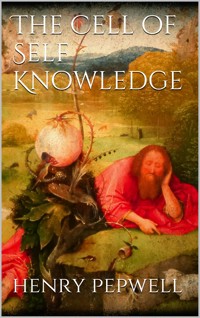
The Cell of Self-Knowledge - H. Pepwell - E-Book

The Cell of Self-Knowledge E-Book

H. Pepwell

0,0
2,99 €

oder
-100%
Sammeln Sie Punkte in unserem Gutscheinprogramm und kaufen Sie E-Books und Hörbücher mit bis zu 100% Rabatt.

Mehr erfahren.
Beschreibung

FROM the end of the thirteenth to the beginning of the fifteenth century may be called the golden age of mystical literature in the vernacular. In Germany, we find Mechthild of Magdeburg (d. 1277), Meister Eckhart (d. 1327), Johannes Tauler (d. 1361), and Heinrich Suso (d. 1365); in Flanders, Jan Ruysbroek (d. 1381); in Italy, Dante Alighieri himself (d. 1321), Jacopone da Todi (d. 1306), St. Catherine of Siena (d. 1380), and many lesser writers who strove, in prose or in poetry, to express the hidden things of the spirit, the secret intercourse of the human soul with the Divine, no longer in the official Latin of the Church, but in the language of their own people, "a man's own vernacular," which "is nearest to him, inasmuch as it is most closely united to him."[1] In England, the great names of Richard Rolle, the Hermit of Hampole (d. 1349), of Walter Hilton (d. 1396), and of Mother Juliana of Norwich, whose Revelation of Divine Love professedly date from 1373, speak for themselves. The seven tracts or treatises before us were published in 1521 in a little quarto volume: "Imprynted at London in Poules chyrchyarde at the sygne of the Trynyte, by Henry Pepwell. In the yere of our lorde God, M.CCCCC.XXI., the xvi. daye of Nouembre." They may, somewhat loosely speaking, be regarded as belonging to the fourteenth century, though the first and longest of them professes to be but a translation of the work of the great Augustinian mystic of an earlier age.

Das E-Book können Sie in Legimi-Apps oder einer beliebigen App lesen, die das folgende Format unterstützen:

EPUB

Veröffentlichungsjahr: 2015

Bewertungen
0,0
0
0
0
0
0
Mehr Informationen
Mehr Informationen
Legimi prüft nicht, ob Rezensionen von Nutzern stammen, die den betreffenden Titel tatsächlich gekauft oder gelesen/gehört haben. Wir entfernen aber gefälschte Rezensionen.


H. Pepwell

The Cell of Self-Knowledge

UUID: c6ad0860-2f7b-11e5-8b0c-119a1b5d0361
This ebook was created with StreetLib Write (http://write.streetlib.com)by Simplicissimus Book Farm

Table of contents

INTRODUCTION

I.

II.

III.

IV.

V.

VI.

VII.

Footnotes:

"Stiamo nella cella del cognoscimento di noi; cognoscendo, noi per noi non essere, e la bonta di Dio in noi; ricognoscendo l'essere, e ogni grazia che e posta sopra l'essere, da lui."—St. Catherine of Siena."Tergat ergo speculum suum, mundet spiritum suum, quisquis sitit videre Deum suum. Exterso autem speculo et diu diligenter inspecto, incipit ei quaedam divini luminis claritas interlucere, et immensus quidam insolitae visionis radius oculis ejus apparere. Hoc lumen oculos ejus irradiaverat, qui dicebat: Signatum est super nos lumen vultus tui, Domine; dedisti laetitiam in corde meo. Ex hujus igitur luminis visione quam admiratur in se, mirum in modum accenditur animus, et animatur ad videndum lumen, quod est supra se."—Richard of St. Victor.

INTRODUCTION

FROM the end of the thirteenth to the beginning of the fifteenth century may be called the golden age of mystical literature in the vernacular. In Germany, we find Mechthild of Magdeburg (d. 1277), Meister Eckhart (d. 1327), Johannes Tauler (d. 1361), and Heinrich Suso (d. 1365); in Flanders, Jan Ruysbroek (d. 1381); in Italy, Dante Alighieri himself (d. 1321), Jacopone da Todi (d. 1306), St. Catherine of Siena (d. 1380), and many lesser writers who strove, in prose or in poetry, to express the hidden things of the spirit, the secret intercourse of the human soul with the Divine, no longer in the official Latin of the Church, but in the language of their own people, "a man's own vernacular," which "is nearest to him, inasmuch as it is most closely united to him."[1] In England, the great names of Richard Rolle, the Hermit of Hampole (d. 1349), of Walter Hilton (d. 1396), and of Mother Juliana of Norwich, whose Revelation of Divine Love professedly date from 1373, speak for themselves.

Lesen Sie weiter in der vollständigen Ausgabe!

Lesen Sie weiter in der vollständigen Ausgabe!

Lesen Sie weiter in der vollständigen Ausgabe!

Lesen Sie weiter in der vollständigen Ausgabe!

Lesen Sie weiter in der vollständigen Ausgabe!

Lesen Sie weiter in der vollständigen Ausgabe!

Lesen Sie weiter in der vollständigen Ausgabe!

Lesen Sie weiter in der vollständigen Ausgabe!