


9,99 €
Mehr erfahren.
- Herausgeber: Nell Goddin
- Kategorie: Krimi
- Sprache: Englisch
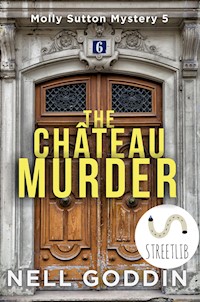
A dead Baron. A missing emerald. And way too many suspects.
Amateur sleuth Molly Sutton has her hands full this time! Shut out of Castillac’s latest murder case and running out of money, she’s praying for a brilliant scheme or at least some dumb luck to strike. Believing good food can be the solution to almost any problem, she comes up with a culinary idea designed to stave off financial disaster—and finds that even a perfect meal can end up a flop.
As for the poor late Baron, once Molly manages to get inside the Château, she quickly pokes her nose where it doesn’t belong. But looking for clues and uncovering secrets is a risky business, and this time Molly ends up with her own life in danger.
The Château Murder is the fifth book in the Molly Sutton Mystery series. If you like page-turning mysteries that keep you guessing, a small town setting filled with characters you’ll feel like you know, and pastry galore, you’ll love Nell Goddin’s latest cozy with a dash of psychological intrigue.
Put the puzzle pieces together along with Molly and see if you can guess who killed Baron Marcel de Fleuray!
Das E-Book können Sie in Legimi-Apps oder einer beliebigen App lesen, die das folgende Format unterstützen:
Veröffentlichungsjahr: 2016
Ähnliche













The Château Murder
Molly Sutton Mysteries 5
Nell Goddin
Beignet Books
Copyright © 2016 by Nell Goddin
All rights reserved.
No part of this book may be reproduced in any form or by any electronic or mechanical means, including information storage and retrieval systems, without written permission from the author, except for the use of brief quotations in a book review.
Would you like a free short story set in Castillac?
To get A Simple Deduction, click here!
For my beloved mother, Cornelia S. Goddin. For a million reasons, I wish you were still here.
Contents
Chapter 1
Chapter 2
Chapter 3
Chapter 4
Chapter 5
Chapter 6
Chapter 7
Chapter 8
Chapter 9
Chapter 10
Chapter 11
Chapter 12
Chapter 13
Chapter 14
Chapter 15
Chapter 16
Chapter 17
Chapter 18
Chapter 19
Chapter 20
Chapter 21
Chapter 22
Chapter 23
Chapter 24
Chapter 25
Chapter 26
Chapter 27
Chapter 28
Chapter 29
Chapter 30
Chapter 31
Chapter 32
Chapter 33
Chapter 34
Chapter 35
Chapter 36
Chapter 37
Chapter 38
Chapter 39
Chapter 40
Also by Nell Goddin
Acknowledgments
Glossary
About the Author
1
October 2006
“Don’t mess about with that.” Marcel waved his hand with an effort at nonchalance but his tone had a slightly wary edge.
Aimed directly at his head, the barrel of the shotgun did not budge.
“Come on now,” Marcel said, forcing a smile. “It’s a Holland & Holland twelve-gauge, you know. Out of London. My grandfather gave it to me when I turned fifteen. Hard to believe I was ever that young.”
The barrel advanced a few steps. And then, just like that, the trigger was squeezed and the gun went off, sending a spray of birdshot straight at baron Marcel de Fleuray. With that mysterious sense of premonition we sometimes have, in an infinitesimal fraction of a second, he felt the shot coming and turned to the side, trying to save his handsome face.
The blast would likely have stung but not been fatal, had not one single pellet happened to nick his carotid artery, which was exposed as he turned away.
Marcel slumped to the floor of the salon, which was hard stone but covered with two layers of sumptuous carpets. For a moment, speechless, he looked imploringly at the shooter, who lay the shotgun on an antique console table and meticulously wiped it clean of prints. By the time that was done, the baron had expired, and his murderer calmly went out through the open door and into the chilly darkness of a brisk October night.
The two-person gendarmerie of Castillac was struggling to get its footing after a series of personnel changes. Gilles Maron was still acting chief, though unhappy in the job, partly because he strongly disliked the other officer. He found the snobby Paul-Henri to be insufferable, and organized their duties so as to spend as little time with him as possible. So on the morning of October 19th, Maron was making the rounds of the village alone, keeping his eye on the various businesses and chatting with residents, just as the former Chief Ben Dufort had taught him to do.
Maron was not naturally easygoing or sociable, but he wanted to do his job well, and every morning he walked the perimeter of the main village. By continuing in smaller circles, he eventually made it to the Place in the center of Castillac, greeting people as he went, and trying to see under the surface in case someone was in trouble but struggling to ask for help. Things had been quiet lately, and a yearning for a more urban posting kept swimming into his thoughts. He liked to imagine himself in a bulletproof vest, storming into a terrorist enclave on the outskirts of Paris, performing dangerous, important work—anything but monitoring this sleepy village where everyone knew everyone else’s business and the main topic of conversation was what you planned to eat at your next meal.
Though no one could really call Castillac sleepy, not anymore. The villagers joked that it had turned into the French version of Cabot Cove, with another murder every time you turned around. Like all the best jokes, it came lined with a streak of truth and discomfort, and some didn’t find it respectful—or prudent—to make light of such serious and unfortunate events.
It was a warm morning, with none of the chill of the past week. The terrace of the Café de la Place was filled with customers, most of whom Maron recognized. It was rather a loud group for mid-morning, he thought as he approached.
“Bonjour, Maron!” shouted Pascal, the young and very handsome server.
Maron walked quickly, understanding from his tone that Pascal was not simply greeting him. “What is it?”
“Have you heard? Babette just came by for a coffee with some news. You know Georgina Locatelli? She’s the housekeeper out at Château Marainte.”
Maron nodded though he had no idea who Pascal was talking about.
“Babette said Georgina told her that she found the baron dead in the salon! Shot to death!” Pascal could not contain his excitement at the news, but tried—and failed—to look appropriately sorrowful.
“Baron?” said Maron, lost.
“Yes, yes, the baron de Fleuray. I am not surprised if you’ve never met him. He didn’t spend much time in Castillac, I don’t think. And when he was here, he… well, I don’t know what he did with himself, but he wasn’t hanging around with the plebes here at the Café, I can tell you that!” Pascal laughed, tipping his head back and showing his straight white teeth.
“He hunted,” piped up a young man leaning back in his chair. “The château has that huge forest behind it--the family owned all the land stretching north for many kilometers—where the baron had hunting parties. I know because I work at the traiteur, and sometimes he would order from us. Everything had to be packed in wicker baskets for them to eat out in the woods. Fussy about the menu.”
Maron was nodding, his mind racing. With relief he thought: hunting accident! And then realized that was fairly unlikely to have occurred in his salon.
Possibly something had happened while he was cleaning his gun?
“Have you seen Georgina?” he asked.
“Oh no,” laughed Pascal. “I’m sure she’s making the rounds of the whole village with a story like that. It’s not every day you stumble upon a dead aristocrat, after all.”
“You think it’s funny?”
“No! I mean, well, the thing is, Maron, the baron was known to be sort of a jerk. Not that anybody actually knew him. Barely ever came into the village because he didn’t like to mix with the great unwashed, you know?”
Maron nodded. He was no great fan of the aristocracy himself, having come from a working class family in the north of France who talked reverently about the part their ancestors had played during the Revolution. “All right then, thank you for the information,” he said stiffly, and took off for the station.
Not for the first time, he wished Ben Dufort was still the chief. He would know how to talk to the people out at the château. Maron jammed his hands into his pockets as he walked, brow furrowed, planning out the first steps in the new investigation.
“Bonjour, Paul-Henri,” he said, entering the station.
Paul-Henri returned the greeting, his expression animated. “I just took a call from baroness Antoinette de Fleuray out at Château Marainte. Her husband has been shot to death.”
“I know,” said Maron, thankful that Paul-Henri hadn’t surprised him with the news. “Let’s get going.”
“My parents might know them,” said Paul-Henri as he put on his coat. “I believe the baron spent most of his time in Paris, and you know my family has very many associations with the—”
“Let’s get to the château, shall we?” said Maron.
“But the—”
“Paul-Henri, just stick to the matter at hand, if you will. A man has been shot here in Castillac. It has nothing whatsoever to do with who your mother knows in Paris.”
Paul-Henri opened his mouth to answer, but changed his mind. It was difficult having a boss who understood so little about how the world worked, but he had learned that Maron did not listen when he tried to explain, so he pursed his lips while delivering a short lecture inside his head as they drove out to Château Marainte.
2
Molly Sutton, no longer a newly-minted expat but practically an old-timer in the village, was planting bulbs with Frances in the front yard of Molly’s house, La Baraque. They made a mismatched pair, with Molly on the short side with freckles and unkempt red hair, and Frances slender and elegant, her red lipstick flawless. The two had been best friends forever.
“You have to dig deeper, Franny,” Molly said, looking down at what Frances was doing.
“I keep hitting stones. Maybe this is a bad spot.”
“Just pry them out, it’ll be fine.”
“I don’t like gardening.”
“So I gather.”
“It’s so…dirty.”
Molly laughed. “But think how these daffodils will look in March! I’ll bring you a big bouquet. They will smell better than the best perfume, I promise!”
“Well, I do like flowers,” mumbled Frances, pressing her trowel under a stone and flipping it up out of the hole. “I’m just more of an instant gratification kind of person.”
“Really?” teased Molly. They continued to dig in companionable silence for several minutes. Molly was thinking that she had been living in Castillac for over a year, and all in all, the move had turned out better than she’d ever dreamed. Her gîte business was…well, finances were perhaps a bit shaky as she headed into the off-season, but bills were mostly paid and she had some bookings over the next few months. She loved France unabashedly, and her adopted village of Castillac even more.
“So how are the wedding plans going?” Molly asked. Frances had come for a visit that winter, and ended up loving not only French village life but the bartender at their favorite bistro. She and Nico were talking about getting married, though no date had been set.
“Well…”
“I thought you were thrilled!”
“I was thrilled that he asked me—who doesn’t like that part? But look, with my history, it’s hard to get very excited about a wedding. I mean, I’m excited about Nico. I’m ga-ga about Nico. But the wedding part of it…”
“Two divorces is not that many.”
“It’s two more than Nico has.”
“What difference does it make? Is he troubled about them?”
“Not that he admits. Or at least, not that I can tell, what with his English and my French. But really, how could he not be? I think I look kind of…flighty. On paper, anyway.”
“You are flighty,” laughed Molly, jamming a bulb for the white-flowered Thalia into a deep hole and filling it in with dirt. “But honestly? You and Nico are suited to each other in a way that you never were with your exes. I’d be happy to stick my nose in where it doesn’t belong and tell him that, if you think it would help.”
Frances sat on the grass, her legs crossed. “It’s not really Nico, it’s me that’s the problem. I’m worried that...what if we get married, and then...you know, it’s hard, sticking with the same person into eternity.”
“You remind me of those cemetery plaques: ‘Care in Perpetuity.’”
“See what I’m saying? Cemeteries aren’t the best association with marriage, right? Something’s wrong with me.”
Molly’s cell phone chirped, and she leaned back on her heels and struggled to get it out of her pocket. She had put on weight since moving to France and practically all her clothes had gotten a smidge too tight. “This guest isn’t even coming for another couple of weeks, and already he’s been totally high maintenance.” She paused, looking harder at her phone. “Wait. It’s from Lawrence. Murder at the château.”
“Whaaat?”
“I know, right? I can’t quite...another one? Really?”
“What else does he say?”
Molly checked her phone. “That’s it. I swear he must be hacking into the gendarmerie system or something—he always knows everything practically the minute it happens.”
“At the château! I’ve always wanted to get invited there for something. Do you know anything about the aristocrats?”
“Never met them. The...Fleurays, I think is the name.”
“Well? I can’t believe you’re just calmly planting another bulb. A murder, Molls! Aren’t you going to head out there and poke around?”
Molly shrugged. “I can’t just show up at crime scenes and start asking questions. I don’t know them or anything about them.”
“So what’s your angle gonna be, then?” asked Frances with a grin.
“Angle?”
“Oh, come on. You know you’re going to get in on this one way or another. Too bad Ben’s not around.”
“Yeah,” said Molly, allowing some wistfulness into her voice. Her romantic relationship with the former chief was a big question mark at the moment. Since he had been at the gendarmerie for many years, he still had an informal authority in the village and had been able to bring Molly into a few investigations on the side. But Ben had left Castillac for many months, off on a midlife crisis trip to Thailand. “I got a postcard from him yesterday with a picture of an elephant. Not much of a note.”
“Well, that’s no help,” said Frances, standing up and brushing dirt off her knees. “But I have faith in you, my dear Miss Marple. If there’s a dead body anywhere within fifty kilometers, you’ll figure out how it got there...one way or another.”
“Thanks for the confidence.” Molly settled the last of the bulbs into a hole and scraped soil on top of it. “But enough about murder. Let’s get back to Nico. Are you worried that once you’re married, he’ll turn out to be someone else, someone you don’t know? That you’ve fallen for some kind of, I don’t know, illusion?”
Frances pushed her straight black hair behind her ear and looked out across the road to the oak woods. “That’s probably part of it.” She took a deep breath and then spoke in a rush. “And also...what if it’s me who’s pushing an illusion? What if he finds out I’m not who he thinks I am?”
“Interesting,” said Molly, pressing down on the newly-planted bulb and standing up. “So who is the real Frances, if you’re not the wayward kook I’ve known since I was seven?”
“What if that’s who I am to you, but to other people I’m someone totally different? What if I’m just a big giant fake and he figures it out right after the ink on the marriage license is dry?”
Molly stood with her hands on her hips, looking at her friend. “You’ve got mud on your chin,” she said. “And I think you should just enjoy Nico and stop worrying. You’re both clearly smitten, so why not appreciate that and stop trying to pick it apart?”
Frances bit the inside of her mouth and considered. “Eh, you’re probably right. Got any pastries? All this backbreaking labor has me half-starved.”
“Silly woman. Of course I have pastries.”
The women walked arm in arm back to the house, Frances missing Nico even though she’d seen him only three hours earlier. Molly wondered about her ex-husband, and whether this theory explained why that marriage had failed. Had she missed seeing who he really was until it was too late?
People are mysteries, that’s all there is to it, she concluded as she opened the bag of almond croissants bought that morning at the beloved Pâtisserie Bujold, breathing in the buttery, almondy aroma and grinning in anticipation.
Long before they reached it, the officers could see the imposing Château Marainte looming up before them, a red flag flying from a turret on the east end of the building. The 13th-century edifice stood on a hill surrounded by farmland, visible for many kilometers in nearly all directions. Maron turned into the drive, which wound up the hill through a wood and then straightened into an allée lined with two-hundred-year-old plane trees.
“To be clear, Paul-Henri, we are not here to interrogate anyone right now. We’ll secure the crime scene for forensics and make whatever observations we can, and that’s all. I do not want to hear you firing questions at the housekeeper or babbling on to the baroness about your mother’s social connections. These situations take planning and strategy, and we can’t do that on the fly.”
Paul-Henri nodded, his jaw working. They pulled into a white-graveled parking area and got out. The château, a defensive building with slits for archers and two crenellated towers, was not in his favorite style. He much preferred the more delicate and artful architecture of later centuries such as the chateaux at Chambord or Challain. He rubbed a spot on one of the buttons of his uniform while waiting for Maron to decide what to do next.
Maron was looking at the vast building with his mouth open. The stone was dark and the place felt unfriendly to him. A wooden bridge crossed a dry moat, and he set off that way, wondering if the baroness was waiting for them inside, and what kind of person she would turn out to be.
The officers went through an immense gate and into a large courtyard planted with parterres outlined in boxwood, with an old well in the center, closed in on all four sides by the gray walls of the château, five stories high.
“Messieurs!”
They turned to see a middle-aged woman coming toward them, dressed in a long wool skirt and a velvet blazer.
“Bonjour, madame,” said Maron politely. “I am wondering if you could direct me to the baroness?”
The woman smiled. Maron noticed that she wore no makeup, as though she had accepted the plainness of her face as fate, and did not fight against it. She looked pale and her cheekbones jutted sharply. “I am the baroness,” she said, “though please, simply call me Antoinette.”
Paul-Henri had been about to speak, but whatever it was, he choked it back.
“I must have spoken to one of you when I called. Marcel...my husband Marcel…has been shot.” She held out a palm and bowed her head, taking a moment to collect herself. “It’s quite horrible,” she said, almost too quietly to hear.
“Can you show us where he is?” asked Maron, unsure how to behave, having had no experience around aristocrats and feeling pretty sure there were rules and protocols for what to say and how to say it, even if you were a gendarme.
“Follow me,” she said. Antoinette crossed the courtyard and stopped before an ancient wooden door that was partly open. “This is his private salon,” she said. “The place where he spent most of his time when he was here at Château Marainte. A man’s place, you understand, where he kept his guns and cigars and that sort of thing.”
Maron nodded, having never seen an aristocrat’s man cave but figuring the concept was the same.
The baroness pushed on the door, and the three of them stepped into the dimly lit room. Old tapestries covered the stone walls, and a table lamp with a green shade pooled light on an antique desk. On the walls hung various hunting trophies: antelope and deer heads, a leopard skin, the impressive twirling horns of a kudu. An enormous fireplace held ashes and a few charred logs, but no fire was lit. Looking around, Maron noticed the shotgun on the console table, and when he moved farther into the room, he saw the baron lying in a pool of dark blood on a Turkish carpet.
Paul-Henri gasped and then tried to pretend he was coughing.
“All right, then,” said Maron. “The coroner is on his way and forensics should be here any minute. Paul-Henri, go out to the gate so you can direct them in here when they arrive.”
Paul-Henri glumly walked off.
“I’m very sorry for your loss,” said Maron to the baroness, who inclined her head slightly and thanked him.
“I’m in rather a state of shock,” she said. “We’ve been married, oh, close to thirty years. Raised two sons. I can’t even begin to understand this. I’m struggling to grasp what has happened even though my eyes are looking right at it.”
“Yes, madame. It sometimes takes the mind some time to catch up. Your sons? Are they on their way? Have you called a friend or anyone to give you some support during this difficult time?”
Antoinette waved off his concern and Maron worried he had been too familiar. “My sons live in Paris. I called them right after I spoke to you earlier. Not a phone call I relished making, I will tell you.”
“I can imagine, madame. Is anyone else here at the château?”
“Georgina was here this morning. My housekeeper. She found Marcel, actually. I rather think it made her day.”
Maron tilted his head inquiringly.
“Oh, I just mean that she likes a bit of drama. You know how people are.” She looked over at her husband and Maron saw tears spring to her eyes.
“Anyone besides Georgina?”
“Hubert is around somewhere. He works for the château, doing whatever needs doing. Some carpentry and repairs, managing the hunting grounds, a gamekeeper of sorts.”
Maron, who had grown up in a city, had no idea what that might entail. “What is Hubert’s surname? And does he hunt as well?”
“Hubert Arnaud. And oh, of course, certainly he hunts. I don’t know what kind of arrangement Marcel had with him about using our land for his own hunting, but he…are you thinking that the shotgun is the murder weapon?” she asked, her voice rising as she gestured at the Holland & Holland lying on the console table.
“Don’t touch it!” barked Maron. “It will need to be dusted for fingerprints. There is some chance that another gun was used, and the coroner will have the final say. But I would guess, looking at your husband, that this gun was…the gun that killed him. Shotguns aren’t the most efficient way to go about killing someone,” he muttered, and then looked up to see that the baroness was staring at him aghast.
“I’m sorry, I just meant that most often a shotgun blast isn’t fatal.”
Antoinette nodded. “Made for killing birds,” she said, a bit harshly. A border collie ran into the room and eyed Maron suspiciously.
“It’s all right, Grizou,” Antoinette said to the dog, reaching down to scratch behind his ears. The baroness’s face relaxed for the first time since Maron had met her, and he had a fleeting glimpse of what she had looked like as a young woman.
The dog started to go around the table to inspect Marcel, but Antoinette held him back. “If it’s all right, may I go? I don’t mind if you have more questions but I would like to continue somewhere else, if we could?”
She’s so polite, Maron was thinking. He had thought aristocrats were imperious and went around with their noses in the air, but here is Antoinette, not the least bit haughty and asking to be called by her first name, and doing her best to be helpful in what must be the most shattering time of her life. He was trying to put her in a category and failing.
“But of course,” he answered, gesturing to the door.
“Grizou!” called Antoinette, and the dog shot through the door and into the sunny courtyard.
Florian Nagrand, the coroner, was just making his way into the courtyard, flanked by several forensics men who had made it from Bergerac in record time.
“Just sitting down to lunch,” growled Nagrand to Maron, and the baroness burst into tears.
3
Alexandre Roulier stretched out on the hotel bed and put his hands behind his head, trying to think. He had just received a call confirming Marcel’s death and he knew that his next moves were critically important. One false step and Antoinette might bar him from the château altogether, or worse, sic the gendarmes on him. He had to think through the details carefully, painstakingly.
The hotel was a solid two-star in an outer arrondissement of Paris. Hardly shabby—and the concierge was a pretty young woman, the breakfast better than average, the view from his window decent enough. But Roulier was not content with a two-star. He wanted to be at the Georges V, the Shangri-La, the Ritz. He wanted to have so much money that he never had to look at a price tag or comparison shop ever again. And once he had his riches, he had a few ideas about changing his last name to something with a bit more sparkle—Roulier referred to someone using a cart, a distinctly working-class name. But after losing a half hour daydreaming of more elegant possibilities, he sternly told himself to stick to the matter at hand and not get ahead of himself. Alexandre was nothing if not disciplined.
First thing was to take the train down to Castillac, just as he had numerous times with Marcel. He could comfort Antoinette in her time of grief. He could enjoy one last stay at Château Marainte, perhaps even get in a day of boar hunting.
And he could finally, with Marcel out of the picture, search for the box. Alexandre had never had a chance to search Marcel’s Paris apartment, but he very much doubted it was there. For all his worldliness, Marcel had a sentimental streak, and Alexandre would bet his little finger that Marcel had hidden the box somewhere at Château Marainte, his boyhood home and that of his ancestors going back nearly four hundred years.
Alexandre liked to get up at dawn, finding that he did his best planning early in the morning. He enjoyed a long shower, spending a few moments regretting how small the stall was, and tiled in porcelain instead of marble. He was careful to dress in his most casual clothing, knowing that Antoinette would disapprove of his customary Parisian finery.
It was critically important to have her on his side, and as he packed a small bag he came up with a few ideas for winning her over. It was a delicate thing, as the baroness—though provincial and overly attached to her dogs—was quite perceptive and apt to be on her guard now that she was a widow.
He would need to figure out how to get Antoinette out of the way while he searched, and there might be others in the household who would need to be persuaded to look the other way. But this gave him little worry since he had yet to meet the housekeeper who was not open to a juicy bribe.
The one thing causing him anxiety was that he had no idea whether the existence of the box and its contents was widely known. Was Château Marainte going to be crawling with charlatans hoping to grab it? Or were the stories Marcel had told him over brandy late at night been actual confidences? Alexandre could think of no way of knowing except to show up at the château and assess the situation. Perhaps Antoinette did not even know about the box. Certainly that would make the operation easier, he thought, allowing himself to imagine finally holding the box in his hand with no one else around, no one to impinge on the rapture, the rapacious pleasure of holding that much money in the palm of his hand.
The box itself was elaborately decorated in jewels—or so Marcel had told him—but the emerald it contained was the real treasure.
All that remained was breakfast, and then to the train.
His fortune awaited.
Florian Nagrand had been the coroner in Castillac for twenty-six years, during which he had driven his white van to pick up around thirty bodies a year, give or take, the vast majority of whom had died of natural causes; taken countless photographs; smoked an infinite number of cigarettes; and consulted with a long list of gendarmes as they arrived in Castillac and then were posted elsewhere a few years later. At this point, a routine death by shotgun was nowhere near interesting enough to spark his curiosity, no matter that it was murder and not an accident, and had apparently taken place in a salon at Château Marainte.
“No chance the body was moved? He was definitely shot right here in the salon?” asked Maron, squatting down next to the body.
“Well, of course,” answered Nagrand. “The bleeding from a wound like that would be instantaneous and copious. Yet there’s no trail over the rugs or anything like that. I expect he dropped like a stone.”
“Time of death?”
“Last night most likely. Or sometime yesterday at any rate.”
Maron nodded. “Will you be able to be more precise?”
“It’s possible,” said Nagrand, who never liked being pinned down about anything, even on what he would like to have for dinner.
The forensics team had already bagged the Holland & Holland and were looking around the room for anything else that might hide evidence—a glass, an ashtray with cigarette butts—but the room was noticeably tidy. “Did someone clean in here after the murder?” one of them asked Maron. “I don’t think my house ever looks this immaculate.”
“That’s because you’re a foul slob,” said his workmate with a wide grin.
Maron got up and walked to the other end of the room, careful to watch where he put his feet. “If this is where the baron spent a lot of time, then yes, he appears to have been orderly in his habits. I will inquire about the housekeeper’s activities. All right then, I’m going to leave you guys to it. Anything comes in from the lab, you know how to reach me. Paul-Henri, you stay here in case the guys need you.” Maron patted his cell and went back outside to the courtyard.
Antoinette was kneeling beside one of the parterres, pulling some weeds, no longer crying.
“Excuse me once again,” said Maron, trying and failing to find the right tone, something that expressed firmness of purpose, authority, and also a degree of personal warmth. “I apologize for the crudeness of Monsieur Nagrand. He…he makes light because death is so familiar to him, not because he’s callous about your situation. I am sorry if he upset you.”
“Oh no,” said Antoinette, getting to her feet and brushing the dirt off her hands. “I didn’t take offense. It’s just…please understand, I’m still very much in a state of shock. This whole thing…when you’re married to someone for a long time, as Marcel and I were, inevitably you consider…you think about things like, who will go first? What will life be like if I’m left all alone? But as you might imagine, Officer Maron, all the considering in the world makes no difference when the thing finally happens. So far, it’s not a bit like I thought it would be.”
“I understand,” said Maron, though he did not. He looked around at the dark gray walls of the château. Instead of feeling protected there in the courtyard, he felt suffocated, even though he was standing in the sunshine and could feel a light breeze.
“Just a few questions, if you don’t mind. Was anyone else here last night besides you and the housekeeper?”
Antoinette cocked her head. “Let me think. Georgina and her husband live in a cottage partway down the hill—you passed it when you drove in. I have no idea whether he was home last night or not. Hubert lives about four kilometers away, between the château and Castillac. Or do you mean right here, inside the gates of Château Marainte?” Antoinette paused and looked at Maron.
He looked into her hazel eyes. For a brief moment he had an urge to brush a stray strand of blonde hair out of her face.
“It was just me, as far as I know,” she said, with a shrug. “We had dinner at about eight-thirty, then Marcel went to his salon. I went to our bedroom and got into bed with a book.”
“And you heard no cars come up the drive, no one walking in the courtyard?”
“No. But the château walls are thick.”
“Did you hear the shot?”
Antoinette shook her head. “I heard nothing. I read for a while, then went to sleep and slept like a baby until seven-thirty in the morning when Grizou woke me up with his wet nose in my ear.”
Hearing his name, Grizou got up from a shady spot under a miniature peach tree and trotted to Antoinette’s side.
“Did you and your husband usually breakfast together?”
“Oh, sometimes. Not if he was up early to hunt. But otherwise, yes, we would have coffee together in the lounge next to the kitchen. Marcel liked to watch the news on television first thing.”
“And would the cook be here to take care of breakfast?”
“Oh heavens, Officer Maron, we don’t have a cook! Yes, we have this immense pile—” she waved a hand at the château. “But in terms of cash flow, life here is not nearly as grand as one might think. I make the coffee in the morning, and cook all the meals for that matter.”
“I see. How about trouble with burglars, anything like that?”
“Well, you should know as well as anyone,” she said with a short laugh. “I’d certainly have reported that kind of thing to the gendarmerie. You know, I’ve always considered Castillac to be the safest place imaginable. I can’t understand this recent rash of crime at all—it’s almost as though an infection is spreading through the population—suddenly you hear of murder and abduction and all sorts of things that used to be common in big cities, but not here. Never here.”
“Yes, madame.” Maron paused to gather his confidence. “You’ll understand that I must ask—how were things between the two of you, baroness?”
“Call me Antoinette, please,” she said, putting her fingers lightly on Maron’s arm. She tipped her face up to the sun, “Oh, marriage. Are you married, Officer Maron?”
Maron shook his head.
“Well, I suppose it’s like anything else. It ebbs and flows. To be very honest, since that is obviously what is required, we did not have much interest in each other anymore. We knew each other as children, you see. Grew up together, raised a family, a lot of years went by. And so at a certain point it was as though all the feeling that could be wrung from sentiment had been gotten, you understand, and there was just not much of anything left.
“Which is not to say we were unhappy. We got along fine, Marcel and I. He did not try to order me about like some husbands do, and I was not a nagging wife as some become, at least I don’t believe I was. For the last few years, he spent most of his time in Paris. First for his work as minister, and then because he enjoyed it. Had a good friend with a place in Berry, very good hunting apparently.”
“You are not interested in hunting?”
Antoinette laughed. “Not in the least,” she said. “At any rate, as you’d imagine I’ve been thinking all day about who in the world could have wanted to kill Marcel, and…for the life of me, I can think of no one. Where does that leave us?”
In a bad way, thought Maron, but kept the thought to himself.
4
It was Saturday morning, market day, and Molly was out of coffee. She dressed haphazardly, raked a comb through her tangle of red curls, fed Bobo, and zipped into the village on her scooter, planning to spend the first half hour at Pâtisserie Bujold getting her caffeine fix and feasting on the freshest and best pastry in the entire département. The air was chilly at eight in the morning. Leaves were turning color and summer gardens drooping, the sight of which always left Molly feeling melancholy. The problem with October was that the whiff of death was up in your face every time you went outside.
“Bonjour, Molly!” boomed Monsieur Nugent from behind the counter as he packed a box of pastries for an older woman at the front of the line.
“Bonjour, Edmond,” said Molly with a wave. She walked over to the case and looked over the day’s selection, always a wide variety on market day. As usual, the rows of delicacies were perfectly neat with not a crumb out of place. Cream puffs, Napoléons, religieuses, palmiers, éclairs, apricot tarts...impossible to decide.




