


Erhalten Sie Zugang zu diesem und mehr als 300000 Büchern ab EUR 5,99 monatlich.
- Herausgeber: Musaicum Books
- Kategorie: Geisteswissenschaft
- Sprache: Englisch
Anthony Trollope's 'The Chronicles of Barsetshire & The Palliser Novels' is a collection of political and social novels that provide a detailed exploration of 19th-century British society. Trollope's literary style is known for its realism and character-driven narratives, offering a nuanced perspective on the interpersonal and political dynamics of the time. The novels in this collection, such as 'Barchester Towers' and 'The Prime Minister,' delve into themes of power, ambition, and morality, creating a rich tapestry of interconnected storylines set against the backdrop of Victorian England. Trollope's adept portrayal of the human condition and his keen observations of society make these novels enduring classics in English literature. Anthony Trollope, a prolific Victorian author, drew on his own experiences working in the British Post Office to infuse his novels with a sense of realism and authenticity. His career as a civil servant influenced his depictions of bureaucracy and social hierarchy, adding depth to his portrayal of the challenges and contradictions of his time. Trollope's dedication to his craft and his ability to capture the complexities of human nature set him apart as a master storyteller of the Victorian era. I recommend 'The Chronicles of Barsetshire & The Palliser Novels' to readers who enjoy immersive historical fiction that offers insight into the political and social landscape of 19th-century Britain. Trollope's richly drawn characters and intricate plotlines make this collection a must-read for those interested in exploring the intricacies of Victorian society through the lens of a masterful storyteller. In this enriched edition, we have carefully created added value for your reading experience: - A comprehensive Introduction outlines these selected works' unifying features, themes, or stylistic evolutions. - The Author Biography highlights personal milestones and literary influences that shape the entire body of writing. - A Historical Context section situates the works in their broader era—social currents, cultural trends, and key events that underpin their creation. - A concise Synopsis (Selection) offers an accessible overview of the included texts, helping readers navigate plotlines and main ideas without revealing critical twists. - A unified Analysis examines recurring motifs and stylistic hallmarks across the collection, tying the stories together while spotlighting the different work's strengths. - Reflection questions inspire deeper contemplation of the author's overarching message, inviting readers to draw connections among different texts and relate them to modern contexts. - Lastly, our hand‐picked Memorable Quotes distill pivotal lines and turning points, serving as touchstones for the collection's central themes.
Sie lesen das E-Book in den Legimi-Apps auf:
Seitenzahl: 15061
Veröffentlichungsjahr: 2017
Das E-Book (TTS) können Sie hören im Abo „Legimi Premium” in Legimi-Apps auf:
Ähnliche







THE CHRONICLES OF BARSETSHIRE & THE PALLISER NOVELS
Published by
Books
Table of Contents
Introduction
This collection gathers Anthony Trollope’s two great sequences of Victorian fiction, the Chronicles of Barsetshire and the Palliser novels, alongside his An Autobiography. Together they map an arc from parish to Parliament, from the cathedral close of a provincial county to the chambers and clubs of metropolitan power. The purpose is comprehensive rather than miscellaneous: to present, in contiguous form, the complete Barsetshire and Palliser cycles with the author’s own account of his life and working methods. The result offers not only exemplary novels of manners and politics but also a reflective document that illuminates how such capacious, intricately connected narratives were conceived and made.
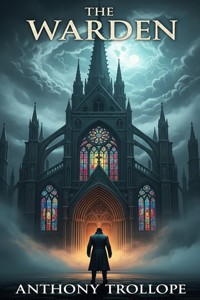
Barsetshire is Trollope’s imagined county, with Barchester as its cathedral city. The novels set here examine the lives of clergy and laity, landowners, professionals, and the dependent poor, tracing how conscience, reputation, and institutional roles shape private conduct. The Warden opens the sequence with a controversy about a charitable foundation and the income of its gentle, conscientious guardian, drawing the provincial world into the glare of public scrutiny. Through recurring scenes in the Close, parsonages, drawing rooms, and market towns, Trollope composes a social anatomy of provincial England that is both particular in detail and representative in its moral concerns.
As the series unfolds, it widens without losing intimacy. Barchester Towers explores ecclesiastical preferment, rivalry, and the interplay of ambition and humility when a new bishop arrives. Doctor Thorne turns to the entanglements of money, medicine, and family pride, asking what counts as worth in a society that prizes lineage and capital. Framley Parsonage follows a young clergyman whose good nature meets the temptations of patronage and fashion. The Small House at Allington studies courtship and the weight of choice. The Last Chronicle of Barset draws the strands together through a scandal that tests reputations and the community’s capacity for judgment and forgiveness.
The Palliser novels shift the center of gravity to London, the aristocracy, and electoral politics, while maintaining Trollope’s characteristic attention to domestic feeling. Here the structures of party, cabinet, and constituency are observed with the same patient exactness he brings to cathedral politics. Through recurring figures, notably the conscientious statesman Plantagenet Palliser and the spirited Lady Glencora, the series considers how authority is acquired, exercised, and constrained. Elections, ministries, and policy debates supply the public framework; marriages, friendships, and patronage create the private pressures that make political life both possible and precarious.
Can You Forgive Her? begins with a young woman weighing competing claims of love, independence, and prudence, setting a tone of moral inquiry that persists throughout the series. Phineas Finn follows an Irish newcomer as he learns the etiquette and hard arithmetic of Parliament. The Eustace Diamonds turns on the contested status of a set of jewels, a social and legal problem that radiates through drawing rooms and newspapers. Phineas Redux revisits the pressures of ambition and reputation. The Prime Minister studies the burdens of office and partnership. The Duke’s Children considers the challenges of guiding the next generation amid exacting public obligations.
An Autobiography stands apart in genre but belongs here in purpose. Trollope recounts his formation as a novelist and civil servant, his habits of steady labor, and the publishing environment of nineteenth-century Britain. He writes candidly about the conditions of serial publication and the business of authorship, reflecting on how deadlines, readership, and editorial relations shaped his practice. The book does not merely decorate the fiction; it clarifies why the novels feel at once disciplined and spacious, and how an outwardly ordinary routine could sustain an imaginative province and a political cosmos across many volumes.
The genres represented are consequently twofold: long-form realist novels and a nonfictional self-portrait. The Barsetshire and Palliser installments are serialized narratives designed to be read continuously yet robust enough to stand alone. Their omniscient voice, carefully modulated pacing, and layered plotting reflect a print culture that favored regular installments and communal conversation about ongoing stories. An Autobiography, by contrast, is a reflective prose narrative that traces a career in letters. Read together, they show both the craft of narration and its material conditions, the art and the industry that together made Trollope’s accomplishment possible.
Across both cycles, unifying themes emerge. Trollope is preoccupied with duty and desire, public responsibility and private feeling, the claims of conscience against the comfort of habit. Money, property, and the mechanisms of inheritance and office recur as tests of character. Marriage is treated as a social institution and a moral decision, not a mere narrative reward. Institutions—the church, Parliament, the press—have personalities and histories; they guide conduct without erasing individual agency. Reform is treated as a matter of persuasion and compromise. Provincial attachment and metropolitan ambition meet and modify each other, producing both comedy and ethical inquiry.
Stylistically, Trollope’s hallmarks include an even-tempered, conversational omniscience, ironic yet humane; an ear for ordinary speech; and a patient unfolding of consequence. He builds ensembles whose minor figures are observed with as much care as their eminent counterparts. His plots advance through credible pressures—financial, familial, institutional—rather than contrived shocks, and his narratorial presence invites readers into judgment without dictating it. The connectedness of the two sequences is itself a stylistic device: characters and reputations travel across novels, and the geography of one series can shade the atmosphere of the other, producing an unusually continuous fictional world.
The lasting significance of these works lies in their breadth of representation and steadiness of tone. Trollope helped define the political novel in English by making legislative life narratable without sensationalism, and he gave the ecclesiastical novel a sociological texture that outlasts topical conflicts. He shows how power is administered, how institutions are staffed, and how principles encounter necessity. Later traditions of the English novel—in their interest in system, milieu, and moral ambiguity—owe something to his example. Yet his influence persists less as a program than as a standard of fairness, clarity, and sympathetic exactness.
The present gathering has a practical design. It brings together, in full, the Barsetshire and Palliser cycles with the author’s own commentary on his life and art, allowing readers to move between imagined communities and the method that sustained them. The two sequences can be read independently or interleaved; each novel stands on its own terms but gains resonance from adjacency. An Autobiography can be approached before, during, or after the fiction; in any order, it sharpens attention to rhythm, structure, and the relationship between narrative patience and ethical complexity.
To enter these novels is to inhabit a continuous fabric, by turns tranquil and contentious, comic and grave. The cathedral close and the committee room are rendered with the same calm luminosity, and the language of duty is tested against everyday wants and fears. Trollope neither idealizes nor indicts; he watches, weighs, and remembers. This collection offers a sustained passage through that world, its seasons and its offices, its rows of pews and benches, its households and constituencies. It invites readers to measure public action by private cost, to recognize decency without sentimentality, and to see how a society is made legible in character.
Author Biography
Anthony Trollope (1815–1882) was among the most industrious and influential novelists of the Victorian era, acclaimed for panoramic, closely observed fictions about British institutions and private life. Writing while employed for decades in the civil service, he developed two interconnected sequences that secured his reputation: the Chronicles of Barsetshire, centered on clerical and provincial society, and the Palliser novels, a sustained study of politics, money, and marriage. His prose favors clarity over ornament, his tone blends irony with sympathy, and his plots rise from ordinary pressures—office, parish, drawing room, and committee room—rendered with patient realism. Readers valued his steadiness, range, and humane judgment.
Born in London and educated in the classical curriculum typical of elite English schools, Trollope entered the General Post Office as a young man in the 1830s. The position took him across Britain and Ireland, where extended residence and constant travel acquainted him with regional speech, religious divisions, and the administrative routines of public life. Observational habits learned on duty—keeping notes, assessing personalities, weighing competing interests—informed his fictional method. He wrote in spare hours and on journeys, gradually shaping scenes from the daily frictions he witnessed. That disciplined double life, civil servant and novelist, grounded his confidence in depicting institutions without melodrama.
His first sustained success came with the Chronicles of Barsetshire, beginning with The Warden and followed by Barchester Towers, Doctor Thorne, Framley Parsonage, The Small House at Allington, and The Last Chronicle of Barset. Set in the cathedral city of Barchester and its surrounding county, these novels examine ecclesiastical preferment, conscience, and social mobility with quiet comedy and moral seriousness. Clergy, doctors, landowners, and ambitious outsiders negotiate reform and tradition, always within convincingly ordinary lives. Serial publication broadened his audience and sharpened his attentiveness to pacing and character return. The sequence established Trollope as a master of interlinked community portraits.
Turning from parish to Parliament, Trollope developed the Palliser novels: Can You Forgive Her?, Phineas Finn, The Eustace Diamonds, Phineas Redux, The Prime Minister, and The Duke's Children. These books trace the interplay of personal desire, property, and political calculation over time, portraying electoral contests, ministerial pressure, and the costs of public ambition. While plots range from courtroom disputes to drawing-room negotiations, the series returns to questions of choice and responsibility—particularly for women managing wealth, reputation, and marriage. Together they form a capacious civic panorama, attentive to procedure and compromise, yet animated by affection for characters tested by power and principle.
Trollope explained his method in An Autobiography, published after his death. He described writing early each day before office hours, measuring his work by the clock and keeping records of pages completed, a routine that made steady composition possible alongside demanding travel for the Post Office. He was candid about contracts, deadlines, and payment, arguing that professionalism need not diminish artistic seriousness. The book's plainspoken defense of craft and realism shaped later views of his achievement, clarifying how habitual industry, rather than sudden inspiration, produced the detailed social canvases that distinguish both the Barsetshire and Palliser sequences.
Although he avoided doctrinaire manifestos in fiction, Trollope believed in pragmatic reform, duty, and the testing of motives through everyday conduct. He briefly sought a seat in Parliament in the late 1860s, experience that deepened his understanding of political life without turning him into a propagandist. Across works such as Can You Forgive Her? and The Eustace Diamonds, he probed how law and custom shape women's choices, and how money complicates honor. In Phineas Finn and Phineas Redux he scrutinized party allegiance and conscience. Such themes, joined to sympathetic humor, made his novels persuasive studies in institutional and personal ethics.
By the time of his death in 1882, Trollope had produced a vast body of fiction that remained in print and circulation. The late volumes of the Palliser cycle, including The Prime Minister and The Duke's Children, confirmed his command of long-form, cumulative storytelling—an approach that anticipates modern series and television narratives. His influence persists in discussions of realism, the politics of everyday life, and the representation of work. New readers continue to find in Barsetshire and Westminster a living record of Victorian society, rendered without caricature. Adaptations and scholarly attention keep his humane, exacting vision in active conversation.
Historical Context
Anthony Trollope’s career spans the heart of the Victorian age, a period marked by industrial growth, urban expansion, and rapid institutional change. Born in 1815 and active as a novelist from the 1840s to the early 1880s, he wrote amid debates over political reform, religious authority, and the social place of the rising middle class. The Barsetshire novels (1855–1867) observe provincial England and its church-centered society, while the Palliser series (1864–1880) tracks parliamentary culture and aristocratic politics. Together with his posthumously published An Autobiography (1883), the collection registers how reforms in law, administration, and communication reshaped Victorian life and the narratives people told about it.
Trollope’s long service in the General Post Office directly informed his interest in bureaucracy, punctuality, and systems. He joined the GPO in 1834, served as a postal surveyor, and helped introduce roadside pillar boxes in the 1850s, emblematic of expanding communication networks. The professionalization of the civil service—propelled by the Northcote–Trevelyan Report (1854) and the Civil Service Commission (from 1855)—challenged older patronage habits that his fiction often dissects. Increasingly efficient mails, the electric telegraph, and a national rail system made information flow faster, aided a booming press, and connected provincial and metropolitan spheres—the very conduits through which reputations rise and fall in both Barsetshire and the Palliser world.
The ecclesiastical frame of the Barsetshire cycle reflects mid-nineteenth-century Church of England upheavals. The Ecclesiastical Commission (from 1836) reorganized cathedral and parish revenues, while controversies associated with the Oxford Movement, Evangelical activism, and legal decisions such as the Gorham judgment (1850) destabilized older assumptions. Questions of patronage, pluralism, and the moral use of endowments animated public debate. Trollope situates Barchester as a representative English diocese, exploring how debates over church governance, ritual, and income distribution intersect with local politics and class. The novels observe the laity’s growing influence, the clergy’s economic precarity, and the way religious identity could map onto broader ideological camps within Victorian society.
The Warden (1855) emerges from a climate of reform scrutinizing charitable endowments and sinecures. Parliamentary inquiries in the 1830s–1840s and the Ecclesiastical Commission’s work made cathedral finances a public matter. Trollope’s story about a church-controlled hospital endowment and its management reflects anxiety over institutional responsibility and the ethics of income derived from historic trusts. It also registers the enlarging power of the press: the repeal of the newspaper stamp duty in 1855 and reductions in paper duties (culminating in 1861) lowered costs and widened reach. Public opinion, increasingly mobilized by national journals, could challenge local authority and prompt reforms or reputational crises.
Barchester Towers (1857) inhabits the politics of episcopal appointments and rival church parties. After 1832, state influence over church preferment remained a flashpoint, and the energetic rise of Evangelicals and Tractarians produced cultural clashes over preaching styles, ritual, and authority. Trollope’s comedy of clerical elections, cathedral chapter life, and drawing-room advocacy reflects how religious questions were negotiated through social networks as much as through doctrine. The novel mirrors a mid-Victorian moment when theological positions were often proxies for broader debates about progress and tradition, and when the composition of a bishop’s household or the conduct of a patron could redirect the moral atmosphere of an entire community.
Doctor Thorne (1858) responds to the merger of landed society with new industrial and contractor wealth. The 1840s Railway Mania, joint-stock expansion, and speculative fortunes unsettled hereditary hierarchies. Trollope’s attention to credit, mortgages, and the fiscal fragility of estates reflects a period when capital from commerce and infrastructure projects could rescue—or compromise—old families. The novel’s engagement with legitimacy and inheritance law highlights the legal frameworks through which status and property were transmitted. It dramatizes how money from modern enterprise, however socially suspect, became increasingly indispensable to rural aristocracy and gentry navigating the economics of mid-Victorian England.
Framley Parsonage (1860–1861) maps the entanglement of clerical vocation with the temptations of credit and patronage. Expanding consumer culture and easy borrowing exposed many to debt, while county-house sociability linked pulpits to political dining rooms. The novel’s serialization in the newly launched Cornhill Magazine signaled Trollope’s alignment with a broad middle-class readership. Circulating libraries such as Mudie’s shaped Victorian fiction by favoring long, respectable narratives that could travel domestically. Framley’s negotiation of ambition, obligation, and financial prudence reflects a society normalizing bourgeois virtues even as it preserves elaborate rituals of deference within the county elite.
The Small House at Allington (1862–1864) brings the civil service and metropolitan mobility to the fore, reflecting reforms that encouraged merit-based appointments while patronage lingered in practice. Railways made commuting and courtship itineraries plausible, collapsing distances between country and capital. The novel’s focus on engagement, economic calculation, and female vulnerability speaks to the legal position of women before the Married Women’s Property Act of 1870, when a wife’s property typically passed to her husband. Debates about women’s education and social roles accelerated in the 1860s, shaping the expectations and constraints that Trollope’s characters navigate without overt doctrinal argument.
The Last Chronicle of Barset (1867) closes the ecclesiastical cycle amid a decade of moral and intellectual contention. The Essays and Reviews controversy (from 1860) and Bishop Colenso’s biblical criticism (1862–1863) unsettled many believers, while the Second Reform Act (1867) expanded the urban male franchise, signaling a broader redistribution of voice. Trollope’s portrait of clerical poverty, public charity, and reputational peril reflects an era increasingly sensitive to social conscience yet wary of sensationalism. The narrative’s concern with fairness—legal, moral, and financial—echoes contemporaneous efforts to reconcile Christian ideals with a competitive, media-saturated society attuned to scandal and reform.
The Palliser novels pivot from diocesan politics to Westminster, tracing how aristocracy, finance, and public policy interlocked in the decades around the Second Reform Act (1867) and the Ballot Act (1872). The expansion of the electorate, secret voting, and periodic boundary changes altered electoral behavior and campaign methods. Party structures and cabinet government grew more disciplined, while clubs, newspapers, and railways sustained a continuous political conversation. Trollope’s Parliament is not a roman à clef but an anatomy of institutional habits, showing how personal character operates within rules, procedures, and the subtle coercions of party, patronage, and publicity.
Can You Forgive Her? (1864–1865) intersects with the “woman question,” a matrix of debates about female autonomy, property, and citizenship. The Matrimonial Causes Act (1857) created civil divorce, while campaigns for women’s education expanded, and John Stuart Mill’s The Subjection of Women (1869) articulated arguments for equality. Mill’s proposed 1867 suffrage amendment failed, yet the issue gained visibility. Trollope’s scrutiny of courtship, consent, and the economics of marriage reflects a legal order in which wives had limited property rights until reforms in 1870 and 1882. The novel’s choices and compromises register the pressure of social convention during a transitional legal regime.
Phineas Finn (1867–1869) depicts the practicalities of a political career as the franchise widens. Before the Ballot Act, open voting and costly contests favored wealth and influence; the Corrupt Practices Act (1854) sought to restrain abuses but did not eliminate them. The Irish origins of its protagonist evoke a post-Famine political world and foreshadow controversies such as the disestablishment of the Church of Ireland (1869). The rapid travel and news cycles enabled by rail and telegraph knit together provincial constituencies and London strategy. Trollope emphasizes the fatigue, calculation, and social immersion required to endure Parliament’s long hours and shifting alliances.
The Eustace Diamonds (1871–1873) engages with property and marital law at a moment when wives’ rights were being debated but not fully secured. The Married Women’s Property Act (1870) allowed women to keep earnings and some property, yet many ambiguities persisted, including the status of jewels as paraphernalia or heirlooms. Public fascination with theft, detection, and scandal was amplified by a burgeoning press and cheaper newspapers after reductions in duties. The novel also resonates with the era’s fixation on colonial wealth, coinciding with discoveries in South African diamond fields in the early 1870s, which fed metropolitan fantasies about luxury, value, and possession.
Phineas Redux (1873–1874) returns to electoral culture in the wake of the Ballot Act (1872), which introduced secret voting and altered local power dynamics. Election petitions, standards for bribery, and the policing of campaigns grew more formalized, while partisan newspapers sharpened their investigative and adversarial roles. The novel explores how reputation could be made or unmade by legal proceedings and by the relentless circulation of rumor. It reflects a period of political volatility between the elections of 1868 and 1874, when party fortunes seesawed and ambitious politicians faced new disciplines imposed by a more regulated and scrutinized public sphere.
The Prime Minister (1875–1876) considers the burdens of high office in an age of cabinet solidarity, stronger party whips, and a widening policy agenda. The 1870s saw debates on education, imperial responsibilities, and economic turbulence, demanding administrative stamina and social tact. Political leadership depended not only on policy but also on the social machinery of dinners, salons, and publicity—arenas where influence was cultivated and tested. Trollope portrays governance as exhausting and procedural, attuned to committee work, departmental coordination, and the moral demands of respectability in public and private life rather than to dramatic ideological confrontation or caricatured statesmanship.
The Duke’s Children (1879–1880) registers the adjustments of the aristocracy as democratic pressures and global wealth flows intensified. Transatlantic encounters formed part of late nineteenth-century elite culture; marriages linking British titles and American fortunes became more visible in the 1870s. Railways and the telegraph shrank distances, while changing university and professional opportunities broadened the pathways open to the younger generation. Trollope’s concern with inheritance, status, and the etiquette of alliance reflects anxieties about maintaining lineage amid social mobility. The novel situates personal choices within a system of settlements, expectations, and public scrutiny that was being renegotiated as Britain modernized.
Across both cycles, the expanding press exerts continuous pressure. The repeal of the newspaper stamp in 1855 and the removal of paper duties in 1861 enabled cheap mass papers and weekly miscellanies, intensifying controversy and celebrity. Trollope writes to a public attuned to reviews, editorials, and letters to the editor, and he depicts journals as quasi-political actors. Serialization shaped pacing and cliffhangers, with magazines like the Cornhill bringing fiction into middle-class parlors. The result is a narrative world where print mediates moral judgment, accelerates crises, and democratizes opinion, paralleling institutional reforms that widened participation in church and state alike. An Autobiography (1883) offers a rare authorial perspective on the professionalization of writing. Trollope describes regular working habits, word counts, contracts, and the economics of serialization and three-volume publishing—details that scandalized some contemporaries yet clarified the market structures governing Victorian fiction. He also reflects on his Post Office career and extensive travel, experiences that enriched his understanding of systems, timetables, and the social cartography of Britain and beyond. The book thus contextualizes the novels’ administrative realism and illuminates the conditions under which this capacious social panorama was produced. Together, the Barsetshire and Palliser novels function as a commentary on mid- and late-Victorian institutions: the Church negotiating modern criticism, aristocracy absorbing capitalist wealth, Parliament adapting to a mass electorate, and families navigating shifting property and gender laws. Later readers have repeatedly rediscovered Trollope as a historian of manners and systems; twentieth-century scholarship and television adaptations—such as the BBC’s The Pallisers (1974) and The Barchester Chronicles (1982)—have emphasized his steady, documentary eye. The collection continues to invite reinterpretation as new audiences reassess power, media, and reform in their own times.
Synopsis (Selection)
An Autobiography
Trollope’s self-portrait outlines how he approaches fiction—from steady work habits to plotting and character—and why he prizes social realism over extravagance. He weighs the novelist’s responsibilities to truth, entertainment, and moral clarity, reflecting on the society that shaped his stories. The tone is frank, pragmatic, and revealing of the craft ethos behind the novels that follow.
Barsetshire I: The Warden & Barchester Towers
Set in the cathedral town of Barchester, these novels use a clerical controversy and a change in episcopal power to explore conscience, patronage, and ambition. A gentle yet incisive comedy of manners unfolds as decent people face public scrutiny and ecclesiastical intrigue, with family affections and courtship braided throughout. Trollope’s characteristic sympathy and measured irony establish the moral texture and social map the later Barsetshire books revisit.
Barsetshire II: Doctor Thorne & Framley Parsonage
Turning from the cathedral close to country houses and parsonages, these stories center on inheritance, class mobility, and the temptations of social climbing. Characters confront debts, unequal matches, and questions of legitimacy, yet the narrative favors patient growth and the humane adjustment of claims. The tone is warmly domestic and quietly corrective, balancing satire with an insistence on character over spectacle.
Barsetshire III: The Small House at Allington & The Last Chronicle of Barset
A tale of love, disappointment, and endurance widens into a communal crisis that tests reputation, charity, and pride. Romance and personal integrity are weighed against pressures of status and scarcity, while familiar figures from earlier books converge for reckonings. The mood deepens toward grave, compassionate realism, bringing the Barsetshire world to a reflective close without melodrama.
Palliser I–II: Can You Forgive Her? & Phineas Finn
The sequence opens with women negotiating constrained choices in money and marriage, alongside a young Irish MP learning the bargains and loyalties of Westminster. Domestic decisions reverberate through drawing rooms and lobbies, binding courtship to party principle and public life. Trollope blends social comedy with a political coming‑of‑age, widening the canvas beyond Barsetshire while sustaining psychological tact.
Palliser III–IV: The Eustace Diamonds & Phineas Redux
A disputed inheritance of jewels sparks a web of lawsuits, gossip, and self-fashioning, while a returning politician faces a public crisis that puts career and character at risk. These paired narratives probe the gap between legal proof and moral truth, and how reputation can be shaped—or undone—by performance. The tone mixes sly sensation with procedural detail, sharpening Trollope’s interest in institutions and the stories people tell about themselves.
Palliser V–VI: The Prime Minister & The Duke’s Children
High office and its burdens come to the fore, as leadership rubs against personal reserve and the social whirlwind that accompanies power. Questions of patronage, electioneering, and responsibility unfold alongside a parent’s struggle to balance authority with affection amid changing norms. Measured, introspective, and at times elegiac, these novels close the political saga by tracing the costs of power and the need to accommodate a new generation.
THE CHRONICLES OF BARSETSHIRE & THE PALLISER NOVELS
An Autobiography
Preface
It may be well that I should put a short preface to this book. In the summer of 1878 my father told me that he had written a memoir of his own life. He did not speak about it at length, but said that he had written me a letter, not to be opened until after his death, containing instructions for publication.
This letter was dated 30th April, 1876. I will give here as much of it as concerns the public: “I wish you to accept as a gift from me, given you now, the accompanying pages which contain a memoir of my life. My intention is that they shall be published after my death, and be edited by you. But I leave it altogether to your discretion whether to publish or to suppress the work;—and also to your discretion whether any part or what part shall be omitted. But I would not wish that anything should be added to the memoir. If you wish to say any word as from yourself, let it be done in the shape of a preface or introductory chapter.” At the end there is a postscript: “The publication, if made at all, should be effected as soon as possible after my death.” My father died on the 6th of December, 1882.
It will be seen, therefore, that my duty has been merely to pass the book through the press conformably to the above instructions. I have placed headings to the right-hand pages throughout the book, and I do not conceive that I was precluded from so doing. Additions of any other sort there have been none; the few footnotes are my father’s own additions or corrections. And I have made no alterations. I have suppressed some few passages, but not more than would amount to two printed pages has been omitted. My father has not given any of his own letters, nor was it his wish that any should be published.
So much I would say by way of preface. And I think I may also give in a few words the main incidents in my father’s life after he completed his autobiography.
He has said that he had given up hunting; but he still kept two horses for such riding as may be had in or about the immediate neighborhood of London. He continued to ride to the end of his life: he liked the exercise, and I think it would have distressed him not to have had a horse in his stable. But he never spoke willingly on hunting matters. He had at last resolved to give up his favourite amusement, and that as far as he was concerned there should be an end of it. In the spring of 1877 he went to South Africa, and returned early in the following year with a book on the colony already written. In the summer of 1878, he was one of a party of ladies and gentlemen who made an expedition to Iceland in the “Mastiff,” one of Mr. John Burns’ steam-ships. The journey lasted altogether sixteen days, and during that time Mr. and Mrs. Burns were the hospitable entertainers. When my father returned, he wrote a short account of How the “Mastiffs” went to Iceland. The book was printed, but was intended only for private circulation.
Every day, until his last illness, my father continued his work. He would not otherwise have been happy. He demanded from himself less than he had done ten years previously, but his daily task was always done. I will mention now the titles of his books that were published after the last included in the list which he himself has given at the end of the second volume:—
An Eye for an Eye, … . 1879 Cousin Henry, … … 1879 Thackeray, … … . 1879 The Duke’s Children, … . 1880 Life of Cicero, … . . 1880 Ayala’s Angel, … . . 1881 Doctor Wortle’s School, … 1881 Frau Frohmann and other Stories, . 1882 Lord Palmerston, … . . 1882 The Fixed Period, … . . 1882 Kept in the Dark, … . . 1882 Marion Fay, … … 1882 Mr. Scarborough’s Family, … 1883
At the time of his death he had written four-fifths of an Irish story, called The Landleaguers, shortly about to be published; and he left in manuscript a completed novel, called An Old Man’s Love, which will be published by Messrs. Blackwood & Sons in 1884.
In the summer of 1880 my father left London, and went to live at Harting, a village in Sussex, but on the confines of Hampshire. I think he chose that spot because he found there a house that suited him, and because of the prettiness of the neighborhood. His last long journey was a trip to Italy in the late winter and spring of 1881; but he went to Ireland twice in 1882. He went there in May of that year, and was then absent nearly a month. This journey did him much good, for he found that the softer atmosphere relieved his asthma, from which he had been suffering for nearly eighteen months. In August following he made another trip to Ireland, but from this journey he derived less benefit. He was much interested in, and was very much distressed by, the unhappy condition of the country. Few men know Ireland better than he did. He had lived there for sixteen years, and his Post Office word had taken him into every part of the island. In the summer of 1882 he began his last novel, The Landleaguers, which, as stated above, was unfinished when he died. This book was a cause of anxiety to him. He could not rid his mind of the fact that he had a story already in the course of publication, but which he had not yet completed. In no other case, except Framley Parsonage, did my father publish even the first number of any novel before he had fully completed the whole tale.
On the evening of the 3rd of November, 1882, he was seized with paralysis on the right side, accompanied by loss of speech. His mind had also failed, though at intervals his thoughts would return to him. After the first three weeks these lucid intervals became rarer, but it was always very difficult to tell how far his mind was sound or how far astray. He died on the evening of the 6th of December following, nearly five weeks from the night of his attack.
I have been led to say these few words, not at all from a desire to supplement my father’s biography of himself, but to mention the main incidents in his life after he had finished his own record. In what I have here said I do not think I have exceeded his instructions.
Henry M. Trollope. September, 1883.
Autobiography of Anthony Trollope
Chapter I.My Education
1815-1834
In writing these pages, which, for the want of a better name, I shall be fain to call the autobiography of so insignificant a person as myself, it will not be so much my intention to speak of the little details of my private life, as of what I, and perhaps others round me, have done in literature; of my failures and successes such as they have been, and their causes; and of the opening which a literary career offers to men and women for the earning of their bread. And yet the garrulity of old age, and the aptitude of a man’s mind to recur to the passages of his own life, will, I know, tempt me to say something of myself;—nor, without doing so, should I know how to throw my matter into any recognised and intelligible form. That I, or any man, should tell everything of himself, I hold to be impossible. Who could endure to own the doing of a mean thing? Who is there that has done none? But this I protest:—that nothing that I say shall be untrue. I will set down naught in malice; nor will I give to myself, or others, honour which I do not believe to have been fairly won. My boyhood was, I think, as unhappy as that of a young gentleman could well be, my misfortunes arising from a mixture of poverty and gentle standing on the part of my father, and from an utter want on my part of the juvenile manhood which enables some boys to hold up their heads even among the distresses which such a position is sure to produce.
I was born in 1815, in Keppel Street, Russell Square; and while a baby, was carried down to Harrow, where my father had built a house on a large farm which, in an evil hour he took on a long lease from Lord Northwick. That farm was the grave of all my father’s hopes, ambition, and prosperity, the cause of my mother’s sufferings, and of those of her children, and perhaps the director of her destiny and of ours. My father had been a Wykamist and a fellow of New College, and Winchester was the destination of my brothers and myself; but as he had friends among the masters at Harrow, and as the school offered an education almost gratuitous to children living in the parish, he, with a certain aptitude to do things differently from others, which accompanied him throughout his life, determined to use that august seminary as “t’other school” for Winchester, and sent three of us there, one after the other, at the age of seven. My father at this time was a Chancery barrister practising in London, occupying dingy, almost suicidal chambers, at No. 23 Old Square, Lincoln’s Inn,—chambers which on one melancholy occasion did become absolutely suicidal. [Footnote: A pupil of his destroyed himself in the rooms.] He was, as I have been informed by those quite competent to know, an excellent and most conscientious lawyer, but plagued with so bad a temper, that he drove the attorneys from him. In his early days he was a man of some small fortune and of higher hopes. These stood so high at the time of my birth, that he was felt to be entitled to a country house, as well as to that in Keppel Street; and in order that he might build such a residence, he took the farm. This place he called Julians, and the land runs up to the foot of the hill on which the school and the church stand,—on the side towards London. Things there went much against him; the farm was ruinous, and I remember that we all regarded the Lord Northwick of those days as a cormorant who was eating us up. My father’s clients deserted him. He purchased various dark gloomy chambers in and about Chancery Lane, and his purchases always went wrong. Then, as a final crushing blow, and old uncle, whose heir he was to have been, married and had a family! The house in London was let; and also the house he built at Harrow, from which he descended to a farmhouse on the land, which I have endeavoured to make known to some readers under the name of Orley Farm. This place, just as it was when we lived there, is to be seen in the frontispiece to the first edition of that novel, having the good fortune to be delineated by no less a pencil than that of John Millais.
My two elder brothers had been sent as day-boarders to Harrow School from the bigger house, and may probably have been received among the aristocratic crowd,—not on equal terms, because a day-boarder at Harrow in those days was never so received,—but at any rate as other day-boarders. I do not suppose that they were well treated, but I doubt whether they were subjected to the ignominy which I endured. I was only seven, and I think that boys at seven are now spared among their more considerate seniors. I was never spared; and was not even allowed to run to and fro between our house and the school without a daily purgatory. No doubt my appearance was against me. I remember well, when I was still the junior boy in the school, Dr. Butler, the head-master, stopping me in the street, and asking me, with all the clouds of Jove upon his brow and the thunder in his voice, whether it was possible that Harrow School was disgraced by so disreputably dirty a boy as I! Oh, what I felt at that moment! But I could not look my feelings. I do not doubt that I was dirty;—but I think that he was cruel. He must have known me had he seen me as he was wont to see me, for he was in the habit of flogging me constantly. Perhaps he did not recognise me by my face.
At this time I was three years at Harrow; and, as far as I can remember, I was the junior boy in the school when I left it.
Then I was sent to a private school at Sunbury, kept by Arthur Drury. This, I think, must have been done in accordance with the advice of Henry Drury, who was my tutor at Harrow School, and my father’s friend, and who may probably have expressed an opinion that my juvenile career was not proceeding in a satisfactory manner at Harrow. To Sunbury I went, and during the two years I was there, though I never had any pocket-money, and seldom had much in the way of clothes, I lived more nearly on terms of equality with other boys than at any other period during my very prolonged schooldays. Even here, I was always in disgrace. I remember well how, on one occasion, four boys were selected as having been the perpetrators of some nameless horror. What it was, to this day I cannot even guess; but I was one of the four, innocent as a babe, but adjudged to have been the guiltiest of the guilty. We each had to write out a sermon, and my sermon was the longest of the four. During the whole of one term-time we were helped last at every meal. We were not allowed to visit the playground till the sermon was finished. Mine was only done a day or two before the holidays. Mrs. Drury, when she saw us, shook her head with pitying horror. There were ever so many other punishments accumulated on our heads. It broke my heart, knowing myself to be innocent, and suffering also under the almost equally painful feeling that the other three—no doubt wicked boys—were the curled darlings of the school, who would never have selected me to share their wickedness with them. I contrived to learn, from words that fell from Mr. Drury, that he condemned me because I, having come from a public school, might be supposed to be the leader of wickedness! On the first day of the next term he whispered to me half a word that perhaps he had been wrong. With all a stupid boy’s slowness, I said nothing; and he had not the courage to carry reparation further. All that was fifty years ago, and it burns me now as though it were yesterday. What lily-livered curs those boys must have been not to have told the truth!—at any rate as far as I was concerned. I remember their names well, and almost wish to write them here.
When I was twelve there came the vacancy at Winchester College which I was destined to fill. My two elder brothers had gone there, and the younger had been taken away, being already supposed to have lost his chance of New College. It had been one of the great ambitions of my father’s life that his three sons, who lived to go to Winchester, should all become fellows of New College. But that suffering man was never destined to have an ambition gratified. We all lost the prize which he struggled with infinite labour to put within our reach. My eldest brother all but achieved it, and afterwards went to Oxford, taking three exhibitions from the school, though he lost the great glory of a Wykamist. He has since made himself well known to the public as a writer in connection with all Italian subjects. He is still living as I now write. But my other brother died early.
While I was at Winchester my father’s affairs went from bad to worse. He gave up his practice at the bar, and, unfortunate that he was, took another farm. It is odd that a man should conceive,—and in this case a highly educated and a very clever man,—that farming should be a business in which he might make money without any special education or apprenticeship. Perhaps of all trades it is the one in which an accurate knowledge of what things should be done, and the best manner of doing them, is most necessary. And it is one also for success in which a sufficient capital is indispensable. He had no knowledge, and, when he took this second farm, no capital. This was the last step preparatory to his final ruin.
Soon after I had been sent to Winchester my mother went to America, taking with her my brother Henry and my two sisters, who were then no more than children. This was, I think, in 1827. I have no clear knowledge of her object, or of my father’s; but I believe that he had an idea that money might be made by sending goods,—little goods, such as pincushions, pepper-boxes, and pocket-knives,—out to the still unfurnished States; and that she conceived that an opening might be made for my brother Henry by erecting some bazaar or extended shop in one of the Western cities. Whence the money came I do not know, but the pocket-knives and the pepper-boxes were bought and the bazaar built. I have seen it since in the town of Cincinnati,—a sorry building! But I have been told that in those days it was an imposing edifice. My mother went first, with my sisters and second brother. Then my father followed them, taking my elder brother before he went to Oxford. But there was an interval of some year and a half during which he and I were in Winchester together.
Over a period of forty years, since I began my manhood at a desk in the Post Office, I and my brother, Thomas Adolphus, have been fast friends. There have been hot words between us, for perfect friendship bears and allows hot words. Few brothers have had more of brotherhood. But in those schooldays he was, of all my foes, the worst. In accordance with the practice of the college, which submits, or did then submit, much of the tuition of the younger boys from the elder, he was my tutor; and in his capacity of teacher and ruler, he had studied the theories of Draco. I remember well how he used to exact obedience after the manner of that lawgiver. Hang a little boy for stealing apples, he used to say, and other little boys will not steal apples. The doctrine was already exploded elsewhere, but he stuck to it with conservative energy. The result was that, as a part of his daily exercise, he thrashed me with a big stick. That such thrashings should have been possible at a school as a continual part of one’s daily life, seems to me to argue a very ill condition of school discipline.
At this period I remember to have passed one set of holidays—the midsummer holidays—in my father’s chambers in Lincoln’s Inn. There was often a difficulty about the holidays,—as to what should be done with me. On this occasion my amusement consisted in wandering about among those old deserted buildings, and in reading Shakespeare out of a bi-columned edition, which is still among my books. It was not that I had chosen Shakespeare, but that there was nothing else to read.
After a while my brother left Winchester and accompanied my father to America. Then another and a different horror fell to my fate. My college bills had not been paid, and the school tradesmen who administered to the wants of the boys were told not to extend their credit to me. Boots, waistcoats, and pockethandkerchiefs, which, with some slight superveillance, were at the command of other scholars, were closed luxuries to me. My schoolfellows of course knew that it was so, and I became a Pariah. It is the nature of boys to be cruel. I have sometimes doubted whether among each other they do usually suffer much, one from the other’s cruelty; but I suffered horribly! I could make no stand against it. I had no friend to whom I could pour out my sorrows. I was big, and awkward, and ugly, and, I have no doubt, sulked about in a most unattractive manner. Of course I was ill-dressed and dirty. But ah! how well I remember all the agonies of my young heart; how I considered whether I should always be alone; whether I could not find my way up to the top of that college tower, and from thence put an end to everything? And a worse thing came than the stoppage of the supplies from the shopkeepers. Every boy had a shilling a week pocket-money, which we called battels, and which was advanced to us out of the pocket of the second master. On one awful day the second master announced to me that my battels would be stopped. He told me the reason,—the battels for the last half-year had not been repaid; and he urged his own unwillingness to advance the money. The loss of a shilling a week would not have been much,—even though pocket-money from other sources never reached me,—but that the other boys all knew it! Every now and again, perhaps three or four times in a half-year, these weekly shillings were given to certain servants of the college, in payment, it may be presumed, for some extra services. And now, when it came to the turn of any servant, he received sixty-nine shillings instead of seventy, and the cause of the defalcation was explained to him. I never saw one of those servants without feeling I had picked his pocket.
When I had been at Winchester something over three years, my father returned to England and took me away. Whether this was done because of the expense, or because my chance of New College was supposed to have passed away, I do not know. As a fact, I should, I believe, have gained the prize, as there occurred in my year an exceptional number of vacancies. But it would have served me nothing, as there would have been no funds for my maintenance at the University till I should have entered in upon the fruition of the founder’s endowment, and my career at Oxford must have been unfortunate.
When I left Winchester, I had three more years of school before me, having as yet endured nine. My father at this time having left my mother and sisters with my younger brother in America, took himself to live at a wretched tumbledown farmhouse on the second farm he had hired! And I was taken there with him. It was nearly three miles from Harrow, at Harrow Weald, but in the parish; and from this house I was again sent to that school as a day-boarder. Let those who know what is the usual appearance and what the usual appurtenances of a boy at such a school, consider what must have been my condition among them, with a daily walk of twelve miles through the lanes, added to the other little troubles and labours of a school life!
Perhaps the eighteen months which I passed in this condition, walking to and fro on those miserably dirty lanes, was the worst period of my life. I was now over fifteen, and had come to an age at which I could appreciate at its full the misery of expulsion from all social intercourse. I had not only no friends, but was despised by all my companions. The farmhouse was not only no more than a farmhouse, but was one of those farmhouses which seem always to be in danger of falling into the neighbouring horsepond. As it crept downwards from house to stables, from stables to barns, from barns to cowsheds, and from cowsheds to dungheaps, one could hardly tell where one began and the other ended! There was a parlour in which my father lived, shut up among big books; but I passed my most jocund hours in the kitchen, making innocent love to the bailiff’s daughter. The farm kitchen might be very well through the evening, when the horrors of the school were over; but it all added to the cruelty of the days. A sizar at a Cambridge college, or a Bible-clerk at Oxford, has not pleasant days, or used not to have them half a century ago; but his position was recognised, and the misery was measured. I was a sizar at a fashionable school, a condition never premeditated. What right had a wretched farmer’s boy, reeking from a dunghill, to sit next to the sons of peers,—or much worse still, next to the sons of big tradesmen who made their ten thousand a year? The indignities I endured are not to be described. As I look back it seems to me that all hands were turned against me,—those of masters as well as boys. I was allowed to join in no plays. Nor did I learn anything,—for I was taught nothing. The only expense, except that of books, to which a house-boarder was then subject, was the fee to a tutor, amounting, I think, to ten guineas. My tutor took me without the fee; but when I heard him declare the fact in the pupil-room before the boys, I hardly felt grateful for the charity. I was never a coward, and cared for a thrashing as little as any boy, but one cannot make a stand against the acerbities of three hundred tyrants without a moral courage of which at that time I possessed none. I know that I skulked, and was odious to the eyes of those I admired and envied. At last I was driven to rebellion, and there came a great fight,—at the end of which my opponent had to be taken home for a while. If these words be ever printed, I trust that some schoolfellow of those days may still be left alive who will be able to say that, in claiming this solitary glory of my schooldays, I am not making a false boast.
I wish I could give some adequate picture of the gloom of that farmhouse. My elder brother—Tom as I must call him in my narrative, though the world, I think, knows him best as Adolphus—was at Oxford. My father and I lived together, he having no means of living except what came from the farm. My memory tells me that he was always in debt to his landlord and to the tradesmen he employed. Of self-indulgence no one could accuse him. Our table was poorer, I think, than that of the bailiff who still hung on to our shattered fortunes. The furniture was mean and scanty. There was a large rambling kitchen-garden, but no gardener; and many times verbal incentives were made to me,—generally, I fear, in vain,—to get me to lend a hand at digging and planting. Into the hayfields on holidays I was often compelled to go,—not, I fear, with much profit. My father’s health was very bad. During the last ten years of his life, he spent nearly the half of his time in bed, suffering agony from sick headaches. But he was never idle unless when suffering. He had at this time commenced a work,—an Encyclopedia Ecclesiastica, as he called it,—on which he laboured to the moment of his death. It was his ambition to describe all ecclesiastical terms, including the denominations of every fraternity of monks and every convent of nuns, with all their orders and subdivisions. Under crushing disadvantages, with few or no books of reference, with immediate access to no library, he worked at his most ungrateful task with unflagging industry. When he died, three numbers out of eight had been published by subscription; and are now, I fear, unknown, and buried in the midst of that huge pile of futile literature, the building up of which has broken so many hearts.
And my father, though he would try, as it were by a side wind, to get a useful spurt of work out of me, either in the garden or in the hayfield, had constantly an eye to my scholastic improvement. From my very babyhood, before those first days at Harrow, I had to take my place alongside of him as he shaved at six o’clock in the morning, and say my early rules from the Latin Grammar, or repeat the Greek alphabet; and was obliged at these early lessons to hold my head inclined towards him, so that in the event of guilty fault, he might be able to pull my hair without stopping his razor or dropping his shaving-brush. No father was ever more anxious for the education of his children, though I think none ever knew less how to go about the work. Of amusement, as far as I can remember, he never recognised the need. He allowed himself no distraction, and did not seem to think it was necessary to a child. I cannot bethink me of aught that he ever did for my gratification; but for my welfare,—for the welfare of us all,—he was willing to make any sacrifice. At this time, in the farmhouse at Harrow Weald, he could not give his time to teach me, for every hour that he was not in the fields was devoted to his monks and nuns; but he would require me to sit at a table with Lexicon and Gradus before me. As I look back on my resolute idleness and fixed determination to make no use whatever of the books thus thrust upon me, or of the hours, and as I bear in mind the consciousness of great energy in after-life, I am in doubt whether my nature is wholly altered, or whether his plan was wholly bad. In those days he never punished me, though I think I grieved him much by my idleness; but in passion he knew not what he did, and he has knocked me down with the great folio Bible which he always used. In the old house were the two first volumes of Cooper’s novel, called The Prairie, a relic—probably a dishonest relic—of some subscription to Hookham’s library. Other books of the kind there was none. I wonder how many dozen times I read those two first volumes.
It was the horror of those dreadful walks backwards and forwards which made my life so bad. What so pleasant, what so sweet, as a walk along an English lane, when the air is sweet and the weather fine, and when there is a charm in walking? But here were the same lanes four times a day, in wet and dry, in heat and summer, with all the accompanying mud and dust, and with disordered clothes. I might have been known among all the boys at a hundred yards’ distance by my boots and trousers,—and was conscious at all times that I was so known. I remembered constantly that address from Dr. Butler when I was a little boy. Dr. Longley might with equal justice have said the same thing any day,—only that Dr. Longley never in his life was able to say an illnatured word. Dr. Butler only became Dean of Peterborough, but his successor lived to be Archbishop of Canterbury.
I think it was in the autumn of 1831 that my mother, with the rest of the family, returned from America. She lived at first at the farmhouse, but it was only for a short time. She came back with a book written about the United States, and the immediate pecuniary success which that work obtained enabled her to take us all back to the house at Harrow,—not to the first house, which would still have been beyond her means, but to that which has since been called Orley Farm, and which was an Eden as compared to our abode at Harrow Weald. Here my schooling went on under somewhat improved circumstances. The three miles became half a mile, and probably some salutary changes were made in my wardrobe. My mother and my sisters, too, were there. And a great element of happiness was added to us all in the affectionate and life-enduring friendship of the family of our close neighbour Colonel Grant. But I was never able to overcome—or even to attempt to overcome—the absolute isolation of my school position. Of the cricket-ground or racket-court I was allowed to know nothing. And yet I longed for these things with an exceeding longing. I coveted popularity with a covetousness that was almost mean. It seemed to me that there would be an Elysium in the intimacy of those very boys whom I was bound to hate because they hated me. Something of the disgrace of my schooldays has clung to me all through life. Not that I have ever shunned to speak of them as openly as I am writing now, but that when I have been claimed as schoolfellow by some of those many hundreds who were with me either at Harrow or at Winchester, I have felt that I had no right to talk of things from most of which I was kept in estrangement.




