


Erhalten Sie Zugang zu diesem und mehr als 300000 Büchern ab EUR 5,99 monatlich.
- Herausgeber: Cinnamon Press
- Kategorie: Gesellschafts- und Liebesromane
- Sprache: Englisch
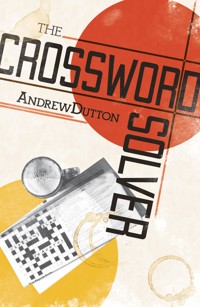
THE PUB IS THE HUB – And the hub of this pub is Pilot Ken, the affable crossword solver of the Bat and Ball, first to arrive and last to leave every drinking day. So the stories of Ken and his companions unwind with pub-talk and laughter, some genuine, some hollow; peppered with Ken's eccentric theories: Does space actually curve towards pubs? Abounding in arguments over politics and trivia, rich in personal tales and tragedies, large and small. As the town slips further into terminal decline, Ken's story weaves with the characters he drinks with. Meet Jim, the fully-qualified giant; landlady Evil Mand and her running battle with the pubco; Frank Speke, who crusades for his right to say whatever he pleases, no matter how offensive; Emily, the theatre director and Pomo, the Clown, both, trying to fend off the burgeoning cultural desert; Wayne, freed from the ties of convention by his decision to drink himself to death; FMC, the lonely class warrior; and Nev, who wants white people to stop behaving like idiots around him. When Ken's posse is exiled from the Bat and Ball by a hostile temporary landlord who ousts the regulars in an attempt to 'revive' the pub; we travel with them on their fruitless tour in search of a new home and triumphant return, mapping the troubled, dying town where the pub is the last redoubt of decency, friendship and bar-room philosophy. Yet always there hovers the shadow of death-in-a-glass, from which nobody is exempt. Crosswords, love, life, death. Love, life, death, crosswords. Praise for Andrew Dutton's debut novel: Nocturne: Wayman's Sky Intriguing, very original. — The Stoke Sentinel
Sie lesen das E-Book in den Legimi-Apps auf:
Seitenzahl: 363
Veröffentlichungsjahr: 2022
Das E-Book (TTS) können Sie hören im Abo „Legimi Premium” in Legimi-Apps auf:
Ähnliche

![Natasha [Redacted] - Andrew Dutton - E-Book](https://legimifiles.blob.core.windows.net/images/74dcb6232229a11f1c48f376399c5c64/w200_u90.jpg)
















Contents
Title page
Copyright
Acknowledgements
Half title page
Epigraph
Dedication
Pilot Ken Gets His Morning Paper
At The Bat And Ball
The Reign of Evil Mand
The Cabinet Discusses Policy
A Quizzical Night
Uxorio
How Jim became a fully-qualified giant
If Frank Speke Does Not Speak Up For Free Speech
Wayne’s Pyzin Cup
The Theatre Is Dark
The Cabinet in Exile
Pomo The Clown and The Joke of Life
Nev and the unwanted honorary
Gina’s Separation
Golf Club Interlude
There Is Nothing We Can Do
Magic Whisky
Ken Day
The Crossword Solver
Andrew Dutton
Published by Leaf by Leaf an imprint of Cinnamon Press,
Office 49019, PO Box 15113, Birmingham, B2 2NJ
www.cinnonpress.com
The right of Andrew Dutton to be identified as author of this work has been asserted by him in accordance with the Copyright, Designs and Patent Act, 1988. © 2021, Andrew Dutton
Print ISBN 978-1-78864-929-2
Ebook ISBN 978-1-78864-946-9
British Library Cataloguing in Publication Data. A CIP record for this book can be obtained from the British Library.
All rights reserved. No part of this publication may be reproduced, stored in a retrieval system, or transmitted in any form or by any means, electronic, mechanical, photocopying, recording or otherwise without the prior written permission of the publishers. This book may not be lent, hired out, resold or otherwise disposed of by way of trade in any form of binding or cover other than that in which it is published, without the prior consent of the publishers.
Designed and typeset by Cinnamon Press.
Cover design by Adam Craig © Adam Craig.
Cinnamon Press is represented by Inpress.
Acknowledgements
To Neil for ‘Bowkism’ and sharing memories.
The Crossword Solver
There is something beautiful about all scars of whatever nature. A scar means the hurt is over the wound is closed and healed, done with.
Harry Crews
To Jo, Tarka and forever Otter
Pilot Ken Gets His Morning Paper
Pilot Ken strolled into the pub with his morning paper tucked under his arm. The paper was folded at the crossword page and several clues were already scribbled, jotted in as Ken made his way across the playing fields after visiting the supermarket. Ken’s morning paper, or rather his visits to the supermarket, caused his friends a small, cold shudder. He would emerge from his flat at the bottom of town, wander past a small row of shops, ignoring the newsagents, and make his unhurried way towards the supermarket, the playing-fields and then the pub.
The supermarket was a shortcut; passing the metal hoppers filled with newspapers, he would browse, pick up his favoured broadsheet, turn to the crossword and tuck the folded paper under his arm before walking away, steadily, slowly, through the side-door and down a set of broad concrete steps to the field, looking like an opener coming in to bat. By this time his pen was already in his hand.
‘Ken, mate, one of these days some security guard will stir from his slumbers and spot you, is it worth it?’ pleaded Ken’s great friend Jim, uncharacteristically fussy and clucking in his concern.
‘It’s been five years and nothing’s ever happened,’ sniffed Pilot Ken, ‘besides, I was walking through that patch of land long before there was any building there; they plonked that thing directly in my way. The papers are a sort of… restitution.’
This sort of talk would always cause Jim to fuss and cluck again, but it never lasted long and that was the end of the discussion—until the next day.
At The Bat And Ball
Pilot Ken would usually arrive at the Bat And Ball early-doors and sit at the largest of the circular tables, spreading his newspaper, reading for a while with his hand pressed to his chin and then turn to the back page, slowly uncapping his pen, putting on his glasses (at this moment and never before) and concentrating with a friendly frown on the day’s cryptic crossword, confirming his sketched, tentative answers, working at the tougher clues. Casual observers must have wondered why one man would want to sit alone at that big round table. They failed to realise how that table would fill up as Ken’s friends and acquaintances, who will come to this story soon enough, drifted in for a drink, to relax and chat with Ken.
Ken was not a large man, but he was stocky and carried himself with confidence; no swagger, surefooted except when his path zigzagged not due to drink but because his gaze was on the paper.
‘Why Pilot?’
Ken’s mate Jim, the fully-qualified giant, was always on hand to explain. ‘He’s got this battered old leather jacket with like woolly lapels, only the wool has gone thin, if you look; it’s like the sort of thing you see in those old RAF movies. Emily here named him Biggles, but I preferred my name; Emily’s was a name to mock an idiot and I knew from the start, this was no idiot.’
‘He was the newcomer, but only for a short while,’ added Emily, ‘dribs and drabs of us had started to meet for lunch every now and then, this became our place, but when Ken came along it wasn’t too long until the usual table of friends became Ken’s table, we became his visitors, looking forward to meeting at Ken’s pub.’
‘I never saw him drunk, what’s more he never got people drunk.’ Gina toyed with her own drink, sunlight catching the glass and the ice, issuing cold sparks. ‘He loved the pub but he was no toper, and wasn’t fond of the company of drunks. He liked people, he liked to talk. I often thought he was like a chat show host, encouraging everyone to have their say, but never humiliating them, always making them welcome. Though sometimes it was as if he was writing a book, just listening, letting us write it for him.’
Up close Ken exuded easy cheerfulness, a warm, open friendliness that took determined, hard-faced effort to wear down; some managed the feat and proceeded to regret it. His eyes had a focussed intensity even after Guinness, his face crinkled attractively and a little knowingly when he smiled, and he smiled a great deal; his aspect was of a small boy who had always known how to charm his way out of trouble. He managed to look boyish even though his next major birthday would take him into his seventh decade and he was bald, with only a little whiteish hair dusting the back of his head in a narrow, almost invisible strip. ‘We experimented with “Egg Head”,’ Jim would explain, ‘Cos of his cleverness. But it sounded like another insult or some kind of naff super-villain so it never caught on. “Pilot” it was, for good.’
The Bat and Ball was Ken’s favourite pub; it wasn’t the only one where his face was known, but if you wanted to find him, you looked there first: it was known to the cognoscenti as ‘Ken’s living room’. Pilot Ken worked at home, from the top-floor ‘studio’ flat he had occupied for about ten years. He lived alone and had no family locally; his periodic absences were explained, should anyone trouble to ask, as visits to his mother in London. Nobody knew Ken’s work; it was generally thought that he ‘designed’, but beyond that there was little explanation. ‘I dunno,’ replied Jim when pressed, ‘he designs things. Computers maybe, or furniture or clothes or space rockets or atom bombs, dunno. He never discusses his work when he comes here, there always seems to be something more interesting to talk about,’ Ken claimed—and it was generally believed—that he rose well before dawn, did much of his work before breakfast, and was consequently a free man by lunchtime. People reckoned that this whateveritis-work must pay well. ‘After all, he’s here from the forenoon onwards day in day out,’ observed Frank Speke, shaking his head.
‘There’s only one way you can know that, Frank,’ Jim jabbed with a cold slice of a smile, and Frank shut up. It was true Ken arrived not long after opening and could be there past teatime, Guinness and the crossword every day, long chats with friends, discussions, disputes, but often he began with coffee and didn’t pick up a pint-glass for hours—on rare occasions, not at all.
Although the Bat and Ball served real ales, it was scarcely a traditionalists’ pub: it was a modernist curio, far from the venerable model of dark wood and frosted panes, it admitted too much light through far too much fenestration, allowing no shadowy corners or nooks. If you stood outside you could see clean through the place, a decided advantage from the point of view of some (it attracted women there, especially when it came under the matriarchy of the still-regnant Evil Mand), but it was an outrage according to a noisy minority. One devoted real-ale bibber once walked out, not in protest at the beer but because he ‘can’t stand drinking inside a fucking paperweight.’
The pub had a large lounge bar, which some years back had been made even bigger by its gulping up the old, rather small public one; the bar itself was generously sized, running three quarters the length of the room—handy for getting served on a busy night—and the floor was populated with tables of different shapes and sizes; little squares two people could barely get their elbows on; two or three-tiered tables on tall columns with scaling-ladder stools set at thin-air heights; conference-style circular tables set on a raised platform under the widest of the windows; and finally a twelve-foot unvarnished wooden table paralleled by plain wooden benches that lent its part of the pub a monkish, refectory look. (The only other monkish thing about The Bat And Ball was that it sold a brooding dark beer called Tonsure.)
A pool table occupied the space that used to be the public bar and here and there fruit machines chattered and burbled to themselves in an alien electronic gibberish, their obscure challenges increasingly easy to translate as the night went on and the booze flowed. On one wall, close to a tall archway that led on to the steps up to the biggest tables, was the juke box, which had for some years stubbornly retained its vinyl 45s, resisting heroically the changeover to compact discs until a visiting brewery manager muttered the words ‘collector’s item’ and it was gone within a week. Ken, amongst others, wouldn’t have minded if it had never been replaced, but the new one duly arrived—louder and more powerful, with no embarrassing sticking or slipping or occasional refusal to operate, slick and soulless just like the music it pumped out.
Like any other pub it had walls full of pictures that nobody was expected to look at; there was nothing amongst the occasionally-changed display that was especially memorable, but regular drinkers could point the curious to where the very first Bat and Ball sign, retired after decades in the wind and rain, hung, and where a poster featuring the local team’s fixtures for 1950-51 was kept in pride of place behind cool glass. Other than that there were only bland portraits picked by the brewery with the intent of offending nobody; old photographs, sports-related to fit the name of the pub, but snapped when the ground it stood on was still occupied by cattle; and superannuated advertisements for beer, shampoo, crisps, nuts and cigarettes nobody made any more, which looked like a job-lot from a junk yard. Fortunately, because it had so many windows, the Bat and Ball wasn’t overstuffed with these trophies and the eyes of most drinkers, if not drifting purposefully towards the pumps and optics, would usually settle on the flat green of the sports field outside. Yes, if you wanted to mess with the real thing you could take a bat and ball outside and play on the grass as long as you didn’t stray on to the cricket pitch proper; some yards over and you could kick a football about and use real goals (no nets, except on local match days) or run in endless stretched circles around the athletics track. It was a fine place to put a pub; those who had done their stint on the green fields could come in for their reward, and everyone else could wear themselves out watching.
The place had borne several names before the owning pubco settled back on its original cricketing title, most cashing in on passing crazes, but which lasted perhaps a few months, a year at most. And so, the sign of bat, ball and stumps was dusted off to swing again in the breeze, inviting drinkers and reassuring everyone that the little universe within it hadn’t really ever changed.
Landlords came and landlords went; good, bad, indifferent, competent, incompetent, middling. The Bat and Ball was a tenancy, the owning company a body of notorious rapacity (Pilot Ken dubbed them GodzillaCorp) and each landlord struggled to make even a scoopful of cash as the pubco squeezed ever harder on the beer prices. It enjoyed an Augustan age of happiness and stability under Jeff and Julie, whose names were frequently muttered by the regulars in later times, always preceded by, ‘It was better when…’ They departed to run a touristy pub in Wales, and Ken and some of his friends made occasional weekend visits, surprising the couple by keeping promises that they had considered offered in a spirit of rather sozzled and transient amity.
Some of Jeff and Julie’s successors tried to make the place more attractive with fancy food, cocktail evenings, entertainments, quiz nights, imaginative (i.e. crazy and tasteless) refurbishments, even witty chalkboards importuning fresh custom.
‘THE PUB IS THE HUB,’ said one cheerily, aspiring to make the Bat and Ball a ‘family-friendly centre of the community’. This was the work of an enterprising clever-dick pub manager who wanted to make a ‘feature’ of everything; he dubbed Pilot Ken and his gathering ‘The Cabinet’, making fun of their frequent, earnest and vocal discussions. The clever-dick only succeeded in embarrassing his regulars with a big chalkboard half-blocking the pavement outside the pub, inviting would-be drinkers to:
JOIN THE DELIBERATIONS OF THE CABINET HERE AT THE BAT AND BALL!
Hear PM Kenny pronounce!
Watch Chancellor Jim count up the Treasury
of the next round!
Order, order with Frank the Speaker!
Beer, lager, Guinness, wine, spirits!
Don’t be a Stranger to the bar!
YES, LET US MINISTER TO YOUR NEEDS!
The council ordered the board to be moved, but it had already been hurled in a skip by an irritated Jim, a shy man who didn’t appreciate ‘being treated as a fucking freak in a peepshow’. The ‘feature’ idea fizzled out, not long after, the tenure of the clever-dick reached its end.
Then came Fun Day. A good idea, albeit a legacy of the clever dick. Some significance lurked in the name of the new landlord; he was known as Danny DeeBee; a nickname, one he was irritated to find had followed him across county boundaries, if relieved its origins had not. The usual crew had a few guesses at the meaning, but only perfunctorily; Frank Speke’s ‘Danny Dole-Bound’ was prescient but lacked his customary bite. A little closer investigation would have helped to explain the Fun Day debacle.
Danny—known on his former patch as Danny The Double-Booker—was well-meaning. Too well-meaning. He had a chronic inability to say no. He was also incapable of remembering what he had failed to say no to, and his diary went forever unused. He had approved thoroughly of the Fun Day, but he had also approved and forgotten two other afternoon events that day, allowing the Bat and Ball to be the second or third major stop-off for a rolling hen-party and the venue for a ‘jolly up’ by a rugby club for a nearby village. The two booze-fuelled waves collided in an unhappy happenstance just as the Fun got swinging.
The Fun Day began thinly, a few families threading their way to the pub, parents ushering nervous children who were wary and watchful on unfamiliar ground. Cheerful music struck up on the pub patio and the French doors were open wide, inviting all to inspect the small number of tiny stalls—cakes, toys, balloons and what have you, set up in the beer garden. Pomo the Clown was in full costume and makeup; he had already taken friendly flak from Pilot Ken’s table where all were duly assembled, and he began to juggle nimbly and chatter in his friendliest manner to attract the shy eyes of his young audience. There was an air of building enjoyment. Perhaps this was to be a fun day after all, and everyone was very happy that the weather was holding off. But the rain came, at first in spots—which could be ignored—then blobs—which proved harder to wish away—then rods, which drove everyone indoors as water fell, bounced, rattled without mercy, drowning the beer garden and its fragile stalls. Pilot Ken and his crew found their fun stretching thin as their space was invaded by families seeking shelter and Pomo the Clown attempted to restart his act in the middle of the pub.
All of this would have been inconvenient but bearable, except for the fact that the two large and noisy drunken parties now surged into the pub, clashing at once. As Jim later put it, unoriginally but effectively, hell broke loose. It was a photo-finish as to which of the groups was the more whammed—each had already drunk well and arrived expecting nearly exclusive possession of the Bat and Ball. Danny Deebee’s helpless what-have-I-done embarrassment was plain as he attempted to cope with the influx, a problem made worse by the fact that the one thing he had failed to double up was the staffing on the bar. Pomo the Clown was swept, almost dashed aside, and he gave up attempts to entertain, sitting dejectedly in full costume and at the one spare seat at Pilot Ken’s table. Ken, having just been served before the invasion, ordered a consolatory pint for poor Pomo who, as ever, was potless and the recipient of disapproving stares from Frank Speke.
The hen party crashed into the Bat and Ball, close on the heels of the rugby boys; their wild, sky-high cries overtopped the bass boom that had already killed conversation there. The rugby crowd was soberly dressed; white shirts, grey trousers, sensible shoes and blazers; whereas the hen party wore abbreviated white shorts, shocking-pink pumps and t-shirts bearing what Ken called ‘interesting’ slogans, but also tinsel haloes or devil-horns, and, just to ensure nobody was confounded by mixed messages, all waved shocking-pink plastic penises, some obscenely bendy, others even more obscenely stiff.
This boy-meets-girl scene was scarcely replete with romance. In truth, they met as invading armies battling over the fragile forage of an innocent city in their unyielding paths. Danny Deebee sweated and struggled to meet their oncoming rapacity, but the queues grew, supplies ran out, tempers frayed. Gentlemen did not buy drinks for ladies, they used their height and weight, elbowing their ‘inferiors’ out of their way so that resentment escalated to a pitch battle-mood. Pink plastic penises, bendy and stiff, were deployed, and more than one grey-trousered crotch assailed with lusty violence.
A three-quarter, full of lager, attempted to rally his troops by climbing on a chair, probably on someone sitting in it, waving his glass and crying over the growing hubbub, ‘Here’s to rugby! Here’s to beer! Here’s to women!’
‘Here’s to bigmouths!’ yelled a tinsel-devil, who shoved him hard, his form vanishing over the heads of his comrades.
An initial gust of laughter was swallowed by silence, but then the two armies remembered what armies were for, and battle was joined, in the bar, in the doorways, on to the still-soaking patio and beer garden as parents attempted to shield shrieking charges, some of whom shrieked not from fear but from a raw appreciation of the marvellous melee.
Pilot Ken’s table was sufficiently removed from the engagement for its occupants to be spared anything but a few flying glasses, which hit nobody, and the approach of the odd staggering figure, easily fielded and returned to the ruck by the big hands of giant Jim. Ken put himself at risk once, as he rushed to the main door to protect Emily who had just arrived for a quiet lunch to walk straight into the battle-ground. A rugby-player stalked toward them, vengeance in his eyes, but he was pulled back by a comrade, whose mouth moved violently but whose voice was lost in the din.
Emily read the restrainer’s lips. ‘Not him mate—look, he’s bald; he’s hard!’
Once the police had removed the combatants and guided shell-shocked parents and thrilled children home, Danny Deebee surveyed the wreckage and contemplated a bleak future. Pilot Ken, Jim and Emily surveyed the wretched figure of Danny and pondered his future too. Frank Speke was uncharacteristically silent; like any good commentator, he knew one should only comment when there was something to add. Pomo the Clown, a sad Pierrot at the table, was unable to comprehend the chaos that had swallowed his precious Fun Day gig and fretted about his fee. The stalls in the beer garden stood sodden and forgotten, cakes now a rain-pounded mush, a tea urn lidless and slopping over with cold brown water.
So it didn’t work, but perhaps in ‘The Pub Is The Hub’ the departed clever dick had hit on something, after a fashion. It was not long before Danny Deebee also took the long road to obscurity; what followed was a brief dark age during which The Cabinet, against its wishes and in the face of hostile action, was forced to adjourn to other meeting-places. More of that tale anon.
Evil Mand (so dubbed by Ken, but in a spirit of deep admiration) came along and put right a great deal of the grotesquery of the recent past, winning respect by dint of simple accomplishments such as actually bothering to keep the beer properly and the lines clean, making sure people were served at the bar in the order of arrival and not through the twisted forms of favouritism that existed in previous regimes, but also by engaging in determined battle with GodzillaCorp over its latest accounting trick. The pretence in their profit and loss forecasts was that every drop of a firkin of cask-conditioned ale could be pulled and sold without there being any sign of undrinkable sediment. Mand fought hard, arguing that she would lose thousands a year because her forecast profits were too high and the pubco charged rent on the basis of this fantasy.
Evil Mand, having won back the regulars, celebrated her accession with an impressive new fascia for the pub, a costly work of art from a local signwriter.
‘Nice piece of work that, Mand,’ said Ken, his eyes crinkling attractively. ‘May I have one of these “cast ales” you’re advertising?’
Mand reached for a glass, reached for a pump, hesitated, turned back to Pilot Ken, was about to say ‘Wha?’ when Jim chipped in with, ‘I’ll pay for this round. I gather that all major cards are ‘excepted’. So actually, I don’t know how I’m going to pay after all…’ He did some comic business with his wallet as Mand mouthed another, ‘Wha…?’ and her eyes sprang wide open with nascent rage. She banged up the flap of the bar, stalked through, slammed it back down as if to prevent any self-service, and shot outside; Ken and Jim could follow the progress of her inspection of the fascia through the modulation and inflection of her impressive and inventive swearing.
‘No cast ales then, mate. Just the usuals,’ Ken mummed disappointment.
‘My god, there’s a signwriter round here who’s gonna find out soon why she’s called Evil Mand,’ whispered Jim, awed.
On a forlorn, failed summer day, low, hazy clouds extended ghostly, bone-white fingers to tickle at the sodden surfaces of track and field and casually brush scatterings of cold rain over the generous windows of The Bat And Ball. Pilot Ken took a long sip of Guinness and surveyed the semi-dark-at-noon, drizzle-soaked outdoors sombrely.
‘The light here… defies physics…’ he mused aloud.
‘Oh bloody hell—Theory Alert!’ Jim laughed, quick on the uptake that one of Ken’s regular parlour-games was imminent, performed to the amusement of all but Frank Speke.
‘Yes, indeed.’ Ken settled back in his chair to talk in a slightly distracted way; Jim felt that what was needed to complete the ambience was a log fire and a sleeping dog. And Ken should be wearing slippers. ‘In the rest of the world, light comes in thin white beams which, if put through a prism, spread into bright branch-lines of constituent colours; put through another prism they close up, tight, and are a thin white beam once more. Round here, however, the beam is grey. Through a prism it’s… greyer. And the bloody prism gets wet.’
‘Pah,’ spat Frank, unaware of having made the gesture.
Theory Alert began accidentally, but became an irregular feature of their days; some of its popularity may have been to do with annoying Frank. Its origins were in a newspaper article at which Ken, crossword done, was half-mooning with amusement.
‘Listen to this.’ He waved his glasses in one hand and the paper in the other. ‘There’s an academic to-do about whether Napoleon was murdered.’
‘Who cares?’ grumbled Frank Speke.
‘These lot do.’ Ken tapped his glasses on the paper. ‘They’ve found traces of arsenic in his body, and reckon his jailers poisoned him.’
‘Bit late to file a case, I won’t call Nev,’ said Emily.
‘Another lot say the arsenic wasn’t in his food, but the wallpaper. And if you ask how on Earth the Emperor got it from the wallpaper—I know. It’s all to do with booze.’
‘Oh God,’ muttered Frank.
‘Remember a few weeks ago Jim—you had a bourbon and cola?’
‘I like bourbon and col…’
‘Not the point. If you recall, I tried it. And what did I say it tasted like?’
‘Something stupid… wallpaper paste.’
‘Precisely! Case proven!’
‘Eh?’
‘It’s like this—I’ve realised that history is not made by “great men” at all, it’s made by drunk people!’
Frank Speke stirred in his chair and Emily slapped his arm to warn him off.
‘Old Boney was on St Helena having lost at Waterloo. The reason he lost? He was drunk! What else could have impaired his peerless skills of generalship? Remember the brandy!
‘Anyway, there’s our exile, far away from civilisation, and supplies get low, the booze runs out and he’s pegging for a drink. Desperate, he remembers that wallpaper paste tastes just like bourbon and cola, he starts licking the walls, only to fall accidental victim to the use of arsenic in the manufacture of wallpaper!’
‘Have you quite finished?’ Frank Speke tried to douse the laughter.
‘So there you are—history is nothing but the mis-steps and mishaps of people under the influence. Fire was discovered by someone so pissed that, for a laugh, they thought up the pointless activity of banging stones together; gods were invented so libations could be poured; cities only founded so pubs could be built: Julius Caesar was so blotto he didn’t know he’d crossed the bloody Rubicon; Columbus was trying to get to India and went the wrong way, the reason for which must now be clear; Isaac Newton and the apple? Cider, more like. See? It all fits!’
A querulous tone pierced the fun again. ‘Don’t you ever look at yourselves and wonder if you are in fact wasting your entire lives?’
‘Oh shut up, Frank.’
The Reign of Evil Mand
AMANDA P.K. ETHERIDGE
Licensed to sell intoxicating liquors
ON or OFF the premises
‘You are in love with two women,’ said Jim to Ken, evenly, without spite, ‘the first we all know about. The second is Evil Mand.’
Ken grunted meaninglessly, but he also smiled.
It is perfectly understandable that when a pub reopens after a fallow period, drinkers pop in to take a look at the place and size up the new regime; perfectly understandable but not especially desirable, in the view of Pilot Ken. Not when it came to Scamp and Gizmo, the two disreputable-looking gutter-scrapings who slithered in to the Bat and Ball, still trailing the shadows of the dingiest corners of the PH Bar, obviously looking to see if they could drip some of their darkness in this peaceful oasis now that a lone woman was known to be in charge. Ken kept a suspicious, disdainful eye on them, but thought little more about the matter until they approached the bar, making their way through the first-night crowd and getting their first view of the new landlady.
The eyes of Amanda P.K. Etheridge lit on them, her welcoming look becoming quizzical, troubled even. She leaned, peering over the pumps at the new visitors. They returned her gaze for no more than half a second; both men physically quailed, one grabbed the upper arm of the other and steered him out of the bar, their feet moving like clumsy tyro dancers heading for a sprawling, limb-tangling fall. The landlady looked minded to follow—perhaps ‘pursue’ was a better word. She placed her hand on the flap of the bar but was called back by the commercial realities of new drinkers pressing for her attention.
‘You from round here, or jus visitin?’ the landlord of the Hidden Garden asked Mand, but headed off any response with, ‘You’re not visitin are you? Who’d visit round here?’
‘I used to live not far—Maxton. I’ve moved here now, though.’
‘Brave woman.’ He smiled, displaying variegated teeth: off-white to ochre.
‘I’ve taken the tenancy at the Bat and Ball. I’ve come to say hello.’
‘Even braver woman. I thought the Bat was a goner this time, thought the last parcel o’clowns had put the steel shutters on it for good. Good luck, and yer drink’s on the house. In my eyes yer not a competitor, more a fellow sufferer.’
‘I’ve been popping into the pubs I knew; not as many as there were.’
Mand’s words caused the landlord to shudder. ‘Steel shutters and wooden boards, girl. You’ve chose ell of a time to run a pub. Or anything, round here. Others’ll tell you the same.’
‘Yeah; they have.’
‘They said there’d be a cold wind. They didn’t mention it wouldn’t stop.’
Mand nodded as she stepped towards the door.
There was a cold wind; darkness had oozed into the streets too, like oil in to a network of vials, filling them up and stifling the feeble streetlights. From the Garden, Mand told herself, I go down this side-street here, and then right, and then I’ll be in the town centre, taxi to the Bat And Ball. Big day tomorrow. Got to be ready. You know, any other town would be showing some signs of life even at this time of night, but this one is dead as dead, no sound and no lights. And with the wind making mournful experimental music, plucking at the stark steel street furniture, moaning hungrily outside locked doors and testing shutters and bars with cold fingers. Looking for the turning to the underpass that led down to the Bat and Ball, Mand found herself lost, going in rough squares—it was impossible to go in circles in that sharp-edged town—with every route looking the same, street-signs terse and uninformative, except to those who already knew their way.
‘You Are Here,’ said Mand to herself. ‘How did I get lost on a crossword grid?’ An instinct thrilled through her head; she had seen nothing other than cloying, gaining darkness, heard nothing apart from the musician wind, but she was instantly sure that she was being followed. Yes, there were two of them, she could hear their steps now, carried unevenly by the wind’s mocking song. She couldn’t shake them, she was lost after all, and a foolish move might deliver her to them as easy meat. What did they want? Don’t… think about that. She stopped and turned, yes, two shifty shadows melted just out of vision, they were coming but they weren’t ready yet. There may still be time to find light and a little life. Whatever had happened to that damn café culture that was supposed to have swept the country? She had seen a café but it was dipped in stale streetlight, closed up like a fortress. Mand herself tried to make use of the darkness, scuttling away from the middle of the street and under jutting shop frontages where the dim light didn’t penetrate, letting her eyes grow accustomed to the thick gloom. If she spotted an escape route, she could make a dash, maybe a turn of speed would leave them huffing; they were probably awash with ale and not in good shape.
It was not time to run, she just needed to maintain her distance. The problem was, they hadn’t lost their local knowledge; they had chosen their ground and were driving her to it.
There was still no sign of people or light. Mand was getting worried. The jackals were closing, cautiously. That her next step was vitally important made her reluctant to take it, made her lose pace and time. Advantage was accumulating to the jackals. The stalking was over; they broke cover, lumps of darkness shaped as men, soon they would rush her, what to do? One took a bold step, his oppo slithered as if to cover any escape, slow-step, slow-step they came, but they would rush soon and the only question was how bad this was going to be. Mand was walking backwards, and her erratic path inevitably got her into even more trouble as she backed into a circle of flickering light and then bashed the breath out of herself as she stepped straight against the cold metal of the poorly-maintained street lamp. She heard one of the men laugh. She could hear a whirring from inside the lamp, the sound of the faulty mechanism. There was no hope, but one thing to try. Sucking in her breath, Mand stepped toward the edge of the light, looking into the dangerous shadows, hoping fear would not make her voice a puny dream-squeak, she bellowed
‘BANNER OFF!’
Her suddenly-huge voice echoed across the town, rattling windows, even coaxing a shrill counterpoint out of the mournfully singing street furniture. The jackals, just as their confidence had reached its peak, stuttered in their tracks, shooting one another uncertain looks. An engine coughed and then roared, brilliant light bathed the little alleyway, a loud howl broke the silence and the would-be attackers rat-scampered back to the protective darkness. Blind and backwards, Mand had found the taxi rank and her stentorian yell had found her a lift to the Bat and Ball. And in that blaze of light, she had seen their faces; faces she recognised on her first night in charge at the Bat and Ball. It was a while before Mand told Pilot Ken the reason why she had so frightened the wretched Scamp and Gizmo.
We all cultivate an image, it’s useless to deny it. Most of the time it’s an exercise in deception, usually mild, to manage and shape the opinions of others, to head off harsh words—minimise them at least. Many people project an idealised self, those with some self-knowledge highlight the better aspects of their character, swathing the remainder in shadow. Others just flat-out fib, as a defensive shell. Precisely what Evil Mand was intending image-wise was difficult to make out: she was small, slim, of indeterminate age, her favoured hairstyle pinned-back with an unostentatious bun, there were no signs of grey and yet this and her round-framed tortoiseshell glasses aged her, the impression being deepened by her sober colours of dress, her woollen shawl, dun, unpretentious, always draped over her shoulders. When Mand took over at the Bat And Ball, certain wags referred to going for ‘a drink at granny’s’. The first of said wags to use that name to Mand’s face received a dousing in slops, and was frog-marched to the door; this incident laid the foundations of Mand’s enduring soubriquet, and forced out of Frank Speke the half-admiring statement, ‘She’s not the granny, she’s the wolf.’
Nobody knew if Mand was a granny, or even a mother; she never spoke of family and although she was occasionally visited by friends, showed few signs of loving anyone, which raised occasional sotto voce comparisons to Pilot Ken. Frank Speke grew curious and tried to persuade first Emily and then Gina to wheedle information out of Mand on a female-sympathy basis, but came away muttering obscurely about the ‘bloody sisterhood’. Pilot Ken told him to stop being so damn nosy; when Frank asked if he didn’t want to know just a little about Mand, to lift the veil a smidge, Ken refused, smiling. ‘Perfect as she is.’
‘I reckon she’s buried three husbands already—at least one of them alive. You watch yourself, Kenny.’
Evil Mand sometimes relaxed her rules of the bar, but only occasionally and only in a manner imperceptible to all but those who were there a great deal and watched closely. Pilot Ken spotted them: a curious collection of mendicants, always men, never young, who appeared infrequently and one by one, bearing little resemblance to one another in appearance or demeanour, apart from their solitude and the fact that, apart from Evil Mand, they spoke to nobody and did not stay long. These men rarely returned. Ken was also sure that not one of these individuals was ever asked to pay for his drinks, no matter how much he put away, and these were the only drinkers ever to be served by Mand as soon as they arrived, ahead of those already waiting. To preserve laboratory conditions, Ken did not mention his observations to anyone, not even Jim, and he waited many, many months before testing his hypothesis.
A spindly-tall middle-aged man with all the hallmarks of a classic consumptive had not long sidled from the bar when Ken took advantage of a quiet spell to beard Evil Mand.
‘A relative, Mand?’
‘Just someone I know. Knew. Used to know years back. He worked for my father; he drove for him.’
‘Did all the others?’
‘Yeah; how did you know…’
‘Your dad was in business?’
‘You could say that.’
‘Drivers—cabmen?’
‘Nope.’
‘A bus company?’
‘No.’
‘What sort of drivers, then? Ambulances, funeral cars…’
Mand said nothing.
‘Good god—getaway… get away!’
Mand nodded and poured Ken a pint, refusing payment.
‘For being a clever boy. And so you can be one of an elite crew.’
Back at the table Jim was astonished, cackling when he heard the tale.
‘Her dad…’
‘…dy was a la-la-la…’ hummed Ken.
‘Great Scott. No wonder there’s never any trouble at this pub. The local scumbags must know they’ll end up set in concrete or something.’
‘I think he was a bank-jobber, not Don Corleone.’
‘You love her even more, now, don’t you?’ said Jim, grinning.
Pilot Ken said nothing; he did not need to.
The Cabinet Discusses Policy
Very, Very Back in the Day
‘A custom loathsome to the eye, hateful to the nose, harmful to the brain, dangerous to the lungs, and in the black, stinking fume thereof, nearest resembling the horrible Stygian smoke of the pit that is bottomless.’ (King James I, 1604)
Rather less Back in the Day
‘I had to catch a bus yesterday, business up the road. I was a shade too early at the bus station, but there wasn’t enough time to have a coffee and, as you’ll recall, it was lashing it down all day, so I was stuck in the bus shelter, that ultra-modern glass lozenge. And at that point remembered why I always avoid the place. I stood at the 94 stand and prayed the bus would pull up early and the driver show mercy; no such luck. It wasn’t long before the woman standing right by me lit up, blew the smoke in my face and then sucked her cheeks in to do it again, so I retreated to the 98 stand, where of course it happened again, then the 102 stand, ditto at the 105 and so on down every last one, it was like the progress of the Olympic bloody Flame!’
‘There’s a no-smoking section, Ken,’ came the reasonable objection from Little Mal, the power-broker of the local council and Golf Club.
‘Ah yes, a prison cell with an automatic door, and you know what happens when I’m in that lifer’s space? One of them lights up and then comes and stands close by—shhhhhhh goes the door, opening obediently: I ask her to stand away but it’s too late, shhhhhhhh, but the condemned cell is now a fume-cupboard then shhhhhhhh, she steps close again and gives me a refill!’
‘Aww, life is hard innit Ken?’ Frank Speke sneered, unable to contain himself.
Even less back in the day, but some time prior to 1/7/2007
‘Voovoom, voovoom, woovoom, voovoom, voovoom!’
Ken was clenching and unclenching his hands, palms outwards, staring across the room, crooning.
‘Voovoom, voovoom, woovoom, voovoom, voovoom!’
‘Ken? You quite alright mate?’
‘I’m exercising my power.’
‘Eh?’
‘My power over ciggie-lighters, look!’
Flick-flick-flick in the far corner of the pub, a tall man was leaning over his lighter as if to shield it from a high wind, but all that emerged from the little gas-bottle was feeble and transitory sparks as the wheel ground fruitlessly. The man’s expression of concentration deepened into furrow-browed frustration and he flicked harder, harder, but still no flame came.
‘Voovoom, voovoom!’
‘Ken…’
‘Don’t break my concentration! While the spell lasts, that fag will never get lit!’
‘You’re weird.’
‘Voovoom, voovoom, voovoom! See my powers, he hasn’t got a chance!’
The frustrated smoker abandoned his failing flint and borrowed a match, which struck first time.
‘Bloody cheat,’ moaned Ken. ‘Voovoom’ he intoned, trying out his power on another lighter-upper not far away.
‘Never mind mate, it’ll all be banned soon.’ A white puff of smoke departed Jim’s mouth as if a piece of his greying beard was detaching: the plume defied physics to make a hairpin-turn, setting off with grim determination for Ken’s face. Jim flapped his hand in the air in a comically ineffectual gesture, the malign cloud dispersed but then visibly regrouped and the dirty airstream formed a beach-head for its renewed attack.
‘Don’t bet on it.’ Ken tried in vain to dodge the worst of the assault. ‘The smokers will make us pay for it somehow.’
‘I love the way you say “the smokers” as if no one round this table was amongst that number. It’s as if they were an alien menace or a bogeyman to you, or maybe cardboard cut-out villains from some daft adventure film.’
‘I hate the smoke, not the smoker, Jim,’ said Ken. ‘But why do smokers assume their smoke won’t affect others? Don’t they know that smoke is not only intelligent, it’s maliciously so, and hunts down the vulnerable. And there’s no point in pubs trying to have smoking areas and no-smoking areas, first of all they never separate them properly and even if they did, the poison-cloud knows where it’s not supposed to go, and so—that’s where it heads!’




