


Erhalten Sie Zugang zu diesem und mehr als 300000 Büchern ab EUR 5,99 monatlich.
- Herausgeber: Pushkin Press
- Kategorie: Poesie und Drama
- Sprache: Englisch
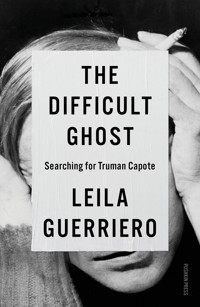
An incisive, stylish exploration of how Truman Capote wrote In Cold Blood and the ethics of storytelling by a star non-fiction writer 'A gem of a book' The Times In 1960, Truman Capote arrived in the small town of Palamós on the Costa Brava.He'd hoped a short break from New York's social scene would help him finish the book he was writing about two young men convicted of a horrific murder. He wound up staying in Europe for three years of agonising self-exile, wrestling with his haunting material, crafting a masterpiece, and waiting for the event that would allow him to finish it - the execution of those two men. Following in Capote's footsteps in Palamós, celebrated journalist Leila Guerriero finds almost no trace of those turbulent years. As she sorts through a jumble of competing local accounts and blatant fabrications, she launches a dazzling enquiry into the curious afterlife of writing - and the dark complexities of turning life into literature.
Sie lesen das E-Book in den Legimi-Apps auf:
Seitenzahl: 167
Veröffentlichungsjahr: 2025
Das E-Book (TTS) können Sie hören im Abo „Legimi Premium” in Legimi-Apps auf:
Ähnliche












12‘Written in Guerriero’s trademark sharp, cutting and highly expressive style… Magnificent’
El Cultural
‘Guerriero is one of the masters of the new Latin American journalism’
Zenda
‘Adopts all of the hallmarks of journalism, autofiction and reportage, then in the same stroke it subverts, betrays and forgets them. The result is dazzling’
Clarín
34
THE DIFFICULT GHOST
Searching for Truman Capote
LEILA GUERRIERO
TRANSLATED FROM THE SPANISH BY MEGAN MCDOWELL
PUSHKIN PRESS
Contents
THE DIFFICULT GHOST
7
Trying out beginnings, here’s one possibility.
Thursday, 13 April 2023, the cemetery in Palamós, a town of eighteen thousand inhabitants on the Costa Brava in Spain. Three individuals—two men, one woman—are searching for a grave. There are vaults, long rows of niches, and some headstones. They have no directions to go on, but common sense makes them think that they’re not looking for a vault—too ostentatious—or a niche—too common—but rather a headstone. Still, though the cemetery is small, the gravestone doesn’t turn up. The woman does a quick Google search, finds a name and an image and tells the men: “Here, this is what it looks like. We have to look for this stone.” They walk down paths they’ve already fruitlessly checked. Suddenly, one of the men stops.
“Here. It’s this one.”
He says it curtly, as if checking his excitement, as if he were afraid of being wrong or being right. The gravestone is large and made of dark granite. New-looking plastic flowers are propped against it. A bronze plaque 8reads, in Spanish: “Robert Ruark. Writer. Born in North Carolina on 29 December 1915. Died in London on 1 July 1965. Great friend of Spain. RIP.” Here lie the remains of the man who, supposedly, first brought the ghost that the woman is seeking to this town.
It’s just one way to begin a story. For a few days, it will seem like enough.
All stories have a beginning. For example, this one: “The village of Holcomb stands on the high wheat plains of western Kansas, a lonesome area that other Kansans call ‘out there.”’
The relevance of the graveyard beginning dwindles as the days pass: turns out, the man who is buried in the Palamós cemetery did not actually bring the ghost the woman is looking for. Or rather: much of what has been written about this subject—as about so many other things—merely repeats previous versions whose doubtful and slippery origins are, precisely: doubtful, slippery.
9What do I feel when I see it for the first time, that Wednesday, 12 April 2023? It’s a simple, two-story house with an unimposing beauty, a tame white animal surging up between sky and sea. What do I feel at the sight of it? We drive in, Juan Pablo Martín Ruiu at the wheel, Nicolás Gaviria in the passenger seat; they’d picked me up in Barcelona, where I’d flown in from Buenos Aires. We enter through the green gate with the word “Sanià” written in artful letters above it, I get out of the car, and Pluma the dog, an eight-month-old Weimaraner, jumps up on me. What do I feel then? When I’m greeted by Ari, one of the house’s three cooks (the other two who aren’t there: Mike, British, very thin, with an expression of mute irony that functions as an opinion on the human race as a whole, and Inma, a Spanish woman who also cooks for the nuns at a convent), and Marisa, an Argentine who is in charge of the cleaning: young, blonde, with light eyes that seem always on the verge of breaking into tears—what do I feel then? It’s not the majesty of the crystal cove that perplexes me, not the cascading rock face, not the trees clinging like claws to the mountain’s throat; rather, it’s the awareness that even if everything is different from when the man who is now a ghost lived here—the house was different, the forest different—I am still seeing what he saw: this landscape 10of dramatic beauty that will be the same every day, and every day so different.
The house was built by Nicolas Woevodosky, a Russian descendant of Tzar Nicolas whose second marriage was to a British woman named Dorothy Webster. Woevodosky came to the Costa Brava at the end of the 1920s, bought seventeen coastal hectares (probably for very little money, since this land so full of pine trees and rocks was impossible to cultivate, and was less valuable than the fertile interior). He built several residences, including the Cap Roig Castle; the monumental home of British actress Madeleine Carroll—star of Hitchcock’s The39Steps—which is nearby, in Sant Antoni de Calonge; and, finally, this house in the Sanià cove, which he originally built for an English lord, and which then passed into the hands of Luis Urquijo, Marquis of Amurrio, and then to the Spanish Ferrer-Salat family, owners of the Ferrer pharmaceutical company. As of 2023, its current owner, Sergi Ferrer-Salat, has made it into a literary residency, a place where several people—three or four at a time—come to do what one American writer did here for several months in 1962: shut themselves away to write. 11
I am assigned a second-floor room with a ceiling of wooden beams and rafters. One of its windows has a mountain view, the other a view of the sea. A balcony leans out over a neat, austere terrace: planted beds, trees, flowerpots with geraniums and cacti. Everything in the room is painted white, including the closet doors. There are chairs with straw seats, throw pillows, wool blankets—a rustic, unpretentious style. My study is next to the bedroom: desk, a single bed, still-empty shelves. The first thing I do is step out onto the balcony that connects the two rooms. The horizon is like a slash, a command: “This is as far as it goes.” In the cove below I see rocks submerged in the water’s dreamy murmur. The only sounds are the waves breaking and the shrill screech of seagulls. Everything is wild and clean, hard, nearly untamed. I’m in this room because, though it’s impossible to prove, it is supposedly the one where the U.S. writer stayed. I’m struck by a thought: “This is a place for disappearing completely.”
From spring until after the summer of 1962, the American writer Truman Capote stayed at this house 12working on the final third of InColdBlood, the book he defined as a “nonfiction novel,” a genre he claimed to have invented. His stay at Sanià was only part of the much longer time he spent on the Costa Brava. He arrived in the area on 26 April 1960, driving from France to the Hotel Trías in Palamós, a small town ten minutes from here. He came with two dogs, a cat, his partner, the writer Jack Dunphy—a serious and silent man, so distinct from Capote and his jolly flitting—plus four thousand pages of notes, documents, and transcripts from an investigation he’d begun in Kansas at the end of 1959, with the goal of transforming them into a book that he hoped to finish quickly. There was no reason to think things would go otherwise: all he needed was for two people to be executed in the United States, and all signs seemed to point to that happening very soon.
Ever since I first started to think about this book—and to size up the obstacles I would encounter in its execution: namely, almost everyone who knew Capote is dead, and the few still alive were in his orbit just to provide him with services, since few of them spoke English and he didn’t speak Spanish—I’ve had its title: The Difficult Ghost. Because I came here in search of 13a difficult ghost, because I myself was traveling with a ghost—the reverberations of a private revolution that seemed to have caught up with me—and because I was full of the spectral emptiness that had been left—as always happens—by the nonfiction book I had just finished writing.
The day I reached Sanià, I went downstairs to the library to meet Nicolás Gaviria. He is a thirty-one-year-old Colombian who manages the residency, reads a lot, listens to sad songs, and runs. He wasn’t there yet, so I took a look around. Domed ceilings, doors secured with showy iron locks—the space has a contemporary air that contrasts with the house’s age, but it’s a discreet contemporaneity, with no trace of aggressive over-design. On the mantel over the chimney—which isn’t used much, because the region’s feverish winds push the smoke back inside—I saw a book. It was thin, white except for the black letters of the title. I went closer and read: Librodefantasmas.Llibredefantasmes. BookofGhosts.“This is going to get interesting,” I said to myself. I opened it. It had some terrifying illustrations.
The Mediterranean Sea lies like a transparent veil over the cove below the house. For nearly six weeks, that 14landscape will seep like an infection into everything I think, feel, and write. But Capote was immune. None of this supernatural splendor is reflected in his work, or in the letters he sent from here, or in the interviews in which he was asked about the writing process behind the book that let him ascend to Olympus, and later dragged him down to hell.
But first, this.
The mother: Lillie Mae Faulk, married at sixteen to Arch Persons. She gets pregnant. Tries to abort. Can’t. Her son, Truman Streckfus Persons, is born in New Orleans on 30 September 1924. Lillie Mae is beautiful, young, she wants to have fun, to travel. To that end, she leaves her little boy locked in the hotel rooms where she stays. She gives explicit instructions: even if the child cries, the staff must not open the door. The boy cries. The staff obeys. Lillie Mae soon separates from Arch Persons.
The child: Lillie Mae takes him to live with some aunts and an uncle in Monroeville, a tiny town in Alabama. The boy is fiercely blond, and effeminate. He makes friends with a neighbor named Harper Lee, whom he calls Nelle. The boy’s mother takes off to New York. 15Every once in a while she reappears and promises to take him with her. “But after three days, she left. And I stood in the road, watching her drive away in a black Buick, which got smaller and smaller and smaller. Imagine a dog, watching and waiting and hoping to be taken away. That is the picture of me then,” says the boy once he is a man.
The father: Vanished, gone, unimportant.
The mother and child: Lillie Mae finally does take the boy to New York, where she has married a successful businessman of Cuban origin, Joseph Garcia Capote. She changes her name to Nina Capote. The child takes his stepfather’s last name. In the fall of 1936, at twelve years old, he writes a letter to his biological father: “As you know my last name was changed from Person’s [sic] to Capote, and I would appreciate it if in the future you would address me as Truman Capote, as everyone knows me by that name.”
In broad strokes: with no family history of artistic vocation, he starts to write. He describes a landscape, a room, what he sees out the window. He edits, teaches himself technique. “By the time I was 16 I was really a competent writer. Technically, I wrote as well then as I do now. Technically I understood the whole mechanism,” he told Lawrence Grobel in the early eighties, in an interview collected in ConversationswithCapote. He 16manages to get a job as a copyboy at TheNewYorker. He shows his stories to people there, but no one is interested. He publishes them instead at Mademoiselle, Harper’sBazaar, and the AtlanticMonthly, where his story “Shut a Final Door” wins the O. Henry Prize. His stint at TheNewYorkerlasts a couple of years. A confused episode during a reading by the poet Robert Frost (Capote, there as a “representative” of the magazine, got a cramp and bent over to ease it. Frost thought he had fallen asleep, got angry, and stopped the reading) leads to Capote a) being fired, or b) quitting. The different versions are, like so many others, contradictory and propagated by Capote himself. He lives with his mother, who consumes barbaric quantities of alcohol and pills. He tries to finish a novel in the midst of a hellish domestic life. He is invited to the Yaddo artist residency, forty minutes from New York. There he meets Newton Arvin, one of the most important literary critics in the United States. They fall in love. In 1948, at twenty-three years old, he publishes his first novel: OtherVoices,OtherRooms. Its success is overwhelming. He is called a genius. The photo printed on the back cover, languid and decadent, generates just as much ink as the book itself: too lascivious, people say, too perverse. He publishes TheGrassHarpin 1951, TheMusesAreHeardin 1956, and Breakfast17atTiffany’sin 1958. In 1954, between one thing and another, his mother commits suicide. By then, he is the fifties version of an influencer: he goes to the city’s most exclusive parties, gets close to beautiful, wealthy women—his “swans”—such as Babe Paley, wife of William Paley, president of CBS; Slim Keith, wife first of Howard Hawks and then of Leland Hayward, a powerful theater producer; Gloria Guinness, wife of magnate Loel Guinness; Lee Radziwill, Jackie Kennedy’s sister; Marella Agnelli, an Italian noblewoman married to the heir of the Fiat empire, Gianni Agnelli. He has the high voice of a talking doll, a funny way of pronouncing his s’s, a deep laugh that doesn’t match that voice. He describes himself as “about as tall as a shotgun and just as noisy.” He is short, very blond, slender, two-faced, intelligent, egocentric, a writer convinced of his own superiority over his peers, someone who has taken a relatively short time to make a name for himself and pry open the gates of heaven.
Then comes that day when he opens up The NewYorkTimes. It’s 16 November 1959, and he reads about something that has happened in Holcomb, Kansas: “A wealthy wheat farmer, his wife and their two young children were found shot to death today in their home. They had been killed by shotgun blasts at close range after being bound and gagged.” He immediately speaks 18with William Shawn, his editor at TheNewYorker—where he has been publishing for years in a stunning revenge arc: from errand boy to star writer—and says he wants to go to Holcomb to write an article about how the crime has affected the townspeople. Shawn agrees.
There is another version—there’s always another version—that says Shawn is the one who proposes two stories for him to choose between: describe the daily life of a cleaning woman in New York, or go to Kansas to relate the murder’s aftermath. In this version, Capote consults with his friend Slim Keith, who advises him: “Do the easier one, go to Kansas.” And he does.
In both versions, Capote is thirty-five years old and beginning to build his coffin. Exquisite. Carved by hand.
During the first days I’ll call it “Sanià.” Later, I’ll call it “the house,” and eventually “home”: “Let’s go home,” or “I need to stay home today.”
I wake up every day at five or five-thirty, when dawn is still some way off. At that hour it’s as though everything is sedated, as if a gentle dejection had descended over the earth during the night. To give life to death, Capote came to this place, this collusion of dream and paradise. 19
Richard Eugene “Dick” Hickock and Perry Edward Smith arrived at the Clutter home in Holcomb on 14 November 1959 after traveling over 350 miles from Olathe. A prison friend of Dick’s, Floyd Wells—the only fake name in the book; Capote changed it because Wells was the one who turned in the murderers for a reward, and he was vulnerable to retaliation in prison—had given him information that turned out to be false: that the Clutters kept ten thousand dollars on hand in a safe. Dick and Perry went into the house, bound and gagged the family—Bonnie, the mother, and Nancy, the daughter, each in their rooms; Herbert, the father, and Kenyon, the son, in the basement—but found no money. They had resolved not to leave any witnesses. They killed Herbert first: cut his throat and shot him in the head. Then it was Kenyon’s turn: they shot him in the face. Then Nancy: shot in the back of the head. Finally, Bonnie: they shot her in the temple. They took a pair of binoculars, a radio, and forty dollars in cash. They drove to Mexico, then returned to the United States, where they left a long trail of bad checks. Dick’s prison buddy connected the dots and informed on him to the police, who started to track him down. 20
Capote, meanwhile, was in Garden City, the town near Holcomb that was the center of operations for the investigation. The townspeople and Al Dewey, the detective in charge of the case, all refused to talk to this city bird who dressed so strangely (hat, scarves, and long coats). He brought along his friend Harper Lee, who had just finished a novel, ToKillaMockingbird,which would win the Pulitzer the following year; she was an unassuming woman with whom the inhabitants of Garden City were more willing to open up.
Up to that point, the story was the one Capote had come to town to cover: the impact of an inexplicable crime on a town where people could no longer sleep peacefully at night, and had grown suspicious of everyone and everything around them. Then Dick and Perry were arrested in Las Vegas. Capote watched them arrive in Garden City, get out of a car in handcuffs, and disappear into the place where they would be held while they awaited trial.
It doesn’t always happen, but there are moments when stories start to transform into something else, when a journalist has to let go of ideas about what they were going to tell, admit they’ve lost control, and change course. That moment came for Capote when he saw the two handcuffed men get out of the police car. The story stopped being Holcomb’s story and became 21the murderers’. That about-face changed everything. In Capote’s book and in his life.
When I arrive at an unfamiliar place it takes me a while to find the right running circuit, a route that will allow me to detach from the world and think. Very demanding terrain is distracting—too much physical effort—and if it’s too dull I’m not stimulated. But here I find my groove quickly on the second day, aided by Nicolás Gaviria’s advice. I leave the house and turn left, run until I reach a wheat field enlivened by poppy patches, then skirt a grove of poplars, and, after traversing a paved stretch, I go on down the long dirt path of the Petit Train route.
One day, on my way back, I run into Pol Guasch, one of the resident writers who will soon be leaving the house. He points to my forearm and asks: “What happened?” I look down: fresh blood. Before I’d left for my run, Pluma had nipped at me, but it didn’t hurt. I wash and disinfect my arm, go up to my room and write down what I had thought about while running: ImagineTrumanCapote’soeuvrewithoutIn Cold Blood.Wouldithavebeenenough?Breakfast at Tiffany’s,Music for Chameleons,storieslike“Miriam,”“Childrenontheir22Birthdays,”thenovellaHandcarved Coffins—wouldtheyhavebeenenoughtoplacehimonthepodiumwiththebest,withthosewhowillendureoveryears,overdecades?Below this annotation is a reference to my wounded arm. It says: Thisstartswithblood. But as time passes the scar turns into a pink line, then white, and, despite the twisted omen, in the days that follow I find only peace.




