


4,49 €
Mehr erfahren.
- Herausgeber: Carly Greene
- Kategorie: Religion und Spiritualität
- Sprache: Englisch
Cultivate a Stronger Sense of Self & Figure Out How You Can Thrive in Life Using the Enneagram, Complete with the Enneagram Test Book!
WHO AM I?
How do I live up to my potential and how to I let go of things that hold me back?
How can I become my best, authentic self without compromising my relationships?
These are just some of the questions we ask ourselves while basking in our solitude. To know who you truly are and how to cultivate a stronger sense of self and purpose, you must first learn to look within, and then figure out what role you play your life and the lives of others.
The world is a melting pot of different personalities and points of view. If you don’t stop to look and absorb the diversity around you, you won’t be able to figure out how to be your authentic self and where you fit into the grand scheme of life.
The beauty about the Enneagram is that it gives you the answers you seek. It is a potent tool for learning about the person you see in the mirror every day. So, how can you use the Enneagram to uncover your true self?
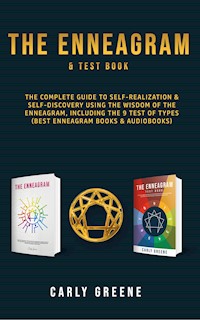
In Carly Greene’s book, “The Enneagram & Test Book”, you will be able to achieve complete self-realization and self-discovery by learning where you belong among the 9 personality types. This complete guide will give you all the tools you need to kick start your journey to becoming your happiest, most authentic self.
Over the course of this life-changing 2-in-1 bundle, you will:
- Get to know yourself better by answering a thorough questionnaire about where you belong in the 9 Enneagram personality types
- Maximize your inherent strengths and unlearn all the habits that hold you back by reading about your childhood patterns
- Get to know your fears and motivations, so you can expertly navigate the world around you and have a firmer grip on who you really are
- Cultivate a stronger sense of self-awareness, so you won’t stray from your values, strengths, life goals, and true calling
- And so much more!
This conundrum has plagued mankind for the longest time, and yet no one has truly figured out the answer… until now!
In this guide, you will be able to uncover the secrets to living your best life by looking within. Find out your strengths, weaknesses, and motivations, so that you can finally move forward and have the life you are meant to live!
Fast-track your journey to self-realization and self-discovery today!
Das E-Book können Sie in Legimi-Apps oder einer beliebigen App lesen, die das folgende Format unterstützen:
Veröffentlichungsjahr: 2020
Ähnliche
















Carly Greene
The Enneagram & Test Book
Table of contents
The Enneagram
Introduction
Chapter 1: The Types
Type 1: The Reformer
Type 2: The Helper
Type 3: The Achiever
Type 4: The Individualist
Type 5: The Investigator
Type 6: The Loyalist
Type 7: The Enthusiast
Types 8: The Challenger
Type 9: The Peacemaker
Chapter 2: Emotions We Find Challenging and How We Deal with Them
Center 1: The Action/Gut Center
Center 2: The Feeling/Heart Center
Center 3: The Thinking/Head Center
Some Thoughts About These Strategies
Chapter 3: Levels of Development
Type 1: The Reformer
Type 2: The Helper
Type 3: The Achiever
Type 4: The Individualist
Type 5: The Investigator
Type 6: The Loyalist
Type 7: The Enthusiast
Type 8: The Challenger
Type 9: The Peacemaker
Chapter 4: Self-Actualization
Type 1: The Reformer
Type 2: The Helper
Type 3: The Achiever
Type 4: The Individualist
Type 5: The Investigator
Type 6: The Loyalist
Type 7: The Enthusiast
Type 8: The Challenger
Type 9: The Peacemaker
Conclusion
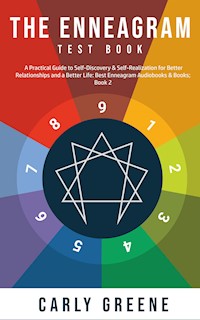
The Enneagram Test Book
Introduction
The Questionnaire
Type One: THE REFORMER
Type Two: THE HELPER
Type Three: THE ACHIEVER
Type Four: THE INDIVIDUALIST
Type Five: THE INVESTIGATOR
Type Six: THE LOYALIST
Type Seven: THE ENTHUSIAST
Type Eight: THE CHALLENGER
Type Nine: THE PEACEMAKER
Conclusion
The Enneagram
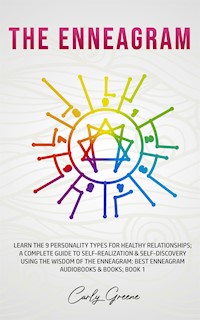
Learn the 9 Personality Types for Healthy Relationships; a Complete Guide to Self-Realization & Self-Discovery Using the Wisdom of the Enneagram: Best Enneagram Audiobooks & Books; Book 1
Introduction
Since the beginning of time, people have always felt that they need to understand themselves better. As humans, we have often cast our curiosity upon the world around us, asking how it behaves and what it is made of. But nothing has been as interesting to us as what makes us human. To understand the experiences of being human and the things that make us behave as we do is an honorable quest. In our journey, we have always wondered what makes people different, what makes us unique, and how we fit in the world. The Enneagram is a personality typing system that is a part of that story. In it, we find nine personality types which are interconnected. It is a nuanced and complex system that shows who we are, what motivates us, our deepest fears, our strengths and weaknesses, and what we do at our worst and best. It is exhaustive. Today millions take the test to find out more about themselves, how they relate to others and the world.
Know Thyself
There is a lot to be gained from understanding ourselves. When we understand ourselves, we know how to accurately predict our behavior. Predicting our behavior allows us to make better plans to better position ourselves to get what we want, and put measures in place to prevent us from acting in undesirable ways. Understanding ourselves gives us insight into our behavior. Insight can heal us; it can make us kinder to ourselves, and reveal our truest desires, freeing us from destructive time-wasting habits. We will know what true success looks like to us, what a happy and fulfilled life looks like with this insight. This can save us a lot of pain and lead us to self-acceptance. With an understanding of ourselves, we can discover how we fit in society, what our role in the world is, and how to maximize our potential in that area. These are important things. They are the things that determine how happy and successful we are going to be in our lives. It is important to know ourselves for these reasons. The Enneagram system gives us that opportunity.
In this book, I will explore what those personality types are. I will also spend some time elaborating on various topics that relate to the Enneagram system. Then we will give each type a roadmap to happiness, self-actualization, and completeness. It is going to be a brief journey, but not one without value.
Chapter 1: The Types
In this chapter, we will go over the descriptions of the nine basic personality types found in the Enneagram. First, I will go over some things worth understanding about the Enneagram system and its structure.
The Structure
The personality types that are in the Enneagram system are interconnected and relate to one another in complex ways. To illustrate these connections and relationships, the proponents of the system have devised a structure. This structure is a cycle with the number 9 on top, right where 12 would be on a clock, and evenly spaced around the cycle are the remaining numbers placed clockwise. Each number represents a personality type. Inside the circle, there are lines that connect the numbers in very specific patterns. These lines indicate what are called directions of integration and disintegration. Each type will have two lines emanating from them that connect with two other types. One line will be the direction of integration for that type, and the other will represent the direction of disintegration. These lines tell us what that type is likely to look like when under stress (disintegration) and when things are going well (integration). For instance, a one who is doing well will act as a healthy seven at the same developmental level, and a one who isn't will act like a five of the same developmental level. We will talk more about developmental levels later.
The position that each personality type takes on the cycle is not arbitrary. The personality types flanking a given personality type are generally present within the personality in the middle. These personality types are called wings. When you take an Enneagram personality test, you will be given your dominant personality type as your type. This means the number you are given is the personality type that fits you best. Then you will be given scores about your wings. This will tell you about the secondary personality type which also best represents you, think of this as another side of your personality. You will also get scores about the extent to which you can find yourself in other personality types in the system. People generally have one dominant personality type and a wing. The culmination of these types is the amalgam of your personality. So you will hear some people saying, “I am a one with a nine as a wing.” This just tells us the two most dominant personality types within that person. Still, strictly speaking, you can find bits of yourself scattered about the structure. This is why a one can act like a seven in certain situations, but their dominant type is who they are most of the time or deep down.
The numbers given to the types say nothing about whether or not they are better than other types. An eight is not better than a two and vice versa. Even when we talk about the traits belonging to any of the personality types, no one is better than anyone else. However, it may appear so in the real world. The environment may reward certain personalities more than others because they have skills that are highly valued. Still, the opposite can be true in another environment.
All the types in the Enneagram have basic fears and desires. Their desire is the thing they want the most, and their fear is the thing they are terrified of.
Let’s turn to our personality types.
Type 1: The Reformer
They are also referred to as the reformer. Type ones have a great sense of right and wrong, and they are driven by a sense of purpose to improve things and the world. They want more than anything to be good. They would easily sacrifice comfort and other things so that they can be an instrument of change. This type is well known for being organized, disciplined, and principled. Ones fear being corrupted and being evil. Since they have such high standards and work hard to uphold them, they can sometimes be critical and express resentment when others get by with little effort. Since they have worked so hard and everything they do is justified in their minds, they can be impatient with others who don't show equal sensitivity or frugality. When ones are at their best, they become like wise gurus. They are discerning, and they inspire great admiration from others through their moral heroism.




