


Erhalten Sie Zugang zu diesem und mehr als 300000 Büchern ab EUR 5,99 monatlich.
- Herausgeber: The O'Brien Press
- Kategorie: Für Kinder und Jugendliche
- Serie: The Grand Central Cinema Club
- Sprache: Englisch
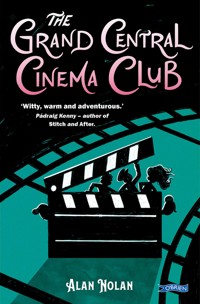
Dublin, 1937 At the Grand Central Cinema on O'Connell Street, the children of Dublin watch their Hollywood heroes on the silver screen When Sylvie meets tenement boy Jem and his daredevil sister Juno, they bond over their love of movies. But an accident means Juno will miss the latest film at the Grando, so they hatch a plot to hijack the movie reel and do a top-secret private showing instead! Meanwhile, a sneak thief called The Magpie has his eye on the Grand Central Cinema too. Can Sylvie and Jem revive Juno's ailing spirits by bringing the movies to her? And will they foil The Magpie's feather-brained plan in time?
Sie lesen das E-Book in den Legimi-Apps auf:
Seitenzahl: 258
Veröffentlichungsjahr: 2025
Das E-Book (TTS) können Sie hören im Abo „Legimi Premium” in Legimi-Apps auf:
Ähnliche













![Tintenherz [Tintenwelt-Reihe, Band 1 (Ungekürzt)] - Cornelia Funke - Hörbuch](https://legimifiles.blob.core.windows.net/images/2830629ec0fd3fd8c1f122134ba4a884/w200_u90.jpg)


1
‘A dazzling delight from first page to last. Set against the golden age of cinema in Ireland, this is a perfect read for young dreamers, mystery lovers and anyone who relishes a great story.’
Patricia Forde
Laureate na nÓg (2023–2026)
‘A book about cinema, daydreams, the power of stories, and so much more. Witty, warm, and adventurous. A properly rollicking yarn.’
Pádraig Kenny – author of Stitch and After.
‘Perfect for young history and adventure fans. A magnificent ode to early cinema and to the creativity and ingenuity of young people!’
Sarah Webb, author of the The Weather Girls.2
3
4
Dedication
For Johanna Harwood
Contents
8
10
Cast List
Sylvie Pickering
Clever, well-spoken, witty and feisty; she plans to be a movie director!
Jem Devine
Works before school as a paperboy, but dreams of writing adventurous films.
Juno Devine
Jem’s twin sister and best friend. She’s the daredevil of the group.
Mario and Bren-Bren
The other members of The Grand Central Cinema Club.
Vish Kumar
Sylvie’s strait-laced pal.
Ray Barrett
The proprietor of the Grand Central Cinema.
‘Captain’ Buggs Lannigan
The stern head usher at the cinema. He regards his Saturday morning pre-teen audience as a rowdy inconvenience.
Tripp Hazzard, the Lonesome Yodelling Cowboy
A bone-fide movie star who is famous for playing cowboy heroes on the silver screen.
Bunny and Warren
Bunny Carter and Leopold Warren are two Hollywood comedy stars. Their movie personas of large, earnest but dim-witted Bunny and small, conniving but dim-witted Warren are mostly true to life.
The Magpie
A mysterious gentleman thief who seemingly travels the world, stealing precious items for his collection.
Friday 7th May, 1937
Sylvie Pickering climbed the tall stepladder like a swashbuckling pirate scaling a mainsail mast, the fraying end of a length of rope gripped hard between her gritted teeth. The ladder wobbled slightly as she neared the middle rungs and she let out a soft, involuntary YARR as she pulled herself up with whitening knuckles, never slowing her ascent despite her slight fear of heights and keeping her eyes on the crystal chandelier that hung above.
Reaching the uppermost rung, she carefully stood 12on the ladder’s tiny footplate, stretching out one hand to the large room’s pristine, cream-coloured ceiling to steady herself. The stepladder tottered uncertainly from side to side, its vulcanised rubber-coated feet lifting and dropping on the Chinese-patterned rug far below, making Sylvie gasp and reminding her of how her father swayed from side to side when he came in from a ‘late meeting’ at the bank. Like a pirate captain on the poop deck, she thought to herself. Aye aye, Cap’n Pickering! She stifled a nervous giggle, and nearly dropped the rope from her teeth. Carefully, Sylvie reached out her free hand to grasp the cool metal of the chain that attached the chandelier to the ceiling and slipped the end of the rope through one of the links.
Mission accomplished, she hopped down off the ladder to the rug where she grabbed both ends of the rope and tugged, gently at first, then more sharply. The chandelier tinkled, but hung firm. Good-o, she thought with a small smile of satisfaction, that should hold him – even if he is a great big Butterball!
She looked around the room for the Butterball, 13finding him wedged tight between the back of a maroon velvet sofa and the plushly wallpapered wall. Baby George. She grabbed her baby brother by a plump leg and pulled. In her head, Sylvie could hear the noise of a comedy P-PLOPPP! as his round, wriggling body emerged from its hiding place. Such a Butterball! thought Sylvie, looking fondly at her baby brother. He’s as wide as he is tall, he’s ninety per cent fat and, to cap it all, he’s almost entirely spherical. ‘Good baby,’ she said and rubbed her nose against his affectionately. ‘Are you ready to be a movie star?’
George looked up at his sister and smiled at her adoringly, wet strings of drool gurgling and dripping from his lips. Cute as a button, thought Sylvie, but so startlingly rotund!
‘It’s natural to be podgy when you’re a baby,’ Sylvie’s mother had said when Sylvie had asked why Baby George was so spherical. ‘Roly-poly babies are just too cute. Having a tubby toddler is rather fashionable at the moment – chubby children are simply the bee’s knees – the very cat’s pyjamas, as it were. The guests at my reading evenings simply 14melt with adoration when I bring him down to the drawing room for a show-and-tell.’
Sylvie thought her mother’s regular evening guests – poets, writers and journalists, mostly – must be a soft-headed lot if they found a mere baby adorable. On top of that, she wasn’t sure that Baby George could be described by anyone as ‘the bee’s knees’; the Butterball’s legs were so thick she couldn’t make out any sign of knees at all.
One saving grace for Sylvie was that while her parents’ attention had been focused on how adorable her Butterball baby brother was, they hadn’t been paying too much attention at all to what the Butterball’s big sister had been getting up to. And the Butterball’s sister had been getting up to quite a lot.
The other saving grace was that although Baby George was big for a baby of nine months, he was, by far, the quietest baby she had ever come across. None of her friends’ baby brothers or sisters were as seemingly soundless as the Butterball; Rosalie Kemp had a little sister who could wail like 15a mountain goat when she was hungry or her nappy was at maximum capacity, and frequently howled the house down, rousing the whole Kemp household from their sleep, but Sylvie’s baby brother was an oddity – he hardly ever made a sound louder than a happy gurgle or a quiet whimper. And that suited Sylvie’s purposes to a tee.
Sylvie looked down at her brother and winked. He stared back passively and silently, a small trusting smile on his lips. She carried him to the Chinese rug and sat him down. He immediately toppled over, then seemed to bounce back into a sitting position again, much like those round-bottomed, wobbling clown toys that Sylvie had seen in the windows of Switzer’s department store on Grafton Street. ‘Stay,’ she ordered, and, with a grunt, hefted the step ladder over to the side of the room beside father’s tall, mahogany bookcase. She closed one eye and pointed a meaningful finger at her baby brother. ‘Staaaaaa-aaayyyyy,’ she said again and, smiling, ran up the two flights of stairs to her bedroom.
A few moments later she clattered excitedly back 16down the stairs, thankful that Father was at work at the bank and Mother was playing bridge with the ladies at the Royal Hibernian Hotel, and that neither could scold her for making such a racket. Even Kathleen was busy in the basement preparing for the weekend parties her parents regularly threw, and was well out of earshot.
In an instant, Sylvie was back on the rug in the centre of the drawing room, arranging the large cardboard set she had brought down from her bedroom around her baby brother. It was a long backdrop depicting a city with tall skyscrapers and buildings with dome-shaped roofs, all painted by Sylvie herself. At the bottom of the backdrop, at street level, Sylvie had drawn some automobiles, copied from one of her father’s car catalogues, along with some motorcycles and a fire engine. Miniature hand-drawn pedestrians were looking up, their hands in the air and their faces tiny pictures of terror. She had made some cut-out cars too and placed them, along with even more minuscule cut-out cardboard people, walking 17dogs and selling papers, at the front of the rug.
All these pieces were painted in shades of grey and black. There was no point using colour paints, Sylvie reasoned, because black and white and grey was what she saw on the big screen in the picture house and in her imagination.
She knelt down and surveyed her work, checking everything was perfectly in place, and then took one end of the rope that was hanging from the chain, way up at the top of the chandelier. She tied it around her baby brother’s waist, making sure the knot was tight and secure, then she grabbed the other end of the rope and pulled down on it, arm over arm. Her baby brother George was instantly hoisted up in the air. He hung amongst the cardboard city set, about a foot and a half over the rug, swinging slightly and turning slowly as the rope twisted around. The Butterball looked over at his big sister and giggled. Sylvie tied the other end of the rope to the leg of the maroon velvet sofa; she had hoped it would be heavy enough to hold the baby’s considerable weight, and to her delight she 18could see that it just about was. Sylvie returned to the rug, grabbed her baby brother by the leg, drawing his rotund, hanging body up and across the set, and then let go. Baby George swung silently back through the streets of the cardboard city, his eyes wide and a long line of drool dangling from his smiling lips.
‘ATTACK OF THE BUTTERBALL – take one,’ Sylvie Pickering said to the drawing room in a low, deep, drawling tone. ‘ACTION!’ She raised another homemade piece of cardboard up to her face. It was made of hard card, painted black and about the size of a writing page. In the centre of this card was a cut-out rectangular hole, decorated around the edges with a white squiggly line. This was Sylvie’s cinema screen, and though it she could see a giant flying baby, terrorising a big city.
‘AAAARRRGGGGHHHHHH!’ cried one of the citizens, raising his arms in fright as the monstrous baby-shaped behemoth flew overhead.
‘WHO WILL SAVE MY CHILDREN?’ shrieked a lady pushing a pram as the humungous baby flew 19back and forth over their cardboard heads.
In Sylvie’s imagination vehicles crashed into each other, Ford Model Ts slamming into the side of fire engines as their drivers looked up in abject terror.
‘OH MY GOODNESS,’ shouted a fireman. ‘WHAT IF THE GIANT FLYING BUTTERBALL BABY’S NAPPY-PIN GIVES WAY AGAIN? WE’LL ALL BE DROWNED IN WEEEEEEEE!’
The Butterball’s pudgy arm caught the side of a tall skyscraper and the whole city shook.
‘KKK-KKERRR-ASSHHHHH!’ said Sylvie, grinning widely as she stared through her cinema viewfinder at the scene of destruction she had created. ‘Ha-HAA! Absolutely perfect …!’
‘SYLVIA PICKERING!’ shouted a shrill voice from the doorway. ‘TAKE YOUR BABY BROTHER DOWN FROM THERE THIS INSTANT!’
‘Mum!’ cried Sylvie, turning to look at her mother through the cardboard viewfinder. Her mother did not look happy.
‘Really,’ said her mother in a tight voice. ‘I am 20having quite the day. First, I get to the Royal Hibernian to find that Polly Prendergast has laryngitis and can’t join us for bridge, leaving us with three so we have to abandon the game; then I get to Bewley’s Café only to find they’ve run out of coffee – Bewley’s? Running out of coffee! I ask you! – and then, to top it all, I ripped one of my brand new silk stockings getting out of the taxi-cab on the way back.’
‘And now,’ she said, her eyebrows raising, ‘now I come into my own drawing room to find … this spectacle before me.’
‘It’s a motion picture, Mama, not a spectacle,’ said Sylvie. ‘Attack of the Butterball – George is playing the part of a giant flying baby who is destroying the once beautiful city of Sylvia-ville.’ She looked at the chubby child swinging slightly amidst the rubble of her handmade cardboard set. ‘He loves it, he’s a born movie star!’
As if confirming Sylvie’s claim, Baby George let out a long BUUUUURRRPPP and giggled.
‘Sylvia Esther Pickering,’ said her mother, untying Baby George and carrying him to the sofa. 21‘This is the fourth time this month that you have been caught playing make-believe movies with poor George as the main character. You had him dressed up in furs, sitting on the top of your bedroom wardrobe –’
‘Ah, yes, that was for The Curious Case of the Himalayan Yeti,’ said Sylvie. ‘One of my better movies – loads of action.’
‘You threw him off the top of the wardrobe!’ said Mother.
‘The Yeti did!’ protested Sylvie. ‘Anyway, he was fine; he fell onto my bed!’
Baby George laughed loudly from the sofa, as if remembering the fun he’d had bouncing on the bedspread.
‘Then there was the time you had him dressed up as a cowboy with your father’s good fedora hat on his head and two “six-guns” tied to his little hands with rubber bands.’
‘The Legend of Bronco Bill,’ said Sylvie. ‘I had to use rubber bands, he wouldn’t hold the guns.’
‘They weren’t guns, Sylvie,’ said Mother. ‘They 22were two of my best forks from the sterling silver cutlery set Grandmama gave us as a wedding gift – you bent both of them almost in two! And, if I remember correctly, you also drew a big moustache on George’s face with India ink that wouldn’t come off! The poor angel looked like a miniature cowboy for a whole week!’
Mother does remember correctly, Sylvie thought, Baby George looked every inch the cowboy Bronco Bill – and besides, the moustache made him look quite elegant.
‘It has to stop, Sylvie,’ said Mother. ‘I’m all for you wanting a job in motion pictures – in fact, I encourage it; we have to show the world that girls and women can do everything – but you simply cannot keep on behaving like a … a … giddy kipper, and abusing your baby brother like this. He is not your plaything and his is certainly not your movie prop.’
‘But, Mum,’ pleaded Sylvie. ‘He loves being a film star!’
Sylvie’s mother frowned. ‘Daddy and I have been talking about this and decided that the next time you misbehaved, you would simply have to be punished.’23
‘And the punishment would be … no Saturday morning trips to the cinema for a month – the Palace is out of bounds!’This was not good news for Sylvie; the Palace Cinema in Great Brunswick Street was her favourite place in the whole world, just around the corner from their house on Merrion Square, and Saturday mornings were the best time of all, when all her friends, as well as children from all over the south of Dublin city, flocked to the special Saturday showings of children’s movies, cartoons and action serials. The Palace was where kids of all social backgrounds met and mingled and sat together in row upon row of plush seats, their eyes glued to the thrilling adventures unfolding in black and white on the huge silver screen. It was a magical place where Sylvie travelled through space and time, her imagination soaring as she found herself in ancient Egypt one week, and the old Wild West the next. One Saturday morning she would be transported to outer space to meet alien emperors, and the next weekend she could be on the deck of a tall-sailed 24ship, fighting off menacing pirates and brutal buccaneers.
Sylvie opened her mouth to protest the unfairness of this horrendous punishment, but her mother cut her off with a raised hand and a stern look.
‘And don’t even think of going to any of the other Southside cinemas,’ she said, checking her torn stocking. ‘They’re all out of bounds too! Now,’ said Mama. ‘That, as they say, is that. I must go down to the kitchen to help Kathleen with preparations for this evening’s salon. And you have to tidy up this room; guests will be arriving at eight o’clock sharp!’
Ugh, thought Sylvie, not another ‘salon’. Her mother and father were always holding salons – reading parties – almost every Friday and Saturday evening where their highfalutin’ Dublin friends would turn up to read poetry aloud, eat, read even more poetry aloud, drink, and blah-blah-blah the night away. Sylvie was always banished to her bedroom where she often found it hard to sleep over the muffled noise of tipsy gentlemen and ladies arguing over the poetry of W. B. Yeats. 25
She watched with her arms folded as her mother plucked Baby George from the sofa and left the room, glaring at Sylvie as she staggered under the Butterball’s weight.
A thought suddenly occurred to Sylvie, and as it did, a smile spread across her face. Mother said the Palace and all the other Southside cinemas were out of bounds, she thought. But … she never said anything at all about NORTHSIDE cinemas …
Friday 7th May, 1937
Jem Devine yawned as he wheeled Bessie, his battered black bicycle up Sheriff Street, the rusty basket attached to the bike’s handlebars half-full of jam jars that clinked and rattled noisily as the wheels rolled over the street’s cracked paving stones. He counted the glass jars while he walked. One, two, three, four, five, six – that’s two for Mario, two for Bren-Bren and two for Juno. Unless I can get another couple off the O’Malleys or the Delaneys, I’ll have to actually pay real money for myself this time. 27Either that or I save my pennies and initiate ‘Plan B’ ...
It had been a long day and it was only four o’clock. Jem had been up and out at seven that morning, cycling from his home in Sheriff Street to Middle Abbey Street with his worn-out leather school satchel on his back. In a laneway beside the tall, imposing Independent House he had ditched both Bessie and the schoolbag, and collected two tied bundles of the morning edition of the Irish Independent from a grey-haired porter through hatch in the wall, and then had brought the bundles up to O’Connell Street to sell. His pitch was under the stone portico of the GPO – the General Post Office – a spot much envied by the other paper boys. There were plenty of commuters passing through on their way to work, so on a good morning you could sell all your papers before half past eight; and you were mostly undercover, so when it rained (and in Dublin it rained quite a lot) you could stay reasonably dry. The only downside to being under the portico was that it was open at both ends – when a breeze picked up, it could become a bit 28of a wind tunnel, and if a paper boy wasn’t careful, he could end up with his papers flying up in the air and wrapping themselves around the GPO’s stone columns. Jem was careful though; he always weighed down both bundles with broken bricks as soon as he untied them and never held more than five newspapers under his arm at any time.
That morning he had a quick read of the front page of the paper so he could both familiarise himself with the day’s news and find a ‘hook’ that would make the potential punters’ ears prick up with interest and make for easy sales. There were stories about the German leader, Herr Hitler, but they were boring; politics didn’t sell papers. A story about the jewel thief called the Magpie was more promising; people loved to read about robberies, especially ones done by gentlemen thieves. Then Jem’s eyes lit up when they landed on a story, right at the bottom of the front page – this one was a story with enough glamour and adventure to make these newspapers fly out of his hands! These babies would sell out in no time!29
‘IIIIIINNNNNNN-DO-OH!’ he shouted, holding up a copy of the Irish Independent with one hand, with the rest under his arm. ‘IIIIIINNNNNNN-DO-OH! AVIATOR AMELIA EARHART VOWS TO BE FIRST WOMAN TO FLY AROUND THE WORLD! IIIIIINNNNNNN-DO-O-O-OHH!!’ He was right: the action-packed story of the female pilot defying all odds was just the kind of derring-do excitement that punters wanted first thing on a Friday morning, and he had sold all his papers by twenty past eight. He trotted back around to the laneway beside the Indo building with a grin on his face, knocked on the hatch and collected the few pennies that made up his day’s wages. He grabbed his bike and cycled to school, delighted with the jingle in his pocket and the fact that he wasn’t going to be late and wasn’t going to have to write lines. ‘Yee-haaawwww, Bessie!’ he’d murmured to himself as he rode. ‘Ride ’em, cowboy!’
The day was darkening as Jem wheeled his bike around the large pile of rubbish bags and rusty metal 30dustbins that almost blocked the stone entrance steps to Number Eighteen Lower Sheriff Street, and propped Bessie up on the outside railings, sticking her handlebar though the black, flakily painted rungs. Number Eighteen was a crumbling Georgian building that housed eight large families in its basement and four storeys above, and the Devines lived on the top floor, with Jem, his mam, his dad and his twin sister Juno occupying three rooms – two bedrooms and a living room with a small kitchen at one end – and another family living in the other three. All the families in the house shared a bathroom at the back of the ground floor, and Jem thought, although it could get crowded at times, it was a great thing to have an indoor lavatory – some of his pals had to pee in an outhouse in the yard. Bren-Bren told him that one night he had been dying to go to the toilet and had put his coat on and had trudged through freezing-cold hailstones to use the outdoor lavvy only to find that a vagrant had climbed the yard wall and was curled up asleep on the toilet, with his head on the torn-up strips of 31old newspaper they used as loo paper! Bren-Bren thought that having an indoor lavvy, one you could pee in without having to dress up like an Arctic adventurer, was the height of extravagant posh-ness.
In the basement of Number Eighteen an elderly couple, called the Paynes, lived with their big dog, Bertie. Jem wasn’t sure if they were married or if they were brother and sister, but they were both very friendly and he often saw the two out walking with their huge, black dog – despite their advanced years they seemed to be still able to ramble all over the city. Sometimes they gave Jem or his sister a penny to walk Bertie for them, and he and Juno were always happy to.
Jem was transferring the jam jars from the rusty bicycle basket into his school satchel when there was a short cry of YIP! YIP! from above, followed by a whooshing noise and a huge WHOMPPPPP! into the pile of rubbish bags beside him. Two of the thin cloth bags exploded, sending rotting cabbage leaves and potato peelings flying past Jem’s head, and a dislodged dustbin lid clattered to the ground 32and rolled noisily across the paving stones. A head popped up from the cloud of dust at the centre of the now flattened bags and began to cough. ‘JUNO!’ exclaimed Jem, looking from his grime-covered sister up to the first-floor window she had just jumped from. ‘That’s the third time this week you’ve jumped from Missus Wilson’s window! Ma told you – no more stunts!’
Juno picked a piece of potato peel from her mop of curly brown hair and winked at her brother with a bright blue eye. ‘I’ve told you before, Jem Devine, if you’re dead set on bein’ an actor in the movies,’ she said, ‘then you’re goin’ to need a stunt double – an’ who could be a better double for you than your own twin sister? F’rinstance,’ she said, standing up in the middle of the rubbish bags she had used as her smelly safety net and dusting herself down, ‘how are you goin’ to be there up on the silver screen as the Sheriff of Sheriff Street, shootin’ your six-guns and ridin’ the range? You can’t even ride a horse!’
‘Neither can you,’ countered Jem. At least he thought Juno couldn’t ride a horse, but she was very friendly 33with the milkman and he had a horse that pulled his dray along, a skinny, bony pony – maybe she could have learned how to ride on that?
‘That’s not the point!’ said Juno. ‘The point is you’re scared stiff of horses, but I’m willin’ to learn!’
Jem opened his mouth to speak, but Juno cut him off. ‘And what would happen if a big Hollywood director wanted you to swing from tree to tree like we saw in that Jungle Boy film last week,’ she said, ‘and to let go an’ land in a crocodile swamp? You couldn’t do that either! You’re scared of heights too! And of crocodiles!’
Jem couldn’t argue with that; as much as he hated to admit it, and as much as he would never dream of admitting it to his friends, he was actually scared of most things. He didn’t like going on the bus because the speed frightened him – some of those buses were known to travel at speeds of up to thirty miles an hour! He didn’t like being high up, although it wasn’t so much the fall he was afraid of, it was the hitting-the-ground part that he had the real problem with. He was especially nervous around animals, although he made exceptions for friendly ones like the big 34downstairs dog Bertie. The worst things in Jem’s opinion, though, were spiders, rats and mice. Spiders, rats and mice gave Jem the walkin’ heebie-jeebies. And when you lived in a crumbling, tottering old building like Number Eighteen Sheriff Street, spiders, rats and mice were as much your neighbours as Bertie the dog and the other seven families who lived there. Jem shuddered.
Juno coughed again, a rattling rasp that quickly turned into a husky laugh. ‘Don’t worry, Jem,’ she said, wiping her mouth with her sleeve. ‘Luckily you have a twin sister who is more than happy to do the brave stuff for you. All you have to do is look good.’ She sniffed and grabbed his arm, leading him up the steps to the hall door of Number Eighteen. ‘An’ because we’re twins,’ she smiled. ‘I’ll look just as good as you do while I’m doin’ it!’
* * *
Jem filled a bucket of water from a metal tap at the side of the house and dragged it up the stairs 35to the fourth floor, wishing heartily that the running water that serviced the lavvy on the ground floor reached up as far as the fourth. As he waddled upwards, the water washed from side to side in the rusty receptacle, sloshing over the sides and wetting the wooden steps.
‘Careful, Jem,’ said Juno, following up behind with the jam jars clinking in her arms. ‘Missus Wilson won’t be happy if you get the walls wet on her landin’ again.’
Jem grunted, shuffling his feet across the bare, creaky landing floorboards. ‘Missus Wilson should be more annoyed that an eejit girl is breakin’ into her house when she’s out and throwin’ herself out of the window.’
Juno fluttered her eyes at her brother. ‘If she doesn’t want a professional stuntwoman practisin’ her craft,’ she sniffed, ‘then she shouldn’t leave her door unlocked.’
After another two landings, and another two entreaties from Juno not to wet the walls of either for fear of a telling-off from Missus Costello on 36floor two or Missus Whelan on floor three, Jem and Juno reached their own family rooms on the fourth floor. Having tipped the remaining contents of the bucket into the big (but slightly cracked) ceramic sink beside the window, Jem sat down, exhausted, on the threadbare sofa and Juno set about washing the jam jars in the sink. Old Buggs Lannigan at The Grando was known to reject jam jars if they still had any vestiges of jam inside them, on the grounds that they were ‘too mouldy and sticky’ to be used as currency, and a ‘potential hazard to the health of our distinguished staff’.
Juno herself had once witnessed the red-faced and usher-uniformed Sergeant Lannigan roaring at a disconcerted six-year-old to ‘Take away them gooey death-traps!’ Didn’t the child know that rotten old stale jam was a primary cause of TB? The poor kid was ejected from the cinema and had to walk home to Gardiner Street, his small head hung in disappointment at not being able to view that Saturday morning’s cartoon, newsreel and two main features, and the unusable, unwanted, sticky jam jars clatter37ing together in his sandwich sack. Juno had watched this spectacle unfold with wide eyes, and from that morning on had carefully washed out the jam jars that Jem collected. She might be a daredevil, but risking life and limb and risking missing out on her beloved Saturday mornings at the Grando were two very different things!
From his vantage point on the low sofa – the legs on the sofa were short, Jem knew, because the flat’s previous tenants had sawn off the last two inches of each one for firewood – Jem surveyed his family home. It didn’t take long; the flat was fairly small. The Devines shared the fourth floor of their rickety Georgian building with the Deveneys across the hall. The Devines and the Deveneys, thought Jem, right beside each other, sharing the same floor – it’s a lucky thing we don’t get much post, the postman would get very confused.




