


8,39 €
Mehr erfahren.
- Herausgeber: David Fickling Books
- Kategorie: Für Kinder und Jugendliche
- Sprache: Englisch
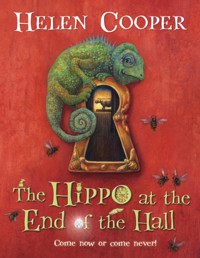
The invitation was delivered by bees. It wasn't addressed to anyone at all, but Ben knew it was for him. It would lead him to an old, shambolic museum, full of strange and bewitching creatures. A peculiar world of hidden mysteries and curious family secrets . . . and some really dangerous magic.Filled with her own wonderful illustrations, The Hippo at the End of the Hall is Helen Cooper's debut novel.
Das E-Book können Sie in Legimi-Apps oder einer beliebigen App lesen, die das folgende Format unterstützen:
Seitenzahl: 301
Veröffentlichungsjahr: 2017
Ähnliche








![Tintenherz [Tintenwelt-Reihe, Band 1 (Ungekürzt)] - Cornelia Funke - Hörbuch](https://legimifiles.blob.core.windows.net/images/2830629ec0fd3fd8c1f122134ba4a884/w200_u90.jpg)



For Ian Butterworth –
for designing this book and all the others.
CONTENTS
OUT OF HOURS
AT THE DARKEST AND MOST DESPERATE HOUR, when everyone should have been sleeping, a dull light gleamed from a puffer-fish lamp in the office at the Gee Museum. The light was so dim that it hardly spilled more than shadow over the miniature printing press that stood on the desk. Yet somehow one last invitation was printed. And somehow, five tiny words were added on the reverse, though these were written with a pen that was almost too large to hold. This is what the words said:
Come now or come never!
Afterwards the light blinked out.
Then nothing moved until dawn, when the front doors opened just a crack, and out flew an envelope. It was addressed to 33A Treadlemill Rd. It was carried off into the pewter fog by bee-mail.
CHAPTER 1
The Invitation
33A Treadlemill Road was a basement flat beneath a shop on the other side of town. A boy called Ben Makepeace, who had eyes as sharp and dark as a sparrow, and tousled tawny hair, lived there with his mum. Sometimes Ben helped in the shop. Other times he helped in the flat. That morning, when he went to bring in the milk, he found an envelope propped up behind it.
Ben was always wary of letters. Occasionally mail still came addressed to Dad; but he saw with relief that this wasn’t one of those. And it wasn’t addressed to Mum either. In fact, it wasn’t addressed to anybody at all. The flap of the envelope was unsealed. Ben hoped it wasn’t another bill. He peeped inside.
At first, seeing only a piece of thin card with a picture on it, he guessed it was an advertisement. He sneaked it out to see it better because the picture showed lots of animals. Ben liked animals – though he didn’t have any pets: they weren’t allowed to keep pets in that flat. In any case, these weren’t the sort of animals you could have kept at home. There was a giraffe, and a hippo, and a grumpy-looking owl, and in the bottom right-hand corner was a shrew-like creature with a pendulous nose. Ben’s heart began to beat faster as he gazed at the picture, for it stirred his most secret memory – a secret that he had never told to anyone at all.
‘What are you doing out there?’ called Mum.
Ben guiltily slipped the card back inside. Then he brought the milk to the table and laid the envelope beside it.
Mum had the same eyes as Ben but different hair, and she ran the shop upstairs. ‘What’s that?’ she said, glancing down.
‘It came with the milk.’
She opened the envelope, then went very still. Yet all she said, after glaring for a while, was: ‘I thought the old Gee Museum had closed down.’
Ben took the card from her and examined it as he munched his crunchy almond flakes. The shrew in the picture was holding a pen as if it had just finished writing the motto at the bottom, which read:
COME INSIDE SOMETIME …
‘It looks like an invitation to get in for free,’ he said. ‘Maybe it’s reopened.’
‘Maybe,’ said Mum. She was biting her lip.
‘I’d like to go,’ said Ben.
‘Would you?’ Mum sounded tense.
‘It says admit two.’
‘But I’m not sure when I’d have time.’ She looked rather pale. However, the post had arrived, and as she glanced through it Ben could tell there were a lot of bills. He knew Mum was worried about money. He knew she couldn’t often leave the shop.
Their shop was called ‘Perfect Pastimes’. Once it had been simply a craft shop, but nowadays Mum sold a bit of everything: art materials and embroidery silks, buttons and wool, stationery and stickers, and the kind of model kits that you took home and painted, and some interesting books, and all sorts of oddments that children liked. Sometimes it was busy. More often it was not, though Mum liked Ben to help on Saturdays in case there was a rush.
Tomorrow was Saturday.
Ben waved the invitation. ‘Could I go myself on Sunday?’
Mum frowned at the bills and said nothing.
‘You’re always saying you used to go everywhere on your own at my age.’
‘True enough,’ said Mum, though her voice was unusually gruff.
‘Well, then … can I go on my own?’
‘It’s … I don’t think it’s … Look, I like you to be independent, but it’s a bit far on your own. Anyway, I don’t think you’d like it.’
‘Where is it?’ Ben turned the slip of paper over. There was no address on the back, only those five tiny handwritten words:
Come now or come never!
He peered inside the envelope and found a small brown feather nestled in the bottom – nothing else.
Mum said, ‘It’s down by the river on the other side – close to the bridge, I think – not far from the weir, but I certainly don’t want you going near that.’
Ben sighed. ‘I won’t go anywhere near the river – I’ve promised you I won’t a million times. I want to go to this museum. It’s not that far – why don’t you want me to go? Is there something you don’t like about it?’
Mum began unpacking a box of art equipment to take upstairs. She hadn’t finished her porridge. Ben was afraid she wouldn’t say any more as she so often went silent when she wanted to end a conversation. But after a moment she continued, ‘I never said I didn’t like it. It’s just … Anyway – since when have you been interested in museums?’
‘I’m interested now. Could we have a look for it online?’
She chewed at her lip. Then she relented. ‘I suppose you could have a quick look before school, seeing as you’re ready. Mind you, I doubt it’ll have a website – unless it’s changed a lot. It used to be run by a very old lady – though she must be dead by now.’
There wasn’t much time. And Ben couldn’t find any listing for the Gee Museum, although he found a website for the newly refurbished Discovery Museum. It looked very modern.
Mum glanced over his shoulder. ‘Perhaps you could go there instead,’ she said. ‘Look, it’s in the centre of town – that’s much closer. And it’s got stuffed animals too. And … wow, look at that smart lady who runs it. Do they think she looks welcoming, I wonder?’
‘She looks like a giant insect,’ giggled Ben. ‘I’m not going there – she might eat me up.’
‘Don’t be so cheeky,’ said Mum, but she was smiling in spite of herself.
Ben didn’t want to spoil her smile, so he didn’t mention the museum again, but before he left for school, he propped the invitation on the shelf in his room where he kept his collection of special objects. He decided to ask his teacher about the Gee Museum. She might know something.
OPENING HOURS
DAYTIME AT THE GEE MUSEUM PASSED AS USUAL. The building was crowded as always – with shadows; for the windows were small, and the walls were a shade of mahogany brown, and the lights were powered by a generator which had never worked terribly well even when it was new. Nowadays it was not new and those lights shone like a torch with an old battery. Sometimes they flickered and sometimes they went out altogether, casting the rooms into a soft darkness that smelled of mothballs, and honey, and long-unopened boxes, and time passing.
All the same, the building was enchanting – if you could get inside.
If you could get inside, you might discover a crystal hive with live bees, or the giant egg of an extinct elephant bird, or a sundial that fitted on a spoon.
If you could get inside, you might find a silver bottle that was rumoured to contain a witch, or a fabulous and rare collection of stuffed animals, or all manner of lugubrious specimens in cabinets and drawers and jars, and some of those seemed to have a touch of magic about them.
If you could get inside – but usually you couldn’t. The Gee Museum was almost always closed.
Most days Constance Garner-Gee, the old, old director, felt too tired to open up for the public. Instead, she waited, hoping for something that was probably impossible; wishing; while her time and money trickled away, and the happy thoughts and words of past visitors seemed to gather in the gloom like ghosts.
CHAPTER 2
A Secret and Peculiar Memory (of Dad)
‘I’ve never heard of the Gee Museum,’ said Ben’s teacher. ‘But I’ve been sent a heap of information from the Discovery Museum. Would you like a leaflet for that instead?’ She held one out to Ben. It had the insect woman on the front of it.
‘No thanks,’ he said.
She looked doubtfully at her computer screen. ‘Well, I can’t find it online. I suppose you could try asking at the Central Library. It isn’t open this afternoon but you could ask your mum to take you tomorrow.’
But Ben was reluctant to mention the museum to Mum again. Anyway, she allowed him to go to the library alone. He was allowed to do lots of things alone because she was always so busy. Unfortunately Ben’s friends weren’t allowed the same freedom. This meant that Ben was on his own rather a lot.
Well, I like exploring on my own, he always told himself. I’m just like my dad.
Actually he had no real idea if this was true because his dad was dead. Dad had died before Ben was three years old, had sailed away in a one-man boat and never come back.
‘Lost at sea,’ Mum said. No one knew why or where. Mum didn’t like to talk about it, and if Ben ever asked questions, Mum would go still and look upset – and then she would change the subject. Indeed, over the years Ben had learned there was never a good time to ask questions about Dad. He certainly couldn’t ask her anything upsetting at the moment, because she was really worried. It was about the rent. It had gone up again and she feared that the landlord was planning to sell the building they lived in.
‘He wants us out of here,’ she sometimes said. ‘Then he can sell the land to a developer. They make a fortune from demolishing old buildings and building new ones in their place.’
‘But it’s our home,’ Ben always insisted, when she talked this way. Mum would often look even more worried, until Ben gave her a big hug and said, ‘We’ll be all right. You’ll see.’ And he hoped that if he said that enough times it would be true.
Nowadays, when Ben thought of his dad, he felt curious rather than sad. The truth was that he hardly remembered him. He could recall in detail only one afternoon they had spent together, and that was a very peculiar memory. He had thought it was probably a dream – until he’d opened that envelope.
If it was a real memory, then he must have been very young, because he remembered Dad carrying him up some steps, through two huge black doors and into a dark, noisy room. The noises had scared him so he’d buried his head inside Dad’s coat. The coat lining was silky and torn. It smelled of engine oil and mint humbugs. It smelled good.
But Dad hadn’t carried him for long. After they’d crossed into the next room Dad had set him down on an expanse of dark wooden floor. A tall window cast a patch of light upon the boards. They sounded like a drum under his feet, so as they waited he had stamped in and out of the light, feet flat and furious, because he felt rejected.
Then an old lady had appeared. He could remember her blunt white hair and dark blue dress, and her kindness. Dad had turned and beckoned and then they’d both followed the old lady to a doorway with a sign above it.
Through that doorway there was another doorway with a sign above it. And through that was another, and another; many repeating doorways, so that it was like standing between two mirrors and looking at the repeating reflections – except that at the very end of that long hall there stood a hippopotamus. As they’d walked along that hallway, Ben had known that the hippo was waiting for them. Yet when they’d reached it, the grown-ups had passed right by.
Only Ben held back.
All at once, with a smile that slashed its face in two, the hippo had spoken:
‘Life may be about to get difficult,’ it sighed. ‘But you’ll be safe with your mother.’
Ben had resented this. He didn’t always want to stay safe with Mum; sometimes he wanted to have adventures with Dad. The words confused him too. Yet he could recall them still, and as he’d grown older they had haunted him. Even now he had such a clear picture in his mind of that grey hippo head leaning down to speak to him. It had a face as cracked as the lines on a map, and eyes that winked like wise brown marbles.
After that the memory became more fractured, like a broken jigsaw. There was another room that smelled of beeswax, with green flocked walls and a fire. As they sat down, he remembered Dad was laughing and talking, though sadly Ben couldn’t picture his face.
Instead he remembered tea cups: pale green tea cups decorated with china bees, and a plain blue beaker of milk for him, and he’d been glad of that because he was scared of bees – even china ones. He was even more pleased by the crusty bread that stood on the tea table. He was given a slice of it spread thickly with butter and honey. As he munched, the peppery sweet taste of it mingled with the sensible round flavour of the milk. Crumbs prickled his neck. He was rubbing at them when a shrew-like creature with a pendulous nose popped out from behind a sugar bowl. It gazed solemnly at him with eyes like small black beads.
Then it said: ‘It’s hard to believe you’ll ever be any use. At least wipe your mouth.’
Ben did – on the back of his sleeve.
When he drew his arm away, the creature was gone. The last thing he remembered was a puffer-fish lantern that hung above a wooden desk. It began to glow. And then it winked at Ben. Ben tried to wink back …
… and that was where the memory ended. He had never recalled anything more, but had often wondered if some day he would be able to make more sense of it.
That evening, while Mum thought Ben was playing games on the computer, he continued his search for the Gee Museum.
For a long while he found no clues. He was about to give up for the night, when he came across a link to an ancient-looking website: The Past and Present Society Guide to Lesser-known Museums. It looked like no one had added anything new to the website for years, but Ben scrolled through it anyway. And with a jolt of excitement, when he had reached almost the bottom of the entries, he found what he had been looking for.
This is what he read:
THE GEE MUSEUM IN TIDBECK
Don’t bother – it’s hardly ever open! BUT if you must, there are many ways to reach it.
BY BUS
Find the thirteenth kiosk behind the railway station. From there take the number 79 bus, which comes once a day. Alight at the corner of Dial Avenue. The museum is beyond the crescent, set back from the road, behind trees.
BY CAR
Unfortunately, there is no car park. Visitors parking without a permit have been known to be wheelclamped, or occasionally troubled by wild animals.
BY FOOT
The Gee Museum is a brisk fifty-minute walk from the city centre. We recommend you carry a good map.
BY TRAM – probably the best way to get there.
But there aren’t any trams, thought Ben.
He decided to go by bike.
CHAPTER 3
Come Now or Come Never
It was Sunday afternoon before his room was tidy and Ben was free to go.
‘I’m off exploring,’ he said as he hugged Mum goodbye. By then he was almost itching with impatience, and nothing was going to put him off – not the cold dreary skies, nor Mum’s odd air of disapproval.
Even so, she lingered on the doorstep longer than usual.
‘You won’t go near the weir, will you?’
‘I won’t,’ Ben replied, pulling his scarf up like a spy. ‘I’m not stupid.’
Then she insisted on fiddling with his bike.
Then she gave him a snack: two custard creams wrapped in cling film. He put them in his bag.
Finally, finally, he waved a cheery goodbye and pedalled off before she could think of any more reasons to keep him at home.
He had worked out his route the night before. Now he rode swiftly though the back streets, and before long reached the raw grey sweep of the river. Halfway over the bridge there was a viewpoint for pedestrians and cyclists. It seemed a good place to take a break and eat those custard creams while he checked the map.
He was good with maps, so much so that Mum often joked, ‘That boy’s got a compass in his head.’ As far as he could tell, Dial Avenue ought to be the first road on the other side. He peered across the water, munching. On the opposite bank there was a row of old houses. Where those houses ended, a building site with half-built modern houses ran down towards the river. Beyond them he could see the edge of the weir and the disused footbridge that ran over it.
In spite of his promise, Ben would have liked to inspect the weir more closely. It looked interesting, though from the bridge very little except the spume from the waterfall was visible. His view was blocked by a wooded peninsula of land, which projected into the river between the building site and the weir. He had a feeling the museum lay amongst those trees.
The leaden sky spat a fat raindrop on to his map. It spread like a hint right on the spot where he had guessed the museum would be. More rain; it was time to go if he wasn’t to be soaked. As he pedalled, he wondered again: Why had Mum not wanted him to visit the museum? Was she just scared of the weir, or did she know something about that afternoon with Dad?
He had never asked her about that: partly because he had never dared; but also because it was a secret he wanted to keep to himself.
He found Dial Avenue with little trouble and biked in the rain along a row of tall, dilapidated buildings built of small black bricks. Most had several doorbells, which meant that they were flats. None of them looked like a museum. Halfway down the road, on the side nearest the river, the dwellings ended. Perhaps a grand crescent had once stood there, but now, behind a fence, there was a building site where stationary bulldozers and diggers rested amongst unfinished boxy houses. These might have made a good hideout. Although something about them seemed uneasy – as if they were crouching on the surface of the riverbank wondering whether to slither in.
Beyond the mud and the tangled wasteland was the wood. Ben spotted a clock tower amongst those February bare trees. He sped towards it and found a melancholy building that looked as though no one had visited it for a long time. Leaves were strewn on the drive and had drifted on to the steps. Paint peeled from the woodwork. He pulled up at the front railings, and gazed doubtfully at the blind windows and the sodden, cheese-coloured facade. Was this it?
A large furry bee appeared and bumbled around his head. Ben flapped his hands rather dramatically – he wasn’t keen on bees. Yet, once the bee had drifted towards the double doors, he called after it in a gruff deep voice that was supposed to sound confident: ‘What are you doing out in the rain?’
The bee didn’t reply – not that Ben had expected it to reply – but it alighted on a small sign to the left of the doors. Ben dismounted, and ran up the steps to read it. This is what it said:
So he had found it.
But it wasn’t open on Sundays.
And even if tomorrow was a third Monday there wouldn’t be time to come after school. He’d have to hope Mum would let him come the following Saturday – if next Saturday was a second Saturday. How could he even know?
Confused, he trudged back down the steps. The rain was turning torrential. And he was cold and deeply disappointed. And though he tried to be brave, the sides of his mouth would keep dragging downwards as if little weights were pulling at their corners. In fact, he felt as miserable as the sobbing sky.
Across the road a café leaked light on to the flooding pavement. Above the steamed-up windows was a very welcoming sign with an image of a cake.
Ben knew it wasn’t safe to ride home in this sort of rain. He fumbled in his bag. At the bottom he found a few coins stuck to a fluffy boiled sweet. Maybe he had enough for a muffin? He locked his bike to the railings, then crossed to the café.
Inside, the café was warm and smelled of wet coats and coffee and freshly baked cake. Other damp customers were drinking and eating. Ben gazed like a hungry dog at the cakes beneath the glass. There were no price labels.
‘How much is a slice of that?’ he asked, pointing to a honeycoloured sponge cake topped with cherries.
Too much. The waitress named more money than he had.
Ben lost his nerve, and pointed to a carton of orange juice he knew he could afford. ‘I’ll have that instead.’
‘To drink in here?’ the waitress said, curling her lip as she picked up the sticky coins.
Ben nodded glumly.
‘I’ll bring it to your table.’
He slunk to a booth near the window so that he would know when the rain died down. Presently, his unwanted juice arrived with an unwanted glass. The waitress turned with her tray, and unloaded coffee and a hunk of oozing chocolate cake at the booth opposite, where a thick-necked man in an over-tight coat had his nose buried in some papers. Ben’s eyes tracked the cake. The man was a clumsy eater. Crumbs spilled down his front as he munched. His thick lips looked almost too big for his mouth, and his teeth were pointed and crowded as if he possessed more than the usual number.
The door opened, creating a draught.
The man rose with chocolate icing smeared on his chin and waved to the woman who entered. The woman was tall and thin and beige, from her pointy shoes to the top of her smooth round head. Even her umbrella was beige. Her large crocodile handbag was beige; her cat’s-eye spectacles were beige; her smile was beige; everything was beige, except her nails – which were varnished a nasty shade of purple. And Ben recognised her. She was the director of that new Discovery Museum – he’d seen her picture on their website. He decided that in real life she looked even more like a tall, sinuous insect.
Her protruding eyes darted nervously around the café. ‘You’re sure it’s wise to talk now?’ she murmured.
‘Don’t worry,’ the man said, waving her to his table. ‘It’s very private here.’ He paused to wink. ‘Glad you could make it early. I’d like to run over a couple of things before we head over the road to the old lady. I didn’t want to use the phone – you never know …’
‘… who’s listening in?’ the woman finished for him.
The man nodded.
Ben was curious. Mum mentioned an old lady at the museum, he thought. And he pricked up his ears.
CHAPTER 4
Eavesdropping
A plate of the honey-coloured cherry cake arrived for the insect woman. She took a polite bite, then left it while she pulled a folder from her bag. Ben could smell the cake.
The woman said, ‘How an old lady runs a museum on her own, I can’t imagine. Are you sure you’ve never seen any other staff?’
The man slurped his coffee. ‘Never,’ he said. ‘No idea how she does it; she must be ancient.’
The woman squeezed lemon into her tea. ‘She does seem to have been there for ever – I’ve looked into it very carefully – and there really doesn’t seem to be anyone waiting to take over after she goes. The museum’s always belonged to the Gee family and she’s the last of them. There’s no record of any surviving heirs.’
The man nodded. ‘Actually there was a relative, a cousin of some sort, but he drowned several years ago. And for some reason there are no trustees either – in fact, there’s no evidence that anyone else is interested in the place – it’s a ridiculous way to run a museum.’
The insect woman picked up her cake as if to take a bite but returned it to the plate untasted. ‘Surely she’ll sell?’ she said. ‘It must be such a struggle to keep the place open at her age.’
‘It hardly ever is open.’
‘Do you think the council will step in and save it?’
‘They might have done, but you know yourself they haven’t had any funds since the floods last year. Any extra cash for this area would go on fixing up the weir – it’s a right mess – could even be dangerous.’
‘Well, she can’t go on running a museum for ever.’
‘You’d think not,’ said the man with a bitter laugh, ‘but I’ve been trying to get her to sell me the place for years. I could build a lot of houses on that land.’
So that’s it, thought Ben in disgust. He’s a property developer, maybe like the one who wants to buy Mum’s shop.
‘Well, hopefully, we’ll persuade her to sell,’ said the woman. Her pale thin tongue flicked briefly over her top lip. ‘But what’s your plan if she still refuses?’
And with those words their conversation changed. They began to speak lower. Their heads drew closer and the looks that passed between them grew secret and unpleasant.
‘I haven’t much time left,’ hissed the woman, clasping her hands. Two purple talons rested under her pointed chin. ‘The funding will go elsewhere if I don’t move fast. Have you thought of some way to … well … to persuade the old lady she needs to sell up quickly?’
The man was very still.
She leaned forward. ‘The museum’s in a terrible state. I’d’ve thought a little bad luck – like … maybe an infestation of vermin – might close her down for good.’
The man rubbed his nose. ‘You talking rats? Or insects?’
‘Well … something on those lines.’ She glanced at the cake and then slipped her hands into the opposite sleeves of her jacket. (Ben thought this made her look like a praying mantis.)
‘A flood would finish things faster,’ the man grunted.
‘But that could damage the exhibits.’ The woman pursed her neat little mouth. ‘Unless, of course, it were only a small flood … The best of the collection is well above ground level. A small flood might be safe enough. It would ruin the building though … wouldn’t it? Mould and rot, filth from the river, overflowing sewers – the clean-up would be expensive, don’t you think?’
‘Bound to be,’ the man smirked. ‘Old buildings like that cost a pile to fix up – and flooding is a possibility this winter. That weir’s not been maintained properly. I’ve been keeping an eye on it because we’re still working on the land next door.’
‘I realise that.’ The woman withdrew one hand from her sleeve and two purple nails tap-tap-tap-tapped on the table like a spider might tap on a web. ‘So … you think a flood might be … arranged?’
The man rubbed his stumpy neck thoughtfully. ‘Accidents do happen … Burst water main, maybe …? Or at this time of year, with the river this high, if something fell into the weir and blocked it … that might cause a lot of trouble.’
There was a heavy pause.
‘Might it?’ Her pale eyes stared fixedly.
The man sniffed.
She regarded him with a predatory gaze. ‘I have to have it.’
The man gave one sharp nod. ‘I understand.’
Now the woman leaned back. ‘Well,’ she said briskly, ‘with luck that won’t be necessary. I’ve a very enticing proposal for her here.’ She passed the folder to the man. ‘I think we’re worrying about nothing. At her age I suspect it would be a huge relief to sell up. She could retire very comfortably on what we’re offering.’
‘And who could resist you?’ The man’s jowls wobbled into a sharky smile. ‘If anyone can charm the old lady round, you will.’
The woman laughed like a cracking mirror. ‘You’re very confident.’
‘I am with you on board. And I’ve got friends who can push this through in planning, once she’s signed on the line.’
‘I’ll bet you have.’
He paused to look at his flashy watch. ‘Look, we’re not due there for another twenty-five minutes. Time for another cup while I have a last look through the corrections … and you haven’t eaten your cake … do you mind if I …?’
‘Go ahead,’ she said, pushing her plate towards him.
Ben’s heart thudded. These people were planning to flood the museum – on purpose!
He had to tell someone.
But who should he tell?
The police?
Would they believe him?
Would they believe a boy instead of this smart beige insect lady? He knew that they wouldn’t. They would say he hadn’t understood what he’d heard. Or they’d say he shouldn’t eavesdrop on grown-ups.
So would Mum.
There was only one thing he could do. He must warn the old lady himself.
The waitress reappeared. Ben slipped out behind her broad back, hoping he wouldn’t be noticed. The insect woman glanced up sharply as he left.
‘Only a child,’ Ben heard the man say.
CHAPTER 5
Time and Feathers
Ben splashed back up the museum steps and knocked on the great wooden doors. Then he glanced over his shoulder, half expecting to see the insect woman watching him through the cafe window.
She wasn’t watching.
But nobody answered the door.
He knocked again, more urgently this time.
The doors remained shut, solid and forbidding, and he saw that the lintel was festooned with cobwebs as if the doorway had been undisturbed for a while.
Or else they were spun by tropical super-spiders, he worried. Ben didn’t like insects. He especially didn’t like insects which stung, yet here came another of those bees which shouldn’t have been out in February at all. The bee flew over his head and bumped against the crack between the doors.
Another bee joined it.
Then a third.
This was too many bees for Ben. When he turned he saw more bees dancing in the rain above the steps behind him. The bees at the door flew to join them. They seemed unusually dark and fat. They seemed to be blocking his way – or that is what he thought as he retreated in panic until his back was pressed hard against the doors, and when he couldn’t go any further backwards he begged the building desperately, ‘Please let me in!’
He didn’t really expect the doors to open. But all of a sudden they swung inwards. He was leaning so hard against them that he stumbled and almost fell. Then, while he was catching his balance, the door slammed:
BANG!
And Ben had a sense of leaving the world behind.
He was in a dark lobby, surrounded by the mechanical creaking and ticking of an orchestra of clocks of every shape and size.
Who had let him in?
He saw nobody, yet the back of his neck prickled, for he had a sense of something that might have been green – if there had been light to see it by – something small, that scuttled down the door and fled away across the flagstones.
And gradually, as he grew accustomed to the dark, he saw that as well as the clock faces that lined the walls, there were eyes gleaming back at him.
They were the tawny eyes of hawks, the red eyes of waterfowl, the smaller bead-black eyes of songbirds. For each clock held a single bird perched on the top of it, and all those birds faced the door, and what with the eyes, and the clock faces, and the flagstones, and the faraway shadowy ceiling, Ben felt as if he had interrupted a private church ceremony.
‘They’re only stuffed birds,’ he told himself.
His voice in that stone room sounded louder than he had meant it to. A small owl that was perched on top of an elaborate casement clock appeared to stare down at him with disapproval – in fact, if a glare could be loud, this owl’s glare would have been deafening.
Ignore it, thought Ben.




