This digital edition first published in 2012
Published by
Amber Books Ltd
United House
North Road
London N7 9DP
United Kingdom
Website: www.amberbooks.co.uk
Instagram: amberbooksltd
Facebook: amberbooks
Twitter: @amberbooks
Copyright © 2012 Amber Books Ltd
ISBN: 978-1-909160-08-8
Text: Original translation and modern commentary by Neil Powell,
adapted by Kieron Connolly
Project Editor: Sarah Uttridge
Design: Rick Fawcett
All rights reserved. With the exception of quoting brief passages
for the purpose of review no part of this publication may be
reproduced without prior written permission from the
publisher. The information in this book is true and complete
to the best of our knowledge.
All recommendations are made without any guarantee on the
part of the author or publisher, who also disclaim any liability
incurred in connection with the use of this data or
specific details.
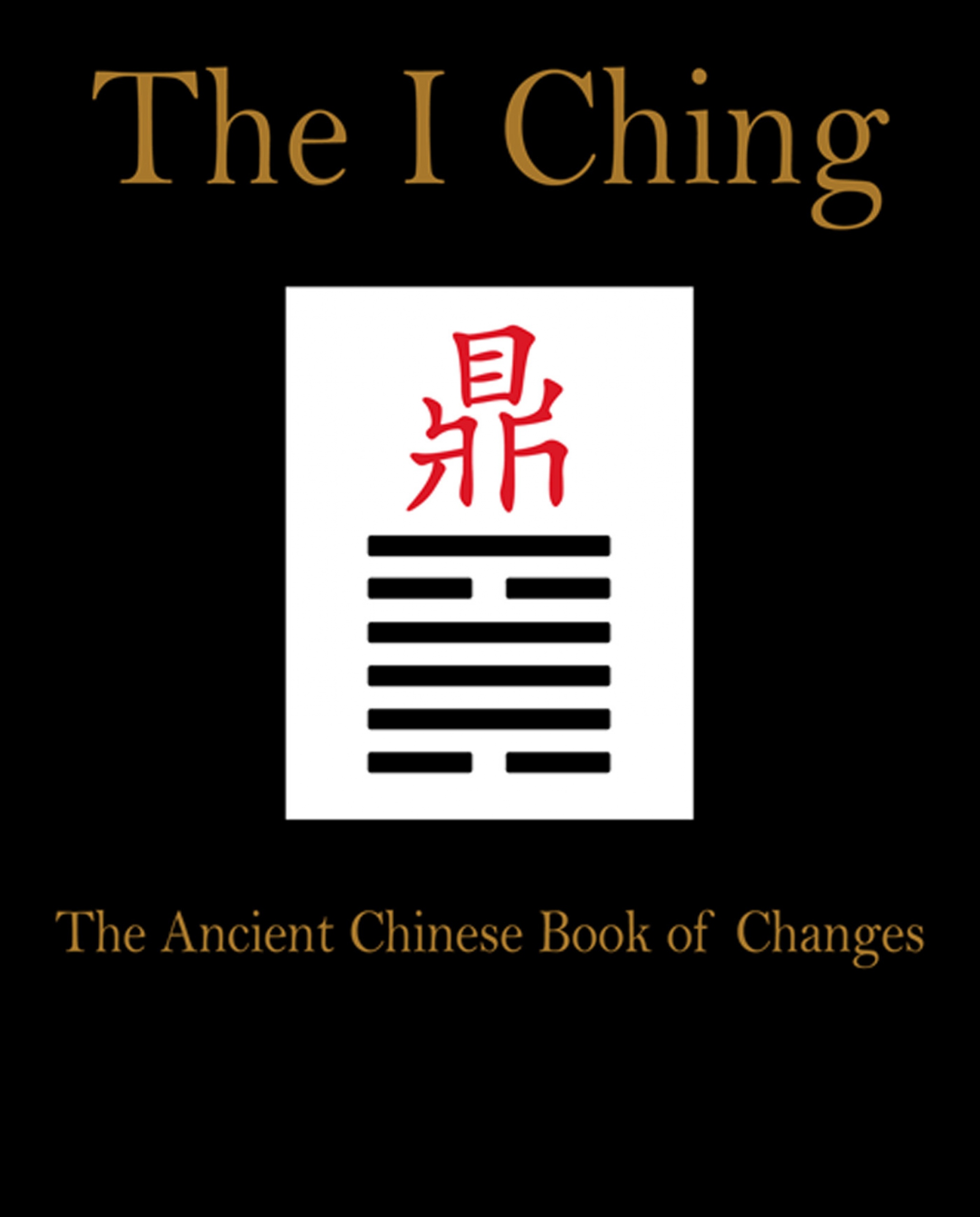
The I Ching
The Ancient Chinese Book of Changes
Introduction
T
he I Ching (also known as the Book of Changes) is one of the oldest and most
respected oracles in the world. In its present form it can be traced back three
thousand years, and even then it was old, being based on more primitive oracles. It
has survived intact through the centuries because wise men in every age have held it in high
esteem as a source of profound wisdom and valuable guidance, both in the search for spiritual
enlightenment and in the conduct of material affairs. Its elusive magic has captivated some of
the greatest minds the world has known, from that corner-stone of traditional Chinese society,
Confucius, down to C. G. Jung. Today it is probably more widely known and more frequently
consulted by people in all walks of life than at any previous time.
The I Ching is constructed around 64 six-line figures whose English name is hexagrams.
These are made up of all the possible permutations of a broken line and an unbroken line
in combinations of six. All phenomena are the result of the interaction between positive,
creative, masculine yang forces, and negative, passive, feminine yin forces. Yang is represented
by the unbroken lines and yin by the broken lines which go to make up each hexagram. In
this way the 64 hexagrams can be said between them to symbolise all the stages of change and
flux operating in the universe, and the texts of the I Ching describe these changes and apply
them to the preoccupations of mankind.
The hexagrams on the following on pages are each accompanied by several texts. The first
text, called The Judgment, is the oldest. It was composed by King Wen, founder of the Chou
dynasty, after he had been imprisoned by the last Shang Emperor, Chou Hsin. The second
text, the Commentary, is one of the later interpretations attributed to Confucius, though
he is unlikely to have written it himself. The third text, The Image, is another Confucian
commentary. It is intended to explain how the sensible person who follows the I Ching’s
advice – generally referred to as the ‘superior man’ – would act at such a time. The final group
of texts, one attributed to each of the six lines of the hexagram, were composed by King Wen’s
son, the Duke of Chou, who destroyed the Shang dynasty in 1027 BC. These short and often
enigmatic lines were written about forty years after King Wen’s text.
To each of these groups of texts, the author has appended some explanation.
4
易
经
I Ching Book of Changes Simplified Han
易
經
Traditional Han
5
How to consult the I Ching
T
he I Ching can be consulted in three ways. The
first involves the use of a bundle of 50 sticks,
the second requires three coins, and the third
uses six specially marked wands. Of these methods, the
oldest and most venerated is the 50 sticks technique.
The 50 Sticks Method
You need 50 narrow, wooden sticks, each about a foot
long. Traditionally these are dried yarrow stalks, but
pieces of bamboo will do.
Your copy of the I Ching should be kept on a
shelf fairly high above the floor, and wrapped in
a clean piece of cloth, preferably silk. When you
consult the book, it should be placed on a clear
table and unwrapped, the book lying on the silk.
The sticks should be kept in a simple box on the
same shelf.
In ancient China, the seat of wisdom and judgment
lay in the north and those giving audience always faced
south. You should place your table in the northern
part of the room and approach it from the south. Lay
the sticks in front of the book and light a small incense
burner beside them.
Before consulting the I Ching, you should make
three kowtows to the floor and, while kneeling, pass
the 50 sticks three times through the incense smoke.
Compose in your mind the question you want to put
to the oracle. Remember that the I Ching does not
tell the future, but offers advice on how to act in the
present to make the best of the future.
1. Take one of the 50 sticks and put it aside. It will not
be used again but is included in the bundle to make
up the significant number 50.
2. Using your right hand, divide the sticks into two
heaps.
3. Take one stick from the heap on your right and
place it between the ring finger and little finger of
your left hand.
4. Remove sticks four at a time from the heap on your
left until there are four or less left. Place these
remaining sticks between the left hand middle
finger and ring finger.
5. Remove sticks four at a time from the heap on your
right until there are four or less left. Place these
remaining sticks between the index finger and
middle finger.
You will now find that the sticks held between the
fingers of your left hand total either 5 or 9 (l + 1 +
3, 1 + 3 + 1, 1 +2 + 2, or 1 + 4 + 4). Put these sticks to
one side.
Gather together all the discarded sticks (totalling
49 minus the 5 or 9 you have just laid aside) and
work through the process of dividing again, starting
with stage 2.
When you have done this you will find a total of
either 4 or 8 sticks between the fingers of your left
hand (1 + 1 + 2, 1 + 2 + 1, 1 + 4 + 3, or 1 + 3 + 4).
Put these sticks aside.
Gather the discarded sticks together once more,
omitting the two small heaps of 5 or 9 sticks and 4 or
8 sticks. Now divide the sticks a third time, starting
with stage 2.
At the end of all this you will have, in addition
to the discarded sticks, three small heaps. The first
will contain 5 or 9 sticks; the second 4 or 8 sticks,
and the third also 4 or 8 sticks. Look up the three
numbers you have:
5 + 4 + 4 Old Yang line
9 + 8 + 8 Old Yin line
5 + 8 + 8 Young Yang line
9 + 8 + 4 Young Yang line
9 + 4 + 8 Young Yang line
5 + 4 + 8 Young Yin line
5 + 8 + 4 Young Yin line
9 + 4 + 4 Young Yin line
The line that corresponds to your three
numbers is the bottom line of your hexagram.
Note it down. To arrive at the second line up from
the bottom you must gather together your 49 sticks
and once more work through the stages of dividing
and counting.
This must be done a further four times to arrive at
the six lines of a complete hexagram.
If your hexagram is made up of just Young Yin
and Young Yang lines, read the
hexagram’s Judgment, Commentary, and Image.
Ignore the Lines, which are not appropriate. But
if your hexagram contains one or more Old Yin
or Old Yang lines, read the Judgment,
Commentary, and Image, followed by the Lines.
6
Each of the four types of line is given a ‘Ritual
Number’ from 6 to 9:
6
7
8
9
This is why the passage referring to each of the six
lines of a hexagram begins ‘In the third line, SIX…’,
or ‘In the fifth line, NINE…’. Six and Nine are the
Ritual Numbers of Old Yin and Old Yang lines.
If your hexagram has one or more of these
significant lines, you can take your consultation a stage
further. The old lines are also known as moving lines,
because they are thought to be in a state of change
and about to become their opposites. An Old Yin
line can be changed into a Young Yang line, and an
Old Yang line can be changed into a Young Yin line,
giving you a second hexagram. Read the Judgment,
Commentary, and Image of this hexagram and it will
throw extra light on your original question.
The Three Coins Method
This is a quicker but shallower technique. In this
method, the toss of three coins gives us the lines of the
hexagram. As with the yarrow stalks, the first toss gives
the bottom line, and so on upward. On Chinese coins,
the inscribed side is given a value of 2, the blank side
3. If you use western coins, ‘heads’ is valued at 3, ‘tails’
at 2. So a toss of three coins can give you totals of 6,
7, 8 or 9, indicating respectively Old Yin, Young Yang,
Young Yin, and Old Yang.
The Six Wands Method
You need a set of six wands about 8 inches (200mm)
long, 1 inch (25mm) wide, and ⅛ inch (3mm) thick.
Each wand should be coloured black on one side and
on the other side black with a 1½ inch band of white
across the middle.
When a wand falls with the all-black side up, this
counts as an unbroken, yang line When a wand
falls with the white stripe up, this counts as a broken,
yin line
Shuffle the six wands behind your back while
concentrating on your question and roll them onto a
table in front of you.
Straighten them into the form of a hexagram,
starting with the wand closest to you, which will
represent the bottom line. The second closest will
be the second line up, and so on.
When you can see which hexagram you have cast,
look it up in the text. The Judgment, Commentary,
and Image will answer your question.
However, the six wands methods does not offer
‘moving lines’, so the Lines cannot be taken into
account, and you cannot obtain a further hexagram.
Interpreting the Moving Lines
The occurrence of moving lines not only adds
significance to the original hexagram but carries you
on to a second hexagram. For example, assume you
divided and counted the sticks as instructed and came
up with this result:
5 + 4 + 8
9 + 8 + 4
5 + 4 + 8
9 + 4 + 4
5 + 8 + 4
5 + 4 + 8
This gives you Hexagram No 8, Pi, Seeking unity.
But suppose you came up with this:
5 + 4 + 8
9 + 8 + 4
9 + 8 + 8
9 + 4 + 4
5 + 8 + 4
9 + 8 + 8
This will still give you Pi, but it includes two
‘moving’ lines – the bottom line and the fourth line
up. Read the Judgment, Commentary, and Image
accompanying Pi, followed by the texts for the first
(reading from the bottom up) and the fourth line.
Now, change the two moving lines into their
opposites. In both cases here an Old Yin line will
become a Young Yang. You now have a second
hexagram, No 17, Sui, Allegiance.
It may also be worthwhile discovering what happens
if the moving lines are changing at different times.
If the Old Yin in the bottom line changes into a
Young Yang first, you will obtain hexagram No 3,
Chun, Initial difficulties. But if the Old Yin in the
fourth line changes first, you will obtain hexagram
No 45, Ts’ui, Congregation.
7
1.
乾
I Ch’ien
Creative Principle
乾
THE TRIGRAMS
ABOVE:Ch’ien Heaven, the creative
BELOW: Ch’ien Heaven, the creative
Ch’ien represents what is great, penetrating,
advantageous, correct and firm. It is the originator,
the creative. The hexagram consists entirely of
yang lines, with the qualities of creativity, virility,
activity and strength. There is no weakness or
yielding. It is a double image of the trigram heaven
(or origination). It embodies the inner creative
power of the lower trigram, representing that of
man, and the outer creativity of the upper trigram,
that of heaven.
THE JUDGMENT
Ch’ien works sublime success. Perserverance
brings favourable results to he who is firm
and unyielding.
COMMENTARY
Vast is the great originator. All things owe their
beginning to it, and it contains all the meanings
embodied in its name: the clouds move and the
rain falls everywhere; all things appear in their
developed form. The initiated comprehend the
relationship between beginning and end, and how
each of the six lines reaches its accomplishment at
the appointed time. At the proper hour, they mount
the chariot drawn by these six dragons and drive
across the sky.
Ch’ien transforms everything, developing its
true nature as heaven determines, preserving great
harmony in union. The initiate appears, high above
all things, and everything under heaven enjoys
true repose.
THE IMAGE
The movement of the heavens reveals transcendent
power. The superior man, therefore, makes himself
strong and indefatigable.
THE LINES
In the bottom line, NINE signifies:
The dragon lies concealed in the deep. Action
at such a time would be unwise.
The superior man is represented by a dragon,
symbolising energy in nature. The time of action
is near, but the wise man bides his time.
In the second line, NINE signifies:
The dragon appears in the field. It is a favourable
time to see the great man.
Although the superior man may begin in a
subordinate position, his purpose will raise him
to a state of power, where others will benefit from it.
In the third line, NINE signifies:
The superior man is active all day long. At nightfall his
mind is still full of care. Danger, but no reproach.
The great man’s importance grows, but he must not
allow ambition to destroy his integrity. Remaining
aware of what lies ahead, he will avoid all pitfalls.
In the fourth line, NINE signifies:
The flight across the abyss is not sure. He who is resolute
suffers no reproach.
The great man can launch himself into the world or
retire into contemplation. As long as he is true to his
nature, he will not be blamed for anything.
In the fifth line, NINE signifies:
The dragon flies across the heavens. It is a favourable
time to see the great man.
All nature is in accord. The great man has made his
choice, and everyone watches him as he reaches the
height of his achievement.
In the sixth line, NINE signifies:
The dragon flies too high. There will be cause
for repentance.
Here is a warning not to aspire too high, allowing
arrogance to isolate the great man from the rest
of mankind.
8
2.
坤
K’un
The Passive Principle
坤
THE TRIGRAMS
ABOVE: K’un Earth, the passive
BELOW: K’un Earth, the passive
K’un represents also what is great, penetrating,
advantageous, correct, and having the firmness of the
mare. The hexagram consists entirely of yin lines –
feminine, yielding, and shaded. It is the diametrical
opposite of Ch’ien in structure but complements it in
character: male and female, heaven and earth, spirit
and matter, the creative and the passive principle, are
nothing but two aspects of the same whole.
THE JUDGMENT
K’un brings supreme success through steadfast
acceptance. When the superior man takes the
initiative in action he will go astray; if he follows, he
will find his true leader. lt is advantageous to find
friends in the west and south, and to relinquish
friends in the north and east. Quiet perseverance
brings good fortune to the superior man.
COMMENTARY
The creativity of K’un is complete: all things owe
their birth to it, and it obediently accepts the
influences of heaven, supporting and containing
everything. The mare is an earthly creature: she
moves about without restriction, mild and docile,
strong and well-favoured. So should the superior
man behave.
THE IMAGE
K’un denotes the great capacity and sustaining
power of the earth. The superior man, therefore,
employs his virtue in supporting all men and
all things.
THE LINES
In the bottom line, SIX signifies:
He treads only on hoarfrost, but solid ice is near.
The wise man, finding that his steps take him on to
newly frozen water, retraces his path and bides his
time until the ice is strong enough.
In the second line, SIX signifies:
Straight, square, great; line, plane, solid. Purposeless,
the work still goes forward.
Allowing himself to be carried forward by the
progress of nature, the superior man proceeds
toward his destiny.
In the third line, SIX signifies:
Although the line is hidden, it persists; who serves a
king should do his work and not seek fame.
The wise man isn’t leaves fame to others. He does
not impose his ideas on others, but perseveres at his
tasks, confident that true virtue will be recognised.
In the fourth line, SIX signifies:
A tightly tied sack. No praise, but no reproach.
The sack keeps its secrets. The wise man keeps
himself to himself, whether in solitude or in the
midst of the world’s turmoil.
In the fifth line, SIX signifies:
A yellow undergarment: Supreme good fortune.
Yellow is the colour of the earth and symbolises
sincerity. An undergarment is not shown off. One in
a high but subordinate position should be discreet.
In the sixth line, SIX signifies:
Dragons fight in the field. Their blood is black and yellow.
When one attempts to fight a way into a position
higher than that to which one is entitled, both sides
will suffer injury.
9
屯
10
3. 屯 Chun
Initial Difficulties
THE TRIGRAMS
ABOVE: K’an deep dangerous water
BELOW: Chen thunder and awakening
The sign for Chun represents a new shoot,
struggling to burst its way through the soil in the
first days of spring. The lower trigram, Chen,
represents upward movement, and its image is
thunder. The upper trigram, K’an, has a downward
movement and its image is rain. There is chaotic
confusion: the air is filled with thunder and rain;
but the thunderstorm brings release from tension,
and everything is calm again.
THE JUDGMENT
Initial difficulties are followed by supreme success,
the result of acting firmly and correctly. Nothing
should be attempted without appointing those who
can provide appropriate assistance.
COMMENTARY
In Chun we see the intercourse begin of Ch’ien the
strong and K’un the weak, and the difficulties that
arise. Motion in the midst of danger leads on to
success. By the action of the thunder and rain, all
the space between heaven and earth is filled up.
But the time is still full of disorder and obscure:
nothing can be predicted with confidence. It is
advantageous to appoint deputies and helpers, but