


Erhalten Sie Zugang zu diesem und mehr als 300000 Büchern ab EUR 5,99 monatlich.
- Herausgeber: Paraclete Press
- Kategorie: Religion und Spiritualität
- Sprache: Englisch
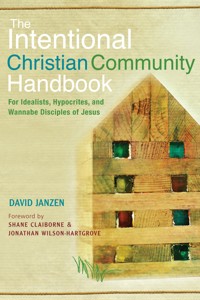
"This is a book that we've needed for a long, long time . . . . This is a book for people who long for community and for people who've found it; for young seekers and for old radicals. Like a farmer's almanac or a good cookbook, it's a guide that doesn't tell you what to do, but rather gives you the resources you need to find your way together with friends in the place where you are. We couldn't be more grateful to have a book like this. And we couldn't be happier to share it with you." —Shane Claiborne and Jonathan Wilson-Hartgrove In the 21st century, a new generation of Spirit-energized people are searching for a new—yet ancient—way of life together. David Janzen, a friend of the New Monasticism movement with four decades of personal communal experience, has visited scores of communities, both old and new. The Intentional Christian Community Handbook shares his wisdom, as well as the experience of intentional Christian communities across North America over the last half century.
Sie lesen das E-Book in den Legimi-Apps auf:
Seitenzahl: 518
Veröffentlichungsjahr: 2012
Das E-Book (TTS) können Sie hören im Abo „Legimi Premium” in Legimi-Apps auf:
Ähnliche














The Intentional Christian Community Handbook
The Intentional Christian Community Handbook: For Idealists, Hypocrites, and Wannabe Disciples of Jesus
Copyright © 2013 by David Janzen
ISBN 978-1-61261-237-9
Unless otherwise noted, all Scriptural references are taken from the HOLY BIBLE, NEW INTERNATIONAL VERSION®, NIV®. Copyright © 1973, 1978, 1984, 2011 by Biblica. Used by permission of Zondervan. All rights reserved.
Scriptures marked NRSV are taken from the New Revised Standard Version Bible, copyright © 1989 National Council of the Churches of Christ in the United States of America. Used by permission. All rights reserved.
Library of Congress Cataloging-in-Publication Data
Janzen, David.
The intentional christian community handbook : for idealists, hypocrites, and wannabe disciples of Jesus / David Janzen and a Community of Friends.
p. cm.
Includes bibliographical references (p. ).
ISBN 978-1-61261-237-9 (trade pbk.)
1. Communities—Religious aspects—Christianity. 2. Spiritual formation. I. Title.
BV4517.5.J36 2012
253—dc23
2012022552
10 9 8 7 6 5 4 3 2 1
All rights reserved. No portion of this book may be reproduced, stored in an electronic retrieval system, or transmitted in any form or by any means—electronic, mechanical, photocopy, recording, or any other—except for brief quotations in printed reviews, without the prior permission of the publisher.
Published by Paraclete Press
Brewster, Massachusetts
www.paracletepress.com
Printed in the United States of America
To Joanne,
who first caught the vision of church as community, which made her even more attractive to this young adventurer half a century ago.
While David Janzen wrote most of this book, others made vital contributions. In a few cases, chapters were written by others or cowritten by the author with others. These contributors are noted here in the order of their appearance:
Brandon Rhodes
(Springwater Community, Portland, Oregon)
Sally Schreiner Youngquist
(Reba Place Fellowship, Evanston, Illinois)
Andy Ross
(Reba Place Church, Evanston, Illinois)
CONTENTS
FOREWORD by Shane Claiborne and Jonathan Wilson-Hartgrove
A PREFACE THE AUTHOR HOPES YOU WILL READ FIRST
ACKNOWLEDGMENTS AND THANKSGIVINGS
PART ONETHE YEARNING FOR COMMUNITY IN CONTEXT
1. Five Stories of Longing and a Call
2. The Landscape of Disintegrating Community and Our Longing for It
3. Contours of Resistance to Community
PART TWOIS INTENTIONAL COMMUNITY YOUR CALLING?
4. Seeking the Community Where I Am Called
5. The Gospel Call to Discipleship in Community
6. Searching for Your Community: Visits, Internships, and Mentors
7. Novice Membership: Testing Your Call Against the Community’s Questions and Your Own
PART THREEBEFORE YOU MOVE IN TOGETHER
8. Dreaming the First Steps of a New Community
9. Transforming Conflict into Solidarity
10. Commitment, Membership, and Mission
11. Where Will You Put Down Roots?
12. Racial Reconciliation—Listening, Submitting, and Collaborating
13. Gender in Community—Conflict and Synergy
PART FOURTHE FIRST YEAR OF COMMUNITY
14. Decision-Making, Leadership, and Paths to Unity
15. Taking on Work Schedules and the Seduction of Careers
16. Making Connections Among Communities
17. Stop Going to Church and Become the Church
PART FIVEGROWING TASKS FOR A YOUNG COMMUNITAY
18. Covenant-Making in Story, Rule, and Liturgy of Commitment
19. On Why Your Community Might Need an Onion
20. Creation Care, Food Justice, and a Common Table
21. The Economy of God and the Community of Goods
22. A Spiritual Life for (and in Spite of) Community
23. When People Leave
PART SIXA MATURE COMMUNITY BECOMES SOIL FOR GOD’S NEW SEEDS
24. Healing the Hurts That Prevent Community
25. Developing Common Work and Ministries
26. Sustaining Prophetic Vocations and Families in Community
27. Becoming Accountable—Visitations and Community Associations
28. Birthing and Nurturing New Communities from a Home Base
29. Exceptionally Gifted Persons and the Challenge of Submission
CONCLUSION: EMBRACING RENEWAL
NOTES
SELECTED READING
FOREWORD
SHANE CLAIBORNE AND JONATHAN WILSON-HARTGROVE
This is a book that we’ve needed for a long, long time. Over the past fifteen years, we’ve sat in living rooms and around kitchen tables with people who have asked the same question: “How can we follow Jesus with our whole life?” At The Simple Way and at Rutba House, the communities that respectively we call home, we’ve wrestled with this question in the company of friends and neighbors. We’ve talked about it late into the night, and we’ve invested all we have into ongoing experiments in the truth of the gospel.
In our communities, we’ve read and reread the Sermon on the Mount. We’ve been inspired by ancient monastics and twentieth-century community movements. We’ve passed around books by Dorothy Day and Jean Vanier, John Perkins and Dietrich Bonhoeffer. We’ve tried to learn from those who’ve gone before us, and we’ve tried to listen to the distinct new challenges of our day. We’ve seen some miracles. We’ve failed miserably. We’ve learned to forgive and be forgiven. Community has been a classroom for our conversion.
As we’ve shared the good news that we’ve seen and heard through these little experiments in the truth of the gospel, we’ve met thousands of other people who are asking the same question, hearing the same call—the call to follow Jesus into a life of discipleship in community. Seeing in their eyes a look that we recognize from those small circles of friends, we have recognized our common cause in a movement of the Holy Spirit.
God is up to something. Hope is springing up, not in one mighty trunk, but in thousands of shoots. Those shoots are rooted in the Song that gave birth to creation, the Love that moves the sun and other stars. God is stirring something new in our time.
But these shoots of new life in community are fragile, and they need tender care to grow into maturity. We’ve learned this the hard way—by seeing firsthand the pain of community-gone-bad. And we’ve seen so many new communities spring up and die, as Jesus speaks of the seeds that are beautiful but short-lived if they don’t grow roots. But in the midst of that pain, we’ve also seen incredible grace. Most often, grace has come in the form of older mentors who’ve come to gently share their wisdom.
For both of us, David Janzen has been one of those wise voices. The book that you’re holding in your hands is the fruit of his efforts to listen closely to what is happening in dozens of communities today, all the while reflecting back on what he’s learned from his own experience in community over the past five decades.
Because David has been formed by community for so long, though, he can’t simply tell you what he thinks. He has to tell you what those he’s listened to think as well. So this book is also the fruit of conversation and the best kind of conspiracy—friends working together to speak the truth that they know and live. It’s a book that truly speaks in a “we” voice, passing the collective wisdom of generations on to the next.
This is a book for people who long for community and for people who’ve found it; for young seekers and for old radicals. Like a farmer’s almanac or a good cookbook, it’s a guide that doesn’t tell you what to do but rather gives you the resources you need to find your way together with friends in the place where you are.
We couldn’t be more grateful to have a book like this.
And we couldn’t be happier to share it with you.
The Intentional Christian Community Handbook
A PREFACE THE AUTHOR HOPES YOU WILL READ FIRST
With some books you can skip the introductory stuff where the author tells you what he or she is going to say again later on. However, in this preface I tell stories you’ll find nowhere else in the book—about the title, about how I grew up in such a way that nurturing communities has become my passion, and about a group of friends from many different communities who have collaborated to bring together the stories and insights for growing communities that are found in this book. Thank you for coming along.
We live in exciting times, when many new intentional Christian communities are springing up, where young people (and older folks, too) are making a courageous experiment with their lives, moving into “abandoned places of empire,” trying to live by the words and example of Jesus to “love one another as I have loved you.” Along the way they are discovering what monastic communities and lay communities have discovered in every generation: to be capable of authentic community we need to undergo a major conversion of life. This is especially true if we have grown up in the soil of a society like ours that has become toxic to community; worships self, money, and power; and scorns the poor. We may know what is wrong with the old world, but we seldom realize how much of that world we still bring along with us as we plant seeds of a new society in the manure of the old. (Hey, I get to say that word because I grew up on a farm.) Although we may be idealists and hypocrites, there is hope for us and for the world if we stick with Jesus—who will surely stick with us.
Concerning idealists, many of us long for community because of our critique about all that is wrong with society, the church, and the people we have lived with so far. Our vision of an ideal world and a model community may bring us to the door, but it will not show us how to live in the house of community itself. As Dietrich Bonhoeffer wrote in 1933, “The man who fashions a visionary ideal of community demands that it be realized by God, by others, and by himself.” Unless we let go of our ideal community, we will end up hating the sisters and brothers who, inevitably, do not live up to our expectations, and so, Bonhoeffer warns, we become the destroyer of that very real community God is already growing up around us. We need honest people to help us channel our idealism into practical work and who love us anyway.
Now about hypocrites, the distance between ignorance and knowledge can be a moment (or the latest book), but the gap between knowing and faithfully doing with others what we already know can be more than a lifetime. We love to judge others by their worst behavior and ourselves by our highest ideals. As alcoholics learn in AA, there will always be a hypocrite lurking within us, ready to take over our lives in a moment of self-confidence. We might practice introducing ourselves in community meetings with the confession, “Hello, my name is David, and I’m a hypocrite.” Hypocrites were some of Jesus’s favorite people not to be like. We believe that Christian intentional community is a support group for recovering hypocrites who discover by living together the great chasm between what we know and how we live—and find out that we are loved anyway.
So where does this impossible love come from that makes community possible? As you might have learned if you went to Sunday school, the answer to every question is “Jesus.” Alas, with Jesus the right words don’t get us to first base. “Not everyone who says to me ‘Lord, Lord’ will enter the kingdom of heaven.” We come close to the love of Jesus as we join a particular band of his disciples, learning from him the “one another” skills of community. “Therefore everyone who hears these words of mine and puts them into practice is like a wise man who built his house on the rock” (Matt. 7:21–24).
“The whole point of what Jesus was up to,” according to N. T. Wright, “was that he was doing close up, in the present, what he was promising long-term in the future. And what he was promising for that future and doing in the present was not saving souls for a disembodied eternity, but rescuing people from the corruption and decay of the way the world presently is so that they could enjoy, already in the present, that renewal of creation which is God’s ultimate purpose—and so they could thus become colleagues and partners in that large project.”
“That large project” is what this book is about: Spirit-led movements that are giving birth to new communities and new vocations for community in our day. These communities are called to be living demonstrations now of the future that God has for the whole world. “Behold, the kingdom is among you.”
This book was created by a “we,” a team of young folks of all ages who have banded together to learn from and to nurture this most recent crop of intentional communities. But before I tell you about how the book came to be, I think it would be fair for you to know some of the life experiences that gave me this passion to nurture Christian intentional communities.
As you have already been warned, I grew up on a farm, in a Kansas Mennonite family, learning how to milk cows, drive tractors, and sneak away whenever possible with my sister and two brothers to play basketball on a goal hanging from the south side of the barn. Church was a regular part of our week, as were devotions at the breakfast table and bedtime prayers. More formative, perhaps, was our parents’ insistence that, whenever there were fights during the day, we confessed our faults and were reconciled with each other before going to bed, because the Bible said, “Do not let the sun go down while you are still angry” (Eph. 4:26). Once I remember my father waking me in the night and asking my forgiveness for losing his temper and chewing me out before my friends. I grew up learning about a radical peacemaking Jesus in the Gospels, but I also encountered enough rigid and authoritarian church leadership that I had a hard time seeing this Jesus embodied in the church.
At Bethel College, a Kansas Mennonite liberal arts college in North Newton, Kansas, I felt the freedom to figure out who I was apart from the pressure to conform. I tried on whatever philosophy I was reading at the time and decided I could not honestly call myself a Christian. In my senior year (1961), during Kennedy’s presidency, I found myself in a delegation of peace-movement activists, fasting and picketing in front of the White House in Washington in opposition to atmospheric nuclear testing. In a mysterious and wonderful way, I felt God entering my life and calling me to be a peacemaker in a world preparing for total war. I was a young radical angry about injustice, but God promised me companionship on this journey—not just an inner personal relationship but also a community of fellow seekers who would experience something of that reconciliation we would proclaim to the world.
Back on campus I sought out Joanne Zerger, a peace club coworker who was willing to hear about my calling to some kind of prophetic mission. Joanne herself belonged to a renewal movement on campus led by Al Meyer (John Howard Yoder’s brother-in-law) and other mentors. They were not content to read about the recovery of the Anabaptist vision and the communalism of the early church, but they formed small groups of students to be the church with each other in community, with Jesus’s teachings at the center of their life.
Let’s fast-forward through two years of divinity school, where I discovered I was not becoming a pastor, marriage to Joanne, history study at the University of Kansas, and then high school teaching in the newly independent Democratic Republic of the Congo under the Mennonite Central Committee—my alternative to military service during the Vietnam War. Wherever we went we found ourselves gathering with like-minded friends into base Christian communities to read Scripture-—often Jesus’s Sermon on the Mount—and asking how to live together in response to this call of radical discipleship.
Back in the States in the early 1970s we plunged into “the movement,” resisting the Vietnam War and seeking more of that intentional community life that we had tasted while in the Congo. We were idealists with visions of the model community that would change the world and hypocrites filled with prophetic rhetoric of all the great things we were going to do in contrast to the rest of the church, which slept while the world was burning.
God was merciful to us and allowed our first attempt at community to fail for many reasons, but mostly because we pursued too many good causes without clear priorities, and with people who were not sure about Jesus as the center of our life. After some floundering first steps, a new community, New Creation Fellowship, was born in 1973 with some essential coaching from Reba Place Fellowship (RPF) in Evanston, Illinois, and from other communal groups who soon banded together into the Shalom Association of Communities.
We were half a dozen families and some single people intentionally living within a block of each other, sharing in a common treasury, tending community gardens with energetic children running in a tribe from one house to another. We experienced the Holy Spirit baptism and launched a charismatic, communal, peace-and-justice Anabaptist church that met in the basement of our largest house. I led a construction crew that gave us an economic base from which to organize other revolutionary projects.
From the outside, for a while, it looked like we had it together. But we would come home from antiwar rallies and fight about the right way to clean, or not clean, the kitchen. Peace for the world, but not for each other. We offered hospitality to a few troubled souls and were quickly overwhelmed. Mental breakdowns and marriage crises caused us to urgently look for help from therapists and wiser mentors in other communities. The traumas of our lives were catching up with us, and we realized we needed to get wise about resources for personal healing if we wanted to continue living together and not devour one another. We joked about how God was gracious to us, allowing us to take turns with our breakdowns. “No shoving in line. Your crisis has to wait ’cause I’m not finished yet with mine.”
We learned what Jesus meant by the first beatitude, “Blessed are the poor in spirit, for they shall see God.” We learned to pray for love and forgiveness with sincere desperation, with empty hearts that God was eager to fill. We learned to let go of our community ideal—achieving something we could be proud of—and just accept who we were with each other, broken people in whose presence Jesus dwells. Through many struggles we received the gift of a tender love that began to nurture us and other people as well, where we and our children were bonded together in ways that still run deep. The Scriptures came alive for us when we heard Jesus say, “Today salvation has come to this house” (Lk. 19:9).
At New Creation Fellowship we soon wore ourselves out trying to make all our decisions by consensus. By God’s grace, the weariness set in about the time we learned to trust the pastoral gifts of those who could conduct our meetings in peaceful and orderly ways. We began to function more like a body where each one had gifts to exercise for the good of all. Community proved more educational than a college campus. We were learning basic community-nurturing lessons and skills, usually finding a good path after trying all the others.
I discovered that others experienced me as a judgmental, principle-driven idealist who had a lot to learn about listening and extending grace in relationships. Fortunately, these folks—mostly sisters—put up with, corrected, forgave, and hugged me anyway because we were all trying to learn the courageous and humble way of Jesus.
I tell this story so that you can get acquainted with me a bit, know what experiences and biases I bring to this project, and also to illustrate that newly forming intentional Christian communities go through similar discoveries and developments if we wait for God to change us while persisting in forgiveness.
Others felt the love of Jesus in our life together and came closer in hopes of finding healing, too. We organized vigils at a local missile silo aiming destruction at the people of the Soviet Union, and we had a part in launching the Newton Area Peace Center.
However, by the mid-1980s, some of the original communal members had moved on and the common purse was abandoned in a time of harassment by the Internal Revenue Service. The community morphed into a Mennonite congregation, which has grown over the years, retaining some of the community character from its birth. At the time of these changes, Joanne and I, with our two middle-school-age children, were taking a sabbatical year at Reba Place Fellowship. With New Creation’s blessing, we chose to stay on at Reba, where we had found good work, healing, and community that more closely fit our sense of calling.
Now that I look back on this demise of the communal life in Newton, Kansas, with the eyes of someone called to “nurture communities” and be a guide to their sustainable development, I ask, what happened? Well, actually, the life of community still goes on in many ways with intimate small groups that retain a knack for deep relationships, traditions of common work, ministry, and celebration from communal times. I see now that the challenge of growing community brought together some insecure young people who had more leadership gifts than they could figure out what to do with on one pile. We were peers without older mentors who might have nurtured a vision of working together using all our gifts. Our leaving was actually a sending, a healthy development for the church that continued on with a generation of younger leaders eventually finding their places.
Our family came to Reba, where I found elders I missed out on in our community of peers. Here I was supported to run a nationwide network of churches and communities resisting the U.S.–sponsored war in Central America and assisting refugees in “el Norte” to find asylum. Julius Belser basically gave me his job, coached me enough to not let me fail, but also trusted me to carry the responsibility and grow with it. What an incredible gift that Julius and I have been meeting now every Monday morning for more than twenty-five years, baring our souls, talking about work, dreaming up new visions, praying about relationships, and keeping on track with the Lord. When in a crisis, I now know what Julius or my other Reba mentors would do, which is a lot like knowing what Jesus would do, because that’s who they look to for guidance.
In 1995 Reba gave me half a year of support to visit twenty-some communities and write the book Fire, Salt, and Peace: Intentional Christian Communities Alive in North America. Since then I have divided my time between directing an affordable housing ministry, serving on the RPF leadership team, launching an apprentice program for young people to learn about community, and coordinating the Shalom Mission Communities—an association of communities to which Reba belongs. During this time I was in the thick of many community issues, both at Reba and in other communities, participating in consultations, mediations, and community reviews.
In 2004 Rutba House, in Durham, North Carolina, hosted what turned out to be a landmark event, bringing together new community activists, veterans of longer-term communities, and scholars of the intentional community movement. Word leaked out about this “by invitation only” meeting, and a swarm of young people showed up eager to tell about the new community movement. The energy and excitement of the young communitarians reminded me of the ’70s and caused me to wonder if this community movement would flash up and burn out quickly as did so many groups a generation ago. But contrary to the youth movement of the ’70s, whose mantra was “Don’t trust anyone over thirty,” these activists clearly wanted the old monasticism and lay communities like Reba, Church of the Sojourners, and Church of the Servant King to walk with them. There was also a familiarity with Anabaptist theology that gave coherence to following Jesus in prophetic communities that give witness to the possibility of justice and peace in this age as it will be in the age to come.
We came together at Rutba House’s invitation, with a goal to name the basic commitments of this “New Monasticism” movement. I was skeptical at first. The Shalom Mission Communities (of which Reba was a part) had worked a whole year to agree on a list of shared commitments. How could this be done in one weekend by people who hardly knew each other?
Well, the Holy Spirit had something else in mind. Jonathan Wilson-Hartgrove wrote while others talked, and we ended up affirming a manifesto named “12 Marks of a New Monasticism.” Following the conference, twelve persons were asked to write chapters on each of the marks, which came together under the title School(s) for Conversion: 12 Marks of a New Monasticism. I was asked to write the chapter titled “Intentional Formation in the Way of Christ and the Rule of the Community along the Lines of the Old Novitiate.” Not many communities actually imported these “12 Marks” as their covenant, but they inspired many groups to study them as they drew up their own rule of life.
Since that time Shane Claiborne wrote The Irresistible Revolution and has taken the message to countless college campuses and youth conventions. Jonathan Wilson-Hartgrove launched Schools for Conversion—retreats hosted by more-established communities around the country, offering seekers a weekend of immersion in the life and teachings of one local Christian community. Here visitors explored starting new communities or becoming interns at the communities that already embodied the life.
In 2010 Reba set me free from most local responsibilities to visit about thirty intentional communities, often accompanied by younger “apprentices,” in a program that Jonathan dubbed the Nurturing Communities Project. Support for this project has come from Shane and The Simple Way, Jonathan and Schools for Conversion, Shalom Mission Communities, and various other intentional Christian groups. As we visited communities, immersing ourselves in their stories and issues, we kept hearing suggestions for chapter headings in case we would ever write a manual for nurturing intentional Christian communities. That is how this book began to hatch and grow wings.
In the summer of 2010, Jonathan was approached by a publisher asking if the time might be ripe to write an instruction manual for the new intentional communities appearing across the map. He said he had too many commitments but knew someone who ought to write that book, and he called me. So, in a way, the tables are turned. The younger generation is mentoring the elders, but things like that keep happening in the kingdom of God. A team of younger community leaders has joined in the planning, writing, and review phase of this book project. A mark of the Spirit’s work is to reconcile the generations to prepare the way of the Lord (Lk. 1:17 and Acts 2:17–18). This is a time of rare opportunity.
A longing for deeper community is growing in our land. Many observant Christians have lamented that, despite the hype of worship and glitz of church buildings and programs, the lives of most American church members look very much like the rest of the world. Statistically speaking, those who identify themselves as Christians are characterized by rootless pursuit of wealth, consumerism, divorce and broken relationships, hedonistic entertainment, moving often while living in neighborhoods that no one loves, segregated by class and race—pretty much like everyone else. A church that expects Christians, on their own, to live a life that resembles Jesus is fooling itself. We live with the myth of a Christian nation and the tattered remnants of what was once called Christendom. But there never was a time when the surrounding world would socialize us into a Christlike way of life.
Our church scene is so different from the first centuries of the Jesus movement, which was notorious for its familial affection and sharing across class and ethnic lines, with a reputation for feeding the urban poor and supporting widows to serve the church, its nonviolent response to persecution, and its refusal to bear arms or join in imperial wars. The joy with which members faced martyrdom subverted the empire particularly because they had no overt power. What is the difference?
One Greek New Testament word for this difference is koinonia, which we often translate as “sharing” but could be translated more concretely by “intentional community.”
Our working definition of intentional Christian community is a group of people deliberately sharing life in order to follow more closely the teachings and practices of Jesus with his disciples. The more essential dimensions of life that are shared—such as daily prayer and worship, possessions, life decisions, living in proximity, friendships, common work or ministry, meals, care for children and elderly—the more intentional is the community.
Communities come in many flavors. There are accidental communities like the people who happen to live on the same city block. There are traditional communities like a third-world peasant village where shared land and history of relationships bind people in expectations of solidarity—where people basically inherit their roles. There are communities thick and thin depending on how much is shared. I belong to a thin community of those who enjoy playing basketball twice a week at the local senior center. I also belong to a thicker community in Reba Place Fellowship, where we share the love of Jesus, possessions, proximity, some common work and ministry, and many informal ways of serving one another that have grown up over the years. Our experience is that these commitments of koinonia give Jesus more power over our lives than the world around us, which does not count him as Lord.
Whatever we share becomes a matter of group discernment as we seek together how the kingdom of God can find expression in these areas of life as well. By contrast, those areas of life that are not lived intentionally tend to resemble the world. Where a community agrees to share possession because of Jesus, there is a Mammon-free zone. Where a group agrees to forgive one another as Jesus taught, there is a condemnation-free zone. Not only are individuals changed, but the world can see how it could change as well. Every group that hopes to be good news for the world must have an intentional life together that will be different from the world. Or, posed the other way around, a group that is like the dominant society has no good news to offer it.
Renewal movements in the church have again and again discovered the power of intentional community to transform lives and demonstrate to the world what the way of Jesus looks like in visible social and economic relationships. Clarence Jordan, founder of Koinonia Partners in Americus, Georgia, farmer, and Greek scholar, loved to talk about these communities as “demonstration plots of the kingdom” not because they get everything right but because they are local experiments the world can see of what the Sermon on the Mount looks like among a group of people sold out for Jesus.
So, now you have an idea of the winding road that has led to the creation of this book. What remains is to explain the developmental approach of the book itself.
As we visited communities young and old, we could not help but notice that they pass through stages of development just like individual human beings. We have certain character-developmental tasks for each stage of life, from infancy to maturity and wisdom. Likewise, for Christian communities these tasks change as they grow from seed to plant to fruitful harvest.
I’ve been a farmer and a carpenter—as was Jesus, apparently. His preference for organic rather than construction metaphors is important when it comes to communities. Community pioneers do not build community; they do not even plant the seeds of community; but they are called to nurture a garden that God has planted in the unique persons and context of shared life. Our outline moves along in the following developmental sequence:
Part One: The Yearning for Community in Context
Part Two: Is Intentional Community Your Calling?
Part Three: Before You Move In Together
Part Four: The First Year of Community
Part Five: Growing Tasks for a Young Community
Part Six: A Mature Community Becomes Soil for God’s New Seeds
If you, too, are on this road, or preparing for this journey into intentional community, you will see yourself in the chapters of these sections. The good news is that communities, like people, need not complete a life cycle and die but that God is active to prune and restore so that we can be born again and again.
ACKNOWLEDGMENTS AND THANKSGIVINGS
Since this book is the overflow of a lifelong passion and calling, my list of debts to acknowledge is beyond all remembering. But I must begin with thanks to God for my parents, Hilda and Louis Janzen, for raising our family on a farm where we learned to serve one another in the way of Jesus and become proficient at whatever needed to be done. They taught by example how to build up community by making friends, extending hospitality, and seeking the common good at all scales from farm neighbors, to local church, to the ends of the earth. They would take pride in this book (as in everything their children wrote) and would understand it from the inside out.
Thanks to my mentors over the years—C. J. Dyck, Al Meyer, Jake Pauls, Virgil Vogt, Julius Belser, John Lehman, Allan Howe, Sally Youngquist, Hilda Carper, and a host of other encouraging fellow travelers.
Collaborators on this book have welcomed me into their homes, dreams, and communities, and in the process of nurturing other communities we have become a remarkable and extensive network of friends. I want to especially express my gratitude to Jonathan Wilson-Hartgrove, Shane Claiborne, Natalie Potts, Luke Healy, Jolyn Rodman, Bren Dubay, Leroy Barber, Brandon Rhodes, Karima Walker, Amanda Moore, Celina Varela, Marijke Stob, Kara Clearman, Mark Van Steenwyck, Anton Flores, Jason and Vonetta Storbakken, Chris and Lara Lahr, Sarah Jobe, Sally Youngquist, Andy Ross, Karl Lehman, Bliss and Jonathan Benson, Jodi and Eric Garbisson, Tricia Partlow, Brian Gorman, Patrick Murphy, Tim Otto, Katie Rivers, Daniel Burt, Louise and Mark Zwick, Bobby Wright, Tom Roddy, Tim and Sharon Doran Moriarty, Josh McCallister, Charles Moore, Allan Howe, Celina Varela, Anali Gatlin, Sarah Belser Tucker, and to others whom I may have forgotten to mention.
My gratitude goes out to Reba Place Fellowship, the Shalom Mission Communities, The Simple Way, Schools for Conversion, the Louisville Foundation, and others too numerous to mention, for their financial support of the Nurturing Communities Project that is behind this book.
Thanks to my buddies on the Levy Center Senior Olympic basketball team, who keep my body young as my hair turns gray.
Thanks to friends around the world, especially mission partners Das and Doris Maddimadugu in India, who kept me in loving and faithful prayer.
Thank you to a decade of Reba apprentices, who educated me about their world and fascinated me with their spiritual journeys shared in trust.
I want to return some love to the students of North Park University in the fall 2011 Intentional Christian Community class who read and discussed early chapters of this book, thus collaborating to make it better.
Thanks be to God for Jim Stringham, now twenty years deceased, who taught me to journal while “listening to the Lord.”
Glory be to the Holy Spirit, who wakes me in the night with one more good insight to write down that would never have occurred to David Janzen.
Blessings on Jon M. Sweeney, Robert Edmonson, and others at Paraclete Press who believed in this book project and expertly guided it to completion.
Love to Joanne, who has patiently taught me how to listen, who found the right place for many wayward commas, and has walked in loving forgiveness with me for forty-eight years.
Halleluiah for our vast and amazing genealogy of grace including all who have prayed before us, “Your kingdom come on earth as it is in heaven.”
And finally, thanks for your attention, dear reader, with whom we are pleased to share these stories and insights on the way to a thicker Christian community life. No matter what our place on this journey, may we have the humble courage to accept that we are slow-learning idealists often in love with our own visions, and relapsing hypocrites who are, nevertheless, invited by Jesus to become disciples in his beloved community.
PART ONE
THE YEARNING FOR COMMUNITY IN CONTEXT
CHAPTER 1
Five Stories of Longing and a Call
The following stories tell of five quite different spiritual journeys to Christian intentional community. They are all accounts of what Jesus would call “repentance” as in “Repent and believe that the kingdom of God is at hand.” Repentance here is not an emotion, like feeling shame over sin in one’s life—worthy as that may be—but it is rather a moment of turning, taking on a new life path because one has found that “treasure hidden in a field” worth selling off everything he or she has to buy it (Matt. 13:44).
These stories, begun here, continue in later chapters of this book. After you have walked a mile with these five people, we’ll meet again and reflect on the differences and the common themes that emerge in these stories of longing and a call.
A YOUTH PASTOR AND HIS FLOCK EXPLORE A THIRD WAY
Natalie Potts’s Story
The summer before my senior year of high school, I did an internship at Woodland Hills Church in St. Paul, Minnesota. At that time I was not so passionate about following Jesus but more concerned with leadership development. One day our youth pastor, Seth McCoy, asked another intern and me, “What if Jesus didn’t know he was God?” It sparked my interest again by imagining Jesus as human, more like us, and thinking that we might be more like him. That was my first interest in understanding the kingdom of God. As part of my internship I did a lot of reading, including Shane Claiborne’s Irresistible Revolution. It’s almost all stories, so readable. We talked with Seth about what we were reading.
After that I read a book called Manna and Mercy, a Bible story book that gave me more accessible language to talk about issues like communities of resistance to “the empire,” which the book called “the Big Deal System.” That sparked my interest in intentional community, church as shared life—something more than just going to youth group and trying to love everyone.
The Prophetic Imagination, by Walter Brueggemann, helped us talk about the prophetic community and its task. Not only were we called to live together sharing everything but also to be a prophetic witness to the world around us, a witness to the way of life that God has for human beings.
The Inner Voice of Love, by Henri Nouwen, contains journal entries from a time he spent in retreat from his community, and he reflects on his need for healing from a codependent relationship. This gave me a vision of community as a place of healing, too. Nouwen stressed the importance of spiritual guides and mentors.
Seth became acquainted with Anabaptist theology from a friend, a framework that made sense of all these ideas together, which he began to teach to our youth group. At that time I was thinking about becoming a doctor and going to Africa, but when Seth told me about his vision for intentional community, I dropped those other plans. I knew right away I wanted to do this. I saw it as my task to start a shared household. For nine months I talked to all my friends—anyone who would listen—about starting a community.
In April of my senior year, some friends and I went to a conference at Willow Creek Association where Brian McLaren, Shane Claiborne, and Mark Yaconelli were speaking. There we heard a lot of the ideas that are behind intentional community living. From there it was a process of finding others who would want to do this with us. Friends from church, Danni and Ricky, caught the excitement with me early on. I asked Sara, one of my close friends, to come and check out a house for the community. She got excited and said, “I think I’m supposed to do this.” That was an apartment above a pizza place on Hamline Avenue. In June 2008, we moved into “the Hamline House” in the Midway neighborhood, between downtown St. Paul and Minneapolis. I was barely eighteen.
At that time Seth and his wife, Jenn, had started a small group with one other couple who had been volunteers in the youth ministry. They read Jesus for President together and then decided to move into the neighborhood in November 2008. The next year other singles started a second intentional household, and in May 2009 we started to worship together and called ourselves “Thirdway.” This refers to Jesus’s nonviolence, which neither flees conflict nor retaliates. But instead we are learning from Jesus a third way of suffering love. About that time Seth spoke at Woodland Hills Church about his decision to devote himself to the care of this new intentional Christian community. Some other families heard that and also wanted to join.…
OUR GROUP CAME TOGETHER FROM A CAMPUS MINISTRY
Luke Healy’s Story
Our community’s story begins with each of us becoming inspired by our contact with other communities. My first communal experience was at a one-year Bible college that stressed community as essential to the Christian life. I thrived in this environment, so different from my religious upbringing that stressed personal knowledge and individualized responsibility for faith. It was a safe place to open up and pursue healing for difficult issues from my past. In short, it “ruined me” for normal life.
Then, at Kansas State University, a further experience of community unfolded when Ichthus, our campus ministry, changed from Bible studies to what we called “lifegroups”; instead of just learning together we desired to let others know our struggles and joys, building small communities to intentionally share our lives.
After a season of leading my own lifegroup, I was made leader of all the lifegroups—first as a student and later as a full-time staff member of Ichthus. We tried hard, and people’s hearts were in the right place, but always the same tensions arose—how can we be a Christian community while full-time students, often with part-time jobs? And how can we grow deeper in community when everyone moves on in a few years? Every semester our schedules changed, and people often had to change groups. The Lord was able to do a lot with us, but a thirst for deeper relationships in community grew in me and in others as well.
Now and then a few drops of more holistic community experience would fall into that thirsty soil, which only increased our longing: a visit to the Taizé community in France, a story of folks living differently in the inner city of Chicago, Shane Claiborne’s book The Irresistible Revolution, about The Simple Way community in Philadelphia. Most of us got to know a community in Oklahoma City called The Refuge—a loose, large, and often changing group of people living in an old hotel, formerly a crack house, in an area with a sizeable homeless population. Their approach and vision seemed to change each time we visited, but their willingness to live differently in the face of the dangers and challenges of their neighborhood inspired us to talk about becoming a community of our own.
Kansas State University is located in Manhattan, Kansas, just a two-hour drive from Kansas City, where many of us in the campus ministry came from. We were inspired to form a community that challenged our typical American lifestyle of affluence and (often isolating) independence in the suburbs. Our community began with seven or eight people gathering once a week for prayer, often after a meal together.
Then an article came out in the Kansas City Star titled “The Murder Factory: 64130.” Research showed that a majority of the murderers incarcerated in Kansas City listed their home address in this zip code. This area was “on the other side of the line,” so to speak, which is Troost Avenue, the racial divide in Kansas City. The way this article moved us was more than just a coincidence—it was a call.…
I WANTED DEEPER RELATIONSHIPS
Jolyn Rodman’s Story
When I was younger, in junior high and high school, I thought I couldn’t be a Christian because I was so broken. I heard people talk about spirituality, but it never fit who I was. In college I chose to be a Christian, but I had no idea where to apply myself. After college I was doing education work with kids in various camps, and I discovered I had gifts, crazy ways of giving joy to children. I realized that God had been moving me into something like this all along, and now the gifts were coming out. I was amazed and joyful looking back over those “lost years” to realize that God had been shaping me to connect with others who felt lost too.
After a while, it wasn’t enough to spend an intensive week with youths who would move on, followed by another group. I wanted deeper relationships. I wanted to spend months and years getting to know people better. That led me to join Mennonite Voluntary Service (MVS) doing elder care and housing ministry in Hutchinson, Kansas. God had given me a heart of compassion for people who were struggling. I found that their lives were very important to me. Service is my love language. It didn’t become “I give and you receive,” but when I gave I got back tenfold. Nevertheless, in MVS, with a new set of volunteers and housemates every year, I usually felt like I was always starting over on relationships. After four years of this, I felt isolated.
That’s when I got serious about asking God what was next for me. I was meeting with a person in the church for discernment and gradually realized it wasn’t a job I was searching for, but a vocation. I was advised to keep listening to the Lord. I learned a lot about prayer during those eight months. I learned about intentional Christian community and realized this is what I had been trying to do everywhere I’d lived. Others wanted a year or two of service and adventure, but for me it was a lifestyle. I wanted to live with hands open rather than clenched, to let go of control and trust God to provide. My spiritual guide mentioned that Reba Place Fellowship might be the kind of place I was looking for.
The day I showed up here, in Ronn and Nina Frantz’s back yard, I knew instantly that I was supposed to live with them, that God had brought me to this community, to the job I was offered, to the Reba apprentice program, and the Rogers Park neighborhood.…
EVERYTHING I KNOW ABOUT CHRISTIAN COMMUNITY
Leroy Barber’s Story
I sometimes say that everything I know about Christian community I learned growing up in the inner city of Philadelphia. Common purse, simple living, talking things out—these were community-type things that we African American folks did just to survive. White people get there by stepping down economically, by stepping out of society as they know it. But this is what we lived. As I became an adult I saw some hard things happening, and, as a believer, I wanted to respond.
It’s so weird. I’ll be forty-seven this year. Donna and I have been on this journey to more intentional community since our marriage at the age of twenty. We felt a call to hospitality. We asked, “How can we set up our home so we can be hospitable to strangers and people who may need a place to stay?” We started living intentionally with other couples, with single moms, inviting them to live in the home with us, functioning with a common purse at some points. We shared life with a mom who was struggling financially, so we did a rent/savings plan. The rent she paid we set aside into a savings fund to get her back on her feet. This is where we cut our teeth on these ideas in a pretty practical way—helping families reestablish themselves in the inner city of Philly.
I began working in a missional internship program started by Tony Campolo, called Cornerstone Ministries. I found that what I was experiencing at a grassroots level fit what others (white folks) were trying to do in intentional Christian community. Now, looking back, what matched up was my experience with struggling people in the city. Those concepts started coming together as I directed this program.…
I’VE ALWAYS HAD AN ATTRACTION TO COMMUNITY, BUT…
Bren Dubay’s Story
I’ve always had an attraction to community, but that was not the way my life developed. At seventeen, I discovered my roots in the Catholic Church. I studied church history and was attracted to the monastic stories, to Saint Teresa of Ávila, who founded so many monasteries. The seeds of community were there way back then. Later, the work I did in theater resulted in intensely communal relationships that I thought would last, but when the set was torn down, people went their own way. When I became a mother, my children went to a Montessori school, which is very communal. The school has weekly community meetings, and everyone works in deep reverence and respect for one another. It is very holistic. But it somehow wasn’t enough.
I did not come to Americus, Georgia, with the idea of community. I came from Houston to the Habitat for Humanity headquarters in Americus, to their Global Village exhibit on a field trip with a group of kids. The guest coordinator insisted that we see Koinonia Partners, birthplace of Habitat, before we went back to Houston. Being a polite Texan, I said, “Yes, Ma’am.”
What happened to me at Koinonia has been hard to explain. The moment I stepped out of the car I sensed a spirit of love, a holiness, something about the land and the community’s history. I was only there for forty-five minutes, but later I went online and ordered all sorts of books and CDs, not thinking I’d ever come back.
Then I got a little devious. I said to another group of city kids, “I know this farm we could visit …” and, surprisingly, they thought it was a great idea. We visited in November 2003, and by January 2004 I had agreed to move to Koinonia! At that time the Koinonia board was conducting a search for a new executive director. They pursued me, I filled out an application, and I was hired.
I have to say, it was not in any of my plans to do something like this. I’d been a playwright in residence at Rice University and hoped to return to that. But I really felt God at work. I said yes. It was out of obedience that I uprooted my life and went.
An important factor in saying yes to coming here was my husband, who has been supportive of everything I’ve done. I was still in the “this is crazy” stage, but Jim said, “I think we should do it.” Life would have been so much easier, staying in Houston where our three sons still live. But Jim was drawn here, too, and found ways to plug in and serve the community as well.
Then Jim was diagnosed with cancer, and our medical insurance would not cover his therapy in Georgia. So he stayed on in Houston, where he could continue teaching and get treatment. Our routine has been this: every month either I go to Houston or Jim comes here for a few days. We talk on the phone several times a day. We know this will not be forever, but it works for now. We hope that by next summer he should be here, after the medical things are cared for and our house is fixed up to sell.…
REFLECTIONS ON FIVE STORIES OF LONGING AND A CALL
The journey of individuals to community often begins with an ache that has no name, a longing for God, it turns out. These stories include a series of “conversions,” experiences that awaken the spiritual travelers to a call to follow Jesus with other disciples on a more radical path than they ever could have managed by themselves. This experience of calling happens in the context of social and spiritual movements that the Holy Spirit uses, like the local geography of a hiking path, to inspire the personal journey of individuals seeking the community where God is calling them. We will review and reflect on the wider context of these movements in subsequent chapters.
I am intrigued by the different ways these people tell essentially similar stories of life change, of a vocational discovery. Natalie Potts marks her journey of transformation by the books she read, by conversations with her youth pastor who discovered Anabaptist theology, and by conferences attended. At an early age she poured her enthusiasm into a miniyouth movement among her peers. In the background we see the astute mentorship of Seth McCoy, who offered spiritual and intellectual nourishment while making space for Natalie’s precocious gifts to unfold as an organizer and servant of community.
Luke Healy discovered God’s calling as a visionary pastor and coordinator for an emerging group of college students who themselves were called to more and more intentional community life. With prayerful steps, Luke and his fledgling group were moved to pioneer community “across the line” in Kansas City from the suburbs where they had grown up, to partner with an African American congregation where the deeper dimensions of racial reconciliation are still to be explored. Although the community has moved to an abandoned place of the empire, God has not abandoned them, the church, or the neighbors they meet.
Jolyn Rodman’s journey to community was a more solitary path, beginning with the painful conviction that she was a broken person incapable of relationships, with nothing valuable to offer. But then she discovered a gift of goofy joy with children and blossomed as a soul alive to God and compassionately energized for service. Her longing for relationships of depth and fidelity led her to a spiritual guide, a life of prayer, and only then did she discover that her vocation matched up with others called to intentional Christian community.
Leroy Barber and his wife began their married life with a call to hospitality the way many African American families have practiced it, usually as a means of survival for an extended family and for those refugees of urban poverty whom God brought their way. Theirs was a practical and experimental way of putting faith into action. Only later did they discover that this ancient communal wisdom from African village life matched up with what Christian intentional communities have been doing for two thousand years, supporting the downward mobility of privileged Christians who hear the gospel call to leave all and follow Jesus.
For Bren Dubay, this turning point in her life was drastic, a decision to move from a comfortable and productive life in Houston to Koinonia Partners in rural Georgia. There her appointment as executive director was, in fact, an open-eyed acceptance of a vow of poverty. She knew she was called to lead a failing nonprofit service agency back to its gospel roots as an intentional Christian community. As miraculous as her conversion of life and work is, equally amazing is her husband Jim’s affirmation and faithfulness to the Spirit’s call despite the painful seasons of separation it has meant for them both.
Despite the different ways these stories unfold, a common and powerful theme is striking. From a sociological perspective we could describe all these stories as discoveries of a common vocation to sacrificial service in the context of community. Historically we could show how these persons joined a minority movement of radical discipleship communities, one option that has always been present in the life of the church. From a spiritual perspective, we can note how these individuals have all come alive in their relationship with God, tuned into a deeper dimension of and purpose for life.
All these perspectives, though true, are but slices of something unified, alive, and God-empowered. It is the movement from a “me” to a “we,” which, according to Jesus, participates in the kingdom of heaven coming to earth, a life here and now that is already eternal, something that is good news for the whole world. However we try to describe it, our words are less than the whole. But we are fascinated, heart-tugged, invited to enter the story.
CHAPTER 2
The Landscape of Disintegrating Community and Our Longing for It
BRANDON RHODES
The yearning to decisively share life as followers of Jesus has been more or less constant for two thousand years now. From the earliest house churches to the Desert Fathers and Mothers to the medieval monastic orders to the early Anabaptists, from William Penn’s Philadelphia and American frontier utopian sects to today’s thriving organic/simple church and new monastic movements, it seems that in every generation Jesus issues a summons to radical community. A remnant persistently refuses the status of civil religion or the navel-gazing piety of self-enlightenment spirituality—seeking after a grounded Christianity with the grandeur of a mustard seed and the piety of fools. Jesus’s call to share life as a reflection of the Triune God (Jn. 17) has not changed, for the Lord has crafted us in the image of a social God. Deep down, we’re meant for this stuff.
This timeless call’s contemporary reception is rooted in both attraction to the call itself and in repulsion from the world’s alternatives to it. Individualism, consumerism, and careerism just aren’t cutting it. We’re more than isolated selves, more than the stuff we own, more than our résumé. We know there’s more, and we hear Jesus’s call to community clearly answering it.
More positively, fresh insights from philosophy, theology, sociology, and neuroscience point to the connectedness of all things and awaken us to the beauty of community. This isn’t a wishy-washy New Age “all-isone” attitude: it’s a humble rediscovery of the ancient truth that God’s plan from the beginning was, as Paul wrote, to unite all things in Christ (Eph. 1:10). We’ve been awakened by the beauty of this truth in myriad ways—that we are called to the mending of all relationships through Jesus Christ. Ecological, spiritual, social: you name it, Jesus is healing it! Salvation is the establishing, then, of community on earth as it is in heaven. Many of us are increasingly aware that to resist community is to deny a basic truth about our humanity. Jesus doesn’t want to bring shalom only to you and me, but to everything between you and me, to vivify our relationships with the life of heaven. This is the big timeless call to community that God is waking us up to.




