


4,49 €
4,49 €
oder
-100%
Sammeln Sie Punkte in unserem Gutscheinprogramm und kaufen Sie E-Books und Hörbücher mit bis zu 100% Rabatt.
Mehr erfahren.
Mehr erfahren.
- Herausgeber: Kim Paradowski
- Kategorie: Gesellschafts- und Liebesromane
- Sprache: Englisch
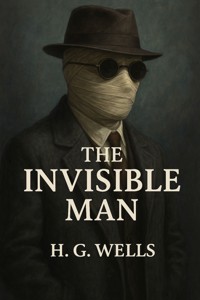
- This is an illustrated edition featuring striking illustrations, a detailed summary, an author biography, and a complete list of characters.
With its blend of suspense, imagination, and psychological depth, Wells’s tale remains one of the most thrilling explorations of the dangers of unchecked scientific power.
This illustrated edition brings the chilling world of The Invisible Man to life with vivid artwork that enhances the mystery and atmosphere of the story. It also includes:
A comprehensive summary to help readers understand the novel’s central ideas and symbolism
A biography of H. G. Wells, offering insight into the visionary author often called the “father of science fiction”
A character list to guide readers through the novel’s key figures and their roles in the unfolding drama
A haunting tale of science, ethics, and the human soul, The Invisible Man continues to captivate readers more than a century after its first publication — a must-have for fans of classic literature and speculative fiction.
Das E-Book können Sie in Legimi-Apps oder einer beliebigen App lesen, die das folgende Format unterstützen:
Veröffentlichungsjahr: 2025
0,0
Bewertungen werden von Nutzern von Legimi sowie anderen Partner-Webseiten vergeben.
Legimi prüft nicht, ob Rezensionen von Nutzern stammen, die den betreffenden Titel tatsächlich gekauft oder gelesen/gehört haben. Wir entfernen aber gefälschte Rezensionen.
Ähnliche


















The Invisible Man
By
H. G. Wells
ABOUT WELLS
Herbert George Wells, better known as H. G. Wells, was born on September 21, 1866, in Bromley, Kent, England. He came from a humble background; his father was a professional cricketer and shopkeeper, while his mother worked as a housemaid. When Wells was a child, an accident left him bedridden for several months, during which he developed a love for reading. This period sparked his imagination and inspired his lifelong interest in science, literature, and the possibilities of the future.
Wells’s early life was difficult. His family struggled financially, and he was apprenticed to various trades before earning a scholarship to study at the Normal School of Science in London. There, he studied biology under the famous scientist T. H. Huxley, which had a lasting influence on his thinking and writing. His scientific education helped him understand evolution, technology, and human progress — themes that would later define his literary career. After teaching for a short time, he began writing full-time, contributing essays and fiction to magazines.
H. G. Wells gained fame with the publication of The Time Machine in 1895, a groundbreaking novel that introduced readers to the concept of time travel. This success was followed by other classics such as The War of the Worlds, The Island of Doctor Moreau, The First Men in the Moon, and The Invisible Man, published in 1897. The Invisible Man tells the story of Griffin, a scientist who discovers how to make himself invisible but becomes consumed by madness and isolation. The novel combines science, suspense, and moral reflection, exploring the dangers of unchecked ambition and the misuse of scientific power.
Beyond his science fiction, Wells was also a prolific writer of social commentary, history, and political thought.
SUMMARY
The Invisible Man is a science fiction novel by H. G. Wells about a mysterious scientist named Griffin who discovers the secret of becoming invisible. At the beginning of the story, Griffin arrives in a small English village called Iping, wearing heavy clothing, dark glasses, and bandages that hide his face. His strange appearance and secretive behavior make the villagers suspicious of him.
Griffin rents a room at an inn to continue his experiments. When the villagers try to learn more about him, he becomes angry and violent. Eventually, they discover that he is invisible, which causes chaos and fear in the village. Griffin reveals that he used chemicals and light experiments to change the structure of his body, making himself invisible. However, he cannot find a way to reverse the process.After his identity is exposed, Griffin flees and becomes an outlaw. He struggles to survive because people are terrified of him, and he cannot live a normal life. His invisibility, which he once thought would give him great power, instead isolates him and drives him toward madness. He plans to use his invisibility to create fear and control others, dreaming of a “reign of terror.”Griffin tries to make an ally out of an old friend named Dr. Kemp, hoping for help with his plan. But Kemp refuses and reports him to the police. Feeling betrayed and hunted, Griffin becomes even more violent and unstable. The police and the townspeople unite to stop him, and after a fierce chase, Griffin is captured and beaten to death.When Griffin dies, his body slowly becomes visible again, revealing the man he once was. The story ends as a warning about the dangers of unchecked ambition and the misuse of science. Through Griffin’s downfall, H. G. Wells shows how the desire for power and control can destroy a person when it lacks morality and humanity.
CHARACTERS LIST
Griffin (The Invisible Man) – The brilliant but reckless scientist who discovers the secret of invisibility and becomes consumed by madness and isolation.
Mr. Marvel – A simple, down-on-his-luck tramp who becomes Griffin’s unwilling assistant and later betrays him.
Dr. Kemp (Dr. Arthur Kemp) – A scientist and former acquaintance of Griffin who opposes his violent plans and ultimately helps bring him down.
Mrs. Hall – The innkeeper of the Coach and Horses at Iping, where Griffin first lodges; she grows suspicious of his strange behavior.
Mr. Hall – Mrs. Hall’s husband, co-owner of the inn; helps his wife deal with the mysterious lodger.
Colonel Adye – The chief of police in Port Burdock who assists Kemp in the effort to capture Griffin.
Mr. Thomas Marvel’s Pursuers (Villagers of Iping) – The group of townspeople who confront Griffin after his identity is revealed.
The Vicar (Mr. Bunting) – A local clergyman whose house Griffin robs early in the story.
Mrs. Bunting – The vicar’s wife who is terrified by Griffin’s invisible burglary.
Mr. Jaffers – The village constable who attempts to arrest Griffin and becomes one of his first victims.
CONTENTS
I The strange Man's Arrival II Mr. Teddy Henfrey's first Impressions III
The thousand and one Bottles IV Mr. Cuss interviews the Stranger V The Burglary
at the Vicarage VI The Furniture that went mad VII The Unveiling of the
Stranger VIII In Transit IX Mr. Thomas Marvel X Mr. Marvel's Visit to
Iping XI In the "Coach and Horses" XII The invisible Man loses his Temper XIII
Mr. Marvel discusses his Resignation XIV At Port Stowe XV The Man who was
running XVI In the "Jolly Cricketers" XVII Dr. Kemp's Visitor XVIII The invisible
Man sleeps XIX Certain first Principles XX At the House in Great Portland
Street XXI In Oxford Street XXII In the Emporium XXIII In Drury Lane XXIV The
Plan that failed XXV The Hunting of the invisible Man XXVI The Wicksteed Murder
XXVII The Siege of Kemp's House XXVIII The Hunter huntedThe Epilogue
CHAPTER I
THE STRANGE MAN'S ARRIVAL
The stranger came early in February, one wintry day, through a biting wind and a
driving snow, the last snowfall of the year, over the down, walking from
Bramblehurst railway station, and carrying a little black portmanteau in his thickly gloved hand. He was wrapped up from head to foot, and the brim of his
soft felt hat hid every inch of his face but the shiny tip of his nose; the snow had
piled itself against his shoulders and chest, and added a white crest to the burden
he carried. He staggered into the "Coach and Horses" more dead than alive, and flung his portmanteau down. "A fire," he cried, "in the name of human charity! A room and a fire!" He stamped and shook the snow from off himself in the bar,
and followed Mrs. Hall into her guest parlour to strike his bargain. And with that
much introduction, that and a couple of sovereigns flung upon the table, he took
up his quarters in the inn.
Mrs. Hall lit the fire and left him there while she went to prepare him a meal with her own hands. A guest to stop at Iping in the wintertime was an unheard-of
piece of luck, let alone a guest who was no "haggler," and she was resolved to
show herself worthy of her good fortune. As soon as the bacon was well under way, and Millie, her lymphatic maid, had been brisked up a bit by a few deftly
chosen expressions of contempt, she carried the cloth, plates, and glasses into the
parlour and began to lay them with the utmost éclat. Although the fire was burning up briskly, she was surprised to see that her visitor still wore his hat and
coat, standing with his back to her and staring out of the window at the falling
snow in the yard. His gloved hands were clasped behind him, and he seemed to
be lost in thought. She noticed that the melting snow that still sprinkled his shoulders dripped upon her carpet. "Can I take your hat and coat, sir?" she said,
"and give them a good dry in the kitchen?"
"No," he said without turning.
She was not sure she had heard him, and was about to repeat her question.
He turned his head and looked at her over his shoulder. "I prefer to keep them on," he said with emphasis, and she noticed that he wore big blue spectacles with sidelights, and had a bush side-whisker over his coat-collar that completely hid
his cheeks and face.
"Very well, sir," she said. " As you like. In a bit the room will be warmer."
He made no answer, and had turned his face away from her again, and Mrs. Hall,
feeling that her conversational advances were ill-timed, laid the rest of the table
things in a quick staccato and whisked out of the room. When she returned he was still standing there, like a man of stone, his back hunched, his collar turned
up, his dripping hat-brim turned down, hiding his face and ears completely. She
put down the eggs and bacon with considerable emphasis, and called rather than
said to him, "Your lunch is served, sir."
"Thank you," he said at the same time, and did not stir until she was closing the door. Then he swung round and approached the table with a certain eager
quickness.
As she went behind the bar to the kitchen she heard a sound repeated at regular
intervals. Chirk, chirk, chirk, it went, the sound of a spoon being rapidly whisked
round a basin. "That girl!" she said. "There! I clean forgot it. It's her being so long!" And while she herself finished mixing the mustard, she gave Millie a few
verbal stabs for her excessive slowness. She had cooked the ham and eggs, laid
the table, and done everything, while Millie (help indeed!) had only succeeded in
delaying the mustard. And him a new guest and wanting to stay! Then she filled the mustard pot, and, putting it with a certain stateliness upon a gold and black
tea-tray, carried it into the parlour.
She rapped and entered promptly. As she did so her visitor moved quickly, so that she got but a glimpse of a white object disappearing behind the table. It would seem he was picking something from the floor. She rapped down the
mustard pot on the table, and then she noticed the overcoat and hat had been taken off and put over a chair in front of the fire, and a pair of wet boots threatened rust to her steel fender. She went to these things resolutely. "I suppose I may have them to dry now," she said in a voice that brooked no denial.
"Leave the hat," said her visitor, in a muffled voice, and turning she saw he had raised his head and was sitting and looking at her.
For a moment she stood gaping at him, too surprised to speak.
He held a white cloth—it was a serviette he had brought with him—over the lower part of his face, so that his mouth and jaws were completely hidden, and
that was the reason of his muffled voice. But it was not that which startled Mrs.
Hall. It was the fact that all his forehead above his blue glasses was covered by a
white bandage, and that another covered his ears, leaving not a scrap of his face
exposed excepting only his pink, peaked nose. It was bright, pink, and shiny just
as it had been at first. He wore a dark-brown velvet jacket with a high, black, linen-lined collar turned up about his neck. The thick black hair, escaping as it could below and between the cross bandages, projected in curious tails and horns, giving him the strangest appearance conceivable. This muffled and
bandaged head was so unlike what she had anticipated, that for a moment she was rigid.
He did not remove the serviette, but remained holding it, as she saw now, with a
brown gloved hand, and regarding her with his inscrutable blue glasses. "Leave
the hat," he said, speaking very distinctly through the white cloth.
Her nerves began to recover from the shock they had received. She placed the hat on the chair again by the fire. "I didn't know, sir," she began, "that—" and she stopped embarrassed.
"Thank you," he said drily, glancing from her to the door and then at her again.
"I'll have them nicely dried, sir, at once," she said, and carried his clothes out of the room. She glanced at his white-swathed head and blue goggles again as she
was going out of the door; but his napkin was still in front of his face. She shivered a little as she closed the door behind her, and her face was eloquent of
her surprise and perplexity. "I never," she whispered. "There!" She went quite softly to the kitchen, and was too preoccupied to ask Millie what she was messing about with now, when she got there.
The visitor sat and listened to her retreating feet. He glanced inquiringly at the
window before he removed his serviette, and resumed his meal. He took a
mouthful, glanced suspiciously at the window, took another mouthful, then rose
and, taking the serviette in his hand, walked across the room and pulled the blind
down to the top of the white muslin that obscured the lower panes. This left the
room in a twilight. This done, he returned with an easier air to the table and his
meal.
"The poor soul's had an accident or an op'ration or somethin'," said Mrs. Hall.
"What a turn them bandages did give me, to be sure!"
She put on some more coal, unfolded the clothes-horse, and extended the
traveller's coat upon this. "And they goggles! Why, he looked more like a divin'
helmet than a human man!" She hung his muffler on a corner of the horse. "And holding that handkerchief over his mouth all the time. Talkin' through it! ...
Perhaps his mouth was hurt too—maybe."
She turned round, as one who suddenly remembers. "Bless my soul alive!" she said, going off at a tangent; "ain't you done them taters yet, Millie?"
When Mrs. Hall went to clear away the stranger's lunch, her idea that his mouth
must also have been cut or disfigured in the accident she supposed him to have
suffered, was confirmed, for he was smoking a pipe, and all the time that she was in the room he never loosened the silk muffler he had wrapped round the lower part of his face to put the mouthpiece to his lips. Yet it was not forgetfulness, for she saw he glanced at it as it smouldered out. He sat in the corner with his back to the window-blind and spoke now, having eaten and
drunk and being comfortably warmed through, with less aggressive brevity than
before. The reflection of the fire lent a kind of red animation to his big spectacles they had lacked hitherto.
"I have some luggage," he said, "at Bramblehurst station," and he asked her how he could have it sent. He bowed his bandaged head quite politely in
acknowledgment of her explanation. "To-morrow?" he said. "There is no speedier delivery?" and seemed quite disappointed when she answered, "No."
Was she quite sure? No man with a trap who would go over?
Mrs. Hall, nothing loath, answered his questions and developed a conversation.
"It's a steep road by the down, sir," she said in answer to the question about a trap; and then, snatching at an opening, said, "It was there a carriage was upsettled, a year ago and more. A gentleman killed, besides his coachman.
Accidents, sir, happen in a moment, don't they?"
But the visitor was not to be drawn so easily. "They do," he said through his muffler, eyeing her quietly through his impenetrable glasses.
"But they take long enough to get well, don't they? ... There was my sister's son, Tom, jest cut his arm with a scythe, tumbled on it in the 'ayfield, and, bless me!
he was three months tied up sir. You'd hardly believe it. It's regular given me a
dread of a scythe, sir."
"I can quite understand that," said the visitor.
"He was afraid, one time, that he'd have to have an op'ration—he was that bad,
sir."
The visitor laughed abruptly, a bark of a laugh that he seemed to bite and kill in
his mouth. " Was he?" he said.
"He was, sir. And no laughing matter to them as had the doing for him, as I had
—my sister being took up with her little ones so much. There was bandages to
do, sir, and bandages to undo. So that if I may make so bold as to say it, sir—"
"Will you get me some matches?" said the visitor, quite abruptly. "My pipe is out."
Mrs. Hall was pulled up suddenly. It was certainly rude of him, after telling him
all she had done. She gasped at him for a moment, and remembered the two sovereigns. She went for the matches.
"Thanks," he said concisely, as she put them down, and turned his shoulder upon
her and stared out of the window again. It was altogether too discouraging.
Evidently he was sensitive on the topic of operations and bandages. She did not
"make so bold as to say," however, after all. But his snubbing way had irritated her, and Millie had a hot time of it that afternoon.
The visitor remained in the parlour until four o'clock, without giving the ghost of
an excuse for an intrusion. For the most part he was quite still during that time; it would seem he sat in the growing darkness smoking in the firelight—perhaps dozing.
Once or twice a curious listener might have heard him at the coals, and for the
space of five minutes he was audible pacing the room. He seemed to be talking
to himself. Then the armchair creaked as he sat down again.
CHAPTER II
MR. TEDDY HENFREY'S FIRST IMPRESSIONS
At four o'clock, when it was fairly dark and Mrs. Hall was screwing up her courage to go in and ask her visitor if he would take some tea, Teddy Henfrey,
the clock-jobber, came into the bar. "My sakes! Mrs. Hall," said he, "but this is terrible weather for thin boots!" The snow outside was falling faster.
Mrs. Hall agreed, and then noticed he had his bag with him. "Now you're here,
Mr. Teddy," said she, "I'd be glad if you'd give th' old clock in the parlour a bit of a look. 'Tis going, and it strikes well and hearty; but the hour-hand won't do nuthin' but point at six."
And leading the way, she went across to the parlour door and rapped and
entered.
Her visitor, she saw as she opened the door, was seated in the armchair before the fire, dozing it would seem, with his bandaged head drooping on one side.
The only light in the room was the red glow from the fire—which lit his eyes like adverse railway signals, but left his downcast face in darkness—and the
scanty vestiges of the day that came in through the open door. Everything was ruddy, shadowy, and indistinct to her, the more so since she had just been lighting the bar lamp, and her eyes were dazzled. But for a second it seemed to
her that the man she looked at had an enormous mouth wide open—a vast and
incredible mouth that swallowed the whole of the lower portion of his face. It was the sensation of a moment: the white-bound head, the monstrous goggle
eyes, and this huge yawn below it. Then he stirred, started up in his chair, put up
his hand. She opened the door wide, so that the room was lighter, and she saw
him more clearly, with the muffler held up to his face just as she had seen him
hold the serviette before. The shadows, she fancied, had tricked her.
"Would you mind, sir, this man a-coming to look at the clock, sir?" she said, recovering from the momentary shock.
"Look at the clock?" he said, staring round in a drowsy manner, and speaking over his hand, and then, getting more fully awake, "certainly."
Mrs. Hall went away to get a lamp, and he rose and stretched himself. Then came the light, and Mr. Teddy Henfrey, entering, was confronted by this
bandaged person. He was, he says, "taken aback."
"Good afternoon," said the stranger, regarding him—as Mr. Henfrey says, with a vivid sense of the dark spectacles—"like a lobster."
"I hope," said Mr. Henfrey, "that it's no intrusion."
"None whatever," said the stranger. "Though, I understand," he said turning to Mrs. Hall, "that this room is really to be mine for my own private use."
"I thought, sir," said Mrs. Hall, "you'd prefer the clock—"
"Certainly," said the stranger, "certainly—but, as a rule, I like to be alone and undisturbed.
"But I'm really glad to have the clock seen to," he said, seeing a certain hesitation in Mr. Henfrey's manner. "Very glad." Mr. Henfrey had intended to apologise and withdraw, but this anticipation reassured him. The stranger turned
round with his back to the fireplace and put his hands behind his back. "And presently," he said, "when the clock-mending is over, I think I should like to have some tea. But not till the clock-mending is over."
Mrs. Hall was about to leave the room—she made no conversational advances this time, because she did not want to be snubbed in front of Mr. Henfrey—when
her visitor asked her if she had made any arrangements about his boxes at Bramblehurst. She told him she had mentioned the matter to the postman, and that the carrier could bring them over on the morrow. "You are certain that is the earliest?" he said.
She was certain, with a marked coldness.
"I should explain," he added, "what I was really too cold and fatigued to do before, that I am an experimental investigator."
"Indeed, sir," said Mrs. Hall, much impressed.
"And my baggage contains apparatus and appliances."
"Very useful things indeed they are, sir," said Mrs. Hall.
"And I'm very naturally anxious to get on with my inquiries."
"Of course, sir."
"My reason for coming to Iping," he proceeded, with a certain deliberation of manner, "was ... a desire for solitude. I do not wish to be disturbed in my work.
In addition to my work, an accident—"
"I thought as much," said Mrs. Hall to herself.
"—necessitates a certain retirement. My eyes—are sometimes so weak and
painful that I have to shut myself up in the dark for hours together. Lock myself
up. Sometimes—now and then. Not at present, certainly. At such times the
slightest disturbance, the entry of a stranger into the room, is a source of excruciating annoyance to me—it is well these things should be understood."
"Certainly, sir," said Mrs. Hall. "And if I might make so bold as to ask—"
"That I think, is all," said the stranger, with that quietly irresistible air of finality he could assume at will. Mrs. Hall reserved her question and sympathy for a better occasion.
After Mrs. Hall had left the room, he remained standing in front of the fire, glaring, so Mr. Henfrey puts it, at the clock-mending. Mr. Henfrey not only took
off the hands of the clock, and the face, but extracted the works; and he tried to
work in as slow and quiet and unassuming a manner as possible. He worked with
the lamp close to him, and the green shade threw a brilliant light upon his hands,
and upon the frame and wheels, and left the rest of the room shadowy. When he
looked up, coloured patches swam in his eyes. Being constitutionally of a
curious nature, he had removed the works—a quite unnecessary proceeding—
with the idea of delaying his departure and perhaps falling into conversation with
the stranger. But the stranger stood there, perfectly silent and still. So still, it got on Henfrey's nerves. He felt alone in the room and looked up, and there, grey and dim, was the bandaged head and huge blue lenses staring fixedly, with a mist
of green spots drifting in front of them. It was so uncanny to Henfrey that for a
minute they remained staring blankly at one another. Then Henfrey looked down
again. Very uncomfortable position! One would like to say something. Should he
remark that the weather was very cold for the time of year?
He looked up as if to take aim with that introductory shot. "The weather—" he began.
"Why don't you finish and go?" said the rigid figure, evidently in a state of painfully suppressed rage. "All you've got to do is to fix the hour-hand on its axle. You're simply humbugging—"
"Certainly, sir—one minute more. I overlooked—" and Mr. Henfrey finished and went.
But he went feeling excessively annoyed. "Damn it!" said Mr. Henfrey to himself, trudging down the village through the thawing snow; "a man must do a
clock at times, surely."
And again, "Can't a man look at you?—Ugly!"
And yet again, "Seemingly not. If the police was wanting you you couldn't be more wropped and bandaged."
At Gleeson's corner he saw Hall, who had recently married the stranger's hostess
at the "Coach and Horses," and who now drove the Iping conveyance, when occasional people required it, to Sidderbridge Junction, coming towards him on
his return from that place. Hall had evidently been "stopping a bit" at
Sidderbridge, to judge by his driving. "'Ow do, Teddy?" he said, passing.
"You got a rum un up home!" said Teddy.
Hall very sociably pulled up. "What's that?" he asked.
"Rum-looking customer stopping at the 'Coach and Horses,'" said Teddy. "My sakes!"
And he proceeded to give Hall a vivid description of his grotesque guest. "Looks a bit like a disguise, don't it? I'd like to see a man's face if I had him stopping in my place," said Henfrey. "But women are that trustful—where strangers are concerned. He's took your rooms and he ain't even given a name, Hall."
"You don't say so!" said Hall, who was a man of sluggish apprehension.
"Yes," said Teddy. "By the week. Whatever he is, you can't get rid of him under the week. And he's got a lot of luggage coming to-morrow, so he says. Let's hope
it won't be stones in boxes, Hall."
He told Hall how his aunt at Hastings had been swindled by a stranger with empty portmanteaux. Altogether he left Hall vaguely suspicious. "Get up, old girl," said Hall. "I s'pose I must see 'bout this."
Teddy trudged on his way with his mind considerably relieved.
Instead of "seeing 'bout it," however, Hall on his return was severely rated by his wife on the length of time he had spent in Sidderbridge, and his mild inquiries
were answered snappishly and in a manner not to the point. But the seed of suspicion Teddy had sown germinated in the mind of Mr. Hall in spite of these
discouragements. "You wim' don't know everything," said Mr. Hall, resolved to ascertain more about the personality of his guest at the earliest possible opportunity. And after the stranger had gone to bed, which he did about half-past
nine, Mr. Hall went very aggressively into the parlour and looked very hard at his wife's furniture, just to show that the stranger wasn't master there, and scrutinised closely and a little contemptuously a sheet of mathematical
computations the stranger had left. When retiring for the night he instructed Mrs.
Hall to look very closely at the stranger's luggage when it came next day.
"You mind your own business, Hall," said Mrs. Hall, "and I'll mind mine."
She was all the more inclined to snap at Hall because the stranger was undoubtedly an unusually strange sort of stranger, and she was by no means assured about him in her own mind. In the middle of the night she woke up dreaming of huge white heads like turnips, that came trailing after her, at the end
of interminable necks, and with vast black eyes. But being a sensible woman, she subdued her terrors and turned over and went to sleep again.




