


0,99 €
Niedrigster Preis in 30 Tagen: 0,00 €
Niedrigster Preis in 30 Tagen: 0,00 €
Mehr erfahren.
- Herausgeber: DigiCat
- Kategorie: Für Kinder und Jugendliche
- Sprache: Englisch
In "The King of the Golden River," John Ruskin crafts a richly imaginative fairy tale resonating with moral allegory, set within the picturesque backdrop of the Tyrol Alps. This purported children's story stands out in Ruskin's oeuvre, blending elements of fantasy and social commentary while employing a lyrical and ornate narrative style reminiscent of the Pre-Raphaelites. The tale intertwines the theme of greed versus generosity, as it follows the journey of young Gluck who, with his kinder spirit, is pitted against his avaricious brothers in a quest for gold and redemption, ultimately culminating in a poignant critique of materialism. Ruskin, a prominent Victorian art critic, social thinker, and philanthropist, infused his works with deep reflections on nature, society, and ethics. His profound appreciation for natural beauty, combined with a passionate critique of industrialization, undoubtedly shaped the moral foundations of "The King of the Golden River." By drawing from his experiences in the art world and his commitment to social reform, Ruskin encapsulates essential human values in this enchanting tale. This richly illustrated book serves as a profound yet accessible introduction to Ruskin's philosophy and aesthetic ideals, making it a must-read for both young audiences and adults seeking escapism through meaningful literature. His masterful synthesis of moral wisdom imbued in a whimsical narrative will leave readers reflecting on their values long after the last page. In this enriched edition, we have carefully created added value for your reading experience: - A succinct Introduction situates the work's timeless appeal and themes. - The Synopsis outlines the central plot, highlighting key developments without spoiling critical twists. - A detailed Historical Context immerses you in the era's events and influences that shaped the writing. - An Author Biography reveals milestones in the author's life, illuminating the personal insights behind the text. - A thorough Analysis dissects symbols, motifs, and character arcs to unearth underlying meanings. - Reflection questions prompt you to engage personally with the work's messages, connecting them to modern life. - Hand‐picked Memorable Quotes shine a spotlight on moments of literary brilliance. - Interactive footnotes clarify unusual references, historical allusions, and archaic phrases for an effortless, more informed read.
Das E-Book können Sie in Legimi-Apps oder einer beliebigen App lesen, die das folgende Format unterstützen:
Veröffentlichungsjahr: 2022
Ähnliche

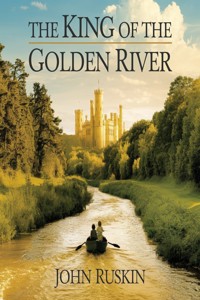








The King of the Golden River
Table of Contents
Introduction
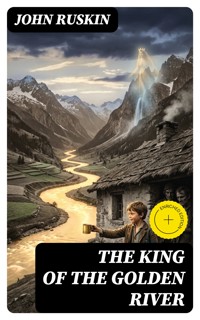
Greed scorches a fertile valley until only the cool springs of mercy can make it flow again. From this arresting moral image, The King of the Golden River unfolds as a compact fairy tale whose enchantments are inseparable from ethical choice. John Ruskin, best known as a Victorian critic of art and society, here turns to story to test the worth of wealth, hospitality, and compassion. The result is a narrative at once light on its feet and grave in its concerns, a legend that invites readers of any age to weigh the glitter of gold against the quiet power of goodness.
The book is by John Ruskin, composed in 1841 and first published in 1851 with illustrations by Richard Doyle. Set in a stylized version of Styria, it announces itself as a legend and uses the architecture of folklore to frame its moral inquiry. As Ruskin’s only complete original fairy tale, it stands apart in his oeuvre while reflecting the ethical preoccupations that run through his later social writings. Its brevity and clarity made it accessible to young readers, yet its acute sense of justice and its precise attention to landscape placed it squarely within the ambitions of Victorian literature.
The central premise is swiftly stated without revealing its resolution. On an alpine farm live three brothers whose characters and choices pull their household in contrary directions. A mysterious traveler—no ordinary guest—tests their conduct, and the landscape itself responds to their behavior. From this crisis arises a quest linked to a magical river whose waters, under certain strict conditions, may be turned to gold. Each would-be adventurer must learn what the river truly demands, and the tale measures prosperity not by acquisition but by the habits of the heart that accompany it.
Ruskin’s prose blends playfulness with moral bite. He animates winds and waters, gives mountains a presence both beautiful and severe, and stages meetings between human beings and personified forces without losing the feel of a working farm, a kitchen hearth, a village road. The tone, at once humorous and solemn, allows the story to be read as parable and as adventure. While the plot is simple, the language carries the textures Ruskin loved: weather, stone, and stream are never mere backdrops but active participants in the drama of choice.
The book’s classic status rests partly on its formal economy. In a short span it delivers a complete world whose laws of magic are coherent and exacting. It also provides a disarmingly clear test of values: wealth measured against pity, success weighed against justice. Because the symbols are vivid—the river, the wind, the mountain—the story has retained an immediacy that many longer works lose. Its images linger in the imagination, inviting rereading and inviting conversation about what riches mean and what they cost when severed from conscience.
As a Victorian fairy tale, it helped consolidate a literary space where fantasy could carry serious thought for young readers. Alongside the subsequent work of writers such as George MacDonald and Charles Kingsley, Ruskin’s legend shows how moral instruction and imaginative delight can coexist. Rather than preaching from a pulpit, he dramatizes ethical principles in actions and consequences, a method that influenced the way later children’s books approached questions of character, virtue, and social obligation without abandoning the pleasures of marvels and mischief.
The book’s impact also resides in its attention to the visual. Richard Doyle’s illustrations, created for the first edition, helped shape how nineteenth-century readers pictured fairies, sprites, and the comic-grotesque—an iconography that echoed across periodicals and children’s gift books. Text and image work together: Ruskin’s sharp delineation of natural forms and Doyle’s delicate, imaginative line reinforce each other, making the legend’s geography and its quirky supernatural figures feel simultaneously concrete and enchanted.
Placed against Ruskin’s broader career, the tale reads like a lucid seed of arguments he would later develop in prose. His criticism of avarice, defense of honest labor, and conviction that beauty and goodness are bound up with one another appear here as story elements rather than theses. The farm’s fortunes, the conduct of its owners, and the fate of its valley reflect a principle he often affirmed: human choices leave marks on the world. That this lesson arrives in crystalline narrative rather than essay gives it an enduring persuasive charm.
Thematically, the book turns on hospitality, humility, and the stewardship of gifts. It asks what we owe to strangers and to the weak, and it suggests that the natural world answers to our deeds with a kind of moral echo. At the same time, it never forgets delight: the capriciousness of personified winds, the rules of enchantment that are strict but fair, the surprising kindness that can appear where least expected. These elements make the story feel both ancient, like the folk traditions it emulates, and distinctly of its own moment.
Ruskin’s narrative method relies on testing and repetition, the classic machinery of the fairy tale. Attempts are made; results follow; standards become clear without authorial lecture. The King of the Golden River himself, an embodiment of treasure and trial, enforces a law that links gain to grace. The Southwest Wind—comic yet formidable—brings weather and judgment in the same breath. By giving forces of nature voices and faces, Ruskin turns abstract ethics into scenes that can be pictured, remembered, and shared aloud.
For contemporary readers, the story’s clarity is an asset. It can be read in a single sitting, discussed by students, or enjoyed privately for the crispness of its images and the rhythm of its events. While nineteenth-century in diction, it remains approachable; the narrative momentum carries one forward, and the moral stakes are legible without being heavy-handed. That combination of accessibility and depth helps explain why the book remains in print and why it continues to appear in collections of classic children’s literature.
The King of the Golden River endures because its concerns are ours: the seductions of wealth, the obligations of kindness, and the ways human choices shape the fate of the places we inhabit. In an age alert to inequality and environmental strain, Ruskin’s legend speaks with fresh pertinence, urging readers to see prosperity as inseparable from responsibility. It offers not a sermon but a story whose enchantments clarify rather than cloud the truth. To open its pages is to meet a living test, and to discover why the oldest riches are those we can give away.
Synopsis
The King of the Golden River, or The Black Brothers: A Legend of Stiria, is a Victorian fairy tale by John Ruskin, first published in 1851. Set in a secluded alpine region, the tale traces how character shapes destiny through a compact sequence of trials. A fertile valley, a magical river, and an imposing wind spirit provide the stage on which human motives are tested. Ruskin combines wonder with moral inquiry, presenting episodes that clarify the costs of cruelty and the claims of charity. The narrative proceeds with clear cause and effect, allowing its fantastical elements to illuminate rather than obscure ethical stakes.
The story opens in Treasure Valley, a place renowned for its orchards and grain, watered by a river whose glittering qualities are the stuff of local legend. Three brothers live there: the elder pair, Schwartz and Hans, are harsh and grasping millers; their younger brother, Gluck, is gentle and often mistreated. The prosperity around them contrasts with the brothers’ private conduct, especially their meanness toward the poor and their disdain for hospitality. Ruskin establishes a moral baseline in these domestic scenes, suggesting that abundance without compassion is precarious, and that the valley’s well-being is bound to the behavior of its inhabitants.
A turning point arrives with the visit of a mysterious traveler during a violent storm. Gluck, left to manage the house, instinctively offers warmth and food, but his brothers reject the stranger with contempt. The encounter quietly signals the presence of powers that observe human choices. Soon after, the valley’s balance is broken: winds rage and waters rise, and the once-bounteous fields suffer a sweeping devastation. The millers’ wealth dwindles, and their habitual hardness is tested by scarcity. Ruskin links natural upheaval with ethical disorder, not as a simple punishment tale, but as a way to explore dependence, reciprocity, and responsibility.
In reduced circumstances, the brothers seek relief by melting their remaining treasures, a desperate act that brings a marvel into being. From their gold emerges a figure known as the King of the Golden River, a presence associated with the glittering stream that feeds the valley. He proposes a path to renewed prosperity: if a traveler reaches the river’s source and casts into it three drops of holy water, the river will respond in a way that may alter fortune. The condition is implicit but essential—the deed must accord with mercy and purity of intent—placing the quest’s outcome within the realm of conscience.




