


0,00 €
Niedrigster Preis in 30 Tagen: 0,00 €
Niedrigster Preis in 30 Tagen: 0,00 €
Mehr erfahren.
- Herausgeber: DigiCat
- Kategorie: Gesellschafts- und Liebesromane
- Sprache: Englisch
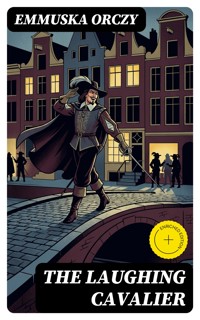
In 'The Laughing Cavalier,' Emmuska Orczy presents a stunning tableau set in the turbulent backdrop of 17th-century Europe. The novel intertwines historical fiction with swashbuckling adventure, showcasing Orczy's flair for vibrant characterizations and intricate plotting. The protagonist, a dashing and enigmatic figure, navigates a world rife with political intrigue and romantic entanglements, all while embodying the spirited essence of the era's cavalier culture. Orczy's deft prose merges humor with suspense, engaging readers in a vivid exploration of loyalty and bravery amid shifting allegiances. Emmuska Orczy, a Hungarian-born British author and playwright, gained prominence for her keen observations of societal norms and her passion for historical narratives. Her own experiences as a woman in a male-dominated literary landscape likely informed her complex characters and compelling narratives. Orczy's works often reflect her fascination with the heroic and the romantic, and 'The Laughing Cavalier' is no exception, encapsulating her desire to celebrate the spirit of adventure while addressing the sociopolitical nuances of her time. This captivating tale is highly recommended for readers who appreciate a rich blend of history and narrative flair. Through its humor and adventure, 'The Laughing Cavalier' offers not only an engaging story but also an insightful commentary on the human condition during an era marked by both artistry and upheaval. In this enriched edition, we have carefully created added value for your reading experience: - A succinct Introduction situates the work's timeless appeal and themes. - The Synopsis outlines the central plot, highlighting key developments without spoiling critical twists. - A detailed Historical Context immerses you in the era's events and influences that shaped the writing. - An Author Biography reveals milestones in the author's life, illuminating the personal insights behind the text. - A thorough Analysis dissects symbols, motifs, and character arcs to unearth underlying meanings. - Reflection questions prompt you to engage personally with the work's messages, connecting them to modern life. - Hand‐picked Memorable Quotes shine a spotlight on moments of literary brilliance. - Interactive footnotes clarify unusual references, historical allusions, and archaic phrases for an effortless, more informed read.
Das E-Book können Sie in Legimi-Apps oder einer beliebigen App lesen, die das folgende Format unterstützen:
Veröffentlichungsjahr: 2022
Ähnliche














The Laughing Cavalier
Table of Contents
Introduction
A laughing blade carves its path through treachery, where wit serves as armor and audacity becomes a creed.
The Laughing Cavalier by Emmuska (Baroness) Orczy is a historical romance of adventure set in the Dutch Republic during the 1620s, composed and published in the early twentieth century after the success of The Scarlet Pimpernel. The novel offers an origin-like tale within Orczy’s broader cycle, introducing a buoyant soldier of fortune nicknamed Diogenes, whose merriment conceals nerve and calculation. Summoned by chance, necessity, and the shifting currents of politics, he enters a world of perilous bargains and contested loyalties. The premise is simple and enticing: a resourceful wanderer, graced with laughter, is drawn into high-stakes intrigue that tests honor, courage, and charm.
The book’s classic status rests on more than its connection to a famous cycle; it embodies the essential pleasures of the swashbuckler with unusual poise. Orczy fuses brisk action with courtly manners, threading clever banter through scenes of suspense. Her hero’s gaiety carries ethical weight, transforming levity into a discipline of courage. The narrative’s balance—between spectacle and restraint, romance and risk—has allowed it to endure as a model of historical escapism that respects historical texture. Readers return for the promise that wit and nerve can navigate tempestuous times without collapsing into cynicism or despair.
Literarily, The Laughing Cavalier extends the template that Orczy helped popularize: the gallant, quick-witted protagonist who maneuvers within hostile systems using disguise, daring, and an unshakable code. That conception shaped popular adventure and espionage storytelling throughout the twentieth century, influencing how later writers and audiences imagine the masked or covert hero. As a prequel within a successful cycle, it demonstrates how mythmaking can be layered backward, enriching a legend by imagining its antecedents. In doing so, Orczy showcased techniques—legacy-building, playful intertext, and heroic genealogy—that have since become staples of serial fiction across genres.
Orczy situates her tale in the bustling cities and waterways of the seventeenth-century Dutch Republic, a trading powerhouse lit by merchant wealth, guild discipline, and vigorous political debate. The period—often called the Dutch Golden Age—was marked by religious plurality, military tension, and civic pride. Against this backdrop, rivalries over governance and sovereignty provide a charged arena for personal risk and public consequence. Orczy’s settings, from tavern to townhouse, reflect a society where wit can be as valuable as steel, and where a single audacious decision might tip the balance between obscurity and renown.
At the novel’s heart stands Diogenes, an adventurous spirit who laughs first and calculates swiftly, a swaggering pragmatist whose cheerfulness is a strategy as much as a temperament. Orczy sketches him with affectionate clarity: light-footed yet grounded by an instinct for fairness; merry, but not reckless; independent, yet susceptible to ideals that outpace personal gain. His presence animates the narrative’s energy, allowing humor to defuse danger without diminishing its stakes. The character’s agile intelligence invites readers to enjoy ruse and riposte while sensing the gravity of choices that cannot be undone.
The book’s title gestures to a famous work of art: the portrait known as The Laughing Cavalier by Frans Hals, painted in 1624. Without claiming an identity between sitter and hero, Orczy borrows the painting’s aura—jaunty poise, alert eyes, and the hint of a smile that promises mischief and mastery. This cultural echo enriches the novel’s atmosphere, aligning visual bravura with narrative verve. In the reader’s mind, the picture’s confident flourish becomes shorthand for the spirit of the tale: self-command in a world of shifting hazards, elegance under pressure, and a style that signals substance beneath ornament.
Orczy’s craft shows the hand of a dramatist: entrances are timely, exits are crisp, and stakes are revealed with theatrical shrewdness. Scenes pivot on dialogue that conceals motives as it reveals character, and the choreography of pursuit and escape is arranged with a playmaker’s instinct for mood and pace. Yet the prose never reduces history to stage dressing. Customs, clothing, and civic rituals serve the story rather than slowing it, granting the reader the satisfaction of immersion without pedantry. The result is a narrative that feels both tightly staged and hospitable to the reader’s historical curiosity.
Enduring themes lend the novel its backbone. Identity—chosen and imposed—meets in the mask of laughter; freedom battles necessity across private and public spheres; loyalty tests the tensile strength of love and conscience. Orczy does not glorify violence, but she acknowledges its proximity to power, and her hero’s triumphs depend as much on mercy as on audacity. The tale suggests that gallantry is not ornament but moral orientation: a way of moving through danger that honors others, accepts risk, and refuses despair. These values elevate adventure beyond spectacle into a meditation on conduct under strain.
Within the larger Scarlet Pimpernel mythos, The Laughing Cavalier functions as a genealogical prelude, advertised by its subtitle as the story of the ancestor of that later hero. This structure encourages readers to trace a lineage of instinct and ideal, where the flourish of a gesture carries across centuries. Orczy thereby converts family resemblance into literary coherence: the prequel does not depend on foreknowledge, yet it resonates for those who know the cycle. The book stands on its own as historical romance while deepening the allure of a celebrated fictional tradition.
Its classic status is also a matter of durability in the imagination. Readers and writers alike have returned to its blend of caper and conscience, learning how levity can sharpen suspense and how historical specificity can amplify, rather than constrain, narrative freedom. The novel anticipates modern franchise logic—origin stories, thematic echoes, recurring motifs—without sacrificing the intimacy of a single, self-contained adventure. Through this balance, Orczy demonstrates a principle that many later storytellers have pursued: that continuity and novelty can reinforce each other when anchored by a vividly realized hero.
For contemporary readers, The Laughing Cavalier remains relevant because it champions nimble integrity in uncertain times. Its world is rife with faction and fear, yet the answer it proposes is not brutality but imagination—courage furnished with humor, resourcefulness tempered by responsibility. In an age fascinated by legacies and reimaginings, it offers a thoughtful template for how stories can look backward to move forward. The novel’s lasting appeal lies in its faith that style can be ethical, that laughter can resist tyranny, and that the brightest bravery often smiles before it draws steel.
Synopsis
The Laughing Cavalier, a historical adventure novel by Baroness Emmuska Orczy, was first published in 1913. Set in the Dutch Republic in 1623, the story moves through a climate of factional suspicion and political reprisals. Its title nods to the famous portrait by Frans Hals, whose exuberant sitter embodies the swaggering spirit of the tale. Orczy introduces a daredevil soldier of fortune known as Diogenes, whose insolent mirth and audacity make him a magnet for trouble. Witty, penniless, and game for risk, he lives by his wits alongside two roistering comrades. From the outset, riotous bravado meets hard-edged intrigue.
Diogenes travels in the company of Pythagoras and Socrates, nicknames that suit their joking camaraderie and mock-philosophic banter. Together they haunt inns, guardhouses, and winter markets, fencing for supper and spinning tales to outwit creditors. Their worldliness draws the eye of men who measure loyalty in coin. In a crowded tavern, Diogenes’s laughter and swordplay mingle with gossip of plots and vendettas. He proclaims himself no partisan, yet his taste for adventure blurs caution. Orczy shapes him as both jester and strategist, a man whose flourish with cloak and rapier conceals a talent for reading danger and opportunities.
Against this backdrop stands Stoutenburg, a disaffected nobleman nursing grievances against the ruling house. He assembles a clandestine league intent on removing the Prince of Orange by violent means, betting on panic to shift the balance of power. The scheme requires secrecy, secrecy requires tools, and tools can be hired. Stoutenburg’s agents test Diogenes’s capacity for daring errands and sealed lips. Flattered by the challenge and tempted by gold, the cavalier accepts a commission whose limits are not immediately clear. What begins as mercenary employment draws him step by step toward the core of a treasonable enterprise.
The first task is audacious and morally fraught: the abduction of a young gentlewoman named Gilda, whose family connections could obstruct or expose the conspiracy. Removing her from the scene promises to muffle inquiries and bend wills. Diogenes plots the snatch with theatrical boldness, managing captors and hirelings while avoiding needless violence. Gilda’s courage and dignity complicate his work, and her resistance introduces a debate between necessity and honor. With the captive under guard, a hard journey begins along frozen roads and canal paths, shadowed by rumors of pursuit. Humor persists, but its edge sharpens as obligations tighten.
While Gilda is spirited away, the conspiracy thickens. Secret meetings are held in shuttered rooms; letters pass hand to hand under false seals; weapons and men are positioned in readiness. Officials and loyalists, wary of unrest, strain to read the signs. Friends of the abducted woman raise alarms and mobilize searches. Diogenes, animated by vanity and professional pride, balances swagger with discretion, relying on his companions for both muscle and levity. The winter setting tests stamina and supplies, and each village stop risks discovery. Orczy keeps motives layered, pressing the question of how far a hired blade will go.
As the miles accumulate, so do misgivings. Diogenes gleans more about Stoutenburg’s plan and senses an approaching calamity that could engulf innocents. His self-image as free agent collides with a nascent code that refuses brutality. Exchanges with Gilda deepen the moral puzzle; her fear and resolve provoke in him a protective instinct he is reluctant to admit. To gain time, he adopts disguises, shuffles messages, and plays factions against one another, a juggler keeping too many torches aloft. Narrow escapes on snow-lit quays and backstreets underscore the theme that quick wits can wound as effectively as steel.
The narrative gathers toward centers of authority where civic guards drill, magistrates confer, and nervous citizens whisper of plots. Stoutenburg’s impatience hardens into deadlines, his lieutenants grow reckless, and betrayal hovers. Diogenes maneuvers to keep proximity to the conspirators while sheltering Gilda from harsher hands, improvising paths through guarded gates and across patrolled waters. Ciphers, forged passes, and hurried bribes multiply as the clock tightens. Orczy intercuts perspectives from salons and taverns, revealing how rumor stokes fear. The cavalier’s laughter still rings, but it now serves as cover for calculations about when and how to act.
Public ceremonies and processions present both occasion and camouflage for the attempt on the Prince of Orange. Crowds, lanterns, and winter darkness create confusion that favors boldness. Diogenes faces the moment when neutrality becomes impossible, and his choice will expose him to enemies on either side. Swordplay flares in alleys, riders vanish into night mists, and loyalties pivot under pressure. The fate of the abducted woman and the fortunes of the plot come to a head, yet the narrative guards its immediate outcomes. What follows rearranges alliances and sets the stage for further exploits beyond the present tale.
Beyond its suspense, the novel examines how laughter, style, and courage resist fanaticism and cynicism. Orczy casts the Dutch Golden Age not only as a gallery of portraits but as a theater of conscience, where audacity can shield the vulnerable and puncture the pomp of zealots. The Hals-inspired cavalier becomes emblem and instrument, his gaiety a tactic as well as a temperament. Published as a prequel within the Scarlet Pimpernel canon, the book foreshadows later celebrations of resourceful heroism. Its enduring appeal rests in marrying romantic dash to political stakes while withholding easy answers about honor and choice.
Historical Context
Emmuska Orczy’s The Laughing Cavalier is set in the Dutch Republic in the early 1620s, most closely around 1623, with action centered in and around cities such as Haarlem and Amsterdam. The dominant institutions framing this world are the States-General at The Hague, the provincial States, and the office of the stadtholder, then held by Maurice of Nassau. Urban magistracies, guilds, and civic militias regulate daily life. The Reformed (Calvinist) Church holds official status, shaping public morals and rituals. Against this framework, Orczy imagines a roistering hero whose adventures unfold within a society known for disciplined governance, commercial prowess, and a vigilant civic order balancing liberty with control.
The novel’s date aligns with a critical phase of the Eighty Years’ War. After a long struggle that began in 1568, the northern provinces achieved de facto independence from Habsburg Spain. The Twelve Years’ Truce (1609–1621) paused hostilities, but war resumed in 1621. Spanish forces and Dutch armies maneuvered across the Low Countries, with sieges, espionage, and shifting alliances common. Orczy harnesses this renewed atmosphere of peril and intrigue; her narrative echoes a society bracing for conflict, where fortified towns, secret negotiations, and wartime opportunism mingle with the confident civic life of the rising Dutch Republic.
Broader European turmoil intensified the tension. The Thirty Years’ War (1618–1648) drew in the Habsburg lands, the German states, and numerous Protestant and Catholic powers. The Dutch Republic, though focused on its struggle with Spain, was enmeshed in this pan-European crisis through diplomacy, finance, and military campaigns on nearby frontiers. Commanders such as Ambrogio Spinola pressed Spanish aims, while Dutch forces sought to protect trade routes and strategic towns. Orczy’s plot reflects an environment in which borders were porous, loyalties could be transactional, and mercenary soldiers, informers, and freebooters found profitable niches in the gray areas of war.
Domestic politics also seethed. In the decade before the novel’s setting, a fierce conflict erupted between the Remonstrants (Arminian-minded Protestants advocating more tolerant doctrine) and Contra-Remonstrants (Calvinist orthodox). The Synod of Dort (1618–1619) condemned the Remonstrant positions; Johan van Oldenbarnevelt, a leading statesman associated with Remonstrant sympathies, was executed in 1619. The jurist Hugo Grotius, imprisoned for the same crisis, famously escaped in 1621. This recent history fostered surveillance, factional suspicion, and ideological tests of loyalty. Orczy’s world of hidden agendas, informants, and political shadow-play mirrors the residue of this bitter confessional and constitutional struggle.
Constitutionally, the Dutch Republic combined republican institutions with quasi-monarchical leadership by the House of Orange-Nassau. The stadtholder wielded military command and patronage, while city regents—wealthy merchants and magistrates—controlled civic government. This balance produced pragmatic governance but also rivalries over authority, taxation, and religious enforcement. Patron-client networks threaded through households, guilds, and militias. Orczy’s characters move within that matrix, where favors, contracts, and whispered recommendations could secure protection or doom a reputation. Her drama gains plausibility from a polity in which personal allegiance and public office were inseparable, and where political currents ran through family salons as much as assembly chambers.
Urban institutions shaped everyday life. City councils oversaw poor relief, market regulation, and public order; the schutterij, or civic militia, drilled for defense and paraded as symbols of burgher pride. Guilds certified craft quality and organized social support. Watchmen patrolled at night, enforcing curfews and deterring petty crime. Local courts handled disputes and punished offenses, while provincial and federal authorities intervened in major cases. Orczy’s settings evoke these textures: taverns near guildhalls, narrow lanes and canal quays under lantern light, and interiors where magistrates and merchants negotiated contracts and alliances. The novel’s capers unfold within a civic machinery designed to keep disorder at bay.
The Dutch Golden Age economy undergirds the backdrop. Amsterdam’s exchange (established 1602) and the Bank of Amsterdam (1609) stabilized finance, while the Dutch East India Company (VOC, 1602) and newly chartered West India Company (WIC, 1621) expanded long-distance trade. Capital from fisheries, textiles, and shipping funded urban growth and public works. The fluyt, a cost-efficient cargo ship, and disciplined convoy systems safeguarded commerce. Orczy’s adventurers navigate a society where wealth is mobile, fortunes rise in speculative ventures, and mercenaries, informers, and creditors all serve the greater engine of trade. The material stakes of ransom, debt, and paymaster politics give the high romance its hard economic edge.
Communications and travel favored stealth and speed. Canals, rivers, and coastal shipping linked towns year-round, while road networks supported horse and coach travel. Barges plied inland waters, and in severe winters frozen canals briefly became thoroughfares. A lively print culture—pamphlets, broadsheets, and news-sheets—spread reports and rumors quickly. Dutch presses, relatively freer than many on the continent, fueled debate but also disinformation. Secret letters, seals, and couriers were common in intelligence work. Orczy’s plotting exploits these conditions: messages change hands at quays, identities blur amid crowded inns, and swift movement by water or road enables both pursuit and escape.
The social elite of the Dutch Republic comprised regent families who governed cities and invested in trade. They commissioned portraits, endowed charities, and arranged marriages to consolidate influence. Household authority was strong, with patriarchs and guardians managing alliances, dowries, and inheritances. Yet women in merchant households could wield real economic agency, managing shops or accounts in a spouse’s absence. The novel’s relationships and conflicts resonate with these patterns—family honor, advantageous matches, and the legal guardianship of young heiresses—without straying from the broad norms of early seventeenth-century urban life in the Low Countries.
Religion structured both conscience and custom. The Reformed Church held public privilege: its consistories promoted moral discipline, regulated Sabbath observance, and frowned on luxury and theater, though enforcement varied by town. At the same time, the Republic tolerated private worship for other confessions, leading to clandestine Catholic churches and space for Mennonites and Jews, especially in Amsterdam. This mixture of confessional authority and pragmatic toleration shaped public rhetoric and private behavior. Orczy’s narrative captures a society negotiating principle and profit, where pious postures could mask political maneuver, and where civic peace depended on careful compromises among rival beliefs.
Weapons, dress, and martial culture add period texture. Wheel-lock pistols, matchlock muskets, and rapiers were typical; officers and gentlemen favored ornate sidearms. Dueling and street brawls were officially discouraged but persisted, intersecting with codes of honor among soldiers and burghers. Fashion in the 1620s featured broad-brimmed hats, feathers, lace cuffs, and the transition from stiff ruffs to softer falling bands. Such attire appears in contemporary portraits and militia banquets. Orczy’s swashbuckling tone fits a milieu where displays of courage and style signaled status, even as civic authorities sought to restrain violence and ostentation for the sake of order.
Frans Hals, active in Haarlem, provides the novel’s most direct artistic anchor. His 1624 portrait known as The Laughing Cavalier—actually a soberly smiling, unidentified sitter—exemplifies lively brushwork and flamboyant costume. Hals’s militia group portraits likewise immortalized civic leaders with vivid immediacy. The nineteenth century popularized the painting’s modern title, and by Orczy’s day it hung in London’s Wallace Collection, widely admired. Orczy imaginatively links her hero to this image, crafting a backstory that melds Haarlem’s artistic vitality with the swaggering charisma evoked on canvas, while acknowledging that the sitter’s historical identity remains unknown.
Haarlem itself was a fitting stage. A prosperous city known for brewing, linen bleaching fields, and skilled artisans, it was home to Hals and to an assertive regent class. The surrounding countryside—polders, dikes, and dunes—made travel and concealment plausible in equal measure. Nearby bulb cultivation grew in the early seventeenth century, though the speculative “tulip mania” would crest later, in the 1630s. Haarlem’s schutterij and guild culture, its tight-knit patriciate, and the visual language of civic pride in militia banquets provide the social scaffolding for Orczy’s scenes of masquerade, negotiation, and audacious feats undertaken within sight of stern magistrates.
International ties with England add another layer. English soldiers had served in the Netherlands since the late sixteenth century, and commercial links were dense. Under James I, England and the Republic maintained wary amity grounded in shared Protestant interests and trade. English travelers, merchants, and adventurers moved through Dutch ports with relative ease. Orczy, a British writer, harnesses this familiarity; her prequel to the Scarlet Pimpernel saga situates an English lineage within Dutch settings, echoing historical mobility without claiming specific historical personages. The cross-Channel sensibility underscores a theme of Protestant, mercantile modernity contrasted with the perceived absolutism of Habsburg power.
Law and order in the Republic were formal yet flexible. Urban courts processed civil suits rapidly and criminal matters with caution, mindful of economic stability. Kidnapping, extortion, and highway robbery were punishable offenses, though wartime chaos could blur jurisdictional lines. Judicial torture, while restricted, remained possible in grave cases; capital punishment was employed sparingly compared with many contemporaries. Ransom practices at frontiers and in maritime warfare persisted. Orczy’s plot devices—abduction, disguise, and negotiated release—fit a period where legal norms contended with the messy realities of war, private violence, and the pursuit of advantage by bold individuals.
Technology and information flows strengthened the Republic’s edge. Dutch shipyards standardized designs like the fluyt; cartographers and instrument makers advanced navigation and optics, building on local innovations such as the telescope’s early development around 1608. Urban infrastructure—locks, bridges, and warehouses—accelerated turnover of goods and news. Printers and booksellers profited from a hungry market for polemic and reportage. Orczy’s conspiracies inhabit this world of speed and scale: a rumor can become leverage within days, and fortunes can rest on a sealed document, a forged pass, or a ledger entry moving capital across oceans and back into a regent’s countinghouse.
The author’s own era also matters. Baroness Emmuska Orczy (1865–1947), a Hungarian-born novelist who made her career in Britain, published The Laughing Cavalier in 1913. Edwardian readers favored romantic historical adventures with clear moral polarities and enterprising protagonists. Orczy’s admiration for aristocratic honor and chivalric daring—well-known from The Scarlet Pimpernel—here meets the disciplined, bourgeois republic of the Dutch Golden Age. The prewar British milieu, with its imperial confidence and anxieties, helped shape the novel’s celebration of individual initiative amid continental turmoil, casting early modern Holland as both ally and stage for bravura feats of loyalty and wit, rather than as a pedantic history lesson alone.','Finally, the painting’s title adds a linguistic footnote. “Cavalier” in English later evoked Royalist partisans of the English Civil War, but in Orczy’s use it is a romantic label rather than a precise political tag. The real sitter was likely a prosperous burgher, not necessarily a soldier. That ambiguity suits the Dutch Republic’s social blend, where merchants, officers, and magistrates often overlapped. Orczy exploits the tension between swaggering appearance and civic reality. Her hero’s laughter—borrowed from the painting’s modern name—signals charm and defiance within a society that prized sobriety, profit, and rule by committees as much as daring and panache.','As historical fiction, the novel refracts, rather than documents, specific events. It borrows the charged atmosphere of 1621–1624: the war’s resumption after the Truce, fresh memories of the Remonstrant crisis, and a civic culture on guard against subversion. Its villains and patrons echo real anxieties about infiltration, betrayal, and the shifting boundaries between public duty and private gain. Orczy’s invention of backstories for an unknown sitter, militia-haunted streets, and regent drawing rooms aligns with the factual scaffolding of Dutch political life, even as it condenses timelines and personalizes conflicts for narrative momentum and romantic appeal.','In sum, The Laughing Cavalier mirrors the Dutch Republic at a hinge moment: prosperous yet embattled, sternly moral yet commercially pragmatic, republican in form yet reliant on princely charisma. Orczy leverages major historical currents—the Eighty Years’ War’s renewal, the aftershocks of the Synod of Dort, and the civic culture captured by Frans Hals—to stage a tale of disguise, loyalty, and negotiation. The book does not offer archival precision, but it does critique and celebrate its era by contrasting bureaucratic order with individual dash, suggesting that in a world of ledgers and laws, wit and courage could still bend the course of events.
Author Biography
Baroness Emmuska Orczy (1865–1947) was a Hungarian-born British novelist and playwright best known for creating the Scarlet Pimpernel, a swashbuckling hero who popularized the motif of the masked avenger with a secret identity. Writing across the late Victorian and Edwardian eras into the mid-twentieth century, she became one of the period’s most widely read authors of historical and detective fiction. Her work bridged stage and page, energized by brisk plotting, romantic adventure, and an unabashed affection for aristocratic honor. The Scarlet Pimpernel, in particular, helped define popular historical romance for modern audiences and seeded ideas later central to spy thrillers and superhero narratives.
Orczy spent her early years in Hungary and moved with her family through continental Europe before settling in London in the 1880s. She trained as an artist at the West London School of Art and Heatherley School of Fine Art, experiences that sharpened her eye for costume, setting, and dramatic tableau—traits that would infuse her fiction and drama. Multilingual and steeped in European literature, she gravitated to the grand historical romances of the nineteenth century and to theatrical melodrama. Those tastes, together with London’s bustling publishing and theatrical worlds, shaped her conviction that history, spectacle, and suspense could be fused for broad audiences.
Before achieving fame, Orczy worked as an illustrator and translator while attempting fiction. Her early novels found modest notice, among them The Emperor’s Candlesticks (1899), a tale of diplomacy and intrigue that previewed her flair for pace and atmosphere. She married the artist and writer Montagu Barstow in the 1890s, and their collaborative efforts on stories and stage pieces strengthened her practical sense of audience expectations. As she moved from painting to prose, Orczy refined an accessible, serial-friendly style, receptive to magazine publication and theatrical adaptation—a flexibility that would later prove crucial to the rapid spread and durability of her most famous creation.
The Scarlet Pimpernel first triumphed on the London stage, co-written with Barstow and opening to great success in 1905 after earlier trials. Orczy then novelized the material that same year, launching a long-running series of adventures centered on a mysterious English nobleman who rescues victims of the French Revolution. Readers embraced the brisk action, disguises, and cat-and-mouse tension, while the refrain they seek him here, they seek him there embedded itself in popular culture. The character’s dual identity, chivalric code, and covert league established a template for later pop-cultural heroes and ensured continuing demand for sequels and adaptations.
Orczy extended her range beyond the Pimpernel. She helped pioneer armchair-detective fiction with The Old Man in the Corner stories, first appearing in magazines in the early 1900s, and introduced one of the earlier female sleuths in Lady Molly of Scotland Yard (1910). Within the Pimpernel cycle, titles such as I Will Repay, The League of the Scarlet Pimpernel, El Dorado, and The Triumph of the Scarlet Pimpernel expanded the saga’s historical canvas. She also produced romances and adventures set in varied periods and locales. While some critics saw her as a master of melodramatic entertainment rather than literary innovation, her popularity with general readers remained strong.
Publicly identified with conservative, monarchist sympathies, Orczy’s work often valorized loyalty, hierarchy, and personal courage against revolutionary violence. During the First World War she organized a women’s patriotic campaign in Britain encouraging enlistment and national service, aligning her public efforts with the values celebrated in her fiction. She continued publishing through the interwar years and into the 1940s, and late in life reflected on her career and times in her autobiography, Links in the Chain of Life. Her books circulated widely in English and in translation, aided by magazine serialization and the steady appetite for historical and detective narratives.
Orczy died in 1947 in England, leaving a legacy anchored by the Scarlet Pimpernel’s enduring appeal. The character’s structure—a cultivated public persona masking secret daring—anticipated conventions later central to espionage fiction and superhero storytelling. Film, radio, and television repeatedly revisited her plots, keeping them alive for new audiences and cementing the Pimpernel as a cultural touchstone. Her contributions to early detective fiction, particularly the figure of the armchair analyst and a female professional investigator, remain part of the genre’s formative history. Today, Orczy’s work is recognized for its narrative verve and for the lasting forms it helped introduce to popular literature.
The Laughing Cavalier
AN APOLOGY
Does it need one?
If so it must also come from those members of the Blakeney family in whose veins runs the blood of that Sir Percy Blakeney who is known to history as the Scarlet Pimpernel—for they in a manner are responsible for the telling of this veracious chronicle.
For the past eight years now—ever since the true story of The Scarlet Pimpernel was put on record by the present author—these gentle, kind, inquisitive friends have asked me to trace their descent back to an ancestor more remote than was Sir Percy, to one in fact who by his life and by his deeds stands forth from out the distant past as a conclusive proof that the laws which govern the principles of heredity are as unalterable as those that rule the destinies of the universe. They have pointed out to me that since Sir Percy Blakeney's was an exceptional personality, possessing exceptional characteristics which his friends pronounced sublime and his detractors arrogant—he must have had an ancestor in the dim long ago who was, like him, exceptional, like him possessed of qualities which call forth the devotion of friends and rancour of enemies. Nay, more! there must have existed at one time or another a man who possessed that sunny disposition, that same irresistible laughter, that same careless insouciance and adventurous spirit which were subsequently transmitted to his descendants, of whom the Scarlet Pimpernel himself was the most distinguished individual.
All these were unanswerable arguments, and with the request that accompanied then I had long intended to comply. Time has been my only enemy in thwarting my intentions until now—time and the multiplicity of material and documents to be gone through ere vague knowledge could be turned into certitude.
Now at last I am in a position to present not only to the Blakeneys themselves, but to all those who look on the Scarlet Pimpernel as their hero and their friend—the true history of one of his most noted forebears.
Strangely enough his history has never been written before. And yet countless millions must during the past three centuries have stood before his picture; we of the present generation, who are the proud possessors of that picture now, have looked on him many a time, always with sheer, pure joy in our hearts, our lips smiling, our eyes sparkling in response to his; almost forgetting the genius of the artist who protrayed him in the very realism of the personality which literally seems to breathe and palpitate and certainly to laugh to us out of the canvas.
Those twinkling eyes! how well we know them! that laugh! we can almost hear it; as for the swagger, the devil-may-care arrogance, do we not condone it, seeing that it has its mainspring behind a fine straight brow whose noble, sweeping lines betray an undercurrent of dignity and of thought.
And yet no biographer has—so far as is known to the author of this veracious chronicle—ever attempted to tell us anything of this man's life, no one has attempted hitherto to lift the veil of anonymity which only thinly hides the identity of the Laughing Cavalier.
But here in Haarlem—in the sleepy, yet thriving little town where he lived, the hard-frozen ground in winter seems at times to send forth a memory-echo of his firm footstep, of the jingling of his spurs, and the clang of his sword, and the old gate of the Spaarne through which he passed so often is still haunted with the sound of his merry laughter, and his pleasant voice seems still to rouse the ancient walls from their sleep.
Here too—hearing these memory-echoes whenever the shadows of evening draw in on the quaint city—I had a dream. I saw him just as he lived, three hundred years ago. He had stepped out of the canvas in London, had crossed the sea and was walking the streets of Haarlem just as he had done then, filling them with his swagger, with his engaging personality, above all with his laughter. And sitting beside me in the old tavern of the "Lame Cow," in that self-same tap-room where he was wont to make merry, he told me the history of his life.
Since then kind friends at Haarlem have placed documents in my hands which confirmed the story told me by the Laughing Cavalier. To them do I tender my heartfelt and grateful thanks. But it is to the man himself—to the memory of him which is so alive here in Haarlem—that I am indebted for the true history of his life, and therefore I feel that but little apology is needed for placing the true facts before all those who have known him hitherto only by his picture, who have loved him only for what they guessed.
The monograph which I now present with but few additions of minor details, goes to prove what I myself had known long ago, namely, that the Laughing Cavalier who sat to Frans Hal for his portrait in 1624 was the direct ancestor of Sir Percy Blakeney, known to history as the Scarlet Pimpernel.
EMMUSKA ORCZY, Haarlem, 1913.
THE PROLOGUE HAARLEM—MARCH 29th, 1623
The day had been spring-like—even hot; a very unusual occurrence in Holland at this time of year.
Gilda Beresteyn had retired early to her room. She had dismissed Maria, whose chatterings grated upon her nerves, with the promise that she would call her later. Maria had arranged a tray of dainties on the table, a jug of milk, some fresh white bread and a little roast meat on a plate, for Gilda had eaten very little supper and it might happen that she would feel hungry later on.
It would have been useless to argue with the old woman about this matter. She considered Gilda's health to be under her own special charge, ever since good Mevrouw Beresteyn had placed her baby girl in Maria's strong, devoted arms ere she closed her eyes in the last long sleep.
Gilda Berensteyn, glad to be alone, threw open the casement of the window and peered out into the night.
The shadow of the terrible tragedy—the concluding acts of which were being enacted day by day in the Gevangen Poort of 'S Graven Hage—had even touched the distant city of Haarlem with its gloom. The eldest son of John of Barneveld[1] was awaiting final trial and inevitable condemnation, his brother Stoutenburg was a fugitive, and their accomplices Korenwinder, van Dyk, the redoubtable Slatius and others were giving away under torture the details of the aborted conspiracy against the life of Maurice of Nassau, Stadtholder of Holland, Gelderland, Utrecht, and Overyssel, Captain and Admiral-General of the State, Prince of Orange, and virtual ruler of Protestant and republican Netherlands.
Traitors all of them—would-be assassins—the Stadtholder whom they had planned to murder was showing them no mercy. As he had sent John of Barneveld to the scaffold to assuage his own thirst for supreme power and satisfy his own ambitions, so he was ready to send John of Barneveld's sons to death and John of Barneveld's widow to sorrow and loneliness.
The sons of John of Barneveld had planned to avenge their father's death by the committal of a cruel and dastardly murder: fate and the treachery of mercenary accomplices had intervened, and now Groeneveld was on the eve of condemnation, and Stoutenburg was a wanderer on the face of the earth with a price put upon his head.
Gilda Beresteyn could not endure the thought of it all. All the memories of her childhoodwere linked with the Barnevelds. Stoutenburg had been her brother Nicolaes' most intimate friend, and had been the first man to whisper words of love in her ears, ere his boundless devotion and his unscrupulous egoism drove him into another more profitable marriage.
Gilda's face flamed up with shame even now at recollection of his treachery, and the deep humiliation which she had felt when she saw the first budding blossom of her girlish love so carelessly tossed aside by the man whom she had trusted.
A sense of oppression weighed her spirits down to-night. It almost seemed as if the tragedy which had encompassed the entire Barneveld family was even now hovering over the peaceful house of Mynheer Beresteyn, deputy burgomaster and chief civic magistrate of the town of Haarlem. The air itself felt heavy as if with the weight of impending doom.
The little city lay quiet and at peace; a soft breeze from the south lightly fanned the girl's cheeks. She leaned her elbowson the window-sill and rested her chin in her hands. The moon was not yet up and yet it was not dark; a mysterious light stil lingered on the horizon far away where earth and sea met in a haze of purple and indigo.
From the little garden down below there rose the subtle fragrance of early spring—of wet earth and budding trees, and the dim veiled distance was full of strange sweet sounds, the call of night-birds, the shriek of sea-gulls astray ffrom their usual haunts.
Gilda looked out and listened—unable to understand this vague sense of oppression and foreboding: when she put her finger up to her eyes, she found them wet with tears.
Memories rose from out the past, sad phantoms that hovered in the scent of the spring. Gilda had never wholly forgotten the man who had once filled her heart with his personality, much less could she chase away his image frim her mind now that a future of misery and disgrace was all that was left to him.
She did not know what had become of him, and dared not ask for news. Mynheer Beresteyn, loyal to the House of Nassau and to its prince, had cast out of his heart the sons of John of Barneveld whom he had once loved. Assassins and traitors, he would with his own lips have condemned them to the block, or denounced them to the vengence of the Stadtholder for their treachery against him.
The feeling of uncertainty as to Stoutenburg's fate softened Gilda's heart toward him. She knew that he had become a wanderer on the face of the earth, Cain-like, homeless, friendless, practically kinless; she pitied him far more than she did Groeneveld or the others who were looking death quite closely in the face.
She was infinitely sorry for him, for him and for his wife, for whose sake he had been false to his first love. The gentle murmur of the breeze, the distant call of the waterfowl, seemed to bring back to Gilda's ears those whisperings of ardent passion which had come from Stoutenburg's lips years ago. She had listened to them with joy then, with glowing eyes cast down and cheeks that flamed up at his words.
And as she listened to these dream-sounds others more concrete mingled with the mystic ones far away: the sound of stealthy footsteps upon the flagged path of the garden, and of a human being breathing and panting somewhere close by, still hidden by the gathering shadows of the night.
She held her breath to listen—not at all frightened, for the sound of those footsteps, the presence of that human creature close by, were in tune with her mood of expectancy of something that was foredoomed to come.
Suddenly the breeze brought to her ear the murmur of her name, whispered as if in an agony of pleading:
"Gilda!"
The Prologue Part 2
She leaned right out of the window. Her eyes, better accustomed to the dim evening light, perceived a human figure that crouched against the yew hedge, in the fantastic shadow cast by the quaintly shaped peacock at the corner close to the house.
"Gilda!" came the murmur again, more insistent this time.
"Who goes there?" she called in response: and it was an undefinable instinct stronger than her will that caused her to drop her own voice also to a whisper.
"A fugitive hunted to his death," came the response scarce louder than the breeze. "Give me shelter, Gilda—human bloodhounds are on my track."
Gilda's heart seemed to stop its beating; the human figure out there in the shadows had crept stealthily nearer. The window out of which she leaned was only a few feet from the ground; she stretched out her hand into the night.
"There is a projection in the wall just there," she whispered hurriedly, "and the ivy stems will help you...Come!"
The fugitive grasped the hand that was stretched out to him in pitying helpfulness. With the aid of the projection in the wall and of the stems of the century-old ivy, he soon cleared the distance which separated him from the windowsill. The next moment he had jumped into the room.
Gilda in this impulsive act of mercy had not paused to consider either the risks or the cost. She had recognised the voice of the man whom she had once loved, that voice called to her out of the depths of boundless misery; it was the call of a man at bay, a human quarry hunted and exhausted, with the hunters close upon his heels. She could not have resisted that call even if she had allowed her reason to fight her instinct then.
But now that he stood before her in rough fisherman's clothes, stained and torn, his face covered with blood and grime, his eyes red and swollen, the breath coming quick, short gasps through his blue, cracked lips, the first sense of fear at what she had done seized hold of her heart.
At first he took no notice of her, but threw himself into the nearest chair and passed his hands across his face and brow.
"My God," he murmured, "I thought they would have me to-night."
She stood in the middle of the room, feeling helpless and bewildered; she was full of pity for the man, for ther is nothing more unutterably pathetic than the hunted human creature in its final stage of apathetic exhaustion, but she was just beginning to co-ordinate her thoughts and they for the moment were being invaded by fear.
She felt more than she saw, that presently he turned his hollow, purple-rimmed eyes upon her, and that in them there was a glow half of passionate will-power and half of anxious, agonizing doubt.
"Of what are you afraid, Gilda?" he asked suddenly, "surely not of me?"
"Not of you, my lord," she replied quietly, "only for you."
"I am a miserable outlaw now, Gilda," he rejoined bitterly, "four thousand golden guilders await any lout who chooses to sell me for a competence."
"I know that, my lord...and marvel why you are here? I heard that you were safe—in Belgium."
He laughed and shrugged his shoulders.
"I was safe there," he said, "but I could not rest. I came back a few days ago, thinking I could help my brother to escape. Bah!" he added roughly, "he is a snivelling coward..."
"Hush! for pity's sake," she exclaimed, "someone will hear you."
"Close that window and lock the door," he murmured hoarsely. "I am spent—and could not resist a child if it chose to drag me at this moment to the Stadtholder's spies."
Gilda obeyed him mechanically. First she closed the window; then she went to the door listening against the panel with all her senses on the alert. At the further end of the passage was the living-room where her father must still be sitting after his supper, poring over a book on horticulture, or mayhap attending to his tulip bulbs. If he knew that the would-be murderer of the Stadtholder, the prime mover and instigator of the dastardly plot was here in his house, in his daughter's chamber...Gilda shuddered, half-fainting with terror, and her trembling fingers fumbled with the lock.
"Is Nicolaes home?" asked Stoutenburg, suddenly.
"Not just now," she replied, "but he, too, will be home anon...My father is at home..."
"Ah!...Nicolaes is my friend...I counted on seeing him here...he would help me I know...but your father, Gilda, would drag me to the gallows with his own hand if he knew that I am here."
"You must not count on Nicolaes either, my lord," she pleaded, "nor must you stay here a moment longer...I heard my father's step in the passage already. He is sure to come and bid me good-night before he goes to bed..."
"I am spent, Gilda," he murmured, and indeed his breath came in such feeble gasps that he could scarce speak. "I have not touched food for two days. I landed at Scheveningen a week ago, and for five days have hung about the Gevangen Poort of S' Graven Hage trying to get speech with my brother. I had gained the good will of an important offical in the prison, but Groeneveld is too much of a coward to make a fight for freedom. Then I was recognized by a group of workmen outside my dead father's house. I read recognition in their eyes—knowledge of me and knowledge of the money which that recognition might mean to them. They feigned indifference at first, but I had read their thoughts. They drew together to concert over their future actions and I took to my heels. It was yesterday at noon, and I have been running ever since, running, running, with but brief intervals to regain my breath and beg for a drink of water—when thirst became more unendurable than the thought of capture. I did not even know which way I was running till I saw the spires of Haarlem rising from out the evening haze; then I thought of you, Gilda, and of this house. You would not sell me, Gilda, for you are rich, and you loved me once," he added hoarsely, while his thin, grimy hands clutched the arms of the chair and he half-raised himself from his seat, as if ready to spring up and to start running again; running, running until he dropped.
Chapter I—New Year's Eve
If the snow had come down again or the weather been colder or wetter, or other than what it was...
If one of the three men had been more thirsty, or the other more insistent...
If it had been any other day of the year, or any other hour of any other day...
If the three philosophers had taken their walk abroad in any other portion of the city of Haarlem...
If...
Nay! but there's no end to the Ifs which I might adduce in order to prove to you beyond a doubt that but for an extraordinary conglomeration of minor circumstances, the events which I am about to relate neither would nor could ever have taken place.
For indeed you must admit that had the snow come down again or the weather been colder, or wetter, the three philosophers would mayhap all have felt that priceless thirst and desire for comfort which the interior of a well-administered tavern doth so marvelously assuage. And had it been any other day of the year or any other hour of that same day of they year 1623, those three philosophers would never have thought of wiling away the penultimate hour of the dying year by hanging round the Grootemarkt in order to see the respectable mynheer burghers and the mevrouws their wives, filing into the cathedral in a sober and orderly procession, with large silver-clasped Bibles under their arms, and that air of satisfied unctuousness upon their faces which is best suited to the solemn occasion of watch-night service, and the desire to put oneself right with Heaven before commencing a New Year of commercial and industrial activity.
And had those three philosophers not felt any desire to watch this same orderly procession they would probably had taken their walk abroad in another portion of the city from whence...
But now I am anticipating.
Events crowded in so thickly and so fast, during the last hour of the departing year and the first of the newly-born one, that it were best mayhap to proceed with their relation in the order in which they occurred.
For, look you, the links of a mighty chain had their origin on the steps of the Stadhuis, for it is at the foot of these that three men were standing precisely at the moment when the bell of the cathedral struck the penultimate hour of the last day of the year 1623.
Mynheer van der Meer, Burgomaster of Haarlem, was coming down those same steps in the company of Mynheer van Zilcken, Mynheer Beresteyn and other worthy gentlemen, all members of the town council and all noted for their fine collections of rare tulips, the finest in the whole of the province of Holland.
There was great rivalry between Mynheer van der Meer, Mynheer van Zilcken and Mynheer Beresteyn on the subject of their tulip bulbs, on which they expended thousands of florins every year. Some people held that the Burgomaster had exhibited finer specimens of 'Semper Augustus[2]' than any horticulturist in the land, while others thought that the 'Scwarzer Kato' shown by Mynheer Beresteyn had been absolutely without a rival.
And as this group of noble councilors descended the steps of the Stadhuis, preparatory to joining their wives at home and thence escorting them to the watch-night service at the cathedral, their talk was of tulips and of tulip bulbs, of the specimens which they possessed and the prices which they had paid for these.
"Fourteen thousand florins did I pay for my 'Schwarzer Kato'," said Mynheer Beresteyn complacently, "and now I would not sell it for twenty thousand."
"There is a man up at Overveen who has a new hybrid now, a sport of 'Schone Juffrouw'—the bulb has matured to perfection, he is putting it up for auction next week," said Mynheer van Zilcken.
"It will fetch in the open market sixteen thousand at least," commented Mynheer van der Meer sententiously.
"I would give that for it and more," rejoined the other, "if it is as perfect as the man declares it to be."
"Too late," now interposed Mynheer Beresteyn with a curt laugh, "I purchased the bulb from the man at Overveen this afternoon. He did not exaggerate its merits. I never saw a finer bulb."
"You bought it?" exclaimed the Burgomaster in tones that were anything but friendly towards his fellow councilor.
"This very afternoon," replied the other. "I have it in the inner pocket of my doublet at this moment."
And he pressed his hand to his side, making sure that the precious bulb still reposed next to his heart.
"I gave the lout fifteen thousand florins for it," he added airily, "he was glad not to take the risks of an auction, and I equally glad to steal a march on my friends."
The three men who were leaning against the wall of the Stadhuis, and who had overheard this conversation, declared subsequently that they learned then and there an entirely new and absolutely comprehensive string of oaths, the sound of which they had never even known of before, from the two solemn and sober town councilors who found themselves baulked of a coveted prize. But this I do not altogether believe; for these three eavesdroppers had already forgotten more about swearing than all the burghers of Haarlem put together had ever known.
In the meantime the town councilors had reached the foot of the steps: here they parted company and there was a marked coldness in the manner of some of them toward Mynheer Beresteyn, who still pressed his hand against his doublet, in the inner pocket of which reposed a bit of dormant vegetation for which he had that same afternoon paid no less a sum than fifteen thousand florins.
"There goes a lucky devil," said a mocking voice in tones wherein ripples of laughter struggled for ever for mastery. It came from one of the three men who had listened to the conversation between the town councilors on the subject of tulips and of tulip bulbs.
"To think," he continued, "that I have never seen as much as fifteen thousand florins all at once. By St. Bavon himself do I swear that for the mere handling of so much money I would be capable of the most heroic deeds...such as killing my worst enemy...or...or...knocking that obese and self-complacent councilor in the stomach."
"Say but the word, good Diogenes," said a gruff voice in response, "the lucky devil ye speak of need not remain long in possession of that bulb. He hath name Beresteyn...I think I know whereabouts he lives...the hour is late...the fog fairly dense in the narrow streets of the city...say but the word..."
"There is an honest man I wot of in Amsterdam," broke in a third voice, one which was curiously high-pitched and dulcet in its tones, "an honest dealer of Judaic faith, who would gladly give a couple thousands for the bulb and ask no impertinent questions."
"Say but the word, Diogenes..." reiterated the gruff voice solemnly.
"And the bulb is ours," concluded the third speaker in his quaint high-pitched voice.
"And three philosophers will begin the New Year with more money in their wallets than they would know what to do with," said he of the laughter-filled voice. "'Tis a sound scheme, O Pythagoras, and one that under certain circumstances would certainly commend itself to me. But just now..."
"Well?" queried the two voices—the gruff and the high-pitched—simultaneously, like a bassoon and a flute in harmony, "just now what?"
"Just now, worthy Socrates and wise Pythagoras, I have three whole florins in my wallet, and my most pressing creditor died a month ago—shot by a Spanish arquebuse at the storming of Breda—he fell like a hero—God rest his soul! But as to me I can afford a little while—at any rate for to-night!—to act like a gentleman rather than a common thief."
"Bah!" came in muffled and gruff tones of disgust, "you might lend me those three florins—'twere the act of a gentleman..."
"An act moreover which would eventually free me from further scruples, eh?" laughed the other gaily.
"The place is dull," interposed the flute-like tones, "'twill be duller still if unworthy scruples do cause us to act like gentlemen."
"Why! 'tis the very novelty of the game that will save our lives from dullness," said Diogenes lightly, "just let us pretend to be gentlemen for this one night. I assure you that good philosophers though ye both are, you will find zest in the entertainment."
It is doubtful whether this form of argument would have appealed to the two philosophers in question. The point was never settled, for at that precise moment Chance took it on herself to forge the second link in that remarkable chain of events which I have made it my duty to relate.
From across the Grootemarkt, there where stands the cathedral backed by a network of narrow streets, there came a series of ear-piercing shrieks, accompanied by threatening cries and occasional outbursts of rough, mocking laughter.
"A row," said Socrates laconically.
"A fight," suggested Pythagoras.
Diogenes said nothing. He was already half way across the Markt. The others followed him as closely as they could. His figure, which was unusually tall and broad, loomed weirdly out of the darkness and out of the fog ahead of them, and his voice with that perpetual undertone of merriment rippling through it, called to them from time to time.
Now he stopped, waiting for his companions. The ear-piercing shrieks, the screams and mocking laughter came more distinctly to their ears, and from several by-streets that gave on the Market Place, people came hurrying along, attracted by the noise.
"Let us go round behind the Fleishmarkt," said Diogenes, as soon as his two friends had come within earshot of him, "and reach the rear of the cathedral that way. Unless I am greatly mistaken the seat of yonder quarrel is by a small postern gate which I spied awhile ago at the corner of Dam Straat and where methinks I saw a number of men and women furtively gaining admittance: they looked uncommonly like Papists, and the postern gate not unlike a Romanist chapel door."
"Then there undoubtedly will be a row," said Socrates dryly.
"And we are no longer likely to find the place dull," concluded Pythagoras in a flute-like voice.
And the three men, pulling their plumed hats well over their eyes, turned without hesitation in the wake of their leader. They had by tacit understanding unsheathed their swords and were carrying them under the folds of their mantles. They walked in single file, for the street was very narrow, the gabled roofs almost meeting overhead at their apex, their firm footsteps made no sound on the thick carpet of snow. The street was quite deserted and the confused tumult in the Dam Straat only came now as a faint and distant echo.
Thus walking with rapid strides the three men soon found themselves once more close to the cathedral: it loomed out of the fog on their left and the cries and the laughter on ahead sounded more clear and shrill.
The words "for the love of Christ" could be easily distinguished; uttered pleadingly at intervals by a woman's voice they sounded ominous, more especially as they were invariably followed by cries of "Spaniards! Spies! Papists!" and a renewal of loud and ribald laughter.
The leader of the little party had paused once more, his long legs evidently carried him away faster than he intended: now he turned to his friends and pointed with his hand and sword on ahead.
"Now, wise Pythagoras," he said, "wilt thou not have enjoyment and to spare this night? Thou didst shower curses on this fog-ridden country, and call it insufferably dull. Lo! what a pleasing picture doth present itself to our gaze."
Whether the picture was pleasing or not depended entirely from the point of view of spectator or participant. Certes it was animated and moving and picturesque; and as three pairs of eyes beneath three broad-brimmed hats took in its several details, three muffled figures uttered three simultaneous gurgles of anticipated pleasure.
In the fog that hung thickly in the narrow street it was at first difficult to distinguish exactly what was going on. Certain it is that a fairly dense crowd, which swelled visibly every moment as idlers joined in from many sides, had congregated at the corner of Dam Straat, there where a couple of resin torches, fixed in iron brackets against a tall stuccoed wall, shed a flickering and elusive light on the forms and faces of a group of men in the forefront of the throng.
The faces thus exposed to view appeared flushed and heated—either with wine or ebullient temper—whilst the upraised arms, the clenched fists and brandished staves showed a rampant desire to do mischief.
There was a low postern gate in the wall just below the resin torches. The gate was open and in the darkness beyond vague moving forms could be seen huddled together in what looked like a narrow unlighted passage. It was from this huddled mass of humanity that the wails and calls for divine protection proceeded, whilst the laughter and the threats came from the crowd.
From beneath three broad-brimmed hats there once more came three distinct chuckles of delight, and three muffled figures hugged naked swords more tightly under their cloaks.
Chapter II—THE FRACAS BY THE POSTERN GATE
Thus am I proved right in saying that but for the conglomeration of minor circumstances within the past half hour, the great events which subsequently linked the fate of a penniless foreign adventurer with that of a highly honorable and highly esteemed family of Haarlem never would or could have occurred.
For had the three philosophers adhered to their usual custom of retiring to the warmth and comfort of the Lame Cow, situate in the Kleine Hout Straat, as soon as the as the streets no longer presented an agreeable lolling place, they would never have known the tumult that went on at this hour under the very shadow of the cathedral.
But seeing it all going on before them, what could they do but join in the fun?
The details of the picture which had the low postern gate[3] for its central interest were gradually becoming more defined. Now the figure of a woman showed clearly under the flickering light of the resin torches, a woman with rough, dark hair that hung loosely round her face, and bare arms and legs, of which the flesh, blue with cold, gleamed weirdly against the dark oak paneling of the gate.
She was stooping forward, with arms outstretched and feet that vainly tried to keep a foothold of the ground which snow and frost had rendered slippery. The hands themselves were not visible, for one of them was lost in the shadows behind her and the other disappeared in the grip of six or eight rough hands.




