


Erhalten Sie Zugang zu diesem und mehr als 300000 Büchern ab EUR 5,99 monatlich.
- Herausgeber: Pushkin Children's Books
- Kategorie: Für Kinder und Jugendliche
- Sprache: Englisch
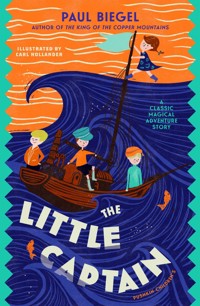
When Marinka, Podgy Plum and Timid Thomas set sail with the Little Captain on board his brave ship the Neversink, a world of adventures awaits. Their incredible journey will take them across stormy seas and scorching sand dunes, through palaces and sailors' inns, past giants, dragons and polar bears. Along the way there will be danger and excitement, ghost ships and buried treasure, pancakes galore, and at the end of it all: friendship. Packed with thrills, laughter and magic, this beautifully illustrated classic seafaring tale has enchanted generations of children.
Sie lesen das E-Book in den Legimi-Apps auf:
Seitenzahl: 308
Veröffentlichungsjahr: 2022
Das E-Book (TTS) können Sie hören im Abo „Legimi Premium” in Legimi-Apps auf:
Ähnliche













![Tintenherz [Tintenwelt-Reihe, Band 1 (Ungekürzt)] - Cornelia Funke - Hörbuch](https://legimifiles.blob.core.windows.net/images/2830629ec0fd3fd8c1f122134ba4a884/w200_u90.jpg)




Contents
THE LITTLE CAPTAIN
The Boat
The Little Captain lived on top of the dunes. Not in a house, not in a hut, but in a boat.
A raging storm which had blown the waves as high as skyscrapers had dashed the boat onto the dunes. And there she lay, stuck fast. Who had sailed in her no one knew. Only a boy had crawled up out of the cabin, a small boy wearing a big cap.
‘Who are you?’ asked the people from the harbour.
‘The captain,’ said the boy.
‘Well, Little Captain,’ said the old salt from the harbour, ‘where do you come from?’
‘From my boat,’ replied the Little Captain.
‘And where does your boat come from?’
But the Little Captain shrugged his shoulders and skipped back into his cabin.
He had lived there ever since.
When the sun shone he sat on the afterdeck and baked himself brown. When the moon shone he sat on the foredeck, playing his little brass trumpet.
Down in the harbour the people listened.
Ta-ran-ta-ra!
‘It makes you go all soft inside,’ the people said.10
But the old salt thought it was beautiful.
Nobody knew where Salty had come from. If anyone asked him, ‘from a shipwreck’ was all he would reply.
One day he climbed the steep, sandy path to the top of the dunes to see the Little Captain.
‘Would you like to come and live with us,’ Salty asked.
The little boy shook his head.
‘Why not?’
‘I want to stay on my boat.’
‘But it’s a wreck.’
‘I’m going to mend it,’ said the Little Captain.
‘And how will you get it back to sea again?’ the old man inquired.
‘I’ll wait,’ said the little boy. ‘I’ll wait for the next storm. And a wave. A back-to-front wave that will sweep my boat out to sea again.’
‘I see,’ said Salty, puffing on his pipe. ‘And where will you sail?’
‘To the island of Evertaller.’
‘And what will you see there?’
‘I don’t know, whispered the little boy, ‘but if only you can sleep there for one night, you will be a grown man when you wake up next morning.’
‘Really?’ Salty said. ‘Are you sure?’
The Little Captain nodded. ‘Yes, it takes so long to grow up here.’
‘A very long time indeed,’ the old man agreed. ‘But do you know how to find this island of Evertaller?’11
‘No,’ replied the Little Captain. ‘I am searching for it. But first I will mend my boat.’
The old salt went home and the boy went down to the cabin to get his cart. It was made from an old chest with wheels underneath, but it ran rather crooked because one pair of wheels came from a bicycle and the other from a barrel-organ. It squeaked as the boy trundled it along, and when he passed through the streets of the little harbour town the people said: ‘There goes the Little Captain.’ They did not need to look; they could hear him.
The Little Captain piled everything he could find on the streets into his cart. A piece of stovepipe, a bit of rope, a baby’s potty, some wire, a chair leg, a bicycle chain, a crooked nail, a length of tubing, a ball of wool, a broken mirror, a coin, an old shoe, a plank with two screws in it and a bit of fish-net.
And when one day he found a whistling kettle and an old bathtub he had all that he needed to build a new engine. He began to hammer and saw and beat and plane and he stuck his tongue out to help him as he worked. This engine had to be stronger than the storm waves.
But there were other children living in the small harbour town and, when they heard from the old salt about the island which the Little Captain meant to find, they all rushed up to the dunes, clambered on the deck of the boat and shouted: ‘Little Captain, we want to grow up in one night too. Can we come with you?’12
‘Sure,’ said the Little Captain. ‘Just help me mend my boat.’
So Dicky and Podgy Plum and Marinka and the others helped. They pushed the bathtub up on the afterdeck where the engine was to be and began to hammer and saw and screw under the Little Captain’s orders. The kettle here and the chair leg there, the bicycle chain up there, the pipe along there, and then the bathtub, upside-down, so that no steam could escape. In the end even Timid Thomas came and helped with the funnel, which was made of six buckets stuck one on top of the other.
‘Thank you all very much,’ said the Little Captain.
‘When do we sail?’ asked Podgy.
‘When the big wave comes,’ said the captain. ‘But first we have to make the propeller.’
They were going to begin right away, but at that moment they heard voices in the dunes. The people from the town had missed their children, who should have been going to school.
They advanced with great strides up the steep, sandy path, the teacher at their head. He was flourishing his stick angrily.
The Great Wave
The fathers and mothers came panting up the steep path after the master. When they reached the Little Captain’s boat at the top, they began to shout: ‘Hey, Dicky! Hey, Marinka! Come here, you must go to school at once!’
The teacher banged on the side of the boat with his stick.
The children hung over the rail and called back: ‘We don’t have to go to school any more! We’re going to the island of Evertaller to learn everything in one night and then we will be grown-ups!’
‘I never heard such rubbish!’ cried the schoolmaster sternly. ‘Who told you that?’
‘The Little Captain,’ said the children.
‘Ha!’ shouted the master, turning as red as a lobster. ‘And where is this island to be found?’15
‘We don’t know,’ cried the children. ‘We are going to look for it.’
‘I’ll teach you to look for it!’ shouted the master. In one bound he was on deck, chasing the children off the boat with his stick. ‘I’ll teach you where to find the island of Evertaller!’ he cried. ‘Off to school with you!’
It was a dismal procession, but Timid Thomas was not in it. He was quaking with fright, hidden away in the hold.
The Little Captain leaned over the rail, staring after the children. He did not have to go to school; the master and the fathers and mothers could not tell him what to do. No one could tell the Little Captain what to do. He picked up his brass trumpet and began to play the song of the sea:
‘O sea, O sea,
Set my little boat free!
She lies all alone where the dunes are dry—
Send us a wave as high as the sky.’
After this song the Little Captain suddenly thought of the propeller he had to make. A bronze propeller, stronger than the waves. He took his cart and his brass trumpet and went down to the town. He laid his cap on the ground, put the trumpet to his lips and began to play.
Ta-ran-ta-ra!
The people came out and stayed to listen, because the Little Captain played so that the music went in at your 16ears and straight down to your heart. He didn’t play jazz and he didn’t play pop, but he played the song of the endless sea—of happy mermaids and mournful gulls. And in between the songs he would call from time to time: ‘A penny for the trumpeter!’
After an hour his cap was full of pennies. He tipped them into his cart, moved a few streets farther on and began again, until his cart was brimming over with pennies.
Then he pushed it carefully back to his boat.
After school the children came back. The Little Captain said: ‘Go and find some drift-wood. We have to melt this heap over a hot fire.’
‘Why?’ asked the children.
‘To make a propeller,’ said the Little Captain.
The boys and girls collected wood from the beach and the Little Captain threw the pennies into his iron saucepan. The fire blazed up and made the pan glow like the sun. Podgy Plum and the others danced round it, but the Little Captain was digging in the sand. He was making the shape of a propeller which would be stronger than the waves and he beat the sand into shape with the flat of his hand.
‘Hurrah!’ cried the children when the money had melted and the red-hot bronze was bubbling. It sounded like Ta-ran-ta-ra!
Then the Little Captain took seven oven-cloths, grasped the pan and poured the bronze into the hollow 17in the sand. It hissed and spluttered and the sparks flew. The children drew back, all but Timid Thomas who was still in the hold, peeping out through the hatch.
Up came Salty. He spat on the bronze to see if it sizzled. ‘Still as hot as an iron,’ he said. But after an hour it had cooled down.
They dug the bronze propeller out of the sand. The three blades glittered in the sun and the sailor tapped it with his pipe. ‘It sings like a mermaid,’ he said, and together they fixed the propeller to the boat. Then they brightened her name up with fresh paint: Neversink.
‘Perhaps you will bring them all back with you,’ said Salty.
‘Who?’ asked the Little Captain.
But the old man turned away without answering and walked back to the harbour.
Now the Little Captain’s ship was ready to sail. They were only waiting for the great wave, the back-to-front wave which was to pluck the ship from the dune top and sweep it out to sea.
‘Will you call us?’ asked the children.
‘Yes,’ said the Little Captain.
But then the parents came back and dragged their children home: they were not allowed to sail away with the Little Captain. They were not allowed to sail to the island of Evertaller, because it did not exist, said their parents. The Little Captain leaned over the rail, staring after them.18
Then the wind began to blow. Harder and harder, so hard that the Little Captain began to stoke the fire under the steam kettle. The wind made the flames roar and the six-bucket funnel shuddered. In the middle of the night the waves flung themselves upon the dune top like baying hounds. ‘The big one’s coming,’ thought the Little Captain. He stood on the afterdeck blowing his trumpet to summon the other children. But the children were sleeping in their warm beds, dreaming that they were on the island already. All except Podgy and Marinka. They sprang to their feet and rushed out. Their night clothes fluttered in the gale and the spray spattered their faces. They ran to the top of the dune, barefoot in the wet sand.
‘We’re coming!’ they cried.
But their voices were smothered by a deafening uproar. A giant breaker reared up, tall as a tower, and, just as Podgy and Marinka grasped the rail, the boat was caught up and swept out to sea.
Out into the wild, desolate sea.
Popinjay Port
The waves were fiercer than wild beasts. They flung themselves on the boat and seemed to be roaring: ‘Neversink? We’ll get you!’ The Little Captain stood at the helm, sure and steady. His shoes might have been nailed to the deck. He said nothing, only steered. Podgy and Marinka were still hanging onto the rail, their night clothes fluttering like flags.
‘Landlubbers!’ shouted the Little Captain. ‘Stoke the fires, look lively!’ Then Podgy suddenly had to laugh. He brushed the sea-spray from his face and did not feel frightened any more. He and Marinka crawled to the afterdeck and together they heaped the black coals on the flames and poked the fire.
Thick black clouds of smoke belched from the six-bucket funnel: the engine began to bellow louder than the storm and the propeller roared more savagely than the waves. So the ship with its three-child crew forged its way through the stormy seas to a region far beyond, where the sea was calm and the sun stood high in the sky.
Then they heard a pounding on the hatch. A wailing voice issued from the hold: ‘I want to go home!’20
The Little Captain unscrewed the storm battens and opened the hatch. The small, white face of Timid Thomas came into view, peering anxiously about.
‘Oh, I do hope we won’t drown!’ he cried.
The sea was so huge.
‘Of course we won’t,’ said the Little Captain.
‘How on earth did you get here, sailor hero?’ asked Podgy.
But Marinka cried: ‘What does that matter? He’ll be useful to swab the decks.’
‘That’s right,’ said the Little Captain. ‘He is a stowaway. He can be our deck-hand.’
‘Can I come to the island with you?’ asked Timid Thomas. ‘Where you get big?’
‘Certainly not,’ said Podgy. ‘You’re not allowed to land. You must stay on board and mind the ship.’
They sailed on for four days. Timid Thomas swabbed the decks, Podgy stoked the fire and Marinka baked pancakes. Sometimes one would fall in the sea, and then two codfish came and gobbled it up. But the Little Captain just stood at the helm, sure and steady, and steered with his eyes on the horizon.
At night they slept in the cabin, side by side in hammocks, swinging gently to and fro. And if Thomas cried because he wanted to go home, Marinka muttered: ‘Quiet, cry-baby!’ but the Little Captain steered, his feet firmly planted on the deck, his eyes on the stars.
On the fifth day Marinka climbed the mast (because 21Podgy was too fat and Thomas too frightened) and cried: ‘Land ahead!’
‘We’ll go there,’ said the Little Captain, and they sailed into Popinjay Port. Timid Thomas wanted to go ashore too and he followed the others, rolling like a real seaman.
The people of Popinjay looked like a lot of parrots, because they loved to dress in red and green and yellow clothes.
‘How pretty,’ said Marinka.
Then the Little Captain took his trumpet and began to play.
Podgy went round with the cap and Marinka sang:
‘Popinjay parrots are happy and bright
Oh, what a gaudy, glorious sight!
Bright as a banner and ever so jolly—
Throw us a penny for Popinjay Polly.’
The people clapped their hands and threw so many coins into the cap that Podgy was able to buy a green jacket and red trousers and Marinka a dress as beautiful as a butterfly. Timid Thomas got a cap with a long tassel and a bell on the end.
‘So that we can hear you if you run away,’ said Podgy.22
Then the Little Captain went into the big sailors’ home to ask the way to the island of Evertaller. He found five hulking sailors in bell-bottom trousers and they all laughed at him. The bellows of their laughter reached 23the top floor, where the old lighthouse-keeper sat. He came downstairs. He did not laugh about the island of Evertaller, but took the Little Captain up with him and pointed across the wide sea.
‘Yonder,’ said he, ‘where my light shines at night, three days off, is the stone dragon gate. If you were to pass through it you would come to the island. But put about at once, because you cannot pass.’
‘Why not?’ asked the Little Captain.
‘The dragon gate is only made of stone at night,’ said the lighthouse-keeper. ‘But then it is so dark that you will run onto a rock.’
‘And by day?’ asked the Little Captain.
24‘By day,’ said the lighthouse-keeper, ‘by day you cannot pass.’
‘Why not?’ asked the Little Captain again.
‘By day the gate is not made of stone.’
‘Oh?’ said the Little Captain. ‘What is it made of, then? Dragons?’ But the lighthouse-keeper turned away and gave no answer.
‘Go back,’ was all he said.
‘Thank you,’ said the Little Captain and he went down to where the others stood waiting.
‘Do you know the way?’ they asked.
‘Yes,’ said the Little Captain.
So they bought more coal and ten bags of dough for the pancakes. They loaded it on the cart and made Thomas pull it.
Half an hour later the Neversink put out to sea. A butterfly and a parrot joined the children hanging over the rail and a bell tinkled on Thomas the deck-hand’s cap.
The Little Captain steered straight for the place where the lighthouse beam pointed after the sun had set.
The Dragon Gates
After three days the Little Captain called: ‘Anchor aweigh!’
‘Why?’ asked Podgy Plum.
‘Anchor aweigh!’ commanded the Little Captain again, sure and steady like a grown-up captain.
Podgy let the chain rattle out and the Neversink sat bobbing up and down on the open sea.
‘We can’t go any farther until it is dark,’ explained the Little Captain.
‘Are we near the growing island then?’ asked Marinka, dancing over the deck like a butterfly. ‘I hope my dress grows with me.’
‘First we have to go through the stone dragon gates.’
Timid Thomas dropped the mop with a clatter. ‘Dragon gates?’ he asked, trembling.26
‘They’re stone!’ declared the Little Captain. ‘I told you—the dragons are made of stone! At least,’ he added, ‘they’re stone at night.’
‘D-do we have to go through b-big black gates in the d-dark?’ asked Thomas.
‘Full of monsters that tear you to pieces!’ shouted Podgy.
‘And pull your hair!’ cried Marinka.
‘I want to go home!’ wailed Thomas, frightened.
But Marinka said to him cheerfully: ‘Here, have a pancake. That will make you brave.’ She tossed the pancake high and it did a fine somersault in the air but plopped into the sea. The two codfish were still swimming alongside and they gobbled it up.
Marinka looked over the rail. ‘Hey!’ she called suddenly. ‘There’s something funny about these fish. They keep circling round the boat as if to say: “Don’t go on.”’
But the sun went down and on they sailed.
‘Look at that!’ shrieked Podgy.
There, straight ahead, in the glimmering dusk, a gloomy black rock rose out of the sea, like a wall. But the Little Captain sailed on.
Then they saw the dragons. Two monsters as high as houses stood on their hind legs facing each other, the claws of their forepaws locked together to form a gate. Their jaws hung wide open and their tongues seemed to quiver in the rosy evening light. It looked as if they were still moving.
‘Full speed ahead!’ shouted the Little Captain.27
Podgy threw fresh coal on the fire; but Marinka stopped dancing and Timid Thomas crept into the hold.
It was pitch black under the gate. The beacon from the lighthouse of Popinjay Port did not reach this far and the Little Captain could no longer see the bows of the ship.
‘Half speed!’ he called.
But before Podgy could damp down the fire, the ship shivered to a stop. The Neversink had hit an under-water rock and lay grounded.
‘Ooh!’ squealed Marinka.
‘What now?’ asked Podgy.
‘We’re going down!’ yelped Timid Thomas, scrambling through the hatch.
But the Little Captain, undaunted, said: ‘The tide will lift us.’
They settled down to wait. All around them was silence—a great, empty, eerie silence. The only sound was the lapping of the water against the stone claws of the dragons. The children couldn’t see them, and that made it all the more creepy. The Little Captain picked up his trumpet and began to play. The notes struck the stone bellies of the beasts and there was such an odd echo that even Timid Thomas had to giggle.
But when the grey light of morning came, the boat still lay fast. The tide wasn’t high enough. The sun peeped over the horizon and began to warm the stone dragons.
Slowly they came to life. First their tongues and then their heads. They started to growl and roar, and as soon 28as their throats were warm the whole gate shuddered with the monsters’ coiling and writhing—their top halves were alive.
Thomas yelled.
Podgy turned white.
Marinka hid her face in her hands.
The Little Captain looked over the rail, and he saw the water churning and seething—with codfish! Not just two, but two with a hundred of their friends. And all hundred and two pulled the boat off the under-water rock so that it could sail away.
‘Double speed ahead!’ cried the Little Captain.
Podgy threw a whole bucket of coal on the fire at once and the Neversink shot over the waves and began to pass between the dragons. By this time the dragons were alive down to their bellies. They growled and snorted and spat fire.
‘Into the cabin!’ ordered the Little Captain.
Thomas had been there for a long time already. Podgy and Marinka dived in too. But the Little Captain stayed at the helm, sure and steady, his eyes fixed on the horizon, where he could see the island of Evertaller rising out of the sea.
By the time the Neversink emerged beyond them the dragons were alive right down to their knees. They lunged forward trying to seize the boat, and scrabbled with their claws as far as they could reach.
The Little Captain never looked back.29
The dragons snorted and spat fire that sizzled in the water around them and showered the boat with sparks, but the Little Captain still stood at the helm, sure and steady. Steam rose from the sea until the Neversink was wrapped in mist, the water boiled and bubbled, flames danced on the foredeck and the claws of the dragons scraped the mast, but the Little Captain sailed on. And by the time the bucket of coal was burned up, they could only hear the dragons in the distance angrily tugging at the claws on their feet, which always remained stone because the warming rays of the sun never reached them.
But still the water swarmed with codfish. The Little Captain opened the hatch.
‘Marinka!’ he called. ‘Pancakes!’ 30
The Island of Evertaller
‘I see giants!’ squealed Timid Thomas.
He tried to take refuge in the cabin again, but the Little Captain held him back. ‘No you don’t, they’re just trees,’ he said, because the Neversink now lay off the island of Evertaller.
‘I see witches!’ screeched Thomas, struggling to escape.
‘No you don’t, they are flowers,’ said the Little Captain.
‘I don’t want to go there,’ stammered Thomas.
But the Little Captain steered towards an inlet. It was a narrow passage between two high cliffs. ‘Half speed!’ he called to Podgy, thinking there might be under-water rocks.
But there were no rocks and the Neversink steamed steadily into a lagoon as calm as a goldfish pond. Podgy 32Plum was the first to land and he started prancing around like a circus elephant.
‘Hip-hip-ho-ho!
Just watch me grow!’
‘Don’t make so much noise—there may be monsters!’ called Timid Thomas, who was still cowering as far away as he could on the afterdeck.
‘So what!’ cried Marinka leaping light as a butterfly to the shore. ‘Once they’ve eaten Podgy Plum they won’t have any appetite left for us.’
‘There aren’t any cannibals,’ said the Little Captain. He clambered ashore with a rope and made the boat fast to a tree.
‘Thomas!’ shouted Podgy. ‘You’d better stay on board to fight off the pirates!’
‘Pirates?’ shrieked poor Thomas. He plunged through the hatch into the hold and slammed the hatch cover shut after him.
‘Sleep tight!’ called Podgy.
They went to have a look around, because before you go to sleep on an uninhabited island, you ought to find out if it really is uninhabited. That’s what the Little Captain said, and he went on ahead.
They discovered trees as high as church steeples and flowers as big as sunshades and shells like tents; but not a house nor a hut nor a path. Nor were there any footprints of cannibal or pirate.33
‘It really is uninhabited,’ declared Podgy.
But just as he said these words, he bumped his nose against the Little Captain’s cap, and Marinka bumped her nose against Podgy’s back, for the Little Captain had come to a sudden halt.
‘Look at that,’ he said.
They looked. On the ground lay a pocket-watch.
‘Giants!’ squeaked Marinka. Because the watch was bigger than a church clock. The children ran to hide in the bushes. Podgy didn’t believe in giants, but his heart beat furiously. Who could own a watch that size? How big was he—and how strong? And where was he?
‘Let’s go,’ whispered Marinka.
‘No,’ said the Little Captain. He walked briskly to the watch and took hold of the ring at the top. ‘Come and help.’
The three of them managed to heave it up. Its silver back was dull and tarnished.
‘It’s been lying here for a long time,’ said the Little Captain.
But when he rapped on it with his fist, it began to tick. Tick-tock. Tick-tock. It sounded a bit rusty. They plumped the watch down on the sand with its silver back uppermost and Marinka began to polish it with spit.
‘Look at that!’ she cried. There was one letter on it. An ‘S’.
‘Well,’ said the Little Captain. ‘It must belong to a sailor who was cast away here.’34
‘A sea giant?’ asked Marinka.
‘No,’ said the Little Captain. ‘But it must have been lying here for ages on the island of Evertaller, and here everything gets bigger and bigger.’
‘Oh! And we’ll keep on growing too?’
The Little Captain nodded. ‘That’s why we have to leave again tomorrow.’
‘I’ll say!’ cried Marinka. ‘Otherwise we’ll be giants.’
Podgy wouldn’t have minded or so he said. But then he thought about S, the castaway. If he hadn’t been able to sail away, then he must still be somewhere on the island. And he must have grown to be a real giant…
‘L-l-let’s go,’ said Podgy.
‘No,’ said the Little Captain. ‘We have to search farther.’
They took each other by the hand, the Little Captain in the lead, and walked cautiously on through the enormous bushes and trees.
‘Look at that!’
The Little Captain halted again. On the ground lay a chest, its sliding top half open, full of red painted wooden beams with round yellow tops. Matches! A giant box of matches.
‘Also belonging to the shipwrecked sailor,’ muttered the Little Captain. ‘He could make a fire, and so can we.’
And the three children shoved the box to the shore near the boat, and gathered wood into a heap. Then Podgy held the box steady, the Little Captain struck a 35beam-match with all his strength and Marinka shielded the flame from the wind by holding out her wide butterfly skirt.
It was a fine fire and it burned the whole night. The light of the flames flickered on the faces of the three sleeping children as they dreamed a little uneasily about the giant sailor; it flickered on the boat in which a little boy hardly slept at all because he was afraid of pirates. And everything seemed to grow in the firelight.
By the morning they would be grown up. They would be grown-up people and sail home in their big ship and never have to go to school again.
If only it wasn’t a real giant… 36
The Giant
The next morning, the sun rose early. It shone down on the trees of the island of Evertaller, casting long shadows. But the shadows soon grew shorter as the sun climbed higher in the sky.
Podgy woke up. He yawned, rubbed his eyes and peered around. He saw trees and flowers and in the distance a hill, all just as usual.
‘Why were we so afraid yesterday evening?’ he wondered.
Podgy stretched himself and turned over on the soft sand to have another nap. But instead he gave a yelp. Right in front of his nose stood a pair of enormous feet. The feet of a giant.
Podgy gave another yelp and jumped up. But what a long time it took to get up. And when at last he was on his feet, he felt as if he were looking out of a skylight.
‘A giant, are you? Why, I’m one myself! Come on and fight!’
Then he saw that the other giant, who had given him such a fright, was the Little Captain.
‘So you’re awake at last!’ said the little giant captain merrily.
‘Yes,’ roared giant Podgy. ‘And it’s true! We’ve grown!’38
He began to prance around until the ground of the island of Evertaller shook.
But the island wasn’t big any more. The whole world wasn’t big any more. Podgy would never have to stand on tiptoe again when he tried to see over a crowd.
‘Marinka!’ he cried. ‘Marinka, we’ve grown up!’
Giantess Marinka came strolling along with a bunch of wild flowers in her hands. And the hatch on the ship opened and out fell the giant deck-hand of the ocean liner Neversink. He was staggering around as if he felt dizzy.
‘My head’s much too high,’ complained timid giant Thomas.
But Podgy took him by the hand and the three of them danced in a ring around the little giant captain.
‘Hurrah for the captain and his ship!
Hurrah for us giants! Skip, skip, skip!’
So they sang, and the Little Captain played a splendid fanfare on his trumpet.
Then Marinka said: ‘Grown-ups don’t dance around like this, so we can’t be grown-ups. Huh, it’s not true at all.’
She sat down daintily on a stone and began to comb her hair with her fingers and smooth her dress. Then she gave a sigh and said: ‘What a sight I must look.’
Podgy stomped over to a tree, broke off a branch, and said: ‘Shall we take a little walk?’
‘Oh no, for goodness’ sake,’ cried Timid Thomas. 39‘That would be far too dangerous.’ Though big, he was still not brave.
But the Little Captain said: ‘We have to leave. Otherwise we’ll grow too tall.’
‘Ooh!’ whispered Marinka. She looked at the Little Captain. He wasn’t dancing and prancing around, but standing by himself, with his gallant cap on, and a look of the distant sea in his eyes. The giantess Marinka felt a strange warm glow inside her, and that was because she had fallen in love, just like a grown-up person.
‘It’s time to stoke the fire,’ said the gallant captain. ‘We must leave at once.’
Podgy and Timid Thomas went to look for firewood in the great forest.
‘Watch how you go,’ warned Thomas. ‘You can’t be too careful.’
‘Let them all come!’ said Podgy. He clenched his fists and strode ahead.
Podgy went off, gathering wood, until he came to a sandhill where he saw a thick root sticking out. ‘That will burn well,’ he thought, tugging to get it loose. Then he stiffened with surprise.
The sand moved and something came out of it. It was a toe—an enormous toe, as big as a man’s fist.
Podgy dropped his bundle of firewood and stood trembling. The giant toe moved.
Podgy gave a yelp and took to his heels. ‘A giant!’ he squealed. ‘A real giant.’40
In thirty giant strides he was back at the boat and jumped aboard, the others after him.
From the island came a rumbling sound, something between thunder and a yawn. And the sandhill began to toss and turn like an earthquake.
‘Quick!’ screamed Marinka. ‘Let’s get away. Something’s happening.’
Podgy grabbed the firewood that Thomas had collected, threw it on the ashes of the ship’s fire and began to blow. The fire blazed up and there was a hiss of steam. The Little Captain stood at the helm. Thomas longed to hide in the hold, but he had to untie the rope that moored the ship.
Slowly the Neversink steamed across the lagoon towards the opening in the rocks.
‘A giant!’ shrieked Marinka. ‘It’s true! I can see him!’ She pointed over the rail towards the sandhill, and now 41they could see that a man as high as a steeple had been lying half under the sand. He was sitting up, scratching his tousled hair, then he opened his mouth as wide as a cave, and gave another huge yawn, ‘Aaaooh!’
The Neversink sped over the water towards the passage in the rocks. But just as they reached it the Little Captain ordered, ‘Full speed astern!’
‘What?’ yelled Podgy, but at the same instant there was a crash. The boat lay fast, jammed between the rocks.
The Neversink had grown as well—she was too broad to get through.
‘Aaaooh!’ yawned the giant again.
The Rescue
Timid Thomas shot into the hold. Marinka clung to the Little Captain. Podgy, with his mouth open and his eyes bulging, gazed up, up, up at the great steeple of a man, with legs like tree trunks.
‘Hey there, what’s going on?’ bellowed the giant.
‘We’re grounded,’ replied the Little Captain.
‘So I see,’ said the giant. He came and sat at the edge of the water, with his feet in the lagoon as if in a tub. ‘You’re a fine captain, I must say. Zero marks for seamanship. Have you come to rescue me?’
‘N-no,’ said the Little Captain. ‘We came to grow bigger.’
‘Ha!’ cried the giant. ‘Well, now you can see what happens. Just take a look at me. You’ll never get away again.’
‘Oh… Won’t we?’ murmured the children.
‘Why are you all looking so scared?’ asked the giant. ‘Do you think I’m a giant?’
They nodded.43
‘Ha, ha!’ he bellowed. ‘And I suppose you also think you’re grown up?’
They nodded.
‘Get away with you. You only grow tall here, that’s all. I was washed up here years ago when I was shipwrecked. But I’m still just Gus, able seaman Gus: taller, but no different otherwise.’
‘Oh,’ said Podgy.
‘And make no mistake—you’re still just children,’ said Gus.
‘Oh,’ said Marinka.
‘But it’s a good thing you’ve come,’ exclaimed Gus. ‘I’ve been longing to get away from here. Now we’ll be able to leave the island.’
‘How?’ asked the Little Captain.
‘With me on a raft,’ answered Giant Gus. ‘And you towing me behind you.’
‘Fine,’ said the Little Captain. ‘If you can get us loose.’
Gus spat in the lagoon, bent over, gripped the Neversink




