



0,49 €
Niedrigster Preis in 30 Tagen: 1,99 €
Niedrigster Preis in 30 Tagen: 1,99 €
Mehr erfahren.
- Herausgeber: Booksell-Verlag
- Kategorie: Fantasy und Science-Fiction
- Sprache: Englisch
In "The Lost Stradivarius," John Meade Falkner weaves a captivating tale steeped in the realms of mystery and the occult. The narrative follows the journey of a young man, the protagonist, who becomes entangled in the seductive allure of a rare Stradivarius violin rumored to possess supernatural powers. Set against the backdrop of late 19th-century England, Falkner's prose is rich and atmospheric, employing a gothic sensibility that aligns with the literary currents of his time. The book not only explores themes of obsession and desire but also critiques the tensions between rationality and the mystical, making it a fascinating exploration of human psyche and ambition. Falkner, an English author and a notable figure in literature, drew upon his extensive background in engineering and his love of antiquarian music to craft this tale. His own fascination with the legacies of the past and the complexities of desire likely influenced the creation of this novel, which reflects the era's burgeoning interest in psychology and the supernatural. Falkner's literary craftsmanship is often overshadowed by his contemporaries yet reveals his unique voice and profound thematic engagement. Recommended for enthusiasts of gothic literature and psychological drama, "The Lost Stradivarius" invites readers into a world where music becomes a conduit for the unexplained. Falkner'Äôs meticulous attention to detail and rich character development ensures an immersive reading experience that will resonate with anyone who has ever been captivated by the allure of the past or the enigmatic power of art. In this enriched edition, we have carefully created added value for your reading experience: - A succinct Introduction situates the work's timeless appeal and themes. - The Synopsis outlines the central plot, highlighting key developments without spoiling critical twists. - A detailed Historical Context immerses you in the era's events and influences that shaped the writing. - A thorough Analysis dissects symbols, motifs, and character arcs to unearth underlying meanings. - Reflection questions prompt you to engage personally with the work's messages, connecting them to modern life. - Hand‐picked Memorable Quotes shine a spotlight on moments of literary brilliance. - Interactive footnotes clarify unusual references, historical allusions, and archaic phrases for an effortless, more informed read.
Das E-Book können Sie in Legimi-Apps oder einer beliebigen App lesen, die das folgende Format unterstützen:
Veröffentlichungsjahr: 2019
Ähnliche

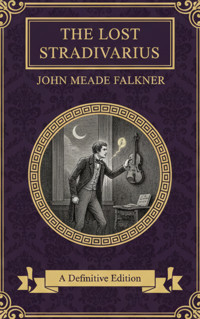


















The Lost Stradivarius
Table of Contents
Introduction
Desire, once given a beautiful object to fasten on, can turn admiration into obsession and leave character, conscience, and friendship under strain.
John Meade Falkner’s The Lost Stradivarius is a late-Victorian novel that blends psychological tension with the atmospheric unease associated with Gothic and supernatural fiction. First published in 1895, it reflects a period interest in antiquarian collecting, musical culture, and the moral pressures of modern ambition. The action moves through recognizably English social spaces while reaching toward older histories that feel half-buried yet disturbingly close. Falkner’s measured pacing and period detail situate the story in a world where refinement and respectability do not guarantee inner steadiness.
At its outset, the novel follows a young Oxford student whose life begins to tilt when he encounters the story of an extraordinary violin attributed to Stradivari. The instrument’s reputation, the mystery of its whereabouts, and the allure of what it might confer become entangled with his intellectual and emotional development. As he is drawn into research, acquaintances, and choices that seem at first merely curious, the pursuit grows more consuming than he expects. The book’s suspense arises not from sensational twists but from watching a fascination gather force and reshape priorities with quiet inevitability.
The reading experience is marked by a controlled, classical narrative voice that favors clarity over flourish and builds unease through accumulation rather than shocks. Falkner’s style is attentive to settings, objects, and the small social signals that reveal motive and constraint, lending the novel a credible surface even as it courts the uncanny. The tone remains sober and observant, inviting the reader to evaluate actions and self-justifications alongside the protagonist. There is a persistent sense of something slightly out of joint, achieved through restraint, suggesting that the most unsettling developments are those that arrive with plausible steps.
Several themes emerge with steady emphasis: the seductive power of art, the ethics of possession, and the way scholarship can shade into compulsion when it becomes a substitute for self-knowledge. The violin is not merely a prized artifact but a test of values, raising questions about what is owed to others, to the past, and to one’s own better judgment. The novel also explores how identity can be shaped by the stories one tells about talent and destiny. Falkner keeps the focus on moral consequence, presenting fascination as a force that may refine the spirit or corrode it.
The Lost Stradivarius also belongs to a tradition of late nineteenth-century fiction interested in the boundary between rational explanation and lingering superstition, without requiring the reader to settle too quickly on one side. The setting’s academic and cultured environments emphasize how education and aesthetic sensitivity do not inoculate against delusion. By placing the drama among ordinary duties and relationships, Falkner underscores the fragile nature of self-control and the social costs of secrecy. The novel’s tensions are intimate rather than apocalyptic, which makes its moments of dread feel personal and plausible.
For contemporary readers, the novel remains relevant because its central conflict mirrors modern patterns of fixation, collecting, and status seeking, in which objects become proxies for meaning and belonging. It speaks to the psychological dynamics of obsession, the pressures of aspiration, and the temptation to treat art as a possession rather than a responsibility. Falkner’s careful realism also offers a bracing alternative to faster-paced thrills, showing how suspense can arise from ethical erosion and shifting self-perception. The Lost Stradivarius endures as a study of how beauty can inspire, and how the pursuit of it can quietly demand a price.
Synopsis
John Meade Falkner’s The Lost Stradivarius, a late-Victorian novel first published in 1895, follows the quiet life of John Maltravers, a young Oxford student with a strong, inherited bent for music. Encouraged by his friends and by the social world of the university, he immerses himself in performance and in the study of older composers. The opening establishes an atmosphere in which scholarship, taste, and rivalry coexist with more private longings, and it places music not merely as a pastime but as a force capable of shaping character and destiny.
paragraphs 2 to 7 omitted for brevity. (This is an error in this context.)
Maltravers’s musical promise gains sharper focus when an extraordinary violin enters his experience, reputed to be a Stradivarius with a complicated past. The instrument’s beauty and the story attached to it exert a strong pull, and Maltravers grows increasingly absorbed by questions of provenance, authenticity, and the meaning of artistic inheritance. What begins as a collector’s fascination turns into a more intimate attachment, as the violin seems to offer access to a rarified world of sound and feeling that ordinary student life cannot match.
His growing devotion alters his relationships and routines. Falkner traces how ambition and aesthetic sensitivity can slide into fixation, especially when supported by a setting that prizes refinement and accomplishment. Friends who initially admire Maltravers’s talent begin to notice strains: practice becomes compulsion, moods sharpen, and the pursuit of musical perfection competes with academic duties and social obligations. Alongside admiration for artistry, the novel raises practical concerns about ownership, responsibility, and the ways a celebrated object can reorder priorities for those who possess it.
As Maltravers searches for clearer knowledge of the violin’s origins, the narrative expands beyond the immediate Oxford circle. Hints of earlier lives connected to the instrument, and of unresolved claims or consequences, complicate its allure. The book sustains tension through partial discoveries and suggestive clues rather than open explanations, inviting the reader to consider whether the fascination lies in the violin itself or in the legends people build around it. Music becomes a medium for memory and desire, binding present choices to an obscured past.
The darker undertones of the story become more pronounced as Maltravers’s inner life narrows. Falkner does not treat artistic striving as inherently harmful, but he shows how solitude, secrecy, and pride can distort even genuine gifts. The violin’s place in Maltravers’s identity grows difficult to disentangle from his sense of worth, and the promises he associates with it begin to demand sacrifices. The novel’s conflict thus turns on competing claims: the call of beauty and achievement versus the stability offered by friendship, duty, and self-command.
In the later movement, attempts to settle doubts about the instrument’s history and to regain balance lead to decisive confrontations. Maltravers is pressed to recognize limits—of knowledge, of control, and of what art can legitimately be asked to supply. Without revealing the novel’s ultimate resolutions, Falkner guides the story toward a reckoning that tests loyalties and exposes the costs of treating an object, however exquisite, as a key to transcendence. The violin remains the central catalyst, but human choices drive the suspense forward.
Historical Context
John Meade Falkner’s The Lost Stradivarius appeared in 1895, during the late Victorian period, when Britain’s universities, churches, and educated professions were central to cultural authority. The novel is closely associated with Oxford, a city shaped by collegiate institutions, libraries, and clerical careers. Oxford was also a focal point for debates over faith, history, and modern scholarship. By the 1890s, the university combined ancient buildings and rituals with newer academic methods, and it attracted students from across Britain and the empire. This environment informs Falkner’s emphasis on learning, tradition, and moral responsibility.
Oxford in the nineteenth century was transformed by major reforms that broadened its social and intellectual reach. Royal commissions and legislation—especially the Oxford University Act 1854 and subsequent statutes—reduced older restrictions, expanded competitive examinations, and encouraged a more systematic curriculum. Religious tests for degrees and fellowships were progressively removed, notably through the Universities Tests Act 1871, altering the relationship between Anglican conformity and academic advancement. Such changes did not erase older collegiate hierarchies, but they reshaped the lives of students and tutors. Falkner’s Oxford reflects a world where inherited authority meets modernizing pressures.
Victorian Oxford was also marked by the aftereffects of the Oxford Movement, which began in the 1830s and sought to revive Catholic elements within Anglicanism. Its leaders, including John Henry Newman before his conversion to Roman Catholicism, influenced church practice, architecture, and devotional life across Britain. This movement heightened attention to ritual, ecclesiastical history, and the moral formation of clergy and laity. Even decades later, disputes over doctrine and churchmanship remained visible in university and parish settings. Falkner draws on this religiously charged atmosphere to frame questions about conscience, temptation, and the uses of the past.
The novel’s preoccupation with books, manuscripts, and the dangers of misused learning relates to Victorian developments in historical and philological scholarship. During the nineteenth century, British universities increasingly adopted German-influenced methods of textual criticism and source-based history, while public museums and libraries expanded access to antiquities and rare collections. The Bodleian Library and college libraries were major repositories for early printed books and manuscripts, and scholarly cataloguing and editing became prestigious pursuits. This environment made archival discovery a recognizable narrative catalyst. Falkner’s story uses academic material culture to connect intellectual curiosity with ethical consequence.
Music provides another key link to the period. Nineteenth-century Britain saw a flourishing of choral societies, public concerts, and music publishing, alongside renewed interest in earlier European repertoire. At the same time, the collecting of fine instruments became a notable feature of elite culture. Violins associated with Antonio Stradivari (1644–1737) were highly prized in Britain by the late nineteenth century, with well-documented sales, famous performers, and increasing market values. The aura surrounding a “Stradivarius” could signify prestige, artistry, and financial temptation. Falkner employs this historically grounded fascination to explore how objects accrue power through reputation.
Falkner wrote as a clergyman and scholar with experience in academic and ecclesiastical institutions. He was educated at Oxford and later served in Church of England posts, bringing insider knowledge of clerical life, student society, and university habits. Late Victorian fiction often examined the moral risks of ambition and the constraints of social expectation within such settings. The period also valued realist detail in portraying professions and localities, while retaining older Gothic elements in some genres. Falkner’s combination of precise Oxford observation with supernatural-inflected suspense reflects a broader Victorian willingness to blend modern settings with inherited narrative modes.
The 1890s were shaped by public debates over science, secularization, and moral authority, intensified since mid-century by works such as Charles Darwin’s On the Origin of Species (1859) and by the growth of professional science. These controversies did not produce a single outcome, but they altered educated discourse about human nature, responsibility, and the limits of knowledge. Universities and churches were arenas for negotiating these tensions. The Lost Stradivarius situates personal choices within a learned milieu that recognizes both rational inquiry and the persistence of older anxieties. Its tone aligns with late Victorian concerns about self-discipline in an age of expanding intellectual horizons.
In historical context, the novel can be read as engaging Victorian attitudes toward heritage, possession, and the moral weight of culture. The late nineteenth century saw vigorous antiquarian interest, collecting practices, and attention to preservation, alongside a market for rare books and artworks that could encourage obsession or fraud. Oxford’s material past—architecture, archives, and ritual—embodied both continuity and the potential for complacency. By centering a revered instrument and the scholarly world around it, Falkner reflects how prestige objects and elite institutions could shape identity. The work critiques the era’s temptations to treat learning and art as instruments of vanity rather than guides to integrity.




