


0,49 €
Niedrigster Preis in 30 Tagen: 1,99 €
Niedrigster Preis in 30 Tagen: 1,99 €
Mehr erfahren.
- Herausgeber: DigiCat
- Kategorie: Poesie und Drama
- Sprache: Englisch
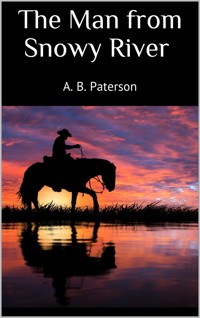
A. B. Paterson's "The Man from Snowy River" is a quintessential work of Australian literature that marries vivid storytelling with the raw beauty of the Australian landscape. Published in 1890 as part of a collection, the poem is renowned for its striking imagery, rhythmic language, and profound exploration of Australian identity. Set against a backdrop of the rugged Snowy River region, Paterson captures the spirit of the outback and celebrates the courage and resilience of the Australian bushman, expertly blending folklore with a narrative that resonates with themes of bravery and camaraderie. A. B. Paterson, often affectionately known as 'Banjo', was a distinguished poet, journalist, and advocates for the Australian bushman. Growing up in rural New South Wales, he was deeply influenced by the landscape and tales of pioneering life, which shaped his literary voice. His experiences in the outback inspired him to depict the lives, trials, and adventures of those who toiled on the land, culminating in a poignant tribute to the heroic archetype embodied in the titular Man from Snowy River. This poem not only serves as a captivating introduction to Australia's unique culture but also stands as a resonant tale of adventure and valor. Highly recommended for readers interested in literature that encapsulates the spirit of resilience, "The Man from Snowy River" offers an unforgettable journey into the heart of Australia's rugged beauty and cultural narrative. In this enriched edition, we have carefully created added value for your reading experience: - A comprehensive Introduction outlines these selected works' unifying features, themes, or stylistic evolutions. - A Historical Context section situates the works in their broader era—social currents, cultural trends, and key events that underpin their creation. - A concise Synopsis (Selection) offers an accessible overview of the included texts, helping readers navigate plotlines and main ideas without revealing critical twists. - A unified Analysis examines recurring motifs and stylistic hallmarks across the collection, tying the stories together while spotlighting the different work's strengths. - Reflection questions inspire deeper contemplation of the author's overarching message, inviting readers to draw connections among different texts and relate them to modern contexts. - Lastly, our hand‐picked Memorable Quotes distill pivotal lines and turning points, serving as touchstones for the collection's central themes.
Das E-Book können Sie in Legimi-Apps oder einer beliebigen App lesen, die das folgende Format unterstützen:
Veröffentlichungsjahr: 2022
Ähnliche











The Man from Snowy River
Table of Contents
Introduction
This single-author collection presents A. B. Paterson’s landmark volume The Man from Snowy River and Other Verses, together with its original front matter. It includes the preface by Rolf Boldrewood, a prelude, and a contents with first lines, replicating features familiar from early editions. First published in 1895, this selection of poems established Paterson’s reputation as a pre-eminent voice of the Australian bush. The present collection focuses on that foundational book rather than attempting a complete works or later revisions. Readers will find the core body of narrative and lyrical verse through which Paterson defined themes, settings, and characters that have remained central to his legacy.
As to genres and text types, the collection is poetry throughout, comprising narrative ballads, character sketches, and reflective lyrics. Many pieces are long-form story poems built for oral recitation, while others are brief, epigrammatic vignettes. The volume opens with editorial and paratextual materials—the Boldrewood preface, a prelude, and a contents list keyed to first lines—that frame the reading experience. There are no novels, short stories, or plays here, and prose appears only in the preface. The arrangement follows the well-known sequence of titles in The Man from Snowy River and Other Verses, allowing the poems to speak in their original cadence and order.
Across these poems, Paterson returns again and again to the lives, labors, and amusements of the Australian interior. Horsemanship, droving, shearing, and makeshift sport provide narrative engines and occasions for humor and courage. The bush emerges as both setting and character, its distances and hazards shaping human action. Mateship, resourcefulness, and a wry sense of justice thread through comic set-pieces and more elegiac reflections. Without romanticizing hardship, the poems celebrate skill earned by practice and nerve. Place-names—Snowy River, Castlereagh, Kiley’s Run—anchor the work in specific geographies, while the characters’ voices register the social textures of stations, townships, and wayfarers’ camps.
Paterson’s stylistic signatures are unmistakable: strong, rideable rhythms; swift, cinematic scene-setting; and a conversational diction enlivened by idiom. The ballad form predominates, with tight rhyme and propulsive meter designed for memorability. Vivid action and crisp characterization carry each narrative forward, while deft shifts between irony and sympathy keep tone dynamic. Refrains of movement—gallops, mail coaches, coursing winds—mirror the tempo of frontier work. Yet amid the pace, landscape description remains precise and concrete, attentive to light, dust, riverbeds, and ridgelines. The result is verse that retains oral energy without sacrificing craft, equally at home in print and in recited performance.
Several poems have become touchstones in Australian literature. The title piece turns on a high-country chase in treacherous terrain, testing a young rider’s courage and seat. Clancy of the Overflow contrasts urban routine with the imagined freedom of a drover’s life. The Geebung Polo Club revels in rough-and-ready sport among bush teams, while The Man from Ironbark spins a comic tale of a countryman’s encounter in a city barber’s shop. Saltbush Bill, Only a Jockey, and The Open Steeplechase draw on racing lore to explore risk, pride, and chance. Each premise is simple; the pleasures lie in voice, timing, and detail.
The presence of Rolf Boldrewood’s preface situates Paterson within a tradition of colonial storytelling familiar to readers of the 1890s, lending context from a celebrated novelist of station life and bushranging. The inclusion of a contents with first lines reflects the bibliographic habits of early printers, assisting navigation within a large verse collection. This edition also preserves the note referencing advertisements appended to a 1911 printing, marking the continuing circulation of the volume in the early twentieth century. Together, these paratexts frame the poems as both literary art and popular entertainment, reminding us how they were first encountered and remembered.
Taken together, these poems articulate a durable vision of Australian experience that continues to attract readers. Their energy, humor, and hard clarity have kept them in classroom anthologies and general circulation, while their portraits of work, travel, and landscape still feel immediate. The collection’s scope remains modest and exact: it offers the contents of Paterson’s formative volume, not a comprehensive edition, so that his early voice can be heard without dilution. Retaining the structure and supports of historical printings, this presentation invites both new readers and returning admirers to engage with the verse on its original terms and enduring merits.
Historical Context
The Man from Snowy River and Other Verses appeared in Sydney in 1895 from Angus & Robertson, an emergent nationalist press. Many poems had first run in The Bulletin, the influential weekly co-founded in 1880 by J. F. Archibald. Paterson, born in 1864 near Orange and raised on Illalong station in the Yass district, wrote under the pen name “Banjo” while practising as a Sydney solicitor. Rolf Boldrewood (Thomas Alexander Browne), squatter-novelist of Robbery Under Arms, supplied the preface, endorsing bush virtues of horsemanship and mateship. The collection arrived amid a surge of cultural self-assertion in the 1890s, anticipating the political federation of Australia in 1901.
Paterson’s imagery draws on the late nineteenth-century pastoral economy that made wool Australia’s leading export. Large squatting runs and smaller selectors’ blocks shaped communities across the Monaro and Riverina, while droving routes extended to the Barcoo and Castlereagh. Poems such as A Mountain Station, On Kiley’s Run, and Over the Range reflect the rhythms of shearing, boundary riding, and stockwork under a harsh climate. Railways and the telegraph were pushing into the interior by the 1880s–1890s, yet isolation remained acute, particularly in drought years, a tension echoed in The Travelling Post Office and the sense of distance threaded through Clancy of the Overflow.
The collection also crystallizes the “Bulletin debate” over the bush that flared in 1892. Henry Lawson’s Up the Country portrayed rural desolation; Paterson replied with In Defence of the Bush, insisting on comradeship, opportunity, and beauty in inland Australia. This dispute, conducted in The Bulletin’s pages, sharpened a wider cultural nationalism that prized plain speech and egalitarian ideals. Poems including A Voice from the Town, In the Droving Days, and Been There Before position city and country as competing moral landscapes. Paterson’s optimistic stance resonated with readers seeking a unifying identity during the economically and politically unsettled 1890s.
Horses underpin both livelihood and spectacle in the 1880s–1890s, and that culture animates many poems. Colonial breeding of hardy “Waler” remounts, the spread of bush race meetings, and the popularity of steeplechasing shaped communities from New South Wales to Queensland. Pieces such as The Open Steeplechase, The Amateur Rider, and Only a Jockey chart risk, wagering, and class tension around the track. The Geebung Polo Club satirizes elite sport newly fashionable since the 1870s, setting rough bushmen against squatter-gentry. In The Man from Snowy River, virtuoso horsemanship becomes a democratic emblem, rewarding courage and skill over pedigree or wealth.
Colonial law-and-order legacies linger throughout the collection. Bushranging’s heyday had ended by the 1880s, yet popular memory of Ben Hall’s gang and the shooting of John Gilbert in 1865 fed poems like How Gilbert Died. Paterson taps the comic and menacing edges of urban larrikinism in The Man from Ironbark, staging a prank in a Sydney barber’s shop to contrast metropolitan swagger with bush dignity. Such pieces examine authority, violence, and reputation within an expanding settler society, where magistrates, troopers, shearers, and swagmen negotiated status and survival far from Britain’s institutions but under their inherited legal codes.
Economic upheaval shadowed the 1890s, including the banking crash of 1893 and the shearers’ strikes of 1891 and 1894, which accelerated unionization in the inland. Paterson’s shearing poems, notably Shearing at Castlereagh and The All Right ’Un, channel the camaraderie, itinerancy, and competitive piecework central to the wool industry. Saltbush Bill dramatizes disputes over pasturage, reflecting tensions between landholders and traveling stockmen during drought and overstocking. Modern infrastructure, evoked in The Travelling Post Office, brought schedules, bureaucracy, and new rhythms to outback life. Together these forces framed questions of fairness, authority, and mobility that recur across the collection.
Although centered on Australian locales, the book registers global currents and exclusions characteristic of the era. The Boss of the ‘Admiral Lynch’ draws on widely reported events from Chile’s 1891 civil war, illustrating how telegraphed news fed colonial imaginations. At the same time, The Bulletin’s brand of nationalism—assertively white and masculine—shaped language and perspective. Irish-Australian speech rhythms, convivial pubs, and Catholic–Protestant undercurrents surface, while Aboriginal people and non-European migrants appear rarely or stereotypically, reflecting prevailing colonial attitudes. Such frameworks help explain the collection’s celebratory tone for many contemporaries and the critical reassessments applied by later readers.
Upon release, the volume was widely popular, running through numerous reprints by Angus & Robertson and becoming a touchstone of bush verse. Its acclaim aligned with the federation movement’s search for emblematic stories and voices, and public recitation culture helped fix lines like “And he ran them single-handed” in memory. School anthologies and newspapers amplified its reach into the twentieth century; the 1911 printing’s advertisements attest to sustained demand. Over time, The Man from Snowy River and related pieces have been adapted, quoted, and debated, their heroic ethos both celebrated as nation-making and queried for romanticism and exclusions.
Synopsis (Selection)
THE MAN FROM SNOWY RIVER AND OTHER VERSES — Collection Overview
Paterson’s collection gathers narrative ballads and lyrics that mythologize Australia’s bush, celebrating horsemanship, mateship, and frontier daring in a musical vernacular verse.
Across the book he shifts from larrikin comedy to quiet elegy, contrasting bush values with city pretensions and establishing a brisk, story-driven style.
Prefatory Materials (with preface by Rolf Boldrewood; Preface; Prelude; Contents with First Lines)
These pages frame the poems as popular bush narratives, situating them within an emerging national tradition of outback storytelling and song.
They set expectations of pace, plain speech, and adventure, while orienting readers to themes of landscape, labor, and character.
Equine and Racing Ballads (Old Pardon, the Son of Reprieve; Our New Horse; The Geebung Polo Club; The Open Steeplechase; The Amateur Rider; Only a Jockey; How the Favourite Beat Us; The Great Calamity; The All Right 'Un; Conroy's Gap)
These tales revel in risky rides, racecourse upsets, and club rivalries, charting luck, nerve, and class on the track and across rough country.
Paterson blends horse lore with bluff humor and galloping meter, turning sporting episodes into character studies of courage, folly, and community pride.
Drovers, Shearers, and Station Life (Clancy of the Overflow; Saltbush Bill; A Mountain Station; Been There Before; In the Droving Days; Shearing at Castlereagh; On Kiley's Run; Under the Shadow of Kiley's Hill; Come-by-Chance; The Swagman's Rest; A Bushman's Song)
These poems sketch itinerant workers and homestead routines, balancing the hardship of the track and shed with the freedom and fellowship of the open bush.
Narrative snapshots and catchy refrains elevate everyday labor into legend, shaping a collective portrait of resilience, resourcefulness, and wide-horizon longing.
Bush Humor and Tall Tales (An Idyll of Dandaloo; The Man from Ironbark; A Bush Christening; How M'Ginnis Went Missing; The Travelling Post Office; The Two Devines; Johnson's Antidote; Frying Pan's Theology; The Boss of the 'Admiral Lynch')
Comic yarns and mischievous set pieces lampoon clerics, quacks, city slickers, and credulous bushmen, powered by deadpan understatement and sudden reversals.
The tone is playful and subversive, using vivid dialect and timing to puncture pretension and celebrate the larrikin streak as a hallmark of bush character.
Outlaws, Pursuits, and Hard Cases (How Gilbert Died; The Flying Gang; Jim Carew; The Man Who Was Away)
These darker narratives follow bushrangers, reckless youths, and absences with consequences, where pride and lawlessness test loyalties at the edge of settlement.
Paterson tightens the ballad line to a stern cadence, favoring stark moral choices, swift action, and a bush code that often eclipses formal justice.
City and Bush: Identity and Reflection (A Voice from the Town; In Defence of the Bush; The Wind's Message; Ambition and Art; The Daylight is Dying; Last Week; Those Names; Black Swans; A Bunch of Roses; Lost; Over the Range)
Meditations and contrasts pit urban chatter, fashion, and ambition against the bush’s quiet authority, memorializing places and people with steady, unadorned feeling.
Nature often speaks as a moral compass in twilight and wind, guiding identity toward endurance, plain dealing, and the promise of horizons beyond the range.
Advertisements (from the 1911 printing)
The closing advertisements offer a snapshot of the book trade that carried these ballads, signaling contemporary tastes and markets.
They contextualize the collection’s popular reach, situating it within everyday reading rather than purely literary circles.




