


17,99 €
Mehr erfahren.
- Herausgeber: Anima Edizioni
- Kategorie: Religion und Spiritualität
- Sprache: Englisch
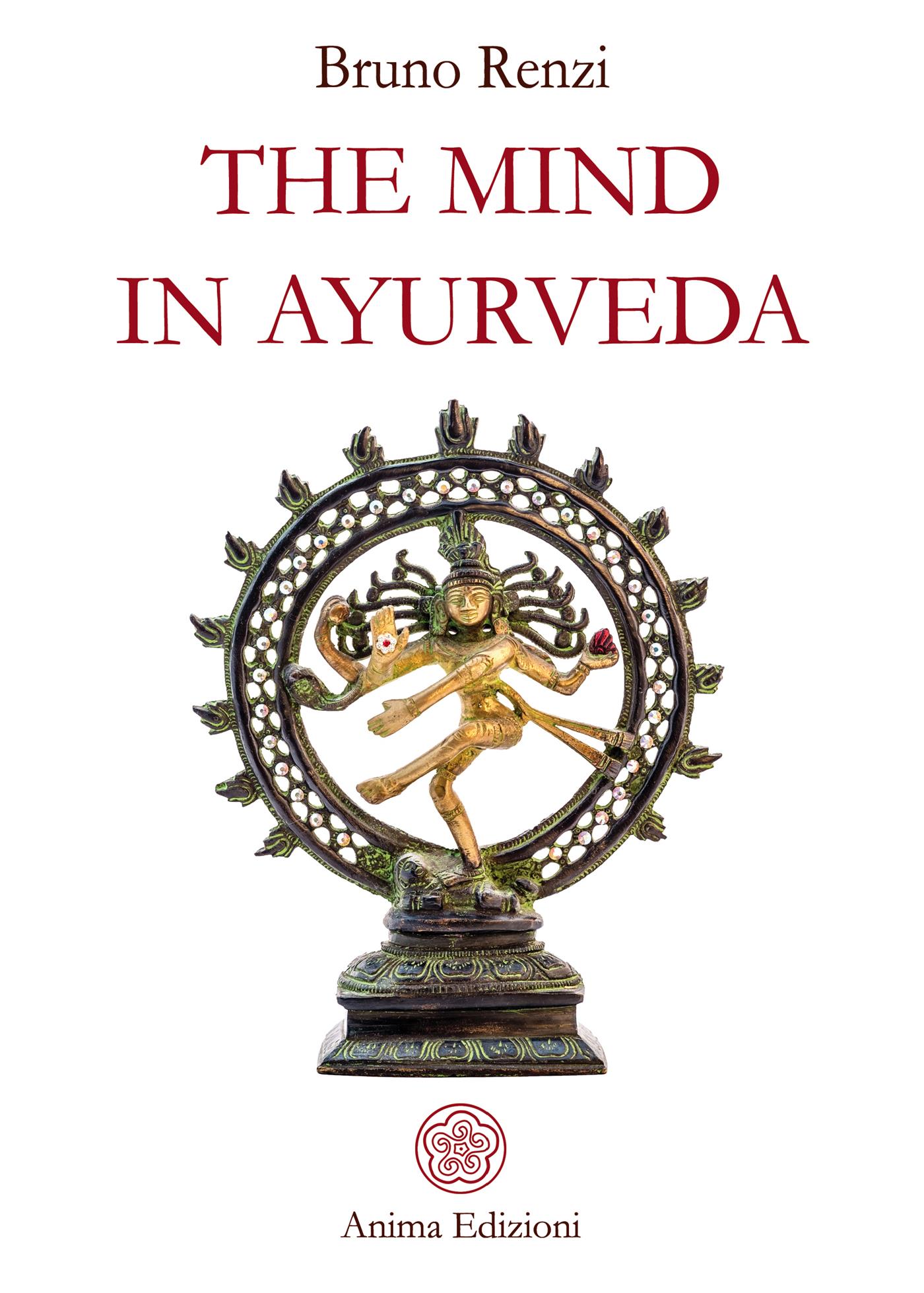
In the tradition of Vedic Knowledge, Consciousness is not a dimension consequent to the peculiar phylogenetic development of the human being, nor is it a configuration that emerges in relation to the organization of the Central Nervous System, but it is considered, on the contrary, a basic dimension of nature.
It is an original nucleus at the base of existence, “a vast and unlimited unified field that originates and pervades every phenomenon expressed in nature.” (Maharishi Maesh Yogi, 1966)
Experience teaches us that the Self has already existed for a long time and is more ancient than the ego, which represents the secret spiritus rector or guiding spirit of our destiny. The Self, as such, does not become conscious eo ipso (on its own), but it has always been taught, if it is taught at all, by a tradition, by knowledge…
Therefore, like every other archetype, it cannot be located, confined within the area of ego consciousness, but it behaves as if it were an atmosphere surrounding man without well-defined spatial or temporal limits… (C.G. Jung)
Within the vision of the mind in Vedic Science, the author highlights the importance of crucial preconceptional quantum factors that make up the “olographic memory”, that morphogenetic field which, at the level of DNA, determines temperamental phenotypical expression, and the existential project of the individual within a well-defined flow of consciousness.
Das E-Book können Sie in Legimi-Apps oder einer beliebigen App lesen, die das folgende Format unterstützen:
Veröffentlichungsjahr: 2020
Ähnliche















SERIES
ESSAYS FOR THE SOUL
BRUNO RENZI
THE MIND IN AYURVEDA
Anima Edizioni
© Anima Edizioni, 2020
© Bruno Renzi, 2020
Translation coordinated by Mr. Christopher David Higgins
The rights of translation, of electronic storage, reproduction and total or partial adaptation, by any means (including microfilm and photostatic copies) are reserved for all countries.
For rights of use contact the publisher.
Management: Jonathan Falcone
Editor-in-chief: Camilla Ripani
Administrator: Loredana Brondin
Book designer: Emanuele Bellisario
ISBN: 9788863655599
ANIMA s.r.l.
C.so Vercelli 56 – 20145 Milano
e-mail: [email protected]
www.animaedizioni.it
I edition Anima, May 2020
I dedicate this work to my life partner, Lorenza. This book is inspired by our many happy hours together, our intimate moments, our progress in life. Lorenza has at many different times been my guiding light, frequently illuminating the way.
INDICE
Preface
CAPITOLO 1.Historical background of Ayurveda
CAPITOLO 2.Ayurveda and its philosophical background
CAPITOLO 3.The fundamental value of consciousness
CAPITOLO 4. Consciousness and the unified field
CAPITOLO 5.Quantum determinants of temperament
CAPITOLO 6.Concept of mind in Ayurveda – Manas
CAPITOLO 7.Constitutional types in Ayurveda
CAPITOLO 8.Determining factors in the development of personality
CAPITOLO 9.The structure of personality
CAPITOLO 10.Structure of personality and existential project
CAPITOLO 11.Ayurveda and its integration into psychiatric rehabilitation
Bibliography
PREFACE
One of the most important meetings in my life was the one with Clara Mancini. Clara was my teacher of transcendental meditation and she introduced me to the world of Eastern philosophy, and Vedic knowledge.
I started meditating in about 1979. I remember that one afternoon, a few years later, Clara waved a slip of paper before my eyes: it was an invitation addressed to medical doctors from the West, to attend the first, full-time course in Ayurvedic medicine lasting twelve months. This was precisely in 1982.
My medical training had been orthodox and, until then, I had never heard of non-conventional medicine. Consequently, I did not have the faintest idea of what Ayurvedic medicine was, except that it represented traditional Indian medicine, featuring an holistic approach to the individual, but basically, I did not have a clue about how it worked.
My professional career was already well under way and I thought it would be virtually impossible to get away from the hospital and medical centre that I ran, but now I have a clear notion about how the course of our existence is often already well embedded in the deepest recesses of our soul and in our infinite evolutionary line.
At other times in my life, seemingly random events had turned out to be specific turning points or, we might say, signposts indicating a path outlined by profound elements of my existence. This is precisely what happened on this occasion, because I followed what was an inspired, rather than entirely rational, desire and I decided to go to the United States and attend this course. I even managed to obtain a leading position at the Maharishi International University with the aim of conducting in-depth research into the similarities between the basic principles of Ayurvedic medicine and neuroscience; I was the only Italian within a very small group of seven doctors.
Over the following months, I had to work very hard to adapt to a way of life and study that was completely different from what I had known in Europe, but it was, nevertheless highly stimulating. What was meant to be a period of in-depth study about an alternative system of medicine, actually turned out to be the most wonderful experience in my life thanks to the knowledge I acquired and the work structure imposed on us by Maharishi Mahesh Yogi.
The course of study and the life experiences I enjoyed over this period of sixteen months (the length of the course was actually extended) had a profound effect on my vision of existence. That process of change is not over even today, but has become an ongoing evolutionary process.
Initially, I did not realise how deep this process of change was going to be: the seed that had been sown would bear its fruits progressively over time. What I do remember vividly is that, when I returned to Europe, my vision of man, from the point of view of a doctor, had changed drastically and become much broader: my attention was no longer limited to bio-molecular processes, but expanded into other areas.
In those years there was still a marked split between the psychiatric world whose orientation was psychodynamic and the world of medical orthodoxy with its prevalently biological approach. After this experience, I felt there was an even deeper split in me and I struggled to blend the knowledge I had acquired with the world of institutional medicine I was employed in.
I realised that it was no easy matter to introduce certain concepts that appeared purely “exotic” to the observer and Western man. So, there was an initial period of silence followed by a second phase, in which some other medical staff members and I cleared the pathway for the inclusion and dissemination of non-conventional forms of medicine, in an attempt to make people understand the importance of integrating this kind of work. We spent the Nineties “spreading the word” and placing the emphasis on promoting healthcare and on the idea of possibly integrating non-conventional medicine with allopathic medicine.
In 2002, I also reached the decision to launch the first Integrated Functional and Psychosomatic Medical Centre, which integrated some basic principles and methods of Ayurveda in the treatment of psychosomatic disorders, within a major public facility i.e. the “Luigi Sacco” University Hospital in Milan. This centre was the first example in Italy involving the integration of non-conventional medicine inside a public facility and, as such, was considered a pilot project, that was truly innovative.
I had created a small team at the centre and basically we engaged in dealing with psychosomatic or dysfunctional disorders using an innovative approach with new prospects in health education. Essentially, our focus was on rebalancing people’s physiology through an integrated approach and abandoning the logic based on treating symptoms, which tended to turn the existing dysfunctional conditions into chronic ones. Our objective was to promote healthcare and the functional reorganisation of their physiology, establishing a natural and physiological improvement with the disappearance of the symptoms.
I do not intend to go into detail about the procedures we used (which were rather complex and carefully structured), as they are not relevant for this task, but during the period I was in charge of this Centre, we treated about 2,000 patients and about 60% of these showed significant improvements in their disorders or even their disappearance.
I had decided to use the knowledge of Ayurveda only partially in the integrated procedures I had developed, since other more substantial methodologies were not acceptable within a public facility: they would not have been understood and were not admissible from an administrative point of view.
During the period I had worked for the MIU (Maharishi International University), I had also had the opportunity to study the section on the structure and treatment of mental health problems: during our training we had covered a significant part of Ayurvedic knowledge except the section relating to mental disorders, the Bhuta Vidya; since I was a psychiatrist, this section was of key importance to me and, therefore, I decided to gain a deeper understanding through personal study.
At the start, I did not pay much attention to this omission, perhaps because the study of Ayurvedic medicine is so vast that there was no way it could have been covered comprehensively in such a short period of time: generally speaking, training in Ayurvedic medicine at Indian universities lasts about six years with residential courses.
Subsequently, I became aware of a certain reluctance on the part of the vaidya (Ayurvedic doctors who were our Masters) to address the subject of Bhuta Vidya. This reluctance was partly due to a lack of interest in mental health problems and partly to a lack of effective in-depth knowledge in that field.
Although Bhuta Vidya is normally taken to mean Ayurvedic Psychiatry or Psychosomatic Medicine, the term bhūta refers to various dimensions “of existence”: in particular, it refers to the existence of invisible beings, or spirits, in a meaning that is common and normally understood by a vaidya (Ayurvedic doctor or “the one who knows”) and by enthusiasts of Āyurveda in the West.
As a science concerning spirits it was not (and still is not) easily comprehended by Western medicine and, for this reason, this branch of Ayurveda is little known, poorly studied and scarcely shared in the medical field; even the vaidya, despite their knowledge of it, tend not to relate health disorders to this dimension.
Suśruta describes Bhuta Vidya as follows: “The name Bhuta Vidya is given to that branch of Ayurveda whose purpose is to cure those who have been possessed by possessing entities such as Deva, Asura, Gandharva, Yakṣa, Rākṣasa, Pitr, Pisaca, Naga etc, by means of pacification rites, offerings and rituals etc.” (S.S. sut. 1. 8.)
In this book, I have decided to describe the complex Ayurvedic vision of the mind in its deepest nature and further on I intend to discuss in greater detail the Ayurvedic classification of mental disorders and the classification of the various forms of cure. In my description on the complexity of the mind, I will use a neuro-psychophysical interpretation and we will understand how a person in their bio-psychophysical dimension can enter into resonance with various dimensions of existence that are not only those immediately perceptible and comprehensible through our senses.
Resonance occurs with regard to vibrational complexes that may have an independence of their own and that can create dysfunctional conditions within the bio-psychophysical reality of the person: these vibrational complexes may be of a different nature and have a specific characteristic of their own; they may persist within a person’s mind, assuming an invasively destructive power over the physiological functioning of the mind.
An energetic or holographic vision of the vibrational complexes will constitute, as we shall see, a possible way of understanding Bhuta Vidya in an attempt to put “the science of spirits”, so commonly accepted within a culture lasting several millennia, within reach of a Western mind.
I had a certain understanding of the above and I thought that this topic might find a place within the anthropological or historical and philosophical studies on the knowledge of Ayurveda. It was only recently (meaning in the last few years) that I developed the idea of presenting Western readers and doctors, who have had some training in Ayurvedic medicine, with the concept of “mind” in Ayurveda, and secondly with an in-depth study on the vision of mental health problems from the Ayurvedic point of view.
I would like to point out that this decision was reached in conjunction with a number of recent developmental experiences, which allowed me to have a clearer vision of the complexity of human beings: these experiences were highly enlightening and provided the missing pieces that enabled me to gain a more comprehensive and comprehensible picture of the topic addressed in this work.
My main intention is to present a vision of man within the Vedic system of reference, in which human beings have their own developmental system of planning structured within flexibly-defined existential lines; people inserted in an eternal cosmic evolutionary cycle, in which the prevailing aspiration is to return and become absorbed once again within the original substance.
Consciousness is a priority and it is the sentient reality that organises an eternal cosmic dream about creation and dissolution. Each “set dimension” runs through this cycle within that existing eternity. The mind and Ayurvedic psychopathology are a reflection, simply a reflection of this cosmic game and in this sense need to be understood: they are qualified realities that become more concrete within the human being’s perceptual capacity; they are, however, just one possible dimension, coexisting together with other possible perspectives. The game of God has infinite forms.
Scholars who have dealt with Vedic texts or Vedic knowledge have always had to make a choice about their approach in setting up and progressing with their work. They have needed to strictly follow a literal translation of the text, which needs to be understood within the historical and cultural background of the period in which it was drafted, or have attempted to use interpretative keys to search for certain similarities between the principles and methodological approach of Ayurvedic medicine and of today’s medicine.
In writing this book, I chose not to follow orthodoxy in the strictest sense: use of the literal texts provides a stimulus for a few thoughts on the vision of the human being. These thoughts are personal ones but do not differ greatly from certain philosophical viewpoints well known to the Western world.
I am well aware of the risk of distancing myself from the purity of its teachings, also linked to the linguistic structure of Sanskrit, but, as mentioned before, my intention is not merely to record and translate classical texts but to succeed in building a bridge, an interpretative key that may be useful for Western readers; it is, nevertheless, a vision that serves to stimulate further exploration and research.
Initially I will discuss the concept of the mind in Ayurveda, piecing together a mosaic that includes the historical and philosophical roots of this concept, as well as a cosmogonical vision that is fundamental in trying to understand this concept. So, I will describe the basic value of consciousness using a quantum physics kind of interpretation, but also the nature of the mind in Ayurveda, the structure of personality and the factors that are involved in determining such a structure: the quantum determinants of temperament and the relationship between the personality structure and existential plan.
Subsequently, I will discuss mental diseases according to the Ayurvedic classification with references to Western nosology; I will look more closely at various therapies with information about certain Ayurvedic preparations that are used in the treatment of such diseases, as well as a description of a series of ritual therapies that are also described in the classical texts.
I apologise in advance if some sections appear incomplete and also for the complexity of the principles discussed here but, within the deep-rooted vision of Vedic knowledge, the human being is a highly complex entity, representing a unique configuration within the infinitely dynamic totality forming the Brāhman.
1. HISTORICAL BACKGROUND OF AYURVEDA
The history of medicine is both history and medicine at the same time: the historical aspect needs to provide a list of dates and events in chronological order, specifying well-defined periods when great thinkers in the field of medical knowledge and medical practices shared their thoughts; the medical aspect must describe the gradual unfolding of ideas developed from the most ancient beliefs.
It should be a gradual or radical transition, from one stage to the next: from the early medical concepts up to the discovery and use of plants and animal and mineral products; a systematic study and observation of the processes of the human body when in good health or in conditions of disease. It is right to ask ourselves today whether, despite the efforts of historians and scholars of the Orient, we can successfully piece together the history of medicine in India.
I am afraid the answer is “No” and the reasons for this are various: the first is that the history of medicine is part of national and regional history and, until the chronology of India’s political and cultural history is successfully defined in its entirety, it will be impossible to try and describe the evolution of medicine within Indian history, despite the importance of medicine, science and philosophy as vital, all-encompassing aspects of the national life in its entirety.
The difficulties encountered in each attempt to write a history on the evolution of medicine in India were fully discussed by Castiglioni in his work entitled A History of Medicine in the chapter devoted to Persian and Indian medicine: there is no certain evidence before 326 BC, that is, before the invasion by Alexander the Great, nor is there any reliable historical proof on any other historical aspect dating back to a period before the 6th century BC, namely the period referring to Buddha.
Historians claim that much of the material in our possession – such as tablets, stone inscriptions and the remains found in excavations – still needs to be put into a precise historical context by the experts, whereas the only resource that can be used as a reference are the religious texts of the Vedas (in particular the section of the Brāhmaṇa, namely the commentaries on the four Saṃhitā) and the Purāṇa, namely some sacred hindū texts for the religious education of members of the lowest caste and women, who were forbidden to study the Vedas.
India was subjected to foreign invasions from age to age and a lot of the valuable material – in the form of literary works, edicts, inscriptions, paintings and other artistic forms – were destroyed or plundered.
This aspect is even more marked, when it comes to Ayurvedic medicine: a significant part of the ancient literature and material belonging to the various branches of medicine was lost during the foreign invasions and domination, meaning that a significant part of the medical knowledge sank into oblivion.
Thus Vedic medicine has for a long time become blurred within a process of decline in Indian culture: on the one hand, little has been done to recover and preserve this knowledge and, on the other, we have seen a kind of blind acceptance of all knowledge that has been handed down, with no analysis or validation of the various claims; at the same time some superficial and often one-sided approaches have been made, which have compromised its acceptance.
It is up to the historians and scholars of Ayurveda to attempt to make a faithful reconstruction of the history of Indian medicine and its early developments, emphasising its worth in that period, now and always.
The Mohenjo-daro and Harappa excavations have taken scholars thousands of years further back, taking us to a period that is much earlier than that of the initial historical references; they have uncovered wide roads, aqueducts, sewers, toilets and bathrooms and other sanitary features of domestic and civic life, revealing a highly-developed sense of health and public welfare. It would be natural to assume that this dedication to public and private health was based on and supported by a similarly valid knowledge of medicine.
The numerous inscriptions, tablets and materials waiting to be analysed and decoded will provide rich results on the medical wisdom acquired by that civilization.
Studying the Vedas may be an invaluable source for medical research that may uncover some extremely important material in the field of clinical medicine: Atharvaveda acquires particular significance in this context.
In India, certain therapeutic practices, formulations and processes regarding phyto-complexes are handed down orally across generations of vaidya: this knowledge is not structured within any document or Saṃhitā.
There is a diverse field of sacerdotal, magical and empirical medicine – also accompanied by particular, antiquated (but often effective), ophthalmic, surgical and medical forms of manipulation – which may be appropriately studied, understood and incorporated into the history of medicine.
Literature from the post-Vedic period – Brāhmaṇa, Tantra, Rāmāyaṇa, Mahābhārata and Purāṇa – contains countless medical references and topics (as does the literature from classical times), which still need to be analysed and encoded; literature on Buddhism and Jainism is also a fertile source of information for the history of medicine.
Ancient masterpieces – in the form of inscriptions, stone tablets and metal sheets – are an invaluable source of information: the edicts of Aśoka (a compendium of the edicts of Darius the Great on the rock of Behistun in Persia) contain references to medical knowledge and health regulations and also emphasise the attention paid to suffering in relation to certain diseases, as well as the usefulness of hospitals.
A lot of valuable material could be gathered from these and other sources such as paintings and other art forms, like friezes, frescoes and icons, which are still preserved in caves and temples: Ajanta, Ellora and some Buddhist stūpa in Amaravati and Nagarjunakonda contain a lot of extremely interesting material for historical research in the medical field.
Another enormously rich source is provided by medical literature in Sanskrit: we refer to the vernaculars (oral traditions and folklore texts) and also to some proverbs. In addition, reference can also be made to medical literature from neighbouring countries and literature in general, such as accounts by travellers in transit and by pilgrims from the surrounding countries, which India had been in contact with since ancient times.
Some paintings and sculptures in temples and tombs, depicting gods and goddesses associated with medicine or those that personified diseases, are useful objects for research.
Thus, we have various depictions of Dhanvantari, Pūtanā and other allegorical depictions of various kinds of diseases or depictions of Hārītī, a goddess and guardian angel of children. A statue of this goddess was found at Sehri Bahlol and is currently at the Museum of Peshawar; Hārītī is believed to be the consort of Kubera, the God of Health.
We should certainly not overlook other areas of scientific study such as Astronomy, Political Science, the study of metals, Botany and the effects produced by precious stones or Gemmology: areas which cast considerable light on other aspects of medicine.
Works such as the Brihat Jataka and Rasa Shastra (processing of metals to produce therapeutic formulations) are still available and contain medical references, which researchers expect to find a comprehensive meaning for.
The general feeling is that if these sources had been analysed with a view to researching the history of medicine, we would have gained an adequate vision of the development of medicine in India from the most ancient times and the return of civilization to the Indus Valley, and managed to re-assemble a series of jumbled dates into one single chronological order.
An investigation of this kind would allow us to get past the stage of picturesque legends, myths and mystery. Interestingly, in his volume on the history of medicine, Castiglioni noted that India offers all the attractions of a vast, amazing museum on medicine and other fields: the magical practices of primitive people, the worship of stones and trees, the belief in amulets and lucky charms, the existence of travelling physicians and itinerant doctors with a Greek, scholastic and dogmatic education, as well as the most up-to-date specialisations found in current medical practice.
All stages in the development of science and medicine and of every form of instinctive, empirical, magical, religious, sacerdotal, metaphysical and scientific practice are found in this country.
Despite everything we have said about establishing aspects of historical chronology, we have absolutely no reference to guide us in our excursus on the historical background of medicine in India, apart from the invasion of Alexander and the era of Buddha.
As we shall see later, the great vaidya of medicine, such as Bharadwaja, Atreya, Divodosa and Suśruta came before Buddha and Mahābhārata; but based the traditional history of the Indian people, no exact dates can be given for the period in which they practised their art.
Excavations in the Indus Valley have revealed the likelihood of a long and intense period of civilization and progress in the study of medicine, as can be deduced from the documents on Vedic knowledge. It was precisely at this time, in conjunction with sacrificial rituals, assemblies and associated speculations, that one saw the emergence of a systematic and rational method of presenting medicine and philosophy. This is known as the great brāhmaṇa period of philosophy or also saṃhitā period which featured the systematic codification of medicine.
This period could properly be defined as the Era of Medicine in India. Ayurveda subsequently reached its mature stage, emerging from a ritualistic period characterised by the use of simple drugs, spells and magical rites to become a health science.
This period lasted from the time of Atreya until the end of the 7th century AD, almost until the beginning of the Muslim invasion of India.
This millennium was the most prosperous period for Ayurveda: the Golden Age of medical history in India, comparable to that of Hippocrates and Galen in the West. This phase was followed by dark ages of stagnation, neglect and decay: the original texts fell into disuse and the noble professions of physician and surgeon were discredited; thanks to the work of some commentators, such as Mādhava, Chakrapani, Sargandhara and Bhavamishra, the purity of traditions and knowledge were preserved in this period of oblivion.
One should remember that, at the time of Mādhava, the great Vijayanagar Empire in the South was the bastion of Sanskrit Culture and Science. The great Vedic commentary by Sāyaṇa and the nidāna commentary by Madhava pointed to a revival of the Vedic traditions in philosophy, science and art. The development of Vedic Science in the South was structured around that body of knowledge known as Siddha, which together with other cultural traditions from the South, had received some positive input from the governors of the Vijayanagar Empire. On account of the persistence of the latter and the rekindling thrust of these governors, we can still find traces today of the ancient practices of Siddha medicine and the local traditions of Agastya (Ṛṣi Agastya).
This Renaissance was short-lived and its development ceased with the spreading darkness and political instability in India during the period of Muslim rule and subsequent vicissitudes under the Moghuls and the Marāthā and the progressive intrusions from the East India companies.
With the subsequent installation of the British Government, science, culture and medicine were sponsored by the State and all attempts to recover the Indian system of medicine were rejected.
It was only during the final period of British rule that Ayurveda regained some consideration from the governors and the governed, partly due to research work conducted by Western scholars of the Orient and partly due to the growing nationalistic spirit and cultural Renaissance in India.
When India gained full independence, it found its own essence once more but had to make some choices: on the one hand, there was that spirited and relentless calling of science in every heart that longed to achieve progress by sharing ideas and views with the other nations in the world; on the other hand, there was a strong attachment to what was a glorious past, but which was seemingly out of step with what was commonly considered as valid and reasonable.
Today we have to deal with a world modelled on the spirit of experimental science that is analytical in its methods and only verifiable using laboratory methods. It will not tolerate abstractions that cannot be put into a test tube, however valid they may appear. The task, however, is not so difficult when we remember that a period of unrivalled experimentation and research took place in the history of medicine between us and the Vedic era, i.e. the scientific phase of medicine in India. Instinct is the first compulsion that an animal body feels when choosing what is good and beneficial for its survival and protection; this same drive developed in early mankind but within a loftier faculty, called intuition.
Supporters of Ayurveda knew that this capacity for protection was structured within life itself and was expressed in various ways in plants, animals and humans in relation to their different needs: a plant develops thorns and a thick outer covering to protect its vulnerable nature; animals and birds know, by instinct, what particular action or item can help them overcome some affliction and, similarly, primitive man could naturally see in his mind’s eye the extent of his suffering and the things that could relieve it.
In the Charaka it is stated that there has never been a time when Ayurveda did not exist: “The path of life carried its own maintenance into its flowing streams together with its protective wisdom which manifested itself at the beginning of every time cycle and to the prophets.” In this sense we can state that Ayurveda had a beginning. Vedic knowledge can boast such instinctive and intuitive origins referring to medicine.
Osler1, the great writer on modern medicine, refers to the natural phlebotomy of a hippo, which instinctively heads for a sharp, pointed cane in order to perform the operation on itself; other examples include a dog’s use of emetics or an ibis’s use of enemas.
In his work, he describes other instinctive behaviours, like the use of valerian by cats and salt by cows, horses, buffaloes and camels; even licking one’s wounds to stop bleeding, as well as many other instinctive behaviours, were described as being part of animals’ spontaneous behaviour.
The Atharvaveda also describes the use of remedies and curative herbs by animals and birds, in particular, the kinds of behaviour which could prove to be highly useful in studying the natural behaviour of animals and identifying natural remedies.
The natural desires and inclinations of a sick man are also the inclinations of his needs that should not be underestimated by physicians; Suśruta puts a lot of emphasis on that kind of inclination, known as prakanksa.
Vedic medicine and post-Vedic medicine were driven largely by what is the doctrine of form: the colour, texture or shape of things, on the basis of their similarity with the affected parts or elements of the body, were evident markers of their usefulness as remedies and agents for recovery. Substances that could dye fluids a bright red colour were a help in producing blood or staunching haemorrhages, while milk and other substances of the same colour and texture were considered to provide relief for similar bodily elements and tissue, such as the male reproductive fluid, the ovaries or protoplasmic fluids.
Osler mentions plants that could clarify vision and were used for centuries in treating eye diseases, because the black spot of the flower was reminiscent of the pupil in the eye; the Atharvaveda again mentions the turmeric birds with their yellow plumage, which can become the recipient of jaundice thus relieving a human patient of their affliction.
Man, driven by his animal instincts and his own intuition, created the current system of healing science in all its complexity, where imagination, fantasy and reason combine to serve health and life.
As man gradually raised his consciousness towards a metaphysical dimension of life, he felt the need to evoke and propitiate the mysterious powers that lie beyond the denser aspects of existence: metaphysical realities that he sensed as natural powers, laws of nature and angelic and spiritual dimensions.
So the Atharvaveda is an extremely rich treasure chest full of evocations and cures, incorporating prayers, spells, charms and natural preparations; it can be thought of as a compendium of medicine in its various phases of evolution, from the most ancient and primitive right up to the most advanced.
A hymn2, for example, describes the four kinds of remedies or treatments that protect life, such as therapies involving sacred songs, juices from plants or parts of animals, with a devotion to naturopathy and, lastly, with the use of drugs: “Oh, life! When you are propitious, the medicines of Atharvan (amulets), the medicines of Angir (juices from plants and parts of animals), the divine medicines (prayers to the sun, water and other natural elements) and medicines produced by man, all generate well-being.”
This highlights the complexity of the idea of therapy in the Vedic period: the complex view about the existence of life is clear and is deep rooted in a concept of totality which the use of medicines derives from.
Poisonous animal bites were a common occurrence and, in those times, antidotes and amulets were used to block their toxic effects. All this knowledge became relevant in the Atharvaveda, and toxicology, as a special branch of study, was already known by the Atharvan who perfected the use of amulets and spells against poison and toxic conditions, witchcraft and the spells of witch doctors.
A thorough research by historians on the Atharvaveda material still remains unfinished: there are 114 hymns dedicated to diseases of various kinds and concerning various bodily systems. A quick browse through is enough to conclude that Vedic texts have considerable knowledge of various branches of medicine developed by Vedic Aryans; wise men and researchers of the Science of Life have structured a comprehensive medical system on these sources and foundations, with its general principles relating to the five fundamental and pervasive elements of each structure in the cell, of the triad of forces known as tridosha and the pharmaceutical formulations.
We will look more closely at these basic principles later on, also through the decodification that science now enables us to use.
After this nebulous period of Vedic medicine we enter the highly-varied Saṃhitā period, i.e. the period of the systematic and scientific compilation of Vedic medicine. The history of Ayurveda as a scientific medicine began after this strange period of the Veda, where mortals and immortals exchanged gifts; when the gods, spirits, demons were an everyday reality and the yakṣa (ghosts, spirits, deities) resided in streams and treetops; when the gandharva (divine musicians) wandered through the valleys and mountains.
At this time, priest and doctor were one and the same person and no distinction could be drawn between religion and sacred rites and the art of healing.
The great congress of wise men described in Charaka, must be placed at the end of the Vedic period. Here, the rishi (ṛṣi) gathered together to find out how to care for and prolong life, enabling higher progress and an evolution of consciousness through meditation and Ayurvedic practices. The Northern Himalayan conference unveiled the dawn of the age of scientific medicine in India.
The first sources of all knowledge on the Indo-Aryan civilization were the Veda: so, in the Vedic texts we can find references to the Science of Life and the wise men who disseminated it. The main sources for Ayurveda are the Rigveda and the Atharvaveda; Ayurveda is considered to be a upaveda of the latter.
The Veda represent an eternal source of knowledge and emerge from Brāhman at the beginning of each creative cycle. In the Atharvaveda the descent of the Brahmavidya from Brāhman is described as follows:
Brahmā taught it to his eldest son Atharva. Atharva passed it on to Angir and he passed it on to Satyavaha, a descendant of Bharadwaja; it was then passed on through him from generation to generation in the world. What holds true for this Brahmavidya also holds true for the whole of the Atharvaveda. This Atharvaveda is also called Brahmaveda, i.e. the Veda par excellence.
At the time of the sacrifice, the Ṛgveda is represented and sung by Hota, the Yajurved by Adhvaryu, the Sāmaveda by Udāgata and the Atharvaveda by the Brahmān i.e. the one that represents the creator.
So pride of place is given to this Veda while in the Gopatha Brahmana it mentions that the three Veda form a wing of a bird of sacrifice, while the Atharvaveda alone forms the other wing.
Thus we can see that the Atharvaveda plays a prominent role within Vedic literature. As the keepers of knowledge, it was the sacerdotal caste that celebrated the sacrificial rites and ceremonies in which Vedic hymns were invoked for religious and practical purposes, as a wish for good health in addition to their use in services for the coronation of Kings.
We can say that Ayurveda is an extremely complex knowledge corpus that was passed down within the sacerdotal castes and with rulers; the great wise man Bharadwaja descended from these Atharvangirasa.
In the transfer of knowledge and in the Atharvaveda, Bharadwaja is the one to whom Vedic knowledge was revealed and is, therefore, the disseminator and master from whom Atreya and the other disciples learned Ayurveda.
The account on how the knowledge was passed down is not unequivocal and in the various Saṃhitā you can sometimes come across conflicting references.
According to tradition, Bharadwaja received the knowledge and the fundamental principles of medicine from the god Indra, in line with the following descent: Brāhman taught the knowledge to Daksa and he passed it on to the Ashwin twins; Indra learnt it from them and then passed it on the mortals through Bharadwaja; the latter had been appointed by the assembly of the ṛṣi, so that he could acquire the science needed for the redemption of mankind’s suffering.
The account of the descent of Ayurvedic knowledge, therefore, explains that this was a revealed knowledge and that Bharadwaja was its disseminator who lived for three generations.
The texts also outline other routes of descent and other wise men, such as Dhanvantari and Kaśyapa, who claim that the knowledge was revealed to them directly by Indra. Nevertheless it seems generally accepted that Bharadwaja was the first disseminator of this science: the wise men of the assembly of the Himalayas delegated him to acquire the knowledge from Indra.
The other wise men acquired the knowledge of Ayurveda from Bharadwaja: his teachings were delivered systematically by tracing the foundations of logical concepts, such as sāmānya (what is similar), viśeṣa (particular property) and samavāya (combination), which supported the theory of medicines and the practices that constituted the first basic principles of Ayurveda.
Like Prometheus in stature and benevolence and wise like Behoves, the son of Brihaspati, the master of the gods walked the Earth like a prophet, carrying the fire of salt and the wisdom of healing to the King of the Immortals and opened the path leading to Paradise, which may mean “Brahmavidya” or the institution of the sacrifice that opens the pathway leading to the gods.3
Prophet, wise man and prince, Bharadwaja was a contemporary of three generations of mankind and acted as counsellor and master to the Kings of Kasi, the venerable leaders of the great wise men; he may also have been one of the seven original wise men who exist at the beginning of each cycle or manuvantara, also known as the age of Manu, i.e. 4,320,000 human years or 12,000 years of the gods.
The history of Ayurveda began with this exceptional character, who was half-historical and half-legendary, half-human and half-divine, who crossed the snowy peaks of the Himalayas in the early dawn of history, walking on the path leading to the House of the God of the Immortals and looking beyond humanity from these ice-covered uplands.
He still remains the bearer of the light of healing, the father of the science of medicine on Earth.
According to the tradition of the masters of Ayurvedic medicine, Punarvasu Atreya learnt the knowledge from Bharadwaja, becoming the leading expert of Kaya Chikitsa or internal medicine.
The Teaching of Medicine written by Charaka recounts the knowledge given by Atreya to the various ṛṣi and the texts reveal that Agniveśa and the other disciples felt enormous veneration for this master.
The Charaka Saṃhitā does not explicitly state that Atreya learned the science from Bharadwaja, but it mentions that Bharadwaja gave the wisdom consecrated by Indra to the wise man Marichi and others, including Atreya; the latter, in turn, taught the Science of Life to his disciples for the benefit of all living things.
Various Ayurveda commentators take this tradition of descent as the right one, even if there is no specific reference to the science being passed on from Bharadwaja to Atreya.
Chakrapani emphasises this point and refutes the conclusion of some commentators who connect Bharadwaja with Atreya in receiving Ayurveda from Indra; according to Chakrapani, there is a misinterpretation, because in the chapter on the rasāyana, it mentions that Atri received the knowledge from Indra.
This type of notation is nevertheless subsequent to the previous statements (in the opening chapters), where Indra reveals the knowledge to Bharadwaja. The confusion arises from a number of quotations from various authors: for example, Vāgbhata and Bhavamsira refer to Punarvasu, son of Atri, who along with other ṛṣi learnt the knowledge from Indra.
Atreya, like all the great wise men, was an expert in spiritual knowledge and science: therefore, he was so revered and esteemed as to deserve the title of Bhagawān, an honour given to those who achieve an extremely high level of evolution, where knowledge and a profound spiritual evolution needed to go firmly hand-in-hand.
He is known as Bhagawān, because he was possessed by the knowledge of the creation and dissolution of the world, of the birth and death of living things, and also of both material and spiritual science.4
Atreya was clearly among the élite of the wise men, because he was an expert in all sciences and mature in spiritual wisdom. In addition, as a master in the science of medicine, although educated in all branches of the Science of Life, he focused his treatise entirely on medicine and directed his disciples to other masters and other treatises, referring to surgery or other methods. So, according to the tradition of the knowledge of Ayurveda5 it says, in a popular verse, that: “Mādhava is incomparable in diagnosis, Vāgbhata in general principles, Suśruta in surgery and Charaka in therapy.”
Atreya is also known as “Punarvasu” or “Punarvasu Atreya”. In the Charaka Saṃhitā, the word “Punarvasu” is used as a synonym for Atreya. The opening line in each chapter always contains the phrase “Thus spoke the revered Atreya” and in the topic summary at the end of the chapter other synonyms are sometimes used such as Punarvasu or “the great wise man” or Chandrabhāgā or Kṛṣṇa Atreya6.
The epithet “Punarvasu” may actually mean Atreya, since the latter was born during the rule of this constellation: it was customary in various regions of India to accompany a person’s principal name with a reference to the dominant constellation at their time of birth; for example, the warrior Arjuna was also called “Phālguṇa”, named after the constellation under whose influence he was born.
According to Charaka, Atreya is the son of Atri and, in fact, in many places he is referred to as the son of Atri; furthermore, in the subsequent period, the royal physician of Śrīharṣa was known as Rasāyana Paunarvasava: this epithet means that he was a descendant of Punarvasu or a scholar of the science of medicine spread by Punarvasu.
If we consider that doctors specialised in surgery were known as dhanvantariyas – since Dhanvantari was the first disseminator of that science – we can probably conclude that experts in the science of medicine spread by Punarvasu were known as paunarvasavas.
Atreya was considered one of the greatest masters in the field of Ayurvedic medicine, since he had rigorously structured various concepts of medicine; in various medical treatises – those of Kaśyapa, Harita and Bhela – Atreya is referred to as accredited master and authority in the field.
It is interesting, therefore, from an historical point of view and with reference to the structure of the treatises, to understand the teaching methods used by these ṛṣi of medicine.
The reverential spirit displayed by students as they approached Atreya when he sat among the wise men and scholars (including occasional governors from nearby kingdoms), and the goals achieved by his teachings, as well as his presence in various assemblies (including the Northern Himalayan assembly and the Eastern assembly with Kailasa and the Southern Plains of Kampilya) are all clear indications of his popularity, wisdom and leadership.
Without doubt, Atreya should be acknowledged for his success in codifying an enormous amount of medical data in an orderly and structured manner; previously it had only been passed down in a highly confused way.
Although the concept of the three forces that govern the body (and similarly the universe) is contained in Vedic literature, Atreya was the person who fully described the concept of tridosha based on a consistent method on a logic of elementary combinations and psycho-chemical transmutations. With the theory of taste, of its influence on physiological and metabolic functions and its application in clinical treatment, with the concept of rasā, guṇa, vīrya, vipāka and prabhāva and with the use of drugs, medicine moved on from the empirical to the scientific phase, based on and supported by biophysical and biochemical concepts.
Although Charaka and Drdhabala may be acknowledged with the current organisational sequence of the various sections and chapters in the Charaka Saṃhitā, the substantial founding principles that run throughout the treatise and its fundamental concepts (the generalisations about drugs, the causes of disease and therapeutic methods) all belong to Atreya and were kept and perhaps embellished with details and illustrations by various editors. The rational spirit of the master was so strong that even diseases usually considered to be of religious or demonic origin, or deemed as such by others, were, according to Atreya down to purely physical and physiological causes or wilful transgressions. In describing insanity, Atreya stated7 that neither the gods nor demons had anything to do with it and that madness should, conversely, be considered the result of incorrect behaviour and treated with appropriate remedies: “Neither the gods nor the gandharva nor evil spirits nor anything else torments a man who is tormented by himself.”
We find the same line of thought in Greece: Hippocrates stated that epilepsy was defined as a “sacred disease”, but he was not inclined to accept this view. In fact, in reference to epilepsy, Hippocrates claimed8: “It does not seem to me, in any way, to be more divine or more sacred than other diseases, but has a natural cause like the origin of all other diseases. Its cause is certainly not divine, but human.”
It is, therefore, natural to suppose that the Atreya period coincides with the period when rational thought, geared to researching causes and processes was prevalent. This tendency became increasingly prevalent in the Brahmanic or Upanishadic Age following the Vedic period that featured a deep consciousness, open to revelations and insights.
So, Atreya taught his ideas on the theories of drugs and diseases during the phase of rising prosperity in the Indian speculative period, heralding the age of scientific medicine; he gave a metaphysical structure to medicine, a theoretical foundation that could support the complex building of advanced and comprehensive pathologies and therapies, in a time when mankind was still in general being cradled in its infancy as regards scientific thinking and medical practice.
Succeeding to the beaming demigod Bharadwaja, Atreya occupied a pride of place among the masters of the “Science of Life”: an enlightened master of great wisdom, vision and clear definitions and, above all, an expert in matching drugs with diseases.
Thanks to this leadership in the art of medicine, he became immortal and is remembered as the one who gave rise to medicine. That is how he will stay for as long as Indian medicine is studied in the light of his principles and fundamental theory.
His devotion to reason and to the favourable results of scientific understanding as opposed to faith and irrational practices related to ignorance, is the outcome of his exemplary definition9 of knowledge and happiness: “The foundations of all suffering, with its effect on the body as well as the mind, are based on ignorance, whereas all happiness has its foundations in pure scientific knowledge.”
An enormous quantity of knowledge, as handed down by Atreya, represents the great heritage of the art of healing, although much of this has been lost. Agniveśa, his pre-eminent student, provided a detailed account of the presentation of the Science of Life made by Atreya.
Agniveśa codified this knowledge in the form of a treatise that went to form the basis of what is today the Charaka Saṃhitā.
Agniveśa was described as Atreya’s most brilliant student: he imparted the knowledge to Bhela, Jatukarna, Parāśara, Harita and Chakrapani.
The treatise written by Agniveśa turned out to be the best among the various codifications of the Science of Life and subsequently became the most authoritative text on Vedic Science.
The treatise was initially known as Hutasa or Hutasavesa or Vahnivesa: in fact, Hutasa and Vahni are synonyms for Agni and, in this respect there are also a few synonyms in the 12th chapter of the Siddhisthana, which refers to Agniveśa as “Vahnivesa”.
The Agniveśa tantra originally consisted of 1200 lines of verse: unfortunately this treatise is no longer available in its original form, and this again revives the chronological issue of the period in which the book was entirely available.
We must express our gratitude to Bharadawaja as the first mortal to be subjected to the risky task of travelling to the abode of Indra to bring the Science of Life to mortals; we hold Atreya in great esteem, as the first disseminator of the science of healing.
Charaka was distinguished as the editor of the original tantra by Agniveśa, but we cannot forget the one who gave science its permanent mark, reducing it to its currently-held systematic format which was greeted enthusiastically as the best of those drawn up: the same Agniveśa.
Agniveśa passed on the truth as it flowed from the lips of his master, bringing the art of healing to the heavenly Ganges, among the limits of mankind’s suffering. His work still remains today as the permanent source of medical science, which has provided all subsequent students with nourishment and support.




