


0,49 €
Niedrigster Preis in 30 Tagen: 1,99 €
Niedrigster Preis in 30 Tagen: 1,99 €
Mehr erfahren.
- Herausgeber: Booksell-Verlag
- Kategorie: Poesie und Drama
- Sprache: Englisch
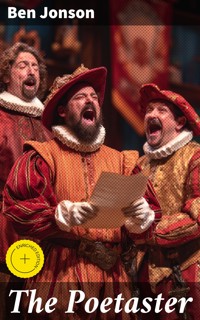
In "The Poetaster," Ben Jonson presents a sharp and satirical critique of the poetic and theatrical conventions of his time, particularly targeting rivals such as Robert Greene and the burgeoning group of the so-called 'Poetasters.' This comedic play intricately weaves together elements of farce and social commentary, exploring themes of authenticity, artistic rivalry, and the nature of true poetry. Jonson's use of witty dialogue and farcical situations provides not only entertainment but also a scathing analysis of the moral and aesthetic implications of poetic pretensions, all set against the vibrant backdrop of the early 17th-century English literary scene. Ben Jonson, a towering figure of Renaissance drama, was well-acquainted with both the complexities of the stage and the intricacies of human character, experiences that shaped his approach to playwriting. A contemporary of Shakespeare, Jonson's insistence on the importance of classical ideals in drama stemmed from his own rigorous education and extensive involvement in the literary world. His background, filled with encounters with fellow poets and playwrights, deeply influenced his desire to elevate the standards of poetry and shed light on the dynamics of literary competition. "The Poetaster" is a must-read for anyone interested in the interplay of art and identity in the theatrical realm. Jonson's incisive humor and lively characterizations not only entertain but also provoke thoughtful discourse on the essence of artistic merit and authenticity. This work is an essential addition to the canon of early modern literature, offering profound insights into the interplay between poetry and power in a transformative period of English history. In this enriched edition, we have carefully created added value for your reading experience: - A succinct Introduction situates the work's timeless appeal and themes. - The Synopsis outlines the central plot, highlighting key developments without spoiling critical twists. - A detailed Historical Context immerses you in the era's events and influences that shaped the writing. - An Author Biography reveals milestones in the author's life, illuminating the personal insights behind the text. - A thorough Analysis dissects symbols, motifs, and character arcs to unearth underlying meanings. - Reflection questions prompt you to engage personally with the work's messages, connecting them to modern life. - Hand‐picked Memorable Quotes shine a spotlight on moments of literary brilliance. - Interactive footnotes clarify unusual references, historical allusions, and archaic phrases for an effortless, more informed read.
Das E-Book können Sie in Legimi-Apps oder einer beliebigen App lesen, die das folgende Format unterstützen:
Veröffentlichungsjahr: 2021
Ähnliche










The Poetaster
Table of Contents
Introduction
In a city of laurel crowns and whispered libels, a poet stands trial for the soul of art.
Ben Jonson’s The Poetaster endures as a classic because it crystallizes an age-old conflict between integrity and opportunism in letters, staging the battle with intellectual rigor and theatrical verve. Written amid the turn-of-the-century skirmishes known as the War of the Theatres, it codifies a vision of poetry as moral labor rather than marketable noise. Its Roman frame, moral seriousness, and lucid comic design made it a touchstone for later satirists who measured art by standards of clarity, truthfulness, and craft. Generations of readers and scholars return to it for its bold defense of judgment, its urbane wit, and its disciplined, classical architecture.
The essential facts are clear and instructive. The Poetaster is a satirical comedy by Ben Jonson, first performed in 1601, and published in 1602. It was staged by the Children of the Chapel at the Blackfriars Theatre in London and participates directly in the period’s theatrical rivalries. Set in Augustan Rome, it dramatizes contests among poets, patrons, and power. Jonson aims to test the claims of literary merit, to expose empty bombast, and to uphold a humane standard grounded in classical precedent. Without disclosing plot turns, one can say the play treats poetry as a public duty and examines the ethics of authorship under scrutiny.
Readers encounter emperors, patrons, and poets navigating salons, streets, and tribunals, while reputations and verses collide. Figures such as Augustus, Horace, and Virgil lend the play an aura of authority and provide a mirror for Jonson’s own era. The Roman setting allows a double vision: a timeless debate about art’s purpose and a pointed commentary on contemporary London. The rivalries are comic, but their consequences feel serious, as slander, envy, and ambition threaten the social fabric that sustains art. The result is a lively mosaic of scenes that balances public spectacle with fine-grained debates about language, style, and responsibility.
Jonson’s intention was not merely to score points in a quarrel but to advocate a standard of poetic discipline informed by classical models. He presents a self-conscious theater of evaluation, where verses are weighed, motives interrogated, and taste adjudicated. The play champions an ideal of honest labor, temperate judgment, and precise expression, opposing it to hasty fashion, moral looseness, and verbal inflation. In crafting this case, Jonson positions the poet as a citizen and craftsman whose work bears ethical weight. The Roman past becomes a stage on which the present’s anxieties about reputation, patronage, and truth can be examined with ironic clarity.
Stylistically, The Poetaster is a display of range and control. Jonson marshals elevated rhetoric alongside brisk comic repartee, varying pace and tone to sharpen contrasts between genuine and counterfeit eloquence. He exploits legal and medical imagery to dramatize the cleansing of language and the diagnosis of vice, fashioning scenes that are as theatrical as they are argumentative. The boy actors’ finesse at Blackfriars enabled intricate staging and quicksilver role-play, supporting Jonson’s intricate patterns of accusation and defense. The language remains lucid and pointed, and its carefully weighted cadences exemplify the very discipline the play demands from its practitioners.
The play’s status in literary history owes much to its role in the War of the Theatres and to its afterlife in satiric tradition. It provoked counterattacks and sharpened contemporary debates about artistic freedom, libel, and decorum. Later critics recognized in Jonson a progenitor of neoclassical standards, and the play’s insistence on judgment, order, and moral purgation resonates with Restoration and Augustan satire. Its emphasis on distinguishing sound craftsmanship from shallow showmanship reverberates in later portraits of bad poets and tastemakers. As a self-conscious defense of poetics within drama, it established a model for literary polemic rendered theatrically with intelligence and balance.
Historically, the play emerges from a charged climate. The late 1590s saw anxieties over satire, censorship, and reputational harm, even as London’s stages flourished. Boy companies like the Children of the Chapel cultivated a nimble, high-style repertoire suited to sophisticated venues such as Blackfriars. Jonson’s decision to displace contemporary disputes onto Augustan Rome provided a protective veil while inviting learned spectators to decode the analogies. The setting also aligns the work with a lineage of classical authority—Horace, Virgil, Augustus—that underwrites its ethical claims. The Poetaster thus operates as both entertainment and intervention, addressing a public conversation about language, law, and the limits of wit.
At its heart, the play explores the dangers of vanity, the seductions of flattery, and the corrosive power of envy. It also meditates on the relationship between art and patronage, asking what kind of protection or distortion power confers upon poets. The trial structure, implicit and explicit, frames a confrontation between standards and fashions, inviting audiences to consider how communities establish and enforce taste. Jonson dramatizes how rhetoric can dignify truth or weaponize falsehood, and how public judgment can either refine or destroy. The Poetaster, without didactic heaviness, insists that language is a civic instrument and that the poet answers to conscience as well as audience.
For newcomers, the Roman personae create an accessible guide to the play’s argument. Horace embodies disciplined artistry; imperial and patronal figures embody power’s allure and oversight; rival poets test the boundaries of license. Jonson aligns comic misrecognitions with moments of lucid evaluation, so that laughter and judgment arise together. He is alert to the emotions that animate literary life—pride, fear, longing for recognition—and he anatomizes them without cruelty. The designs of scenes and speeches reward attentive reading: transitions from festivity to censure, from private jest to public reckoning, from linguistic play to ethical clarity. The world he conjures is both theatrical and thoughtfully civic.
The book’s classic status also rests on its craftsmanship. Jonson’s sense of structure organizes a sprawling milieu into a coherent arc, while his prose and verse calibrate decorum to character and occasion. The Roman fiction empowers him to present debates about style and virtue as matters of public order, not mere taste. Allusions interlace the play with a learned culture that values measure, restraint, and earned authority. Yet the comedy keeps it buoyant, so even the sternest lessons are staged with ingenuity. The Poetaster remains an exemplar of how drama can argue as well as delight, engage time-bound quarrels, and still speak beyond them.
Today, The Poetaster feels strikingly current in its portrayal of reputational battles, rhetorical excess, and the public courts of opinion where art is daily judged. Its core themes—integrity versus opportunism, clarity versus obfuscation, judgment versus noise—retain urgency in any culture saturated with performance and commentary. Jonson’s vision of poetry as ethical craftsmanship offers a durable counterpoint to transient fashion. The play’s formal intelligence, historical resonance, and comic vitality ensure its lasting appeal. It invites readers to relish language while demanding responsibility, to admire mastery without idolatry, and to see in the fate of poets a mirror for the health of the commonwealth.
Synopsis
The Poetaster, a satirical comedy by Ben Jonson first performed in 1601, is set in Augustan Rome and examines the role of the poet within society, patronage, and law. Against the backdrop of imperial authority, the play stages rivalries among writers, contrasting disciplined craft with pretentious ambition. Its action unfolds among historical figures such as Augustus Caesar, Virgil, Horace, and Ovid, alongside flamboyant contemporaries and stage professionals. The plot interweaves a public dispute over libel with a private intrigue concerning love and decorum. Across five acts, the play charts conflict, accusation, and adjudication, culminating in a judgment about art, reputation, and civic responsibility.
Early scenes establish the imperial court and the standards it seeks to uphold. Augustus presides over a realm attentive to law, public order, and moral reform. Virgil is honored as an exemplar of grave epic, while Horace appears as a measured satirist whose verse aspires to correct without malice. Ovid, celebrated for elegance, is introduced with a penchant for love poetry that presses against official restraint. Advisors such as Maecenas signal a culture of patronage that can elevate or restrain talent. This framework situates poetry within civic duty, making questions of taste, responsibility, and reputation matters for public consideration.
Within this civic frame, rivalries among lesser poets gain momentum. Crispinus and Demetrius Fannius, eager for notice, resent Horace’s access to patrons and status among his peers. Their talk favors flashy language and quick popularity over discipline, turning personal frustration into literary grievance. Captain Tucca, a swaggering soldier with theatrical connections, attaches himself to their cause, loudly promising protection and advantage. The trio’s energy moves from complaint to strategy, imagining satires that will wound Horace’s credit and unsettle his alliances. Around them, gossip and rumor begin to function like weapons, and the boundary between spirited competition and actionable slander blurs.
The play also turns to the world of players and managers, showing how the marketplace of performance mediates reputation. Tucca bullies an acting company for favors and leverage, while Crispinus and Demetrius court the stage as a megaphone for their attacks. Scenes of rehearsal, patron-hunting, and backstage negotiation present practical pressures that shape what gets performed and how it circulates. Jonson’s Romans debate authorship, payment, and risk, suggesting that theatrical success depends on alliances as much as talent. Through this bustle, Horace tries to keep his counsel, preparing defenses of his practice while refusing to answer rumor with rumor.
A contrasting milieu appears at gatherings under Maecenas, where Virgil, Horace, and other writers exchange verses and judgments. Here standards of clarity, proportion, and decorum are articulated as public virtues rather than private tastes. Crispinus arrives to test his style among these arbiters, offering ornate diction as proof of excellence. The scenes juxtapose controlled craft with showy excess, letting comparisons unfold through performance rather than denunciation. Maecenas and his circle encourage correction through reasoned critique, though the friction between rival camps remains unresolved. The idea that society benefits when poetry is lucid, modest, and useful gains institutional weight.
Running alongside the quarrel is a romantic thread centered on Ovid the Younger. Admired for his grace, he writes love verse that captivates readers and draws the attention of Julia, Augustus’s daughter. Their exchanges, discreet but vivid, place personal desire in tension with the emperor’s public program of moral exemplarity. Ovid’s father counsels restraint, warning that wit and charm can carry political costs. Letters, songs, and secret meetings animate the subplot, linking private pleasure to public scrutiny. The atmosphere grows uncertain as art, affection, and authority converge, foreshadowing consequences that will not remain confined to the world of poetry.
As the rivals’ campaign hardens, lampoons begin to circulate, and formal complaints follow. Accusations of malice, theft, and defamation are set against claims of honest correction and lawful satire. Tucca plays provocateur, prodding confrontations and promising impunity that he cannot guarantee. Maecenas and Virgil urge moderation, but the matter outgrows private mediation. Augustus, attentive to order and to the uses of literature, convenes a hearing to consider the quarrel. The proceeding is framed not only as a dispute among individuals, but as a test of what counts as permissible speech in a polity that prizes both virtue and eloquence.
The climactic session gathers poets, patrons, and officers to weigh evidence, examine texts, and distinguish rivalry from wrongdoing. Charges are read, authorship is scrutinized, and the principles of decorum, intention, and public harm are applied. In the course of judgment, a comic device exposes affected style and borrowed phrases, turning pretension into self-indictment. The court also addresses Ovid’s entanglement with love poetry and imperial family, measuring personal inclination against civic duty. Outcomes arise that separate praise from censure and assign responsibility in proportion to fault, establishing a precedent for how art and authority may coexist without mutual injury.
The resolution restores a workable balance between literary freedom and social restraint. True poets are affirmed as those who temper wit with conscience, accept correction, and serve the commonweal. Pretenders who trade in noise, detraction, or fashionable novelty are warned by example. Patronage is shown as stabilizing when it rewards clarity and probity, and as perilous when it shields faction. The theater emerges as a public forum where standards can be tested before discerning judges. The play’s final movement projects confidence that measured satire can thrive under just rule, and that reputation, once cleared, is best defended by continued good practice.
Historical Context
Ben Jonson’s Poetaster is set in Augustan Rome, the period following the collapse of the Roman Republic and the establishment of the Principate under Gaius Octavius (Augustus) from 27 BCE to 14 CE. The city, refashioned as a capital of order and imperial culture after decades of civil war, was a hub of patronage, law, and moral regulation. Palatine palaces, the Forum, and Maecenas’s gardens symbolized a state that yoked literature to imperial ideology. The setting’s urban density, surveillance, and ritualized public life create a backdrop where poets navigate proximity to power, and where legal and social punishments—banishment, confiscation, disgrace—police reputations as carefully as armies secure frontiers.
Jonson stages poets within a courtly milieu shaped by Augustus’s consolidation of authority, his propaganda, and the curation of a literary canon around Virgil and Horace. Moral legislation—such as the Lex Iulia de maritandis ordinibus (18 BCE) and the Lex Iulia de adulteriis coercendis (18 BCE)—intersected with cultural oversight, culminating in events like Ovid’s exile to Tomis in 8 CE. In the play, the emperor’s judicial presence and the poets’ dependence on patronage mirror a polity where aesthetic practice has legal stakes. Rome’s multilingual, status-conscious society and its performative politics supply Jonson a historical frame to dramatize the risks of satire and the ethics of authorship.
The immediate historical world of Poetaster’s composition is Elizabethan London in 1601, a city of roughly 200,000 clustered along the Thames with theaters at Bankside and within liberties like Blackfriars. Poetaster premiered with the Children of the Chapel at the Blackfriars playhouse, an indoor hall licensed for select audiences. Nearby companies included the Lord Chamberlain’s Men at the Globe (opened 1599) and the Admiral’s Men at the Fortune (1600). Indoor stages, lit by candles and charging higher prices, appealed to courtiers, Inns of Court men, and gentry. This environment fostered topical drama, the sharpness of which was mediated by censors and by patrons who shielded or exposed playwrights.
The Bishops’ Ban of June 1599, issued by Archbishop John Whitgift and Bishop Richard Bancroft, prohibited the printing of satirical verse and ordered public burnings of books by authors such as John Marston and Joseph Hall. It extended ecclesiastical policing over secular lampoons during a period of political sensitivity. In response, satiric energies migrated to the stage, where allegory, classical disguise, and the licensing process offered limited cover. Poetaster’s Roman costume and its portrayal of slanderous “poetasters” are a direct theatrical transposition of a print culture that had just been curtailed, enabling Jonson to continue combative critique under the veil of antiquity.
The Isle of Dogs affair of July–August 1597 shaped Jonson’s sense of risk. A satirical play by Thomas Nashe and Ben Jonson, performed by the Admiral’s Men at the Swan, provoked the Privy Council to close the theaters and investigate seditious content. Jonson was imprisoned in Marshalsea; Nashe’s house in Norwich was raided, and he fled. This crackdown demonstrated the volatility of topical satire and the state’s readiness to punish. Poetaster reflects lessons from 1597: Jonson embeds invective in classical personae, emphasizes authorial “honesty,” and stages judicial procedures that legitimize satire as moral correction rather than mere libel.
The so‑called War of the Theatres, or Poetomachia (c. 1599–1602), is the central historical conflict shaping Poetaster. It pitted playwrights and companies in a public contest of satire and counter‑satire aligned with rival playhouses and audiences. Jonson, writing for the Children of the Chapel at Blackfriars, answered provocations associated with John Marston and Thomas Dekker, who were linked to the Children of Paul’s and other venues. Jonson’s Cynthia’s Revels (1600) had already mocked mannered affectation; Poetaster (1601) intensified the quarrel by personating adversaries as “Crispinus” (Marston) and “Demetrius Fannius” (Dekker). In a notorious scene, Crispinus vomits polysyllabic neologisms, theatrically purging stylistic excess. The play also introduces Captain Tucca, a braggart parasite whose swaggering interference lampoons theatrical opportunism and mercenary criticism. Marston and Dekker retaliated swiftly. Dekker’s Satiromastix; or, The Untrussing of the Humorous Poet (1601), staged by the Lord Chamberlain’s Men and the Admiral’s Men, seized Tucca and turned Jonson’s satirical weapons back upon him, dressing him as the “Horace” who must be unmasked. The rivalry mapped onto institutional differences: indoor boy companies, priding themselves on courtly wit and topical audacity, versus outdoor adult companies with broader publics. The Master of the Revels, Edmund Tilney, licensed texts amid complaints from offended parties; Jonson later noted that an “Apologetical Dialogue” intended to accompany Poetaster was barred from the stage and printed in the 1602 quarto instead. Names, dates, and venues—Blackfriars (Children of the Chapel), Paul’s (Children of Paul’s), the Globe (Lord Chamberlain’s Men), and the Fortune (Admiral’s Men)—demonstrate how the Poetomachia institutionalized literary faction into theatrical economies. Poetaster is thus not only a satire but an artifact of a documented sequence of performances and counter‑performances in London between 1599 and 1602.
Censorship and theatrical licensing under the Master of the Revels formed a procedural backdrop. Edmund Tilney, Master from 1579 to 1610, read manuscripts, cut passages, and issued licenses; the Privy Council could intervene in sensitive cases. The 1586 Star Chamber decree had already centralized control of printing, and stage content was folded into this oversight. Jonson’s prefatory claims in the 1602 quarto of Poetaster report that the “Apologetical Dialogue” was denied performance. Such interventions shaped dramaturgy: trials, oaths, and public recantations within Poetaster mirror real mechanisms by which authorities sought to convert satire into moral instruction and to prevent defamation from spilling into sedition.
The Essex Rebellion of 8 February 1601 dramatically heightened surveillance of the stage. Robert Devereux, 2nd Earl of Essex, attempted to rally support in London and notoriously commissioned a performance of Shakespeare’s Richard II (with the deposition scene) on 7 February 1601 by the Lord Chamberlain’s Men. After the rebellion collapsed, Essex was executed on 25 February. The Privy Council scrutinized companies and patrons; any dramatic allusion to treason, court faction, or the succession became dangerous. Poetaster’s insistence on imperial justice, responsible speech, and the line between private libel and public offense resonates with a city that had just witnessed the legal consequences of theatrical-political entanglement.
Augustan moral reform provides the Roman historical analogue that Poetaster exploits. Augustus’s marriage laws (18 BCE) and later Lex Papia Poppaea (9 CE) aimed to regulate elite conduct, while his cultural program elevated compliant poets. The exile of Ovid to Tomis in 8 CE—traditionally linked to the Ars Amatoria and an unnamed “error”—demonstrated that literary fame could not shield an author from imperial displeasure. Poetaster stages Ovid’s confrontation with Augustus and crafts a Horatian defense of ethically disciplined satire. By dramatizing a regime that rewards virtue and punishes licentiousness, Jonson reflects on English censorship, suggesting that restrained satire can serve the state rather than subvert it.
The resurgence of boy companies around 1599 constituted a significant theatrical movement. The Children of the Chapel at Blackfriars and the Children of Paul’s returned to regular performance after periods of relative dormancy. Their indoor halls charged higher admission—often sixpence or more—and catered to legally savvy, court-connected audiences. Managers like Nathaniel Giles and Henry Evans recruited choristers under royal warrant. This ecology encouraged intricate satire, Latin tags, and topical “in-jokes.” Poetaster’s dense classical allusions, legalistic scenes, and pointed character types were calibrated for such auditors, whose proximity to the court amplified both the play’s influence and the risk of offending powerful figures.
The Stationers’ Company’s regulation of print shaped Poetaster’s afterlife. Entries in the Stationers’ Register were required before printing; ecclesiastical and secular oversight policed content. The 1602 quarto of Poetaster, issued soon after its stage run, included the “Apologetical Dialogue” that licensing had withheld in performance. Print fixed the identities of Jonson’s targets more durably than performance and widened the circle of potential offense. This transition from stage to page also shifted jurisdiction from the Master of the Revels to the Stationers and ecclesiastical authorities, embedding the play in a broader infrastructure of control that the 1599 Bishops’ Ban had recently tightened.
A late-Elizabethan anxiety over libel and slander informed both policy and plot. London had witnessed sensational prosecutions, such as the Dutch Church Libel of 1593, a xenophobic placard investigated by the Privy Council, and periodic Star Chamber actions against defamatory verse. Sir Edward Coke, Attorney General from 1594, pursued seditious writings with vigor. The legal category of “libellus famosus” treated defamatory publication as a public offense. Poetaster’s arraignments and forced recantations dramatize the borderline between witty invective and punishable libel, aligning the “honest” satirist with civic virtue while exposing parasitic defamers to judicial humiliation—a stance shaped by the era’s punitive approach to scandal.
The Tudor expansion of humanist education was a social movement that molded Jonson’s method. Grammar schools and institutions like Westminster School, where Jonson studied under the antiquary William Camden, emphasized Latin rhetoric, declamation, and classical moral philosophy. Camden’s Britannia (first Latin edition 1586) and scholarly ethos promoted disciplined engagement with antiquity. Poetaster’s Horatian posture—celebrating ars and honestas—and its forensic rhetoric reflect this training. Jonson’s self-presentation as a learned moralist, distinct from improvising hacks, reproduces the schoolroom’s hierarchy of eloquence. The play’s citations, mythological framing, and Roman legal forms are not mere ornament but instruments of ethical argument recognizable to educated Elizabethan audiences.
Competition between indoor boy companies and outdoor adult troupes was an economic and cultural driver. The Lord Chamberlain’s Men moved into the Globe in 1599; the Admiral’s Men shifted to the Fortune in 1600. Boy companies, smaller and agile, prospered on wittily satirical repertory, while adult companies dominated spectacle and chronicle history. Rivalries encouraged playwrights to write polemically against competitors and their audiences. Poetaster, performed by the Children of the Chapel, positions itself against work by writers associated with Paul’s or with adult-staged rebuttals, making the play a weapon in market competition as well as a moral tract, with specific venues and company identities sharpening its barbs.
The protracted Anglo-Spanish War (1585–1604) and campaigns in the Low Countries under Sir Francis Vere created a cohort of veterans and camp followers in London, feeding the cultural type of the braggart soldier. Demobilization and the circulation of military rumor colored urban life. Captain Tucca in Poetaster parodies martial swagger, opportunism, and the economy of favors that linked soldiers, players, and patrons. Jonson himself had served briefly as a soldier in the Netherlands, lending authenticity to his satire of counterfeit valor. The figure exposes how boasts, threats, and patronage‑seeking speech functioned as social currency, a phenomenon acute in a capital managing war expenditures and reputations.
Poetaster functions as a political anatomy of speech in a regime anxious about order. By setting Elizabethan controversies in Augustan Rome, Jonson critiques the patronage system’s temptations, the commodification of reputation, and the state’s uneven censorship. The play defends regulated satire as a civic good while arraigning libelers who weaponize verse for private malice. Courtly favoritism appears as a hazard to justice; trials in the play propose transparent adjudication over backstage influence. In dramatizing Ovid’s discipline and Crispinus’s purgation, Jonson argues that literary culture must be accountable to public virtue, even as he exposes how power manipulates the border between correction and suppression.
Social inequities and class tensions are equally probed. The indoor theater’s elite auditors, mirrored by Roman courtiers, are shown to broker fame and punishment, while parasitic brokers and captains exploit dependents. Jonson indicts a culture where access to patrons can eclipse merit, and where defamatory entertainment circulates as fashionable capital. He spotlights the precariousness of players and poets under legal regimes that punish them while using them for propaganda. By aligning honest labor and learned discipline with the commonwealth, and by ridiculing ostentation, graft, and fashionable malice, Poetaster exposes structural injustices that tied cultural production to hierarchy, surveillance, and the market in late Tudor London.
Author Biography
Ben Jonson (1572–1637) was an English dramatist, poet, and deviser of court masques whose learning, wit, and formal rigor helped shape early modern literature. A towering presence in the theater that followed Shakespeare, he popularized “humours” comedy and advanced a self-conscious idea of the author as craftsman and critic. His best plays balance sharp satire with classical structure, and his poems model urbane clarity. Moving between public stages and royal entertainments, Jonson became a central arbiter of taste in the late Elizabethan and Jacobean eras, leaving an influential body of drama, poetry, and prose that defined standards for generations of writers.
Raised in London, Jonson received a rigorous classical education at Westminster School, where the antiquary William Camden encouraged his taste for Latin literature and history. The grounding in Horace, Martial, Aristotle, and Plautus that he absorbed there shaped his aesthetics for life. Before turning fully to the stage, he experienced trades and service typical of the time, including an apprenticeship in bricklaying and soldiering in the Low Countries. These apprenticeships in discipline and hierarchy, coupled with classroom training in rhetoric, instilled habits of precision and argument that later marked his drama and criticism. By the mid-1590s, he had joined the London theater world as actor and playwright.
Jonson’s early breakthrough came in the late 1590s with Every Man in His Humour, a play that crystallized his notion of comedy built on dominant “humours” in human behavior. A combative temperament and satiric bite drew him into the so‑called “War of the Theatres,” in which rival dramatists answered one another onstage with barbed caricature. A deadly duel in 1598 led to his imprisonment; he escaped capital punishment by pleading benefit of clergy. During confinement he converted to Roman Catholicism, a stance he later abandoned when he conformed again to the Church of England. These crises reinforced his image as fearless, learned, and unyieldingly self-directed.
The first decades of the 1600s saw a run of comedies that secured Jonson’s reputation: Volpone exposes the predations of greed in Venice; Epicoene, or The Silent Woman, ridicules social pretenses; The Alchemist dissects credulity with dazzling stagecraft; and Bartholomew Fair revels in carnival excess while satirizing moral hypocrisy. Each play shows his commitment to classical coherence—tight plotting, consistent characterization, and controlled style—paired with a keen ear for contemporary speech. Audiences and critics have long admired the ingenuity of his intrigues and the precision of his satire, which target folly rather than tragedy, and set ethical intelligence against the lures of appetite and fashion.
Under James I, Jonson became a principal author of court masques, collaborating with the architect-designer Inigo Jones on richly staged allegories such as The Masque of Blackness and Pleasure Reconciled to Virtue. He also faced controversy: the satiric play Eastward Ho! brought a spell of imprisonment when it offended powerful sensibilities. In 1616 he was granted a royal pension, formalizing his status at court, and published a landmark folio, The Workes of Benjamin Jonson, asserting dramatic literature as serious art. His poetry—Epigrams, The Forest, and the later Underwoods—includes much-anthologized pieces like “To Penshurst” and “On My First Sonne.” His prose Discoveries and an English Grammar were issued posthumously.
Jonson’s later career mixed honors with setbacks. He received honorary degrees from Oxford and Cambridge and nurtured a circle of younger writers who styled themselves the “Tribe of Ben.” Friction with Jones strained masque collaborations, and new comedies such as The Devil Is an Ass, The Staple of News, The New Inn, The Magnetic Lady, and A Tale of a Tub found uneven reception in the 1620s and 1630s. Health problems, including a debilitating stroke late in the 1620s, curtailed his activity, though he continued to write. He died in 1637 and was buried in Westminster Abbey, where the succinct epitaph “O Rare Ben Jonson” memorializes his stature.
Jonson’s legacy rests on a fusion of classical measure and topical acuity that shaped English neoclassicism, Restoration comedy, and later satire. His authoritative prefaces, folio “Works,” and critical dicta modeled professional authorship; his drama offered blueprints for plot economy and moral argument. He influenced poets and playwrights who prized urbane clarity and social critique, and his followers extended his manners into the Cavalier tradition. His tribute to Shakespeare in the First Folio remains a touchstone of literary fellowship and evaluation. Today, Jonson’s plays are regularly revived, his masques studied for their interplay of text and spectacle, and his poems widely anthologized for their crafted candor.




