


0,49 €
Niedrigster Preis in 30 Tagen: 1,99 €
Niedrigster Preis in 30 Tagen: 1,99 €
Mehr erfahren.
- Herausgeber: Booksell-Verlag
- Kategorie: Gesellschafts- und Liebesromane
- Sprache: Englisch
In "The Rose in the Ring," George Barr McCutcheon weaves a captivating tale that merges romance, adventure, and a touch of the fantastical. Set against an enchanting backdrop, the narrative follows the protagonist's quest intertwined with themes of love, honor, and the complexities of human relationships. McCutcheon's meticulous prose and vivid imagery evoke the charm of early 20th-century literature, reflective of the era's fascination with exotic locales and societal norms, while simultaneously critiquing the constraints placed upon individuals by society. His deft character development ensures readers are deeply invested in the characters' journeys, making it a fine example of classic American storytelling. George Barr McCutcheon, an esteemed novelist and playwright, drew inspiration from his varied life experiences, including his early career as a newspaper journalist. His travels and interactions with diverse cultures enriched his literary voice, enabling him to tackle universal themes with both sensitivity and insight. McCutcheon's works often mirror his belief in the power of love and the importance of personal freedom, perspectives that undoubtedly influenced the narrative of "The Rose in the Ring." I highly recommend "The Rose in the Ring" to readers seeking an engaging exploration of love and adventure. Its timeless themes and McCutcheon's skillful storytelling invite reflection on the nature of relationships, making it a worthwhile addition to any literary collection. In this enriched edition, we have carefully created added value for your reading experience: - A succinct Introduction situates the work's timeless appeal and themes. - The Synopsis outlines the central plot, highlighting key developments without spoiling critical twists. - A detailed Historical Context immerses you in the era's events and influences that shaped the writing. - A thorough Analysis dissects symbols, motifs, and character arcs to unearth underlying meanings. - Reflection questions prompt you to engage personally with the work's messages, connecting them to modern life. - Hand‐picked Memorable Quotes shine a spotlight on moments of literary brilliance. - Interactive footnotes clarify unusual references, historical allusions, and archaic phrases for an effortless, more informed read.
Das E-Book können Sie in Legimi-Apps oder einer beliebigen App lesen, die das folgende Format unterstützen:
Veröffentlichungsjahr: 2019
Ähnliche




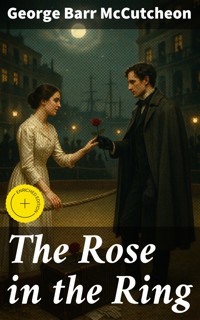
The Rose in the Ring
Table of Contents
Introduction
Love and reputation are tested where public spectacle threatens to eclipse private conscience. That tension gives the novel its pulse, shaping a story that moves between outward show and inward resolve, inviting readers to weigh not only what characters do but how they are seen. The title’s juxtaposition of a delicate emblem and a performance space signals a drama of exposure, where grace must prove itself under scrutiny. Without revealing turns of plot, what follows offers an introduction to its mood and concerns: a romance animated by suspense, a moral inquiry wrapped in swift scenes, and an enduring question about what it means to stand firm.
The Rose in the Ring is a novel by George Barr McCutcheon, an American author best known for popular romantic adventures in the early twentieth century. First appearing in that period’s vibrant market for serialized and book-length fiction, it reflects the tastes of readers who prized brisk storytelling and clear emotional stakes. While McCutcheon achieved lasting fame with romances set in imagined principalities, he also wrote widely in contemporary modes, balancing sentiment, wit, and momentum. This book belongs to that tradition, offering a narrative that fuses romance with dramatic complication, attentive to the social currents and public pressures of its time.
At its core, the premise is simple and compelling: lives that might have remained separate are drawn together by a visible emblem and the scrutiny it invites, and the resulting entanglement forces difficult choices about truth, loyalty, and courage. The experience is that of a swiftly paced, accessible read, marked by direct prose, crisp scene construction, and a storyteller’s instinct for cliff-edge moments that resolve into character-revealing decisions. McCutcheon’s narration favors movement over ornament, yet it pauses at key junctures to register moral consequence. Readers encounter a steady escalation of stakes without the burden of elaborate exposition or opaque psychology.
Themes of identity and performance run throughout, asking how much of a person’s worth can be judged by what is displayed before others. The narrative considers how reputations are formed, damaged, and redeemed; how affection survives under suspicion; and how integrity demands not only feeling but action. Questions of justice surface as characters confront the gap between community judgment and personal knowledge. The book also probes the allure of symbols—tokens, promises, and names that seem to confer meaning—and shows how they can both guide and mislead. In these ways, it speaks to the perennial human task of discerning truth amid noise.
Stylistically, the novel exemplifies McCutcheon’s blend of romantic feeling and clean, scene-driven storytelling. Dialogue carries much of the movement, with settings sketched efficiently to keep attention on characters’ choices rather than on extended description. Tonally, the work sustains a balance between tenderness and tension: gestures of kindness coexist with moments of risk, and humor breaks the surface without dissolving the stakes. Readers who appreciate clear motivations, recognizable emotional dilemmas, and an undercurrent of suspense will find the book welcoming. Its architecture rewards steady reading, each chapter nudging the story forward while preserving the larger arc’s sense of promise.
The publication context matters. Emerging from the early twentieth century, the novel participates in a period when popular fiction explored public life, celebrity, and the social theater of appearances. That moment prized narratives in which moral clarity is earned, not assumed, and where characters negotiate expanding spheres of attention. McCutcheon writes within that current, offering a story that is aware of how swiftly judgment circulates and how fragile trust can be. Without leaning on topical references, the book channels the era’s energy—its appetite for romance, its curiosity about status, and its belief that character is revealed under pressure rather than proclaimed.
For contemporary readers, The Rose in the Ring offers more than period charm. It raises durable questions: How do we measure fidelity when the world is watching? What obligations do we owe to those who misread us? How do symbols shape, and sometimes distort, our choices? The novel answers not with lectures but with situations that demand courage and compassion. Its appeal lies in the promise of a heartfelt romance guided by ethical stakes, in prose that moves swiftly without haste, and in the reassurance that even under the glare of public attention, steadiness of purpose can find its way to grace.
Synopsis
The novel opens in the world of traveling entertainments and city drawing rooms at the turn of the twentieth century, where performers, patrons, and onlookers mingle under the glare of publicity. At its center are a conscientious young man with ties to a performing troupe and a poised young woman whose past is guarded by others. Their paths cross around an emblem that gives the book its title: a rose linked to a ring, a token at once sentimental and incriminating. This image frames the narrative’s blend of romance and intrigue, setting up questions of identity, loyalty, and the reach of reputation.
An evening meant for spectacle becomes the first turning point when a celebrated figure is wronged and valuable property disappears, creating a scandal that spreads quickly. Suspicion falls where it is most convenient: on the itinerant company and those nearest to it. Circumstances place the young man in a compromising position, and the token associated with the young woman is noticed by watchful eyes. Officials move to contain the matter, yet their haste only deepens uncertainty. The incident sets the protagonists on diverging paths, one seeking to clear a name, the other struggling to remain out of the harshest light.
Investigation follows, both formal and private. A methodical officer pursues leads through boarding houses, stages, and parlors, while a quiet ally pieces together overlooked details. The ring, and the rose bound up with it, acquires a history that seems to connect disparate lives. Letters, whispered recollections, and half-remembered promises sketch a story older than the scandal itself. The young woman confronts the boundaries set by guardians and benefactors, testing how far protection can extend. Meanwhile, the young man’s absence or restraint is interpreted as guilt by some and prudence by others, and the circle of pressure gradually tightens.
As the scene shifts to a larger city and its environs, the novel broadens its portrait of class and spectatorship. Drawing rooms host anxious conversations; rehearsal spaces echo with practical worries. Supporting figures emerge: steadfast friends who risk their comfort, opportunists who read advantage in confusion, and respectable leaders whose reputations are invested in a swift conclusion. The question of who speaks for the young woman becomes central, as competing guardianship claims and obligations surface. Through encounters carefully arranged and chance meetings alike, the narrative reveals how social standing shapes what is believed and how rumor becomes harder to rebut.
Midway, the story complicates its mystery without resolving it. A misdirected message yields an unexpected clue, and the emblem is traced to a moment that predates the scandal. Connections among families, patrons, and performers suggest a legacy that explains, but does not excuse, current hardship. Hints of mistaken identity appear, not as trickery, but as artifacts of secrecy and care. A taciturn benefactor aids the search for truth, quietly placing people where they can speak safely. With each disclosure, the protagonists gain partial leverage, yet they must choose between expedient explanations and a fuller account that may implicate the powerful.
An apparent opportunity to settle the matter arrives in the form of a negotiation, yet it carries conditions that would silence essential facts. A trap is set under the guise of compromise, drawing the protagonists into a narrow corridor between scandal and safety. A near encounter with danger underscores what is at stake, forcing a new alignment among friends and watchers. Trust, once given cautiously, becomes an active partnership. From this point, the narrative turns toward assembling proof rather than merely avoiding blame, and public opinion, once hostile or indifferent, begins to waver in the face of corroborated detail.
Approaching its climax, the book brings contending stories to a public forum, where stakes are articulated plainly and witnesses are compelled to speak. Material evidence, long hidden in plain sight, finds context, and the origins of the rose and ring are recounted in a manner that ties past favors to present obligations. The antagonists’ coherence falters as prior assertions collide with established timelines. Still, the novel declines to rely on dramatic confession; instead, it emphasizes method, patience, and the ethical weight of testimony. The exact resolution of culpability remains concealed here, but the path toward vindication is clearly marked.
Throughout, the narrative underscores themes of loyalty under scrutiny and the difference between performance and reality. The world of spectacle provides livelihood and community, yet it also invites misreading from those who only see the surface. The emblem functions as both a sentimental keepsake and a practical key, suggesting that symbols matter because of the people who invest them with meaning. The love story develops alongside the inquiry, constrained by duty and timing rather than by volatile whim. By aligning affection with truth-seeking, the book holds that personal constancy and public justice can reinforce one another without tipping into sermon.
In its final chapters, the threads of identity, obligation, and proof come together without erasing the costs paid along the way. Names are clarified, promises are acknowledged, and the immediate wrong is answered in a manner consistent with the evidence amassed. Future prospects are left hopeful but grounded, with relationships reshaped by candor rather than convenience. The closing return to the image of the rose in the ring is deliberate, sealing the connection between origins and outcomes. Overall, the book offers a melodrama of steady temperament, presenting the gradual triumph of truth and trust over confusion, presumption, and opportunism.
Historical Context
Set in the closing years of the Gilded Age and the dawn of the Progressive Era, The Rose in the Ring unfolds in an American milieu defined by urban theaters, fairgrounds, and small-town depots linked by rail. The narrative’s atmosphere—crowded streets, gaslit and then electrically lit stages, and the itinerant economy of shows—locates it roughly in the 1890s to early 1900s, with a likely Northeastern and Midwestern orbit that includes New York and other rail-connected cities. The era’s rapid urbanization, expanding leisure industry, and volatile social hierarchies form the backdrop, shaping the book’s preoccupation with spectacle, reputation, mobility, and the precarious standing of performers and impresarios.
The expansion of American popular entertainment after 1870 anchors the book’s world. P. T. Barnum’s “Greatest Show on Earth” (organized in 1871) and the Barnum & Bailey partnership (1881) normalized the circus train, bringing traveling spectacle to hundreds of towns each season. The consolidation culminating in Ringling’s 1907 acquisition and the 1919 merger illustrates an industry maturing into national circuits. Parallel vaudeville empires—Benjamin F. Keith’s and Edward F. Albee’s circuits in the 1890s–1900s, and the Orpheum in the West—standardized booking, censorship, and wages. The novel’s focus on troupe logistics, backstage discipline, and the power brokers who route acts mirrors these structures and the dependence of performers on centralized managerial systems.
Labor conflict within entertainment shaped the conditions the book depicts. The White Rats of America, a vaudeville performers’ union founded in New York in 1900, organized against unfair commissions, arbitrary blacklisting, and contract “blanket” clauses imposed by Keith-Albee managers. Strikes in 1901–1903 challenged the so-called United Booking Office’s dominance, drawing attention to wage suppression and punitive cancellations. While show business projected glamour, its workers faced irregular pay and managerial surveillance. The novel’s tensions around contracts, loyalty, and the vulnerability of itinerant artists to summary dismissal or coercion echo these disputes, capturing the era’s contested balance between entrepreneurial showmen and the rank-and-file talent that filled the bills.
Accelerating urbanization between 1880 and 1910 reshaped the settings the book traverses. New York’s population jumped from 1.2 million (1880) to over 4.7 million (1910), swelled by immigration from Southern and Eastern Europe. Tenement reform—spurred by Jacob Riis’s How the Other Half Lives (1890) and the New York Tenement House Act (1901)—contested overcrowding, fire hazards, and disease. Machine politics, notably Tammany Hall under Richard Croker (boss until 1902), mediated patronage and policing. These facts inform the book’s city scenes: crowded neighborhoods provide audiences and opportunities, but also moral scrutiny and municipal entanglements, foregrounding how entertainments navigated class boundaries, licensing regimes, and neighborhood gatekeepers to secure venues and safety.
Modern policing and private detection contextualize the novel’s criminal pursuits and legal anxieties. The Pinkerton National Detective Agency (founded 1850 by Allan Pinkerton) dominated private security for railroads and high-profile investigations, often clashing with labor. In New York, Thomas Byrnes’s “Rogues’ Gallery” and the methods of anthropometric identification (the Bertillon system, adopted in U.S. departments in the 1890s) professionalized identification before fingerprinting gained ground. Theodore Roosevelt’s tenure as NYPD commissioner (1895–1897) tightened discipline and curtailed graft. The book’s chases, interrogations, and fears of wrongful exposure draw on this milieu, suggesting both a new faith in forensic rationality and persistent anxieties about surveillance, corruption, and reputational ruin.
The power of the press and the hazards of public amusements are central historical coordinates. Yellow journalism, sharpened by the Pulitzer–Hearst rivalry in New York after 1895, sensationalized crime and celebrity, turning backstage incidents into citywide scandal. The Iroquois Theatre fire in Chicago (30 December 1903), which killed more than 600, spurred nationwide reforms in exits, fireproofing, and occupancy enforcement. Such disasters revealed the risks embedded in spectacle economies and the costs of lax oversight. The novel’s attention to rumors, crowd dynamics, and the fragility of a show’s reputation reflects this environment, in which headlines could ruin managers overnight and safety codes, when enforced, reshaped stagecraft and venue design.
Transportation and communications advances enabled the very mobility the book dramatizes. By 1900, the United States had roughly 193,000 miles of railroad track; dedicated circus trains coordinated complex load-ins using flatcars, stock cars, and sleepers to move tents, menageries, and labor crews on tight timetables. Telegraphy and, increasingly, telephones after 1876 accelerated bookings, credit checks, and news. Electric illumination—practical after Edison’s 1879 lamp and widespread by the 1890s—lengthened performance hours and intensified visual effects. The novel’s reliance on timed arrivals, coded messages, and nighttime stages aligns with this technological regime, where speed and light magnified both opportunity and the risk of exposure or missed connections.
As social and political critique, the book exposes the fragility of status in an era of volatile markets and moral scrutiny. It interrogates how class divides sort audiences, patrons, and performers, and how policing and the press can entrench or shatter reputations with uneven fairness. By staging conflicts over contracts, surveillance, and public virtue, it critiques managerial monopolies, municipal graft, and reformers’ selective zeal. The itinerant entertainers’ insecurity becomes a lens on broader precarity among urban workers, while crowd psychology and scandal highlight democratic spectacle’s costs. In doing so, the novel questions who controls visibility, whose labor is safeguarded, and which lives are expendable in the pursuit of amusement.




