


0,49 €
Niedrigster Preis in 30 Tagen: 1,99 €
Niedrigster Preis in 30 Tagen: 1,99 €
Mehr erfahren.
- Herausgeber: Booksell-Verlag
- Kategorie: Poesie und Drama
- Sprache: Englisch
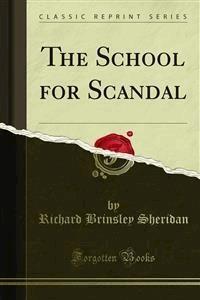
Richard Brinsley Sheridan's "The School for Scandal" is a masterful comedy that satirizes the frivolities and moral duplicities of London high society in the late 18th century. With its witty dialogue and intricate plot, the play unveils a world where reputation is paramount and virtue is often disguised by deceit. Sheridan employs sparkling repartee and clever characterizations to explore themes of jealousy, betrayal, and the superficiality of social norms, featuring an ensemble cast that dances through the decadence of a scandal-driven society while ultimately advocating for honesty and integrity. Sheridan, a prominent figure in the theatrical world of the Enlightenment, drew from his experiences in both the arts and politics to craft this timeless work. His sharp observations of human behavior and societal pretensions reflect his keen intellect and acute awareness of contemporary social issues. Drawing inspiration from the theatrical traditions of restoration comedies, Sheridan's flair for dramatic tension and humor positioned him as a pivotal playwright, successfully bridging the gap between wit and social criticism. Readers and theater enthusiasts will find "The School for Scandal" not only entertaining but also enlightening, offering a profound commentary on the human condition that remains relevant today. Its brilliant character dynamics and satirical narrative make it a must-read for those interested in the complexities of social interactions and the enduring consequences of scandals. In this enriched edition, we have carefully created added value for your reading experience: - A succinct Introduction situates the work's timeless appeal and themes. - The Synopsis outlines the central plot, highlighting key developments without spoiling critical twists. - A detailed Historical Context immerses you in the era's events and influences that shaped the writing. - An Author Biography reveals milestones in the author's life, illuminating the personal insights behind the text. - A thorough Analysis dissects symbols, motifs, and character arcs to unearth underlying meanings. - Reflection questions prompt you to engage personally with the work's messages, connecting them to modern life. - Hand‐picked Memorable Quotes shine a spotlight on moments of literary brilliance. - Interactive footnotes clarify unusual references, historical allusions, and archaic phrases for an effortless, more informed read.
Das E-Book können Sie in Legimi-Apps oder einer beliebigen App lesen, die das folgende Format unterstützen:
Veröffentlichungsjahr: 2019
Ähnliche













The School for Scandal
Table of Contents
Introduction
In a world where a whispered tale can ruin a life, wit becomes both weapon and shield. Richard Brinsley Sheridan’s The School for Scandal flourishes in that electric space where reputations are traded like currency and civility masks calculation. The play invites us into salons and drawing rooms that sparkle with conversation, while underneath the sparkle lies a persistent itch to expose, to mock, to control the social narrative. Sheridan understands that scandal is less about truth than performance, and he stages the duel between appearance and reality with deft timing, generous humor, and an exacting eye for human frailty.
This play is often regarded as a classic because it crystallizes the comedy of manners at a decisive moment in English theater, marrying Restoration brilliance to Enlightenment poise. Its vitality has not dimmed: across centuries, audiences return to its nimble wit, keen observation, and buoyant stagecraft. The School for Scandal influenced the tradition that later produced celebrated Victorian and modern comedies, demonstrating how social satire can entertain while sharpening moral perception. As a touchstone for theatrical craft—especially ensemble scenes, repartee, and comic exposure—it stands alongside the most enduring works of Congreve and, later, writers who refined urbane, satirical dialogue.
Written by Irish-born playwright Richard Brinsley Sheridan and first performed in 1777 at the Theatre Royal, Drury Lane in London, The School for Scandal belongs to the late eighteenth-century Georgian stage. It is a five-act comedy of manners centered on gossip, reputation, and the collisions between public display and private conduct. Without disclosing its surprises, one can say it arranges misunderstandings, disguises, and tests of character into a brisk sequence of comic situations. Sheridan’s purpose is not to scold but to illuminate: he frames folly and deceit so that they reveal themselves, trusting the audience’s delight in wit to carry moral insight home.
Sheridan wrote within a culture fired by coffeehouse chatter, pamphlets, caricature, and the emerging power of public opinion. The play distills these currents into a theatrical microcosm where tongues are quick and loyalties contingent. Fashionable society becomes a stage upon the stage, and each character a performer rehearsing virtue while angling for advantage. The result is a portrait of a world where seeing and being seen are constant negotiations. Money, family, and marriage form the grammar of this negotiation, while gossip supplies its volatile idiom. The School for Scandal turns this social chemistry into high entertainment without losing sight of its ethical temperatures.
Sheridan himself was ideally positioned to write such a comedy. A celebrated dramatist from a young age, he had already achieved success with The Rivals and brought to the theater an ear for rhetoric honed by public life. His career threaded through the corridors of culture and politics, and he understood how persuasion, reputation, and spectacle operate. In The School for Scandal, he deploys that understanding to dramatize the mechanics of influence and the temptations of duplicity. The play shows his characteristic qualities: polished dialogue, comic energy, and an encompassing intelligence that makes even minor figures memorable without darkening the tone into bitterness.
Formally, the play exemplifies the elegance of eighteenth-century stagecraft. Sheridan builds his comedy through intersecting plots that accelerate toward moments of exposure, while still giving actors space to shine in set pieces of convivial conversation and precise misunderstanding. He uses eavesdropping, masquerade, and strategic entrances to translate social anxiety into kinetic action. Metaphor and verbal patterning reinforce the theme of surfaces and depths, and the rhythm of the scenes balances sparkle with structure. That craft explains the work’s long stage life: directors can emphasize crisp farce, silky irony, or delicate sentiment without distorting the engine that drives the comedy.
The gallery of characters offers a cross section of polite society at play. There are devotees of scandal for whom tales are trophies, guardians anxious about their wards, and young people navigating the demands of affection and fortune. Marital dynamics are placed under a magnifying glass, as a seasoned husband and a spirited wife test the etiquette and expectations of their circle. Differences of generation and temperament supply constant friction. Sheridan ensures that no character exists purely to be condemned or adored; each is both mask and face, reminding us that social life refines as much as it conceals, and that temptation often travels under respectable forms.
Language is the instrument of both charm and harm here, and Sheridan tunes it with remarkable care. The repartee glints, but it also cuts; the balanced phrasing suggests propriety even as it exposes hypocrisy. The comedy delights in double meanings, not merely for cleverness but to show how people slide between sincerity and performance. Yet the tone remains generous. The ridicule aimed at folly is countered by an affection for human resilience and a belief that laughter can be corrective. The play’s humor, then, is not cruel; it is diagnostic, allowing audiences to recognize their own foibles at a safe, illuminating distance.
As a fixture of the repertory, The School for Scandal has enjoyed longstanding popularity and frequent revival, both on traditional stages and in adaptations that highlight its social bite. Its durable techniques—ensemble orchestration, poised irony, and the comic unmasking of public pretense—echo in later comedies of manners and social satires. Writers who favor urbane wit and moral sparkle, from the nineteenth century onward, have drawn from Sheridan’s example. The play’s reputation as a pinnacle of eighteenth-century comedy owes as much to its theatrical effectiveness as to its literary finesse, placing it at a crossroads of British drama’s past and future.
At its core, the work interrogates reputation: how it is made, traded, defended, and destroyed. It considers the ethics of spectatorship in a world where everyone watches and everyone performs. Money and inheritance complicate affection; generosity and prudence face off; idealism and calculation share the same room. Social masks become necessary, yet also dangerous. The play does not insist on a single moral; instead, it stages a conversation about trust, loyalty, and the ways people rationalize their desires. By dramatizing both the pleasures and costs of gossip, it asks what kind of society we create when stories replace understanding.
For contemporary audiences, the satire feels strikingly current. The circuits of rumor that once ran through salons now pulse through digital feeds, and reputations can still turn on speed, spectacle, and repetition. Sheridan’s exploration of curated public selves anticipates a world of managed images and strategic self-presentation. The comedy’s lightness enables serious reflection without heaviness, inviting viewers and readers to enjoy its craft while reconsidering how they participate in cycles of judgment. Fashion shifts, but the impulse to listen, repeat, and embellish persists; by holding that impulse to the light, the play remains both pleasurable and instructive in our age.
The School for Scandal endures because it unites elegance with insight, offering laughter that clarifies rather than blurs moral vision. Sheridan brings together bright dialogue, secure construction, and humane perception to stage the abiding drama of how people see and are seen. Without preaching, the play celebrates generosity and exposes vanity, leaving audiences with a renewed alertness to the stories they tell. Its themes—reputation, hypocrisy, desire, and the lure of performance—continue to resonate, and its theatrical verve continues to entertain. As an introduction to classic comedy and to the perennial theater of society itself, it remains an invigorating invitation.
Synopsis
The School for Scandal (1777) is a five-act comedy of manners set in fashionable London, where wit and rumor shape reputation as powerfully as fact. Richard Brinsley Sheridan presents a bustling social world centered on a circle of gossips who relish spreading tales about friends and rivals alike. Their conversations, sharpened by epigrams and innuendo, create a climate in which character is judged by surface appearances. Within this environment, inheritance, marriage, and guardianship become fields of intrigue. The play explores how easily slander can distort judgment, and how hard it is to distinguish true virtue from the polished semblance of propriety.
At the heart of the plot are the Surface brothers: Joseph, admired for his apparent rectitude, and Charles, notorious for prodigality but warm in his affections. Sir Peter Teazle, an older guardian fond of traditional decorum, has recently married the spirited Lady Teazle, whose tastes for fashion and novelty challenge his stern economy. Their ward, Maria, objects to the sniping culture of society and faces pressure in matters of love and estate. Meanwhile, Sir Oliver Surface, the brothers’ long-absent, wealthy uncle, returns incognito to evaluate his nephews’ characters before determining how to bestow his support.
The play opens among the self-styled connoisseurs of scandal, led by Lady Sneerwell and her obliging agent Snake. They cultivate rumor as a pastime and a weapon, composing ambiguous anecdotes and questionable letters that blur truth and malice. Their immediate project is to undermine the attachment between Maria and Charles, thereby advancing Joseph’s discreet pursuit of Maria. The group’s gatherings function as a public tribunal of private conduct, pronouncing judgments with confidence but scant evidence. Into this setting, the brothers’ contrasting reputations are rehearsed and reinforced, establishing a contest between polished appearances and generous impulses.
Domestic scenes with Sir Peter and Lady Teazle highlight the tensions of age, taste, and control. Their witty quarrels, though comic, expose anxieties about money, fidelity, and fashion’s authority over judgment. Sir Peter, exasperated by Lady Teazle’s spending and social circle, nonetheless defends Joseph’s supposed virtue, while she toys with the attention of men who flatter her novelty. These exchanges position the household as both a target and a catalyst for rumor. The marriage becomes a proving ground where exaggerated fears and whispered reports threaten mutual trust, and where lively banter can either veil or provoke genuine feeling.
Sir Oliver, guided by the loyal steward Rowley, designs practical tests to learn his nephews’ true natures rather than relying on hearsay. Disguising himself under different identities, he plans to confront Joseph and Charles separately, gauging how each responds to need, temptation, and appeals to conscience. The strategy contrasts with the gossip circle’s speculative method, substituting direct encounter for secondhand inference. Servants and dependents, including Charles’s valet Trip, offer additional glimpses into habits, debts, and loyalties. As Sir Oliver sets his examinations in motion, the plot aligns personal revelation with social spectacle, inviting the audience to watch belief clash with evidence.
Charles’s interview with the disguised Sir Oliver unfolds in a raucous scene centered on a sale of family portraits to raise cash. The episode dramatizes Charles’s impulsiveness and good humor, juxtaposed with his disregard for prudence. Yet amid the improvised auction, a moment of restraint suggests a deeper feeling for family ties than his revelry implies. The contrast between reckless expenditure and spontaneous generosity becomes a crucial indicator of character. Sir Oliver, behind his assumed identity, must balance disappointment at wastefulness with recognition of honest sentiment, and the scene becomes a turning point in interpreting the difference between improvidence and moral worth.
Joseph’s examination proceeds under another disguise, where appeals to charity and kinship meet measured, self-interested replies. His polished rhetoric stresses prudence and reputation, but practical help is less readily offered. Around this test, a farcical sequence in Joseph’s chambers introduces concealments, sudden entrances, and narrow escapes. The choreography of hidden listeners and mistaken confidences produces a cascade of partial revelations, bringing private realities closer to public notice. Although the immediate outcomes remain uncertain, the scene disrupts the composure that sustains Joseph’s public virtue, and it seeds doubts among those who have relied on refined manners as proof of integrity.
As word of these encounters filters through society, the scandal chorus turns its attention to fresh material, magnifying hints into assertions. Charges and countercharges circulate, and characters seek documents, witnesses, or timely confessions to establish the difference between rumor and fact. Relationships strain under the pressure: guardianship and courtship are tested, and marriage is subjected to the same tribunal that judges friendships. The revelations, though not fully detailed in advance, begin to reorder allegiances. Those who have prospered by insinuation face scrutiny, while unintended acts of candor gain weight. Across the scenes, surfaces are questioned, and substance gradually asserts itself.
The conclusion restores a sense of balance as genuine qualities are acknowledged and misplaced esteem corrected, reaffirming the value of charity over detraction. The school of scandal is exposed as a corrosive pastime that injures both targets and practitioners, while sincerity and forgiveness prove more durable than allure. Sheridan closes with reconciliations that refuse to reward malice, underscoring how social harmony depends on resisting the seductions of slander. The play’s enduring message cautions audiences against judging by polish alone, recommending direct knowledge, humane judgment, and the courage to reject fashionable cruelty in favor of integrity, generosity, and truth.
Historical Context
The School for Scandal is set in the urbane milieu of late eighteenth-century London, a city whose fashionable West End drawing rooms framed elite sociability and display. The play’s characters move among neighborhoods such as St James’s and Mayfair, where private apartments, salons, and clubs shaped reputations as much as law or religion. London by the 1770s was a dense communications hub of coffeehouses, pleasure gardens, and print shops, a place where conversation and rumor traveled quickly. The setting presumes a culture fluent in polite manners and sharp wit, yet saturated by surveillance and talk, making the capital’s social stage a direct mirror of public life.
Premiered at the Theatre Royal, Drury Lane, in May 1777, the work also reflects its theatrical place of origin. Drury Lane, a leading West End venue, stood at the intersection of courtly influence and commercial entertainment. Audiences of courtiers, lawyers, merchants, and politicians encountered a world recognizably their own: rooms ornamented with portraits, circulating billets-doux, and fashionable callers. The setting presupposes the etiquette of visits, the economics of credit, and the stakes of marriage settlements. The play’s London is therefore both literal location and social mechanism, one in which social capital and scandal are minted, exchanged, hoarded, or squandered like coin.
The Licensing Act of 1737 established pre-performance censorship by the Lord Chamberlain’s Office, reshaping British theatre through the later eighteenth century. All new plays required licensing, and politically sensitive material risked suppression. Drury Lane operated under this regime in 1777; Sheridan had purchased a share in the theatre in 1776, assuming managerial responsibilities that demanded prudence with topical satire. Historical fact underscores the play’s strategic art: it critiques public hypocrisy without naming particular ministers or policies. The careful generality of vice and virtue in The School for Scandal reflects a censored environment in which character types, not political personages, carried the sting of public rebuke.
The rapid expansion of the London press created a culture of gossip that is central to the play’s world. After the lapse of pre-publication press licensing in 1695, newspapers multiplied, and by the 1760s and 1770s titles such as the Morning Chronicle (1769) and the Morning Post (1772) fed readers society news, parliamentary reporting, and scandal. Monthly miscellanies like Town and Country Magazine (founded 1769) popularized tales of intrigue, often thinly veiled. The book echoes this informational ecosystem by dramatizing how printed whispers and drawing-room talk overlap. Its merciless portraits of tattlers mirror the period’s new traffic in personal news as marketable commodity.
Alongside newspapers, satirical engraving shops transformed London’s streets into galleries of rumor. Printsellers in the Strand, Fleet Street, and the West End displayed caricatures that lampooned public figures and private vices. Artists such as James Gillray and Thomas Rowlandson, active from the late 1770s and 1780s, amplified scandal with biting visual allegory. Window displays drew crowds, making reputations precarious and spectacle unavoidable. The play’s emphasis on surfaces, portraits, and viewing dovetails with this culture of public looking. It stages the moral danger of an audience primed to judge, anticipating how caricature and conversation together could punish, or perversely reward, duplicity.
Scandal litigation further fueled public appetites. Criminal conversation suits, civil actions for adultery damages, filled court calendars and the press; the celebrated case of Grosvenor v. Cumberland in 1769 paraded elite infidelity before readers in serialized transcripts. Ecclesiastical courts governed separation and annulment until the early nineteenth century, but the theater of reputation played out in print long before verdicts. The play borrows the psychology of these proceedings without becoming legal drama, exposing how accusation, not proof, ruins lives. Its scenes of eavesdropping and trap-setting resemble the evidentiary theatrics of such trials, where testimony and innuendo entwined and the public judged as much as any bench.
Eighteenth-century London was a credit economy, with aristocrats and merchants alike living on loans, annuities, and expectation. Gambling at clubs like White’s (founded 1693) and Brooks’s (1764) compounded fashionable debt, while bills of exchange floated consumption. Insolvency was common; debtors’ prisons such as the Fleet and the King’s Bench confined those who failed. John Howard’s investigations, published in The State of the Prisons in 1777, shocked readers with conditions. The book’s portrait of Charles Surface’s prodigality and easy borrowing speaks to this system. Recklessness and generosity, in a world of paper promises, may ruin the ledger yet reveal a truer moral balance.
Public auctions emblemized the commodification of taste. Christies, founded by James Christie in 1766, institutionalized the fashionable sale room in Pall Mall, where collections were dispersed under the hammer. Aristocratic financial distress produced headline auctions that attracted crowds and press notices. The play’s auction of family portraits converts lineage into cash, citing a familiar urban ritual in which art, status, and liquidity collide. This scene captures the paradox of a rank society mediated by markets: honor and antiquity appraised lot by lot. It also mocks the sentimental value attached to images, asking whether virtue resides in history, or in present conduct.
Marriage law and guardianship shaped domestic politics. The Marriage Act of 1753, known as Hardwicke’s Act, required formal church ceremonies and, for minors, parental or guardian consent, curbing clandestine unions. Property settlements, dower rights, and the doctrine of coverture made marriage a financial arrangement as much as an affectional one. Wards of Chancery were protected but also maneuvered as assets. The play reflects this legal landscape through Sir Peter Teazle’s guardianship of Maria and strategic marital plans. It exposes the tension between contractual alliance and personal inclination, dramatizing how consent, reputation, and money intersected in upper-class households.
London’s demographic surge intensified social display and anxiety. The metropolis grew from roughly 700,000 inhabitants mid-century to about one million by 1801, extending westward with squares such as Grosvenor Square and developments like Portland Place. Migration from provincial England and Ireland fed the service economy of dressmakers, milliners, and servants that sustained polite life. Lady Teazle’s trajectory from country simplicity to urban sophistication mirrors a common pattern of aspirational relocation. The work situates its intrigues within this expanding urban theater, where newcomers negotiated codes of rank and taste, and the fear of social slippage made scandal both entertainment and weapon.
Coffeehouses and gentlemen’s clubs ordered information flows and allegiance. Covent Garden, St James’s Street, and the Strand hosted sites where politicians, journalists, and gamblers mingled, trading news as credit. Brooks’s Club, associated with Whig grandees like Charles James Fox, blended sociability with factional politics. Sheridan, a Whig by the 1780s, moved in these circles. The play’s economy of visits, notes, and whispered reports reproduces clubland’s speed and exclusivity. To be seen, or excluded, mattered. The characters’ reputations thus rise and fall not solely by conduct, but by gatekeeping institutions that confer access, a social reality as concrete as any statute.
The Wilkes agitations of the 1760s transformed press liberty. John Wilkes’s North Briton No. 45 in 1763 prompted general warrants, later condemned, and mobilized the Bill of Rights Society. The 1768 Middlesex elections, Wilkes’s imprisonments, and the 1771 printers’ struggle led to de facto toleration of parliamentary reporting. By the 1770s, Londoners consumed debates, lampoons, and court proceedings with unprecedented appetite. The play presumes this informed audience, satirizing how public virtue can be a performance calibrated to readers. Its attack on professed moralists aligns with a polity that had learned to distrust pieties crafted for newspapers as much as for sermons.
The American War of Independence (1775–1783) formed the geopolitical backdrop to the play’s premiere. Under Lord North’s ministry, Britain fought colonial insurgents; 1777 saw General Burgoyne’s catastrophic defeat and surrender at Saratoga, a turning point that encouraged French intervention. War news coursed through London’s coffeehouses and dailies, fostering a climate of blame and patriotic posturing. While the play avoids direct reference to campaigns, its fixation on appearance and reality resonates with wartime rhetoric. Characters who declaim virtue while plotting self-interest mirror politicians balancing principle and expedience, and audiences in 1777 could hardly miss the analogy between moral and national credibility.
Imperial controversy over the East India Company shaped late-century politics. Financial crisis led to the Regulating Act of 1773; parliamentary inquiries into Robert Clive followed in 1772–1773; and Pitt’s India Act of 1784 tightened oversight. The impeachment of Governor-General Warren Hastings opened in 1788, climaxing public debates about conquest, corruption, and accountability. Sheridan entered Parliament in 1780 and became a leading orator against Hastings, delivering a celebrated speech on Indian misgovernment in 1787 that helped initiate the trial. The play’s earlier exposure of hypocrisy and self-serving benevolence anticipates Sheridan’s political crusade, rehearsing in comedy the moral indictment he would later press in Westminster.
The Gordon Riots of June 1780 epitomized rumor’s capacity to ignite violence. Lord George Gordon’s Protestant Association, exploiting anti-Catholic fears, drew tens of thousands to petition; disturbances escalated into arson and looting, including the burning of Newgate Prison. Troops restored order after several days, with hundreds killed or injured. The riots demonstrated how insinuation and exaggeration, once diffused through taverns and broadsides, could mobilize destructive crowds. Although written earlier, the play’s portrayal of slander as social contagion reads as prescient diagnosis. It suggests that calumny, even when masked as zeal for public morals, corrodes the very community it claims to defend.




