


0,49 €
Niedrigster Preis in 30 Tagen: 0,00 €
Niedrigster Preis in 30 Tagen: 0,00 €
Mehr erfahren.
- Herausgeber: DigiCat
- Kategorie: Poesie und Drama
- Sprache: Englisch
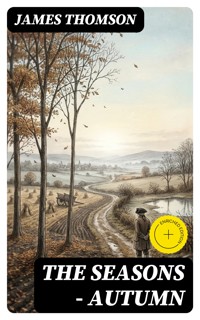
In "The Seasons — Autumn," James Thomson conjures a vivid portrayal of the autumnal landscape, steeped in rich imagery and reflective of the cyclical nature of both the environment and human experience. Written in the early 18th century, Thomson's work exemplifies the transition from the ornate, formal styles of the Augustan period to a more expressive and sensuous approach. Through sophisticated use of personification and pastoral motifs, he captures the melancholic beauty of fall, inviting readers to contemplate themes of decay and renewal in a natural world that mirrors the fleeting nature of life itself. James Thomson, a Scottish poet whose life and work were deeply influenced by the Scottish landscape and the Enlightenment's reverence for nature, produced this remarkable poem amidst a burgeoning interest in the interplay between humanity and nature. Reflecting personal experiences and the philosophical currents of his time, Thomson sought to elevate the ordinary observation of the seasons into a profound meditation on existence and mortality, a theme that resonated deeply in his own life—marked by personal loss and existential inquiry. "The Seasons — Autumn" is not merely a poem; it is an invitation to pause and reflect upon the beauty and transience of life. Readers who appreciate exquisite lyrical poetry and profound philosophical inquiry will find themselves captivated by Thomson's eloquence. This work stands as a significant contribution to the Romantic canon and is essential for those wishing to explore the evolution of nature poetry. In this enriched edition, we have carefully created added value for your reading experience: - A succinct Introduction situates the work's timeless appeal and themes. - The Synopsis outlines the central plot, highlighting key developments without spoiling critical twists. - A detailed Historical Context immerses you in the era's events and influences that shaped the writing. - A thorough Analysis dissects symbols, motifs, and character arcs to unearth underlying meanings. - Reflection questions prompt you to engage personally with the work's messages, connecting them to modern life. - Hand‐picked Memorable Quotes shine a spotlight on moments of literary brilliance. - Interactive footnotes clarify unusual references, historical allusions, and archaic phrases for an effortless, more informed read.
Das E-Book können Sie in Legimi-Apps oder einer beliebigen App lesen, die das folgende Format unterstützen:
Veröffentlichungsjahr: 2022
Ähnliche













The Seasons — Autumn
Table of Contents
Introduction
At the hinge between ripeness and ruin, James Thomson’s Autumn contemplates how abundance ripens into gratitude even as the year inclines toward darkness, holding readers in the charged moment when bursting granaries, glowing orchards, lengthening shadows, and first sharp winds reveal that plenty and perishability are inseparable, that human joy must be tempered by foresight, and that nature’s seeming generosity is also a discipline testing perception, patience, and moral balance, the poised season where work culminates, travel quickens, creatures recalibrate their habits, and the mind, stirred by sensuous detail and anxious weather signs, weighs comfort against vigilance.
Autumn forms part of The Seasons, a cycle of long descriptive poems by the Scottish poet James Thomson, composed and published in separate installments during the 1720s and early 1730s and repeatedly revised throughout his career. Written in blank verse indebted to classical georgic traditions and the influence of Milton, the poem situates readers in the British countryside at the turn of the year, where agriculture, weather, and social rhythms converge. Its scenes assemble from fields, orchards, rivers, and villages, treating the landscape not as static ornament but as an active system whose changes shape feeling, conduct, and collective routines.
In place of plot, the poem offers a patient itinerary through the season’s characteristic phenomena, guiding the reader from ripening to reaping, from crisp mornings to gathering dusk, from domestic tasks to public festivities. The voice is at once observant and exhortative, moving between expansive panoramas and exquisitely rendered particulars, and it adopts a measured, elevated tone typical of its era without sacrificing immediacy. Thomson’s blank verse flows in supple periods that reward slow reading, balancing sensory richness with reflective pauses, so that images of labor, weather, and repose prompt ethical meditation rather than mere picturesque survey.
Autumn turns the visible cycle of nature into a moral and civic inquiry. It dwells on the dignity of labor and the interdependence of rural communities; it measures how prosperity depends on prudence, charity, and attention to limits; and it treats weather and seasonality as teachers rather than obstacles. The poem reflects Enlightenment habits of observation alongside a sense of order larger than the self, inviting readers to align conduct with natural process. Its meditations on contingency, gratitude, and preparedness produce a vision of plenty that resists indulgence, insisting that care for others and foresight are part of abundance.
Thomson animates this inquiry through a choreography of attention that alternates between human scenes and nonhuman agencies. One moment the verse lingers over textures of fruit, grain, light, and air; the next it contemplates the movements of flocks, insects, and clouds, letting small shifts of temperature or color reshape the mood. Direct address, apostrophe, and descriptive catalogues appear without stiffness because they are yoked to practical observation. The result is a style that cultivates wonder while remaining concrete, letting readers feel how sound, smell, and rhythm index seasonal change and how perception itself can become a form of stewardship.
For contemporary readers, Autumn matters because it models a way of paying attention that cuts against distraction and instrumental thinking. Its careful noticing of weather, agriculture, and habit resonates in an era marked by environmental stress, reminding us that seasonal cycles are fragile, labor is shared, and comfort draws on ecological and social conditions that require care. The poem’s fusion of description, reflection, and implied ethics offers a counterpoint to quick consumption and erasure of origins, inviting readers to recover a sense of place and time, to relish sufficiency, and to consider responsibilities that accompany enjoyment of the harvest.
Read on its own or within the full cycle, Autumn offers an entry into The Seasons that is both welcoming and profound. It presents a coherent world whose images and arguments unfold steadily, yet it leaves space for readers to supply their own memories of fall and to test its counsel against lived experience. In its fusion of artistry and inquiry, early eighteenth-century poetics and enduring concerns, the poem stands as a durable companion for anyone attentive to how natural change organizes human life, keeping alive the thought that gratitude, vigilance, and mutual care are themselves seasonal arts.
Synopsis
James Thomson’s Autumn, first published in 1730 as part of his four‑poem sequence The Seasons (1726–1730), is a long descriptive meditation in blank verse on the year’s ripening decline. The poem surveys nature and rural life as fields reach maturity and communities gather their produce, arranging observation and reflection into a steady progression rather than a conventional plot. Thomson blends close attention to weather, light, and growth with moral commentary characteristic of the georgic mode. He guides the reader through abundance and restraint, pleasure and prudence, shaping a season that is both sensuous and instructive, and that prepares minds and stores against the oncoming cold.
The poem opens by fixing the changed atmosphere and light of autumn: softer sun, lengthening shadows, cool mornings, and mists that lift to reveal mellowed fields. Thomson catalogs the ripeness of orchards and hedgerows, the heavy grain, and the quieting of summer’s exuberance into measured plenty. He balances these painterly vistas with attention to practical signs—dew, fog, and wind—that govern the day’s labor. Birds, insects, and domestic animals are observed as they alter habits with the season’s shift. Through these calm transitions, the poem establishes its method: precise natural description moving toward ethical and communal implications.
From this groundwork Thomson turns to the harvest itself, tracing the choreography of reapers, binders, and carriers. He lingers over gleaning, threshing, and the bustling barn, presenting labor as dignified, cooperative, and central to rural well‑being. The poem records customs around the harvest home, where festivity acknowledges communal interdependence without dissolving into excess. Thomson’s voice commends careful management, gratitude for sustenance, and equitable regard for those whose work secures it. Land stewardship becomes a moral relation, and the social fabric of the countryside—its mutual obligations and seasonal rhythms—emerges as both a practical system and a source of shared meaning.




