



Erhalten Sie Zugang zu diesem und mehr als 300000 Büchern ab EUR 5,99 monatlich.
- Herausgeber: Corvus
- Kategorie: Gesellschafts- und Liebesromane
- Serie: Surplus Girls
- Sprache: Englisch
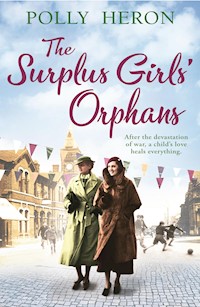
After the loss of war, can there be hope for the future? Manchester, 1922. Belinda Layton is a surplus girl. One of the many women whose dreams of marriage perished in the Great War, with the death of her beloved fiancé, Ben. After four years of mourning, she's ready to face the future, even though Ben's family is not happy to see her move on, and her own only cares about getting hold of her meagre factory wages. Then, Belinda joins a secretarial class and a whole new world opens up to her as she quickly finds herself drawn to beguiling bookshop owner Richard Carson. But after all the loss and devastation she has experienced, can she really trust him with her heart? The first in a quartet of sagas set during the early 1920s, following three Surplus Girls - those women whose dreams of marriage perished in the Great War, after the deaths of millions of young men, and the new lives they forged for themselves.
Sie lesen das E-Book in den Legimi-Apps auf:
Seitenzahl: 587
Veröffentlichungsjahr: 2020
Das E-Book (TTS) können Sie hören im Abo „Legimi Premium” in Legimi-Apps auf:
Ähnliche



















First published in paperback in Great Britain in 2020 by Corvus,
an imprint of Atlantic Books Ltd.
Copyright © Polly Heron, 2020
The moral right of Polly Heron to be identified as the author of this work has been asserted by her in accordance with the Copyright, Designs and Patents Act of 1988.
All rights reserved. No part of this publication may be reproduced, stored in a retrieval system, or transmitted in any form or by any means, electronic, mechanical, photocopying, recording, or otherwise, without the prior permission of both the copyright owner and the above publisher of this book.
This novel is entirely a work of fiction. The names, characters and incidents portrayed in it are the work of the author’s imagination.
Any resemblance to actual persons, living or dead, events or localities, is entirely coincidental.
10 9 8 7 6 5 4 3 2 1
A CIP catalogue record for this book is available from the British Library.
Paperback ISBN: 978 1 78649 967 7
E-book ISBN: 978 1 78649 968 4
Printed in Great Britain
Corvus
An imprint of Atlantic Books Ltd
Ormond House
26–27 Boswell Street
London
WC1N 3JZ
www.corvus-books.co.uk
To the memory of John Copas (1940–2017).Tarantara! tarantara!
And to Ron and Celia Dorrington, dear friends, best of neighbours and surrogate parents.
Chapter One
Manchester, January 1922
‘THERE’S NO CALL for you to visit the pie shop with the others, Miss Layton.’ Mr Butterfield’s tone was casual, but the brief flicker in his hooded eyes was anything but indifferent and Belinda felt a dip of dismay in the pit of her stomach. ‘I know Mrs Sloan won’t have sent you out this morning without your midday snap.’
‘I could do with a spot of fresh air.’ Why had she run downstairs? Where were the others? She edged nearer the door. Better to wait outside in the mill-yard even on a bitter day like today than to be backed into a grubby corner by Butterfingers. Shifting her shoulders beneath her woollen shawl, she made a show of gazing at her bare hands. ‘I’ve forgotten my gloves. I’ll nip back up.’
‘They’re sticking out of your skirt-pocket.’
Drat. She tugged them out and put them on, pushing them down into the gaps between her fingers with as much care as if they were kid gloves that fitted like a second skin instead of having been knitted by Grandma Beattie from an old cardigan she had unravelled.
Mr Butterfield moved closer; she stepped towards the door. He frowned and smiled at the same time, a pretend-humorous expression that questioned her silly reaction to his perfectly normal behaviour. She reached for the door-knob; her woolly glove slithered round it. Mr Butterfield stretched out his hand. He wore gloves without fingertips; there was a line of dirt beneath each nail and the ends of the pointing finger and middle finger on his right hand were a dull tobacco-yellow. He was much taller than her five foot two.
His hand stopped in mid-air. ‘I were only going to open the door for you since it appears to be stuck. Why?’ There was a triumphant smirk about his lips, there and gone so swiftly it might never have existed. A bland smile replaced it. ‘What did you think I was going to do?’
The others clattered down the wooden staircase. Belinda glanced their way and when she looked back, Mr Butterfield was a couple of yards away. Her knees felt watery with relief – but only for a moment. Annoyance flared. It was horrible having to put up with Butterfingers, but they had no choice. As one of the tattlers, he was important. If someone was off sick, he could offer a day’s work to one of the desperate souls who lurked outside the gates from the crack of dawn every weekday morning; and if someone left the mill, he chose which weaver took their place and which moved into the vacant slot left behind. Eh, they were powerful men, the tattlers. And they were all men. There was no such thin g as a woman-tattler. Not now the war was over and the women weren’t needed any more.
‘There you are.’ Buxom and keen-eyed, Maggie was in the lead.
The knot of women drew Belinda in. Crossing the lobby with its depressing smell of floorboards and low pay, they burst into the mill-yard. The January morning – well, it was afternoon now, just turned – was only slightly less raw than it had been first thing and the wind, as they marched along the street, was sharp as a knife. Normally, Belinda preferred to wait outside the pie shop since she never bought anything, but today she sneaked indoors for warmth. A mixture of delicious aromas wrapped round her, setting her tummy rumbling: pastry, mince-and-onions and the bacony, mustardy smell of devilled chicken puddings that would form a savoury treat for some lucky families later. Grandma Beattie’s fish-paste barm cake suddenly seemed unappetising – oh, what a disloyal thing to think. Shame on you, Belinda Layton. Disloyal was the last thing she was. The past four years had proved that.
Her companions chose their handheld pies, selecting the cheaper ones, cheese-and-onion, curried vegetables, suet-andveg. Coins chinked and the shop-owner and the copper-haired girl who worked with him handed white paper bags over the counter. Then everyone scurried back up the street and through the tall gates into the mill-yard. The banks of grimy windows made the mill an unwelcoming place.
Jostling good-naturedly to get out of the cold, they hurried upstairs to the canteen, which was a grand name for a long, draughty room. They were glad enough of the draughts on weekdays when the mill was working full tilt and the hot, humid atmosphere left everyone gasping for breath, but on Saturdays, especially winter Saturdays, the draughts nipped fiercely, no matter how much hot tea you supped to keep them at bay.
Steaming mugs were handed round, then everyone plonked themselves on the benches and tucked in.
‘Didn’t them devilled chicken puds smell heavenly?’ said Annie.
A chorus of agreement was mumbled through mouths filled with pasties.
‘I might get a couple to take round to Mum’s…’ Belinda began.
‘No, you don’t, lady.’ Annie spoke so sharply that pastry crumbs flew out of her mouth. ‘It’s not your job to feed them kids. It’s your dad’s.’
‘Leave her alone,’ said Maggie. ‘But don’t forget, love,’ she advised Belinda, ‘it’s because of you that your family had a good Christmas.’
‘Not just because of me…’
‘Yes, because of you.’ Even though she was hard of hearing after her years in the mill, Maggie didn’t speak unnaturally loudly the way a lot of the women did. ‘You’re the one what came here every Saturday for two months and saved all the money so yon young ’uns got more than a sugar mouse on Christmas morning and your mum got a capon with all the trimmings.’
Belinda shrugged. ‘I wanted to.’
‘I know, and now it’s time to spend a few coppers on yourself.’ Maggie gave her a look. ‘That’s what your Auntie Enid’s expecting.’
Belinda warmed to the older woman. She owed Maggie a lot. It was Maggie who had helped Auntie Enid get her this job at the mill when she moved in with her and Grandma Beattie; and, a few weeks back, it was Maggie who talked Auntie Enid into letting her work the Saturdays leading up to Christmas. Auntie Enid and Grandma Beattie would never have allowed it if Maggie hadn’t stuck her oar in. When Belinda had gone to live with them back in 1916, Auntie Enid had made promises to Mum, one of which had been no Saturday cleaning. That had seemed to matter to Mum more than anything, though it hadn’t stopped her accepting the Christmas goodies that had come her way.
Maggie raised her eyebrows and Belinda laughed, giving in.
‘Yes, Auntie Enid expects me to treat myself.’
‘Come Monday morning, I’ll want to know what you bought.’
‘That’s easy. I’d like material to make a new blouse.’
‘I’m pleased to hear it, lass. What colour?’
A flush crept across her cheeks. ‘I haven’t decided.’ Hadn’t built up the courage, more like. She knew what she would like, but would she dare?
Maggie patted her hand, then left her alone. That was one of the good things about Maggie. She never pressed you. Or did she need to be pressed? Deep down, did she want to be? Oh, heck.
She finished her barm cake and helped wash up the mugs. It was time to line up for their wages. Saturday cleaning was paid separately to the weekly wage. You cleaned all morning; then, while you ate your snap, the tattler checked the work and got the wages ready.
Queuing with the others, Belinda edged towards the front as those ahead of her received theirs. Mr Butterfield sat behind a table that did duty as a desk, courtesy of an ink-pot and a wooden pen-tray with grooves for pens and pencils. A ledger was open in front of him, a tin cash-box beside it.
‘Name?’ As if he didn’t know.
‘Belinda Layton.’
‘Make your mark here.’
He always said that – as if the workers couldn’t write. She signed her name, though what she felt like doing was scoring an indelible black X across his forehead. Make your mark, indeed! But her annoyance was short-lived. It was impos sible not to be thrilled by the prospect of receiving of a whole two shillings and elevenpence for a morning’s work. Two and eleven! You got a higher rate for Saturday cleaning. For the forty-eight hours she gave the mill Monday to Friday as a two-loom worker, she expected to earn twenty-six bob a week, give or take, which was sixpence ha’penny an hour. But on Saturdays, everyone got an extra tuppence one farthing per hour. Some said this was for working on the weekend, others that it was danger-money for hand-brushing the turning wheels to sweep off the floss. Belinda didn’t care. It was wonderful to have been able to give her family a better Christmas.
Mr Butterfield reached into the cash-box and counted coins into his palm. The other tattlers didn’t do that. They counted it straight into your hand, but Mr Butterfield held it out on his palm, obliging each woman to take it from him.
She had taken off her glove. With woolly gloves on, you couldn’t pick up coins without fumbling, especially not a heap of coins like that. Did he really have to give her so much copper? Mr Butterfield wasn’t looking at her; he was writing in his ledger. She reached towards his extended hand, wanting to scoop up her bounty in one go, but his fingers clamped around hers, squeezing her flesh into the edges of the small change. Her breath hitched and she tried to pull away. For one moment – just for one moment, as if maybe it hadn’t really happened – he held tighter. He looked up into her eyes.
‘I’m sorry, Miss Layton. I believe I’ve given you the wrong amount.’
He dropped his pen and twisted her hand the other way up so the coins lay in her palm. With one hand, he held hers in place while his other fingers sifted through the coins, his fingertips brushing against her skin as he moved each coin, one by one, from the heel of her thumb to the base of her fingers. Almost of its own accord, her hand tried to jerk free, but he held on.
‘Careful, Miss Layton. You don’t want to send your hardearned wages flying all over the floor. I wouldn’t be able to reimburse you if you lost any… And thruppence makes two shillings… and thruppence, sixpence, sevenpence, eightpence, eightpence ha’penny, ninepence, ninepence ha’penny, ninepence three farthings, tenpence, tenpence one farthing…two farthings… three farthings… elevenpence. Two shillings and elevenpence in total. No mistake after all.’
She wrenched her hand away, clutching the money, forcing herself to clutch it when she felt more like flinging it away because it was tainted. Her eyes filmed with tears. It wasn’t the money that was tainted. It was her hand. Switching the coins to her other hand, she wiped the hand he had held across the side of her skirt, brushing past the rest of the queue as she marched out.
She didn’t stop until she was in the mill-yard. Only then did she pull out her purse and thrust her wages inside, snapping it shut.
‘You all right, love?’ It was Annie, eyes narrowing as she fixed her gaze on Belinda’s.
Take a breath and smile. ‘I’m fine. Butterfingers grabbed my hand, that’s all.’
‘Could have been a lot worse.’
She felt stung. Was she meant to be grateful that Mr Butterfield had ‘only’ played with the palm of her hand? Distaste wriggled inside her, but there was no point in dwelling on it. They all knew what Butterfingers was like. Should she keep her gloves on next time? Or would that simply spin out the process, as her wool-encased fingers struggled to take the money?
There probably wouldn’t be a next time. Auntie Enid had only agreed to her working Saturdays in November and December so as to give the Laytons a better Christmas. Today, the first Saturday of January, she had been allowed to work the extra four hours, thanks to Maggie’s influence, so as to have something to spend on herself.
‘Don’t let on to your mum and dad about it,’ Maggie had said, advice that made Belinda’s throat thicken with shame, the more so because she knew it must be what Auntie Enid thought as well. Auntie Enid and Grandma Beattie were always polite about the Laytons, but what did they say behind Belinda’s back?
‘Off to fritter your ill-gotten gains, love?’ It was Flo, one of the three-loomers. ‘Lucky you, able to spend it on yourself. Some of us have no sooner got us mitts on it than it vanishes down the children’s throats.’
‘Better that than down your old man’s throat in’t pub,’ said Maggie. ‘You go and enjoy your money, love. I’ll ask you on Monday, mind, what you bought.’
‘I already told you: blouse material. You never know, if I spend all weekend making it, you won’t need to ask. You’ll see for yourself.’
‘I hope not, lass. I hope it’ll be too pretty to wear for work.’
She chewed her lip. Could she? Was it time? Oh, heck.
A spiteful breeze caught Belinda’s breath and whipped across her cheeks as she swung round the corner by the news agent’s, nimbly skirting the sandwich-board with its wonky black capitals about poor Sir Ernest Shackleton. In the tightly packed square where the weekly market was under way, the cobbles were slippery. The earthy aroma of winter vegetables bounced out at her, merging with the mouth-watering smell of sausage-meat cooked in sage and the heavy, burnt sweetness of treacle toffee. Alongside the cries of the stallholders calling their wares was the scrape and clink of pieces of china and the whirr and spark of the knife-grinder’s wheel. Better-off housewives had their own knife-sharpeners, so it was the less well-off who queued for his services, though not the poorest, who sharpened their knives against the corner of a brick wall.
She rounded the corner by the ironmongery stall, with its array of pots and pans hanging up and all those differentsized nails and screws in little cardboard boxes laid out on the trestle-table. The draper’s was along this row.
‘Belinda – Belinda Layton! I thought it was you.’
She felt a burst of pleasure at the sight of her old schoolteacher, followed by a rush of concern. Miss Kirby had a pinched look about her. Well, didn’t everyone these days? First the war, then the influenza, and Miss Kirby wasn’t a young woman. Everyone was tired and in need of a pickme-up. But this was the beginning of a new year. New year, new hope.
‘How are you, Miss Kirby?’
‘Fair to middling. I’m retired now. I was well past the age, though I’d gladly have carried on.’
‘Why didn’t you?’
‘Oh, the usual reason these days. A returning soldier needed a teaching post. Anyway, I’m sorry: I shouldn’t call you Belinda Layton, should I?’ Her eyes swept over Belinda’s apparel, black from head to foot. ‘I did hear – oh, ages ago; several years ago – that you’d got engaged. You can’t have been married long before… I’m sorry for your loss.’
Chill streamed up her nostrils and down her throat. Her lungs went cold, then hot. She released a quick breath. It appeared in front of her, a huff of white cloud, like a cat-sneeze. She had never worked out what to say at these moments. Fortunately they seldom happened these days. A devil in her head pointed out that since she hadn’t seen Miss Kirby since she left school, she wasn’t likely to bump into her again, so why correct the mistake? Why not be a widow just for a few minutes? After all, it was what she was, really and truly.
Except for not having Ben’s ring on her finger; except for not having his name. Belinda Sloan. That was who she should have been.
But she didn’t want to tell lies. With all the troubles in her parents’ home, all the bickering and her brothers running wild, it was important to conduct herself correctly, not just to set a good example to the boys, but because it was the right thing to do. She was – it shamed her to think it, but she was – better than the Laytons. When Ben’s mother and grandmother had taken her in, they had lifted her not just into a cleaner, more pleasant home, but also into a more ordered way of life. She would be grateful to them to her dying day.
So: no lies. Especially, she couldn’t lie to Miss Kirby, who had been so good to her, who had tried hard on her behalf.
‘I did get engaged, but he… he were killed before we could get wed.’
‘I’m sorry to hear that.’ Miss Kirby sighed, shaking her head. ‘It was just that, seeing you in full black, I thought… Anyway, I’m sorry.’
Please don’t say: You’re young. You’ll meet someone else.
Miss Kirby said, ‘What a shame you didn’t go to high school.’
Raw air swooped into her eyes as they widened in surprise.
‘It’s true,’ said Miss Kirby. ‘Without a husband to rely on, you’d be in a stronger position with some education behind you. Think of the job you could have got.’
She didn’t know what to say. ‘I’m well suited where I am.’
‘And where is that?’ It was an honest question, not a snide remark.
‘I’m a mill-worker.’
Miss Kirby’s lined features took on the blank politeness of resignation. And just like that, they were back on the brink of whatever it was that she had seen in Belinda when she was a child of ten; only it hadn’t been resignation on Miss Kirby’s face then. There had been anxious determination in the furrowed brow and the steady, quiet voice.
‘Your Belinda’s different. She’s bright.’
Miss Kirby had actually come to their house – sometimes it was hard to remember that the Laytons had lived in a house back then; a modest two-up two-down that seemed like a palace compared to the squalid couple of rooms they were crammed into these days. Miss Kirby had come to plead for her star pupil to be granted this potentially life-changing opportunity.
‘Let her sit the scholarship. Let her go to high school. She’ll pass, I’m sure she will.’
Listening, crouched on the other side of the door, Belinda had felt a moment of glory. Her heart drummed in her chest and she felt more awake, more alert. But she had known permission wouldn’t be granted and, truth be told, she wasn’t disappointed, not really. She had gorged on Angela Brazil books in those days, but when faced by the dazzling possibility of rubbing shoulders with girls called Philippa and Katrine, who got up to larks and had private art lessons and were captains of tennis, she knew she would die a thousand deaths if she fetched up in a place like that. What, a back-street lass stopping on at school till fifteen? Alongside girls whose fathers were doctors and senior clerks and owners of the better class of shops? Not on your life. Or not on Dad’s life, anyroad, and his was the word that counted.
‘Nay, miss,’ he had told Miss Kirby. ‘Our Belinda’s the eldest. I need her out working. She’ll stop at the elementary school, go to work half-time when she’s twelve and leave when she’s thirteen, and that’s flat.’
‘If she goes to high school, she’ll get a better job.’ Miss Kirby had managed to say the words and bring more money home without uttering them out loud.
‘No point,’ said Dad. ‘She’ll only get herself engaged and get wed. That’s what girls do.’
And he had been proved right, hadn’t he? She and Ben had had an understanding when she was just fourteen and had been allowed to get engaged when she was fifteen.
‘A mill-worker?’ There was no scorn in Miss Kirby’s voice, only kindness. That was worse, because it felt like pity. ‘That’s hard work.’
‘It’s regular.’ If she hadn’t been talking to her old teacher, she might have jerked her chin in open annoyance. ‘Skilled an’ all. I could work my way up to six looms if I stay.’
‘That’s the point, my dear. You’ve got to work. You’re a surplus girl.’
‘A what?’
‘A surplus girl. That’s what they’re being called. With so many of our young men having lost their lives in the war, there’s now a generation of girls with no men to marry them.’
She bridled. ‘I’m not looking for another husband. Ben were the only boy for me.’
‘I didn’t mean to give offence. My point is that surplus girls face a lifetime of fending for themselves. What education, what training, do they have under their belts to equip them for that?’
‘I’ve been trained.’
‘You’re being deliberately obtuse, my girl. Yes, one day you might run six looms. I’m not underestimating the skill that takes, but – oh, Belinda, with the right education, you could have been an office girl. You could have started as the office junior and by now you’d be adept at typewriting and filing and the correct layout of business letters. You could be training up your own office junior. Goodness, a clever girl like you could have learned to keep the books.’
‘Anyroad, I’m at the mill.’ She might not have greeted Miss Kirby so warmly had she known she was going to get a lecture.
‘I know. It’s no use fretting over what might have been.’
Belinda laughed and then smiled because the laugh might have sounded bitter and she didn’t want to give the wrong impression. ‘There’s no might-have-been about an office job. That was never going to be. I knew Dad would never let me try for high school. The only might-have-been I care about—’ She stopped, clawing in a deep breath to stop her chest caving in.
‘I know,’ Miss Kirby said softly. ‘I’m sorry if I’ve upset you. I’d best let you get on. It was good to see you again.’
‘You an’ all, Miss Kirby.’
But instead of being glad to see the back of her old teacher, she felt a stab of guilt. This dear lady had done her best for her and didn’t deserve to walk away thinking she was hurt.
‘Wait a minute.’ Belinda went after her. ‘Would you like to help me choose blouse material?’
The light in Miss Kirby’s face was reward enough. ‘I’d be delighted, if you’re sure.’
Bolts of fabric were laid out across the stall, with boxes of cotton-reels, ribbons and buttons at one end, and pin-cushions (fancy not making your own!) and sewing-boxes at the back. At one end of the stall was a pyramid of bolts of blacks and mauves, just as there had been for as long as Belinda could remember, though the pyramid had been significantly bulkier since the outbreak of war. Surely it must reduce in size now that the influenza epidemic was behind them. Surely.
‘What sort of fabric are you looking for?’ Miss Kirby asked.
She pretended not to notice the glance that swept over her all-consuming black. ‘Well…’
‘Will it be more black? I’m sorry, dear, but I have to ask if I’m to be of any assistance. How long ago were you bereaved? I assume your young man was taken by the influenza.’
She drew her shawl more tightly round herself. ‘No, he was killed in France at the start of 1918. Four years ago this month.’
‘Four years? And you’re still in deepest black. You must have loved him very much.’
Oh, heck, now Miss Kirby thought she was some latter-day Queen Victoria type. Yes, she had loved Ben with all her heart, but… but… It wasn’t that simple. She took off her gloves and ran her fingers over some of the materials, testing texture and drape.
‘What are you looking for today?’ Miss Kirby’s voice was gentle.
Go on, say it. You’ve been thinking it for long enough. ‘I’ve been wondering…’ Oh, Auntie Enid and Grandma Beattie were going to kill her for this. ‘Something in mauve, not an entire blouse, but with mauve trimmings.’
‘You’re going into half-mourning. Don’t look so stricken. I can see this is hard for you.’
Aye, but not for the reason Miss Kirby imagined. Belinda felt a complete heel. In spite of the chilly afternoon, her flesh felt hot and prickly.
‘What about a mauve collar and cuffs?’ Miss Kirby dealt her a sharp, though not unkind, look. ‘That’s pretty material, isn’t it? Your hand keeps going back to it, even though you’re meant to be choosing mauve.’
‘Oh – this. No, really, I…’
Oh, but it was heavenly. Her colour-starved soul yearned for it. Rose-pink cotton scattered with a pattern of tiny rosebuds in darker pink with green leaves. It would be perfect with her colouring, dark brown hair, blue eyes. Imagine wearing something pretty, something flattering, instead of endless black.
‘I’ll have some of that mauve,’ she said briskly. ‘As you say, collar and cuffs.’
‘You might try lavender, my dear, if you’d like something… prettier.’
‘I always feel sorry for lavender matched with black. Mauve looks like it can hold its own better.’ She took a breath. ‘I have a blouse pattern with panels in the front so you can have contrasting fabric, so I’ll need mauve for that as well as the collar and cuffs.’ There, she had said it. Never mind all her shilly-shallying.
Her purchase made, she felt torn between pleasure and panic.
‘Thanks for your help, Miss Kirby.’
‘A pleasure.’
Turning from the stall, they began to walk away, avoiding an old girl carrying a sagging bag made of sack-cloth. Without planning to, Belinda stopped dead.
‘Wait.’
She returned to the stall, heart pumping. Mauve wasn’t what she wanted. She had dreamed of colour. She was sick of black.
Her hand trailed across the pink. It was a deep pink, a serious pink, not pale, not too summery, and the pattern was small, not too frivolous. Was she wrong to want it? Want it? She ached for it.
If it was bad of her to buy the mauve, what sort of person was she to want this?
But she didn’t have to make it up immediately, did she? She could start with the mauve and give Auntie Enid and Grandma Beattie time to grow used to it; then, at a later date, she could suggest having a colour. Tension held her taut; her muscles felt sore. She tried to roll her shoulders inside her shawl without making it obvious.
‘It would suit you with your dark hair and fair skin,’ said Miss Kirby.
‘That’s what I thought.’ Was she really going to do this? She had worn black for four years. Four whole years. Her fingers curled into fists, then straightened. She caught the stallholder’s eye. ‘How wide it is, please?’
Moments later, she had a second paper bag tucked under her shawl, but there was no time to think about what she had done, because from behind her came a yell followed by the clatter of running footsteps. She glanced round – oh no, not them. As they barged past, Miss Kirby staggered and Belinda was a second too late to save her from falling. Her parcels dropped to the cobbles as she bent to help Miss Kirby to her feet.
‘Are you all right?’
‘Yes, thank you, just shocked.’
Folk gathered round. The draper came from behind her stall.
‘Are you hurt?’ voices asked. ‘Did you see them lads? I’d tan their hides if they were mine.’
Miss Kirby’s face had lost its colour, but there was a glint in her eyes as she met Belinda’s gaze. ‘Was that who I think it was?’
Oh, heck.
Chapter Two
SHE HAD LIVED here once, in squalid Cromwell Street. Simply walking up the road was enough to set little spikes of fear jumping beneath Belinda’s skin. What if everything went wrong and she ended up back here? Things did go wrong. She was living proof. Look at her, losing Ben. Life could be cruel.
Not that she was one to complain. She wasn’t like her father.
She arrived outside the house the Laytons squeezed into along with three other families. Dad blamed the war for the way they had come down in the world, but the truth was they had lived here before it started. Belinda could remember the gradual slide that had happened while she was in elementary school: Dad losing his job and finding another, only it hadn’t paid as well; then losing that job and the family taking another step down the ladder. The scrimping and saving; the first time she was sent to the grocer’s to ask for cracked eggs. The first time there was meat on Dad’s plate but not on the children’s. The first time she lied to the rent-man about Mum not being in the house when really she was hiding under the kitchen table. The time she looked at the sour-smelling, gaunt-faced children who took turns to come to school because they shared clothes with their brothers and sisters, and instead of the usual sneering pity, she felt dread streaming through her: what if we end up like that?
Things had changed between Mum and Dad. There had always been arguments, but now there was constant carping and bickering. It hadn’t all been bickering, though. There had been plenty of making up afterwards. Oh aye, Denby and Kathleen Layton, who had had just three children between 1901 and ’06, fell for three boys in two years. Two years! Twenty-three months, to be exact.
Belinda had not long turned seven when Thad was born. She had been thrilled to have a baby to look after; but by the time Jacob came along twenty-three months later, with Mikey in between, she was sick of babies. As the oldest, and even more so because the second-oldest was a boy, she had become a nursemaid; and if she complained, Mum would give her a thick ear and set her to mop the floor or fill the coal-scuttle.
‘It’s how girls learn,’ said Mum.
She had learned a great deal in the next few years.
The time came when the family did a moonlight flit and went to their new home. It had never felt like home. Two rooms in a house bulging with people, mould and bad temper, with smelly, sticky fly-paper dangling everywhere, covered with houseflies and bluebottles, a single stinking privy out the back, and if one person came home with a flea or if one person had diarrhoea…
How could somewhere you were ashamed of be home? If they had been a happy family struggling to get by but making the best of things, it might have been different, but not with Mum and Dad at it hammer and tongs because Dad had raided the housekeeping jar again, and Thad giving Mikey a good kicking in bed and swearing he had done it in his sleep, and the girls complaining bitterly about the lack of privacy on bathnight, and all of them digging their elbows into one another, not always by accident, because there wasn’t enough room to swing a cat.
Please don’t let me ever have to come back to live here.
The gate, its wood rotten at the bottom, lolled from one hinge, permanently wide open. From gate to doorstep was only a yard, but that would have been room for a tub or two of plants or herbs under the windows, if anybody could have been bothered. But no one could be bothered, the same way the front step hadn’t been donkey-stoned in years. Mum had done it when they first moved in, but then she got fed up of being the only one and had stopped.
As she let herself into the narrow hallway, Belinda’s skin tightened over her bones so as to have less surface area to feel unclean. Entering the kitchen-cum-sitting room, she pinned on a smile.
The room was damp: it always was, but it was worse in winter. The pulley-airer was full and there was a clothes-horse that was undoubtedly meant to be stationed round the fireplace, only Dad had shifted it and was now ensconced in their one armchair by the hearth, with half of the newspaper, while George, wearing the pullover Belinda had knitted him for Christmas, sat hunched over one end of the table, reading the other half and steadfastly ignoring Mum, who, eyes weary, mouth sullen, was using the rest of the table for ironing. They had had an ironing-board once upon a time, but it had had to go, one in a long line of things that had had to go, because Mum had needed a few bob and, anyroad, they didn’t have room. Mum looked like she was bashing the clothes rather than pressing them: Sarah was going to get an earful when she showed her face. Ironing was her job, just as it had once been Belinda’s.
Mikey crouched on the hearthrug at Dad’s feet, bent over something he was constructing out of matchsticks. He would have to defend it with his life if he intended it to last longer than two minutes after Thad returned.
Had her smile slipped? She hitched it higher.
‘It’s only me.’
‘Shut the door,’ said Dad. ‘You’re letting the warm out.’
She draped her shawl over the back of a chair, depositing her paper bags by the door before taking the iron from Mum.
‘Let me help.’
‘That’s our Sarah’s job.’
‘Then I’ll help both of you. Where is she?’
‘Lord knows. Not where she should be: here, seeing to the ironing. Lazy cat, leaving it to me.’
‘She’s not lazy. She puts in long hours cleaning that hotel and she’s on her feet the whole time, either that or on her knees.’
‘Trust you to stick up for her.’
There was no talking to Mum in this mood. Belinda took the cooling iron from Mum’s hand and popped it onto the iron hob on the range to heat up again, picking up the hot one.
‘Take the weight off your feet, Mum. I’ll make us all a pot of tea in a minute.’
‘About time someone did,’ George said without looking up.
Mum heaved a dramatic put-upon sigh and grabbed the kettle.
‘Saint flaming Kathleen,’ Dad muttered. He crushed the newspaper into his lap. ‘Let our Bel do it, for Pete’s sake. She does little enough else for us.’
Belinda’s mouth dropped open. Had he forgotten already? The capon, the presents, the tin of Mackintosh’s Toffee de Luxe – de Luxe, mind – the crackers, the box of dates.
‘Steady on, Dad,’ said George.
‘Oh – aye.’ He had the grace to look shame-faced. No, he didn’t. That sideways glance was sly. ‘At the mill this morning, were you?’
‘Yes, Dad.’
‘Give us your money, then. It’s not needed for Christmas now.’
Her heart lurched. Would he force her? ‘Auntie Enid said I could keep it for myself.’
‘Easy for her to say. She hasn’t got family responsibilities.’
‘Nay, leave her be, Denby.’ Mum perked up, the washedout drudge transformed into a straight-backed lionheart. ‘She spent all her Saturday money to give us a good Christmas. The least we can do is let her keep this one week’s. I don’t suppose Mrs Sloan will let her do any more Saturdays.’
‘No, she won’t.’ Belinda threw her a grateful look.
‘Whose side are you on?’ Dad demanded. ‘I’m the one with mouths to feed. It’s not as if Bel has a husband and children at home.’
She flinched. How could he hurl that at her?
‘Oh aye,’ Mum taunted, ‘and you’d use her money to top up the housekeeping, would you? I weren’t born yesterday. What you didn’t waste over the bar, you’d lose on the horses.’
Dad roared to his feet, scattering sheets of newspaper, and then they were at it, him bellowing and Mum shrieking like a fishwife. Belinda’s energy seeped out of her. An all-out row like this made her mind freeze.
The door crashed open and Thad burst in, followed awkwardly by Jacob, clutching a half-full sack, their arrival cramming the already crowded room still further. George stuffed his fingers in his ears and bent closer to the newspaper. Belinda stood the iron on its end on the trivet, keeping hold of the handle in case she got jostled.
Thad gave his parents a filthy look. ‘Ruddy hell, another barney.’
Mum and Dad stopped rowing and turned angry faces on the newcomers.
‘I want a word with you,’ said Belinda. Did she sound like just another loud-mouthed Layton? But she couldn’t let Thad get away with his behaviour in the market. With luck Jacob might see that Thad’s wasn’t the best lead to follow.
‘Have you brought us owt this week?’ Thad demanded.
Was that all she was to her family? The goose that laid the golden eggs? She stepped across to confront Thad. He might be taller than she was these days, but he was still a schoolboy in short trousers. Not for much longer, though. He would finish school the summer of next year.
‘I was there in the market when you two came racing through like a pair of hooligans, barging past all and sundry. Do you know who that lady was that you knocked down?’
‘We never knocked no one down.’ Thad gave a cocky sneer.
‘You jolly well did – and don’t answer back. You knocked over Miss Kirby, that’s who.’
‘Oh, her,’ said Thad. ‘The stupid old bag shouldn’t have got in our way.’
‘Miss Kirby from school?’ asked Mum.
Dad snorted. ‘Interfering so-and-so, trying to tell me how to run my family.’
‘That was years ago,’ said Belinda. ‘She’s older now and she’s retired – and these two ran hell for leather through the market, bowled her over and didn’t stop.’
‘Who cares?’
Turning on his heel, Thad shoved Jacob, but Jacob, unprepared for a quick exit, stumbled and the two of them got tangled up. Jacob lost his grip on the neck of the sack. It slipped from his grasp, hitting the floor with a smashing sound.
Everyone froze; then Dad’s hand landed on Jacob’s shoulder. Belinda dodged aside so as not to get clouted by accident: it wouldn’t have been the first time.
‘What’s in here, then?’ Dad flicked at the sack with his toe.
‘N-nothing,’ stammered Jacob.
He danced aside as Dad swooped on the sack, upending it and scattering pieces of china on the bare floorboards. There was a rectangular lid painted with ivy leaves, still in one piece but with a crack across the middle; and bits and pieces of what must be the matching dish.
Belinda went hot and cold. ‘You’ve been thieving. No wonder you were running like that. You were running away.’
‘Nah,’ drawled Thad. ‘It were payment – weren’t it, Jake? We helped a stallholder and he gave us this to pay us.’
‘Rubbish.’ George stood up at last. ‘Firstly, no stallholder ever gave a piece of china as payment; and secondly, when did you ever do anything to help anyone? You nicked it.’
Dad landed a sharp crack across the side of Thad’s head followed by a hefty slap that Jacob didn’t manage to dodge. He yelled and sank down the wall, crying, but Thad was made of sterner stuff. Nursing the side of his face, he jutted out his jaw defiantly.
‘To think that any lads of mine…’ Mum pressed her hand to her chest.
‘And what good is that to us now?’ Dad kicked at the pieces of china. ‘I can’t sell it in that state, can I? It’s no damn use to me.’
‘Dad!’ Belinda exclaimed. ‘You can’t punish them for stealing and then complain you can’t sell things on. What sort of example is that?’
‘Don’t you speak to me like that, telling me what’s what under my own roof. Go and lay the law down with your precious Auntie Enid if you want to lecture somebody, but don’t try it on with me. Is that clear?’
‘Is that clear, our Bel?’ added Thad in a soft sing-song.
How had that happened? Thad and Jacob had committed theft, but she was the one getting it in the neck. By, there were times when she felt that she, George and Sarah were one family and the young lads were quite another.
‘I think I’d best go,’ she said.
‘She thinks she’d best go,’ mocked Thad.
George gave him a clip round the ear. It should have come from Dad, but at least it had come from someone.
‘You two boys can get lost an’ all.’ Dad flopped into the armchair. ‘Don’t come back till teatime.’
‘Suits me,’ said Thad, ‘but before we go…’
He trampled on Mikey’s matchstick construction. With an indignant yell, Mikey snatched at his ankle, yanked hard and brought him toppling down. With a series of mighty kicks, Thad jerked free, aiming a few kicks at Mikey’s head. With a bellow, Dad was on his feet. He wasn’t a big man, but he picked up his brawling sons and flung them into the hallway, with Jacob scrambling after them. He slammed the door, muttering darkly.
There was a heated silence. Belinda gathered up the folded ironing and took it into the bedroom, flicking aside the tatty old sheet that was strung across the room to give a semblance of privacy to the sleeping arrangements, Mum and Dad on one side, George and two younger boys in the other bed with the third lad sleeping on a mat on the floor on a rotation basis. Poor Sarah had to make do with a straw-filled mattress in the other room and no matter what shifts she worked in the hotel, she could never lie down to sleep when their kitchen-cumsitting room was in use.
Belinda laid the ironed garments on Mum and Dad’s bed, looking round as Mum followed her into the room.
‘Thanks for sticking up for me against Dad. I’d have pretended I hadn’t worked this morning if I’d known he was going to ask for my money.’
‘That’s all right, love. We both know he’d only waste it.’ Mum edged closer. Her tongue flicked out and licked her lips. ‘But you can let me have some, can’t you? I only stopped him so you could give it to me.’
It was dark before Belinda reached home. Some folk made a show of shuddering when she said she lived near Stretford Cemetery, but that was just them being daft. Their cottage was at the far end of a row down an unpaved lane, no more than a cinder path, and once you got halfway down, it wasn’t even that, just a dirt-track that turned to slop after a few days of solid rain. The lane had no board at the top with a road name, but it was known locally as Grave Pit Lane. Everyone knew it as that. Ben’s letters, addressed to End Cottage, Grave Pit Lane, Stretford, had all arrived.
The telegram had arrived.
As she approached End Cottage, Belinda’s heart lifted at the welcome sight of the lamplight’s soft glow behind the thin curtains. If you thought about it, the cottage was nowt special. It had low doorways and low ceilings, which had made Ben and his ma and his nan joke the first time she visited them there that it was a good job she was nobbut five foot two; and it had no indoor pipes, just a water pump out the back, and candles and oil-lamps instead of gas-light. The rooms were small and the upstairs floors sloped, so that if you hauled yourself out of bed before you were properly awake, you stumbled about like a drunken sailor.
So no, it was nowt special.
But at the same time, it was the best place in the world; even more so after a visit to Cromwell Street.
Chilled through, Belinda let herself in, gloved fingers fumbling with the catch, but being cold became a pleasure of sorts as the mingled smells of onion and ginger enveloped her. She knew what that meant: poor man’s pudding, which was like toad-in-the-hole but with onions and potato instead of sausage, followed by ginger pudding and custard.
She hung up her shawl on the peg inside the door. The paper parcels with her pieces of fabric felt vaguely damp. She slid them onto the shelf where they kept the clothes brush. It wouldn’t be tactful to come barging in with them. Say hello first. Take your time.
Coward.
Grandma Beattie looked over her shoulder from where she stood in front of the range. It was a colossal beast that ate up most of one wall and took an age to blacklead, but, properly tended, it kept the cottage toasty-warm in winter. A dumpy woman all in black, Grandma Beattie was of an age to wear a headdress at all times, even indoors, and her iron-grey hair had a modest covering of black lace – well, it wasn’t really lace, just some fine black cotton that she had tatted in a loose pattern.
Belinda went to her, slipping an arm round her ample frame. ‘Grandma Beattie, have I told you recently that you’re an angel?’
‘Get on with you. I knew you’d need summat hot inside you on a day like today.’
Auntie Enid smiled across from the cramped window-seat, where she was knitting scarves for the poor by the light of an oil-lamp. The Sloan household might not be well off, but never let it be said they didn’t do their Christian duty. The scarf dangling from her needles was a rich royal blue, which, in the golden glow from the lamp, was jewel-coloured compared to Auntie Enid’s black garb, the black crêpe on the over-mantle shelf and the black fabric draped around the treasured studio portrait of Ben.
‘Don’t put your shawl on the peg, love,’ said Auntie Enid. ‘Hang it over a chair by the range. It must be damp.’
Lifting a chair closer to the range, Belinda fetched her shawl. She glanced at the parcels. Now was the moment. She braced herself. They would be disappointed, of course they would. Hurt, even, and she didn’t want to hurt them. She slid the parcel with the mauve into the folds of her shawl and returned to the range. All she had to do was produce the parcel and say, ‘Look what I bought. I hope you don’t mind, but…’
Grandma Beattie bent to open the oven door, sliding the dish inside, careful not to spill batter. Heat poured into the room. ‘There.’ She straightened up. ‘Did you buy yourself summat, lovey?’
Playing for time, she draped her shawl over the chair, easing the parcel out of sight under it on the seat as craftily as any magician.
‘You’ve been out all afternoon,’ said Auntie Enid, ‘and you’re not the sort to spend all that time trailing round the shops. I expect you went round your mum’s, didn’t you?’
‘Yes.’ And to the market. I bought—
‘I bet you gave your mum some money an’ all,’ said Grandma Beattie.
‘Well, yes.’ There was still time to own up. Still time to produce the parcel.
‘There, we said she would, didn’t we?’ Grandma Beattie said in a pleased voice to Auntie Enid.
‘Aye, we did. We knew you wouldn’t get owt for yourself.’ Setting aside her knitting, Auntie Enid rose, her thin face with its hollow cheeks and lined mouth softening into a smile. ‘That’s why we decided to give you this now.’
What? A gift? She couldn’t produce her parcel now, not if she was about to receive something. But she could reveal it afterwards. Make a fuss of the gift, then half-laugh, perhaps blush, and say, ‘Actually…’
Auntie Enid reached under her knitting bag. ‘Here. This is for you.’
Belinda saw what it was and her hand faltered. A photograph of Ben, a copy of the studio portrait on the over-mantel shelf, but with a black crêpe sleeve over it with a window in the material to display the picture. Fastened to the top righthand corner of the sleeve was a red paper poppy. Poppies had been sold in November to mark Armistice Day and she, Auntie Enid and Grandma Beattie had each bought one, weeping as they pinned them to one another’s clothes. The heavy thud of her heart was surprisingly calm. Auntie Enid held out the photograph and she took it in both hands. Less chance of dropping it.
‘It’s his anniversary in a day or two,’ said Auntie Enid. There was a catch in her voice. She sniffed and carried on. ‘Four whole years. We were worried about giving it to you on the day itself in case it got too emotional.’
‘But with you supposedly buying yourself summat nice today, and us knowing you wouldn’t,’ said Grandma Beattie, ‘this seemed the perfect day.’
Belinda swallowed. This was a generous, heartfelt gesture and she loved them for thinking of it. Her very own picture of Ben: she would treasure it. Yet after what she had purchased today…
‘We got the idea when it were the anniversary of burying the body of the unknown soldier a few weeks back,’ said Auntie Enid, ‘and that’s your poppy sewn on there. They’re going to sell poppies every year from now on so, after every Armistice Day, when you take yours off, you can sew it onto the photograph-sleeve. Look, I made it slightly large, so you can add your poppies to it. What d’you think?’
Her stomach knotted. She raised her fingers to her throat, inside which a painful thickness threatened to suffocate her.
‘Oh, the poor love,’ said Grandma Beattie. ‘She can’t speak. She’s too upset.’
No, too guilty. What would they think if they knew that while they had been busy planning this sentimental surprise, she had been planning – what had Miss Kirby called it? – to go into half-mourning? And, worse, she had bought a pretty patterned cotton an’ all.
‘Put it by your bed,’ said Auntie Enid.
‘Ben’s face will be the first thing you see every morning,’ said Grandma Beattie, ‘and the last you see at night.’ She sighed, adoration of her handsome grandson in the lingering breath.
‘I’ve moved your library books aside to make room,’ said Auntie Enid. ‘Up you go.’
Carrying the precious photograph in one hand, she picked up her shawl in the other, bending over the chair to scoop up her parcel. Aware of their gaze lovingly following her every move, she managed to remove her other parcel from the shelf. The stairs were steep and her foot caught in her trailing shawl. An image swooped through her mind: the photograph falling – glass smashing – parcels tumbling down the stairs, working themselves open in the process – a splash of mauve and patterned pink. She righted herself and hurried to her room, a tiny space that used to be Ben’s until she moved in.
‘I’ll sleep downstairs when I’m home,’ he had said, leaving the words and when we’re married, we’ll get somewhere of us own dangling in the air between them.
The bed she slept in was Ben’s bed, the cupboard she used was his, as was the small table, waiting now for Ben’s picture so that she could have it at her side as she slept and when she woke. Oh, Ben. Old sorrow washed through her, a strangely sombre feeling, a stillness.
That was the point, wasn’t it? She, Auntie Enid and Grandma Beattie had… stopped when the telegram came. All they had wanted, all they had hoped and prayed for, was his safe return and when that had been denied them, they had clung together, supporting one another in their desolation.
But their grief had never moved on. Four years later, they were still in deepest black. Maybe that was how it was when your son or grandson died; maybe you never got over it. She could understand that. But she, Ben’s fiancée, much as she had loved him, dear and special as he would be to her until her dying day, she… she…
She owed Auntie Enid and Grandma Beattie so much. When she and Ben had started walking out, they had naturally wanted to know about her background. She had been careful what she said, not wanting to be disloyal to her family, but had Ben spoken more freely behind her back? Anyroad, when they got engaged, his ma had gone round to Cromwell Street and offered to take her in.
‘It’ll be easier on you, less of a squeeze, and it’ll give me and Ben’s nan a chance to get to know her properly. It’s different for you, with several children, but with Ben being our only one, we want to feel close to his future wife.’
She had made it sound like they would be doing her an enormous favour. Oh, how wonderful it had been to move into End Cottage. Truth to tell, it wasn’t all that much bigger than the two rooms the Laytons lived in, but the quiet and the orderliness had bestowed on Belinda such a sense of well-being that she had no desire to be anywhere else. It was the first time in her life she had had a room to herself, and who cared how small and cramped it was? It was perfect.
‘Ben calls me Ma and you can call me that once you’re wed,’ Auntie Enid said to her on her first day, ‘but until then I’ll be your Auntie Enid. He calls his nan Grandma. You can call her Grandma Beattie.’
Auntie Enid, with Maggie’s help, had got her taken on at the mill, so she had been rescued not just from her old squalid home but also from her old job, which she had found more of a strain by the day. Living with Auntie Enid and Grandma Beattie had made her feel grown up. She wasn’t taken for granted or put upon. They treated her with affection and respect, listening to what she said and placing value on her because she was their Ben’s choice.
She trailed her fingertips down the photograph. The black crêpe sleeve was a bit roomy, ready for sewing on more poppies over the years. One day, her lovely Ben would be surrounded by red paper poppies, the only splash of colour in his womenfolk’s swathed-in-black world. There would never be anyone else for her, but surely it wasn’t wrong – after four long years, surely it wasn’t wrong – to feel something inside her unfurling and looking forward to the coming springtime?
She owed Auntie Enid and Grandma Beattie so much and they had her undying gratitude.
But was she grateful enough to stay in deepest mourning for the rest of her days?
Chapter Three
‘TELL ME ABOUT the material you bought on Saturday,’ said Maggie. ‘I hope you found summat fetching.’
Belinda glanced round. What if anyone overheard? But that was unlikely with the fent room being so noisy, as it was the last chance for spoken conversation before they went to their looms and the clatter of the machinery drowned out all other sound and mee-mawing took over. Women hung up their shawls and put on their sacking fents to protect their clothes.
‘You’re all in black still,’ said Maggie. ‘You’re too young to look like a crow.’ She brightened. ‘Don’t tell me. You found yourself some reet pretty stuff that’s too good to wear for work.’
Was your conscience housed inside your chest? That was where Belinda felt a pang. Her gaze went to Auntie Enid, in a group a few feet away. She spoke close to Maggie’s ear.
‘I know you mean well, Mags, but leave it for now, eh? Please.’
Maggie wasn’t stupid. She too glanced in Auntie Enid’s direction. ‘I’ll have a word. I know what it cost her to lose her lad – God knows, I lost two of my own – but she can’t keep you in widow’s weeds for ever and a day.’
‘Please don’t say owt, Maggie.’
‘Suit yourself.’
Maggie concentrated on tying her fent round her waist and filling the spacious pocket with the scissors and whatnot that she needed. Belinda felt guilty all over again. Now she had snubbed Maggie as well as going behind Auntie Enid’s back.
Maggie was in a nowty mood most of the morning, which the others, muttering when they stopped for their mid-morning brew, put down to her having been landed with a new girl to train. Wanting to make it up to the friend who had always been good to her, Belinda offered to spend part of dinner-time helping Colleen practise the weavers’ knots that she had to be able to do in her sleep.
‘Ta ever so,’ said Colleen as they left the canteen together. She was a scrawny fifteen-year-old with caramel-coloured marks on her skin, as if her freckles had merged into blotches. ‘I don’t think Mrs Sumner is happy with me.’
‘It’s nowt personal, but time taken teaching you is time her looms work slower, so her pay will go down. That’s why you must pay attention and pick it up quick. Don’t feel bad about it. We all start out as tenters. I was Maggie’s tenter once, and she was a tenter herself years ago.’
Colleen’s face screwed up. ‘D’you mind if I nip to the lavvy before we start?’
She dashed off. That was another lesson she would learn. You didn’t use the lavatory if you could avoid it. Most women had developed cast-iron bladders so they could hang on all day without using the facilities provided by the mill.




