


0,49 €
Niedrigster Preis in 30 Tagen: 0,00 €
Niedrigster Preis in 30 Tagen: 0,00 €
Mehr erfahren.
- Herausgeber: DigiCat
- Kategorie: Poesie und Drama
- Sprache: Englisch
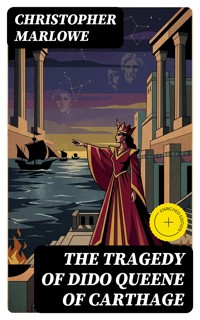
In "The Tragedy of Dido Queene of Carthage," Christopher Marlowe delves into the complexities of love, power, and betrayal through the ill-fated love story of Dido and Aeneas. Written in blank verse, the play exhibits Marlowe's signature dramatic intensity and rich, evocative language, characteristic of the Elizabethan era. The narrative weaves elements of classical mythology with powerful emotional resonance, exploring the tragic consequences of desire and ambition in a world governed by fate and the whims of the gods. Marlowe's work also reflects the shifting ideologies of his time, encapsulating themes of colonial ambition and personal sacrifice, thus positioning Dido's plight within a broader socio-political context. Christopher Marlowe, a contemporary and rival of Shakespeare, was known for his daring use of blank verse and his exploration of the darker aspects of human experience. A scholar at Cambridge, Marlowe's early exposure to classical texts and philosophical ideas profoundly influenced his writing. His fascination with the tragic hero and the moral dilemmas they face is palpable in this play, as it mirrors his own tumultuous life, rife with intrigue and controversy, culminating in his untimely death. For readers and scholars alike, "The Tragedy of Dido Queene of Carthage" is a compelling exploration of human emotion and the tragic consequences of love. Marlowe's masterful portrayal of Dido invites readers to reflect on the themes of desire and destiny, making this play essential for anyone interested in the foundations of English drama and the emotional complexities of its characters. In this enriched edition, we have carefully created added value for your reading experience: - A succinct Introduction situates the work's timeless appeal and themes. - The Synopsis outlines the central plot, highlighting key developments without spoiling critical twists. - A detailed Historical Context immerses you in the era's events and influences that shaped the writing. - An Author Biography reveals milestones in the author's life, illuminating the personal insights behind the text. - A thorough Analysis dissects symbols, motifs, and character arcs to unearth underlying meanings. - Reflection questions prompt you to engage personally with the work's messages, connecting them to modern life. - Hand‐picked Memorable Quotes shine a spotlight on moments of literary brilliance. - Interactive footnotes clarify unusual references, historical allusions, and archaic phrases for an effortless, more informed read.
Das E-Book können Sie in Legimi-Apps oder einer beliebigen App lesen, die das folgende Format unterstützen:
Veröffentlichungsjahr: 2022
Ähnliche



















The Tragedy of Dido Queene of Carthage
Table of Contents
Introduction
Amid storm-tossed seas and celestial intrigues, a shipwrecked exile and a commanding queen discover that the perilous current between desire and destiny can remake kingdoms as surely as it remakes hearts, in the nascent city of Carthage where hospitality is statecraft, love burns as hot as war, and unseen powers bend human resolve toward courses no mortal foresight can safely chart, a crucible forged from Troy’s wreckage and the imagined future of empire.
The Tragedy of Dido Queene of Carthage presents Christopher Marlowe’s dramatic reimagining of an episode from the ancient world: the arrival of the Trojan Aeneas in Carthage and his reception by its founder and ruler, Dido. The play stages the first encounters between the storm-beaten refugees and a queen who has secured a fragile haven on the African coast. From the outset, mortal choices intersect with divine designs, and a city’s political aspirations meet the combustible energies of affection, obligation, and ambition. Without disclosing later turns, the play’s premise is the meeting, sheltering, and testing of guest and host.
Composed in the Elizabethan period and commonly dated to the late 1580s or early 1590s, the play was first printed in 1594, the year after Marlowe’s death. That quarto names Christopher Marlowe as author and also credits Thomas Nashe, acknowledging collaboration or contribution. Published posthumously, the text preserves an early experiment in mythic tragedy by one of the most influential dramatists of the English Renaissance. Its timing places it among the formative works that shaped professional theater in London, when classical narratives were being translated, adapted, and staged for audiences newly attuned to humanist learning and theatrical spectacle.
The 1594 quarto further announces that the play was performed by the Children of Her Majesty’s Chapel, indicating a production by a renowned company of boy actors. This context matters: children’s companies often specialized in eloquent rhetoric, swift scene changes, and visually striking allegory, qualities that suit Marlowe’s elevated verse and the presence of gods, sailors, and courtiers. The play’s compactness and ceremonial scenes would have matched the resources of such troupes. Understanding this performance lineage illuminates how the drama combines intimacy with pageant, allowing political ceremony to sit beside divine mischief and private persuasion.
Marlowe’s classic status rests on the transformative force of his poetic drama, and this play exemplifies that achievement. His predominantly blank verse gives English tragedy a new muscularity and musicality, propelling thought and feeling with kinetic intensity. Dido showcases the playwright’s command of heightened speech, where images of flame, flood, and celestial light dramatize interior conflict. Although shorter and more concentrated than some of his later works, it bears the imprint of a writer who expanded what could be said and how it could sound on the public stage, influencing the craft of dialogue, rhythm, and characterization for generations.
The tragedy draws chiefly on Virgil’s Aeneid, the foundational Latin epic known to Marlowe and his audience. The dramatization retains the epic’s central situation—Trojan survivors, a hospitable queen, and watchful deities—while transforming narration into scene and argument. Gods step forth as characters whose preferences and rivalries steer human lives, and speeches that in epic explain become in drama attempts to convince, resist, or console. Marlowe’s education and milieu saturated him in classical myth; here he distills that inheritance into a living theater of persuasion, ritual, and risk, accessible without specialized knowledge of the source.
At the heart of the play stand enduring themes: the tension between private desire and public duty, the ethics of hospitality, the burdens of leadership, and the unsettling presence of fate. The drama asks what rulers owe to their people, what survivors owe to their dead, and what any person owes to a command that arrives from beyond human jurisdiction. In staging these dilemmas, it probes how political founding stories depend on personal choices fraught with uncertainty. The result is a tragedy of competing loyalties, where love and law, home and voyage, are measured against the cost of becoming a legend.
The characters embody these pressures with affecting clarity. Dido appears as both sovereign and woman, a strategist whose compassion is inseparable from her statecraft. Aeneas enters as a veteran of catastrophe, a leader responsible for his son and followers as they seek a second beginning. Around them gather figures who sharpen the drama’s angles: Anna, a sister attentive to policy and feeling; Achates and other Trojans, guardians of memory; Iarbas, a rival king; and deities whose interventions expose the limits and vulnerabilities of human resolve. Their conversations move from courtesy to contest, from welcome to wager.
Marlowe’s imagery furnishes a map of the play’s inner weather. Tempests and harbors, embers and meteors, the architecture of palaces and the fragile security of camps—such images turn landscape into argument. The sea suggests both peril and possibility; fire marks passion, sacrifice, and illumination. The gods’ appearances externalize forces that humans sense but cannot master, while the ceremony of court and the rituals of storytelling dramatize how communities remember and justify themselves. Through this texture of symbols, the play articulates emotional stakes with sensuous immediacy, letting audiences feel the weight of choice before its consequences are known.
As a work in Marlowe’s corpus, Dido complements the audacity of Tamburlaine and the searching intelligence of Doctor Faustus, while placing a woman ruler at its center. Marlowe’s innovations in poetic form and tragic architecture influenced contemporaries and successors, including Shakespeare, who inherited a stage enlarged by Marlowe’s energies. The play helped entrench a tradition of translating classical epic into living drama, sustaining interest across centuries. It survives in a single early quarto, a circumstance that has invited careful editorial attention and revived performances attentive to its lyric concentration and theatrical pliancy.
Readers encountering the play today benefit from approaching it as both story and argument. Attend to how scenes of hospitality double as negotiations of power, how divine scenes throw human motives into relief, and how speeches attempt to shape reality by naming it. Notice, too, the interplay of public ceremony and private reckoning, and the ways in which silence or hesitation punctuates eloquence. Even without foreknowledge of the Aeneid, the drama’s stakes are legible; with it, the play’s daring choices become an illuminating conversation with its source rather than a mere transcription.
The Tragedy of Dido Queene of Carthage endures because it speaks to perennial conditions: migration and the search for refuge, the demands placed upon leaders, the lure and hazard of love, and the narratives states tell about their beginnings. In an age attentive to displacement and the ethics of welcome, its questions are freshly urgent. Marlowe’s artistry ensures that these questions arrive with beauty and bite. The play’s legacy lies not only in its place in literary history but in its capacity to make ancient conflict illuminate present choice, securing its lasting appeal.
Synopsis
The Tragedy of Dido, Queen of Carthage, by Christopher Marlowe, is an Elizabethan tragedy first printed in 1594. Drawing chiefly on episodes from Virgil’s Aeneid, it dramatizes the encounter between the Trojan leader Aeneas and Dido, the ruler of burgeoning Carthage. Marlowe frames the tale within a contest of divine wills and mortal obligations, showing how personal desire, political calculation, and imposed destiny collide. The action moves between celestial machinations and the Carthaginian court, charting how hospitality and admiration grow into entanglement. Through elevated rhetoric and ceremonial scenes, the play probes what leaders owe to their peoples and what individuals owe to themselves.
The play opens among the gods, with Jupiter enthralled by his cupbearer and Venus protesting the hazards her son endures after Troy’s ruin. Juno’s longstanding resentment toward the Trojans darkens the atmosphere, and the audience sees how rival divinities shape human fortunes for reasons that mix affection, jealousy, and pride. Their interventions establish that the mortal story will unfold under pressure from conflicting celestial agendas. This elevated frame lends grandeur to what follows while clarifying the stakes: whether a refugee captain can secure his people’s future, and whether a renowned queen can balance sovereign responsibility with the stirrings of private inclination.
A violent storm drives Aeneas and his scattered companions to the coast of Libya, where Carthage emerges as a haven and a test. Weary survivors seek aid, wary of further betrayal, while their leader measures the risks of dependence. Dido presides over an industrious, expanding city and receives the strangers with statecraft and curiosity. Her court assesses the Trojans’ value as allies, guests, or supplicants, and the language of hospitality quickly takes on political weight. Aeneas’s bearing and misfortunes command attention, and the prospect of a mutually beneficial bond begins to surface as public ceremony shades into personal regard.
Protective and ambitious, Venus intervenes to secure her son’s safety and prospects. She deploys Cupid in the guise of Ascanius, placing divine influence directly within Dido’s household. The enchantment operates not as crude coercion but as an intensifier of admiration and tenderness, heightening every favorable impression Aeneas makes. Juno’s opposition persists, ensuring that each gesture of welcome is shadowed by celestial rivalry. The result is a courtly atmosphere charged with ritual, intimacy, and surveillance, where genuine feeling and supernatural prompting are difficult to untangle, and where the boundaries between political alliance and private attachment steadily blur.
Aeneas recounts the fall of Troy and the trials of exile, supplying a dramatic centerpiece that marries report with spectacle. His narrative of ruin, escape, and wandering gives Carthage a fuller picture of Trojan suffering while affirming his credentials as a leader who endures for others’ sake. The tale deepens sympathy and sharpens the contrast between rest and duty. As his men taste security and Dido’s favor grows, the Trojans’ temporary harbor begins to look like a possible home. The audience sees how memory, gratitude, and admiration may coax a warrior from the path set by prophecy.
Within Carthage, counsel and countercounsel unfold. Anna, valuing stability and advantage, encourages a bond that could enrich the city and soothe her sister’s loneliness. Courtiers weigh the prestige of hosting Trojan heroes against the risks of entanglement. Beyond the walls, Iarbas voices jealousy and alarm, representing regional pressures that complicate Dido’s choices. His agitation underscores that royal affection is never merely private. The city’s industrious vigor stands in contrast to the Trojans’ precarious status, and the question emerges whether hospitality can be converted into lasting alliance without eroding authority, reputation, or the disciplined purpose that sustains an exiled people.
At a decisive moment, Jupiter’s command reaches Aeneas through Mercury, reminding him of obligations that extend beyond personal happiness or present comfort. The reminder of a fated future, tied to founding labors and a larger historical design, throws his situation into stark relief. Aeneas grapples with competing claims of gratitude, affection, and duty, while his followers anticipate the hardships of renewed wandering. Preparations begin that cannot remain hidden for long, and every practical step acquires moral weight. The drama concentrates on inward resolve and outward protocol, asking how a leader justifies painful choices to those whose trust he has earned.
The ensuing scenes test bonds and reputations. Dido seeks clarity and constancy, Anna mediates, and Aeneas articulates a case for obedience to higher command that does not diminish the sincerity of his regard. Tokens, promises, and public displays are weighed against the claims of empire, honor, and survival. Iarbas and the gods remain potent forces, ensuring that human will is never sovereign for long. Marlowe stages farewells, accusations, and appeals with a sense of mounting inevitability, directing attention to how quickly ceremony can turn to grievance. The trajectory darkens, yet the play preserves ambiguity until its final movements.
Beyond its immediate story, the play considers the cost of founding myths and the precariousness of authority under the gaze of gods and rivals. It questions how love intersects with statecraft, and how hospitality, once politicized, reshapes both host and guest. Marlowe’s focus on eloquence, negotiation, and spectacle reveals the allure and danger of charismatic leadership. As an English engagement with classical epic, it probes the tension between destiny and choice without resolving it easily. The enduring significance lies in its portrayal of passion and policy at cross-purposes, and in its caution about what ambition asks mortals to sacrifice.




