


6,99 €
Mehr erfahren.
- Herausgeber: No Exit Press
- Kategorie: Krimi
- Sprache: Englisch
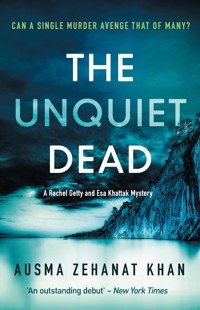
One man is dead. But thousands were his victims. Can a single murder avenge that of many? Scarborough Bluffs, Toronto: the body of Christopher Drayton is found at the foot of the cliffs. Muslim Detective Esa Khattak, head of the Community Policing Unit, and his partner Rachel Getty are called in to investigate. As the secrets of Drayton's role in the 1995 Srebrenica genocide of Bosnian Muslims surface, the harrowing significance of his death makes it difficult to remain objective. In a community haunted by the atrocities of war, anyone could be a suspect. And when the victim is a man with so many deaths to his name, could it be that justice has at long last been served? In this important debut novel, Ausma Zehanat Khan has written a compelling and provocative mystery exploring the complexities of identity, loss, and redemption.
Das E-Book können Sie in Legimi-Apps oder einer beliebigen App lesen, die das folgende Format unterstützen:
Veröffentlichungsjahr: 2017
Ähnliche

















THE UNQUIET DEAD
One man is dead.
But thousands are his victims.
Can a single murder avenge that of many?
When Christopher Drayton’s body is found at the foot of the Scarborough Bluffs, Detectives Esa Khattak and Rachel Getty are called to investigate his death. But as the secrets of his role in the 1995 Srebrenica massacre surface, the harrowing significance of the case makes it difficult to remain objective. In a community haunted by the atrocities of war, anyone could be a suspect. And when the victim is a man with far more deaths to his name, could it be that justice at long last has been served?
In this striking debut, Ausma Zehanat Khan has written a compelling and provocative mystery exploring the complexities of identity, loss, and redemption.
About the author
© Athif Khan
AUSMA ZEHANAT KHAN holds a Ph.D. in International Human Rights Law with a specialization in military intervention and war crimes in the Balkans. She has practiced immigration law and taught human rights law at Northwestern University and York University. Formerly, she served as Editor in Chief of Muslim Girl magazine. The first magazine to address a target audience of young Muslim women, Muslim Girl re-shaped the conversation about Muslim women in North America. She is a longtime community activist and writer. A British-born Canadian, Ausma currently lives in Colorado with her husband. The Unquiet Dead is her debut novel. She has also written a forthcoming fantasy series for Harper Voyager.
ausmazehanatkhan.com | @noexitpress | @AusmaZehanat
Praise forThe Unquiet Dead
‘Khan has brought every ounce of her intellect and professional experience in working with Muslim refugees to this affecting debut. Her use of certain mystery conventions echoes the masters… Yet for all of the echoes of the greats, Khan is a refreshing original… a debut to remember and one that even those who eschew the genre will devour in one breathtaking sitting’ –LA Times
‘Gripping… An intelligent plot and graceful writing makeThe Unquiet Deadan outstanding debut that is not easily forgotten’ –Associated Press
‘Beautiful and powerful’ –Publishers Weekly(starred review)
‘Compelling and hauntingly powerful… anyone looking for an intensely memorable mystery should put this book at the top of their list’ –Library Journal(starred review)
‘Khan’s stunning debut is a poignant, elegantly written mystery laced with complex characters’ –Kirkus Reviews
‘Heartbreaking… [a story] that needs to be told’ –Booklist
‘An engrossing story that allows the author to sift through the emotional rubble of real-world tragedy. In the end, it isn’t just gripping. It’s devastating’ – Steve Hockensmith, Edgar-nominated author ofHolmes on the Range
For my parents,
Dr Zehanat Ali Khan
and
Mrs Nasima Khan,
whose love and shining example
are everything
Let justice be done lest the world perish.
–HEGEL
Contents
Chapter 1
Chapter 2
Chapter 3
Chapter 4
Chapter 5
Chapter 6
Chapter 7
Chapter 8
Chapter 9
Chapter 10
Chapter 11
Chapter 12
Chapter 13
Chapter 14
Chapter 15
Chapter 16
Chapter 17
Chapter 18
Chapter 19
Chapter 20
Chapter 21
Chapter 22
Chapter 23
Chapter 24
Chapter 25
Chapter 26
Chapter 27
Chapter 28
Chapter 29
Chapter 30
Chapter 31
Chapter 32
Chapter 33
Chapter 34
Chapter 35
Chapter 36
Chapter 37
Author’s Note
Notes
Acknowledgments
THE UNQUIET DEAD READING GROUP QUESTIONS
Also by Ausma Zehanat Khan
Read the next in the series
Copyright
1
I will never worship what you worship.
Nor will you worship what I worship.
To you, your religion – to me, mine.
Esa Khattak turned his headto the right, offering the universal salaam at the conclusion of the evening prayer. He was seated with his legs folded beneath him on a prayer rug woven by his ancestors from Peshawar. The worn red and gold strands were comforting; his fingers sought them out when he pressed his forehead to the floor. A moment later, his eyes traced them as his cupped palms offered the final supplication.
The Maghrib prayer was for Khattak a time of consolation where along with prayers for Muhammad, he asked for mercy upon his wife and forgiveness for the accident that had caused her death. A nightly ritual of grief relieved by the possibility of hope, it stretched across that most resonant band of time: twilight. The dying sun muted his thoughts, much as it subdued the colors of theja-namazbeneath him. It was the discipline of the ritual that brought him comfort, the reason he rarely missed it. Unless he was on duty – as he was tonight, when the phone call from Tom Paley disturbed his concentration.
He no longer possessed the hot-blooded certainties of youth that a prayer missed or delayed would bring about a concomitant judgment of sin. Time had taught him to view his faith through the prism of compassion: when ritual was sacrificed in pursuit of the very values it was meant to inspire, there could be no judgment, no sin.
He took the phone call from Tom Paley midway through the prayer and finished up in its aftermath. Tom, the most respected historian at Canada’s Department of Justice, would not have disturbed him on an evening when Khattak could just as easily have been off-roster unless the situation was urgent.
CPS, the Community Policing Section that Khattak headed, was still fragile, barely a year into its existence. The ambit was deliberately vague because CPS was a fig leaf for the most problematic community relations issue of all – Islam. A steady shift to the right in Canadian politics, coupled with the spectacular bungling of the Maher Arar terrorism case in 2002, had birthed a generation of activist lawyers who pushed back vigorously against what they called tainted multiculturalism. Maher Arar’s saga of extraordinary rendition and torture had mobilized them, making front-page news for months and costing the federal government millions in compensation when Arar had been cleared of all links to terrorism. A hastily concocted Community Policing Section had been the federal government’s response, and who better than Esa Khattak to head it? A second-generation Canadian Muslim, his career had seen him transition seamlessly from Toronto’s homicide squad to national counterintelligence work at INSET, one of the Integrated National Security Enforcement Teams. CPS called on both skill sets. Khattak was a rising star with an inbuilt understanding of the city of Toronto’s shifting demographic landscape. At CPS, he was asked to lend his expertise to sensitive police investigations throughout the country at the request of senior investigating officers from any branch of government.
The job had been offered to Khattak as a promotion, his acceptance of it touted as a public relations victory. Khattak had taken it because of the freedom it represented: the chance to appoint his own team, and as with INSET, the opportunity to work with partners at all levels of government to bring nuance and consideration to increasingly complex cases.
And for other reasons he had never offered up for public scrutiny.
His mandate was couched in generic terms: sensitivity training for police services, community support, and an alternative viewpoint in cases involving minorities, particularly Muslim minorities. Both he and his superiors understood the unspoken rationale behind the choice of a decorated INSET officer to head up CPS. If Khattak performed well, then greater glory to the city, province, and nation. If he ran into barriers from within the community as he pursued his coreligionists, no one could accuse the CPS of bias. Everyone’s hands were clean.
It didn’t matter to Khattak that this was how he had been lured into the job by his former superintendent, Robert Palmer. He loved police work. It suited an analytical nature tempered by a long-simmering hunger for justice. And if he was being used, as indisputably he was, he was also prepared to enact his own vision for CPS.
What flame-fanning bigots across the border would doubtlessly call community pandering, a fig-leaf jihad. Take anything a Muslim touched, add the word jihad to it, and immediately you produced something ugly and divisive.
But Tom wasn’t one of these. Chief historian at the Department of Justice, he was a gifted academic whose fatherly demeanor masked a passion for the truth as sharp and relentless as Khattak’s own.
He had called to ask Khattak to investigate the death of a Scarborough man named Christopher Drayton. There was no reason that CPS should have an interest in the man’s death. He had fallen from a section of the Scarborough Bluffs known as the Cathedral. His death had been swift and certain with no evidence of outside interference.
Khattak had pointed this out to his friend in measured tones, and Tom had let him. When he’d finished, Tom gave him the real reason for his call and the reason it encroached upon Khattak’s jurisdiction.
Khattak heard the worry and fear beneath Tom Paley’s words.
And into the remnants of Khattak’s prayer intruded a series of recollections from his youth. Of news reports, hurriedly organized meetings and volunteer drives, followed too slowly by action. He saw himself as a young man joining others in a circle around the flame at Parliament Hill. He absorbed the thick, despairing heat of that summer into his skin. His dark hair flattened against his head; he felt in that moment his own impotence.
He listened to Tom’s labored explanation, not liking the hitch in his friend’s breath. When Tom came to the nature of his request, Khattak agreed. But his words were slow, weighted by the years that had passed since that summer. Still, he would do as asked.
‘Don’t go alone,’ Tom said. ‘You’ll need to look objective.’
Khattak took no offense at the phrasing. He knew the unspoken truth as well as Tom did.
Because you can’t be.
‘I’ll take Rachel.’ He had told Tom about his partner, Rachel Getty, before.
‘You know her well enough to trust her?’
‘She’s the best officer I’ve ever worked with.’
‘She’s young.’
‘Not so young that she doesn’t understand our work. And I find her perspective helps me.’
He meant it. But even as he said it he knew that he would work with Rachel as he had done in the past. Withholding a part of the truth, of himself, until he could see the world through the clear, discerning eyes that watched him with such trust.
He knew he could turn to his childhood friend, Nathan Clare, for background on Drayton. Nate lived on the Bluffs and would understand why he’d agreed to Tom’s request. Nate would understand as well the toll compliance would take. But Khattak’s bond with Nate had long since been severed. It was a mistake to think Nate still knew him at all.
He’d meant the last words of his prayer to be a blessing asked for his family, in a space he tried to keep for himself, exchanging solitude for solace. Lately, he’d come to accept that there was no separate peace. His work, and the harshness of the choices he had made, bled into everything.
He rose from his prayer rug to find that dusk had given way to dark. He thought of the tiny documents library in Ottawa with its overflowing shelves. He’d spent most of that long-ago summer there, collecting evidence.
And he remembered other words, other blessings to be sought with a premonition of ruin.
They are going to burn us all.
2
I keep wondering, where have all the good friends gone?
Rachel took her own carto the Bluffs. A couple of times when she and Zach were young, their father had taken them to Bluffer’s Park for picnics. She remembered the suppressed pleasure in Don Getty’s eyes as his son dragged him to the marina to watch the boats. Even then, the park had been filled with immigrants. Children scrambling unsupervised, shrieking with pleasure. She’d been an afterthought, but her Da had taken time over Zach.
She got out of the car, scuffing her runners against the dirt in the road. She had driven around the crescent slowly so as not to miss the house called Winterglass, an imaginative name for the three-story structure settled at the edge of the Bluffs, as much a part of its surroundings as the trees that framed the park or the wind that had worn down the stone over time.
The first and second stories were separated by a horizontal band of stonework that wrapped around the house. Above the white doors, a pediment supported a recessed arch. On either side of the arch, chimneys flanked an elegant arrangement of windows.
On the east side of the house, a balcony set on white columns floated above a ground-floor terrace. The long, curved drive was edged by maple trees, the small garden before the house embroidered by a gathering of roses. A single ornament rested within its diamond-shaped border: a chipped stone eagle balanced on a plinth.
A weathered house and a thing of beauty, its name subtly inscribed on the plinth.
Khattak hadn’t given any reason for meeting at this house. He’d provided a short summary on Christopher Drayton, but unless she missed her guess, Drayton’s house was at the opposite end of the circle. She’d already called Declan Byrne, her junior team member, for background on Drayton. As far as Dec could tell her, a man had gone for a stroll at night and fallen to his death. An ordinary man leading an ordinary life.
The only drama she could squeeze out of this was the possibility of suicide. Yet the coroner’s report had ruled it an accident.
So why was CPS being asked to dig around Drayton, and why had her boss asked her to meet at Winterglass?
Restless, she kicked at her front tire just as Khattak’s BMW pulled up behind her.
‘Bit upscale, isn’t it, sir?’ she said by way of greeting. She meant the house, not the car. Her envious appraisal of his car had been documented on previous excursions.
‘Hello, Rachel.’
It was too dark out to read his expression. He sounded withdrawn. Fatigued, maybe, though it hadn’t dampened his good looks.
And he wasn’t gotten up in one of his closely tailored suits. He was wearing black trousers and a dark, fitted shirt. No tie, no cuff links, grappling a string of beads in his right hand. When they stepped under the house’s porch light she saw the beads were green agate. He was fingering them in a nervous gesture unusual for him.
‘This isn’t Drayton’s house, sir.’
‘No. This is Winterglass.’
Which sounded like he expected the name to mean something to her.
Biting back the temptation to remind him she could read, she countered, ‘Never heard of it. Did Drayton use to live here?’
She heard Khattak’s quick intake of breath, saw the string tighten around his fingers. He turned to face her and, as always before his direct attention, she squirmed a little.
‘This is the home of Nathan Clare. I haven’t been here in some time.’
‘Nathan Clare?TheNathan Clare? The writer?’
She was babbling. Everyone knew the internationally acclaimed author. His last book,Apologia,had outsold all his previous works combined. He had made a name for himself intervening in national debates on multiculturalism. Every few years his essays would be collected together and published in a volume, cementing his credentials as a somewhat reclusive public intellectual.
She’d heard him on the radio and had liked his voice and his dry sense of humor. She had meant to purchase the book selection he’d endorsed, but time had gotten away from her. That, and her job. She wasn’t on duty tonight, but CPS hours were irregular, and she worked at being someone Khattak could rely on.
She felt a little awed at the thought of meeting Clare. Then she grasped what Khattak had just said.
‘You’ve been here before, sir? You know Mr Clare?’
He rang the doorbell.
‘Yes. Drayton lives nearby. I thought that Nathan might know him.’
Now she remembered that the writer was also the son of Loveland Clare, a diplomat in the Stephen Lewis tradition, a fact she correlated to the spike in her nervousness.
When the door opened, they were greeted by a tall man with a slim, straight nose and a delicate face and jaw. His straw-colored hair was worn long in the front, obscuring his gold-rimmed glasses: he was the perfect example of Rachel’s idea of an English gentleman. He was even wearing a tweed jacket. Well-fitted, she observed, and though Khattak was tall, this man had an inch or two over him.
‘Esa?’ He sounded shocked.
Rachel’s eyes widened. Khattak hadn’t called to set up the visit?
‘May we come in?’
The man in the doorway stepped back, his attention occupied by Khattak, who offered no identification, Rachel trailing behind them. They were led through an entrance hall with a sculptured staircase to a double-height room that defied her every expectation of grandeur. Or was it grand? At least fifty feet across, something about the room managed to suggest warmth. Its floor was a bleached pine, off-setting furnishings in delicate green and the most elaborate Chinese carpet Rachel had ever seen. Velvet sofas anchored the carpet across from a wall of glass that must have given the house its name. Situated on a curve of the Bluffs, the wall overlooked white cliffs and black water extending over a limitless distance.
She didn’t know where to look first. The blue and white porcelain that shimmered on the room’s tables? The painted white chandeliers suspended between a set of peacock chairs? Or the classical architecture of pilasters and arches that ran the perimeter of the room to support a gallery on the second level? Under a set of casement windows, a grand piano with a raised lid occupied an antechamber that led outside, sheet music scattered across its bench. A silk banner was flung over a nearby chair.
Gawking, she turned back to hear herself being introduced.
‘Sergeant Rachel Getty, my partner at Community Policing.’
Nathan Clare took her hand. She was surprised at the strength of his grip: there was something romantic, almost effeminate, about the elegant bones of his hand. She took a green-and-white-striped chair at his invitation, ducking his assessment of her, knowing the picture she presented to the world. Boxy, square-shouldered, round-cheeked, indifferently dressed.
When Nathan smiled at her, she said awkwardly, ‘You must like music. You don’t have any photographs on your piano.’
She’d seen plenty of soap operas where a Steinway served mainly as a repository for antique picture frames.
‘Nate believes pianos are for playing.’
The ‘Nate’ caught Rachel by surprise. Both the nickname and the comment implied familiarity, making her wonder how well her boss knew Nathan Clare and whether that had been a sneer in his cultured voice.
Nathan sat back on the green sofa, watching Khattak string the beads together around his wrist.
‘I haven’t seen that in a while. Does it help while you’re working?’
There was a hint of challenge in his manner.
Sitting next to Khattak, Rachel was able to see the string of beads more clearly. Every now and again, the agate stones were sectioned off by a little marker, dividing the string into segments. It was a rosary or – what was the word Khattak had taught her?
A tasbih, the Muslim equivalent.
She realized that Nathan was watching her. He had swept the hair from his forehead, and now she could see the hazel eyes behind his glasses, intent but also kind.
‘We’ve come about your neighbor, Christopher Drayton. I was hoping you might have known him.’
‘Everyone in the neighborhood did. He was well regarded here, generous with his time. People were shocked to hear of his fall, myself included, but I suppose no one was quite as distraught as Melanie. Melanie Blessant, his girlfriend.’
‘You knew him well, then?’
‘As well as I know all my neighbors, I’d say. He was an educated man, he enjoyed books, art. He’d been here for dinner several times to discuss various projects he was interested in with mutual friends. On some of the same nights you were invited. He was funding a small museum – something that would interest you. I can give you a list of the guests, if you’d like.’ He rummaged in a small drawer and handed the paper to Rachel.
Khattak brushed it aside.
‘Did he often walk by the Bluffs?’
‘I believe so, but the people who live here are well versed in the dangers of erosion. It’s easy to lose your footing out there.’
‘Had you ever seen him from these windows?’
‘You know these windows don’t face the path, Esa.’
There was a note of chiding in Nathan’s voice that took Rachel aback. The tenor of the whole conversation seemed strange to her, the room imbued with an inexplicable anxiety. The tasbih was taut around Khattak’s hand; Nathan Clare’s posture was stiff. That both men knew the source of it was clear: it was Rachel who was in the dark.
Nathan turned to her.
‘Do you like the house?’
She couldn’t help being caught by the cloudy expanse of lake beyond the windows. Waterfront views were not to be had off the dim streets of Etobicoke, where she lived.
‘It’s stunning. From the outside, I thought it might be a little pompous, but it isn’t.’
She bit her lip. Sometimes she was too honest and in this case probably naïve as well. There were thousands of dollars worth of antiques within the room, pieces she could neither name nor identify, yet all possessed of a consonance that pleased the eye. Things to live with rather than admire. The careless sprawl of music suggested as much.
‘You can play the piano if you’d like,’ he said, following her gaze.
Rachel couldn’t play. Though Don Getty had done well for himself in life, the arts weren’t a luxury he’d encouraged his children to indulge in. It was her mother’s old recordings she had listened to when her father was out of the house, the needle scratching over Chopin’s nocturnes, her mother’s favorite composer. Part of her mother’s life before she’d married Don Getty, as inaccessible to Rachel as her mother’s thoughts.
Rachel made her way to the piano, called there by a secret longing. The banner casually placed on the chair beside it looked like a miniature flag, a blue Superman shield imposed upon its green background, the initialsCKappliquéd at one corner.
The two men followed in her wake like an entourage, Drayton forgotten.
Khattak reached around her and took the banner.
‘You still have it,’ he said.
He deposited the tasbih in his pocket, his hands relaxing.
‘It was a pledge, Esa. You know that.’
Khattak’s gaze switched to the fireplace, taking in the blank space above the lip of white marble.
‘The portrait’s gone.’
‘It was more than time.’
A rectangular space between the white and blue chinoiserie was less faded than the rest of the wall. Something had been there, and again she was the outsider, in the dark as to why they were here at all when they should have been at Drayton’s house, searching for indications of homicide.
‘I’m sorry, Mr Clare. How do you and the inspector know each other?’
Nathan smiled at her and she blinked. The smile transformed her notion of the introverted writer into something much more visceral. A more than ordinarily attractive male, with glints of light turning his straw-colored hair gold.
‘Didn’t Esa tell you? We were at school together. We’re old Seatonians.’ And when she still looked blank, he clarified, ‘Upper Canada College.’
Openmouthed, the piano forgotten, she turned to Khattak.
‘You wentto schoolwith Nathan Clare, the writer?’
‘He wasn’t “Nathan Clare, the writer” then. And we’ve come about Christopher Drayton, not my unsavory past.’
Nathan grinned at him, the first unforced gesture she’d seen from either man.
‘It was unsavory, wasn’t it? At least, all the good parts.’
Her eyes lit up at the teasing. Here was someone who might deflate the always unruffled, ever-so-proper Inspector Khattak. She wanted to delve deeper into the mystery of this hidden friend, megawatt writer or not, who must be awash in particularly useful inside information. Despite their rocky start when she’d first joined CPS, she’d come to admire Esa Khattak and to value his opinion. She just wasn’t sure that she understood him as well as she’d like to. And if Nathan Clare could help her with that, she wouldn’t object.
But the mood died in an instant as Khattak answered, ‘Most of the bad parts as well, I’m afraid. I’m sorry to have bothered you. We should go.’
‘Sir –’
There were at least a dozen questions she could think of that they hadn’t asked Nathan Clare – at least he could clarify the list he’d given them, why he’d had it to hand, and why it even mattered.
‘Now, Rachel.’
She scurried along behind him, swallowing a grimace. Whatever brief connection she had felt to the author, Khattak was her boss. Her boss who ignored the question Nathan called after him.
‘Did you ever readApologia, Esa?’
And that wasn’t a question he seemed ready to answer.
3
He was a modest and reasonable man.
They left their cars wherethey were. It was a silent ten-minute walk from the far end of the circle to Drayton’s address. There was no cordon of police tape around the house, a large home typical of those built on small lots when fifty-year-old bungalows were scraped down to make way for new luxury models. The exterior was stuccoed in white, a color Drayton must have repainted yearly, because the outside bore no traces of wear.
She wasn’t sure what they were looking for, wasn’t sure why a name like Christopher Drayton would pop up on the CPS radar. On the face of it, it didn’t seem like a minority-sensitive situation. All she knew was that her boss was doing a favor for a friend on his own time, and he had asked her along to the party.
‘Figure the girlfriend did it, sir?’
‘What?’
‘Melanie Blessant. The one Clare mentioned. Maybe followed him out after dark, pushed him over the edge?’
They were meandering their way through the well-proportioned living spaces, a family room and salon that mirrored each other in dimension, furnished with expensive if generic taste. Everything was in order, well tended, as if death had not visited this house.
Her question was meant as a gentle reminder that nothing about this assignment appeared to fall within their purview.
They had reached the kitchen at the back of the house: dark cabinets, earth-colored stone, stainless-steel appliances, a desk where the mail was tidily sorted. She thumbed through it. Credit card statements, utility bills, a landscaping service, the usual. Adjacent to the kitchen was the study, a glimpse through its French doors disclosing bookcases and a wide desk. She tried the handle. The doors were locked.
Khattak produced the keys.
‘Local police were asked to leave this room locked so we could take a look for ourselves. Take some photographs, will you?’
Rachel pondered this. Drayton’s body had been found two days ago. Why had Justice moved so swiftly to secure this particular scene when the body had been found at the base of Cathedral Bluffs?
She had her answer when the doors spread wide to reveal a room twice the size of any other on the main floor. She unearthed her camera and set to work.
The chair from the desk was situated in the center of the room, facing windows that looked out upon the garden. It was an old-fashioned oxblood leather chair without casters, but that wasn’t what had captured Rachel’s attention. Nor was it the reason Khattak stood still beside her.
On the floor in front of the chair lay a 9-millimeter pistol, pointed away at the windows.
‘Uh, sir…’
‘I see it.’
‘What’s it still doing here? Has it been printed?’
‘There are only Drayton’s prints on the gun. It isn’t loaded. The forensic team was asked to leave the room once it had finished, so we could take a look.’
Rachel knelt down for a closer look. She knew it was a 9-millimeter, but the make was unfamiliar. There was a black star inside the circle on the plastic grip. Something else caught her eye on the floor not far from the gun. It was a resinous puddle the size of a quarter plate. She scraped it lightly, her nails raising a white line on the puddle as the flaky residue came off beneath her fingertips.
‘Candle wax,’ she breathed. She rose to her feet, perplexed. ‘Sir.’
She described a semicircle with her index finger.
‘There’s several of them.’
She counted the puddles under her breath.
‘Someone’s tried the door as well.’
He showed her the scratch marks around the keyhole.
‘But they couldn’t get in or they would have cleaned this mess up?’ Rachel hazarded. ‘What does any of it mean? Drayton didn’t die here. The gun hasn’t been fired, his injuries were consistent with a fall.’ She looked around.
‘There aren’t any candles in the study, sir.’
‘Rachel.’
Khattak was at the desk, trying the drawers. One was locked.
‘Maybe he kept the gun there.’
Her guess proved correct. The wide drawer yielded to Khattak’s key. Inside, a kerchief was folded to one side, boxes of ammunition were stacked on the other.
‘What did Drayton do?’ she asked slowly. There was no permit in the drawer. It didn’t make sense that a retired man in his sixties would need a small army’s worth of firepower.
‘He was a businessman.’
‘What kind of business, drugs?’
Khattak shrugged, not meeting her eyes.
That was Rachel’s first clue. Khattak was never evasive with her. When he withheld information, he told her the reason for withholding it. His leadership at CPS had been characterized by a spirit of inclusion. He wore his authority more lightly than any other police officer Rachel had ever worked with. He was certainly nothing like the old bull Don Getty, thirty-five years in the police service, the last fifteen as superintendent, and God help you if you got under his skin or in his way. As Rachel, being his daughter, was prone to do.
Khattak was the polar opposite of Don Getty’s bluster. Urbane, soft-spoken, respectful, decisive. The only thing he had in common with her Da was his insight into human behavior. And he’d been candid about his shortcomings as well, something Don Getty could never be. With the great Don Getty, one didn’t participate or contribute ideas. One merely bowed and scraped like the rest of his sycophants.Yes, Chief. No, Chief. Of course you have it right, Chief.
Khattak allowed her to tell him when he got it wrong. Heaskedher to tell him. Just as he had told her to do during their first case in Waverley, when she’d thrown his affair with Laine Stoicheva in his face, using the well-known sexual harassment claim Laine had brought against him like a machine-gun attack. His composure hadn’t altered. He’d taken her aside and in simple, blunt phrases told her the truth about Laine.
There’d been no need to share the truth with Rachel: she was no threat to him. Rachel had fallen as far as she could go before Khattak had brought her into CPS. She’d thought it a consolation prize of sorts, won for her by her father’s influence when no one else was prepared to take her on.
But Don Getty had had nothing to do with it. Esa Khattak had asked for her. He had chosen her specially.
We’re not just two birds wounded by the same stone, Rachel. Your evaluations were phenomenal.
They had been. It was the claim she had brought against her former boss, Inspector MacInerney, that had seen her fall as swiftly as she had risen. The claim that had died for lack of evidence when his other victims had stayed quiet to salvage their careers.
And just like that, she was a pariah in the service.
You know what it’s like to be judged, Rachel. You know in your bones what it’s like to shatter the truth against a wall of disbelief.
Khattak had been cleared of all charges brought by his former partner, Laine Stoicheva. He hadn’t gone into details, Rachel hadn’t asked. It was enough to know they had this in common. His confidence earned her trust. She didn’t always agree with him, but she’d learned to respect him. She didn’t want to take a step back.
His catlike eyes were watching her. She could tell he knew what she was thinking.
‘What’s up then, sir? You know more about this than you’re telling me.’
Blunt as ever. Direct and to the point. It was the thing about her she knew Khattak valued most. And she couldn’t change her spots if she tried.
The handsome face that looked back at her in the dimmed light of the study was troubled. And not about the case, she thought, or noncase, as it were. It was something deeper. His fingers were working the beads again.
‘Tell me what you see,’ he said.
She nodded, trying to ignore the stale, slightly smoky scent in the room. This was often how they began.
‘No photograph of Drayton yet, but here we are in a house that looks and feels expensive, probably about right for a retired businessman. It’s a little large for a man on his own, at least four bedrooms, I’m guessing. It’s well kept, somewhat impersonal, suggesting he might have had a touch of OCD and maybe not much personality. There’s no art anywhere on this floor, just a map above the desk. He keeps a gun in a locked drawer with plenty of ammo, but on the night of his death the gun is found on the floor in this room, although it hasn’t been fired. And there’s several puddles of what looks like candle wax on the floor without any sign of candles. Maybe they’re in the garbage. Maybe he took them with him on his walk and dumped them over the Bluffs.’
She ran over the summary in her mind.
‘I haven’t seen that make before,’ she added. ‘Nine millimeter is my guess. We’ll have to look more thoroughly to see if there’s a license anywhere. Has it been identified?’
‘Not yet.’
‘I admit it’s odd, but there’s no sign of a struggle here, nothing in the coroner’s report to indicate that he was restrained or dragged or pushed over the cliff with unusual force. But, if he was taken by surprise, I don’t know that we’d see any evidence of that. He was probably sitting here looking out at his garden before he went for his walk and lost his way. So I ask you again, sir, what’s going on?’
Khattak hesitated, then he picked up a set of picture frames that rested on the desk, handing one to Rachel.
‘There’s Drayton for you. Possibly with his girlfriend. I don’t know who this is.’
Primming her lips at the evasion, Rachel studied the first photograph. It had been taken in broad daylight in Drayton’s garden. A stocky man with a head of white hair and a square jaw had his arm around a beautiful woman who came to his shoulder. She was petite and curvy. Rachel squinted at it. Maybe not beautiful, with those bloated lips and that hyperinflated chest. She looked like a Barbie doll, her clothes straining over a nipped-in waist and the flare of her hips. Her loosely curled hair was an unlikely shade of platinum blond. It tumbled over her chest in a style suited to a much younger woman. Like Drayton, she wore sunglasses.
The other photo was of two teenage girls in tank tops and shorts. They looked alike with their clever heart-shaped faces, a smattering of freckles, and long, straight, toffee-colored hair. The younger one was smiling at the camera.
‘His daughters? An estranged former family?’
Khattak shook his head.
‘I haven’t answered your question, I know. There’s a reason for that. I’d like to see what conclusions you draw without the weight of prior knowledge.’
Weightwas a peculiar choice of word, Rachel thought. Maybe that was the reason that Khattak looked almost haggard. Or spoke to her so formally.
She gave him back the photographs, marched over to the bookshelves she hadn’t inspected yet.
‘But eventually you’ll tell me. It’s not exactly a thrill to work in the dark.’
‘The light’s no better, believe me.’
As Khattak worked through the other drawers, she turned her attention to Drayton’s library. Nathan Clare had said he was an educated man. The books reflected that. An educated businessman with a more than passing interest in languages. Italian, Russian, Albanian, German. He also had a complete set of the works of Nathan Clare. Several volumes of essays and at least a dozen novels. All exceptApologia.The rest of the selection was unremarkable, available at any bookstore display. Some new fiction, some books on health, a little political humor, and a set of gardening books. Plus the classics, with new hardbound covers.
On the last shelf she found a curious assortment of teen fiction interspersed with atlases and books on medieval history. A navy wool jacket hung on a peg beside the shelf. Absently, she checked the pockets.
The outer pockets were empty. The inner pockets held a pen and Drayton’s wallet. She went through this. Driver’s license, check. Credit cards, check. Gym membership, check. The discount cards of various retail chains. The billfold contained a modest amount of cash and a folded piece of paper. She withdrew it, frowning at what she read.
‘Sir. Here’s something.’
She handed the paper to Khattak. Its edges were torn at the top and at the bottom, leaving no more than half a page. Even that was more than enough for the single sentence typed at its center.
Is this waiting more desperate than the shooting?
‘Something’s been torn away. There must have been more to it. It explains the gun, doesn’t it? Maybe an indication of suicidal ideation?’
Khattak didn’t answer, so Rachel went on.
‘Of course, we could ask why he typed it. There’s a computer and printer on his desk but suicide notes are usually handwritten, unless there’s some kind of manifesto attached.’
‘Was there anything else?’
‘I haven’t been through these cupboards yet.’ She pointed to the cabinets at the base of the bookshelves. ‘His taste in reading is pretty bland. What about the desk?’
‘Paperwork, mostly. Bills, mortgage information, insurance policies. I’ll read those in a moment. There’s a folder here on the museum Nate mentioned. I haven’t gone through it yet.’
She went back to work. Most of the cupboards were empty. Some contained computer gadgets, speakers, printer cables, and the like. There were no photo albums, no congratulatory cards on retirement, no evidence of the business Drayton had run. Midway through, though, she found what she was looking for. The central bookcase was anchored to the wall because its cabinet contained a safe. Not a high-tech safe but the standard kind available at Walmart, weighing in at several hundred pounds with a digital lock. To open it, they’d need to call in a team member or unearth the combination among Drayton’s papers.
‘This is where he should have kept the gun.’
Khattak joined her at the safe, hunching down.
‘Perhaps he needed the safe for something more important than the gun.’
‘Like what? A will? A fortune in black-market diamonds? The guns that go with that ammo?’
‘We need that combination if we’re to find out.’
‘It might be in his papers. It’s probably not anything as obvious as his birth date.’
Khattak was studying the digital display.
‘It’s five digits.’
‘I’ll keep looking.’
There was a filing cabinet beside the printer. It was jammed tight, but most of it was old tax returns on a business Drayton had run. A profitable parking lot he had owned downtown. No evidence of drugs or guns or anything else out of the ordinary. Nothing that would necessitate the deadly black weapon on the floor. She yanked the lower drawer forward. It was caught on a file that had slid in over the others. When she pulled it out, the papers inside spilled through her fingers.
‘Sir.’
The pages were identical to one she had found in Drayton’s wallet. The tops and bottoms torn away, a few chopped-off sentences in the center of each page.
She read through them slowly.
This is a cat-and-mouse game. Now it’s your turn to play it.
What was it you told me? You survive or you disappear. Somehow you managed both.
As you took everything from me, you asked if I was afraid.
How could I not be afraid?
Do you hear as we did the starved wolves howling in the night?
Do you feel as if you’d never been alive?
Can you right all the wrongs of the past? Because I tell you that the sky is too high and the ground is too hard.
Something about the words frightened Rachel. Alone each sentence meant nothing. Together they ran like a kind of damaged poetry.
She looked up to find Khattak’s face had changed, his weariness shed for animation. The randomness of the words meant something to him.
‘This doesn’t read like a suicide note, sir. Maybe a confession. And what’s missing here? Why are the pages torn?’
He already knew, she could tell.
‘He didn’t write these himself,’ she went on. ‘Someone was sending them to him. That’s what’s missing from each page. The salutation and the signature. Someone was threatening him.’
‘I don’t think these are threats.’
‘Then what?’
‘Reminders. If someone did send these pages to Drayton, it’s because they wanted to remind him of something.’
‘And you already know what that something is,’ she concluded, exasperated. ‘I’m not much help to you like this, sir. Wouldn’t it be easier on both of us if you just told me what you know?’
Khattak set the pages down on the desk, sizing her up.
‘There’s nothing concrete for me to tell you. I’m relying on your clearheadedness. You have a knack for digging things up that most people would leave alone.’
Rachel rubbed a hand over her lank, dark hair. How many times did she have to remind herself not to wear a ponytail at night? It did nothing for glamour and it gave her a headache.
‘Right now the only knack I have is for some fresh air and my bed. Call it a night, sir?’
He handed her the pages.
‘Take these with you. Something might come to you.’
‘What about you?’
‘I’m going to see if I can find the combination to that safe. And if not, we’ll call someone in.’
He didn’t want any of this to be true. He didn’t want the words on the pages to have the meaning that Tom Paley’s phone call suggested to him.
The sky too high, the ground too hard.
He ran the name Tom had given him over his tongue, hating the way it sounded, hating the rise and fall of its syllables.
Would the past not serve them better left in the past? Its muted face buried, its gravestones a world away? Things he wished he hadn’t seen, people who rose like ghosts in his mind. And always that music – its trenchant melody, insistent, unrelenting: there was something here once.Wewere something.
He heard his wife’s voice raised in reproach.
We owe the living the truth. It’s the only coin of justice left to offer.
Samina had always been braver than he, able to see things as they were, able to shoulder her way forward to difficult truths.
This truth wasn’t difficult.
It was devastating.
That was what he hadn’t been able to bring himself to tell Rachel Getty, despite the trust in her dark eyes.
He knew, of course, why he had gone to see Nate. Throughout his life, every one of his sins had been confessed to Nate. The only letters he had written, the only stories he had told, had been to Nate. If he’d said to Nate, ‘I think Christopher Drayton was murdered and here’s why,’ Nate would have understood him instantly. There would have been no need for further explanation.
Esa and Nate. Clare and Khattak. Seaton’s diabolical duo.
He’d seen the pleasure in Nate’s eyes at the door, the hope. The hope that Esa had finally let go of the anger and judgment that had characterized the last two years of their friendship. The banner should have made it easy, the absence of Laine’s portrait even more so.
He told himself he was a compassionate man, not one to judge lest he be judged. As Nate had once judged him, staring across the divide as if he’d never seen him before.
So he’d wanted to tell Nate about Drayton, wanted to seek his help, except that one moment was always with him. Nate turning away when nothing could have hurt Khattak worse than Nate’s defection.
His wife’s death was still the emptiest part of him. His deep-rooted faith and the seven years that had passed since had made it bearable – but if he was honest with himself, it was the presence of Nate, always beside him, that had enabled him to see the way forward again. It had given him a means of putting his tragedy into perspective: he wasn’t alone to suffer. Others had suffered and would suffer far more than he ever had. With hardship would come ease.Lo, with hardship comes ease.
Lately, there had only been hardship.
He knew what he sought from Nate, as much as he knew why Rachel had become a friend. A friend he would protect and shield in any situation even as he kept a part of himself from her. But who besides Tom Paley could he discuss Drayton with? Tom, who wanted the knowledge less than Esa did.
That Drayton was a man risen from hell.
4
Father, take care of my children, look after my children.
‘I’ve learned a little moreabout the museum,’ Khattak said.
‘How long were you at Drayton’s house last night?’
‘Enough to discover two important things. One, the will’s not at hand, but there are two insurance policies that name Melanie Blessant as the beneficiary. And two, Drayton was preparing to make a major donation to a local arts project called the Andalusia Museum.’
‘How major?’
‘At least a hundred thousand dollars worth, maybe more.’
Today Rachel was in Khattak’s car, cautioned to leave her breakfast sandwich in her handbag until she could remove herself from its immaculate environs. Her stomach rumbled but they both ignored it. Khattak had gotten used to her habit of eating on the fly.
‘Pickup game this morning?’
It was Rachel’s most common excuse for missing breakfast. She was a forward on a women’s hockey team and her schedule was erratic.
‘We lost four to one. Looks like I’m not getting in enough practice.’ She smirked at him. ‘Who’s David Newhall and why are we meeting him?’
‘One of the neighbors from the list Nate gave us. Someone who might shed some light on Drayton and the museum. He’s listed as a director on the project. He works at the university up here. Have you been here before?’
‘No, thank God. I was at the downtown campus. I heard they used this place as a stand-in for a nuclear bomb shelter onWar of the Worlds.’
As they pulled up the long drive to the Scarborough campus, Rachel could see why. The new signage wasn’t fooling anybody. It was still just a series of concrete blocks.
‘I think they call this brutalism,’ Khattak offered.
‘It’s brutal, all right.’
They made their way to the administrative offices where significant reconstruction was under way. From the outside dark and dour, inside it was all glass walls and newly minted light. The corridors were thronged by students lining up to arrange for their photo ID. A pert Asian receptionist waved them through the line to a small inner office.
‘Mr Newhall’s expecting you.’
So that was one phone call Khattak was prepared to make.
Inside, they were greeted by a man of middle height with a wedge-shaped face, cropped black hair, and close-set eyes behind square frames. His speech was clipped and he spoke with pronounced impatience.
‘How may I help you, Inspector?’
Rachel, he ignored. She sat back in the chair he had offered, fascinated by the thick, dark eyebrows that bristled when he spoke, an outlet for the nervous energy he exuded.
‘As I mentioned on the phone, we were hoping for some background on Christopher Drayton. I understand he was a friend.’
Newhall didn’t answer right away. On the desk before him was a plentiful amount of paperwork, cordoned off into separate piles. He ran nail-bitten fingers along the edges of these, his gaze moving between Rachel and Khattak. She was struck by an impression of guardedness.
‘I knew him in passing. We live in the same general area but I doubt I knew him better than any other of my neighbors.’




