



1,99 €
Mehr erfahren.
- Herausgeber: Quickie Classics
- Kategorie: Religion und Spiritualität
- Sprache: Englisch
The Varieties of Religious Experience (Complete Edition) presents James's 1901–1902 Gifford Lectures as a psychologically exacting inquiry into conversion, mysticism, saintliness, and the "sick soul" versus "healthy-mindedness." Mining memoirs and clinical reports, he builds a phenomenology of religion that tests beliefs by their consequences—"by their fruits." The prose is lucid and case-rich, balancing clinical detachment with narrative verve. Set at the crossroads of early scientific psychology, pragmatism, and post-Darwinian religious modernism, it ranges from St. Teresa to Tolstoy and Whitman. William James (1842–1910), Harvard psychologist-philosopher and a founding architect of pragmatism and radical empiricism, brought medical training and laboratory rigor to questions of meaning. His bouts of depression and neurasthenia, and experiments in altered states (including nitrous oxide), bred sympathy for extremity in faith. Drawing on transatlantic networks and wide reading—Edwards, Teresa, Leuba, Starbuck—he sought to honor experience without doctrinal partisanship, reconciling scientific naturalism with plural religious value. This complete edition restores the full arc of his argument and cases, making it indispensable to scholars of religion, psychologists, philosophers, clinicians, and reflective seekers. Read it to assess spiritual claims without cynicism or credulity, to meet diverse textures of belief, and to see pragmatism at work as a humane method. Quickie Classics summarizes timeless works with precision, preserving the author's voice and keeping the prose clear, fast, and readable—distilled, never diluted. Enriched Edition extras: Introduction · Synopsis · Historical Context · Author Biography · Brief Analysis · 4 Reflection Q&As · Editorial Footnotes.
Das E-Book können Sie in Legimi-Apps oder einer beliebigen App lesen, die das folgende Format unterstützen:
Veröffentlichungsjahr: 2026
Ähnliche










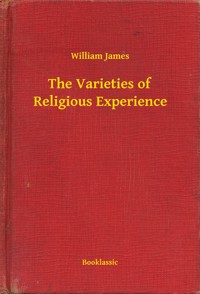



The Varieties of Religious Experience (Summarized Edition)
Table of Contents
Introduction
Between the intimate tremor of private faith and the cool scrutiny of science, William James stages a searching conversation about what it means to have a religious life. The Varieties of Religious Experience is a landmark in psychology and the philosophy of religion, drawn from the Gifford Lectures delivered at the University of Edinburgh in 1901–1902 and published soon after. Addressing a broad audience, James approaches religion not as doctrine or institution but as lived experience. He attends to personal narratives and observable effects, asking what inner states reveal about belief. The setting in a lecture hall shapes its cadence: patient, cumulative, and deliberately conversational.
Rather than defend a creed, James investigates how individuals describe conversion, assurance, despair, and renewal, and how such states transform conduct. He reads memoirs, testimonies, and case reports with a clinician’s eye and a humanist’s sympathy, weighing temperaments and histories. The prose moves between careful analysis and vivid anecdote, echoing a teacher intent on clarity while refusing premature certainty. Readers encounter an author who tests claims by their practical bearings, yet refuses to reduce experience to mere mechanism. The tone is exploratory and plural, more mapmaking than verdict, inviting reflection without pressing for agreement or conformity.
The lectures survey a wide field of religious phenomena while staying close to the testimonies of particular lives. James considers patterns of joy and cheerfulness alongside experiences of guilt, melancholy, and division, and he explores how some people pass through decisive change into a new moral orientation. He examines prayer as a psychological act, the marks and credibility of mystical states, and the ethical fruits associated with devotion and self-surrender. Case materials range from well-known autobiographies to obscure reports, chosen not to prove a doctrine but to illuminate varieties of response. Throughout, the organizing question is what these experiences do for those who have them.
Central to James’s approach is a pragmatic test: the meaning of a belief shows itself in its consequences for conduct, character, and endurance. He does not attempt to prove theological propositions or arbitrate among traditions; instead he asks how different temperaments, needs, and crises make certain experiences compelling. This focus on the individual, rather than on churches or creeds, gives the book its distinctive scope and also its limits. The argument values plurality without flattening differences, and it leaves ultimate metaphysics open. As a result, readers retain freedom to assent or dissent, while engaging a framework that respects sincerity and observable outcomes.
The book remains timely because it treats religion as a human phenomenon that can be studied without cynicism or credulity. In an era attentive to mental health, pluralism, and the ethics of care, James’s emphasis on lived effects offers a common vocabulary for believers, skeptics, and scholars. Counselors, educators, and readers navigating secular and sacred commitments can find tools for understanding crisis, healing, purpose, and moral energy. At the same time, his caution about generalizing from single cases models intellectual humility. The work’s patient pluralism and insistence on experience give it continuing relevance in conversations about meaning, identity, and social coexistence.
Reading The Varieties of Religious Experience is less like consulting a manual than joining a seminar that unfolds through examples. James builds momentum by juxtaposing reports, drawing careful distinctions, and pausing for synthesis, so the book rewards attentive, paced reading. His diction reflects its era but remains lucid, and his metaphors serve clarity rather than ornament. Because he keeps metaphysical conclusions provisional, the reader’s own reflections become part of the inquiry. The result is an unusual blend of case study, philosophical probing, and psychological observation that invites conversation across differences without demanding that anyone surrender their deepest commitments.
To approach this book is to encounter a thinker determined to honor both the data of inner life and the standards of critical inquiry. Its enduring insight is that religion, viewed through the prism of experience, is neither reducible to mystification nor exhausted by analysis. James’s pages open a space in which competing outlooks can meet, test themselves by their fruits, and learn from unexpected neighbors. For contemporary readers, that space remains precious: a field for disciplined wonder, moral experimentation, and sympathetic attention to lives unlike our own. The dialogue he brokered continues, and the questions he posed still press.
Synopsis
William James’s The Varieties of Religious Experience, drawn from the Gifford Lectures delivered in Edinburgh in 1901–1902 and published in 1902, investigates religion through psychology and pragmatism, centering on individual experience rather than institutions or creeds. James limits his inquiry to personal states of feeling, belief, and transformation, asking what these experiences are like, how they arise, and what effects they have. He gathers autobiographies, clinical reports, and testimonies from diverse traditions to build an inductive portrait. He neither defends nor refutes theology, but proposes to assess religion by its observable consequences in conduct and mental life.
He opens with the relation between religious states and the nervous system, recognizing physiological correlates while rejecting the simple fallacy that origin discredits worth. He argues evaluation should rest on experiential fruits. He defines religion as experiences of individuals in relation to what they regard as divine or an unseen order, commonly felt as a presence that alters appraisal of life. Case materials show how certainty may attach to such feelings, though their content varies culturally. James emphasizes temperamental differences and the role of suggestion and habit, framing religion as a field where psychological description can proceed without metaphysical verdicts.
James next examines varieties of temperament that shape religious life, beginning with healthy-mindedness, an orientation that minimizes evil and dwells on the world’s goodness. He surveys mind-cure movements and optimistic piety that cultivate happiness, confidence, and healing through suggestion and attention. Such experiences often yield buoyant energy and practical reform of habits. Yet he notes limits: the tendency to overlook tragedy and moral struggle. The analysis introduces his broader contrast between lighter and darker religious sensibilities and sets the stage for probing experiences that foreground guilt, vulnerability, and the need for reconciliation beyond cheerfulness.
Turning to the sick soul, James gathers accounts of melancholy, anxiety, and a sense of radical wrongness that can saturate consciousness. These individuals experience division within the self, where ideals and impulses clash, and where ordinary resources feel inadequate. He traces how such states can deepen reflection on finitude, evil, and personal failure, generating a craving for relief and unity. Psychological observation shows how despair may alternate with hope, preparing the ground for transformative moments. This portrait of inner conflict becomes central to later chapters on how the divided self seeks unification and renewed moral orientation.
The study of conversion deploys extensive narratives to analyze sudden and gradual transformations. James distinguishes processes driven by deliberate effort from those involving surrender, noting how latent materials in the subconscious can reorganize the personality. Sudden conversions often arrive with a felt solution to prior conflicts, bringing peace, energy, and new motives; gradual conversions consolidate insight through sustained practice and reflection. Across types, he highlights durable fruits such as altered habits, resilience, and social engagement, while observing that not all reported changes endure. The psychological mechanisms, rather than doctrinal differences, anchor his comparative approach.
James then treats saintliness as an amplified outcome of religious experience. He distills common traits reported across traditions: heightened charity, purity of intention, ascetic restraint, and a readiness for sacrifice. Such lives can exert notable moral influence and inspire communal service. Yet he also interrogates excesses and liabilities, including imprudence, intolerance, or neglect of ordinary goods when ideals harden. His appraisal keeps origin and value distinct, asking whether saintly dispositions cultivate verifiable benefits for the self and others. The chapter balances admiration for transformed will with scrutiny of psychological costs and the diversity of social consequences.
The lectures on mysticism analyze experiences characterized by a sense of union with a more-than-personal reality. James identifies recurrent marks: they resist full expression in language, carry a felt insight or illumination, tend to be brief, and are often accompanied by passivity of the will. He examines ranges from gentle absorption to overwhelming ecstasy, drawing examples from multiple traditions. While granting their authority for those who undergo them, he questions their binding force for others and recommends practical tests of worth. The inquiry emphasizes continuity between mystical states and ordinary consciousness through the threshold of the subconscious.
In discussing prayer, inspiration, and automatism, James explores how the subliminal mind may mediate experiences that feel given rather than made. Reports of guidance, answered petitions, and healing are treated as data for psychology, with attention to suggestion and the reorganization of motivation. He then considers philosophical interpretations—monistic, theistic, and pluralistic—without insisting on a final system, keeping the inquiry empirical. Additional traits such as sacrifice, asceticism, and enthusiasm are revisited to weigh their practical bearings. The closing movement gathers these strands into a framework for evaluating religion that links subjective states with durable conduct.
The book’s enduring significance lies in its method and scope: a comparative, psychologically informed portrait of how individuals encounter, interpret, and are changed by what they take to be higher realities. By privileging first-person testimony yet insisting on behavioral outcomes as the test of worth, James models a way to study religion that is neither credulous nor dismissive. The argument invites ongoing research into temperament, habit, and the subconscious, and fosters tolerance for diversity in spiritual life. Without resolving metaphysical disputes, it offers tools for discerning when religious experiences contribute to human flourishing and ethical action.
Historical Context
William James delivered the Gifford Lectures on Natural Religion at the University of Edinburgh in 1901–1902; they were published in 1902 as The Varieties of Religious Experience. The Gifford endowment, established in 1887 by Lord Adam Gifford, charged lecturers to advance natural theology at Scotland’s ancient universities. James approached the task as an American philosopher and psychologist based at Harvard, where he had taught since the 1870s. Addressing a transatlantic audience in a period of intense debate over science and faith, he framed religion as a set of experiences open to empirical study, rather than as doctrines confined to ecclesiastical authority.
James wrote amid the professionalization of psychology. Wilhelm Wundt founded the first experimental psychology laboratory at Leipzig in 1879, and the American Psychological Association was organized in 1892. James’s own Principles of Psychology (1890) had helped define the new discipline. Physicians and psychiatrists were classifying so-called nervous conditions such as neurasthenia (named by George M. Beard in 1869), while French researchers like Théodule Ribot and Pierre Janet analyzed memory, hysteria, and dissociation. Against this backdrop, James treated religious conversion, melancholy, and mysticism as phenomena continuous with ordinary psychology, using case histories and introspective reports that could be compared with clinical and laboratory findings.
Religious life in the United States and Britain at century’s end was diverse and contested. Rapid industrialization and urbanization shifted congregational life, while immigration broadened the spectrum of belief. Evangelical revivalism remained influential, with figures like Dwight L. Moody shaping Protestant practices into the 1890s, and the Holiness and Keswick movements stressing sanctification. The Social Gospel gained prominence in the 1880s and 1890s, urging ethical reform. These currents supplied testimonies of conversion, assurance, and moral transformation that James mined as data. He focused on first-person accounts from Protestant, Catholic, and other traditions to assess religion’s practical effects on character.
Debates over science and scripture framed the era. Charles Darwin’s On the Origin of Species (1859) and The Descent of Man (1871) challenged traditional teleology, while Thomas H. Huxley’s term agnostic (coined in 1869) captured a skeptical stance toward metaphysics. German higher criticism, associated with scholars such as Julius Wellhausen, subjected biblical texts to historical analysis. Comparative religion expanded with projects like Max Müller’s Sacred Books of the East (begun in 1879). Against this backdrop, James avoided sectarian apologetics and doctrinal polemic, proposing instead that the worth of religion be judged by experiential fruits observable in personal and social life.
Late nineteenth-century therapeutic and metaphysical movements supplied prominent case material. The New Thought milieu promoted mental healing and optimistic healthy-mindedness, while Mary Baker Eddy’s Church of Christ, Scientist (organized in 1879) advanced spiritual healing grounded in Science and Health (1875). Transatlantic audiences also encountered Theosophy, founded in 1875, and various faith-healing currents. James engaged these examples not to endorse any sect, but to evaluate how beliefs, expectations, and practices influenced well-being. He contextualized such movements within broader medical debates, comparing claimed cures and moral changes with pathological states, and asking what psychological mechanisms might account for their reported efficacy.
James’s openness to unusual experiences was shaped by psychical research. The Society for Psychical Research was founded in London in 1882, and the American Society for Psychical Research followed in 1885; James helped found the latter and investigated mediumship, notably the case of Leonora Piper. He served as president of the British Society for Psychical Research in 1894–1895. While cautious about proof, he insisted that exceptional experiences merited careful, empirical scrutiny rather than dismissal. This posture informed his reliance on first-person documents, case collections, and cross-cultural examples, and his insistence that anomalous states could illuminate ordinary religious psychology.
James’s project also responded to contemporaries studying religion scientifically. Edwin Diller Starbuck’s The Psychology of Religion (1899) gathered statistical data on conversion and adolescence; James cited and critiqued such work. Psychologist James H. Leuba published early empirical studies in the 1890s. Philosophically, James extended a pragmatic method seeded by Charles S. Peirce’s 1878 essays, and defended religious commitment under uncertainty in The Will to Believe (1897). In Varieties he evaluates religion by its practical consequences—moral energy, resilience, and conduct—while challenging medical materialism, the tendency to reduce faith to pathology, as an incomplete account of complex human experience.
Published at the dawn of the Progressive Era, the book reflects a culture wrestling with modernization, pluralism, and therapeutic ideals. James bypassed institutional polemics to consider how individuals narrate crisis, conversion, and renewal, integrating clinical insight with comparative learning. His transatlantic venue and eclectic sources epitomized expanding scholarly networks that treated religion as a human phenomenon amenable to evidence. At the same time, his critique of reductionism and dogmatism challenged prevailing certainties on both sides. The result is a landmark that mirrors its moment—scientific yet humane—while proposing standards of judgment that continue to inform psychology, religious studies, and philosophy.




