



0,49 €
Niedrigster Preis in 30 Tagen: 1,99 €
Niedrigster Preis in 30 Tagen: 1,99 €
Mehr erfahren.
- Herausgeber: Booksell-Verlag
- Kategorie: Sachliteratur, Reportagen, Biografien
- Sprache: Englisch
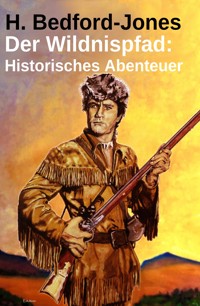
H. Bedford-Jones' "The Wilderness Trail" is a masterful exploration of the rugged terrain and untamed spirit of the American frontier. Set against the picturesque backdrop of the early 19th century, the novel delves into the lives of explorers and pioneers who navigate the physical and psychological challenges of wilderness survival. Bedford-Jones employs a vivid, evocative prose style akin to the romanticism prevalent in his era, deftly capturing the nuances of adventure and the profound relationship between humans and nature. The narrative is intricately woven with historical references that situate the personal struggles of the characters within a broader context of exploration and discovery. H. Bedford-Jones, often referred to as the "King of the Pulps," was a prolific author whose extensive travels and experiences in various settings greatly informed his writing. Raised in a time of burgeoning American identity, he developed a keen interest in the tales of adventure and the heroism embodied by early American frontiersmen. This background provided him a wellspring of material, allowing him to craft stories that reflect both the external challenges of exploration and the internal dilemmas faced by his characters. Fans of historical fiction, as well as those drawn to narratives steeped in adventure and nature, will find "The Wilderness Trail" an invaluable read. Bedford-Jones' meticulous attention to detail and character development invites readers to immerse themselves in an era of discovery, making it not only an adventure story but also a poignant commentary on human resilience. In this enriched edition, we have carefully created added value for your reading experience: - A succinct Introduction situates the work's timeless appeal and themes. - The Synopsis outlines the central plot, highlighting key developments without spoiling critical twists. - A detailed Historical Context immerses you in the era's events and influences that shaped the writing. - A thorough Analysis dissects symbols, motifs, and character arcs to unearth underlying meanings. - Reflection questions prompt you to engage personally with the work's messages, connecting them to modern life. - Hand‐picked Memorable Quotes shine a spotlight on moments of literary brilliance. - Interactive footnotes clarify unusual references, historical allusions, and archaic phrases for an effortless, more informed read.
Das E-Book können Sie in Legimi-Apps oder einer beliebigen App lesen, die das folgende Format unterstützen:
Veröffentlichungsjahr: 2022
Ähnliche



















The Wilderness Trail
Table of Contents
Introduction
A road hacked through raw country becomes not just a line on a map but a crucible where endurance, loyalty, and judgment are tested, and where the price of forging onward—through weather, wilderness, and the wills of others—must be weighed at every step.
The Wilderness Trail by H. Bedford-Jones introduces readers to an adventure shaped by distance, danger, and decisions made far from the safety of settled roads. Bedford-Jones (1887–1949) was among the most prolific American storytellers of the early twentieth century, known for swift, vividly plotted fiction across the pulp magazine era. This novel belongs to that tradition: a tale grounded in practical details of travel and pursuit, attentive to the cadence of hard going in rugged country. Without relying on antiquarian display, it draws on historical textures and the romance of exploration, situating its drama amid remote reaches where maps thin and human intentions collide.
At its outset, the narrative follows travelers compelled into a challenging passage through sparsely settled land, tasked with a purpose that demands nerve, discretion, and speed. Their route, more a sequence of hazards than a simple line, entangles them with competing interests and uneasy truces, and invites choices that cannot be postponed. The early chapters establish the stakes in clear, kinetic terms—supplies, weather, ground, and the unpredictability of other people—while hinting at broader forces that frame the mission. The experience offered is lean and propulsive: close-quarters action, wary dialogue, and a mounting sense that every mile invites both opportunity and risk.
In keeping with Bedford-Jones’s broader body of work, the prose is disciplined and vivid, favoring concrete detail over ornament and momentum over digression. Scenes turn on tactile specifics—sound, wind, water, brush, the small economies of camp and trail—so that physical effort registers alongside strategic calculation. The voice carries a period idiom without becoming opaque, giving the pages a brisk, reportorial clarity. Action is staged cleanly, with geography and intention legible to the reader, while the mood remains alert, watchful, and frequently austere. Even moments of respite feel provisional, defined by the knowledge that weather, terrain, or ambition can change without warning.
Several themes give the book its durability. It tests the boundary between prudence and daring, sketching how necessity reshapes rules when authority is distant. It meditates on allegiance—personal, professional, and provisional—and on how trust is built, strained, and sometimes bartered under pressure. The wilderness is not simply backdrop but a force that exposes character, requiring resilience, improvisation, and humility before what cannot be controlled. Questions about belonging and passage—who has the right to travel, claim, protect, or profit—surface in conflicts that remain grounded in immediate stakes. Throughout, the narrative treats courage less as bravado than as the steady management of fear.
Read today, The Wilderness Trail offers more than an excursion into classic adventure; it opens a conversation about risk, responsibility, and the stories cultures tell about remote places. Its emphasis on logistics, leadership under uncertainty, and cooperation amid rivalry resonates with contemporary interests in expedition narratives and survival literature. At the same time, the book bears the assumptions of its era, inviting attentive readers to weigh its depictions of people and places with a critical eye. That reflective stance enriches the excitement, allowing the novel to serve both as engrossing entertainment and as a document of how the pulp imagination mapped the unknown.
For newcomers to H. Bedford-Jones, this is a concentrated demonstration of how he balanced pace with atmosphere, crafting stories that move while suggesting deeper currents beneath the action. For longtime readers of pulp and adventure, it supplies the satisfactions of terrain-savvy plotting, resourceful protagonists, and steadily tightening stakes. Beyond those circles, it rewards anyone drawn to narratives of movement through difficult country and the moral calculations that accompany such travel. Without overpromising grandeur, The Wilderness Trail delivers a taut, skillful journey that respects the intelligence of its readers and the elemental challenges of its setting.
Synopsis
Set on the eighteenth century North American frontier after an uneasy truce, The Wilderness Trail follows an experienced woodsman drawn back into service when rumors of renewed conflict spread across forests, lakes, and trading posts. He is tasked to guide a compact party along an unmarked route toward a remote strongpoint, carrying intelligence that could steady a fragile peace. The mission is as much about reading people as it is about reading the land. With supply lines thin and alliances unstable, the journey promises more than hardship; it becomes a test of caution, resolve, and the delicate balance among soldiers, traders, and Native nations.
The party gathers at a rough outpost, a knot of cabins and palisades facing the timbered unknown. It includes a stern officer mindful of orders, a pragmatic fur trader fluent in the economies of the woods, a Native guide whose knowledge is essential, and a traveler whose purpose remains unclear. Early miles reveal the trail as a network of rivers, portages, and game paths threaded through disputed territory. Weather and water dictate their pace. Each member carries separate loyalties, and small decisions begin to matter. Signs of unrest appear in passing: abandoned traps, emptied caches, and stories traded over campfires.
At a river post they hear of a widening design to choke off supplies and bind scattered villages under a single banner. The news reframes their task from routine courier work to a race against converging forces. A skirmish on the shore forces them to test their partnership and their tactics, and the traveler proves unexpectedly capable under fire. The guide insists on protocols of respect when crossing sacred ground, reminding the party that roads exist by consent as much as by discovery. They move forward by diplomacy and care, choosing caution rather than force whenever the path narrows.
As the route bends north and inland, the land grows harsher. Muskeg, blown-down timber, and sudden frosts threaten their food and strength. The woodsman recalls an earlier campaign whose costs still shadow the frontier, keeping him alert to patterns in tracks, smoke, and silence. They read coded blazes and find posts burned or deserted, evidence that plans have outrun letters. Trust deepens cautiously, shaped by shared labor at the poles and paddles. When storms turn trails into rivers, they adapt by cutting new portages and rationing carefully. The mission remains clear, but the distance between intent and outcome widens.
A turning point arrives at a neutral village where trade goods, tobacco, and words are set out with equal care. The party seeks safe passage and the chance to carry their warning without opening new quarrels. A rival scout appears, representing the other empire with polished manners and sharp questions. The council runs on speeches and silence, where a nod or a pipe means more than a shout. Permission is granted, but with a condition that complicates their objective and binds them to more than their own cause. The trail ahead is open, yet entangled in promises they cannot ignore.
Beneath the canopy, those promises are tested. An ambush springs from the spruce and alder, forcing a withdrawal into trackless country. The woodsman shifts from guide to commander, splitting loads, masking tracks with water travel, and running canoes down cold rapids by starlight. The officer bleeds but holds his discipline; the trader barters with salvaged goods for news; the guide charts a line through country where the compass fails. The traveler’s loyalties, once ambiguous, fracture and then reform under pressure. When they reach higher ground, they are fewer, leaner, and late, but the message they carry has sharpened.
The last stretch leads toward a threatened stockade where a handful of defenders watch multiple horizons. The party weighs whether to break through at once or divert to answer a cry for help that would cost time and safety. They choose a course that preserves the mission while acknowledging obligations earned along the way. Moving at night, they cross ditches and shadows, count sentries by their footfall, and glimpse the larger plan without laying it bare. Inside, decisions are made quickly and without fanfare. The traveler’s true allegiance becomes deed rather than declaration, altering the balance at a crucial moment.
Events converge along the titular trail, a corridor of water and woodland that shapes tactics and fate. Allies met on the outward journey now return small favors in decisive ways, closing paths to pursuers and opening others at need. Messages reach where they must, and a broader escalation is checked, though not erased. The conflict resolves in movement rather than spectacle, with distance and weather finishing what courage begins. Losses are acknowledged, maps amended, and the frontier’s rough arithmetic holds. What emerges is not triumph so much as a workable calm, secured by endurance and the memory of near disaster.
The closing chapters return to the outpost and to uncertain days. The mission has shifted the terms among soldiers, traders, and neighboring nations, but no one pretends the woods will be quiet for long. The protagonist weighs what was gained against what was spent, seeing the trail as both path and boundary, a line where promises and pragmatism meet. The book’s message is steady: survival and honor on the frontier depend on restraint, respect, and the skill to read the land and its people. The Wilderness Trail concludes with a guarded peace, acknowledging that every road forward must be earned anew.
Historical Context
H. Bedford-Jones situates The Wilderness Trail in the trans-Appalachian borderlands of North America, a vast geography stretching from the upper Holston and Watauga valleys across the Cumberland Gap into central Kentucky and onward to the Ohio River. The timeframe evoked runs from the mid-eighteenth century through the 1790s, when imperial rivalry, Native diplomacy and resistance, and settler migration collided. This is a world of fortified stations, river crossings, and narrow gaps where scouts, traders, soldiers, and families threaded through dense forests. The novel’s evocation of the “trail” mirrors the historical Wilderness Road, a corridor of movement and conflict linking the old Virginia frontier to the Bluegrass country during decades of rapid, contested change.
The French and Indian War (1754–1763) set the stage for later developments across the Ohio Country. British colonial forces and Native allies fought France and its Indigenous partners over forts like Duquesne and Niagara, culminating in the fall of Quebec (1759) and the Treaty of Paris (1763). This redrew sovereignty claims and intensified Anglo-American expansion pressure. The novel echoes this crucible by foregrounding scouts, interpreters, and mixed-war-party tactics that emerged in that war. It reflects how post-1763 British policies and veteran frontiersmen translated wartime routes and knowledge into peacetime migration pathways that would soon become the “wilderness trail.”
The creation and use of the Wilderness Road—often called the Wilderness Trail—was a pivotal event. In March 1775, Richard Henderson’s Transylvania Company negotiated the controversial Transylvania Purchase at Sycamore Shoals (on the Watauga River), with Cherokee leaders such as Oconostota and Attakullakulla signing; Dragging Canoe vehemently opposed it. Daniel Boone then led axemen to blaze a road from the Holston settlements through Cumberland Gap to the Kentucky River, where Boonesborough was founded. This track connected to existing stations at Harrodsburg (established 1774) and to Logan’s Fort. The path carried thousands of migrants between 1775 and the early 1790s despite constant raids and shortages. By dramatizing perilous crossings, makeshift ferries, and palisaded refuges, the book mirrors the logistical, legal, and moral uncertainties unleashed by a private land scheme that Virginia would later void (1778) while largely confirming settler titles. The trail is thus not merely a road but a contested artery binding corporate ambition, settler necessity, and Indigenous dispossession.
The Cherokee-American conflicts, including the Chickamauga Wars (1776–1794), formed the backdrop to early travel along the trail. Following the 1775 purchase, Cherokee towns divided; while figures like Nancy Ward advocated for restraint, Dragging Canoe led a militant faction south and west to the Chickamauga Towns near present-day Chattanooga, launching raids against frontier stations. Campaigns like the 1776 Rutherford Expedition devastated some Cherokee towns, fueling cycles of reprisal. Spanish and British agents intermittently supplied Indigenous resistance. The novel channels this history into scenes of ambush along river fords, fraught parleys, and evasive travel strategies, emphasizing how diplomacy and small-unit warfare structured every mile of borderland movement.
Kentucky’s Revolutionary-era warfare sharpened the trail’s dangers. In early 1778, Daniel Boone was captured near the Blue Licks while making salt, adopted into a Shawnee community under Chief Blackfish, and escaped to warn Boonesborough; the fort endured a major siege in September 1778 by Shawnee and allies influenced from British Detroit. Frontier stations at Harrodsburg and Logan’s Fort faced repeated attacks in 1777–1778, and the Battle of Blue Licks (1782), involving British Captain Caldwell and Simon Girty with Shawnee and Wyandot warriors, became one of the war’s last bloody engagements. The book mirrors these realities in its depiction of stockades, militia musters, and the precarious line between captivity and survival.
The Northwest Indian War (1785–1795) reshaped the Ohio Valley after the Revolution. A confederacy of Miami, Shawnee, Delaware, and others defended homelands against U.S. incursions. American forces suffered major defeats in Harmar’s campaign (1790) near Kekionga and in St. Clair’s Defeat (1791) on the Wabash, before General Anthony Wayne’s Legion won at Fallen Timbers (1794) near present-day Maumee, Ohio. The Treaty of Greenville (1795) then compelled large land cessions. The novel’s frontier journeys implicitly traverse a landscape militarized by these campaigns, where convoys, rangers, and guides relied on the same mountain corridors and river routes that migrants and traders used.
Land policy and speculation defined the politics of the trail. The Royal Proclamation of 1763 restricted settlement west of the Appalachians, yet treaties such as Fort Stanwix (1768) extended cessions to the Ohio River, spurring Kentucky ventures. Henderson’s Transylvania claim was nullified by Virginia in 1778, but settlers generally retained tracts via Virginia land warrants, military bounties, and county surveys. Kentucky, carved as a Virginia district in 1776, entered the Union in 1792. The book’s conflicts mirror frictions among speculators, surveyors, and smallholders, and the movement of both free migrants and enslaved laborers who were forced along the same road into the expanding plantation and mixed-subsistence economy of the interior.
As social and political critique, the book exposes the severe inequities embedded in frontier expansion. Its emphasis on contested corridors highlights how private companies, imperial agents, and later state authorities converted Indigenous homelands into surveyed commodities while ordinary settlers bore the costs of war, scarcity, and legal ambiguity. By foregrounding captivity, treaty mistranslations, and unequal bargains, it critiques the dispossession of Native nations and the class divides between land-poor migrants and land-rich speculators. The portrayal of militia justice, ad hoc governance, and the trafficking of enslaved people along the trail underscores a polity built through coercion as much as courage, inviting scrutiny of the era’s triumphant narratives.




