



0,49 €
Niedrigster Preis in 30 Tagen: 1,99 €
Niedrigster Preis in 30 Tagen: 1,99 €
Mehr erfahren.
- Herausgeber: DigiCat
- Kategorie: Gesellschafts- und Liebesromane
- Sprache: Englisch
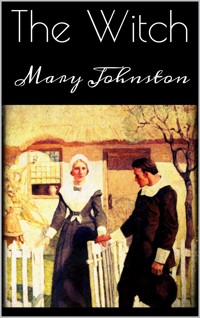
Mary Johnston's "The Witch" is a captivating historical novel set in early 17th-century colonial Virginia, exploring themes of superstition, gender, and societal conflict. Written in a lush, descriptive style, Johnston skillfully interweaves the personal struggles of her characters with the broader historical context of the witch hunts that gripped the Puritan colonies. This intricate narrative delves into the psyche of its protagonist, a woman accused of witchcraft, and examines the moral complexities surrounding fear, power, and the erosion of community bonds, thereby enriching the reader's understanding of this tumultuous period. Johnston, an accomplished novelist known for her vivid storytelling and feminist interests, was deeply influenced by her Southern upbringing and the historical narratives of early America. Her own involvement in the Virginia suffrage movement likely informed her depiction of female agency and vulnerability in a patriarchal society. Drawing from her extensive research into the colonial experience, Johnston's work reflects her commitment to portraying the nuanced lives of women in history, making "The Witch" a vivid commentary on gender dynamics. This powerful novel is essential for readers interested in American history, feminist literature, and the intersection of fear and society. Johnston's deft characterizations and atmospheric prose illuminate the harrowing effects of persecution, making "The Witch" not only a compelling read but also a profound exploration of the human condition. In this enriched edition, we have carefully created added value for your reading experience: - A succinct Introduction situates the work's timeless appeal and themes. - The Synopsis outlines the central plot, highlighting key developments without spoiling critical twists. - A detailed Historical Context immerses you in the era's events and influences that shaped the writing. - A thorough Analysis dissects symbols, motifs, and character arcs to unearth underlying meanings. - Reflection questions prompt you to engage personally with the work's messages, connecting them to modern life. - Hand‐picked Memorable Quotes shine a spotlight on moments of literary brilliance. - Interactive footnotes clarify unusual references, historical allusions, and archaic phrases for an effortless, more informed read.
Das E-Book können Sie in Legimi-Apps oder einer beliebigen App lesen, die das folgende Format unterstützen:
Veröffentlichungsjahr: 2022
Ähnliche
















The Witch
Table of Contents
Introduction
The Witch turns the gaze of a fearful community upon an uncommon woman and asks who truly wields the most dangerous power. Mary Johnston’s novel is a work of historical fiction, set in an earlier century when accusations of sorcery could unmake reputations and reorder lives. First appearing in the 1910s, it belongs to an era when American letters increasingly paired past settings with modern social inquiry. Johnston, an American novelist widely read for her historical narratives, uses the frame of a bygone world to probe the pressures that bind neighbors together—and drive them apart—when belief, law, and custom collide around a single contested figure.
Without disclosing later turns, the premise is spare and unsettling: rumors gather, an inquiry begins, and an independent woman—conspicuous for qualities that do not fit an approved mold—finds herself at the center of the village’s unease. Johnston traces how whispers become testimonies, how official procedures magnify private resentments, and how the desire for order feeds a hunt for explanations. The opening movements focus less on spectacle than on the incremental tightening of circumstance, inviting readers to feel the daily texture of a place where fear travels swiftly and sympathy must fight for a hearing.
The reading experience is marked by measured suspense, lucid description, and a steady moral gaze. Johnston writes in a clear, deliberate style that values atmosphere and psychological shading over sensational incident, allowing the larger forces of tradition and authority to loom without overwhelming the human scale. Scenes move from parlors and meetinghouses to open-air gatherings, and the narration keeps close to lived detail—gestures, whispers, the weight of a silence—so that the stakes are felt before they are declared. The tone is grave but not despairing, attentive to courage as well as cruelty, and to the stubborn complexity of conscience under pressure.
At its heart, the novel examines how communities decide what counts as truth, who is empowered to speak it, and what they will sacrifice to protect an idea of purity. Johnston is attentive to the circulation of rumor, the uses of religious language, and the ways institutions can harden when threatened. She also foregrounds gender, showing how expectations of submission and docility create the conditions by which a woman’s difference can be construed as danger. Reason and superstition contend with one another, but the contest is never abstract; it is entangled with property, prestige, and the habits by which neighbors recognize—or refuse to recognize—one another’s humanity.
As historical fiction, the book builds its critique through the material particulars of an earlier world: the cadence of public prayers, the protocols of local magistrates, the folkways that legislate dress, gesture, and allegiance. Johnston uses these textures to demonstrate how everyday life becomes the stage on which power is rehearsed and enforced. The result is not a museum display of the past but a living portrait of social mechanics. Readers encounter the slow escalation of evidence, the rhetoric of uprightness, and the fragile countercurrents of compassion, all of which make the story’s tensions feel intimate rather than distant or purely allegorical.
The work’s publication in the 1910s matters. Johnston wrote during a period of reformist conversation in the United States, and she herself was a public advocate for women’s suffrage. That context illuminates the novel’s preoccupation with voice, civic responsibility, and the consequences of confounding moral authority with unchecked power. Yet the historical setting prevents the book from collapsing into pamphleteering; the past becomes a mirror angled toward the present. By staging the costs of conformity and the peril of moral panics, Johnston aligns narrative sympathy with those who question, refuse, and persist when collective certainty demands submission.
For contemporary readers, The Witch remains urgent because it anatomizes how fear can be weaponized and how institutions, convinced of their rectitude, can err most gravely. It argues, through story rather than treatise, for the vigilance of conscience, the discipline of due process, and the ethical necessity of listening to the person at the center of a storm. Its enduring themes—gendered scrutiny, the politics of belief, the fragility of justice—are recognizable in many modern debates. Approached with patience, the novel rewards with a principled, absorbing narrative that asks readers to measure courage not by victory but by fidelity to the truth.
Synopsis
Mary Johnston’s historical novel unfolds in an early modern world uneasy with change, where learned inquiry begins to jostle inherited certainties. Against this backdrop, a woman whose independence and practical knowledge unsettle neighbors becomes the focus of suspicion, while a younger observer—educated, curious, and wary of dogma—emerges as a counterpoint to fear. Clergy, magistrates, and householders form a web of authority and rumor that frames the action. Without dwelling on sensational detail, the opening sections trace how ordinary grievances, chance misfortunes, and pious rhetoric combine to create a climate in which the charge of witchcraft can be imagined, voiced, and pursued.
The story’s first movements follow the slow thickening of talk into accusation. A sick child, a failed harvest, an unexplained quarrel—each supplies material for those inclined to see hidden malice. The woman’s skill with herbs and habit of solitary walks, once tolerated, are now invoked as evidence. Sermons stress vigilance; neighbors trade stories; officials promise discernment yet feed uncertainty. The skeptical observer begins gathering facts and testing claims, arguing for natural causes where others hear darker explanations. What had been village life becomes a theater of watchfulness, with every gesture interpreted and every silence read as confirmatory sign.
Johnston interlaces these events with the intellectual and spiritual tensions of the age. Pamphlets traffic in wonders; jurists cite precedent; physicians dispute causes; ministers search scripture. The narrative lets readers witness how learning can be bent to fear or mobilized to resist it. The observer seeks allies among those willing to question procedure, only to discover how social standing, patronage, and rivalry shape outcomes. The accused woman, meanwhile, must navigate expectations about obedience and speech, aware that self-defense may be construed as proof of guilt. The community’s insistence on certainty hardens just as ambiguity and doubt most require patience.
When official inquiry arrives, process appears orderly but proves perilous. Examinations turn into performances; recollections are compressed into tidy stories; the language of law grants weight to rumor. Confinement narrows the accused woman’s world to guarded rooms and brief interviews, while outside, factions compete to control interpretation. The observer and a small circle work to assemble testimony, urge moderation, and expose contradictions without provoking reprisals. Moments of ordinary kindness—food quietly shared, a door briefly left ajar—counterpoint the larger machinery of accusation. The proceedings move toward a public reckoning that will force choices, each carrying moral and practical cost.
A turning point reframes dangers and possibilities without yielding simple relief. The hearing reveals as much about the accusers as the accused, yet fear is not easily dislodged, and an unsettling incident renews agitation. Concluding that local remedies cannot resolve a problem rooted in authority and belief, the principals contemplate appeal beyond familiar jurisdiction. The narrative’s horizon widens from parish lanes to the open sea, where passage offers both hazard and hope. Johnston uses the shift to contrast rigid social enclosures with a frontier of contingencies, suggesting how distance—geographic and mental—can make space for rethinking inherited narratives.
In the newer settlements, the atmosphere is harsher and freer at once. Survival demands cooperation, but old habits of thought trail migrants like shadows. Work, weather, and wary neighborliness leave little time for hunts of the imagination, yet reputation remains fragile. The woman and her defenders test how much rein a community will grant to difference when resources are scarce and authority less centralized. Flashbacks and conversations keep the earlier ordeal in view, showing how fear can migrate across oceans. The story moves toward a resolution grounded not in spectacle but in earned understanding, restraint, and the quiet courage of daily choices.
Throughout, The Witch considers how societies respond to the unfamiliar, and what it takes for individuals to hold steady when crowds demand clarity at any cost. Johnston’s measured scenes emphasize process over sensationalism, revealing the mechanics of panic, the uses and limits of learning, and the gendered expectations that turn skill into suspicion. Without disclosing final outcomes, the novel closes on the possibility that empathy, evidence, and endurance can loosen fear’s grip. Its enduring resonance lies in the way it links a past controversy to perennial questions: how to balance conscience and order, how to listen, and how to live together without scapegoats.
Historical Context
The Witch, published in 1914 by American novelist Mary Johnston, draws its narrative from the early modern Anglo-American world in which witchcraft accusations carried real legal peril. The setting evokes communities governed by English law and the established Church of England, where parish vestries, county courts, and assize circuits oversaw daily order and criminal trials. In such towns and plantations, ministers, magistrates, and juries shaped reputations and determined guilt. The novel’s milieu reflects a period when belief in maleficium, charms, and prophecy coexisted with a growing print culture and an imperial Atlantic economy linking England with its colonies.
English statutes defined the crime. Parliament’s Acts against witchcraft in 1542 (Henry VIII), 1563 (Elizabeth I), and 1604 (James I) criminalized conjuration and familiar spirits, making certain offenses capital. James VI and I also advanced learned demonology, publishing Daemonologie in 1597. Trials proceeded in secular courts under common-law procedure, with indictments, depositions, and examinations by justices of the peace. While continental inquisitorial practices differed, English proceedings centered on witnesses, reputation, and alleged harms. The 1736 Witchcraft Act finally repealed earlier statutes and punished only fraudulent pretenders to magical powers, marking a legislative turn from prosecution of witchcraft to skepticism.
In the English colonies, including Virginia, local institutions applied metropolitan law within frontier conditions. Jamestown was founded in 1607; the House of Burgesses, created in 1619, and county courts managed civil and criminal business under the Church of England’s establishment. Virginia witnessed allegations of witchcraft but relatively few severe penalties. Surviving records indicate no executions for witchcraft there. The most famous case involved Grace Sherwood of Princess Anne County, ordered to a ducking ordeal in 1706 after neighborhood disputes; she later regained liberty and property by 1714. Colonial courts often treated such conflicts as slander, nuisance, or disorder rather than heresy.
Elsewhere in New England, the 1692–1693 Salem witchcraft crisis produced the largest Anglo-American outbreak: more than 150 accused, 20 executed, and several deaths in jail. Though shaped by Puritan theology and wartime frontier stress distinct from the Chesapeake, the episode informed later Anglo-American memory of witch trials and legal caution about spectral evidence. Massachusetts authorities soon curtailed the proceedings; in 1697 a day of fasting and repentance was proclaimed, and in 1711 many convictions were reversed with compensation to families. Subsequent public apologies and exonerations underscored how panic, factionalism, and dubious testimony could overwhelm ordinary judicial safeguards.
Across the seventeenth-century English Atlantic, accusations often arose from social and economic strain. Climatic hardship associated with the Little Ice Age, crop failures, epidemic disease such as smallpox, and the disruptions of war heightened communal anxiety. In Virginia, conflicts with Indigenous peoples and upheavals like Bacon’s Rebellion in 1676 unsettled authority and sharpened neighborly quarrels. Gender expectations under coverture constrained married women’s legal standing, while widows, midwives, healers, and assertive women could attract suspicion. Defamation suits over charges of “witch” appear in county records, revealing communities negotiating honor, charity, credit, and blame within a world suspicious of hidden causes.
Intellectual and legal shifts gradually undermined witch prosecutions. The Scientific Revolution, print debates, and institutions such as the Royal Society (chartered 1662) encouraged empirical skepticism. Writers like Reginald Scot, whose The Discoverie of Witchcraft (1584) challenged demonological claims, circulated arguments against credulity. In the late seventeenth century, Chief Justice Sir John Holt of the King’s Bench reportedly dismissed numerous witch cases for lack of credible evidence, insisting on material proof of harm. By the early eighteenth century, higher evidentiary standards, medical explanations for fits, and judicial caution narrowed the path to conviction, trends formalized by Parliament’s 1736 repeal.
Mary Johnston wrote during the Progressive Era, when Americans debated women’s rights, civil liberties, and social reform. A prominent Virginian author, she publicly supported woman suffrage and worked with the Equal Suffrage League of Virginia, founded in 1909 in Richmond. Johnston lectured and published essays urging political equality, drawing both praise and denunciation. Her novel Hagar (1913) provoked controversy in Virginia for its forthright feminism and critique of orthodox constraints. Into this climate she published The Witch (1914), turning to historical persecution to explore authority, conscience, and the policing of women’s behavior while her state contested enfranchisement and gender norms.
By staging witchcraft suspicion within English legal and religious frameworks, The Witch reflects the period’s entanglement of belief, governance, and social discipline, and it measures those forces against ideals of justice and reason. Its attention to parish politics, court procedure, and communal rumor mirrors archival patterns from England and the colonies. At the same time, Johnston’s Progressive Era vantage animates a critique of misogyny, moral panic, and punitive conformity, implicitly connecting early modern prosecutions to contemporary debates over women’s autonomy and the rule of law. The novel thus uses a verifiable past to interrogate enduring structures of power.
The Witch
CHAPTER I
THE QUEEN’S CHAMBER
It was said that the Queen was dying. She lay at Richmond, in the palace looking out upon the wintry, wooded, March-shaken park, but London, a few miles away, had daily news of how she did. There was much talk about her—the old Queen—much telling of stories and harking back. She had had a long reign—“Not far from fifty years, my masters!”—and in it many important things had happened. The crowd in the streets, the barge and wherry folk upon the wind-ruffled river, the roisterers in the taverns drinking ale or sack, merchants and citizens in general talking of the times in the intervals of business, old soldiers and seamen ashore, all manner of folk, indeed, agreed upon the one most important thing. The most important thing had been the scattering of the Armada fifteen years before. That disposed of, opinions differed as to the next most important. The old soldiers were for all fighting wherever it had occurred. The seamen and returned adventurers threw for the voyages of Drake and Frobisher and Gilbert and Raleigh. With these were inclined to agree the great merchants and guild-masters who were venturing in the East India and other joint-stock companies. The little merchant and guild fellows agreed with the great. A very large number of all classes claimed for the overthrow of Popery the first place. On the other hand, a considerable number either a little hurriedly slurred this, or else somewhat too anxiously and earnestly supported the assertion. One circle, all churchmen, lauded the Act of Uniformity[1], and the pains and penalties provided alike for Popish recusant and non-conforming Protestant. Another circle, men of a serious cast of countenance and of a growing simplicity in dress, left the Act of Uniformity in obscurity, and after the deliverance from the Pope, made the important happening the support given the Protestant principle in France and the Netherlands. A few extreme loyalists put in a claim for the number of conspiracies unearthed and trampled into nothingness—Scottish conspiracies, Irish conspiracies, Spanish conspiracies, Westmoreland and Northumberland conspiracies, Throgmorton conspiracies—the death of the Queen of Scots, the death, two years ago, of Essex.
All agreed that the Queen had had a stirring reign—all but the latter end of it. The last few years—despite Irish affairs—had been dull and settled, a kind of ditch-water stagnation, a kind of going downhill. Fifty years, almost, was a long time for one person to reign....
On a time the Queen had been an idol and a cynosure—for years the love of a people had been warm about her. It had been a people struggling to become a nation, beset with foreign foes and inner dissensions, battling for a part in new worlds and realms. She had led the people well, ruled well, come out with them into the Promised Land. And now there was a very human dissatisfaction with the Promised Land, for the streams did not run milk and honey nor were the sands golden. As humanly, the dissatisfaction involved the old Queen. She could not have been, after all, the Queen that they had thought her.... After crying for so many years “Long live Queen Elizabeth!” there would come creeping into mind a desire for novelty. King James,—King James! The words sounded well, and promised, perhaps, the true Golden Age. But they were said, of course, under breath. The Queen was not dead yet.
They told strange stories of her—the old Queen; usually in small, select companies where there were none but safe men. As March roared on, there was more and more of this story-telling, straws that showed the way the tide was setting. They were rarely now stories of her youth, of her courage and fire, of her learning, of the danger in which she lived when she was only “Madam Elizabeth,” of her imprisonment in the Tower—nor were they stories of her coronation, and of the way, through so many long years, she had queened it, of her “mere Englishness,” her steady courage, her power of work, her councillors, her wars, and her statecraft. Leaving that plane, they were not so often either stories of tragic errors, of wrath and jealousy, finesse and deception, of arbitrary power, of the fret and weakness of the strong.—But to-day they told stories of her amours, real or pretended. They repeated what she had said to Leicester and Leicester had said to her, what she had said to Alençon and Alençon had answered. They dug up again with a greasy mind her girlhood relations with Seymour, they created lovers for her and puffed every coquetry into a full-blown liaison; here they made her this man’s mistress and that man’s mistress, and there they said that she could be no man’s mistress. They had stories to tell of her even now, old and sick as she was. They told how, this winter, for all she was so ill at ease, she would be dressed each day in stiff and gorgeous raiment, would lie upon her pillows so, with rings upon her fingers and her face painted, and when a young man entered the room, how she gathered strength....
The March wind roared down the streets and shook the tavern signs.
In the palace at Richmond, there was a great room, and in the room there was a great bed. The room had rich hangings, repeated about the bed. The windows looked upon the wintry park, and under a huge, marble mantelpiece, carved with tritons and wreaths of flowers, a fire burned. About the room were standing women—maids of honour, tiring-women. Near the fire stood a group of men, silent, in attendance.
The Queen did not lie upon the bed—now she said that she could not endure it, and now she said that it was her will to lie upon the floor. They placed rich cushions and she lay among them at their feet, her gaunt frame stretched upon cloth of gold and coloured silk. She had upon her a long, rich gown, as full and rigid a thing as it was possible to wear and yet recline. Her head was dressed with a tire of false hair, a mass of red-gold; there was false colour upon her cheek and lip. She kept a cup of gold beside her filled with wine and water which at long intervals she put to her lips. Now she lay for hours very still, with contracted brows, and now she turned from side to side, seeking ease and finding none. Now there came a moan, and now a Tudor oath. For the most part she lay still, only the fingers of one hand moving upon the rim of the cup or measuring the cloth of gold beneath her. Her sight was failing. She had not eaten, would not eat. She lay still, supported upon fringed cushions, and the fire burned with a low sound, and the March wind shook the windows.
From the group of men by the fire stepped softly, not her customary physician, but another of some note, called into association during these last days. He crossed the floor with a velvet step and stood beside the Queen. His body bent itself into a curve of deference, but his eyes searched without reverence. She could not see him, he knew, with any clearness. He was followed from the group by a grave and able councillor. The two stood without speaking, looking down. The Queen lay with closed eyes. Her fingers continued to stroke the cloth of gold; from her thin, drawn lips, coloured cherry-red, came a halting murmur: “England—Scotland—Ireland—”
The two men glanced at each other, then the Queen’s councillor, stepping back to the fire, spoke to a young man standing a little apart from the main group. This man, too, crossed the floor with a noiseless step and stood beside the physician. His eyes likewise searched with a grave, professional interest.
“Navarre,” went the low murmur at their feet. “Navarre and Orange.... No Pope, but I will have ritual still.... England—Scotland—”
The Queen moaned and moved her body upon the cushions. She opened her eyes. “Who’s standing there? God’s death—!”
The physician knelt. “Madam, it is your poor physician. Will not Your Grace take the draught now?”
“No.—There’s some one else—”
“Your Grace, it is a young physician—English—but who has studied at Paris under the best scholar of Ambroise Paré. He is learned and skilful. He came commended by the Duke of —— to Sir Robert Cecil—”
“God’s wounds!” cried the Queen in a thin, imperious voice. “Have I not told you and Cecil, too, that there was no medicine and no doctor who could do me good! Paré died, did he not? and you and your fellow will die! All die. I have seen a many men and matters die—and I will die, too, if it be my will!”
She stared past him at the strange physician. “If he were Hippocrates himself I would not have him! I do not like his looks. He is a dreamer and born to be hanged.—Begone, both of you, and leave me at peace.”
Her eyes closed. She turned upon the cushions. Her fingers began again to move upon the rich stuff beneath her. “England—”
The rejected aid or attempt to aid stepped, velvet-footed, backward from the pallet. The physicians knew, and all in the room knew, that the Queen could not now really envisage a new face. She might with equal knowledge have said of the man from Paris, “He is a prince in disguise and born to be crowned.” But though they knew this to be true, the Queen had said the one thing and had not said the other, and what she said had still great and authoritative weight of suggestion. The younger physician, returning to his place a little apart alike from the women attendants and from the group of courtiers, became the recipient of glances of predetermined curiosity and misliking. Now, as it happened, he really did have something the look of a dreamer—thin, pale, and thoughtful-faced, with musing, questioning eyes. While according to accepted canons it was not handsome, while, indeed, it was somewhat strange, mobile, and elf-like, his countenance was in reality not at all unpleasing. It showed kindliness no less than power to think. But it was a face that was not usual.... He was fairly young, tall and well-formed though exceedingly spare, well dressed after the quiet and sober fashion of his calling. Of their own accord, passing him hastily in corridor or street, the people in the room might not have given him a thought. But now they saw that undoubtedly he was strange, perhaps even sinister of aspect. Each wished to be as perspicacious as the Queen.
But they did not think much about it, and as the newcomer, after a reverence directed toward the Queen, presently withdrew with the older physician,—who came gliding back without him,—and as he was seen no more in the palace, they soon ceased to think about him at all. He had been recommended by a great French lord to the favour of Sir Robert Cecil. The latter, sending for him within a day or two, told him bluntly that he did not seem fitted for the Court nor for Court promotion.
The March wind roared through London and over Merry England and around Richmond park and hill. It shook the palace windows. Within, in the great room with the great bed, the old Queen lay upon the floor with pillows beneath her, with her brows drawn together above her hawk nose. At intervals her mortal disease and lack of all comfort wrung a moan, or she gave one of her old, impatient, round, mouth-filling oaths. For the most part she lay quite silent, uneating, unsleeping, her fleshless fingers keeping time against the rich cloth beneath her. Her women did not love her as the women of Mary Stuart had loved that Queen. Year in and year out, day in and day out, they had feared this Queen; now she was almost past fearing. They took no care to tell her that the carmine upon her face was not right, or that she had pushed the attire of hair to one side, and that her own hair showed beneath and was grey. They reasoned, perhaps with truth, that she might strike the one who told. She lay in her rich garments upon the floor, and the fire burned with a low sound beneath the wreathed tritons and she smoothed the gold cloth with her fingers. “England—Scotland—Ireland.... Mere English—... The Pope down, but I’ll have the Bishops still—”
CHAPTER II
THE CAP AND BELLS
The inn was small and snug, near Cheapside Cross[2], and resorted to by men of an argumentative mind. The Mermaid Tavern, no great distance away, had its poets and players, but the Cap and Bells was for statesmen in their own thought alone, and for disputants upon such trifles as the condition of Europe, the Pope, and the change in the world wrought by Doctor Martin Luther. It was ill-luck, certainly, that brought Gilbert Aderhold to such a place.
When he lost hope of any help from Cecil, the evident first thing to do upon returning from Richmond to London, was to change to lodgings that were less dear,—indeed, to lodgings as little dear as possible. His purse was running very low. He changed, with promptitude, to a poor room in a poor house. It was cold at night and dreary, and his eyes, tired with reading through much of the day, ached in the one candlelight. He went out into the dark and windy street, saw the glow from the windows and open door of the Cap and Bells, and trimmed his course for the swinging sign, a draught of malmsey and jovial human faces.
In the tavern’s common room he found a seat upon the long bench that ran around the wall. It was a desirable corner seat and it became his only by virtue of its former occupant, a portly goldsmith, being taken with a sudden dizziness, rising and leaving the place. Aderhold, chancing to be standing within three feet, slipped into the corner. He was near the fire and it warmed him gratefully. A drawer passing, he ordered the malmsey, and when it was brought he rested the cup upon the table before him. It was a long table, and toward the farther end sat half a dozen men, drinking and talking. What with firelight and candles the room was bright enough. It was warm, and at the moment of Aderhold’s entrance, peaceable. He thought of a round of wild and noisy taverns that he had tried one after the other, and, looking around him, experienced a glow of self-congratulation. He wanted peace, he wanted quiet; he had no love for the sudden brawls, for the candles knocked out, and lives of peaceable men in danger that characterized the most of such resorts. He sipped his wine, and after a few minutes of looking about and finding that the cluster at the far end of the table was upon a discussion of matters which did not interest him, he drew from his breast the book he had been reading and fell to it again. As he read always with a concentrated attention, he was presently oblivious of all around.
An arm in a puffed sleeve of blue cloth slashed with red, coming flat against the book and smothering the page from sight, broke the spell and brought him back to the Cap and Bells. He raised his chin from his hand and his eyes from the book—or rather from the blue sleeve. The wearer of this, a formidable, large man, an evident bully, with a captious and rubicund face, frowned upon him from the seat he had taken, at the foot of the table, just by his corner. The number of drinkers and conversers had greatly increased. There was not now just a handful at this especial table; they were a dozen or more. Moreover, he found that for some reason their attention was upon him; they were watching him; and he had a great and nervous dislike of being watched. He became aware that there was a good deal of noise, coarse jests and laughter, and some disputing. Yet they looked, for the most part, substantial men, not the wild Trojans and slashswords that he sometimes encountered. For all his physical trepidations he was a close and accurate observer; roused now, he sent a couple of rapid glances the length and breadth of the table. They reported disputatious merchants and burgomasters, a wine-flushed three or four from the neighbouring congeries of lawyers, a country esquire, some one who looked pompous and authoritative like a petty magistrate, others less patent,—and the owner of the arm still insolently stretched across his book.
The latter now removed the arm. “So ho! Master Scholar, your Condescension returns from the moon—after we’ve halloaed ourselves hoarse! What devil of a book carried you aloft like that?”
Aderhold decided to be as placating as possible. “It is, sir, the ‘Chirurgia Magna’ of Theophrastus Bombast von Hohenheim, called Paracelsus[3].”
The red and blue man was determined to bully. “The Cap and Bells has under consideration the state of the Realm. The Cap and Bells has addressed itself to you three times, requesting your opinion upon grave matters. First you deign no answer at all, and finally you insult us with trivialities! ’S death! are you an Englishman, sir?”
“As English as you, sir,” answered Aderhold; “though, in truth, seeing that I have lived abroad some years and am but lately returned, my English manners may have somewhat rusted and become clownish. I crave pardon of the worshipful company, and I shall not again read in its presence.”
A roisterer addressed him from halfway down the table. “We’ve got a ruling—we that frequent the Cap and Bells. You’re a stranger—and a strange-looking stranger, too, by your leave—and you must wipe out the offense of your outlandishness! A bowl of sack for the company—you’ll pay for a bowl of sack for the company?”
The colour flooded Aderhold’s thin cheek. He had not enough in his purse or anything like enough. To-morrow he expected—or hoped rather than expected—to receive payment from the alderman whose wife, having fallen ill before the very door of the house where he lodged, he had attended and brought out from the presence of death. But to-morrow was to-morrow, and to-night was to-night. He told the truth. “I am a poor physician, my masters, who hath of late been set about with misfortune—”
The red and blue bully smote the table with his fist.
“What a murrain is a man doing in the Cap and Bells who cannot pay for sack? Poor physician, quotha! I’ve known a many physicians, but none so poor as that—”
One of the lawyers, a middle-aged, wiry man in black, raised his head. “He says true. Come, brother, out with thy gold and silver!”
“When I shall have paid,” said Aderhold, “for the malmsey I have drunk, I shall not have fourpence in my purse.”
“Pay for the sack,” said the lawyer, “and leave the malmsey go.”
“Nay,” said Aderhold, “I owe for the malmsey.”
The red and blue man burst forth again. “Oons! Would you have it that you do not owe the sack? Call for the drink and a great bowl of it, aye! If the host is out at the end, he can take his pay with a cudgel or summon the watch! Physician, quotha? Now, as my name’s Anthony Mull, he looks more to me like a black seminary priest!”
Aderhold leaned back appalled. He wished himself in the windy street or the gloom of his lodgings, or anywhere but here. Was it all to begin again, the great weariness of trouble here and trouble there? To thread and dodge and bend aside, only in the end to find himself at bay, bright-eyed and fierce at last like any hunted animal—he who wanted only peace and quiet, calm space to think in! He groaned inwardly. “Ah, the most unlucky star!” There came to his help, somewhat strangely, and, though none noticed it, upon the start as it were of the red and blue bully’s closing words, the Inns of Court man who had spoken before. He took his arms from the table and, turning, called aloud, “William Host! William Host!”
The host came—a stout man with a moon face. “Aye, sir? aye, Master Carnock?”
“William Host,” said Carnock, “it is known, even in that remnant of Bœotia, the Mermaid Tavern, that thou ’rt the greatest lover of books of all the Queen’s subjects—”
The host assumed the look of the foolish-wise. “Nay, nay, I would not say the greatest, Master Carnock! But ’tis known that I value a book—”
“Then,” said the other, “here is a learned doctor with a no less learned book.” Rising, he leaned halfway over the table and lifted from before Aderhold the volume with which he had been engaged. “Lo! A good-sized book and well made and clothed! Look you, now! Is’t worth thy greatest bowl of sack, hot and sugared? It is—I see it by thine eye of judicious appraisement! I applaud thy judgement!—I call it a Solomon’s judgement.—Furnish the doctor with the sack and take the book for payment!”
Aderhold thrust out a long and eager arm. “Nay, sir! I value the book greatly—”
“If you are not a fool—” said the lawyer with asperity.
But the physician had already drawn back his arm. He could be at times what the world might call a fool, but his intelligence agreed that this occasion did not warrant folly. He might somehow come up with the book again; if the alderman paid, he might, indeed, come back to-morrow to the Cap and Bells and recover it from the host. When the first starting and shrinking from danger was over, he was quick and subtle enough in moves of extrication. He had learned that in his case, or soon or late, a certain desperate coolness might be expected to appear. Sometimes he found it at one corner, sometimes at another; sometimes it only came after long delay, after long agony and trembling; and sometimes it slipped its hand into his immediately after the first recoil. Whenever it came it brought, to his great relief, an inner detachment, much as though he were a spectator, very safe in some gallery above. Up there, so safe and cool, he could even see the humour in all things. Now he addressed the company. “My masters, Cleopatra, when she would have a costly drink, melted pearls in wine! The book there may be called a jewel, for I prized it mightily. Will you swallow it dissolved in sack? So I shall make amends, and all will be wiser for having drunk understanding!”
The idea appealed, the sack was ordered. But the red and blue bully was bully still. Aderhold would have sat quiet in his corner, awaiting the steaming stuff and planning to slip away as soon as might be after its coming. At the other end of the table had arisen a wordy war over some current city matter or other—so far as he was concerned the company might seem to be placated and attention drawn. He was conscious that the lawyer still watched him from the corner of his eye, but the rest of the dozen indulged in their own wiseacre wrangling. All, that is, but the red and blue bully. He still stared and swelled with animosity, and presently broke forth again. “‘Physician’! It may be so, but I do not believe it! As my name’s Anthony Mull, I believe you to be a Jesuit spy—”
The sack came at the moment and with it a diversion. Cups were filled, all drank, and the lawyer flung upon the board for discussion the growing use of tobacco, its merits and demerits. Then, with suddenness, the petty magistrate at the head of the table was found to be relating the pillorying that day, side by side, of a Popish recusant and a railing Banbury man or Puritan. All at table turned out to be strong Church of England men, zealous maintainers of the Act of Uniformity, jealous of even a smack of deviation toward Pope or Calvin. At the close of a moment of suspension, while all drank again, the red and blue bully, leaning forward, addressed the man of justice. “Good Master Pierce, regard this leech, so named, and put the question to him, will he curse Popery and all its works.”
It seemed, in truth, that this was Aderhold’s unlucky night. That, or there was something in the Queen’s declaration, there was something about him different, something that provoked in all these people antagonism. And yet he was a quiet man, of a behaviour so careful that it suggested a shyness or timidity beyond the ordinary[1q]. He was not ill-looking or villainous-looking—but yet, there it was! For all that he was indubitably of English birth, “Foreigner” was written upon him.
The present unluckiness was the being again involved in this contentious and noisy hour. He had been gathering himself together, meaning to rise with the emptying of the bowl, make his bow to the company, and quit the Cap and Bells. And now it seemed that he must stop to assure them that he was not of the old religion! Aderhold’s inner man might have faintly smiled. He felt the lawyer’s gaze upon him—a curious, even an apprehensive, gaze. The justice put the question portentously, all the table, save only the lawyer, leaning forward, gloating for the answer, ready to dart a claw forward at the least flinching. But Aderhold spoke soberly, with a quiet brow. “I do not hold with cursing, Master Justice. It is idle to curse past, present, or to come, for in all three a man but curses himself. But I am far removed from that faith, and that belief is become a strange and hostile one to me. I am no Papist.”
The bully struck the table with his fist. “As my name’s Anthony Mull, that’s not enough!”
And the justice echoed him with an owl-like look: “That’s not enough!”
A colour came into Aderhold’s cheek. “There is, my masters, no faith that has not in some manner served the world and given voice to what we were and are, good and bad. No faith without lives of beauty and grace. No faith without its garland. But since I am to clear myself of belonging to the old religion—then I will say that I abhor—as in a portion of myself, diseased, which I would have as far otherwise as I might—that I abhor in that faith all its cruelties past and present, its Inquisition, its torturers and savage hate, its wars and blood-letting and insensate strife, its falseness and cupidity and great and unreasonable pride, its King Know-No-More and its Queen Enquire-No-Further! I abhor its leasing bulls, its anathemas and excommunications, its iron portcullis dropped across the outward and onward road, its hand upon the throat of knowledge and its searing irons against the eyes of vision! I say that it has made a dogma of the childhood of the mind and that, or soon or late, there will stand within its portals intellectual death—”
The table blinked. “At least,” said the justice sagely, “you are no Papist!”
But the red and blue man would not be balked of his prey. “That’s round enough, but little enough as a true Churchman talks! You appear to me not one whit less one of us than you did before! Master Pierce, Master Pierce! if he be not a masked Jesuit, then is he a Marprelate man, a Banbury man, a snuffling, Puritan, holy brother! Examine him, Master Pierce! My name is not Mull, if he be not somehow pillory fruit—”
It seemed that they all hated a Puritan as much as a Papist. “Declare! Declare! Are you a Banbury Saint and a Brother? Are you Reformed, a Precisian, and a Presbyter? Are you John Calvin and John Knox?”
But Aderhold kept a quiet forehead. “A brother to any in the sense you mean—no. A saint—not I! A Calvinist?—No, I am no Calvinist.”
“Not enough! Not enough!”
Aderhold looked at them, bright-eyed. “Then I will say that Calvin burned Servetus. I will say that where they have had power to persecute they have persecuted! I will say that—”
Outside the Cap and Bells arose a great uproar. Whether it were apprentices fighting, or an issue of gentry and sword-play with—in either case—the watch arriving, or whether it were a fire, or news, perhaps, of the old Queen’s death—whatever it was it behooved the Cap and Bells to know the worst! All the revellers and disputers rose, made for the door, became dispersed. Aderhold snatched up his cloak and hat, laid a coin beside the empty malmsey cup, sent one regretful glance in the direction of the volume lying beside the great bowl, and quitted the Cap and Bells. In the street was a glare of light and the noise of running feet. The crowd appeared to be rushing toward Thames bank, some tall building upon it being afire. He let them go, and drawing his cloak about him, turned in the direction of his lodging.
He had not gone far when he felt himself touched on the shoulder. “Not so fast! A word with you, friend!—You’ve put me out of breath—”
It proved to be the lawyer who had befriended him. They were standing before some church. Wall and porch, it rose above them, dark and vacant. The lawyer looked about him, glanced along the steps and into the hollow of the porch. “Bare as is this land of grace!—Look you, friend, we know that it is allowable at times to do that in danger which we disavow in safety. Especially if we have great things in trust.—I marked you quickly enough for a man with a secret—and a secret more of the soul and mind than of worldly goods. Hark you! I’m as little as you one of the mass-denying crew we’ve left. What! a man may go in troublous times with the current and keep a still tongue—nay, protest with his tongue that he loves the current—else he’ll have a still tongue, indeed, and neither lands nor business, nor perhaps bare life! But when we recognize a friend—” He spoke rapidly, in a voice hardly above a whisper, a sentence or two further.
“You take me,” said Aderhold, “to be Catholic. You mistake; I am not. I spoke without mask.” Then, as the other drew back with an angry breath. “You were quick and kindly and saved me from that which it would have been disagreeable to experience. Will you let me say but another word?”
“Say on,” said the other thickly, “but had I known—”
The light from Thames bank reddening the street even here, they drew a little farther into the shadow of the porch. “I have travelled much,” said Aderhold, “and seen many men and beliefs, and most often the beliefs were strange to me, and I saw not how any could hold them. Yet were the people much what they were themselves, some kindly, some unkindly, some hateful, some filled with all helpfulness. I have seen men of rare qualities, tender and honourable women and young children, believe what to me were monstrous things. Everywhere I have seen that men and women may be better than the dogma that is taught them, seeing that what they think they believe is wrapped in all the rest of their being which believes no such thing. Both in the old religion and in the Reformed have I known many a heroic and love-worthy soul. Think as well as you may of me, brother, and I will think well of thee—and thank thee, besides,—”
“Cease your heretic talk!” said the lawyer. “I held you to be of holy Mother Church—” With suddenness, in the darkness, he put forth his foot and swung his arm, at once tripping and striking the physician with such violence that he came to the ground with his forehead against the stone step of the church. When he staggered to his feet the lawyer was gone. Around him howled the March wind and far above the church vane creaked. He stood for a moment until the giddiness passed, then gathered his cloak about him and, hurrying on through the nipping air, reached his lodging without further adventure.
That night he slept well. The next morning, as he was eating his breakfast, that was spare enough, he heard a loud and formal crying in the street below. He went to the window. A crier was approaching, at his heels a mob of boys and of the idle generally. “The Queen is Dead!—The Queen is Dead!—The Queen is Dead!—Long Live King James!”
CHAPTER III
THE TWO PHYSICIANS
He went that morning to visit the alderman, inopportune as he knew the visit would be esteemed. But many things were inopportune—hunger, for instance. The alderman found the visit offensively, unpatriotically inopportune. “What! The King’s Majesty’s ascension day—!” But one thing saved Aderhold, and that was the presence in the alderman’s parlour of some seven or eight cronies, men and women. It would not do—it would not do for the alderman to seem haggling and unwilling. Aderhold quitted the house the richer by twelve shillings.
The narrow streets were crowded; everybody was out, excited and important as though he or she had died or been crowned. The physician strolled with the others. The morning was fine, he felt wealthy and happy. The sunshine that stroked the projecting, timbered fronts of houses was the sunshine of home, the soft and moist light of England. He loved England. He wandered for an hour or two here and there in the London of less than two hundred thousand souls. He went down to the riverside, and sat upon a stone step, and gazed into the purple, brooding distance.... At last he turned back, and after a time found himself in the street of his lodging, and before the house.
It was a narrow, poor, and gloomy place, owned by people whom he guessed to have fallen on evil days. The plainly dressed elderly woman from whom he had hired his room had told him, indeed, as much. “Aye?” said Aderhold. “Then, mother, I’ll feel the more at home.” He had lodged here now ten days and he had seen only the elderly woman and her son, a boy far gone in consumption who coughed and coughed. The woman was a silent, rigid person, withered but erect, wearing a cap and over her gown of dark stuff a coarse white kerchief and apron. This morning, when she brought him his half loaf and tankard of ale, he had spoken with casualness of the Cap and Bells[4]. She looked at him strangely. “The Cap and Bells!... Doubtless you heard good talk there.” Then had come the crying about the Queen’s death. When he turned from the window the woman was gone.
Now he entered the house. As he laid his hand upon the stair-rail the woman stood framed in a doorway. “Tarry a little,” she said. “I wish to tell you that this house will lodge you no longer.”
Aderhold stood still, then turned. “And why, good mother? I like my room and the house. I have striven to be in no way troublesome.” He put his hand in his purse and drew it forth with the alderman’s shillings upon the palm. “You see I have money. You’ll not lose by me.”
A voice came from the room behind the woman. “Let him enter, mother. We would see this fellow who will make no trouble for us.”
Aderhold noted a pale triumph in the woman’s strong, lined face and in her tense, updrawn figure. “Aye, it happened to give thanks for!” she told him. “Two things happened this morning. A King came to the throne who, for all his mother’s scarlet and raging sins, has himself been bred by godly men to godly ways! And my two sons came home from overseas!”
She turned and passed through the doorway into the room from which she had come. Aderhold, after a moment of hesitation, followed. It was a large, dark place, very cold and bare. Here, too, was a table, drawn toward the middle of the room, with a cloth upon it and bread and a piece of meat. Beside it, chair and stool pushed back, stood two men—the returned sons Aderhold was at once aware. He had seen before men like these men—English sectaries abroad, men who stood with the Huguenots in France, and in the Low Countries fought Spain and the Devil with the soldiers of Orange. Estranged or banished from home, lonely and insular, fighting upon what they esteemed the Lord’s side, in the place where they esteemed the fight to be hottest, they exhibited small, small love and comradeship for those in whose cause they fought. Only, truly, in conventicles, could they seem to warm to people of another tongue and history. Ultra-zealous, more Calvin than Calvin, trained to harshness in a frightful war, iron, fanatic, back now they came to England, the most admirable soldiers and the most uncharitable men!
The two stood in their plain doublets, their great boots, their small falling collars. They were tall and hard of aspect, the one bearded, the other with a pale, clean-shaven, narrow, enthusiast’s face. The home-keeping son also had risen from table. He stood beside his mother, coughing and pressing a cloth to his lips.
The bearded man spoke. “Good-morrow, friend!”
“Good-morrow, friend,” answered Aderhold.
“You spoke that,” said the bearded man, “as though you were indeed a friend, whereas we know you to be but a Cap and Bells friend.”
“I do not take your meaning,” said Aderhold. “I would be friends—no man knows how I would be friends with men.”
The shaven man spoke. “Thou hypocritical prelate’s man! Why did you let slip to my mother that the Cap and Bells was your place of revelling and roistering and blackening God to his face? As if, before we went to the wars, the Cap and Bells was not known for what it was—yea, and is! for my mother saith the leopard hath not changed his spots nor the Ethiop his skin—a bishop-loving, stained-glass praising, Prayer-Book upholding, sacrament kneeling, bowing, chanting, genuflecting, very pillar and nest of prelacy! drinking-place of all they who, if they had their wicked will, would give into the hand of ruin—yea, would pillory and stock, yea, would put to the rack if they might, yea, would give to the flame if they were strong enough!—the Lord’s chosen people, sole fence between this land and the fate of the cities of the plain!”
“There have been before now,” said the bearded man, “spies sent among the Lord’s people, and always such have been received and comforted in that same house—to wit, the Cap and Bells!”
The consumptive took the red cloth from his lips. “Mother, mother, did I not say, when the man came, that he had a strange look?”
“Aye, Andrew,” said the mother, “he went like a man with a guilty load and watched his shadow.—But I had you to think on, and the need for bread, and he paid me, which, God knoweth! they do not always do. And it came not into my head, until, before he thought, he had said the ‘Cap and Bells,’ that he might be here to spy and wring news of us—cozening us to tell reportable tales of the Lord’s Saints!” She stopped, then spoke on with a high, restrained passion and triumph. “But now—but now I think that that is what he is! But now I am not afraid—and now he may get his deserts—seeing that the new King is surely for us, and that my sons have come home!”
“The new King!” exclaimed the shaven man. “The new King is an old Stuart! Lean upon that reed and it will pierce your hand! I tell that to my brother and to you, mother, and you will not believe—”
“Time will show,” said the bearded man impatiently. “Time will show which of us is right. But to-day my mother can turn out this bishop’s man, neck and crop! Yea, and if he murmurs—”
He made a step forward, a big-boned, powerful man, grim of countenance. His hand shot out toward the physician.
Aderhold gave back a step, then recovered himself. “You are mistaken,” he said. “I am no spy and I am no bishop’s man. Like you, I have been from England. I return poor and seeking physician’s work. Desiring lodging, I asked at this house as I had asked at others, and as honestly as a man may. For the Cap and Bells, I knew naught of it nor of its frequenters. I crossed its threshold but once, and so ill did the place suit me that I am not like to go again. I tell you the plain truth.”
The woman and her sons regarded him fixedly. “What think you,” asked the shaven man at last, abruptly and sternly, “of the law that maketh it an offense for a man to worship his Creator after the dictates of his own heart—yea, that would compel him to conform to practices which his soul abhorreth?”
“I think,” said Aderhold, “that it is an evil law.”
“You say truth,” answered the shaven man. “Now tell me plainly. Believe you in copes and stoles and altars and credence tables, in kneeling at communion, in Prayer-Book and surplice and bowing when the name is mentioned, in bishops and archbishops and pride of place before God?”
Aderhold looked at him dreamily. The fear of physical injury, which was the weakness that most beset him, was gone by. He had at times a strange sense of expansion, accompanied by a differentiation and deepening of light. The experience—he knew it to be inward, and never steadfast, very fleeting—returned to him now. The room looked world-wide, the four interlocutors tribes and peoples. “My mind does not dwell overmuch,” he said, “upon matters such as these. They are little matters. The wrong is that a man should be made to say they are necessary and great matters, and, to avoid falseness, be made to fight dwarfs as though they were giants.—I need no priest in cope or surplice or especial dress when all that I am lifts in contemplation and resolve. I need not kneel when All communes with All. No slave is my soul. Would I pray, I can pray without book, and would I not, no book held before my face hath power to pray for me. If I bowed my head at each thought of the mystery that surrounds us, I would not with overmuch frequency walk erect, for I think much and constantly of that mystery. If I bow my head without thought—an idiot may do the same. As for prelates and they who are called ‘spiritual princes’—I have seen not one who is not a man-chosen master of a man-built house.”
The woman spoke uncertainly. “If we have been mistaken in you, sir,—”
“What you say has truth,” said the bearded man. “But it also has a strangeness and rings not like our truth.... If you are a Brownist[5], this house will have naught to do with you!”
“I am not a Brownist,” said Aderhold wearily. The sense of space widening off and intenser light was gone. Never yet had it stayed but the fewest of moments, and, going, it threw life back upon itself....
But the second son, who had been standing with an abstracted and distant look, started and spoke. “Let him alone, mother and my brother! Whatever he be, he hath no ill-will nor guile—” He turned to the table. “Are you hungry?” he asked. “Sit down and eat with us.”
Aderhold dwelt in this house some days longer. He did not again see the two sons; they had taken horse and ridden to visit some returned comrade or officer in the country. The woman he saw, and sometimes talked with, but she had ceased to be curious about him, and they chiefly spoke of the consumptive boy. He was near death. The physician could only give something that should make the nights pass more swiftly, less painfully.
He himself wished to see a physician, the physician to whom, as to Cecil, he had been recommended by a great noble of France, but whom he had not seen since that day in Richmond, after that hour in the Queen’s chamber. He had gone to his house to enquire—he was yet out of London, he would be home on such a day. Aderhold went then, but could not see him; waited two days, and was again denied; went in another three, and was admitted. The physician was alone, in a small room, and his manner dry and cold.
If Aderhold still nursed a hope it was a faint and failing one. Before that day in Richmond the hope had been strong. This physician was a skilled man and knew skill when he saw it—the great Frenchman had written with a guarded enthusiasm, but yet with enthusiasm of what Gilbert Aderhold might do—the London physician had let drop a hint that he himself had thought at times of an assistant—if not that, he could certainly speak a word in season in another quarter. Aderhold had hoped—after Richmond he had hoped less strongly. Now he found that hope was failing. What had happened? What always happened?
The physician continued standing. The room opened upon a garden, and outside the lattice window there showed a tender mist of budding tree and shrub. “You were so good,” said Aderhold, “as to bid me come to you upon your return.”




