


Erhalten Sie Zugang zu diesem und mehr als 300000 Büchern ab EUR 5,99 monatlich.
- Herausgeber: Books on Demand
- Kategorie: Religion und Spiritualität
- Sprache: Englisch
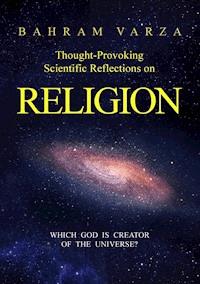
Research into wars and the resulting misery and bloodshed shows that, even today, these scourges of humanity are usually rooted in religion. Clearly, the vast majority of believers are influenced by their religious education, convinced that their own faith is the sole guarantor of eternal bliss in Paradise. In order not to jeopardize the blessedness which clerics suggest they will attain and depending on the level of their devoutness, the faithful attempt to obey the wishes and orders of their clergy. The media are full of reports on the destructive outcomes of such blind faith. Faith is, in most cases, the result of the upbringing provided by our parents, who, as our protectors, also have our complete trust. Since children are not able to consider the dogmas instilled in them by their parents in intellectual terms, these dogmas are deposited in our subconscious without qualification. And influence us for the rest of our lives. A religion demonstrates its destructive powers when, for reasons of self-interest and contrary to all reason, clerics are able to present the creator of the universe as a God who is, on the one hand, omnipotent and, on the other, an individual requiring assistance. This trick is employed to lay claim to the services of an omnipotent, retributive God, who punishes unbelievers severely while fulfilling the wishes of believers. In order, however, to win His favour we are obliged to protect this God against ‘infidels’ with our goods and persons as the clerics see fit. This book therefore explores how consistent the traditional concept of God is with the actual creator of the universe.
Sie lesen das E-Book in den Legimi-Apps auf:
Seitenzahl: 274
Veröffentlichungsjahr: 2016
Das E-Book (TTS) können Sie hören im Abo „Legimi Premium” in Legimi-Apps auf:
Ähnliche



















"Two things are infinite: the universe and human stupidity; and I'm not sure about the universe."
(Albert Einstein).
"The world is not threatened by the people who are evil, but by those who allow evil!"
(Albert Einstein).
What causes people to believe that an all-powerful God, the Creator of a universe of seventy billion light years, needs helpers and accomplices on earth (which is only 1/7 light second)?
How malicious must the people be who promise that God would reward murder, robbery and the rape of “infidels” with Paradise?
Table of Contents
Foreword
Introduction
Dance on the Volcano
Religion
The carrot and the stick in the service of religion
The instinct for self-preservation and its possible transformation into diabolical degeneracy
The formula for religion
The difference between primal and modern superstition
Religion and modern globalization
The psychology of the revelation
Can reason and faith be combined?
The indoctrination of faith
Miracles
Miracles in the Old Testament
Miracles in the New Testament
Miracles in Islam
The detriments and benefits of religion in the here and now and in the afterworld
Religion’s influence on the human conscience
Ethics
Rules for divorce
Divine justice
The description of Paradise and Hell in the Quran
The foundations of the Abrahamic religions
The origin and authenticity of the Holy Books
The legitimacy of the Old Testament based on an examination of the most recent archaeological research
The relationship of Christianity and Islam to the Old Testament
Similarities between the Old Testament and the Quran
Noah in the Bible and the Quran
Joseph in the Bible and the Quran
Cain and Abel in the Bible and the Quran
Conflicting commandments in the Bible and the Quran
God's commandments about food
God’s personal relationship with Moses, Jesus and Mohammed
The relationship between the Abrahamic God and his believers
The Massacre of the Jewish tribe Banu Qurayza
God’s omnipotence and all-mercifulness
Omniscient God
The all-merciful God
Surah 9 The Repentance (Al-Tauba)
Atheism
The principle of randomness in the origins of being
.
Childish superstition: Einstein’s letter makes view of religion relatively clear
Mysterious questions
To conclude, the three central pillars of religion.
Thought-provoking Scientific Reflections on Religion
Foreword
Before I address this fundamental but awkward topic I would like to precede my remarks with a simple analogy – let us assume that one man has invested a few euros in a company while another has put his entire fortune, earmarked for his old age, into the same company. Now imagine, if you can, how differently both shareholders will probably react to the news that the company has gone bankrupt. On this basis I would like to ask anyone who underwent a strict religious upbringing as a child, particularly if they are now elderly, not to read this book. The reason for this? Because, on the one hand, in keeping with the motto “It may not be what must not be”, you will struggle to accept the facts the book discusses and, on the other, you may find that these facts anger you.
A short comment as regards this book – Some readers of the first edition complained that they found the proof I provided from the Holy Books boring and superfluous. As you will, however, probably notice when reading this book, it is my intention to convey the realization that we should obtain the most detailed information possible concerning religion and its background, rather than credulously and uncritically believing in something. It would, therefore, be a mistake to trust every quotation, including my remarks, without sufficient facts and proof being provided. Historical research often reveals that humanity has frequently become involved in absolutely unnecessary wars because of its credulity and ignorance. Wars which have resulted in immeasurable suffering and bloodshed. A typical phenomenon in this context is for the vigour and enthusiasm with which people go to war, usually coupled with the populace’s naivety and lack of information, to later tip over into great misery.
We should thus not disregard the fact that even in “democratic countries” the inevitable outcome of cutting the people off from the information they require by means of censorship, for whatever reason, is that democracy becomes absurd. Sufficient, correct, adequate information is thus the cornerstone of democracy.
The topic of “Religion” is a very sensitive, personal one, meaning that I must be sparing with my comments, allowing readers to come to their own conclusions with regard to the Holy Books which form the basis of religions. I would thus also like to request your understanding should I occasionally overtax your patience with my informative, possibly even long-winded proofs.
I would like to refer to a number of Internet links in order to enable you to scientifically trace the content of this book:
http://quran.com/
In addition to this, I recommend a biography of the “Prophet Mohammed” (Ibn Ishag: Leben des Propheten, ISBN: 978-9-963-40022-5). It will also allow you to gain your own insight into the authenticity of global Islamic terrorism.
To conclude, I would like to point out an unusual translation of the Arabic verb GHATL “” in the Quran. It is currently predominant practice to translate or interpret this verb as “struggle” instead of as “kill”. The Arabic word for “struggle” is, however, HARB “”
Moreover, as becomes obvious in Surah 66 Ayeh 12 and Surah 21 Ayeh 92, the Quran texts are often manipulated and embellished in the process of translation.
Introduction
The objective of this book is to discuss religion in terms of more than just simple faith, using straightforward logic to analyse it. It is well-known that each religion attempts to present its own Holy Book as a divine revelation, without providing a shred of proof to support this claim. Although the content of these books is usually contradictory, both in the context of the text itself as well as also in relation to other Holy Books, and also repudiates scientific facts, it is a curious phenomenon that clerics and the clergy in general try to present this deficit as an asset. Their self-interest causes them to promote it as a divine fact. Even well-educated, intelligent scientists are apparently rarely able to free themselves from the faith and dogmas which were instilled into them as children. On the other hand, people are able to identify the shortcomings of other religions’ dogmas without any effort. Throughout history it has been this nonsense which has, unfortunately, led to many deaths resulting from religious wars and will, in future, undoubtedly lead to still more. As will be discussed, it is most probably this disinformation which has caused us to stop questioning and exploring the distance which humanity still has to travel before it will ever even perceive the creator of this incredible universe.
Dance on the volcano
Despite the obvious indications that there is a risk of war it is clear that attempts are currently being made to play down the conflict between the cultures for reasons based on short-term interests. Since any future “war of the cultures” would, in all probability, result in a nuclear conflict it is crucially important that humanity engages with the issue of religion and its hostile dogmas in order to be able to arrive at corresponding solutions. Initial attempts may initially be made to physically ward off this fundamental risk of war. As this book will, however, later discuss (e.g. in Surah 9 Ayah 111), within the context of their ideology some “believers” are of the opinion that the death of “infidels” and being killed in the struggle against these unbelievers are, among other things, a precondition for achieving eternal bliss in Paradise.
Humanity will therefore have no alternative in the long term but to ward off this risk by intellectual means as soon as possible without engaging in physical conflict. It is thus expedient to engage with religions and their aggressive dogmas in order to subsequently arrive at a peaceful coexistence. Since, following any atomic war, the survivors will envy the dead, in the final analysis even the clergy will be forced to distance themselves from inciting conflict between the denominations as they have done for thousands of years in order to expand their “market share” and to still their unholy greed for power. Since any serious approach will primarily provide information about the Abrahamic religions (Judaism, Christianity and Islam) by quoting from the Bible and the Quran, I will, in the following, refer extensively to these texts. In order to avoid any misunderstandings whatsoever concerning the explicitness of the Quran quotations I would like to cite the following comments from the Quran. As they will show, Allah stated four times, for example in the Surah “The Moon”, that HE revealed the Quran with unambiguous Ayah. Anything else would fallacious since, if Allah wishes to indicate something, then we must assume that HE would also wish his texts to be understood. In line with this statement, any interpretation of Allah’s commands must be viewed as pure blasphemy.
http://quran.com/
Quran:
Surah 54 AL-QAMAR (THE MOON)
Ayeh 17: „ And We have certainly made the Qur'an easy for remembrance, so is there any who will remember? “
Ayeh 22: „And We have certainly made the Qur'an easy for remembrance, so is there any who will remember? “
Ayeh 32: „And We have certainly made the Qur'an easy for remembrance, so is there any who will remember?
Ayeh 40: „And We have certainly made the Qur'an easy for remembrance, so is there any who will remember? “
As it is often said that one should not view the Ayehn out of context or cite them by themselves, you will later have the possibility to see Surah 9 (Al-Tauba) in its entirety as an example.
Quran:
Surah 2 AL-BAQARAH (THE COW)
Ayeh 216
Ayeh 216 Fighting (killing) has been enjoined upon you while it is hateful to you. But perhaps you hate a thing and it is good for you; and perhaps you love a thing and it is bad for you. And Allah Knows, while you know not.
Surah 9 AT-TAWBAH (THE REPENTANCE)
Ayeh.111: “Indeed, Allah has purchased from the believers their lives and their properties [in exchange] for that they will have Paradise. They fight in the cause of Allah, so they kill and are killed. [It is] a true promise [binding] upon Him in the Torah and the Gospel and the Qur'an. And who is truer to his covenant than Allah? So rejoice in your transaction which you have contracted. And it is that which is the great attainment.“
Surah 61. AS-SAF (THE RANKS)
Ayeh.11-12: “you believe in Allah and His Messenger and strive in the cause of Allah with your wealth and your lives. That is best for you, if you should know.
He will forgive for you your sins and admit you to gardens beneath which rivers flow and pleasant dwellings in gardens of perpetual residence. That is the great attainment”.
Surat 9 AT-TAWBAH (THE REPENTANCE)
Ayeh.123: „O you who have believed, fight (kill) those adjacent to you of the disbelievers and let them find in you harshness. And know that Allah is with the righteous! “
Religion
I would like to begin this section with a story which is intended as scientific food for thought. When humans still lived as hunters and gatherers they had to work every day to secure their existence. In order to minimize the risks involved in hunting and to increase the chances of success they learned over time how to hunt in groups.
When they returned to their huts with their kill it was logical that it should be distributed among those who had taken part in the hunt. As also evidenced by primitive tribes today, even then there were people who were too lazy to subject themselves to the exertion and risks of hunting. These idlers thus had to come up with a plan to avoid going empty-handed when the kill was distributed. By claiming that “Your hunt was only successful because we called up the gods” they succeeded in establishing a claim to a share in the kill. It is certainly conceivable that history’s first “shamans” were able to gain special status within their community by these means. After this astute group had, thanks to its fraudulent claim, gained permission not to take part in hunting but still be fed, it was able to use its extra time to explore the surrounding flora and fauna. The first shamans thus became the first medicine men and women. Over time they discovered that they could make a huge impression on their contemporaries by means of impressive rituals which were continuously expanded. The medicine men and shamans were thus able to cast a spell over their fellow tribesmen. Initially they tried to differentiate themselves from the others by wearing eye-catching items. They adorned themselves with impressive furs, animal skulls and jewellery. This practice was subsequently supplemented, among other things, by including ornate sculptures (idols) in their rituals; decorating places of worship with gold and precious stones; etc. in order to fascinate the faithful. When the medicine men and shamans realized that humanity’s unsuspecting nature is infinite, they named these places houses of prayer and told their followers that visits to the temples and the offering of sacrifices were both necessary and would bring luck. Take note: these questionable buildings were claimed to be the special home of the creator of the universe. Be that as it may, almost every believer swears solely by his or her own place of worship. In the course of time, narcotic and hallucinogenic substances such as incense, myrrh and magic mushrooms, deadly nightshade and hashish were also discovered and were used by the medicine men and shamans for their own purposes, thus gaining them even more prestige and securing their positions. A further accomplishment was the discovery that monotone sounds and movements during religious dances could trigger hallucinations and narcotize the body. This natural phenomenon is due to the effect we experience when endorphins, a substance produced by the body and similar to morphine, are produced in the brain as a result of monotone sounds and movements. In addition to this, the shamans and medicine men, who bit by bit later became the clerics and the clergy, were skilful practitioners when it came to fascinating their followers by using so-called idols – in the form of specially shaped stones, wooden figures and “holy animals”. Aside from their previously mentioned eye-catching outward appearance, intended to gain the desired devotion of the masses, the clergy exploited people’s anxieties for their own purposes. Clerics accordingly took advantage of the opportunity to represent their contemporaries’ fears – e.g. ignorance of the causes of disease and death or inexplicable natural phenomena such as thunder and lightning or forest fires caused by lightning strikes – as the work of invisible beings with evil influence and powers. They also created a counter-pole to this – angels with positive characteristics – claiming that these beings could drive away the evil powers and/or direct the healing powers of their gods. This in turn ensured that the clergy gained even more prestige and attention. In addition to this, the clerics had to consider how they would behave should one of their predictions fail to come true – for example if, despite their knowledge of clouds, a rain dance was unsuccessful and the medicine man was so exhausted that he had to break off his dance. In such cases he could justify himself with the simple excuse that the promised rain would come in the future, thus rebutting his followers’ criticism. The fulfilment of predictions was thus postponed further and further into the future and the medicine men realized that the majority would still follow them even if the success of their supposed efforts were deferred until Judgement Day. Interestingly, the clerics also discovered that the threat of punishment is a far more effective tool for making people amenable than the promise of rewards. I would like to use the following analogy to illustrate this human phenomenon.
The carrot and the stick in the service of religion
This section is devoted to the impact of rewards and punishments, which religious indoctrination shamelessly exploits. I would like to relate the following improvised, analogous anecdote to better illustrate this procedure, which has been a standard method since the dawn of religion. One day a woman needed to go shopping at the supermarket. On her way there she saw a man standing behind a huge pile of jars of jam. She was curious and asked him what they were and how much they cost. The salesman answered that they were special jars of jam and cost two thousand euros each. The woman answered “But jam like that usually costs five euros, why do you want two thousand? What’s the reason?” He responded “This special jam tastes so good it’s like nothing you’ve ever had before!” The woman in turn responded “Ok, I’ll take one jar, but on one condition. If I don’t like it as much as you say I will, then I’ll bring it back and you’ll refund me my money.” The man thereupon answered “No, no, you can only eat this special jam after you’ve died.” The conversation ended and the woman started to walk away without buying the jam. The salesman, however, called her back, saying “There’s one thing I still have to tell you. If you don’t buy my jam, then the following will happen to you when you die and pass over to the other side – you’ll be given clothes of fire; boiling water will be poured over your head causing the contents of your stomach and your skin to melt and you’ll be beaten with iron clubs. Each time your fear makes you try to escape you’ll be driven back. You’ll be pushed into the fire and each time your skin is burnt off you will be given another skin so that you experience the torment to the full.” Nevertheless, the woman went home without the jam, however spent a sleepless night imagining the horror scenario the salesman had described. She dreamed that she was experiencing everything he had threatened her with. The next day the agitated woman returned to the salesman, paid him two thousand euros and was given her jar of jam in return. As she was about to leave, the salesman once again blocked her path, saying “I’m glad you’ve bought this special jam. There is, however, something you should know – having a single jar does not, by any stretch of the imagination, mean that you’re safe. You have to come back at least once a year and buy another jar from me.” This brief fictional story is intended to illustrate how easily we can fall into the clutches of the clerics. As already discussed, from the outset this phenomenon, which is thousands of years old, originated because of the existence of two classes of people. The first class is a small, astute minority which uses grotesque claims and clever suggestion techniques to rule the other class – the vast majority of their contemporaries. In order to maintain their ascendancy and resulting privileged status, they have, from the beginning, made every effort to withhold knowledge and education from those they forced into submission. This method still functions – by denying education to underdeveloped peoples. In addition to this, the clergy has always employed mystic rituals to impress, mislead and exploit those under its control. It uses a figurehead to safeguard its position of power, both material and ideal, namely God – an authority with infinite power. Over and above this, clerics have invented a raft of individual articles of faith (dogmas) to rule over their flock. These dogmas, which each religion selected specifically, form the basis of today’s denominations, which, strangely, are rejected and derided by the other denominations. This rejection of other beliefs was fuelled by the clerics in order to expand their own “market share” with the final result that religious wars broke out. Despite this, the three Abrahamic religions, each of which defines itself as monotheistic, all invoke the same source, the Old Testament, to present three different concepts of God which, first and foremost, decline to recognize the differences to the others. It is thus often – for whatever reason – pointed out that these three denominations believe in the same God. If, however, that is the case then we must ask ourselves why these three religions have, right up to the present day, been the cause of numerous wars leading to immense loss of human life and property. These religions continue to equate their individual image of God with the creator of the universe, whose dominion is estimated to extend over 70 billion light years.
I would like to point out the following paradox concerning the relationship of God to the corresponding “Holy Books” – when the adherents of a religion emphasize from the outset that their God as the creator of the universe indisputably possesses the three fundamental characteristics of omnipotence, omniscience and all-mercifulness then it is a contradiction to believe in a divine or sacred book which permanently questions these three fundamental characteristics. It is paradoxical to assert on the one hand that the concept of God as the sole creator of the universe is a pretence and, on the other, that he is accompanied by helpers (clerics) and enemies (heathens). It is just as ridiculous to accuse HIM, for obvious reasons, of being an infinitely vengeful being who created Hell. Such a paradoxical view is an attempt to fit a square peg into a round hole. Even today a certain group of self-interested clerics still persists in portraying its opponents as enemies of God who must be fought in order to achieve eternal bliss (cf. the infinite number of religious wars in the past and present). In addition to the above-mentioned contradictory points of view, religions have, as a matter of principle, one central doctrine – the unconditional submission of their followers to their dogmas. In this context, each denomination has its own specific faith and corresponding dogmas. Clearly clerics of all religions demand that, contrary to all natural laws, members of their faith unconditionally accept their hypotheses and points of view without proof or argumentation. This arrogant, absurd behaviour goes so far as to demand that believers accept points of view which are paradoxical and contradict generally accepted knowledge and logic. Curiously, these absurd viewpoints are easily recognizable and obvious when they concern the dogmas of other religions. Since discussion of this fact is not desired and this inconsistency is disputed I will try to base my arguments on facts which are as incontestable as possible, using credible sources from these three religions to do so. In line with this and in common with the three so-called Abrahamic religions, almost all religions make the claim that their God is one and the same as the creator of the universe. In order to explore the extent of the veracity of this the following facts, which relate solely to our macrocosm, will be stated: the diameter of the visible universe is estimated to be over 70 billion light years. The latest astronomical research indicates that the invisible universe is significantly larger than the visible one. We also know that light travels at a speed of approximately three hundred thousand kilometres per second; in other words, a particle travelling at the speed of light will orbit the earth, which has a circumference of around 40 000 km, over seven times in one second. Since it is impossible for us to visualize the immense figure of 70 billion, I will try to illustrate it by means of a specific example. If we were to build a counting machine operating around the clock counting the numbers for one to seventy billion at a rate of one number each second, it would take this device far in excess of one thousand years to finish counting.
Take note, this discussion refers to light years, whose immense dimensions are simply too large for our brains to comprehend. It is thus no over-exaggeration to say that the spatial relationship of our planet to the universe is far smaller than a floating speck of dust in relation to a major city.
It should also be noted that the massive complexity of the microcosm with its causes and effects, which we see, for example, in flora and fauna as well as in atoms with their “Higgs boson particles”, is as inconceivable as the macrocosm. We cannot, therefore, possibly have even a glimmer of an idea of the size of the universe. In addition to this, we should not forget that the difference between the creator and His creation is, logically, also beyond our powers of imagination as regards complexity and size – similarly to the potter and his pot. Taking this negligible understanding of creation as our starting point, we should recollect the judgement of the “LORD”, as consistently described in the so-called “Holy Books”. It is, furthermore, of crucial importance that we scrutinize the facts which form the basis for identifying the authenticity of the divine commands which each religion has selected in its corresponding Holy Book. How can it be that hundreds of religions and denominations with their specific Holy Books are all of the opinion that only their own divine commands are genuine? If we examine the Old Testament – the basis of the Abrahamic religions – we will come across a section describing the Tower of Babel, which tells us that God was enraged by a brick-built tower only a few storeys high and, as a result, created the Babylonian confusion to prevent humanity from continuing with this insignificant project. We can also discover how miserably God failed during his power struggle with Jacob and how powerlessly he rants and curses in the 111th Surah. All of this should prompt us to look deeper and not simply to ignore these facts.
https://www.biblegateway.com/versions/New-English-Translation-NET-Bible/#booklist
http://quran.com/
The Old Testament
Genesis
The Tower of Babel
Chapter 11
11/1 The whole earth had a common language and a common vocabulary.2 When the people moved eastward, they found a plain in Shinar and settled there. 3 Then they said to one another, “Come, let’s make bricks and bake them thoroughly.” (They had brick instead of stone and tar instead of mortar.) 4 Then they said, “Come, let’s build ourselves a city and a tower with its top in the heavens so that we may make a name for ourselves. Otherwise we will be scattered across the face of the entire earth.” 5 But the Lord came down to see the city and the tower that the people had started building. 6 And the Lord said, “If as one people all sharing a common language they have begun to do this, then nothing they plan to do will be beyond them. 7 Come, let’s go down and confuse their language so they won’t be able to understand each other.” 8 So the Lord scattered them from there across the face of the entire earth, and they stopped building the city. 9 That is why its name was called Babel—because there the Lord confused the language of the entire world, and from there the Lord scattered them across the face of the entire earth.
Jacob wrestles with God at Peniel
Chapter 32
32/ 22 During the night Jacob quickly took his two wives, his two female servants, and his eleven sons and crossed the ford of the Jabbok. 23 He took them and sent them across the stream along with all his possessions. 24 So Jacob was left alone. Then a man wrestled with him until daybreak. 25 When the man saw that he could not defeat Jacob, he struck the socket of his hip so the socket of Jacob’s hip was dislocated while he wrestled with him. 26 Then the man said, “Let me go, for the dawn is breaking.” “I will not let you go,” Jacob replied, “unless you bless me.” 27 The man asked him, “What is your name?” He answered, “Jacob.” 28 “No longer will your name be Jacob,” the man told him, “but Israel, because you have fought with God and with men and have prevailed.” 29 Then Jacob asked, “Please tell me your name.” “Why do you ask my name?” the man replied. Then he blessed Jacob there. 30 So Jacob named the place Peniel, explaining, “Certainly I have seen God face to face and have survived.” 31 The sun rose over him as he crossed over Penuel, but he was limping because of his hip. 32 That is why to this day the Israelites do not eat the sinew which is attached to the socket of the hip, because he struck the socket of Jacob’s hip near the attached sinew.
Quran
Sura 111 AL-MASAD (THE PALM FIBER)
Ayeh 1: May the hands of Abu Lahab be ruined, and ruined is he.
Ayeh 2: His wealth will not avail him or that which he gained.
Ayeh 3: He will burn in a Fire of flame
Ayeh 4: And his wife [as well] - the carrier of firewood.
Ayeh 5: Around her neck is a rope of [twisted] fiber.
The instinct for self-preservation and its possible transformation into diabolical degeneracy
The Holy Books of the Abrahamic religions present the “Devil” or “Satan”, who was God’s first archangel, as the embodiment of malice and artifice. God subsequently expelled the Devil because of his reluctance to express his loyalty to Adam (OT: Genesis / The creation of Adam, Chapters 2-3) (Quran: Surah 7 Ayat 11-18). According to this, however, God fulfilled the Devil’s wish, allowing him to tempt humanity until the Day of Judgement. In order to do the Devil a favour, all-merciful and omniscient GOD thus made a childish bet with him, promising that any sinners succumbing to the “Devil’s” temptation, which includes the vast majority of humanity, could roast in Hell in the afterworld (Quran: Surah 7, Ayat 178179). Interestingly, the first sin consisted of Adam and Eve acquiring intelligence as a result of the Devil’s temptation and against God’s will. This was the reason why God cast them out of Paradise. It is clear that human beings have two simultaneous character poles – the good and the bad. It is thus expedient to attempt to analyse this natural phenomenon. To all appearances, the creator programmed the instinct for self-preservation into the genes of all living things to ensure the protection and preservation of the species as well as the spread and protection of each individual’s own genes in the form of their offspring. This is the reason why, when observing the animal kingdom, we see how parents, in particular mothers, feed their young from their own mouths and risk their own lives to protect their young from danger. If we take a closer look we will establish that this primal instinct is not limited to animals but also even applies to microorganisms – for example when bacteria become resistant to antibiotics. Analysis of this phenomenon in the case of human beings is more complicated because of their intelligence. It can, in general, be asserted that the more pronounced this primitive and inherently necessary impulse – defined as the “instinct for self-preservation” – is in human beings, the greater their tendency to commit malicious acts. Intelligent humans with a less pronounced instinct for self-preservation, such as Albert Schweitzer, become terrific examples of humanism, performing numerous good deeds for those around them. In contrast, when the instinct for self-preservation is excessively pronounced the result is overweening egoism, causing humans to become demons. History shows us innumerable examples of such monsters in politics, such as Hitler or Stalin, who mercilessly exterminated their perceived opponents under the guise of patriotism. In addition to such statesmen there have been, and are, many religious leaders of a similar ilk – to name just one, Mubed Kartir, “a servant of God”, who during the Sasanian era (Iran) had thousands of heretics executed under the pretext that it was the will of God. It is difficult to comprehend how human nature can degenerate to such an extent that in order to assert their own interests some individuals suggest to those around them that there is an almighty God who demands that his believers fight with their goods and persons in His cause.




