


0,49 €
Niedrigster Preis in 30 Tagen: 2,49 €
Niedrigster Preis in 30 Tagen: 2,49 €
Mehr erfahren.
- Herausgeber: Booksell-Verlag
- Kategorie: Geisteswissenschaft
- Sprache: Englisch
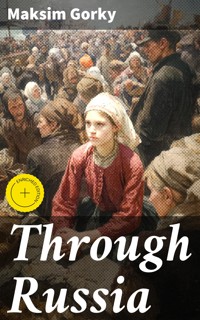
Maksim Gorky's "Through Russia" is a compelling narrative that explores the socio-political landscape of early 20th-century Russia through the lens of personal experience. Gorky employs a vivid, almost documentary style, weaving autobiographical elements with keen observations of the Russian peasantry and burgeoning revolutionary spirit. The book stands as a significant literary work, juxtaposing human resilience against the backdrop of societal upheaval, and is enriched with Gorky's signature realism that challenges romanticized notions of the Russian countryside. Gorky, a prominent figure in Russian literature and a pioneering socialist, drew upon his own impoverished upbringing in Nizhny Novgorod to capture the struggles and aspirations of the common man. His experiences as an activist and witness to the tumultuous changes in Russia informed his narrative, emphasizing the need for social justice and reform. Gorky's commitment to the proletariat and his belief in the power of art as a catalyst for change resonates throughout the text. "Through Russia" is essential reading for anyone interested in the intersections of literature, history, and social justice. Gorky's insights not only illuminate the challenges faced by the Russian populace but also offer timeless reflections on human dignity and the quest for freedom, making this work both relevant and inspiring for contemporary readers. In this enriched edition, we have carefully created added value for your reading experience: - A succinct Introduction situates the work's timeless appeal and themes. - The Synopsis outlines the central plot, highlighting key developments without spoiling critical twists. - A detailed Historical Context immerses you in the era's events and influences that shaped the writing. - An Author Biography reveals milestones in the author's life, illuminating the personal insights behind the text. - A thorough Analysis dissects symbols, motifs, and character arcs to unearth underlying meanings. - Reflection questions prompt you to engage personally with the work's messages, connecting them to modern life. - Hand‐picked Memorable Quotes shine a spotlight on moments of literary brilliance. - Interactive footnotes clarify unusual references, historical allusions, and archaic phrases for an effortless, more informed read.
Das E-Book können Sie in Legimi-Apps oder einer beliebigen App lesen, die das folgende Format unterstützen:
Veröffentlichungsjahr: 2019
Ähnliche













Through Russia
Table of Contents
Introduction
A restless road threads a vast country, carrying the voices of the dispossessed toward horizons where endurance contends with dignity and hope.
Through Russia gathers Maksim Gorky’s journeys of imagination and observation into a map of people more than of provinces, presenting wanderers, workers, and outcasts whose lives refract the character of a changing nation. Rather than offering a single plot, the book unfolds as a procession of encounters, in which landscapes and human temperaments mirror one another. The result is less travelogue than moral topography: stations, crossroads, riverbanks, and night fires become stages where hunger meets generosity, fear meets courage, and isolation meets fellowship. Gorky invites readers to travel not only across distance, but into the inner weather of the human spirit.
Its classic status rests on the rare balance it achieves between gritty realism and lyrical exaltation. Gorky captures the pressures of poverty and the allure of freedom with equal intensity, refusing to sentimentalize hardship while insisting on the stubborn radiance of human dignity. The collection’s portraits are concise yet indelible, searing themselves into memory by virtue of voice as much as event. By crystallizing the experiences of those habitually overlooked, the book helped to expand the moral horizon of modern prose. It endures because it turns social reality into art without sacrificing either truth or tenderness.
Maksim Gorky (1868–1936) wrote the stories that comprise Through Russia across the late nineteenth and early twentieth centuries, during the twilight of the imperial era and the ferment that preceded revolution. First appearing in periodicals and then in collections, these tales reached wide audiences and were soon known beyond Russia in translation. Gorky’s purpose was not reportage alone: he sought to render the pressures that shape character and to test ideas of freedom, solidarity, and responsibility in concrete situations. The book offers a panoramic, story-by-story view of a society on the move, attentive to both the wounds and the resourcefulness of ordinary lives.
Stylistically, the collection is marked by an energetic, flexible prose that shifts from colloquial roughness to soaring lyricism without tearing its fabric. Gorky’s narrators often listen as much as they speak, granting space to the cadences of sailors, laborers, tinkers, and vagrants. Scenes unfurl through vivid sensory detail—dust on a roadside, frost along a river’s edge, the crackle of a campfire—yet the imagery always gestures toward inner states. That fusion of surface and depth gives the book its distinctive resonance: the seen world is never merely backdrop, but a partner in the drama of decision, memory, and longing.
The book’s influence extends both within Russian letters and across world literature. By centering the voices of the marginalized with unsparing clarity and compassion, Gorky helped redefine what subjects were worthy of serious art. His example encouraged subsequent writers to treat working lives and itinerant lives as reservoirs of insight rather than material for caricature. Although later associated with the doctrine of socialist realism, Gorky’s earlier stories resist prescription; their moral force lies in attentive portrayal rather than program. The result is a lineage of socially conscious narrative that owes as much to his humane curiosity as to his political commitments.
The historical atmosphere suffusing these pages is one of mobility and strain: rural economies in flux, cities swelling, and rail lines stitching distant regions together. Gorky’s settings—ports, inns, factory outskirts, forest clearings—suggest a country negotiating between old customs and new urgencies. Yet the book never collapses people into symbols of an era. Instead, it observes how historical pressures register in gestures, choices, and stories told at dusk. The tension between necessity and aspiration becomes the real engine of movement, pushing characters to test boundaries and to measure themselves against the landscapes that both shelter and challenge them.
Because Through Russia is a collection, it develops its unity through recurring motifs rather than continuous plot. Journeys, whether by foot, boat, or train, serve as laboratories for chance meetings that open windows onto fates otherwise invisible. The figure of the wanderer recurs—not as escapism, but as a mode of inquiry into identity, belonging, and moral accountability. Each episode functions like a facet in a larger prism: turn it, and the same light of human hunger for meaning refracts differently. This structure allows Gorky to assemble a composite portrait of a people without claiming to deliver a final summation.
Gorky’s intention, evident throughout, is to elicit recognition: recognition of strength where society expects only weakness, of imagination where circumstances appear to crush it, and of responsibility where suffering might excuse indifference. He frames hardship as a field in which conscience is tested and companionship acquires weight. At the same time, he honors the pull of beauty—song, sky, water, tale—by which people endure and affirm themselves. The book thus becomes a conversation about what sustains life beyond bread: the dignity of labor, the solace of storytelling, and the ethical demands that arise when lives intersect on the road.
Reading the collection is to travel across textures: the grit of a roadside meal, the glow of embers under a kettle, the hush before dawn over a broad river. Gorky is attuned to the drama that flickers in small exchanges—the offer of a seat, the sharing of bread, the guarded confession. These moments accumulate into a sense of moral weather, in which compassion and suspicion alternate like sun and cloud. The prose asks readers not merely to witness but to weigh, to grant the characters the time and seriousness they are so rarely afforded in the public gaze.
For contemporary readers, the book’s relevance lies in its clear-eyed attention to inequality, displacement, and the search for ground under one’s feet. It speaks to the precarity of those who move for work or survival, and to the hunger for meaning that persists even when material conditions are harsh. Its empathy is neither naive nor indulgent; it recognizes failure and compromise while defending the possibility of renewal. In a world still riven by distances—geographic, economic, and cultural—Through Russia offers companionship, sharpening perception and broadening sympathy without demanding agreement on doctrine or reducing people to examples.
What emerges, finally, is a testament to resilience and regard: a book that crosses a continent to discover the uncharted provinces of conscience. Its themes—freedom and necessity, solitude and solidarity, endurance and imagination—continue to resonate because they are anchored in the texture of lived experience. As literature, it endures for its sharply etched characters, resonant imagery, and supple music of voice; as witness, it endures for its unwavering attention to lives that might otherwise slip from view. Through Russia remains compelling because it extends both a hand and a question, inviting readers to travel further into themselves.
Synopsis (Selection)
Through Russia is a collection of travel sketches and short narratives by Maksim Gorky, composed in the early twentieth century. Rather than a single plot, it offers an itinerary through towns, rivers, and steppe, recorded by a narrator who observes more than he intervenes. Each piece focuses on brief encounters, conversations, and episodes that illuminate everyday life under strain. The people he meets—peasants, pilgrims, workers, outcasts—supply the stories, while the author supplies attentive listening and descriptive detail. The result is a mosaic of voices that shifts from place to place, linking disparate scenes through movement, memory, and the continuity of the road.
At the outset, the narrator takes to the road and waterways, joining barges, river steamers, and dusty footpaths that bind provinces together. Travel itself becomes the organizing principle: chance meetings in crowded decks and wayside inns yield testimonies of loss, endurance, and small ambitions. He records how fellow travelers earn their keep, trade rumors, and measure distances not only in versts but in separations from family and home. Through these itinerant frames, the reader meets barge-haulers, tradesmen between fairs, and wanderers who move because staying still has grown impossible, each encounter opening a window onto a different corner of Russia.
In rural districts, the sketches linger in village streets, threshing yards, and church porches where news travels by word of mouth. Peasants speak of bad harvests, debt, and the compromises required to survive, yet also of festivals, songs, and stubborn attachments to land and kin. The narrator notes the interplay between customary practices and the demands of officials, landowners, and markets that press at village borders. Fairs brighten the calendar with color and bargaining, while religious brotherhoods and dissenting sects shape moral boundaries. These scenes establish the texture of country life, outlining both constraint and resourcefulness without prescribing solutions.
In towns and along their margins, the book turns to workshops, taverns, and night shelters where the precarious gather. There are artisans displaced by new machines, porters seeking day labor, and women negotiating limited options in crowded quarters. Episodes pivot on small exchanges: a shared loaf, a loan repaid late, a quarrel diffused by humor. The narrator registers codes of honor among thieves and beggars, the informal economies that sustain them, and the thin line between work and destitution. These urban glimpses complement rural chapters, expanding the portrait of hardship and mutual aid that threads through the collection.
Interspersed are portraits of singular figures whose choices form quiet turning points. A restless worker weighs security against the pull of the open road; a young woman measures reputation against independence; a seasoned pilferer tests his own rules when faced with an unexpected appeal. Such episodes rarely conclude with dramatic revelations. Instead, they end at the moment of decision or shortly after, allowing consequences to remain implicit. By pausing at these thresholds, the book emphasizes the pressures that shape character—necessity, pride, fatigue, and hope—while keeping the focus on lived experience rather than exemplary outcomes.
Questions of belief surface repeatedly as the narrator meets pilgrims bound for monasteries, preachers of austere sects, and skeptics formed by misfortune. Stories describe icons carried on processions, vigils in dim chapels, and disputes over sin, merit, and fate. Some characters rely on miracle tales; others argue for reason or education. The text does not adjudicate these positions, presenting faith as one element among many in people’s attempts to account for suffering and chance. By setting piety beside hunger, and fervor beside fatigue, the book shows how spiritual language frames choices without erasing the material conditions that constrain them.
Across the collection, landscape functions as both setting and participant. The wide river bears rafts, fog, and songs; the steppe stretches monotonously until a village appears like an island; forests close in, then break to fields. Weather matters: dust and heat sap strength; autumn rain renders roads impassable; winter hardens everything into endurance. Attention to seasons and places links otherwise separate narratives, supplying rhythm and recurrence. The movement from province to province underscores the scale and diversity of the country, while repeated routes and crossings suggest that paths trodden by one traveler are shared, in altered form, by many others.
The storytelling blends reported speech with observational detail, adopting cadences of oral narration so that characters seem to address the reader directly. Idioms and sayings mark regional origins, and humor offsets bleakness without denying it. Background currents of change—railways, factories, and migration—alter expectations and unsettle trades, but the book largely refrains from analysis. Instead, it accumulates scenes that let the pressures of modernization emerge from testimony. Recurrent motifs include hunger for dignity, suspicion of authority, and the attraction of freedom, all conveyed through small incidents rather than manifestos, maintaining the work’s documentary, open-ended character.
Taken together, these sketches compose an impression of Russia in transition, seen through encounters that foreground ordinary endurance. Without advancing a single thesis, the book suggests that the country’s variety defies simple classification, and that understanding begins with attentive listening. Major events remain offstage; what we see are the daily negotiations by which people preserve self-respect, offer help, and move on when they must. The volume closes without final resolution, returning the reader to the road’s continuity. Its lasting message is the recognition of common humanity across divisions of place and station, conveyed through concrete voices and scenes.
Historical Context
Through Russia unfolds across the vast geography of late imperial Russia, from the Volga basin and Ural foothills to the Black Sea ports and southern steppe. The settings correspond to the last decades of the Romanov empire, roughly the 1880s to the eve of World War I, when peasant villages, factory towns, fairs, and bustling harbors coexisted uneasily. The collection’s scenes reflect the seasonality of rural labor, the rise of steam transport on rivers and rails, and the contrasting atmospheres of provincial markets and cosmopolitan ports like Odessa. Socially, the era was marked by the friction between a still-dominant peasantry, a rapidly growing industrial workforce, and a strained autocratic state.
Gorky’s vantage point is that of a peripatetic observer who had himself wandered and worked across the empire before fame. The stories that later formed Through Russia were composed mainly between the mid-1890s and the 1910s and draw from journeys by riverboat, rail, and foot. Characters such as tramps, fishermen, factory hands, and petty criminals embody the lived effects of policy and upheaval. The time is specific: post-emancipation villages burdened by debt, 1890s industrial boomtowns, and the politically volatile years around 1905. Places recur with documentary clarity: Nizhny Novgorod and its fair, the Astrakhan fisheries, Crimean and Black Sea ports, and the alleys of Petersburg and Moscow.
The Emancipation of the Serfs (1861) freed roughly 23 million peasants from personal bondage but assigned allotments through village communes (mirs) and imposed redemption payments scheduled over decades. Although reduced in 1881 and abolished in 1907, these payments and uneven allotments produced enduring land hunger and peasant indebtedness. Communal strip farming and demographic growth intensified fragmentation. Through Russia’s peasants still inhabit a post-emancipation order: small plots, seasonal migration, and periodic hunger. Characters drifting to fisheries or construction crews mirror the real movement of land-poor villagers seeking wages. The tension between communal norms and individual survival underlies Gorky’s depictions of quarrels, petty tyrannies, and moral fatigue in rural life.
State-led industrialization accelerated in the 1890s under Finance Minister Sergei Witte (1892–1903), who adopted the gold standard in 1897, raised protective tariffs, expanded railways, and attracted foreign capital. Heavy industry surged in the Donbas coal basin, Krivoi Rog iron district, the Baku oilfields, and around Moscow and St. Petersburg plants such as the Putilov Works. By 1900, millions of former peasants worked 11- to 12-hour days in factories and construction sites, often in overcrowded barracks. Through Russia captures this migration and the harsh factory regime. Stories such as Twenty-Six Men and a Girl and Konovalov condense conditions into specific workplaces, evoking wage instability, foremen’s control, and the fragile solidarities among crews assembled from disparate provinces.
The Trans-Siberian Railway, launched in 1891 under Alexander III and connected end-to-end by 1904, with the Amur line finished in 1916, reshaped mobility and markets. Stretching over 9,000 kilometers, it funneled grain, timber, and migrants and enabled resettlement schemes and labor flows eastward. Stations became microcosms of empire where ex-soldiers, deserters, pilgrims, and vendors crossed paths. Gorky’s itinerant narrators and chance encounters on trains, river docks, and sidings reflect this new geography of movement. The book’s portraits of vagrants and casual laborers show how the railway’s promise of opportunity often turned into precarious wandering, with passport checks and police surveillance framing the margins where Gorky’s characters live.
The famine of 1891–1892, triggered by drought across the Volga and central provinces, killed hundreds of thousands and exposed the fragilities of agrarian Russia. Grain exports continued amid shortages, provoking public outrage. Zemstvo self-government bodies organized relief, farmers sold livestock, and cholera outbreaks intensified the toll in 1892. Figures like Leo Tolstoy led voluntary kitchens, while officials debated responsibility. Through Russia’s stark depictions of hunger, sickness, and exhausted mothers echo that crisis and its long aftershocks. The rural characters’ fatalism, the seasons of scarcity, and the prevalence of petty theft and mendicancy bear the imprint of a countryside that had only precariously recovered by the late 1890s.
Black Sea port cities, especially Odessa, became gateways for grain exports and nodes of smuggling and casual labor. The harbor economy drew seasonal workers, stevedores, and sailors into an urban underworld policed by municipal forces and the secret police. Contraband, dockside taverns, and the risk of sudden violence defined many lives. Gorky’s story Chelkash, set among thieves operating on the Odessa waterfront, forms part of Through Russia and embodies the moral economy of the port: cunning, desperation, and temporary alliances. By situating marginalized figures in an actual place whose economy turned on global trade, the book links personal choices to the pressures of empire-wide markets and policing practices.
The Russo-Japanese War (1904–1905) exposed the weakness of the imperial state. Port Arthur fell in January 1905, and the fleet’s defeat at Tsushima in May was catastrophic. On 14/27 June 1905, sailors on the battleship Potemkin mutinied off Odessa, where unrest and repression followed. The losses strained finances, discredited officials, and fed urban and rural discontent. Though Through Russia focuses on civilians, its atmosphere of simmering anger and disillusionment reflects this context. Port-side scenes and talk of soldiers’ grievances in the book trace the war’s effect on ordinary people, from price spikes and scarcity to the spreading conviction that the old order could not manage modern conflict.
The Revolution of 1905 was catalyzed by Bloody Sunday on 9 January (22 January, New Style), when a peaceful procession led by Father Georgii Gapon in St. Petersburg, petitioning for relief, was fired upon by troops. More than a hundred were killed and hundreds wounded, triggering mass strikes and rural disorders across the empire. In October 1905, a general strike paralyzed railways and industry, prompting Nicholas II to issue the October Manifesto (17 October) promising civil liberties and a representative Duma. Workers’ councils (Soviets) formed, notably the St. Petersburg Soviet chaired by Georgy Khrustalyov-Nosar with Leon Trotsky as a leading figure. Armed risings, including the December 1905 Moscow insurrection, were suppressed by loyal units. Reaction followed: the Black Hundreds and police abetted pogroms, and the state dismantled soviets and unions. Yet the legal space opened by the Manifesto proved equivocal; changes in the electoral law and censorship curbed many gains by 1907. Gorky was arrested in January 1905 for revolutionary agitation and released after public pressure. Through Russia does not narrate the barricades, but its vignettes of strike talk, foremen’s reprisals, and fragile worker dignity are saturated by the social learning of 1905, when collective action and political language entered shop floors and courtyards. The detail of crowded tenements, suspicion of spies, and the circulation of leaflets and rumors in Gorky’s factory and street scenes reflects practices that became widespread during this year of upheaval. The book’s portraits of ordinary people struggling to speak about injustice and to imagine alternatives owe much to the political apprenticeship that 1905 forced upon Russia’s new urban classes.
Pyotr Stolypin’s premiership (1906–1911) combined repression with agrarian reform. Field courts-martial instituted in 1906 led to swift executions—contemporaries spoke of the Stolypin necktie—and by 1909 thousands had been hanged or shot. Simultaneously, the 9 November 1906 ukase allowed peasants to exit the mir, consolidate strips, and form khutor farms. Between 1906 and 1914, some 3 million people resettled eastward, many via the Trans-Siberian, under government incentives. Through Russia’s depictions of men leaving villages for fisheries, rail gangs, or distant work camps echo this social churn. The book registers both the promise of mobility and the atomization produced by policies that broke communal ties without guaranteeing prosperity.
Revolutionary parties and the police state shaped everyday risk. The Russian Social Democratic Labour Party (founded 1898, split 1903 into Bolsheviks and Mensheviks) and the Socialist-Revolutionary Party (1901) built clandestine networks. The SR Combat Organization assassinated officials, including Interior Minister Dmitry Sipyagin (1902) and Vyacheslav von Plehve (1904), while the Okhrana infiltrated cells; the double agent Evno Azef notoriously exposed comrades. Arrests, exile to Siberia, and katorga penal labor were common. In Through Russia, wanderers and workers speak in hushed tones of agitators and spies, and characters vanish to prisons or to the road. Gorky’s own interrogations and exiles inform the book’s sensitivity to surveillance, coded speech, and the moral costs of clandestinity.
Orthodox religious culture framed village and urban life, from parish rites to pilgrimages to monasteries such as Sergiev Posad. Popular piety intersected with folk healers, holy fools, and Old Believer communities along the Volga. Church-state bonds underpinned autocracy, yet disillusionment and dissent grew after crises like the famine of 1891–1892. Through Russia portrays pilgrims, mendicants, and disenchanted believers who struggle to reconcile ritual with poverty and injustice. Scenes of icons and processions appear beside harsh depictions of priests or sacral authority, not as theology but as a social reality that disciplines and sometimes consoles. The book thereby documents the contested religious landscape of the late imperial years.
Ethnic and confessional tensions intensified in the empire’s borderlands and cities. The Pale of Settlement confined most Jews, and pogroms erupted, notably at Kishinev in April 1903, where 47 were killed and hundreds injured, and again in 1905–1906 amid revolutionary turmoil. In the Caucasus, clashes in Baku (1905) pitted Armenians and Tatars amid oilfield labor disputes and political agitation. Through Russia’s multiethnic ports and markets include Jewish neighborhoods, Tatar traders, and minority laborers, and it registers prejudices in street talk and hiring. By embedding characters within these fraught spaces, the book mirrors the era’s volatile mix of economic competition, police passivity, and nationalist rhetoric that shaped daily danger.
Labor conflict surged in the years before and during 1905. Textile strikes in St. Petersburg (1895–1896) pushed the state to enact the 1897 law limiting the factory workday to 11.5 hours, though enforcement was uneven. The 1902 Rostov-on-Don railway strike evolved into mass meetings; the 1903 South Russian strikes affected Odessa and other cities; and Baku oil workers in 1904 won concessions on wages and hours. Through Russia distills this history into concrete shop-floor worlds: the bakery of Konovalov, the biscuit shop in Twenty-Six Men and a Girl, and workshops where foremen and owners calibrate pressure and rewards. The stories dramatize emerging worker speech, collective pride, and the brittleness of solidarity.
World War I (1914–1918) brought mobilization, defeats at Tannenberg and the Masurian Lakes (1914), severe inflation, and urban food shortages. By 1915, a shell crisis and transportation breakdowns strained industry; in 1916, strikes and bread queues multiplied in Petrograd and Moscow. The war’s burdens eroded legitimacy, paving the way for the February Revolution of 1917, which overthrew Nicholas II, and the later Bolshevik seizure of power. Although most of Through Russia’s materials depict prewar life, the collection’s later publication history and readers’ reception were refracted through wartime suffering and revolutionary expectations. The book’s insistent attention to scarcity, dignity, and coercion resonated with a public living through collapse.
Through Russia functions as a social critique by assembling an archive of ordinary voices that expose structural injustice: land hunger after emancipation, predatory labor regimes, and the capricious violence of police and employers. The stories show how law and custom combine to trap people—peasants bound by debt, workers by blacklists and barracks, vagrants by passport checks. By focusing on work processes, wages, and the granular texture of overcrowded housing and seasonal unemployment, Gorky identifies the sources of despair not in individual failure but in policy and hierarchy. The book thereby gives historical content to abstract grievances that fueled strikes, riots, and political radicalization.
Politically, the book’s irony and sympathy undermine official mythologies of harmony between state, church, and people. It depicts the autocracy’s reliance on censorship, informers, and exemplary punishment, and shows how communal and religious authority can reinforce submission while offering scant relief. It also maps the fractures within the lower classes—ethnic prejudice, gendered vulnerability, and the temptations of petty cruelty—that complicate collective action. By insisting on the humanity and intelligence of beggars, thieves, and laborers, Through Russia contests the period’s moral hierarchies and anticipates the demands of 1905 and 1917. Its social microscope makes visible the class divides and political brittleness of late imperial Russia.
Author Biography
Maksim Gorky (born Alexei Maximovich Peshkov) was a central figure in Russian and early Soviet literature, active from the late 19th century through the 1930s. A novelist, dramatist, essayist, and public intellectual, he helped shape the transition from Russian realism to the ideological aesthetics that later became known as Socialist Realism. His work combined sympathy for the downtrodden with an often romantic exaltation of human will, producing portraits of workers, vagabonds, and outcasts that resonated across Europe. Gorkys plays and novels traveled widely in translation and on stage, and his public interventions made him one of the best-known Russian writers of his generation.
Raised in hardship along the Volga region, Gorky had little formal schooling and educated himself through voracious reading and wide travel. As a teenager and young adult he worked a succession of menial jobsbakers assistant, porter, boatmanabsorbing the speech and lore of ordinary people that would later animate his fiction. He adopted the pen name Maksim Gorky, meaning 'Bitter,' in the early 1890s to signal an unsentimental stance toward social injustice. His formative influences included Russian realism, the populist ethos that valorized the narod, and emerging socialist ideas. Folktales, oral storytelling, and encounters with the margins of society shaped both his themes and his prose rhythms.
By the mid-1890s Gorky was publishing sketches and stories that brought him rapid recognition. Pieces such as Chelkash, Old Izergil, Malva, and Twenty-Six Men and a Girl portrayed thieves, seasonal laborers, and factory workers with a mixture of toughness and lyrical defiance. The Song of the Falcon and The Song of the Stormy Petrel offered emblematic visions of revolt that became touchstones for radicals. He participated in the literary circle Sreda and helped build the Znanie (Knowledge) publishing enterprise, which disseminated contemporary authors to a broad readership. Esteemed figures, including Anton Chekhov and Leo Tolstoy, took note of his talent, even when they differed from his positions.
At the turn of the century, Gorky emerged as a dramatist of international stature. The Lower Depths, staged by the Moscow Art Theatre, presented a communal flophouse with uncompromising candor and became a landmark of modern theater. He followed with Summerfolk and Children of the Sun, plays that examined the intelligentsia and the turbulence of modernization. The realism of his dramatic settings, the vividness of his dialogue, and his attention to the disenfranchised drew acclaim as well as censorship in the late imperial period. Productions of his plays across Europe helped cement his reputation as a writer who confronted social questions through compelling stagecraft.
Gorkys public activity intersected with revolutionary politics. He supported workers causes and aligned himself with socialist currents, which brought surveillance, arrests, and periods of exile under the tsarist regime. In the first decade of the 20th century he traveled abroad, including a widely reported visit to the United States, and then lived for stretches in Italy. His novel Mother, published in that period, became one of the most influential political novels in Russian literature, depicting a workers awakening and collective struggle. He also wrote essays and reportage, balancing advocacy with reflections on culture. Editorial initiatives broadened his reach and promoted accessible literature for mass audiences.
After the revolutions, Gorky alternated between collaboration and criticism. He supported ambitious cultural programs, including the World Literature publishing house, and defended the value of humanistic education. His autobiographical trilogyMy Childhood, In the World (often translated as My Apprenticeship), and My Universitiesrecounted the formation of a writer from poverty and remains a major document of late imperial social life. In the 1920s he produced The Artamonov Business and began the large-scale cycle Life of Klim Samgin, tracing the fate of the intelligentsia across decades. Returning to the Soviet Union in the late 1920s, he became a leading organizer of literary institutions and an emblematic figure of official culture.
In his final years, Gorky presided over key gatherings of Soviet writers and endorsed doctrines that prioritized socially directed art, a role that made him both celebrated and controversial. He died in the mid-1930s in the Soviet Union after a long, prolific career. Today his legacy is seen in several strands: the enduring theatrical life of The Lower Depths; the political and historical significance of Mother; the nuanced self-portraiture of the autobiographical trilogy; and the panoramic ambition of Life of Klim Samgin. Scholars and readers continue to debate his political choices while recognizing his extraordinary influence on 20th-century Russian prose and drama.




