


0,49 €
Niedrigster Preis in 30 Tagen: 0,00 €
Niedrigster Preis in 30 Tagen: 0,00 €
Mehr erfahren.
- Herausgeber: DigiCat
- Kategorie: Gesellschafts- und Liebesromane
- Sprache: Englisch
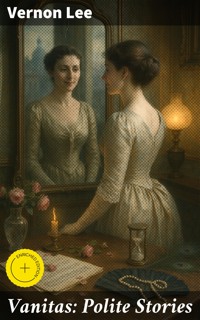
In 'Vanitas: Polite Stories', Vernon Lee weaves a tapestry of intricate narratives that explore the ephemeral nature of beauty, art, and existence. Through a collection of tales rich in emotional resonance and aesthetic contemplation, Lee employs a lyrical, almost decadent prose style that invites readers into a world of refined sensibilities and philosophical musings. Set against the backdrop of the late 19th century—a time flourishing with artistic movements and existential inquiry—these stories engage with themes of mortality and the fleetingness of life, characteristic of the literary trend known as 'vanitas' in art and literature. Vernon Lee, the pseudonym of the British writer Violet Paget, was a pioneering figure in the exploration of aestheticism and the psychology of art. With a rich educational background in philosophy and literature, Lee's personal experiences and travels across Europe profoundly influenced her perspective, infusing her work with a deep appreciation for culture and the human experience. Her unique voice often bridges the gap between the supernatural and the psychological, making her insights into the human condition compelling and relevant. 'Vanitas: Polite Stories' stands as an essential addition to the libraries of readers engaged with fin-de-siècle literature, art history, and those who appreciate intricate storytelling. With its blend of elegance and profundity, this collection promises to captivate and provoke thought, inviting readers to reflect on the transient beauty of life and art. In this enriched edition, we have carefully created added value for your reading experience: - A comprehensive Introduction outlines these selected works' unifying features, themes, or stylistic evolutions. - A Historical Context section situates the works in their broader era—social currents, cultural trends, and key events that underpin their creation. - A concise Synopsis (Selection) offers an accessible overview of the included texts, helping readers navigate plotlines and main ideas without revealing critical twists. - A unified Analysis examines recurring motifs and stylistic hallmarks across the collection, tying the stories together while spotlighting the different work's strengths. - Reflection questions inspire deeper contemplation of the author's overarching message, inviting readers to draw connections among different texts and relate them to modern contexts. - Lastly, our hand‐picked Memorable Quotes distill pivotal lines and turning points, serving as touchstones for the collection's central themes.
Das E-Book können Sie in Legimi-Apps oder einer beliebigen App lesen, die das folgende Format unterstützen:
Veröffentlichungsjahr: 2022
Ähnliche







Vanitas: Polite Stories
Table of Contents
Introduction
Vanitas: Polite Stories presents the complete texts of three long tales by Vernon Lee—Lady Tal, A Worldly Woman, and The Legend of Madame Krasinska—originally issued together and divided into numbered sections. The volume is a unified work of fiction rather than a miscellany, shaped as a triptych of related studies in character and society. Issued by William Heinemann, it often appears with a concluding catalogue titled Mr. William Heinemann’s List, a publisher’s notice rather than part of the narrative. This edition retains the integrity of the original arrangement, enabling readers to encounter the collection as a deliberate sequence of complementary narratives.
The pieces gathered here are extended stories—novellas in scale and focus—centred on the social world and its codes. They are not essays, poems, or dramatic works, but carefully constructed works of prose fiction that apply the author’s analytic art to the conduct of “polite” life. Each tale is segmented into succinct chapters, a device that supports shifts of scene, emphasis, and moral perspective. While Vernon Lee wrote widely in criticism and the supernatural, this collection showcases her psychological fiction, attentive to motive, circumstance, and the rhetoric of manners rather than to spectres or abstract aesthetic doctrine.
The title signals the collection’s governing themes. Vanitas evokes the moral of transience, the precariousness of fame, beauty, and worldly advantage; polite points to the theater of sociability—gracious surfaces, tactful speech, and the often unseen negotiations beneath them. Across these stories, public image contends with private conscience, and elegance becomes both instrument and mask. Characters are observed at moments when taste, ambition, and ethical scruple meet, revealing the price of self-fashioning in a world governed by reputation. The result is neither satire nor sermon, but a poised, exacting inquiry into the uses and limits of refinement.
Each tale approaches these concerns from a distinct angle. Lady Tal follows a celebrated figure in society whose presence exerts a powerful attraction, inviting questions about agency, responsibility, and the burdens of being admired. A Worldly Woman considers a cosmopolitan protagonist navigating the claims of career, friendship, and moral probity within an environment that rewards calculation as much as charm. The Legend of Madame Krasinska traces how stories accrete around a woman whose name becomes an emblem, exploring the distance between what is witnessed and what is believed. Together, they compose variations on social visibility and its consequences.
Vernon Lee’s stylistic signature is unmistakable: lucid, finely balanced sentences; ironic restraint; and an art of psychological close-up that renders small gestures decisive. Her narrators proceed by discriminations rather than declamations, testing judgments and inviting readers to register the ethical temperature of a drawing room as attentively as its décor. The numbered sections shape a rhythm of approach and swerve, allowing revelation to proceed by increments. Cultural reference and cosmopolitan observation enrich the texture without diverting from character. The prose is hospitable yet exacting, a medium for criticism enacted through story rather than appended to it.
Within the literary landscape of the fin-de-siècle, these stories stand at the intersection of the novel of manners and the modern psychological tale. They belong to the European conversation about taste, conduct, and the self, yet remain unmistakably English in their moral tact and rhetorical clarity. The Heinemann imprint situates the collection among late nineteenth-century books that sought readers attuned to subtlety rather than sensation. Vanitas: Polite Stories thus exemplifies a mode of fiction that refines social observation into ethical analysis, maintaining aesthetic poise while engaging the complexities of choice, influence, and consequence in polite society.
The continuing significance of Vanitas lies in its unsentimental account of how reputations are made, managed, and unmade. In an age newly attentive to performance and publicity, these tales illuminate the enduring dynamics of self-presentation, loyalty, and responsibility under the gaze of others. They reward close reading, not for puzzles or plots to be solved, but for the light they cast on motive and measure. Preserving the original triptych and its publisher’s context, this edition invites fresh attention to Vernon Lee’s craft—its clarity, irony, and humane precision—and reaffirms her place among writers who turned social life into a disciplined art of understanding.
Historical Context
Published in London by William Heinemann in 1892, Vanitas: Polite Stories emerged at the fin de siècle, when debates over Aestheticism, Decadence, and moral psychology animated British and continental letters. Vernon Lee—pen name of Violet Paget (1856–1935)—had already established herself as a cosmopolitan critic of art and manners, and the title’s vanitas allusion signaled her preoccupation with transience and worldly display. The collection’s urbane settings and psychological poise reflect a Europe knit by railways and salons, where reputations traveled swiftly. Early reviewers responded to Lee’s incisive style and cool irony, reading her fiction alongside contemporary essays that scrutinized taste, ethics, and social performance.
The stories draw on Lee’s long residence in Italy, especially Florence and Rome, where an English-speaking colony mixed with old Italian nobility and international visitors. After Italian unification (1861) and the capture of Rome (1870), aristocratic households adjusted to a constitutional kingdom and influxes of tourists, scholars, and art seekers. This cosmopolitan milieu, with its multilingual conversation and intricate codes of courtesy, provided Lee with case studies in tact, tactlessness, and the moral economies of hospitality. The elegant surfaces of polite society—balls, church fêtes, antiquarian visits—became stages on which ambition, nostalgia, and social improvisation revealed themselves.
Vanitas also reflects the era’s arguments about women’s education, property, and public voice. In Britain the Married Women’s Property Acts (1870, 1882) and the growing visibility of women in professions and universities unsettled Victorian gender arrangements. By the early 1890s the “New Woman” controversy was cresting, sharpened by essays such as Sarah Grand’s 1894 coinage of the term. Lee’s fiction, attentive to calculation and constraint within courtship and marriage, met a readership already primed to scrutinize female strategy, social risk, and respectability. Her cosmopolitan settings demonstrate how these questions shifted across borders, where marital law, guardianship, and dowries varied markedly.
Late nineteenth-century financial volatility also informed the period’s fascination with status and rumor. The Baring crisis of 1890, which shook London’s banking prestige, dramatized the fragility of credit—social as well as monetary. In elite transnational circles, introductions functioned like currency, and gossip, amplified by a rapidly expanding press and telegraph networks, could bankrupt reputations. The spectacle of Anglo-American and continental marriage markets—the so-called “Dollar Princess” era—further entwined affection, calculation, and display. Lee’s attention to measured speech, negotiated favors, and tactful silence registers a world where politeness operated as both ethical stance and instrument of risk management.
Religious difference shaped these encounters. After 1870, the Roman Question and the Law of Guarantees (1871) redefined relations between the Italian state and the Papacy, while foreign residents navigated Catholic ritual as social theatre. English Protestants wintering in Rome or Florence attended services, processions, and aristocratic patronal feasts with a mix of piety, curiosity, and diplomacy. Confessional boundaries intersected with national identities and marriage choices, producing moral negotiations in which conversion, attendance, or abstention carried social meaning. Lee’s fiction registers how civility could lubricate—or disguise—deep disagreements about conscience, authority, and the proper spheres of faith and fashion.
Another recurring horizon was Eastern and Central Europe, especially Poland, whose partitions (1772–1795) and failed uprisings (1830–31; 1863–64) generated a celebrated émigré culture in Western salons. Names, music, and legends associated with Polish aristocracy—famous since the “Great Emigration” to Paris—circulated through European drawing rooms, from Chopin’s memory to Mickiewicz’s epics. By the 1890s, such exilic narratives were touchstones for discussions of loyalty, sacrifice, and the hazards of courtly myth-making. In invoking a figure like Madame Krasinska, Lee could assume readers’ familiarity with these romanticized histories and examine how nostalgia and national glamour complicated private motives.
Intellectual crosscurrents strengthened Lee’s analytic bent. She engaged the French moralistes’ cool observations of vanity, while contemporary science popularized psychological explanation and theories of degeneration. Max Nordau’s Degeneration (1892–93) attacked aesthetic cults as pathological; in Italy, Cesare Lombroso’s criminology circulated widely. Lee’s earlier essays—Euphorion (1884) and Baldwin (1886)—had already argued for ethical scrutiny within aesthetic experience. Against both cultish aestheticism and crude moral panic, her “polite” method deploys irony, measured sentiment, and close attention to tone. Contemporary reception often praised her style yet debated her severity, revealing competing late-Victorian expectations for fiction’s moral labor.
The book’s material history also situates it within a transforming publishing economy. Heinemann, founded in 1890, promoted single-volume fiction as circulating libraries and the three-decker system waned after 1894. International markets expanded under the Berne Convention (1886), and English-language books moved more swiftly across Europe and America. Catalogues—like “Mr. William Heinemann’s List” appended to many volumes—advertised a cosmopolitan roster to mobile readers. Vanitas benefited from this infrastructure: reviewed in British and continental periodicals, it reached audiences negotiating a fin-de-siècle balance between art-for-art’s-sake polish and the ethical critique of society that Lee, with precision, supplied.
Synopsis (Selection)
Vanitas: Polite Stories — Collection Overview
An urbane trio of society tales where polished manners and aesthetic surfaces frame quiet moral inquiry and psychological finesse.
Recurring motifs include masks, reputation, and performative virtue, with a tonal shift from crisp social comedy toward contemplative legend.
Lady Tal (Sections II–X)
A portrait of a titled beauty maneuvering marriage, friendship, and public gaze in cosmopolitan circles, balancing charm with calculation.
Ironic and poised in tone, it probes vanity, gendered power, and the cost of shaping a life into an impeccable social image.
A Worldly Woman (I–IX)
Following a modern, pragmatic heroine, the story examines how status, utility, and decorum structure intimacy and choice.
Cool-eyed and analytical, it weighs ambition and self-preservation against conscience, testing the boundaries of independence within polite society.
The Legend of Madame Krasinska (I–X)
A reflective reconstruction of a celebrated woman's story as filtered through memory, hearsay, and the allure of romance.
Elegiac in mood, it explores how myth overtakes the person, meditating on reputation, cultural memory, and the vanitas of fame.
Mr. William Heinemann's List
An appended publisher’s catalogue presenting contemporary offerings and signaling the market context surrounding these tales.
Functional rather than narrative, it underscores the period’s literary milieu without adding to the collection’s themes or plots.




