


Erhalten Sie Zugang zu diesem und mehr als 300000 Büchern ab EUR 5,99 monatlich.
- Herausgeber: epubli
- Kategorie: Sachliteratur, Reportagen, Biografien
- Sprache: Englisch
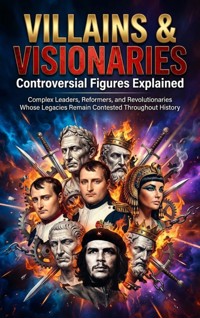
Historical figures who transformed their societies often defy simple moral categorization, combining progressive achievements with oppressive actions, visionary reforms with brutal methods, and personal integrity with political ruthlessness. This comprehensive examination analyzes controversial leaders across history—from ancient reformers and revolutionary figures to colonial administrators and independence leaders—exploring how their decisions shaped nations while examining the ethical complexities their legacies present. Drawing on biographical records, policy documents, contemporary accounts, and scholarly reassessments, this book reveals how these figures operated within specific historical constraints while making choices that had lasting consequences. It explores how leaders balanced competing interests, how their stated ideals conflicted with their methods, and how their actions affected different populations unequally. The narrative examines how propaganda shaped contemporary reputations and how later generations reassess controversial figures based on evolving ethical standards. Each profile analyzes the political context that enabled their rise, the institutions they built or destroyed, the opposition they faced, and what their careers reveal about power, reform, and historical change. It addresses why societies celebrate some controversial figures while condemning others, how nationalist narratives shape historical memory, and the difference between understanding historical actors and justifying their actions. Without moral relativism or presentism, this work provides rigorous analysis of how complex individuals navigate historical crises.
Sie lesen das E-Book in den Legimi-Apps auf:
Seitenzahl: 221
Veröffentlichungsjahr: 2026
Das E-Book (TTS) können Sie hören im Abo „Legimi Premium” in Legimi-Apps auf:
Ähnliche




















Table of Contents
Chapter 1: The Legacy of Julius Caesar
The Early Years of Julius Caesar
Rise to Power and Notable Achievements
The Dictatorship and Its Implications
The Assassination: Causes and Reactions
Reevaluating Caesar's Legacy
Chapter 2: Empress Dowager Cixi: The Power Behind the Throne
Early Life and Rise to Power
Modernization Efforts in the Qing Dynasty
Response to Foreign Pressure and War
The Ethical Dilemmas of Power
Legacy and Historical Reinterpretation
Chapter 3: Gandhi: The Paradox of Peaceful Resistance
Early Life and Influences
Philosophy of Nonviolence
Controversial Views and Actions
Legacy and Reassessment
Chapter 4: Napoleon Bonaparte: The Visionary Dictator
The Rise of Napoleon: A Historical Context
Military Innovations and the Napoleonic Wars
Reforms That Shaped Modern France
Authoritarianism vs. Enlightenment Ideals
The Global Impact of Napoleon's Legacy
Reassessment of Napoleon's Legacy
Chapter 5: Mao Zedong: Revolutionary Hero or Tyrant?
The Early Years: Mao's Rise to Power
The Great Leap Forward: Ambition or Catastrophe?
The Cultural Revolution: Ideological Purges and Social Upheaval
Mao's Legacy: Hero or Villain?
The Role of Propaganda in Shaping Mao’s Image
Chapter 6: Margaret Thatcher: The Iron Lady's Divide
The Road to Number 10
Implementing Economic Reforms
Social Consequences and Public Response
Thatcher's Foreign Policy and Global Influence
Controversies and Critiques of Her Leadership
The End of an Era and Lasting Impact
Chapter 7: Che Guevara: Revolutionary Icon or Misguided Idealist?
Early Life and Ideological Foundations
The Cuban Revolution: A Turning Point
The Post-Revolution Era: Ideals vs. Practice
Guevara’s Internationalist Vision
The Legacy of Che Guevara
Chapter 8: Franklin D. Roosevelt: A New Deal with Controversy
The Great Depression and the Birth of the New Deal
Controversial Figures and Policies within the New Deal
FDR's Leadership During World War II
The Political Opposition and Criticism
The Legacy of FDR's Controversial Decisions
Chapter 9: Simon Bolivar: Liberator or Despot?
Early Life and Influences
Revolutionary Achievements
The Vision of a United Latin America
Authoritarian Tendencies
Legacy and Controversy
Reevaluation in Contemporary Context
Chapter 10: Woodrow Wilson: Idealism and Realpolitik
The Idealist's Vision
Racial Segregation and Discrimination
The Contradictions of Interventionism
The League of Nations: A Vision Unfulfilled
Reassessing Wilson's Legacy
Chapter 11: Nelson Mandela: A Beacon of Hope or a Political Player?
The Early Years: A Revolutionary Awakening
The Rivonia Trial: A Turning Point
Life in Prison: Resilience and Strategy
Negotiating Freedom: A Political Pragmatist
The Presidency: Visionary vs. Realities
A Complex Legacy: Hero or Pragmatist?
Chapter 12: Augustus: The First Emperor with a Contested Legacy
Rising from Chaos
Establishing the Imperial System
The Propaganda Machine
The Cost of Peace
The Legacy of Augustus
Balancing Competing Interests
Reflections on Augustan Governance
Reflections on Legacy and Leadership
Chapter 1: The Legacy of Julius Caesar
Julius Caesar stands as one of history's most complex figures. Celebrated for his military conquests and political reforms, his legacy remains clouded by his ruthless quest for power and the civil strife he incited. This chapter explores how Caesar's actions reshaped Rome and set the stage for the transition from Republic to Empire, while also examining the moral ambiguities of his methods and the impact on various social classes.
The Early Years of Julius Caesar
Julius Caesar's formative years played a crucial role in shaping the man he would become. Born into a patrician family in 100 BCE, his early life was marked by the political turmoil of the late Roman Republic. Understanding his upbringing and initial ambitions is key to analyzing his later decisions and actions.
Patrician Roots
Julius Caesar was born into the prestigious patrician family of the Julii, a lineage that granted him significant advantages in his early life. His father, Gaius Julius Caesar, served as a praetor, and his mother, Aurelia, was known for her strong character and influence over him. This noble background ensured that Caesar had access to a rigorous education, including rhetoric and philosophy, which were vital for a future political career.
Being part of the patrician class not only opened doors to political office but also exposed him to the societal expectations and conflicts of the Roman elite. Such upbringing ingrained in him a deep understanding of politics, societal factions, and the importance of alliances. However, it also placed him in the midst of conflicts among patricians and plebeians, igniting a lifelong ambition that would define his legacy.
Military Experience
Caesar's military career began in his early twenties, providing him the opportunity to forge his reputation as a skilled commander. His service in Asia Minor exposed him to the complexities of warfare and command. However, it was during the Jugurthine War that he truly distinguished himself; he displayed both tactical ingenuity and bravery, earning accolades that bolstered his political ambitions.
Caesar's experiences in these conflicts were formative, allowing him to refine his leadership abilities and develop a loyal following among soldiers. This military success became critical later in his career, as it not only augmented his authority but also provided a platform for his future political maneuvers. His blend of military prowess and political acumen would prove essential in navigating the treacherous waters of Roman politics.
Political Aspirations
With ambition burning within him, Caesar embarked on a political career at a time of profound instability in the Roman Republic. His entry into politics was marked by a keen awareness of the importance of alliances and rivalries. He successfully navigated the complex political landscape, aligning himself with powerful figures while utilizing patronage to build a network of supporters.
However, his aspirations often brought him into conflict with traditionalists and rivals, reflecting the fractious nature of Roman politics. His relentless pursuit of power showcased both his strategic mind and willingness to engage in morally ambiguous dealings. These early political maneuvers not only set the stage for his future dominance but also laid the groundwork for the profound changes he would eventually enact within the Republic.
Involvement in Populares
Caesar's alignment with the Populares movement marked a significant aspect of his early political identity. This faction sought to champion the rights of the lower classes against the elite patricians, focusing on reforms that addressed a growing divide in Roman society. By advocating for the populares’ policies, such as land reforms and grain distributions, Caesar carved out a niche as a defender of the common people.
His association with this movement was not without controversy; it alienated some of his patrician peers who viewed his sympathies for the masses as a threat. Yet, it also solidified his support base among the plebeians, providing him with a crucial platform as he ascended to power. This early commitment to the cause of the lower classes would influence his later policies and actions as he navigated the tumultuous political waters of Rome.
Rise to Power and Notable Achievements
Julius Caesar's rise to power was marked by a series of remarkable military and political achievements. His conquests expanded Roman territory and his reforms aimed at addressing social inequalities. However, his ascent also sowed the seeds of controversy and civil unrest.
Conquest of Gaul
Julius Caesar's military campaign in Gaul, spanning from 58 to 50 BCE, is often regarded as a hallmark of ancient military strategy and tactical brilliance. This extensive series of battles not only showcased his exceptional leadership and military acumen but also significantly expanded Rome's territorial reach. By defeating formidable tribes such as the Helvetii, the Belgae, and the Gallic chieftain Vercingetorix, Caesar secured vast regions that added immense wealth and resources to Rome.
Furthermore, the conquest of Gaul had profound political ramifications. It bolstered Caesar's popularity and military reputation among his troops and the Roman populace, enabling him to consolidate power back in Rome. However, the brutal nature of these campaigns, often marked by significant violence and devastation, also raised ethical questions surrounding his ambition. The contrast between his celebrated victories and the harsh realities of conquest paints a complex picture of a leader who operated amid the dualities of glory and oppression.
Crossing the Rubicon
One of Caesar's most infamous actions was the crossing of the Rubicon River in 49 BCE, a direct defiance of the Senate's authority and a pivotal moment in Roman history. This bold move ignited a civil war that would irrevocably alter the political landscape of Rome. By crossing the Rubicon, Caesar famously declared ''the die is cast,'' signaling his commitment to challenge the status quo and pursue his vision of governance against the Senate's wishes.
The consequences of this act were monumental, leading to the downfall of the Roman Republic and the eventual rise of imperial rule. This civil war not only pitted Caesar against Pompei, a former ally turned adversary, but it also exposed deep societal divides within Rome, as well as differing visions for its future. While his decisive actions were intended to eliminate corruption and establish order, they catalyzed a period of unrest that left a lasting impact on Roman governance and its people.
Political Reforms
Amidst his military conquests, Caesar also implemented significant political reforms that aimed at addressing social inequalities within Rome. Notably, he reorganized the calendar, introducing the Julian calendar, which improved the timekeeping system used throughout the empire. This reform not only streamlined administrative processes but also showcased his commitment to enhancing civic life.
Additionally, he enacted land redistribution policies aimed at allocating land to veterans and the urban poor, which sought to alleviate economic disparities. Such reforms were widely popular among his supporters and helped to solidify his base. However, these actions also sparked criticisms and resentment among the traditional patrician class, who viewed these changes as radical threats to their entrenched privilege. Through these reforms, Caesar illustrated a complex interplay between benevolence and ambition in his leadership style.
Formation of the Triumvirate
The formation of the First Triumvirate in 60 BCE, which included Caesar, Pompey, and Crassus, marked a significant turning point in the power dynamics of the Roman Republic. This informal alliance was designed to consolidate their strengths against the Senate, allowing each member to pursue their political ambitions while ensuring mutual support. For Caesar, this alliance provided the necessary resources and political clout to advance his military and administrative objectives.
However, the Triumvirate also sowed the seeds of intense rivalries. Over time, the ambitions of each member began to clash, leading to a fractious division between Caesar and Pompey, particularly after Crassus's death in 53 BCE. The eventual fallout from this alliance contributed to the cataclysmic civil war, highlighting the dualities of cooperation and conflict inherent in political maneuvering. The Triumvirate exemplifies how alliances can both empower leaders and threaten their stability, revealing the precarious nature of political power in ancient Rome.
The Dictatorship and Its Implications
Caesar's appointment as dictator for life marked a turning point in Roman governance, leading to both advancements and growing unrest. This section discusses the implications of his absolute power and how it challenged the traditional republican norms.
Concentration of Power
Julius Caesar's rise to power and subsequent appointment as dictator for life represented a significant shift in Roman governance. This concentration of power was seen as a direct challenge to the Republic's democratic principles, which had been founded on a system of checks and balances. By accumulating authority that allowed him to bypass traditional republican offices, Caesar effectively dismantled the political structures that had protected against tyranny.
As he centralized military and political control, concerns among the citizenry grew, leading many to perceive him as a dictator. The very essence of the Republic, which relied on the distribution of power among elected officials, was undermined. This led to a crisis of legitimacy, as fears of absolute rule and the potential for abuse clouded his reforms, creating a deep-seated anxiety about the future of Roman governance.
Reforms vs. Autocracy
Caesar was a complex figure, known for implementing a series of populist reforms intended to address the needs of the lower classes. These initiatives included land redistribution and debt relief, aimed at alleviating the suffering caused by years of civil strife. However, these reforms often conflicted with his autocratic approach, leading to significant divisions among the Senate and within Roman society.
While many citizens celebrated his progressive policies, the Senate viewed his actions with suspicion, perceiving them as a means to consolidate power rather than genuine altruism. This division highlighted the paradox of Caesar's leadership—his ambition to reform Rome clashed with the perception of him as a tyrant, exacerbating the political tension and dissent that would ultimately lead to his assassination.
Public Image
To secure his position and foster support among the populace, Caesar adeptly utilized propaganda, crafting a public image as a benevolent and dedicated leader. This portrayal was crucial in legitimizing his rule; he presented himself as a champion of the people, a protector against the elite and corrupt senatorial class.
However, this carefully cultivated image masked the realities of his dictatorial governance. Propaganda played a vital role in shaping public perception, allowing Caesar to maintain a facade of popularity even as his methods grew increasingly autocratic. The success of this propaganda not only reinforced his power but also obscured the underlying tensions created by his concentration of authority.
Unrest Among the Elite
While many citizens rallied behind Caesar's reforms, his autocratic style alienated a significant portion of the elite, predominantly the senatorial class. Many senators viewed him as a direct threat to their power and influence within the Republic. This growing resentment culminated in increased plots against his life, as dissatisfaction fermented among those who feared the implications of his unchecked authority.
The assassination of Caesar was not only a personal attack but also a desperate attempt by the Senate to restore what they viewed as the proper balance of power in the Republic. This unrest among the elite underscored the precariousness of his position and served as a stark reminder of the dangers inherent in consolidating power, ultimately shaping the course of Roman history in the years to follow.
The Assassination: Causes and Reactions
The assassination of Julius Caesar on the Ides of March remains one of the most famous events in history. Suited for both treachery and a noble cause, this pivotal moment was rooted in complex motivations involving fear, jealousy, and political philosophy.
Factors Leading to Assassination
The conspiracy to assassinate Julius Caesar was fueled by a growing concern among Roman senators about his immense power and perceived aspirations to become king. Figures like Brutus and Cassius feared that Caesar's consolidation of authority would dismantle the republic, leading to a tyranny reminiscent of monarchy.
Historians argue that Caesar's reforms, while beneficial to many, engendered significant opposition among the elite who felt threatened by his ability to bypass traditional institutional checks. His popularity among the populace contrasted starkly with the discontent of the ruling class, who worried about their diminishing influence. The political climate of Rome, marked by factionalism and rivalry, created a volatile atmosphere that ultimately set the stage for his assassination on the Ides of March.
Symbolism of the Ides of March
The assassination of Julius Caesar on March 15, famously known as the Ides of March, transcended mere historical event to become a powerful symbol in the struggle between tyranny and republicanism. This date has since been etched in history as a reminder of the drastic measures taken to preserve the ideals of the Roman Republic.
Following Caesar's death, interpretations of this event varied significantly over time. For some, he represented an overreaching leader whose demise was a necessary step to restore freedom and democracy. Others viewed the conspirators as betrayers of a powerful figure who was transforming Rome for the better. This duality reflects ongoing debates about the nature of power and the responsibilities of leaders versus the governed, as well as the risks involved in resisting authority.
Immediate Aftermath
The immediate aftermath of Caesar's assassination was marked by a profound sense of chaos and instability in Rome. Far from restoring the Republic, the act unleashed a wave of civil wars, as various factions vied for power. The anticipated liberation quickly devolved into further conflict, demonstrating the unpredictable nature of political upheaval.
In this tumultuous environment, Caesar's grandnephew, Octavian, emerged victorious. Eventually, he capitalized on the confusion to establish himself as the first emperor of Rome, fundamentally altering the course of Roman governance. Thus, rather than marking the end of Caesarism, the assassination inadvertently facilitated the rise of imperial rule, challenging the motives and foresight of those who conspired against him.
Legacy of the Conspiracy
In the years following Caesar's assassination, the legacy of the conspirators shifted dramatically. Initially celebrated as liberators, figures like Brutus and Cassius would come to be vilified, illustrating how historical narratives are often shaped by perspective. The initial approval of their actions gave way to critiques as the consequences of their rebellion unfolded.
As history progressed, perspectives often changed based on the political climate and societal values of different eras. Modern interpretations have varied from viewing the assassins as defenders of republicanism to recognizing them as purveyors of chaos, reflecting the complex relationship between ethics and political action. This evolution emphasizes the challenges of interpreting historical figures through the lens of contemporary moral standards.
Reevaluating Caesar's Legacy
In the centuries that followed, Julius Caesar's legacy has undergone numerous reinterpretations. Scholars and historians continue to debate his achievements and failures, revealing how perspectives on power and morality evolve over time.
Cultural Representations
From William Shakespeare's iconic play, Julius Caesar, to modern cinematic adaptations, Caesar's narrative has been a fertile ground for artistic exploration. These representations not only dramatize his life events but also shape public perception of his character. In Shakespeare's play, for instance, Caesar is portrayed as a tragic figure whose ambition leads to his downfall; this interpretation emphasizes themes of betrayal and the struggle between personal ambition and civic duty.
Modern films and documentaries often reflect contemporary values and anxieties, adapting Caesar's story to resonate with today’s audience. This ongoing reinterpretation illustrates how cultural narratives can elevate or vilify historical figures, and how they reflect the complexities of power and morality. Through these lenses, Caesar’s legacy becomes both a reflection of its time and a commentary on enduring human struggles, illustrating the power of storytelling in shaping historical memory.
Academic Perspectives
Historians continue to wrestle with the dualities of Julius Caesar's character, often presenting a complex picture of a leader whose brilliance on the battlefield was matched by a troubling disregard for the republican principles of governance. His military conquests expanded Rome’s territories, proving him a tactical genius, yet his actions led to the undermining of the Roman Republic and the rise of autocratic rule. This duality raises questions about the morality of his methods.
Scholars debate whether his reforms, which benefited the Roman populace, can outweigh the disruptive forces he unleashed. Some view him as a progressive reformer who addressed socio-economic disparities, while others argue that his authoritarian tendencies paved the way for tyranny. Consequently, academic discourse reflects the evolving moral framework through which Caesar’s legacy is evaluated, balancing his contributions against the ethical implications of his actions.
Continued Relevance
Caesar’s legacy offers a cautionary tale about the concentration of power and the inherent risks that accompany such authority. In contemporary political discussions, parallels are often drawn between Caesar's rise and the dynamics of modern political leaders who challenge democratic norms. His life serves as a reminder of how well-intentioned reforms can lead to unintended consequences, particularly when power becomes centralized in a single individual.
This relevance is underscored in discussions around populism, authoritarianism, and the fragility of democratic institutions. By examining Caesar's trajectory, societies can reflect on the mechanisms of power and the vigilance needed to preserve democratic ideals. His story prompts essential questions about leadership, ethics, and the responsibilities of those in power, reinforcing its significance in the modern political landscape.
Enduring Influence
The enduring influence of Julius Caesar’s life and death continues to shape discussions about legacy and morality in leadership across various contexts. His assassination on the Ides of March is often viewed not just as a pivotal moment in Roman history, but also as a profound statement on the perils of power and betrayal. This event acts as a touchstone for debates around martyrdom, justice, and political legitimacy, inviting interpretations that vary across different times and cultures.
Moreover, the complexities surrounding Caesar's legacy highlight the ongoing discourse about how society reconciles admiration for achievements with the moral implications of actions taken to secure those achievements. In navigating the nuances of his story, individuals and societies can better understand the intricate dynamics of leadership and their historical ramifications, making Caesar's legacy a vital subject of inquiry for scholars and general audiences alike.
Chapter 2: Empress Dowager Cixi: The Power Behind the Throne
As a formidable leader in late Qing Dynasty China, Empress Dowager Cixi is often viewed through conflicting lenses. Her reign witnessed significant modernization efforts amid conservative resistance. This chapter investigates her role in navigating these turbulent times and the ethical dilemmas she faced, contrasting her ambitions for progress with her willingness to employ oppressive tactics to maintain power.
Early Life and Rise to Power
Cixi’s journey from a low-ranking concubine to the Empress Dowager is a remarkable tale of ambition and adaptation. This section outlines her early life, the socio-political context of the Qing Dynasty, and how these factors influenced her ascent to power.
Born into a modest family, Cixi's early encounters shaped her worldview and ambitions.
Empress Dowager Cixi was born in 1835 into a prominent but not wealthy family in Beijing. Her early years were marked by a traditional upbringing that emphasized Confucian values and social hierarchy. This modest background instilled in her a fierce ambition to rise above her circumstances. The competitive nature of her environment, coupled with her intelligence, set the stage for her future as a significant political player.
Encounters with influential figures during her youth exposed Cixi to the intricacies of power and court life. Despite her humble origins, she developed a keen understanding of the dynamics that governed society. This awareness would later drive her to navigate the complex social structures within the Forbidden City, forging paths that many in her position could not envision. Her formative experiences provided the foundation for her assertive and often ruthless pursuit of power.
Her entry into the forbidden city was marked by competition and political intrigue among the imperial harem.
In 1850, Cixi entered the Forbidden City as a low-ranking concubine of Emperor Xianfeng. This transition was not merely a personal achievement but a plunge into a realm of fierce rivalry and political maneuvering. Within the imperial harem, concubines often vied for attention, favor, and status, creating a cutthroat environment where alliances formed and shattered swiftly.
Cixi's keen awareness of her surroundings allowed her to assess the strengths and weaknesses of her rivals. She cultivated relationships with vital allies and strategically distanced herself from potential threats. This ability to thrive amid intrigue not only showcased her resilience but also indicated her potential for leadership—a quality that would later define her reign as Empress Dowager.
Emperor Xianfeng's reign experienced instability and external pressures, creating a pathway for Cixi's influence.
The Qing Dynasty during the 1850s was fraught with challenges. Emperor Xianfeng's rule was characterized by internal strife, including peasant revolts and external pressures from Western powers, particularly in the form of the Opium Wars. This context of instability created significant opportunities for Cixi to assert her influence within the court.
Cixi capitalized on the emperor's vulnerabilities, especially as he struggled to maintain control over a government besieged by corruption and unrest. Her understanding of the socio-political landscape allowed her to position herself as a critical advisor to Xianfeng, suggesting policies and actions that would benefit both the emperor and her ambitions. This tumultuous environment ultimately paved the way for her ascension following his untimely death.
Cixi's intelligence and political savvy allowed her to navigate the complexities of court life successfully.
Cixi was not merely a bystander in the Qing court; her intellectual prowess and political cunning were instrumental in her rise to power. She adeptly manipulated court politics, showcasing an ability to outmaneuver her rivals while gaining the emperor's favor. This combination of intelligence and strategic acumen allowed her to secure influential positions within the royal hierarchy.
Cixi understood the importance of creating and maintaining alliances. By fostering loyalty among key officials and maneuvering through the intricacies of the court's power dynamics, she positioned herself as a central figure in governance. Her ability to maintain a delicate balance between ambition and diplomacy proved crucial in navigating the often treacherous environment of the imperial palace.
Her relationship with Emperor Xianfeng positioned her as a pivotal figure in state affairs, particularly following his death.
Cixi's close relationship with Emperor Xianfeng was fundamental to her rise. As his favored consort, she gained unparalleled access to him and thus to the mechanisms of power. Their partnership allowed Cixi to play a significant role in state matters, particularly during times of crisis, when stability was paramount.
Following Xianfeng's death in 1861, Cixi swiftly moved to consolidate her power, acting as regent for her young son, the new emperor. Her ambition transformed her from a consort into a formidable ruler. Despite being faced with councilors who were skeptical of a woman's authority, she leveraged her connection to the deceased emperor to justify her influence. This transition period marked the beginning of her long and controversial reign, wherein she implemented policies that reflected her vision for China.
The political landscape of the time had a significant influence on Cixi's ambitions and strategies for consolidating power.
The political context of Cixi's era was critical to her ascent. The Qing Dynasty faced numerous external threats, including territorial encroachments by foreign powers and internal dissent from various factions, including the Taiping Rebellion. These pressures created a volatile environment where traditional authority was contested and reform was often viewed as a necessity.
Cixi's ambitions were shaped by this tumultuous landscape. She recognized the need for modernization to strengthen China against foreign imperialism. Her strategies included supporting reforms, albeit selectively, to maintain stability and her own power. The constant push and pull of these socio-political forces compelled her to adopt opportunistic approaches to governance, often prioritizing control over inclusive reform. This resulted in a legacy that remains hotly debated—one defined by both progress and repression.
Modernization Efforts in the Qing Dynasty
Cixi’s rule is often associated with significant modernization reforms amidst a conservative backlash. This section explores the initiatives she championed that aimed to modernize China while examining the challenges she faced from traditionalists.
Cixi supported the Self-Strengthening Movement, which aimed to adopt Western technologies and military practices.




