


Erhalten Sie Zugang zu diesem und mehr als 300000 Büchern ab EUR 5,99 monatlich.
- Herausgeber: Peepal Tree Press
- Kategorie: Poesie und Drama
- Sprache: Englisch
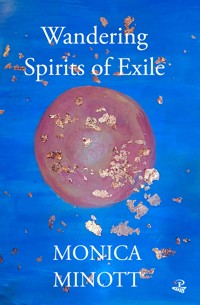
In Wandering Spirits of Exile, poems converse with art, bridging words and visual representation. This powerful collection breathes life into images, capturing their essence and telling their stories. Through three sections, the collection reimagines the exilic journey. Section 1 interrogates and illuminates the Middle Passage. Section 2 delves into the spirit-life of Jamaica's Nanny of the Maroons, tracing the 'Nanny Spirit' through generations. Section 3 expands the narrative through artists like Mallica 'Kapo' Reynolds and Jean-Michel Basquiat, portraying the enduring legacy of Africans in the New World. With ekphrastic poetry at its core, Wandering Spirits of Exile weaves history and emotion, confronting institutional violence and social disenfranchisement. The Nanny spirit, a symbol of empowerment, guides readers through a journey of reclamation and resilience. This collection is a tribute to heritage, identity, and the uncontainable spirit of those far from home.
Sie lesen das E-Book in den Legimi-Apps auf:
Seitenzahl: 71
Veröffentlichungsjahr: 2025
Das E-Book (TTS) können Sie hören im Abo „Legimi Premium” in Legimi-Apps auf:
Ähnliche














MONICA MINOTT
WANDERING SPIRITS OF EXILE
CONTENTS
Lignum Vitae
Section I.Iterations of Ships That Scattered Us
A Prayer for Ships that Scattered Us
La Santa Maria: Kamau Reassesses Columbus’ Travels
Marie Séraphique of Nantes
New Britannia
Taínos’ Zemis Held Captive for Safekeeping
Ignatius Sancho Travels on Nobody
Recovery
A Word from Herodotus
Who Will Tame the Sirens?
Port Maria
John Newton’s Thoughts on the African Slave Trade Re-storied
Penning Down Possibilities
Those Who Came After
Section II.Travelling Spirits of Nanny
Nanny’s Pot
Buck Toe Stone
Mapping the Politics of We, Us & Them
Nanny Sleeps Under a Broom Tree.
Dancehall Museum
Nanny Spirit Travels – Suppliant Sisters
Mapping Maroon Territory
Spirit of Jonkonnu Reach the Lane
Colour “I” Dancehall
Nanny as Critic, and the Caribbean Quartet
Words on a Slow Burn
Proclamation:st August Free Paper Grant
Fragile
My Wild Woman Sings Too
Chaucer House
Section iii:Your Paint, My Canvas
Warrior King
Sitting on Top of a Pagoda
Basquiat Acquits Himself with a Jawbone of an Ass
Basquiat’s Delusion
Defacement
Foreign Policy Writer
Undiscovered Genius
Making Fufu
A Revivalist Going to Heaven
Rock-stone Artist
Gene Pearson’s Masks
Zion, Where Sea Meets Sky
Notes
LIGNUM VITAE
“Three wooden figures (said to be Taíno deities… zemis) were put on display before the Society of Antiquaries of London.”
Hardwood taking shape.
Cacique listens to grain
of the wood, turns voice
into form.
Ancestors’ knowledge-tree bends
but never breaks, stone-
chisel strips away bark
revealing heart-wood
ready for stone grinder.
Bevelled liberation. Bird-
man finds tree-of-life
good to make ships.
SECTION I: ITERATIONS OF SHIPS THAT SCATTERED US
“Between 1662 and 1807 British colonial ships [carried] an estimated 3,415,500 Africans. Of this number, around 2,964,800 survived the ‘middle passage’ and were sold into slavery in the Americas.
The transatlantic slave trade was the largest forced migration in human history and completely changed Africa, the Americas and Europe.1
1.
‘London and the Slave Trade, International Slavery Remembrance Day’ Royal Museums Greenwich.
A PRAYER FOR SHIPS THAT SCATTERED US
May the ships that scattered us bear witness,
so that I, too, might find proximal peace.
Still searching for peace and men long dead?
May a faithful railroad track, bones of men
who never made it across (starving sailors and
Africans too sick, too weak, too troublesome)
find a margin of peace if not the whole.
Stains and shame of slavers so hard to wash away.
May continents of longing – yearning to see enemies
swallowed into the blue – be satisfied by the waves
of forgiveness, as cyclones appear mid-ocean,
on time to whip up a frenzy carrying water afar.
I have a burden for ships, yet ships have no heart!
And what of heartless men? I build seawalls
of acceptance if not understanding; only then
will each cyclone dissipate, cool down. In the
ocean of now, time, man, and magic inseparable.
Yes, the wind unnerves me, it tells me nothing.
We learn that “Prospero still fears Caliban, yes
he sees much of himself in his would-be-slave.”
He begs me to transplant my black heart for
heartlessness, shed the skin of empire for ruin.
Ah, the taste of the sea still stings my tongue.
I swallow the sea’s energy. I find a newborn me,
not one clothed in garments of borrowed silence.
In an evolving day, the sea – at first a frivolous
emerald-green – is forced to grow up into cobalt.
I entreat bones in the deep to put on new flesh.
Yet, what explanations do we give to our children
and their children when they question
insidious names of slavers: Success, Satisfaction, Free Bounty?
Each name carrying the potential of a tripwire!
LA SANTA MARIA:KAMAU REASSESSES COLUMBUS’ TRAVELS
A crumbling Rome set-off dread rumblings,
Kamau calls it! Not by chance Columbus sails west
to find east. Is a force greater than de man bring de fire
firing up the world, a rupture launching mantu-spirits.
Columbus, a blind bat flying into daybreak, stumbling over the seas, slipping by Daedalus’ labyrinth, invisible to the waves driving La Santa Maria, invisible to a sliver of sharks moving by instinct, he sails west.
Who fe hear hear. An irreversible landing. We who live on
unpossessed lands, dem come fi reconfigure we footprints.
If waters had high-spirit insight, they’d gang together and
censure the Pinta, Niña and La Santa Maria.
Columbus get free pass. Look…Armageddon!
Who fi feel no feel yet. Dem say dem clean islands free of aborigines. Arawaks and Caribs languishing under sugarcane sicknesses before blue eyes turn to Africa.
Columbus’ free pass tidalectic-strong, wave after wave
other European spectral-mantu-sprits rise. Is like spite.
They hold continental man in triangular detention, rulers
of earth B.C. know Columbus’ route is a winding roadmap to
Armageddon!
Armageddon!
Armageddon!
We who come after, our feet searching for home, find a crush, a carnival of bones, each day’s red tint bruising the skies. Migration ships scatter our voices. Must avoid straits separating Africans from Africa. Time to reconnect.
MARIE SÉRAPHIQUE OF NANTES
(Channelling Kamau Brathwaite through time travel)
A slaver leaves Le Havre for Africa; next stop: a place of the have-nots –
no language, no family, no immortelle in Sainte-Domingue.
Asymmetrical bodies wear unearned scars; death balance
threatens life scales. We watch you break limb after limb.
Now that perspectives have changed on genocide, heart shields
pierced, blood runs red. Natural justice is natural, yet not
constant. Remnants look at a broken flagstaff, brown like Sycorax.
On the way a student meets a bloodied teacher.
Thoughtfulness detonates oppression and avarice; it is
rainmaker, gamechanger, place-setter. Ashantis upset
the stage. Speak. Rattling rage and pent-up language
of the oppressed grow loud, then simmer, simmer down.
We are beyond the Middle, beyond bloodshed, en route past
domination; an active volcano belches lava,
bleaching all in its path. It is I-self you set upon. We
disappear inside ourselves. I-self ash into invisible.
Yet we are not travelling shadows, for you’ve seen
blood run like water from our veins; a changeable wind
lands ships near our equator – French Equatorial Africa.
You claim the sulphur. Troubling winds blow ships to Haiti.
Trafficking thousands. A back-handed right, your claim
ought to fail. 150 million extorted! Blood money!
A no-good title pass fi payment for freedom.
Bodies live through brutal landings in bewilderment.
Geography waves a white flag.
Surrender? No!
We who believed a landlocked continent to be impermeable,
woke up pregnant with Dutch, English, and French heirs.
Ancestors invisible. My fingers traverse my body touching places
that I long to call my own, but I find your marks still there.
NEW BRITANNIA
(An English slaver destroyed along the Gold Coast)
(Kamau in conversation with “Bijago” fathers who know “The master’s tools will never dismantle the master’s house”, unless there is mutiny.)
We the people of Gambia know the call
of drums, how children come to us pure.
Yet, we must instruct: “Pass chisel, chalice, and wrecking irons.”
Silence…optional? Then and now oppressors erect
walls. Peace… optional! Then and now violence guilty.
They hammer profits out of our bones,
wrench jazz from hollowed-out bellies. Black prayers
ascend. They nail our feet to the reggae of wood;
cops shoot black men on doorsteps, ask questions later.
Later. Black bodies stacked on racks in holds.
I see justice peeking through portholes judging time.
Time. An ocean’s sensibilities detect trouble.
The people of Gambia know the call, “Moses come kill
the serpent.” Children cry out. No time to wipe tears.
A malevolent sea reinvents itself; stunted men swing cat-o’-nine tails,
cut & carve graven images on black backs.
S is the sting in songs softly breaking; monosyllables and snap
root-words fire up old revolt into strip down and murder of
sin-tactical systems. Head or no head, a void. Usurpers play
black chess, unravel cold money words, injustice scales fences.
“Should words fail, strike the match,” a father’s swift command.
“Perhaps ascendant ashes will make men sober.”
“Thy will be done,
thy kingdom come.”
TAÍNOS’ ZEMIS HELD CAPTIVE FOR SAFE KEEPING
(Concerning Jamaican wood carvings from Carpenter’s mountain, held in the British Museum)
Sirs and Madams, now talk de truth
tell the world how you come by these,
shame the devil with yu confession.
It was in the crossing over? I thank you Sirs and Madams,
for thoughtful yet forked gestures; is a strange




