


Erhalten Sie Zugang zu diesem und mehr als 300000 Büchern ab EUR 5,99 monatlich.
- Herausgeber: Oldcastle Books
- Kategorie: Geisteswissenschaft
- Sprache: Englisch
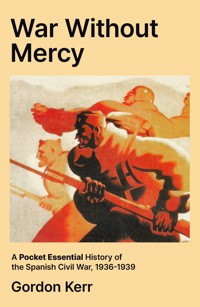
More than eighty-five years after it ended in defeat for the Republicans and victory for the Nationalists headed by General Francisco Franco, the Spanish Civil War remains a subject of debate and contention. We live in a time of political polarization, with opposing sides holding entrenched and unalterable positions and War Without Mercy sheds light on the consequences of such circumstances. It also presents a detailed but concise picture of this turbulent and pivotal moment in European history. The Spanish Civil War was a war of firsts: the first in which civilians were targeted, through the bombing of cities. It was also the first 'photogenic' war in history, the growth in photo-journalism bringing images of the fighting and of the huge number of refugees that were created by the conflict to the newspapers and newsreels of other European countries. New weapons, technologies and strategies were tried out, rehearsing for the increasingly inevitable war on European soil. War Without Mercy examines the origins of this deadly conflagration which date back to the nineteenth century and which finds its causes in the issues of mass suffrage, social welfare reform, and land reform, as well as in the increasing tensions between urbanism and rural tradition. The course of the war is laid out, including descriptions of the major battles and incidents, incorporating details of the bombing of major cities, most harrowingly, of course, the bombing of civilians at Guernica, famously depicted in Pablo Picasso's painting of the atrocity. The reaction of the other nations of Europe is also examined - the 'non-intervention' promulgated by Great Britain and France, and the direct intervention of the fascist nations, Germany and Italy, in support of the Nationalist cause, support that took the form of troops, planes and armaments. ]]>
Sie lesen das E-Book in den Legimi-Apps auf:
Seitenzahl: 231
Veröffentlichungsjahr: 2026
Das E-Book (TTS) können Sie hören im Abo „Legimi Premium” in Legimi-Apps auf:
Ähnliche













Praise for Gordon Kerr
‘Superb book, well written and although as title suggests it is a short history, it still packs in a great deal of Information. Ideal for anyone wanting a strong overview of timelines, events and the people involved’ – 5-Star Reader Review
‘An excellent brief account and an ideal primer for the topic’ – 5-Star Reader Review
‘A brilliant read from a very good author’ – 5-Star Reader Review
‘Informative, fascinating and extremely well-researched... Gordon Kerr’s book is a mini masterpiece’ – ABC Brisbane
‘Thoroughly rewarding’ – Travelmag
‘Factual and even-handed, Kerr presents a fair-minded introduction’ – Booklist
Marco: ‘Peace? Where can you find it? Our country’s been turned into a battlefield! There’s no safety for old people and children. Women can’t keep their families safe in their houses; they can’t be safe in their own fields! Churches, schools, hospitals are targets! It’s not war; war is between soldiers! It’s murder! Murder of innocent people! There’s no sense to it. The world can stop it! Where’s the conscience of the world?’
Blockade (1938)
Written by James M. Cain, John Howard Lawson and Clifford Odets; Directed by William Dieterle
Abbreviations
ACNPAsociación Católica Nacional de Propagandistas (Association of National Catholic Propagandists) – also known as the Movimiento Nacional, an elite rightist group established by General Francisco Franco during the Spanish Civil War.
CEDAConfederación Española de Derechas Autónomas (Spanish Confederation of Autonomous Rights) – a Catholic, conservative political party in the Second Spanish Republic.
CNTConfederación Nacional del Trabajo (National Confederation of Labour) – a Spanish confederation of anarcho-syndicalist labour unions.
CTV Corpo Truppe Volontarie (Italian Volunteer Troop)
CONCA Confederación Nacional Católico-Agraria (National Catholic Agrarian Confederation)
ERCEsquerra Republicana de Catalunya (Republican Left of Catalonia)
FAIFederación Anarquista Ibérica (Iberian Anarchist Federation) – militant anarchist wing of the CNT.
FET y de las JONS Falange Española Tradicionalista y de las Juntas de Ofensiva Nacional Sindicalista (Traditionalist Spanish Phalanx of the Councils of the National Syndicalist Offensive)
FIJL Federación Ibérica de Juventudes Libertarias (Federation of Iberian Libertarian Youth)
FJSFederación de Juventudes Socialistas (Federation of Socialist Youth)
FNTTFederación Nacional de Trabajadores de la Tierra (National Federation of Workers of the Land) – agricultural workers’ section of the UGT.
HISMASociedad Hispano-Marroquí de Transportes – (Spanish-Moroccan Transport Company) – a dummy Spanish-German company set up in July 1936 by the Nazi Party to supply the Nationalists with arms during the civil war.
JAPJuventudes de Acción Popular – CEDA Youth Movement.
JSUJuventudes Socialistas Unificadas (United Socialist Youth) – a Socialist youth movement formed by the unification of Socialist and Communist youth in 1936.
OSE Organización Sindical Española (Spanish Syndical Organisation)
PCEPartido Comunista de España (Communist Party of Spain)
PNV Partido Nacionalista Vasco (Basque Nationalist Party)
POUMPartido Obrero de Unificación Marxista (Workers’ Party of Marxist Unification) – a Spanish communist party formed by the 1935 unification of the Trotskyist Communist Left of Spain the Workers and Peasants’ Bloc.
PSOEPartido Socialista Obrero Español – the Spanish Socialist Workers’ Party.
PSUC Partit Socialista Unificat de Catalunya (Unified Socialist Party of Catalonia)
ROWAKRohstoff-und-Waren-Kompensation Handelsgesell-schaft (Raw Material and Goods Compensation Trading Company) – export agency set up in Germany in October 1936 to send supplies to the Spanish Nationalists.
UGTUnión General de Trabajadores (General Union of Workers) – trade union with ties to the Spanish Socialist Party.
Introduction
From the late fifteenth century until the early nineteenth, Spain was a superpower, creating, during the European Age of Discovery, one of the largest empires in history. The Spanish Empire included large parts of the Americas, territories in western Europe, and islands in both Asia and Oceania, covering more than five million square miles. It was at its most powerful in the late eighteenth and early nineteenth centuries, and during its 400 years of existence inestimable wealth from South America flowed into the coffers of the Spanish monarch and the elite. This prosperity did not last, however, and, as its colonies in the Americas began to agitate for independence, Spain began to lose territories. Argentina, Chile and Gran Colombia gained independence in 1810, Paraguay in 1811 and Uruguay was lost in 1815. In 1821, Panama declared independence, merging with Gran Colombia and remaining part of the Republic of Colombia until 1903. Santo Domingo declared independence, also in 1821, although it would return to being a Spanish colony 17 years later. Between 1811 and 1826, Venezuelan politician and soldier, Simón Bolívar led the fight for independence that proved successful not just for his homeland but also for Colombia, Ecuador, Peru and Bolivia. The Spanish-American War of 1898 resulted in the United States’ occupation of Cuba and Puerto Rico. Meanwhile, Guam and the Philippines were ceded by Spain to the USA that same year. The following year, Spain sold its remaining Pacific Ocean possessions to Germany, retaining only its African colonies – Spanish Guinea, Spanish West Africa, Spanish Sahara and the Spanish Protectorate in Morocco.
Following the demise of its empire, Spain remained deeply rooted in its old structures and any notion of reform was immediately quashed by reactionary elements keen to maintain their positions of privilege and entitlement. This meant that by the beginning of the twentieth century, the country was in serious decline and loss of empire had engendered a deep sense of pessimism amongst the Spanish people who mainly worked in agriculture, the industrial revolution that had regenerated other countries, having mostly bypassed the Iberian Peninsula. Government was by a constitutional monarchy, in the form of King Alfonso XIII who had come to the throne on his birth in 1886, his father, Alfonso XII, having died the previous year. On reaching his majority in 1902, at the age of 16, Alfonso assumed effective power. At the time, Spain was still reeling from the humiliating catastrophe known as El Desastre (The Disaster), the term given to the defeat by the Americans in the Spanish-American War. Despite that, Alfonso closely associated himself with the Spanish military, seeing himself as a soldier-king, but the country over which he reigned had serious problems. The government was corrupt and inefficient, officials often buying their positions, meaning that there was little competency.
Earlier, the country had endured even more chaos. On the death of the unpopular King Amadeo in February 1873, a republic had been declared by a coalition of republicans, radicals and democrats. In that turbulent time, the new government had faced war on several fronts. The Third Carlist War, an attempt to install the Carlist pretender, Carlos VII, on the throne, had been ongoing in Spain since 1872. Meanwhile, the Ten Years’ War in Cuba, lasting until 1878, pitted Spain against Cuban-born planters and other wealthy Cubans who were fighting for independence. Finally, between 1873 and 1874, there was an insurrection by federal republicans who were impatient to establish a federal republic immediately, rather than wait for the drafting and approval of the new Federal Constitution by the Constituent Cortes, the Spanish parliament. In January 1874, the coup of Pavía installed a government under General Francisco Serrano but on 29 December of the same year, General Arsenio Martínez Campos seized power, signalling the end of the First Spanish Republic and the restoration of the monarchy.
Spain had endured political upheaval and several civil wars during the preceding 100 years and in order to bring stability, a new political system was introduced that employed the practice of turno – an informal and highly corrupt system operated by the liberal and conservative parties to fix the results of general elections. In effect, they took turns at being in power. The system depended on the local bosses (caciques) in rural agricultural areas instructing the workers under them which way to vote. As both liberals and conservatives supported the monarchy, the status quo was maintained and this system lasted until the proclamation of the Second Spanish Republic on 14 April 1931. Meanwhile, King Alfonso and the Spanish political elite knew that if they were to remain in power and avert revolution by the dissatisfied masses, reform was necessary. Of course, any reform would have to be on the elite’s terms and would have to ensure they retained control, but, in the first three decades of the twentieth century, Alfonso and his political associates signally failed to effect the change that would save their country.
That lack of reform was one of the factors that led to the devastating conflict that was the Spanish Civil War. Of course, what was simmering in Spain was happening across Europe at the time. Democratic institutions were coming under attack from authoritarian tendencies. Germany and Italy had already succumbed and Spain’s Iberian neighbour, Portugal, had installed António de Oliveira Salazar at the head of an authoritarian regime in 1932. In Spain, too, there were people who leaned towards fascism, such as the leader of the political party, the Spanish Confederation of Autonomous Rights, or CEDA, José María Gil-Robles. But as the right moved further in that direction, the left also began to take up an extreme position. Eventually, the military leaders could stand no more and they rose up against the government of the Spanish Second Republic, launching the brutal conflict that was the Spanish Civil War. The horrors of this conflict cannot be overestimated. It was the first war fought in Europe in which civilians became targets, especially through bombing raids and its reverberations continue to this day in Spain, even decades after Franco died.
This book attempts to explain how the Spanish Civil War came about, detailing the machinations of politicians on both sides of the equation, the mistakes and missteps that made civil war an inevitability. It also details the lamentable attitude of foreign governments to what was happening in Spain, as Germany and Italy used the conflict as a test tube for the horrific methods of warfare that were used in the Second World War.
It was a lesson that was not learned.
A Country Divided – From Monarchy to Republic
Signs of Growth and Change
Although Spain is largely viewed as having been a backward, rural society in those early decades of the twentieth century, there was some modernisation and even economic growth. As in other countries, its major cities experienced a population explosion. Barcelona and Madrid doubled the number of their inhabitants from half a million to a million during that time and smaller cities such as Zaragoza and Bilbao enjoyed a similar growth in population. With better medicine and improved health care, the death rate fell, and the population of the entire country rose from 18.6 million in 1900 to almost 24 million in 1930. In education, too, there were improvements and the percentage of people who were illiterate fell from 60 to 35 per cent. Life expectancy increased, rising in the first three decades of the twentieth century, from just under 35 years of age to almost 50. The average national income increased, too, doubling in those decades. There had traditionally been high emigration from Spain, but from 1914 this changed and, as we have seen, Spanish cities saw mass immigration.
In spite of these improvements, Spain remained a divided society. At least 50 per cent of Spaniards worked on the land, the country’s main exports consisting of agricultural produce. Industry and mining were responsible for only around 18 per cent of the available jobs. Spain’s neutrality during the First World War created an economic boom through the export of agricultural produce and raw materials, as well as an increase in industrial output, but the end of the war saw Spain return to the same old protectionist policies, resulting in an increase in unemployment and growing resentment amongst ordinary people.
The top Spanish families were unaffected, of course. They controlled industry and had a say in the economic policies of the various governments. Meanwhile, in the countryside, rural landowners ruled supreme. They had gained their large tracts of land, mostly in the south, through confiscations in the nineteenth century. These were the forced expropriations by the government of land and property from the mortmains – the Catholic Church and religious orders and from municipalities. The government would then sell the expropriated land at public auction in order to pay off its public debt securities – vales reales – which were what the state used to finance itself. It was also hoped that confiscation and sale would bolster the capitalist system, create a bourgeoisie and a middle class of farmers who were owners of the land they cultivated. But large swathes of land merely ended up in the possession of a few titled families. They were not true nobility, having often gained their titles through marriage, but they, and the newly emerging industrial and banking class, together with the old nobility, were the people who participated in government and controlled things.
There had been attempts to organise a trade union in Spain in the 1830s and by the middle of the nineteenth century many small non-political associations were operating. The new political ideas that were changing the world elsewhere began to cross the French border. The anarchist form of socialism arrived and continued its dispute with the Marxist form of socialism in Spain, a disagreement that would later become significant. The popularity of anarchism came from a deep dislike of the centralism that had operated in Spain for so long. Marxism seemed too centralist in its approach and developed more slowly in Spain. Anarchism’s cooperative communities and federalist approach also appealed to Spaniards, seeming to provide an antidote to the corruption of the Spanish political system and the duplicity of the Catholic Church. It also had an appeal for luckless and landless peasants who were forever at the mercy of their overlords. However, the frustration of the anarchists at their inability to change things turned into political violence in the 1890s and the secret police responded with brutal repression. It culminated in the 1897 assassination of six-time prime minister, Antonio Cánovas del Castillo by an Italian anarchist, exacting revenge for the execution of several other anarchists.
With the dissatisfaction of the masses growing, new political parties and organisations were being founded. In 1879, the Partido Socialista Obrero Español (Spanish Socialist Workers’ Party or PSOE) was established, followed in 1888 by the Unión General de Trabajadores (General Union of Workers or UGT). The socialists were most influential in the centre of the country and on the northern coast while the anarchists were popular in Catalonia and the south – especially in Andalusia. Still, however, the cycle of revolt and repression continued. At the end of July 1909, there was an outbreak of urban unrest in Barcelona and other Catalonian cities. A number of violent confrontations known as the Semana Tragica (Tragic Week) broke out, a series of clashes between the Spanish army and Freemasons, anarchists, republicans and socialists. The revolt grew out of the colonial war Spanish troops were fighting in Morocco. One of King Alfonso’s advisers owned some mining concessions in Morocco and local tribesmen had wiped out a platoon of soldiers sent to protect these. Premier Antonio Maura started to call up reservists, mainly poor workers and, more often than not, married men with families who lacked the wherewithal to buy themselves out of military service. Those who were better off, meanwhile, had the means to hire men to act as substitutes for them in the army. Consequently, as the troops boarded ships owned by the prominent Catholic industrialist, the Marquess of Comillas, a vehemently anti-military mood prevailed, as well as anti-Catholic Church sentiment. Those watching from the quayside jeered and whistled as religious medals were distributed to the conscripts by eminent ladies and emblems of the Sacred Heart were thrown contemptuously into the sea by the onlookers. The labour federation, Solidaridad Obrera (Workers’ Solidarity) – led by a committee of anarchists and socialists – called a general strike and workers took over the centre of Barcelona, disrupting transport. Riots and street fighting broke out with churches being burned and acts of desecration taking place. The rioters viewed the Church as in cahoots with the upper and middle classes whose sons had been able to buy their way out of conscription. In one infamous incident during that week, a worker is said to have danced with the corpse of a disinterred dead nun, one of many graves that were desecrated. Of 112 buildings that were set on fire, no fewer than 80 had connections with the Catholic Church. A ‘state of war’ was declared by the Spanish government, and troops were dispatched to deal with the situation. More than a hundred people died in the unrest, eight of them soldiers, and five rioters were executed afterwards while fifty-nine life sentences were handed out to protesters. Across Europe there was condemnation of the government’s drastic reaction to the crisis. The king, dismayed by the damage done to his country’s reputation, sacked the prime minister, Maura, replacing him with Segismundo Moret, occupying the office of prime minister for the third time.
In Barcelona in 1910, the anarcho-syndicalist Confed-eración Nacional del Trabajo (National Confederation of Labour or CNT) was founded in opposition to the largest trade union, the socialist UGT. The CNT had just over 26,000 members and in 1911 called a general strike. As a result, a judge in Barcelona declared the organisation illegal, a proscription that lasted until 1914.
The boom of the First World War did not benefit everyone, but as well as losers, there were winners. At the top of the tree and enjoying the boom, was the bourgeoisie, controlling large industry with the help of the Spanish banks. The banks also exerted influence over the economic policies of whichever party was in government, but it was the new class of the elite that really ruled the roost – those rural landowners who owned large tracts of land in the south. From this block – the heirs of the old elite, the aristocracy and the Catholic Church, plus the rural landowners and the Basque and Catalan industrial oligarchy – came the majority of the men who entered the parties of government.
The owners of industry did well, but with prices doubling and wages rising by only 25 per cent, workers were losing out. This was, of course, to the benefit of the unions whose membership increased dramatically, the UGT boasting 160,000 members, while by 1919 the CNT enjoyed a membership of over 700,000. Meanwhile, the Socialist Party claimed 42,000 activists. The Catholic union, the Confederación Nacional Católico-Agraria (National Catholic Agrarian Confederation or CONCA) was active amongst the farmworkers of León and Castile as well as amongst devout Basques.
The military was, of course, set against any kind of reform, no matter how gradual. It was a ridiculous organisation, corrupt and incompetent, consisting of 16,000 ordinary ranks, 12,000 officers and 213 generals. Without any imperial possessions to protect, its purpose was vague, to say the least, and it was mostly reduced to manning provincial garrisons. It was operationally active only to protect the phosphate mines of Spanish Morocco, a protectorate given to Spain at the 1906 Algeciras Conference. Soldiers serving in Morocco – known as africanistas – became the elite force of the Spanish military and this, in turn, bred an arrogance amongst them that led to many very difficult situations.
In 1917, there was a crisis in the armed services. Juntas de Defensa (defence boards) had been formed to obtain better pay and conditions for soldiers but when the government tried to have them abolished, the leaders of the defence boards issued a manifesto exposing the deplorable state of the armed forces. Fearing a pronunciamento – a coup d’état– Prime Minister Eduardo Dato made a few concessions to them which some saw as an opportunity. Therefore, the Lliga Catalana (Catalan League) announced a conference in Barcelona on 19 July 1917 to discuss the creation of a proper constituent Cortes. Also seeing an opportunity for change suggested by Dato’s concessions, the unions, the PSOE and the UGT, called a general strike in support of this proposal of a representative parliament. Dato responded by closing parliament and withdrawing constitutional guarantees. When the strike was launched, however, on 13 August, instead of joining the strikers, as they might have been expected to do, the members of the Juntas de Defensa joined the action to stop the strike and in the resulting turmoil, 72 died and 2,000 were arrested. The repression was terrible, especially in Asturias where a young major who had fought in Morocco supervised an operation in which many people were tortured. The major’s name? Francisco Franco.
In February 1919, during another period of disruption, the CNT brought the workers out on strike at Barcelona’s main electricity company, Riegos y Fuerzas del Ebro – known as La Canadenca because its major shareholder was the Canadian Bank of Commerce of Toronto. The strike lasted more than 44 days but blackleg labour was brought in from other areas and as the strikers became violent, the employers brought in gunmen to attack the union leaders, 21 of whom were gunned down in 48 hours. In 1921, Eduardo Dato paid the price for this brutality. He was assassinated by three Catalan anarchists as he was being driven from the parliament building, the second Spanish premier to be assassinated in a decade.
In 1921, the Partido Communista de España (Spanish Communist Party or PCE) joined the struggle for the hearts of the working class, after its foundation by Andreu Nin, Joaquín Maurín and others, providing a home for the more extreme socialists and anarchists. Meanwhile, uprisings continued, most notably by farmworkers in Asturias. Their strikes were greeted by shootings and arrests by the Guardia Civil (Civil Guard) and soon the unrest had spread to other Spanish cities. Inspired by the Russian Revolution, the strikers were demanding better working conditions and recognition of rural trade unions. Looking on at events in the east, the employers and even the government realised that something needed to be done if they were not to suffer the same fate as Russian landowners and nobility. Land reform of some kind was necessary but governments were so short-lived that none remained in power long enough to implement what was required. Since 1895, no prime minister had remained in office for more than two years and most were lucky to last a year.
Primo de Rivera’s Dictatorship and the End of Alfonso
The years between 1918 and 1921 saw a series of risings by anarchist workers of the rural south – especially in the Andalusian countryside – and these years became known as the trienio bolchevique in acknowledgement of the influence of the Russian Revolution and the Bolshevik revolutionaries on their actions. The trouble arose from the unsatisfactory situation in which the workers, both landless day labourers in the countryside and factory workers in the cities, found themselves. Output had been reduced, resulting in layoffs, unemployment and a decrease in real wages with the increase in prices. Organisations and the government made efforts to improve the situation. When Álvaro de Figueroa, Count of Romanones, was prime minister between December 1918 and April 1919, he introduced measures such as a public pension system and the eight-hour working day but that did not come into force until 1923. As we have seen, there had been a tremendous increase in membership of trade unions during these years. More than 100,000 day labourers had joined the Andalusian Regional Confederation of the CNT by the end of 1919 and between October 1918 and July 1919 no fewer than 23,900 agricultural workers joined the UGT. In Andalusia, numerous strikes were called that spread through southern Spain and were accompanied by violence – the burning of crops, the occupation of town halls and other actions that forced their employers to flee to safety in the big cities. But wage increases were achieved, one source estimating that there was a nominal increase of 150 per cent between 1917 and 1921. However, as usual, brutal repression followed their actions and from May 1919, workers’ societies were banned and the leaders of those organisations and movements were imprisoned, leading to a serious decline in union membership in Andalusia.
More actions took place in 1920, strikes paralysing the Riotinto-Nerva mining basin in the province of Huelva, attracting a good deal of media attention and quickly spreading to other regions. Anarchists in the cities were also agitating against the ruling powers. Following the boom years of the First World War, industrialists in the north had not invested any of their profits in modernisation or rationalisation and their factories were now suffering at the hands of foreign competitors enjoying a resurgence after the war. In Catalonia, wage cuts and lay-offs were the only response of factory owners which led to extraordinary outbreaks of violence, especially in Barcelona, in which a phenomenon known as pistolerismo was practised. In this, Spanish employers locked the workers out of their places of work and hired gunmen to ensure they stayed locked out. And it worked in the opposite direction, too, with trade unionists hiring thugs to attack employers. In Barcelona, hundreds died or were injured in such attacks. As usual, the industrial actions were ruthlessly dealt with by the army and the Guardia Civil, but the resentment continued to simmer. The ruling classes, bolstered for so long by the political system of the Restoration, understandably now felt that their lifestyle was coming under threat.
In 1921, Spain was hit by another crisis. King Alfonso had been hoping to celebrate the feast of St James by announcing a resounding victory in Morocco where Spanish troops under General Manuel Fernández Silvestre, commander of the Spanish armies in Morocco, had been fighting Ahmed er Raisuni, leader of the Jebala tribal confederacy, whom the Spanish regarded as an outlaw. Silvestre’s force consisted of 20,000 Spanish soldiers and 5,000 regulares, Moroccans fighting for Spain, but more than half the Spanish troops were poor, illiterate conscripts who had been sent to war with no more than minimal training. Their equipment was poorly maintained and many of their rifles could not even be fired. Soldiers’ pay was so bad that many of the troops traded their weapons for fresh vegetables in the local markets. Silvestre was aware of the terrible conditions in which his men lived and knew their morale was bad but considered it unimportant as he believed North Africans to be vastly inferior to Spanish people.
His men were deployed in 144 forts and blockhouses across Morocco but, as he pushed deeper into the Rif Mountains, he received a message from the president of the Republic of the Rif, Abd-el-Krim, warning that if Spanish troops crossed the Amekran River, he would consider it an act of war and take appropriate action. Ignoring the threat, and egged on by the king, Silvestre carried on regardless, ordering his men across the river. In the foothills of the Abarrán Mountains, they set up a military post. As had been threatened, Abd-el-Krim’s Riffian force attacked shortly afterwards, killing 179 of the 250 Spanish troops before going on to successfully ambush and wipe out a force of 3,000 that Silvestre sent to help. The disastrous Battle of Annual followed during which Abd-el-Krim’s men showed no mercy. Almost the entire garrison of 5,000 Spanish troops was lost and, during the attack, General Silvestre is said to have disappeared into his tent and shot himself in the head.




