


Erhalten Sie Zugang zu diesem und mehr als 300000 Büchern ab EUR 5,99 monatlich.
- Herausgeber: Editares
- Kategorie: Religion und Spiritualität
- Sprache: Englisch
The author's decision to leave religion, after experiencing a profound growth crisis, founded itself in the free action of one, who after walking tenaciously, has extinguished an existential possibility and reached a new realm of understanding about the realities of the consciousness and the universe. The inner freedom encountered to make this kind of decision was the result of a gradual self-confrontation. This author perceived the necessity to dispel the fear associated with questioning his habitual suppositions and to look beyond the limits of the indoctrination he had received. For a long time, while still religious, he named this fearlessness "a quest for wisdom" or "the spirituality of an unsettled heart". Nowadays, in light of the experiences had, he prefers to emphasize the courage to evolve, which requires, five years after the abjuration, the assumption of speaking publicly about the dissidence that was effected. When dissidents of ideologies or institutions start talking or writing about their experiences, it is necessary to observe the kind of motivation and intention implicit in the decision made. The former militant, the former integrant, the former partisan, the former something, in spite of the effort to affirm that they are no longer part of the institution to which they once belonged, may continue to define themselves based on the institution. In this case the person is still a "former" in relation to what they intend to deny. Perhaps, in their eagerness to critically speak out about the reasons underlying their abandonment of a certain idea or organization, they still flaunt the previous condition as a trophy, unfurling the pride of being a "former". The ambiguity in question lies in the fact that the person's point of reference continues to be in the no longer desired way of living or thinking.
Sie lesen das E-Book in den Legimi-Apps auf:
Seitenzahl: 800
Veröffentlichungsjahr: 2017
Das E-Book (TTS) können Sie hören im Abo „Legimi Premium” in Legimi-Apps auf:
Ähnliche















Marcelo da Luz
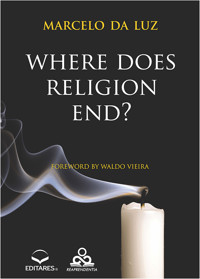
Where does religion end?
Foz do Iguaçu, PR – Brazil
2017
Copyright © 2017 by Editares
All rights reserved. No part of this book may be reproduced or transmitted in any form or by any means, electronic or mechanical, including photocopying, recording, or by any information storage and retrieval system, without permission in writing from the copyright owner.
1st E-book Edition
Original translation: Otto Mendonça.
Original proofreading: Jeffrey Lloyd e Jaclyn Cowen.
Cover: Luciana Melo.
ISBN: 978-85-8477-090-8
INTERNATIONAL ASSOCIATION OF EDITARES
Av. Felipe Wandscheer, 6200, sala 107, Bairro Cognópolis
CEP 85856-530, Foz do Iguaçu, PR, Brazil
Phone / Fax: +55 45 2102-1407 Website: www.editares.orgE-mail: [email protected]
REAPRENDENTIA – INTERNATIONAL ASSOCIATION OF PARAPEDAGOGY AND CONSCIENTIAL REEDUCATION
Rua da Cosmoética, 1.511, Cognópolis, Caixa Postal 921, Centro
Foz do Iguaçu, Paraná, Brazil, CEP: 85851-000
Tel.: +55 (45) 3525-2652 – Fax: +55 (45) 3525-5511
Website: www.reaprendentia.org
E-mail: [email protected]
TABLE OF CONTENTS
TRANSLATOR’S PREFACE
FOREWORD
INTRODUCTION
SECTION I – FALLACIES OF HOMO RELIGIOSUS
1. A parapsychic mistake in the origin of religion
2. The anti-universalistic nature of religions
3. Outsourcing of existential choices
4. Religious discourse and consciential manipulation
SECTION II – PARA-ANATOMY OF A SAINT
5. The myth of Jesus Christ, “God” incarnate
6. Martyrdom: the idealization of self-sacrificial fanaticism
7. The human, all too human elements of holiness
8. The fear underlying the desire for holiness
SECTION III – RELIGIOUS LIFE AND AFFECTIVE ECTOPIA SYNDROME (AES)
9. Clerical celibacy: idealization of a wrong love
10. The dissimulation of homosexuality in the Catholic clergy
11. Pedophilia: the irruption of the clerical system’s perverse reality
SECTION IV – HANDS THAT BLESS AND HURT: RELIGION AND VIOLENCE
12. Typology of religious conflicts
13. Violence in the Sacred Books
14. The Inquisition: a historical extrapolation of the violent religious logic
15. The myth of a peaceful religion
SECTION V – DISBELIEFOLOGY
16. The disbelief principle
17. Is there still space for the belief in “God”?
EPILOGUE: Where does religion end?
APPENDIX 1 – Historical summary of some significant religious conflicts
APPENDIX 2 – Open Letter to the Order of Conventual Franciscans (2004)
ANNOTATED FILMOGRAPHY
SPECIFIC BIBLIOGRAPHY
INFOGRAPHY
INDEX OF NAMES
INDEX OF PLACES
INDEX OF SUBJECTS
ACKNOWLEDGMENTS
While still a child, I configured my mind to the game of religion, making it an exclusive labor for over two decades. This period of fables was shared with countless other consciousnesses, of whom I have fraternal remembrances, notwithstanding the abyssal ideological distance that presently keeps us apart. The abjuration of the Christian faith and the abandonment of the possibility of adhering to any other religious creed made me lose sight of the social relations and companions from the past, a fact equivalent to assuming a completely new life and identity. However, in the recomposition of my way, I counted on the assistance of many other consciousnesses, some of whom were determinant in the production of this book.
Firstly, I would like to note my immense gratefulness to the community of voluntary researchers of conscientiology, the International Cosmoethical Conscientiological Community (ICCC). Since the very first contact, in 2003, up until now, the fraternalism expressed towards me has always been tangible in everybody’s gestures, initiatives and energies. With this book I hope, for the time being, to reciprocate the consciential contributions given by the many colleagues and friends throughout the last six years.
During the gestation of this work, I had the privilege of counting on the invaluable contributions of César Cordioli, Cristina Arakaki, Karla Ulman, Málu Balona, Mário Oliveira, Munir Bazzi and Valana Ferreira in the role of generous revisers of the manuscript. The insights gained from the ma-ny conversations with these researchers enriched, without any doubt, the final text. I also relied on the valuable technical advice of Alexandre Zaslavsky, João Ricardo Schneider, Ruy Bueno and Ivo Valente in the fields of epistemology, history of parapsychism, psychology and filmography, respectively.
Special thanks goes to dear friends Munir Bazzi and Drielly Zanata, whose very rare friendship, materialized through fruitful dialogues and experiences, decisively enriched the author and his work.
A honored mention is deserved for the professionalism and assistantiality of the entire team of the Associação Internacional Editares, especially Cláudio Garcia, Kátia Arakaki, Maximiliano Haymann and Dulce Daou. I also extend my appreciation to Erotides Louly, Helena Araújo and Antônio Pitaguari, who were in charge of the final revision. Luciano Melo, author of the beautiful cover, and Alexandre Marchetti, a sophisticated photographer, who gave the book a graceful artistic touch.
My sincere acknowledgement to the assistance of William Klein in the preparation for launching the work and to all the volunteers of the Associação Internacional de Parapedagogia e Reeducação Consciencial – Reaprendentia, for the support given.
The graphical quality of this work would not have been the same without the contribution of an authentic lover of good books: Ernani Brito, who generously granted me the fortune of relying on his expertise in publishing services.
The respect for my choices and experiences, ever since demonstrated by my nuclear circle – Moacir, Hilda, Andreia, Luciane and Marcos – exerted, without doubt, a significant influence in the assumption of the disbelief principle as the grounds for this book.
Even knowing they are free from egocentrism and the need of praise, I thank the extraphysical helpers, without whose aid this work would not have been written.
Finally, I could not end this acknowledgement without reference to friend, orienter and Professor Waldo Vieira. For his interassistantial exemplarity, magnitude of thought and evolutionary pertinacity, it was him, in this life, who awoke me from the dogmatic slumber. By inscribing this text in the library of conscientiology authors, I am honored to be part of his mentalsomatic offspring.
Marcelo da Luz, Foz do Iguaçu,
the 30th of August, 2010.
TRANSLATOR’S PREFACE
This translation sought to maintain a balance between the letter and the spirit of the text, that is, between absolute fidelity to the source and adaptation to the target language. Where this was not possible, the translator invariably chose to be faithful to the original, keeping to the letter, as he judges such procedure best to preserve the content and style of the original work.
Faithfulness is shown by respecting the author’s syntax, having the idiosyncrasy of the English language as both limit and parameter. An example of that is the maintenance of the original’s enumerations with semicolons, without using “and” before the last element. Despite being uncommon in English, this does not constitute a challenge to the language’s nature. However, such a limit is not always easy to adhere to and sometimes must be transgressed, as in the creation of neologisms such as “claritask”, “consoltask”, “disbeliefology”, “evolutient”, “foolictionary”, “recexis”, “recin” among others.
Fidelity also comes forth by respecting the author’s usage of upper and lower cases. Where in the original Portuguese the author preferred to use lower case over traditionally used capital letters, this translation abode by the pattern established – that is the case in sacred scriptures. On the other hand, when the original followed the traditional rules of Portuguese, the translation followed suit, thus respecting the current usage of upper and lower case in English. That is the case of pope, which is lower case when indeterminate, and Pope when accompanied by a proper name. Such is also the case of king, emperor, bishop, professor and the like.
Because the footnotes are many in the original work, this translation did not employ any translator’s footnotes, which could baffle the reader. The few and unavoidable translator’s insertions were made directly into the text, in [brackets] rather than in (parentheses), to make clear that they are translator’s interpolations. That happened, among others, in a) chapter 9, topic “Regression to infantilism”, after the abbreviation CNBB; b) chapter 12, topic “Characterization of religious violence”, after the title of two books which were not acknowledged in footnotes; c) chapter 16, topic “Disbelief principle and conscientiology”, after the acronym CEAEC; d) appendix 1, topic “The First Crusade”, after the reference to the book quoted; and e) additions to the author’s footnotes to present the English titles of the works cited, as explained further below.
In general, the New International Version was the source of biblical quotations. However, in Section IV the traditional King James Version was used because it was better suited to faithfully convey the author’s arguments concerning religious violence.
Quotations from the Vatican’s official documents were taken directly from the institution’s website where they are typically available in several languages. By doing so, the translator avoided retranslation of what was already officially published in English. Such an approach also permitted the maintenance of consistent sources which facilitates any reader who wishes to check them.
The books cited in Portuguese in the original, whose first publication took place in English, had their original titles written in [brackets] as an addition to the author’s footnote. This procedure is similar to what the author himself did in some passages, when at the same time he gave the original title in English, he presented the title of the translation published in Brazil. In other passages, the author used the Portuguese translation, but acknowledged the original title in English. Therefore, this translation intends to preserve, as well as enhance, the original work’s bibliography, thus assisting the anglophone reader to identify the books used by the author available in their language.
It is worth noticing that the works quoted in Portuguese not originally written in English, but which have an Anglo-Saxon translation, also had their titles acknowledged in brackets in the footnotes.
On the other hand, books quoted by the author whose original is in Portuguese, or another language, and which had not yet been translated into English, did not have their possible translated titles acknowledged in brackets. This was done so as not to insert artificial and inaccurate translations that may not be the official ones chosen in a possible future translation. The same approach was applied to the titles of conscientiological works. An exception to this is the titles of the entries of the Encyclopedia of Conscientiology, whose translations – temporary and unofficial – were inserted so that the quotation that follows the entry’s title could be made sense of by an English-speaking reader. Still, at the end of the quotation, following the pattern established by the author, the original entry’s title and the Encyclopedia’s name were kept in Portuguese.
In the original work, all the author’s citations were written in Portuguese, even when the author quoted English books. Whenever possible, the translator resorted to the original publications used by the author in order to reproduce the passages cited rather than retranslating them back into English, which could cause interpretive mistakes and lead the reader astray from the true excerpt. Retranslating was the case only when the original text could not be found.
As for conscientiology books whose originals in Portuguese had already been translated into English, the passage quoted by the author was tracked and taken from the published translations so that retranslation could again be avoided. Moreover, the conscientiological book was acknowledged in the footnote with its translated title, thus ruling out, in this case, the use of additional brackets. This aimed at highlighting the conscientiological translations already published in English for the anglophone reader. However, for both conscientiological and general works whose excerpt quoted had not yet been translated into English, the translator himself did the translation.
Otto Mendonça
the 25th of August, 2015.
FOREWORD
Portentous Parabrain
Interview. In 2003, the cultivated author of this work-testimonial, while still a Catholic priest, Friar Marcelo, in full religious activity, sought us out with an interest to know conscientiology. After some interviews, we presented him with factual evidence of the Pre-Resomatic Intermissive Course and the possibility of deviation from the self-proexis due to religious sub-brainwashing that is able to affect conscins with the best of intentions and good-will towards consciential evolution.
Megagescon. Time goes by and at this moment, in 2010, we have here this magnificent work, based on the author’s erudite research, a genuine Treatise of Anti-religion, the fruit of institutional mega-dissidence and a self-critical ideological rupture, constituting, without doubt, a definitive vigorous existential recycling and, at the same time, an exemplary consciential megagestation and the first step towards a competent multiexistential self-relay.
Abjuration. The current Professor Marcelo da Luz, now an ex-indoctrinated and ex-indoctrinator, aware of the fact that no one in the cloth can think for oneself, lives fully liberated from his two decades of priestly professionalism and from the groupkarmic interprisons of the holobiographical millenary religiosity. This is the result of a categorical explicitation of peaceful public abjuration, without the fanaticisms of the widely-held superstitions of religious dogmas.
Discernmentology. The author’s portentous parabrain handles the scalpel of cosmoethical discernment through solid arguments, grounded on incontestable facts and multifarious sources of bibliographical research, along with a candid surgical exposition of the childish foolishness of myths, superstitions, absurd beliefs and the centuries-old indoctrinations of mankind’s fanaticizing religions.
Singularity. This true Mega-exposition of Anti-theology, a work singular in its evolutionary reach and claritaskical goal, seeks to clarify, with rational arguments founded on facts, parafacts, elevated polymathy, educated communicability and without any retaliatory sentiments, how to avoid the two worse infirmities of mankind: consciential inter-intrusion and religious mega-fanaticism.
Mega-animadversion. Only a sub-brainwashed person subject to absurd beliefs, apriorisms, self-corruptions, self-intrusions and crass acriticism remains indifferent to the indefensible mega-animadversion generated by the experiences exposed and the verbactiological reasoning of the author in each page, where he demonstrates the folly of the imposition of ideas, the interpretive mistakes of truths held to be absolute and irrefutable, and the greatest need to leave all coercion maintained by the paraphernalia of piety of amaurotic theocracies, of sectarianism and of anti-universalistic factiousness.
Eruditiology. In this highly competent, bold and devastating Eloquent Criticism Against Anti-universalism we can research, in light of the advanced principles of conscientiology, the erudite analysis of millenary religious mistakes in general and, more specifically, of the Roman Catholic Church, which are still committed in the contemporaneity of this Third Millennium.
Irrationalities. The author makes explicit, with enumerations and details, the panorama of modern irrationalities, among which are the sectarian voracity of churches and sects, the diversified acts of religious violence, the shameless sadistic electronic appeals, the ethical deformations of Opus Dei, the insistence with charismatic fallacies, the evangelicals’ illusions of prosperity, the paranoia of celibacy of the high tech pseudo-saints or singing priests, the multifaceted phobias of piety, the countless mystical tribal yokes of all natures and the regressions to morbid childishness of the pedophilia practiced in the sacristy.
Approaches. This brilliant text approaches with rationality and logic the universe of cosmoethics, the issue of deconversions, the relevance of the clarification task, the fruits of the anti-manipulative disbelief principle and the integral study of the consciousness, the fundamental goal of conscientiology.
Proof. Here is another conclusive proof of the force of existential recycling promoted by the consciential paradigm and the conscientiological techniques for the lucid human consciousness, who has the ability of priority evolutionary self-discernment in the face of growth crises, which we draw attention to as it deserves deep and cosmovisiological reflection.
Bibliography. This alert written for the general public and to religious people in particular (Catholicism) enriches the section of cosmoethical maxidissidence of recycling authors from the Conscientiological Bibliography, currently composed, among others, of the works of Jean-Pierre Bastiou, Globe-Trotter da Consciência (Orientalism), and our small book Projections of the Consciousness (Spiritism).
Honor. With sincere thanks to Professor Marcelo da Luz for the honor granted to present these simple prefatory pages, we challenge open-minded readers to minutely research this unique document.
Waldo Vieira
Holocycle, Foz do Iguaçu, PR, the 14th of July, 2010.
INTRODUCTION
Itinerarium mentis extra Deum (Journey of the consciousness “outwards” God)
The main objective of this book is to lay a foundation for abjuration – the public renunciation of religious life, or the abandonment of religion – as was performed by this author after twenty years dedicated to serving the Roman Apostolic Catholic Church. A member of a traditional religious order since adolescence, the author was ordained as a priest and celebrated countless Masses, weddings, baptisms and all the other rituals performed by a priest. He heard innumerable confessions, was the spiritual director of several catholic groups and preached the teachings attributed to Jesus Christ to large crowds. He was a superior of a convent community and was also a rector of one of the institution’s seminaries, instructing young candidates on the foundations of religious life.
It is possible that some readers, indignant at the author’s decision, could question his moral and mental fitness to perform these religious functions. After all, at the beginning of this 21st century the diseases of many clergy have been publicly emerging as hideous scandals and crimes, thus precipitating the Catholic Church into a profound crisis. However, in this author’s case, it can be demonstrated that it is not possible to accuse him of incompetence or infidelity in the fulfillment of the requisites demanded by the religious institution. Throughout his seminary formation evaluations of this author’s conduct by educators and hierarchical superiors always described him as an idealist, loyal, responsible and dedicated religious person. These documents constitute tangible proof of Friar Marcelo’s permanence in the Catholic Church as being characterized by an honest and intense quest to find, in a consecrated life and in the priesthood, complete fulfillment of the meaning of life. Until leaving religious life the author, within the limits of his abilities, did what he could to be a loyal preacher of the gospel, a conscientious pastor, an efficient catechizer and a fraternal brother in the convent.
The author’s decision to leave religion, after experiencing a profound growth crisis, founded itself in the free action of one, who after walking tenaciously, has extinguished an existential possibility and reached a new realm of understanding about the realities of the consciousness1 and the universe. The inner freedom encountered to make this kind of decision was the result of a gradual self-confrontation. This author perceived the necessity to dispel the fear associated with questioning his habitual suppositions and to look beyond the limits of the indoctrination he had received. For a long time, while still religious, he named this fearlessness “a quest for wisdom” or “the spirituality of an unsettled heart”. Nowadays, in light of the experiences had, he prefers to emphasize the courage to evolve2,which requires, five years after the abjuration, the assumption of speaking publicly about the dissidence that was effected3.
When dissidents of ideologies or institutions start talking or writing about their experiences, it is necessary to observe the kind of motivation and intention implicit in the decision made. The former militant, the former integrant, the former partisan, the former something, in spite of the effort to affirm that they are no longer part of the institution to which they once belonged, may continue to define themselves based on the institution. In this case the person is still a “former” in relation to what they intend to deny. Perhaps, in their eagerness to critically speak out about the reasons underlying their abandonment of a certain idea or organization, they still flaunt the previous condition as a trophy, unfurling the pride of being a “former”. The ambiguity in question lies in the fact that the person’s point of reference continues to be in the no longer desired way of living or thinking.
It is not a simple task for a consciousness to leave something they had long been identified with. The elimination of vices, the overcoming of ideologies and the abandonment of institutions or lifestyles are not equivalent to simply changing an address, changing clothes or permuting a car. Moving house, for example, concludes when the inconveniences brought about by the situation are resolved, such as, the transfer of furniture and belongings, the modification of some documents, and the moving of the telephone number, among other things. In contrast, ideological dissidence or the abandonment of a deeply rooted behavior demands structural modifications within a consciousness – the acquisition of a new ego, the undertaking of recin – intraconsciential recycling4. Not every dissidence represents an authentic recycling. For this reason, and as is proposed below, it is necessary to examine the different possibilities with regards to the consciential movement involving an institutional rupture.
Possible types of dissidents5
a. The nostalgic discontent
It is possible to encounter many dissidents that still share the beliefs and ideals of the system they already abandoned. This happens when the rupture was based solely on a rejection of the way the institution operates, or on some specific law to which they could not agree. In such cases, the dissident remains a silent dreamer of how the institution could function better if the organization’s structure or certain traditions were corrected. This type of dissident left the corporation but continues to have thoughts stemming from it. This is the case, for example, of priests who withdraw from the Catholic Church on the grounds of matrimony or because they disagreed with the authoritarianism established in that institution. Although they have left the institution, they still look at the past with nostalgia in their eyes wishing to return some day, if their personal necessities could be integrated into ecclesiastical life.
b. The reformer
Some do not abandon the system of which they are a part. Rather, they mount an insurgency against the existing arrangements, creating alternatives within the old structure. These are the reformers. It is debatable to what extent a reform can be considered a change. A reform is, essentially, a return to a tradition’s original patterns. Over time deviations, excesses, corruption and bureaucratic processes are created, diverting the institution from its principles and objectives. The reformers then come to put things back into place, resuscitating the ideals of the past.
Reformers usually fall into one of two groups. The first one is comprised of internal reformers, whose reform proposals are accepted without causing ruptures or dismembering the organization. Many sacred Orders produced reformers, who essentially realigned the religious association with the original objectives and introduced new disciplinary norms to avoid future deviations. The second group is comprised of reformers whose proposals were rejected by the institutional community. In this case, a conflict becomes inevitable and the discontented end up leaving the institution to found new organizations. The movements resulting from the dismemberment of the original institutions are supposedly improved versions of the former, but do not constitute new paradigms since the basic beliefs are virtually identical. The advent of Protestantism is an illustrative example: it constituted an alternative to Catholicism within the same parameters of Christianity.
c. The resentful
Others physically detach themselves from the system in which they lived, but they cannot free themselves from it. They pass their time submerged in resentment, ruminating over their frustrated experiences. They believe the time spent in the institution is the cause of their suffering. They are continuously haunted by negative memories and are unable to refer to the past without a bitter tone. Some of these people try to avenge themselves on the old groups to which they used to belong, by making public embarrassing facts that occurred behind the scenes in the religious establishment. Hence they adopt the logic of retaliation, seeking to somehow damage their adversaries.
After considering the possibilities related to the complex issue of institutional dissidence, this author can now clarify the reasons why he wrote this book. Firstly, in the author’s case, the abandonment of Catholicism did not occur due to a type of functional discontentment. Although, with the course of time, the limits of the religious community and the folly of some dogmas have become quite evident, until his penultimate year in the institution the author still considered the Catholic Church the “least worst” organism through which he could render assistance to fellow beings and affirm the transcendental meaning of the human life.
Secondly, it is necessary to point out the absence, in these pages, of any attempt to take revenge or to retaliate for whatever painful events experienced by the author within the convent’s atria. Where necessary, facts learned through experience are included to illustrate the themes being debated. Nevertheless, the names of those involved, as well as the details of the places where the facts took place, are omitted. At some moments in this work, the critical positions taken by the author reach considerable power and gravity, but they are deprived of the bitterness and revanchist intention of the resentful.
It is also important to stress that this book is not a source of income for the author, who does not retain for himself any of the money invested by the reader in the purchase of the work. The authorship, promotion and clarification related to this publication are completely voluntary. The copyrights were donated to the Associação Internacional Editares to help finance other initiatives directed towards the assistantial task of clarification.
Finally, the author’s analytical look is destitute of any intention of reforming the centuries-old institutions of the Catholic Church or other religions. The author’s ideological rupture is total, and does not refer only to Catholicism, still the most long-lived and numerous tradition within Christianity (base-year: 2010), but to the Christian faith and any other interpretations of the world based on a religious belief.
Far from the types of dissidence analyzed, the motivation of this work is to clarify and assist all consciousnesses interested in openly debating the illogicality and evolutionary encumbrance fostered by the religions on Earth. In order to achieve these objectives with maximum ponderation and critical vigor, minimizing the possible interference of emotional factors, the author developed the entire text in the third person.
The overcoming of religiosity, as a transitory stage in the evolutionary process of a human life, can only occur in a consciousness’ intimacy as a mature result of discernment, without any violence or impositions whatsoever. Nevertheless, up until that moment, information from those who have crossed the threshold of some structures that restrict the consciousness’ freedom cannot be withheld. Hence the only scope of this book is to express the author’s examplarism, as an old walker on the religious path. Therefore, in his critique of religion, this dissident stands beyond the interest of reforming old structures, avenging injustices suffered, having a financial gain or converting people to his current way of thinking. For this unique, personal and untransferable position, the author assumes total responsibility.
New paradigm
After many lives repeating himself in the condition of an indefatigable religious indoctrinator devoted to the cause of holiness and the exercise of benevolent tasks, this author, by means of a frank self-scrutiny, has finally come to consider the longer evolutionary reach of the clarification task. This opening to omniquestioning led him to rationally admit the broader scope of the consciential paradigm – the detailed study of a consciousness by the consciousness itself – the leading-theory of conscientiology, a field of study proposed by Brazilian researcher Waldo Vieira. Conscientiology intends to surpass the epidermic approach of sciences based on the subject-object disjunction in the investigation of the highest possible priority theme: the consciousness. To this end, variables currently neglected by conventional academic knowledge are included, such as:
1.Holosomatics. Consideration of the existence of other bodies for the consciousness to manifest through, beyond the physical body: the energetic body (energosoma), the emotional body (psychosoma) and the mental body (mentalsoma). The integrated set of all bodies is called the holosoma. The practical manifestation of a consciousness takes place through the thosene (the indivisible union of thought, sentiment and energy).
2.Bioenergetics. Lucid self-experimentation of bioenergies through the energosoma, discriminating immanent energies (primary, multiform energies diffused throughout the entire universe) and consciential energies (energies employed by a consciousness). Bioenergetic abilities go far beyond perceptions registered by the physical senses.
3.Multidimensionality. Admission of a consciousness’ intrinsic capacity to manifest itself beyond this material (intraphysical) dimension, in varied extraphysical dimensions using the different bodies of manifestation. Multidimensional knowledge is granted to a consciousness mainly through the experience of conscious projection (out-of-body experience, astral projection or astral travel).
4. Multiexistentiality. Admission of a series of multiple lives (existential seriality, “reincarnation”) assumed by a consciousness and intercalated with intervals in extraphysical dimensions. Existential seriality allows a consciousness to evolve by means of multiple experiences across millennia.
5. Cosmoethics. Cosmic moral or the moral philosophy of conscientiology, whose scope intends to go far beyond the imbrications of intraphysical human society. Cosmoethical discernment includes the consideration of multidimensionality, multiexistentiality, intentionality and the quality of consciential energies. The values of a consciousness are with them in every dimension where they manifest – extraphysically the inner truth is inconcealable. The level of a consciousness’ cosmoethicity is their personal code of conduct, the thermometer of self-incorruptibility, developed throughout countless existences over the course of time.
The rational cosmovision afforded by the consciential paradigm allowed this author to perceive the extent to which religion remains a preliminary approach within the more complex mechanisms of evolution. Determining that he was underperforming in relation to greater assistantial tasks, whose fulfilment would not be possible within the narrow limits of sectarianism, led the author to abandon faith. To better explain this type of ideological rupture conscientiology uses the term maxidissidence – the greater renovation of the consciousness whose situation was beyond the average level of their group of evolutionary tasks6. This term is employed not to boast, but rather to establish the difference in comparison to the other types of dissidence previously explained.
In subsequent chapters this author intends to demonstrate – by means of a detailed critical examination and in light of personal experience – how the evolution of humanity (the gradual and qualitative growth of a consciousness towards greater rationality, pacifism and universal love) necessarily passes through the overcoming of religion. The analyses, due to the author’s experiences, will most of the time be linked to Christianity, and even more specifically to Catholicism. To achieve this objective, the arguments of this book are arranged into five sections.
In the opening section, Fallacies of Homo religiosus, after the hypothetical proposition that religion’s origin is an illegitimate and distorted reading of extrasensory phenomena (chapter 1), some of the main inconsistencies of the religious phenomenon are exhaustively discussed, namely: the sectarianism inherent to all salvationist proposals (chapter 2), the heteronomy and dependence nurtured in believers (chapter 3), and the consciential manipulations materialized in religious discourse (chapter 4).
The section entitled Para-anatomy7 of a saint is dedicated to the problematization of sanctity, an idealized perfection fostered by religions. The analysis herein is restricted to the Christian tradition, beginning with the demythologization of the divine figure of Jesus (chapter 5), whose self-sacrifice inspired the senselessness of martyrdom (chapter 6) and other paradigms of sanctitude. Chapters 7 and 8 attempt to perform a conscientiometric examination of the personality of a saint – a surgical look at the supposed saintly virtues, under which severe consciential fissures may be hiding.
The third section, Religious life and affective ectopia syndrome (AES), intends to analyze three severe affective distortions of Catholic religious life: celibacy (chapter 9), the dissimulation of homosexuality (chapter 10) and pedophilia (chapter 11). The approaches proposed, far from exploring the sensationalism related to these issues, seek to discuss how the configuration of religious structures themselves maintain and exacerbate consciential pathologies.
The following section Hands that bless and hurt: religion and violence investigates the dyad of religious belief and violence. Given the long trail of blood left behind by conflicts related to religion throughout history, it is necessary to answer the following question: is religion merely a manipulable victim of third parties’ political interests, or is violence inherent to it? The research initially proposes a typology of religious conflicts (chapter 12), and then goes on to examine the problem of violent content present in monotheistic sacred texts (chapter 13). The study proceeds to analyze the Inquisition, the most pungent historical manifestation of the potential violence of sectarian reasoning (chapter 14), and finishes by reflecting upon why “peaceful religion” constitutes another myth nurtured by faith (chapter 15). A list and description of some significant historical religious conflicts are in Appendix 1 at the end of book.
Finally, the section Disbeliefology discussesthe application of critical thinking to the unjustified affirmations of religions. It studies the reasons why the approaches of contemporary atheism are still insufficient when compared to the antidogmatical attitude of conscientiology by means of the “disbelief principle” (chapter 16). Also, the problem of the usage and content of the word “God”8 is confronted before rejecting the proposal of a possible “compromise” as represented by the “religious parapsychism” practiced within the Spiritist Doctrine (chapter 17). Each chapter closes with a megaproblem – a question or proposition-synthesis whose objective is to challenge the reader to elaborate a sufficient counterargument.
In the Epilogue, the question-title of the work – “Where does religion end?” is resumed and answered by a concatenation of the theses and problems raised throughout the book. After abandoning the religious strategies of indoctrination, this author does not consider it his right to dictate to readers what they should think or do. Thus, the “answer” to the book’s title-question appears as the personal laboratory is unveiled – the author’s self-exposure as a guinea pig-consciousness –, sharing the questions which were faced and the solutions encountered through self-research.
The history of a “deconversion”
The title given to this introduction – Itinerarium mentis extra Deum (Journey of the Mind “outwards” God) – refers to the small classic of Christian spirituality written in the 13th century by Franciscan Bonaventure of Bagnoregio (1221-1274). Bonaventure’s work was entitled Itinerarium mentis in Deum (The Soul’s Journey into God) and describes the ascetic journey made by a consciousness through the exercise of Christian discipleship up to the point of fully conforming itself to the idea of “God”. The parody with the title of the Medieval work intends to present the exact opposite direction to the one proposed by the medieval mystic: to gradually deconstruct the dictates of religion and the heavy burden brought by the concept of “God” – the mega-idealization operated by credulity, whose result is the exile of the consciousness away from itself, and the oblivion of evolutionary self-responsibility. In short, this book explicitly expresses the reasons for the author’s “deconversion” – the beginning of a new stage in life in which the objective is consciential reeducation – the task of “unteaching” the mistakes and fallacies disseminated in the past.
If this work stimulates readers’ critical reflection, the writer will naturally feel fulfilled in his efforts without, however, losing the respect for the consciousnesses still in need of the consolation offered by religion. In case the reader experiences unbearable antagonism to the point of feeling insulted while leafing through these pages, it is best to abandon the reading. In this case, it is probable that the ideas of the book are disproportional to the volume of information and experiences afforded by the evolutionary level of the one who is reading them. It is not this author’s intention to cause any evolutionary rape, although nowadays he considers religion to be a pre- elementary school in the long journey of evolution. Nevertheless, to those who, even hurt in their religious sensitivity by the affirmations herein, kept reading tenaciously, the author recommends to go beyond the emotional reaction by means of an honest exercise of refutation based on research and the logic of facts, and to apply the disbelief principle:
Do not believe in anything. Not even the ideas defended by the author in this book. Nothing, reader, replaces self-experimentation. Experiment, research, reflect, refute! Have your own experiences.
The author is open to refutations, criticisms and suggestions to the theses and information presented in this book. Readers may contact him through the site www.ondeareligiaotermina.com.br
SECTION I – FALLACIES OF HOMO RELIGIOSUS
1. A parapsychic mistake in the origin of religion
Polysemy of the term “religion”
The word religion evokes many experiences, indefinite general ideas, and frequently passionate reactions. For this reason, it is necessary to define with maximum clarity what one understands when the phenomenon “religion”, the object of the author’s critical exercise, is mentioned in this book. Although obvious in the daily vocabulary, determining the precise meaning of this word is not an easy task. The term derives from the Latin word religio, whose origin is still uncertain. The word may have been preceded by the term relegere, which means “return again”, “reread”, “treat carefully”. This connotation, which stresses the ritualistic or repetitive aspect of the religious phenomenon, appears in the work De natura deorum, written by Roman intellectual and politician Marcus Tullius Cicero in the year 45 BCE.
Nonetheless, many think the word religio originates from the term religare, whose meaning is “to relink”. This definition dates back to the work Divinarum institutionum written by the 4th century Christian apologist Lactantius. After rejecting the meaning given by Cicero, Lactantius states religion is the bond of piety uniting human beings to “God”. In this definition the aspect of human dependence on their transcendent and superior origin is emphasized. In contrast Augustine of Hippo (354-430), in the classic The City of God, attributes the meaning of religere, namely “to reelect”, to the word religio: religion would be the instrument whereby humanity, after long neglect, would again choose to acknowledge the absolute lordship of “God” over the world.
Augustine himself adopted Lactantius’s definition in the work De vera religione, when he said that “religion unites us to Almighty God”. However, this meaning does not cover all the manifestations recognized as “religious” in many non-Occidental cultures, since not all individuals and religious groups admit the notion of a supreme “God”. Broadly speaking the classic concept of religion, voluntary submission to an all powerful “God”, applies to the understanding of monotheistic traditions, but is incompatible with many other manifestations seen as “religious” but which are disengaged from the notion of a good, omniscient, omnipresent and omnipotent being that created all things. Examples of this, among others, are the various superstitious practices, primitive tribal cults and several of the mystical traditions worshipped on the Asian continent.
The majority of those who belong to religious groups, as well as most of those antagonistic to any creed, do not suspect how vast the volume of complex studies performed to determine the nature of “religion” is. The phenomenon’s geographical ubiquity and the cultural multiplicity of the human groups involved hamper the construction of a univocal definition.
Generally, in occidental cultures, the noun religion designates the system of doctrines and precepts of faith, the sacred institution. Such an institution comprises the social, ethical, ritual and intellectual elements unified under the aegis of belief in a trans-human horizon, whether supernatural or idealistic, and described as a myth or a dogmatic doctrine. In contrast the adjective religious indicates the fundamental trait of one who is guided by religiosity, which is the assumption of conducts or experiential postures orchestrated by the imperative of belief. Here, in alphabetical order, are 35 variables found in different spiritual traditions, traits to which the adjective “religious” could be superposed:
01. A missionary attitude or proselytism;
02. Adoration rendered to objects and personalities;
03. Belonging to a group, community or church through a rite of initiation;
04. Communication with spheres deemed transcendent (prayers, litanies, invocations);
05. Consolating assistantial tasks bound to the idea of a future reward;
06. Delimitation of sacred and profane spaces;
07. Elaboration of dogmatic concepts and instauration of absolute truths;
08. Experience of faith (belief turned into existential surrender to alleged divine plans);
09. Experience of guilt and inadequacy in the face of sacrality;
10. Experiences gone through over time and being rewarded or punished in eternity (concepts of paradise and hell);
11. Experiences that lead individuals and groups to the sensation of experiencing a deeper realm of reality, surpassing the threshold of materiality;
12. Extension of spiritual power over the temporal realm in the form of theocracy;
13. Indoctrination (imposition of ideas and irrefutable interpretations);
14. Invocation of the dead;
15. Maintenance of liturgy or established rituals;
16. Mind-body dualism;
17. Moral codes and precepts regulating the behavior of the faithful;
18. Need to expiate guilt through sacrifices;
19. Offer of salvation;
20. Overvaluation of belief to the detriment of experimental knowledge;
21. Perpetuation of myths and sacred scriptures;
22. Personification of evil (Satan, demon, malign enemy, angel of darkness);
23. Portentous temples and constructions whose finality is to express the grandiosity and power of the presumed divine being in contrast with human insignificance and destitution;
24. Primacy of the symbolic over the factual;
25. Promise of the end of human history (Last Judgment, Apocalypse, Armageddon, Doomsday) and the distribution of subsequent prizes and castigations, according to the group’s belief;
26. Promotion of altered states of consciousness (ingestion of hallucinogenic substances, hypnotic trance, suggestive rhythms, among others);
27. Radical dependence on an almighty being or a group of entities considered ontologically superior;
28. Repression, persecution and punishment of dissidents;
29. Reverence and imitation of models considered to be saints;
30. Sacralization of objects for protection against contrary forces, both visible and invisible (amulets);
31. Search for a miracle, considered to be a divine intervention over the realm of nature;
32. Sentiments and emotions considered to be the units of measure of the experience;
33. Speeches with high emotional appeal;
34. Submission to the mediation of authorities representing the sacred;
35. Utilization of art (music, painting, sculpture, among others) as a means of awakening and increasing the religious sentiment of the faithful.
A consistent and exhaustive description of the phenomenon in question would need to integrate this entire set of variables9. At least two of the characteristics listed appear to be common to all religious traditions. Firstly, the admission of a spiritual dimension, a plane of reality ulterior to matter which is generally associated with the destiny of the dead. Secondly, belief as an interpretive filter and parameter to spiritual experiences. Somehow, when a religious individual places himself before the unknown layers of reality, he interrupts the investigative procedure in order to establish belief, letting himself get caught up in reverence and submission to what they judge surpasses their own abilities. Thus, religious belief is, essentially, a profession of heteronomy. This concept is expressed in the definition proposed by Christian thinker Friedrich Schleiermacher (1768-1834), to whom the core of religiosity is “the feeling of an absolute dependence”10. The theologian Rudolf Otto (1869-1937) became renowned by his characterization of the experience of the sacred as a combination of fear and fascination before the divine11. According to Otto, the experience of the “numinous”, before which a human being feels small, would be the prototype of all religious experiences. This concept further strengthened the arguments of apologists of the faith against attacks from naturalist researchers, the proposers of skepticism. Nonetheless, the “fear and trembling”12 suggested by Otto as the essence of religion provided ammunition to the good-humored sentence proffered by American critic Ambrose Bierce (1842-1914): “religion is a daughter of Hope and Fear, explaining to Ignorance the nature of the Unknowable”13.
Religion as an object of critical study
During the last five hundred years in the West, many facts and new ideas have contributed to gradually diminishing the power and influence of – formerly supreme – Christian dogmas that concern the functioning of society. Since the 19th century onward, from the dawn of human sciences, religiosity has begun to be intensively and systematically studied in a more critical manner. Several studies undertaken in the nascent fields of anthropology, sociology, ethnography, psychology and political science sought to determine the precise moment of the irruption of the religious phenomenon and the human inclination to cultivate spirituality.
However, uncertainty is present not only in the etymological determination of the word religion, but also in the explanation about the phenomenon’s historical origins. Ambiguous paleontological evidence led to the supposition that Neanderthal man, around 150 thousand years ago, performed funerary rituals on the grounds of a presumed permanence of life after bodily death. Also, the primitive paintings made during the Upper Paleolithic in Lascaux, around 15 thousand years ago, may have been part of a complex of religious rituals14. Suggestive vestiges point to shamanism15, the belief in spirits and ancestor worship as the first religious manifestations of Homo sapiens. Traces of these remote events can be found 40 to 10 thousand years prior to today, although recent findings may identify shamanistic practices with even earlier events16. However, the beginning of unequivocal written records on mankind’s religious practices dates from 3000 BCE. Poems composed to pay homage to the god Tammuz, found in the region of Sumer, currently Iraq, come from this period17. From around 2500 BCE, in different places – Sumer, Egypt, China – there appears clear artistic and architectonic records of human devotional activity with the construction of great monuments intended for the worship of dead rulers. The combination of all these pieces of information suggests that the appearance of religion was concomitant to the emergence of human self-awareness itself.
Other than theologians, who obviously maintain an apologetic posture regarding the need of religion in the world, researchers from several fields of natural and human sciences have looked into the enigmas of religion. Among the most influential contributions to determining the origin of religiosity is the psychological approach offered by Sigmund Freud (1856-1939). In the work The Future of an Illusion, written in 1927, the religious phenomenon was described as a collective neurosis, the projection of human fantasy eager to escape from the suffering experienced in this world. In Civilization and Its Discontents, a work from 1930, Freud refers to Hindus’ mystical experiences and compares them to the repressed desire that originates in a child’s helplessness. In this way the Austrian neurologist explicitly presents religion as an expression of human childishness.
According to philosopher and social scientist Karl Marx (1818-1883), religion would have been an original attempt to revolutionize society, abolishing the scourge of exploitation within it. However, this attempt ended up being projected to the otherworld, transforming religiosity into a mechanism of alienation. Religion would be, according to Marx, ‘the sigh of the oppressed creature’, who seeks to experience, through fantasy, the projects frustrated on earth. Religion acts as a narcotic to the human population, distracting them from the responsibility of the historical fight18. The propositions of another German philosopher, Ludwig Feuerbach (1804-1872), served as a basis for Marx and Freud. He authored the influential theory of religion as a maximized expression of human longings. Divinity, according to the text in the work The Essence of Christianity, is nothing more than the projection of human attributes – reason, will, affection, among others – onto an abstract idea of the infinite. According to Feuerbach, by worshipping ‘God’ humans worship themselves as they have outwardly dislocated their own essence from themselves.
Besides the criticism arising from these merely theoretical approaches, the researches of anthropologists and social scientists into the way of life of tribal societies, carried out from the 19th century onwards, culminated in a series of conjectures on the original religious forms. The fact that these societies remained isolated from contact with western peoples up to that moment allowed them to conserve their primitive habits. Thus notwithstanding the absence of historical records, the observation of these groups’ lives allowed for new and more fundamental attempts to reconstruct humanity’s past. Anthropologists were stupefied by the naturality and centrality of some experiences and rituals in the tribal communities’ daily life, such as evocation of spirits, cult of the dead, divination practices and manipulation of energies from nature, among other ‘beliefs’. Researchers tried to pick out psychological, sociological and anthropological factors underlying all these phenomena in order to formulate hypotheses about the origin of religious ceremonies. Three theoretical strands on the origin of religiosity arose from these studies:
1. Animism. The primitive, through experiencing the recurrent cycle of sleep and wakefulness, would have developed the notion of “soul” or anima, hence the term animism, introduced by British anthropologist Edward Tylor (1832-1917). According to him, the ‘invention’ of immaterial entities – spirits – allowed for the adoration of the tribe’s ancestors, supposedly the most primitive form of religion19.
2. Naturism. A term coined by theologian Albert Réville (1826-1906) to characterize the worship of nature verified in many tribal societies. According to linguist Friedrich Max Müller (1823-1900), deities would originate from a gradual anthropomorphization of natural forces.
3. Totemism. Nature’s animate or inanimate elements chosen as symbols of clans - the totems - would have, little by little, gained substantiality and begun to be venerated as protective deities. Émile Durkheim (١٨٥٨-١٩١٧), an icon of classical sociology, is among the proposers of this thesis.
More recently, since the last decade of the 20th century, anthropologists, neuroscientists and evolutionary biologists have offered new perspectives on studies of the relevance of religious phenomenon in human life. There are also those who wonder whether there is a specific gene responsible for the development of spirituality. Throughout the 20th century, neuroscience – the simultaneously detailed and comprehensive study of the nervous system – has achieved maturity as an autonomous discipline. Since the 1990s, knowledge regarding the brain’s functioning has increased exponentially. It is estimated that the human brain is composed of approximately 100 billion nerve cells, joined by some 100 trillion connections20. Cerebral areas associated with specific skills and behaviors have been mapped with a wealth of details. Hence several present-day researches try to answer whether religiosity is or is not an innate aspect of this organ’s functioning21. Some neuroscientists are dedicated to exploring the possible origins of religious sentiments and experiences in the brain. Such is the case of Eugene D’Aquili and Andrew Newberg22, whose research aims to discover the relation between the stages of Buddhist meditation and the increase or decrease of activity in specific cerebral regions.
Some anthropologists, such as Pascal Boyer, have also started to give more attention to neuronal and cognitive processes. For these anthropologists religion is a byproduct or an effect of the development of the human mind along the evolutionary chain. According to him, humans have ontological expectations and, at the same time, the tendency to assent to intuitions contrary to these expectations. An example of this would be the spirits, beings invisible to intraphysical eyes. Thus humanity, in Boyer’s view, since the advent of self-awareness, has admitted the existence of imaginary figures transcendent to all norms and logical expectations23.
Absence of a consensus among human sciences on the origin of religion
After more than a century of debate, there is no consensus among scientists as to the precise determination of the origin of religiosity. However, the divergent interpretive paradigms gravitate around the same phenomena universally observed in a multiplicity of primitive cultures: i) approximation with the forces of nature; ii) notion of “soul” or “spirit”; iii) communication with the souls of the dead.
The conflicting explanatory theories offered by anthropologists and social scientists converge on the following point: all consider that primitive individuals have intellectually “invented” the notions related to the immateriality of the phenomena originating the beliefs.
Edward Tylor, cited above in the item referring to animism, who was a pioneer in the studies of the anthropology of religion, thought religiosity is the belief in spiritual beings and pondered on the existence of certain apparently incomprehensible human experiences, such as dreams, visions and hallucinations. According to him, the primitive invented beings called “souls” or “spirits” as a solution to assign some sense to these events. Thus, the notion of a soul constituted the basis of rituals that paid homage to the deceased. Evocation of the dead and other manifestations of devotion to immaterial and superior beings would have given rise to several forms of religion in mankind’s history. In accordance with this reasoning, members of tribal societies would have been able to create concepts about extraphysicality, such as “spirit”, “deity”, “communication with the dead”, among others. Now, this thesis seems unlikely given the rudimentary capacity of abstraction and the savage lifestyle of primitive social groups, which were occupied almost exclusively with the challenges of material survival in a dangerous and crude world24.
Both the philosophical nature of the ideas about the origin of religion raised by Feuerbach, Marx and Freud, and the anthropological and sociological theories previously mentioned proved insufficient to identify the genesis of religious behavior on Earth. In spite of all the divergence amongst the proposals, there is one single point of convergence between them: the presupposition of the inexistence of any transcendent factor that may have given rise to the religious interpretations and practices. The problem with each of these approaches is the reduction of the origin of religion to pure human imagination.
The assumption of this presupposition has led to two inconsistent types of criticism of religiosity. The first is the absolute denial of religion because the entire phenomenon’s reference base would be either false or inexistent. This is the position of radical atheism, which inevitably leads to another form of belief: the affirmation of the inexistence of any transcendence in relation to matter (this subject is dealt with in chapter 16). In the second type, skeptical researchers deconstruct the supernatural allegations of religion using the tools of human sciences, but they admit belief in belief25 – the consideration of religion as a useful fabrication. Hence, many scientists intimately maintain their disbelief, but do not position themselves regarding the illogicality of religious explanations and its effects on society. After all, they think these consolatory narratives continue to be psychologically useful to attenuate the suffering of the Earth’s population. Followers of this second line of criticism personally reject faith, but believe that it is convenient for others. Thus many religious scholars (sociologists, anthropologists, theologians, psychologists, philosophers and historians) are living a universal omission with respect to the denunciation of irrationality, consciential infantilism and other dehumanizing actions perpetrated by religions around the planet26. Others intentionally invest efforts to justify the need of maintaining beliefs and religious systems, such as Mircea Eliade (1907-1986), a historian of religions and defender of the relevance of myths, especially the Christian myth to the existential significance of contemporary man.
Hypothesis of the origin of religion as a parapsychic mistake
Contrary to conventional scientific approaches, for whom the genesis of religious beliefs lies in the human imagination, this author suggests the hypothesis that concepts such as “soul” or “spirit” do not originate from the pure fantasy of primitive peoples, but rather from paraperception, that is, the perceptive experience of parapsychic phenomena.
One can understand the word “parapsychism” – extrasensory perception, paranormality or mediumship – as the human consciousness’ faculty of perceiving, beyond the five physiological senses, the energetic flows, dimensions, and extraphysical consciousnesses, through the use of bioenergies, animism and consciential exchanges27 – facts largely ignored by the approaches of human and natural sciences. In the academic world the hypothesis of parapsychism as the original source of religion has even been proposed, in 1898, by Scottish writer and researcher Andrew Lang (1844-1912)28. Nonetheless, his thesis was ignored under the pretext of it not being scientific29.
Brazilian researcher Waldo Vieira, proposer of the consciential paradigm30, in the work Projectiology:a Panorama of Experiences of the Consciousness outside the Human Body, points out that among the greatest mistakes of contemporary science is its insistence in maintaining ignorance about the consciousness’ extraphysical nature31. According to Vieira, transphysical phenomena surpass conventional science’s current instruments, which are restricted to detecting the world’s physical occurrences. The consciousness’ capacity to transcend matter is a fact that can be verified by any interested person through the experience of a conscious projection32.Parapsychic knowledge can be systematized and its hypotheses and propositions can be tested in light of experience, just as in common science. However, for the verifiability of the phenomena’s veracity there is no means other than the personal and individualized participation of the experimenter himself, something not yet admissible in the current comprehension of conventional sciences.
In research about the nature of parapsychic phenomena, two hypotheses prevail33. According to the first of them, spiritualism, parapsychic phenomena are only triggered by extraphysical consciousnesses, regardless of the human sensitive’s physiology. The second hypothesis, naturalism, completely rejects the possibility raised by spiritualism and reduces the explanation of parapsychic phenomena to the operating conditions of the physical world. Studies within the tradition of naturalism are divided into different versions and follow the methodological parameters of empirical sciences.
Consonant with the observation of conscientiology researcher João Ricardo Schneider, naturalistic approaches do not offer yet a sufficient explanation to a large number of phenomena, such as conscious projection, apparition of extraphysical consciousnesses, psychography and xenoglossy34. Paraphenomenology – the subdiscipline of conscientiology that studies parapsychic manifestations of the human consciousness35 – proposes a synthesis between the allegations of spiritualism and naturalism by considering the hypothesis of the objective body– the existence of a real, yet extraphysical, second body of the consciousness36. According to Schneider,
The hypothesis of the objective body is founded on the idea that there are other real non-physical bodies of manifestation. Parapsychic perceptions are, therefore, sensory captures of the paraphysiological, extraphysical and natural senses of the vehicles of manifestation that are subtler than the physical body, and are noticed by the individual, using the biological body, as a result of the dislocation or discoincidence of the set of vehicles, the holosoma37.
With the admission of the hypothesis of an objective body as a foundation for paraperceptions (these are not the fruit of imagination, nor even phenomena restricted to only the physical world), it is possible to consider that the parapsychic mistake38, that is, the distorted or erroneous interpretation given to a sensitive’s parapsychic and bioenergetic experiences, may have been the origin of religious beliefs. Inexperienced and ingenuous regarding paraperceptions, members of primitive societies would have experienced fear and fascination in relation to the processes of clairvoyance (“visions”), clairaudience (audition of “messages”), materialization of extraphysical consciousnesses (apparition of “spirits”), among other phenomena. The stupor caused by these experiences provoked spontaneous attitudes of sacralization of the manifesting entities, considered as superior, mysterious, benign or threatening depending on the situation. Members of the clan endowed with greater parapsychic sensitiveness began to be held in higher regard by others, becoming intermediaries between the tribe and the “spirit world”. Extraphysical consciousnesses, considered to be deities, began to be invoked and worshipped through rituals controlled by the tribe’s mediums, the shamans. In no time parapsychic ability would turn into religious power, and the respect accorded to sensitives, into subservience. The problem of the origin of religion seems to be based not on hallucinations or imaginative fiction, but on a parapsychic mistake, the objective perception of paraphenomena diverted to a mystical explanation, involved in ritual and secrecy, in which the observer is reduced to servitude39.
Famous passages from the history of religions can illustrate this hypothesis. In the genesis of most of the religions on the planet, there are individuals’ or groups’ experiences decoded and transmitted as miraculous events. In light of paraphenomenology, the putative “miracles” serving as the foundations of religions were events occasioned by the inherent capacity of the consciousness to transcend matter, erroneously interpreted in mystical terms. Among the innumerable parapsychic occurrences present in the main religious traditions, the following examples, listed in chronological order, stand out:
1. Hinduism. The belief in Hindu deities, that number in the thousands, may have originated in experiences of conscious projection, through which extraphysical societies, and their inhabitants who looked different from humans, were seen. Also the phenomenon of clairvoyance, that is, the visual perception of extraphysical consciousnesses, may have generated the conclusion in mystics that they had seen “gods”.
2. Judaism. Histories about the rapture of prophets and saintly men, such as the biblical characters Elias and Ezekiel, possibly refer to a phenomenon of human parateleportation – the combination of the phenomena of dematerialization, levitation, apport and rematerialization, in which the person suddenly disappears and reappears in another location40.
3. Buddhism. The “enlightenment” of Buddha (Siddhartha Gautama, c. 563-483 BCE), under a tree on the banks of Nairanjana river, could have been an experience of cosmoconsciousness – the maximum expansion of lucidity in which a consciousness feels “the living presence of the universe and becomes one with it”, in an indivisible manner41.
4. Christianity. The apparitions of Jesus after his death, considered by Christians as “proof” of a resurrection, may have been the effect of materialization of an extraphysical consciousness – a visualization of the form of an extraphysical consciousness’ psychosoma, made possible by the emanation of ectoplasm from a medium’s body – a relatively common phenomenon in mediumistic sessions.
5. Islamism. The composition of the Koran, Islam’s holy book, “dictated” by “Angel Gabriel” to Muhammad, may have possibly been a consequence of psychography – a mode of parapsychic writing resulting from the communication between the parabrain42 of an extraphysical consciousness and the parabrain of a sensitive.
Parapsychic mistake and personal consecration to religious life
Parapsychic phenomena are frequently related to the origin of an individual’s religious “vocation”, mystical consecration or missionary mandate and are found among the most diverse religious traditions on the planet. Extrasensory experiences are frequently reported by those dedicated to a professional religious life. These experiences are always explained as probatory signs of a supposed divine revelation whose finality would be to reinforce the receptor’s faith and to impel them to even greater missions. This kind of experience can make more comprehensible the spiritualization that occurred with mankind’s ancestors in times immemorial.




