


Erhalten Sie Zugang zu diesem und mehr als 300000 Büchern ab EUR 5,99 monatlich.
- Herausgeber: epubli
- Kategorie: Geisteswissenschaft
- Sprache: Englisch
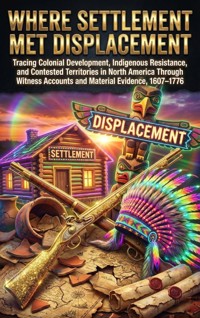
Colonial America was not built on empty land awaiting European civilization, but carved from territories with established communities, trade networks, and diplomatic systems that had existed for centuries. Every settlement negotiation masked coercion, every land deed concealed prior claims, and every boundary line represented erasure of Indigenous sovereignty. This book examines colonial development through the voices often excluded from founding narratives: Indigenous leaders navigating impossible choices between resistance and accommodation, enslaved Africans whose forced labor made plantation economies viable, indentured servants whose dreams of land ownership collided with elite consolidation of property, and women whose domestic labor sustained settlements while legal systems denied them autonomy. It traces how early cooperation deteriorated into systematic displacement, how disease and violence created demographic collapse, and how colonial legal frameworks legitimized theft through manufactured justifications. Drawing on treaty negotiations, court records, archaeological evidence from contact sites, oral histories preserved in tribal archives, and material culture revealing daily interactions, it explores how different European powers pursued distinct colonial strategies, how Indigenous nations formed alliances to resist encroachment, how enslaved communities built networks of survival and resistance, and how ecological transformation followed European agricultural practices. It examines how conflicts over land, resources, and sovereignty escalated into wars that devastated entire regions. This is a reckoning with how colonial institutions—plantations, missions, trading posts, military forts—created structures of inequality that persisted long after independence.
Sie lesen das E-Book in den Legimi-Apps auf:
Seitenzahl: 195
Veröffentlichungsjahr: 2026
Das E-Book (TTS) können Sie hören im Abo „Legimi Premium” in Legimi-Apps auf:
Ähnliche
















Table of Contents
Chapter 1: The Land Before Arrival
The Diverse Indigenous Nations
Trade Networks and Economic Systems
Spiritual and Cultural Connections to the Land
Pre-Colonial Conflict and Diplomacy
Chapter 2: Initial Encounters
The Arrival of European Explorers
The Role of Indigenous Diplomacy
Trade and Exchange: A Double-Edged Sword
Early Conflicts and Violence
The Cultural Exchange Phenomenon
Reflections on Initial Encounters
Chapter 3: The Formulation of Colonial Identities
The Need for Identity in a New World
Ambition and the Pursuit of Land
The Role of Trade and Economy in Identity Formation
Religion and its Impact on Identity
The Erosion of Indigenous Sovereignty
Collective Identities and Fragmentation
Chapter 4: Resistance and Accommodation
Indigenous Diplomacy in Colonial Context
Armed Conflict and Resistance
The Role of Women in Resistance
Enslaved Peoples and Indigenous Alliances
Chapter 5: Enslaved Voices in the Colonial Narrative
The Foundations of Enslaved Labor
Personal Narratives of Enslaved Individuals
Cultural Resilience and Identity Formation
Acts of Resistance and Agency
Chapter 6: Women on the Margins
Defining Domestic Labor
Marginalization and Social Structures
Indigenous Women and Community Resilience
Enslaved Women and Resistance
The Role of Women in Colonial Alliances
Women’s Legacy in Colonial Narratives
Chapter 7: The Ecology of Displacement
The Shift in Agricultural Practices
Disruption of Indigenous Ecological Knowledge
Environmental Consequences of Colonization
The Role of Trade and Economy in Ecological Displacement
Resistance and Adaptation
Long-term Impacts of Colonial Ecology
Chapter 8: Legal Frameworks of Dispossession
The Role of Treaties in Land Dispossession
Manipulative Legal Language: A Tool for Dispossession
The Impact of Colonial Courts on Indigenous Rights
Testimonies of Dispossession and Resistance
The Legacy of Colonial Legal Frameworks
Chapter 9: Trade, Alliances, and Betrayals
The Foundations of Trade
Evolving Alliances
The Role of Trade Goods
Betrayals and Broken Treaties
Chapter 10: Conflicts and Wars
The Prelude to Conflict
King Philip's War
The French and Indian War
The Transformation of Warfare
The Aftermath of Conflict
Chapter 11: The Role of Missions and Religious Institutions
The Missionary Frontier
Coercion and Compliance: The Dual Nature of Missions
Indigenous Agency in Mission Interactions
Material Culture and the Impact of Missions
The Legacy of Missions
Religion as a Tool and a Shield
Chapter 12: The Legacy of Colonialism
Understanding Colonial Constructs
Indigenous Resistance and Adaptation
Enslaved Lives in Colonial America
Women’s Roles and Perspectives
The Interplay of Disease and Colonialism
The Future Shaped by the Past
A New Understanding: Moving Forward Together
Chapter 1: The Land Before Arrival
This chapter explores the rich tapestry of Indigenous communities that existed in North America long before European settlement. By examining archaeological findings and oral histories, we paint a picture of thriving cultures, extensive trade networks, and complex social structures that were intricately tied to the land. Understanding this pre-colonial context is crucial to realizing the profound impact that colonization would have on these established societies.
The Diverse Indigenous Nations
This section introduces the wide array of Indigenous nations that inhabited North America before European arrival. From the Iroquois Confederacy in the Northeast to the Pueblo peoples in the Southwest, these communities exhibited rich diversity in languages, governance, and cultural practices.
Complex Societies
Indigenous nations across North America epitomized remarkable diversity, characterized by distinct languages, social customs, and intricate governance systems tailored to their unique environments. For example, the Iroquois Confederacy in the Northeast developed a sophisticated political structure that emphasized cooperation and consensus among its member nations. In contrast, the nomadic Plains tribes, such as the Lakota, adapted their social systems to the dynamic lifestyle centered on bison hunting.
This diversity extended beyond governance; it also manifested in social roles, kinship patterns, and economic practices. Each community crafted its identity and societal values through historical experiences and ecological contexts. As these nations navigated relationships with one another and the land, they fostered a rich tapestry of cultural practices that celebrated resilience, adaptation, and interconnectedness. Thus, understanding the complexity of these societies is vital to appreciating their profound significance long before colonial encounters.
Political Structures
The political frameworks of Indigenous peoples were often sophisticated and adaptive, reflecting the values and traditions of each community. Many nations employed systems of governance such as councils, chiefs, and confederacies to manage resources, resolve disputes, and maintain social order. The Algonquin tribes, for instance, utilized councils composed of respected elders and leaders, ensuring that decisions were collective and grounded in the community’s customary laws.
Moreover, these political structures facilitated diplomatic relations not only within individual nations but also between different tribes. Treaties and alliances were central to maintaining peace and cooperation, particularly in regions where multiple groups coexisted. Through an intricate web of political relationships, Indigenous nations demonstrated their capacity for governance and negotiation long before European contact disrupted these established systems.
Cultural Practices
Art, storytelling, and spirituality formed the foundation of Indigenous cultures, offering a deep connection to their ancestral lands and reinforcing community ties. Oral traditions, passed down through generations, played a crucial role in preserving histories, teachings, and identity. These narratives were not merely stories but were integral to the social fabric, imparting knowledge and moral lessons that shaped cultural values.
Additionally, artistic expressions, from pottery and weaving to totem pole carving, encapsulated the aesthetic and spiritual beliefs of communities. Rituals and ceremonies, often tied to the seasons or significant life events, invoked a sense of shared identity and continuity. By understanding these cultural practices, we gain insight into how Indigenous peoples honored their relationships with the land and each other, thereby solidifying their distinct identities amidst the pressures of colonization.
Adaptation to Environment
Indigenous communities showcased extraordinary adaptability in their lifestyles, finely attuned to local ecological conditions. They practiced sustainable resource management, employing techniques that fostered biodiversity and ensured environmental stewardship. For instance, the Pacific Northwest tribes engaged in careful fishing practices that honored the salmon population, utilizing methods that preserved fish stocks for future generations.
This deep ecological knowledge facilitated diverse agricultural practices, hunting methods, and gathering habits, enabling communities to thrive in various landscapes. Whether it was the agricultural ingenuity of the Pueblo peoples in arid Southwest regions or the seasonal migrations of the Plains tribes following bison herds, Indigenous peoples demonstrated a profound respect for the interconnectedness of their ecosystems. This adaptability not only nurtured their communities but also laid the groundwork for resilience in the face of external pressures during the era of colonization.
Trade Networks and Economic Systems
This section explores the extensive trade networks established among Indigenous communities prior to European contact. These networks were vital for the exchange of goods, ideas, and cultural practices.
Intertribal Trade
Indigenous nations in North America engaged in long-distance trade well before European contact. These interactions were not merely economic transactions; they fostered vital cultural connections and strengthened alliances. Goods such as furs, textiles, pottery, and tools were exchanged among diverse tribes, with each community contributing its unique craftsmanship and resources.
Through intertribal trade, Indigenous communities not only enhanced their access to valuable materials, but also facilitated the sharing of ideas, technologies, and practices. This vibrant network of commerce was rooted in mutual respect and dependent on established pathways, ensuring a continual flow of goods and cultural exchange across vast distances.
Trade gatherings and seasonal markets served as social hubs where tribes could interact, solidify relationships, and negotiate terms beneficial to all involved. Thus, intertribal trade played a crucial role in the development of a sophisticated economic system that enriched the lives of countless Indigenous peoples.
Resource Sharing
The practice of resource sharing was fundamental to the survival and sustainability of many Indigenous communities. Rather than a sole focus on individual gain, these societies operated on principles of mutual aid and cooperation. Communities pooled their resources to ensure that everyone, including the most vulnerable members, had access to food, shelter, and tools necessary for daily life.
This approach cultivated strong social bonds by emphasizing collective well-being over individual wealth. During times of scarcity, established systems of sharing helped mitigate the impacts of resource shortages, allowing communities to weather environmental challenges and maintain societal stability.
Furthermore, the emphasis on sharing extended beyond the confines of individual tribes, fostering intertribal alliances. Such alliances not only strengthened social ties but also served as a strategic means of enhancing resilience against external pressures, laying the groundwork for collaborative governance based on respect and reciprocity.
Trade Routes
Well-established trade routes crisscrossed the continent, serving as arteries of commerce and cultural exchange among Indigenous tribes. These pathways facilitated not just the transport of goods but also enabled tribes to maintain relationships and share innovations. The routes varied significantly, ranging from rivers and mountain passes to well-worn trails that connected distant regions.
Travel along these routes often involved ceremonial practices and the forging of diplomatic ties, as traders from different tribes met to exchange not only goods, but also news, storytelling, and cultural practices. The interactions along these routes transcended economic into cultural realms, leading to deeper understanding and mutual respect.
As these routes became integral to social cohesion and economic viability, they laid the groundwork for complex intertribal dynamics that would be impacted profoundly by European colonization. The disruption of these networks was one of the many facets of colonial encroachment that disrupted established social structures and relationships.
Impact of Resources
Access to valuable resources, such as fertile land, hunting grounds, and sustainable water sources, significantly influenced Indigenous alliances and conflicts long before European arrival. The distribution of these resources shaped the interplay of power among tribes, leading to strategic partnerships and sometimes contention as groups sought to protect their interests.
For example, tribes situated near lakes or rivers often leveraged their geographic advantages to establish trade dominance, while those in resource-scarce areas formed alliances to bolster collective strength against rivals. The relationships governed by resource availability reflected intricate socio-political landscapes, which were characterized by ongoing negotiations in response to environmental changes.
Moreover, conflicts arising from resource competition set the stage for dynamic regional shifts that predated European influence. Recognizing these patterns of resource-driven diplomacy is critical to understanding how Indigenous nations navigated complex interrelations before the profound disruptions brought about by colonization.
Spiritual and Cultural Connections to the Land
This section examines how Indigenous cultures viewed their relationship with the land not just as a physical space, but as a source of identity, spirituality, and sustenance.
Land as Sacred
Many Indigenous beliefs underscored the profound sacredness of the land, viewing it as a living entity that demanded respect and stewardship. For these communities, the earth was not merely a physical space to occupy; it was a source of identity and spiritual connection. This concept fostered a relationship where humans were seen as caretakers, responsible for maintaining the health and balance of their environment.
This reverence is deeply embedded in numerous creation stories and cultural narratives, which illustrate how Indigenous peoples view themselves as part of an intricate web of life. Such perspectives stand in stark contrast to European notions of land ownership and exploitation. Recognizing land as sacred reinforces the idea that Indigenous cultures were inherently tied to their territories, underpinning their social, spiritual, and economic practices.
Spiritual Practices
Rituals and ceremonies in Indigenous cultures were profoundly intertwined with seasonal changes and agricultural cycles. These practices reflected a deep understanding of ecological balance and highlighted the importance of timing in agricultural endeavors. For example, planting and harvesting rituals were often performed to honor the spirits of the land and ensure a bountiful crop.
These spiritual practices served not only to connect communities with their environment but also reinforced social cohesion and cultural identity. By engaging in collective ceremonies that celebrated the land’s cycles, Indigenous peoples maintained a harmonious relationship with nature, which in turn sustained their cultural heritage and ecological knowledge.
Knowledge Systems
Indigenous knowledge systems are rich repositories of ecological understanding, passed down through generations via oral traditions. These narratives include detailed insights about local ecosystems, such as seasonal variations, animal behaviors, and plant uses, ensuring sustainable practices that resonate with the rhythms of nature.
This body of knowledge emphasizes the importance of observation and experience in learning. Instead of viewing nature as a resource to be exploited, these systems advocate for a symbiotic relationship with the land, promoting practices that sustain both the environment and the people who inhabit it. Thus, oral traditions not only play a role in cultural education but are vital for ecological stewardship.
Cultural Identity
The land played a central role in shaping the cultural identities of Indigenous peoples, with geographical features and ecosystems intricately woven into their stories, art, and social customs. Each valley, mountain, and river held significance and was often personified in narratives that imparted lessons, values, and practical knowledge.
This deep connection shaped community identities, fostering a sense of belonging and responsibility toward the land. Through their cultural expressions, Indigenous peoples conveyed their histories and cosmologies, reinforcing their ties to the places they inhabited. Recognizing the land's role in cultural identity highlights the multifaceted relationships Indigenous communities maintain with their environment, underscoring the essential nature of their connection to their ancestral territories.
Pre-Colonial Conflict and Diplomacy
This section explores the realities of conflict and diplomacy among Indigenous nations, illustrating that the pre-colonial landscape was not solely peaceful but marked by competition, alliances, and treaties.
Alliances and Rivalries
Indigenous nations in pre-colonial North America engaged in complex social dynamics marked by both alliances and rivalries. Alliances were often formed for purposes such as trade, mutual defense, and cultural exchange. For example, neighboring tribes might unite to enhance their negotiating power against a common rival or to share resources, thereby reinforcing their societal ties. These alliances were not only pragmatic but also reflected deep-rooted cultural values and shared histories.
Conversely, rivalries frequently arose from competition over territory, access to resources, or social disputes. Conflicts could lead to diplomatic negotiations or escalated tensions, demonstrating that Indigenous relations were nuanced and multifaceted. Such competition was not merely disruptive but also a catalyst for political organization, strengthening identities among tribes. Understanding these dynamics is crucial for acknowledging the sophisticated sociopolitical landscapes that existed before European contact.
Diplomatic Practices
Before European contact, Indigenous nations established sophisticated diplomatic practices, characterized by negotiation and formal treaties. These processes served multiple functions: they formalized alliances, resolved disputes, and created frameworks for communication among tribes. Elders and leaders played pivotal roles in these negotiations, utilizing oratory skills and cultural symbolism to express intentions and establish trust.
Treaties were often laboriously crafted, reflecting mutual respect and a recognition of each nation’s sovereignty. These agreements were not static; they could be revisited and renegotiated over time, demonstrating flexibility in tribal relations. This aspect of Indigenous diplomacy showcases the complexity of their interactions, as well as their desire to maintain peace and manage relationships within a landscape marked by competition and coexistence.
Impact of War
Warfare among Indigenous tribes was a reality that often stemmed from resource scarcity, territorial expansion, or social tensions. Conflicts could escalate rapidly, with tribes engaging in battles that were as much about survival as they were about honor and prestige. Such warfare played a significant role in shaping the demographics and political geographies of the region, demonstrating the interconnectedness of conflict and cooperation.
The aftermath of these conflicts could lead to shifts in territorial control or the formation of new alliances. While some tribes lost land and influence, others capitalized on the chaos to expand their territories or secure beneficial trade routes. Understanding the impact of warfare in this context reveals the complexity of Indigenous relations, highlighting how historically entrenched practices were altered in response to environmental and social pressures.
Adaptability
Indigenous tribes displayed remarkable adaptability in response to changing circumstances, which included the formation of new alliances or the re-routing of trade networks. As conflicts arose and new challenges emerged, communities were often required to reassess their positions and resources. This adaptability was enabled by a deep understanding of local geography and an intricate knowledge of regional politics.
For example, tribes might shift alliances based on the landscape of conflict or adapt their economic strategies to utilize new resources. This resilience fostered a sense of agency among tribes, allowing them to navigate volatile situations and maintain their cultural identity. Ultimately, the ability to adapt speaks to the vitality and sophistication of Indigenous societies before European settlement, countering narratives that portray them as static or homogenous.
Chapter 2: Initial Encounters
As the first European explorers arrived on the shores of North America, their interactions with Indigenous peoples were marked by curiosity and mutual interest, yet underpinned by a looming sense of conflict. This chapter details these initial encounters, where cultural exchanges and misunderstandings set the stage for future relations between settlers and Native populations. It highlights testimonies from both sides that reveal the complexity of these early interactions.
The Arrival of European Explorers
The arrival of European explorers in North America in the early 17th century marked the beginning of significant cultural exchanges and conflicts. Initial encounters often involved curiosity and attempts at mutual understanding, yet these interactions were layered with the possibilities of conflict and misunderstanding. This section examines the first impressions recorded by explorers and Indigenous peoples, highlighting the complexity of their encounters.
Explorer Accounts of Initial Encounters
European explorers' narratives regarding their initial encounters with Indigenous peoples often reveal significant cultural biases. Many accounts portrayed Indigenous individuals through the lens of the "noble savage," an idealized figure that, while rooted in admiration, ultimately denigrated Native cultures by implying they lacked complexity. Explorers like Jacques Cartier and Samuel de Champlain documented their observations, framing Indigenous communities as uncivilized and primitive, despite their sophisticated social structures, trade networks, and ecological knowledge.
Such descriptions were not merely innocent musings; they served to rationalize the colonial agenda of expansion and exploitation. Scholars today analyze these texts to uncover the underlying intentions behind the explorers’ words, emphasizing how these early accounts shaped European perceptions and justifications for land appropriation. The divergence between Indigenous self-representations and European interpretations highlights a critical tension that would escalate in the years to come, setting the stage for conflict and misalignment in the objectives of both cultures.
Indigenous Reactions to Europeans
The initial encounters with European explorers inspired a complex and cautious curiosity among Indigenous communities. Many Indigenous leaders recognized the potential threats that accompanied these newcomers yet were equally intrigued by the possibilities of trade and cultural exchange. It was not uncommon for leaders to engage diplomatically, seeking to understand the intentions behind European exploration and settlement.
This careful approach reflected a broader Indigenous worldview that prioritized relationships and alliances. Different tribes reacted in varied manners, often shaped by their previous experiences with outsiders. While some sought to establish trade relationships, others remained skeptical, wary of the cultural misunderstandings that could arise from these new interactions. This blend of suspicion and curiosity set the stage for both collaboration and rupture in the evolving dynamics between the Indigenous peoples and European settlers.
Initial Trade Relations
Early trade relations between Indigenous populations and European explorers were crucial in establishing initial contact and fostering mutual interdependence. Indigenous communities welcomed opportunities to exchange goods such as furs, which were highly valued by Europeans, in return for metal tools, weapons, and other items that could enhance their daily lives. This exchange was more than a mere transaction; it represented the possibility for partnership and shared knowledge.
However, trade also introduced a new layer of complexity, as European goods began altering Indigenous economies and social structures. The introduction of European technologies and commodities presented both opportunities and challenges, leading to evolving relationships that could quickly become fraught with tension. These initial engagements laid the groundwork for a growing reliance on European goods, while simultaneously highlighting the contentious power dynamics that would emerge in the decades that followed.
Cultural Misunderstandings
The differences in customs, worldviews, and communication styles often led to profound cultural misunderstandings during the initial encounters between Indigenous peoples and European explorers. For instance, concepts of land ownership vastly differed; while Europeans viewed land as a commodity to be owned and sold, many Indigenous groups perceived it as a communal resource to be shared and respected.
This fundamental divergence frequently resulted in misinterpretation of intentions and actions, creating a cycle of conflict and mistrust. Ritual exchanges that were central to Indigenous cultures were sometimes misconstrued as mere transactions by European explorers, further complicating diplomatic relations. As explorers and Indigenous peoples navigated these cultural chasms, the seeds of future conflicts were inadvertently sown, shaping the trajectory of colonial relations in North America.
The Role of Indigenous Diplomacy
Indigenous nations were not passive victims of European colonization; they employed diplomatic strategies to navigate the complexities of these new encounters. This section emphasizes the active role that Indigenous leaders and communities played in shaping their interactions with European powers.
Seeking Alliances
Many Indigenous leaders actively engaged in forming alliances with European powers as a strategic response to rival tribes. These alliances were not merely opportunistic; they were intricate agreements rooted in a deep understanding of local politics and intertribal dynamics. Indigenous nations recognized that by forging partnerships with Europeans, they could bolster their own defenses against neighboring enemies, sharing resources and intelligence.
For instance, leaders like Powhatan in Virginia initially welcomed the English settlers, seeing an opportunity to gain access to European goods and military support. These relationships allowed Indigenous leaders to utilize European firepower to protect their territories. However, such alliances were fraught with complexities, as they could lead to disputes, corrupted alliances, and shifting loyalties, proving that Indigenous diplomacy was both a tool of negotiation and a means of survival in an increasingly colonized landscape.
Diplomatic Negotiations
Treaties and agreements between Indigenous nations and European settlers revealed the necessity of translating diverse cultural concepts into mutually negotiable terms. Indigenous leaders often faced the challenge of conveying their worldviews and laws through a language and framework that Europeans could comprehend. While some treaties promised peace and cooperation, they were frequently interpreted through a colonial lens, which distorted the original intentions.
For example, many Indigenous leaders emphasized the importance of land stewardship rather than ownership in these agreements, which Europeans misinterpreted as relinquishment. This cultural miscommunication laid the groundwork for future conflicts, highlighting how diplomatic negotiations crafted by Indigenous nations were essential for addressing and mitigating the immediate threats posed by colonial ambitions.
Resistance Through Diplomacy
Indigenous diplomacy served not just as a means of negotiation but as a significant form of resistance against colonial encroachment. Through treaties and formal communications, Indigenous leaders sought to assert their sovereignty and emphasize their rights to their ancestral lands. This diplomacy was an acknowledgment of the pressure imposed by colonizers while firmly asserting Indigenous identity and authority.
Leaders such as Tecumseh later exemplified this strategy of combining negotiation with resistance. By uniting various tribes and forming a confederation, he argued for a collective front against European encroachments. Thus, Indigenous diplomacy became a powerful tool; it allowed communities to resist by showcasing their agency and stressing the need for Indigenous voices to be heard in the evolving colonial landscape.
Long-term Strategies
Some Indigenous groups developed comprehensive long-term strategies that emphasized coexistence and negotiation in response to the realities of European colonization. These strategies often involved a delicate balance between adapting to new circumstances and maintaining traditional practices. Indigenous leaders recognized that adaptability was crucial for survival amidst changing political and environmental landscapes.




