


0,49 €
Niedrigster Preis in 30 Tagen: 1,99 €
Niedrigster Preis in 30 Tagen: 1,99 €
Mehr erfahren.
- Herausgeber: DigiCat
- Kategorie: Lebensstil
- Sprache: Englisch
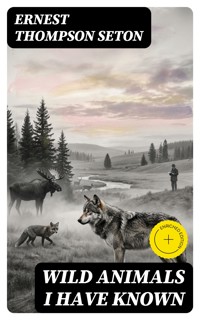
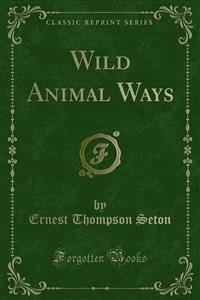
In "Wild Animals I Have Known," Ernest Thompson Seton presents a fascinating amalgamation of natural history, personal narrative, and anthropomorphism, inviting readers into the intricate lives of various wild animals he observed. With a richly descriptive prose style that vividly captures the essence of the wilderness, Seton blends scientific observations with emotional storytelling, lending a voice to creatures such as Lobo the Wolf and Wully the Moose. The book is nestled within the broader context of early 20th-century American literature, reflecting a growing interest in nature and wildlife preservation amid an industrializing society. Seton, a pioneering naturalist and one of the founders of the Boy Scouts of America, drew from his extensive encounters with wildlife, infusing each tale with his unique perspective on the natural world. His passion for animals and dedication to environmental conservation stemmed from a deep-seated reverence for nature, influenced by both his upbringing in Canada and his artistic pursuits. This blend of experience and creativity shaped his storytelling approach, allowing for profound reflections on the human-animal connection. This enchanting collection is highly recommended for readers who wish to explore the delicate balance of nature through engaging narratives. Seton's skillful interweaving of factual detail with compelling storytelling makes "Wild Animals I Have Known" not only an important ecological text but also a timeless literary work that continues to resonate with audiences today. In this enriched edition, we have carefully created added value for your reading experience: - A comprehensive Introduction outlines these selected works' unifying features, themes, or stylistic evolutions. - A Historical Context section situates the works in their broader era—social currents, cultural trends, and key events that underpin their creation. - A concise Synopsis (Selection) offers an accessible overview of the included texts, helping readers navigate plotlines and main ideas without revealing critical twists. - A unified Analysis examines recurring motifs and stylistic hallmarks across the collection, tying the stories together while spotlighting the different work's strengths. - Reflection questions inspire deeper contemplation of the author's overarching message, inviting readers to draw connections among different texts and relate them to modern contexts. - Lastly, our hand‐picked Memorable Quotes distill pivotal lines and turning points, serving as touchstones for the collection's central themes.
Das E-Book können Sie in Legimi-Apps oder einer beliebigen App lesen, die das folgende Format unterstützen:
Veröffentlichungsjahr: 2022
Ähnliche







Wild Animals I Have Known
Table of Contents
Introduction
This edition presents Ernest Thompson Seton’s Wild Animals I Have Known, first published in 1898, as a unified cycle of eight animal narratives. It gathers Lobo, The King of Currumpaw; Silverspot, The Story of a Crow; Raggylug, The Story of a Cottontail Rabbit; Bingo, The Story of My Dog; The Springfield Fox; The Pacing Mustang; Wully, The Story of a Yaller Dog; and Redruff, The Story of the Don Valley Partridge. The scope is deliberately compact: complete short stories rather than novels, arranged to advance Seton’s vision of individual creatures observed in their own worlds. A naturalist and wildlife artist, Seton shaped these accounts from field experience and disciplined imagination.
Readers will find prose narratives that move between realistic short story, natural-history sketch, and, at moments, autobiographical recollection. The pieces are not essays, poems, letters, or diaries; they are crafted stories that use the methods of fiction—scene, character, and pacing—while remaining grounded in observed behavior and place. Several tales portray wild species in open country, while others present domestic companions tested by the pressures of landscape and human contact. Seton’s textual method draws on the language of the field note without becoming technical report, offering an accessible narrative form for experiences that might otherwise reside only in scientific notebooks.
The unifying theme across the collection is the recognition of animals as individual beings with consistent habits, capacities, and choices shaped by environment. Seton grants each protagonist a personal history and a territory, exploring intelligence, caution, cooperation, and the costs of survival without turning the figures into human stand-ins. Boundaries between humans and nonhuman life are examined where they most often meet: at traps, den sites, fence lines, and feeding grounds. The stories invite respect for wildness and restraint in the face of power, urging readers to measure success not by conquest but by an enlarged attention to lives different from our own.
Stylistically, Seton’s signatures are clarity of incident, economy of dialogue, and a painter’s precision with sensory detail. He names animals and landscapes in order to fix them in memory, then builds sequences of cause and effect that illuminate habits rather than decorate them. The narrator’s stance shifts between first-person observer and detached chronicler, a technique that anchors empathy in witnessed behavior. He favors clean, muscular descriptions of movement—how a hoof falls, how a wing turns a thermal—because such particulars establish character without resorting to sentiment. The result is prose that feels both immediate and reflective, factual yet shaped by a storyteller’s cadence.
In the decades since its appearance, Wild Animals I Have Known has remained a touchstone for readers seeking narratives that join natural history to moral awareness. The book helped popularize realistic animal storytelling in North America at the turn of the twentieth century and contributed to conversations about conservation and humane conduct toward wildlife. Seton’s parallel careers in nature study and public education framed these tales as more than entertainment; they were invitations to notice, name, and preserve. Their continued circulation reflects an enduring appeal: they encourage curiosity about behavior, skepticism toward mythic ferocity, and attentiveness to the shared landscapes that sustain all species.
Each story begins from a clear premise. Lobo introduces a renowned wolf whose presence dominates the Currumpaw region, while human trackers reckon with his tactics. Silverspot follows a resourceful crow leading a wary community. Raggylug traces a young cottontail learning the patterns that mean life or death. Bingo offers a personal portrait of a dog whose loyalty is tested by circumstance. The Springfield Fox studies a canny fox adapting to pressure. The Pacing Mustang centers on a horse whose unusual gait complicates capture. Wully portrays a rough-coated farm dog under divided claims of duty. Redruff accompanies a partridge through the seasons of the Don Valley.
Approached together, these narratives form a mosaic of North American animal life rendered with sympathy and restraint. They do not propose parables; they present encounters that ask for patience, close looking, and an acceptance of limits on human knowledge. Read slowly, and allow Seton’s careful naming of habitats, tracks, and routines to accumulate into character and place. The purpose of this collection is not to resolve debates about instinct and reason but to foreground attention as an ethical act. In that spirit, the following pages offer memorable lives, observed with care, and a durable invitation to consider coexistence as a cultivated practice.
Historical Context
In 1898, Charles Scribner’s Sons published Ernest Thompson Seton’s Wild Animals I Have Known, a collection of illustrated animal biographies drawn from his fieldwork across North America. Born in 1860 and raised in Canada, Seton had sketched and studied wildlife in Manitoba, Ontario, and the American West during the 1880s–1890s. Stories such as Lobo, Silverspot, Raggylug, The Pacing Mustang, and Redruff reflect encounters in ranch country, river valleys, and patchwork farms reshaped by settlement. Appearing as the Gilded Age yielded to the Progressive Era, the book answered an urban public’s appetite for close-to-nature narratives grounded in recognizable places and habits.
Seton wrote amid rapid shifts in the sciences of life and mind. Darwin’s On the Origin of Species (1859) had redirected natural history toward evolution and careful observation, while George Romanes’s Animal Intelligence (1882) and C. Lloyd Morgan’s Canon (1894) framed debates about animal cognition and anthropomorphism. Seton positioned his stories between strict empiricism and moral sympathy, asserting that individual animals displayed learnable habits and character without denying their wildness. The rich, engraved pages of magazines like The Century and Scribner’s created a marketplace for such illustrated “true” narratives, encouraging authors to merge field notes, drawings, and accessible prose for a broad readership.
The collection emerged as American conservation coalesced from scattered local efforts into national advocacy. Yellowstone National Park (1872) set a precedent; the Forest Reserve Act (1891) and Sierra Club (1892) signaled institutional momentum; the Boone and Crockett Club (1887) promoted regulated hunting. At the same time, ranchers and counties offered bounties on wolves, coyotes, and cougars. Lobo, set around the Currumpaw country of northeastern New Mexico, grew from these predator wars, showing both the ingenuity of ranching communities and the ecological upheaval caused by large-scale cattle operations after the railroad boom of the 1880s. Seton’s tone balances admiration, pity, and critique.
Industrial expansion and market hunting also form the backdrop for the book’s birds and small game. By the 1890s, commercial shooting and the plume trade had devastated many species, prompting early Audubon societies in Massachusetts (1896) and other states, soon to unite nationally in 1905. Congress passed the Lacey Act in 1900 to curb interstate trafficking in wildlife. In Ontario’s Don Valley, where Redruff unfolds, farms, mills, and urban growth around Toronto fragmented habitat and pressured partridge and crows. Silverspot’s wary intelligence mirrors a period when city margins became contested spaces between scavenging birds and increasingly regulated human environments.
Closing of the frontier, declared by the 1890 U.S. Census and analyzed in Frederick Jackson Turner’s 1893 thesis, reshaped attitudes toward wild land and animals. Barbed wire, introduced in the 1870s, and expanding rail networks constrained free-ranging herds and accelerated roundups of mustangs and bison remnants. The Pacing Mustang and the fox-hunting tale set near a town like Springfield reflect settled agriculture pressing against older chase traditions. Improved repeating firearms and organized hunts increased human reach, while county fairs and newspapers celebrated record catches. Seton captures this hinge moment, when rustic skill met industrial logistics and the quarry’s disappearance felt imminent.
The stories about dogs, notably Bingo and Wully, arose during the spread of urban humane societies and evolving ideas about companion animals. The Royal Society for the Prevention of Cruelty to Animals (1824) inspired the American Society for the Prevention of Cruelty to Animals in 1866, followed by SPCA chapters across the United States and Canada by the 1890s. Licensing, anti-cruelty statutes, and rabies controls encouraged closer supervision and sentimental attachment to dogs, even in rural districts. Seton leverages that sympathy while recalling working roles—herding, guarding, trailing—that tied human survival to canine intelligence, thus linking household affection to frontier know-how and restraint.
Initial reception was enthusiastic, yet the book soon stood at the center of a national argument about truth in nature writing. Between 1903 and 1907, John Burroughs and President Theodore Roosevelt attacked “nature fakers,” alleging that authors invented animal motives. Seton defended his method as disciplined observation enlivened by narrative. Many tales had first appeared in periodicals of the mid-1890s, reaching schools as the Cornell-led nature-study movement promoted firsthand observation for children. The controversy paradoxically broadened his audience, sharpening readers’ expectations for evidence while affirming the emotional power that had made Wild Animals I Have Known a bestseller.
By connecting Western ranges, Midwestern farms, and Canadian ravines in one cycle of lives, Seton offered a continental map of interdependence during a period of consolidation—of land, industry, and sentiment. The book influenced later animal narratives by Jack London and Thornton W. Burgess, and it foreshadowed Seton’s youth education work, from the Woodcraft Indians (1902) to cofounding the Boy Scouts of America in 1910. Its blend of intimacy and reportage helped shift public feeling toward predators and migratory birds, contributing to a political climate that supported laws from the Lacey Act (1900) to the Migratory Bird Treaty Act (1918).
Synopsis (Selection)
Predators of the Frontier: LOBO, The King of Currumpaw; THE SPRINGFIELD FOX
These two tales follow an apex wolf and a wily fox as they match wits with human hunters across open country.
Frontier suspense gives way to wary respect, probing intelligence, dignity, and the moral cost of relentless pursuit.
Bird Lives: SILVERSPOT, The Story of a Crow; REDRUFF, The Story of the Don Valley Partridge
Centering on a crow leader and a Don Valley partridge, these stories render bird societies, seasonal rhythms, and survival tactics with naturalist detail.
The mood is observant and quietly elegiac, emphasizing flock intelligence, camouflage, and the pressure of human encroachment on near-urban woods and fields.
Dogs and Domestic Bonds: BINGO, The Story of My Dog; WULLY, The Story of a Yaller Dog
Seton’s portraits of a beloved companion dog and a rough country yaller cur balance affection with clear-eyed accounts of hardship, training, and loyalty under strain.
The tone ranges from warm and humorous to stark and sobering, examining how domestic fidelity intersects with instinct and the call of the wild.
RAGGYLUG, The Story of a Cottontail Rabbit
A young cottontail learns the laws of the field under a vigilant mother, negotiating predators, weather, and human hazards.
Gentle yet taut, the narrative highlights instinct, education, and the small-scale dramas that underwrite survival.
THE PACING MUSTANG
A fleet, oddly gaited wild horse turns capture into a long, shifting contest, testing stamina, strategy, and will on the open plains.
With brisk, open-sky energy, it explores freedom versus possession and the mythic aura of untamed movement.
Collection-wide Motifs and Style
Across the collection, Seton blends anecdote, field observation, and sympathetic imagination to individualize wild lives without fully domesticating them.
Moving from high-stakes chases to intimate domestic portraits, he returns to motifs of cunning and compassion, seasonal cycles, and the ethics of pursuit in a restrained, elegiac style.




