


0,49 €
Niedrigster Preis in 30 Tagen: 1,99 €
Niedrigster Preis in 30 Tagen: 1,99 €
Mehr erfahren.
- Herausgeber: DigiCat
- Kategorie: Gesellschafts- und Liebesromane
- Sprache: Englisch
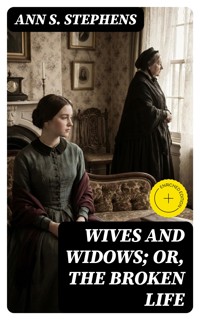
In "Wives and Widows; or, The Broken Life," Ann S. Stephens presents a profound narrative exploring the emotional and social complexities faced by women in the 19th century. The novel employs an engaging realism and intricate character development, painting a vivid picture of domestic life and the challenges of marital relationships. Through the lens of its central characters, the work delves into themes of duty, fidelity, and societal expectations, set against the backdrop of a rapidly changing America where women's roles were increasingly questioned and redefined. Stephens' prose is both lyrical and poignant, reflecting the intricate struggles of love and loss, ultimately leading to the story's central motif of redemption and the quest for identity amidst adversity. Ann S. Stephens, a prominent novelist of her time, drew from her own experiences as a wife and mother, which deeply influenced her literary voice. Active in a male-dominated literary world, she addressed the constraints placed upon women, using her writing to advocate for their rights and roles. Her keen observations of society's evolving dynamics fueled her desire to create narratives that shed light on women's inner lives and their often-overlooked challenges, making her work significant in the context of feminist literature. For readers seeking a richly woven tale that interrogates the intersections of gender and societal norms, "Wives and Widows; or, The Broken Life" is a compelling choice. Stephens' insightful exploration will resonate with contemporary audiences, inviting reflection on the enduring themes of love, loss, and the resilience of the human spirit in the face of societal expectation. This novel is not just a glimpse into the past, but a mirror reflecting challenges still relevant today. In this enriched edition, we have carefully created added value for your reading experience: - A succinct Introduction situates the work's timeless appeal and themes. - The Synopsis outlines the central plot, highlighting key developments without spoiling critical twists. - A detailed Historical Context immerses you in the era's events and influences that shaped the writing. - A thorough Analysis dissects symbols, motifs, and character arcs to unearth underlying meanings. - Reflection questions prompt you to engage personally with the work's messages, connecting them to modern life. - Hand‐picked Memorable Quotes shine a spotlight on moments of literary brilliance. - Interactive footnotes clarify unusual references, historical allusions, and archaic phrases for an effortless, more informed read.
Das E-Book können Sie in Legimi-Apps oder einer beliebigen App lesen, die das folgende Format unterstützen:
Veröffentlichungsjahr: 2022
Ähnliche















Wives and Widows; or, The Broken Life
Table of Contents
Introduction
Balancing on the narrow ledge between love’s promise and society’s punishment, Wives and Widows; or, The Broken Life reveals how a woman’s public title—wife or widow—can shelter, expose, and ultimately test the private self, as domestic hopes strain under gossip’s scrutiny, money’s pressures, and the quiet persistence of grief, while choices made in drawing rooms and at sickbeds echo outward through families, fortunes, and reputations, asking what endures when vows are shaken, households altered, and the moral ledger of a community weighs tenderness against duty, compassion against control, and survival against the fragile comfort of being seen as respectable.
Ann S. Stephens, a prominent figure in nineteenth-century American popular fiction, brought a keen eye for domestic life and social pressure to this novel, which belongs to the tradition of the sentimental and social domestic narrative. Emerging from the mid-nineteenth-century print culture that thrived on serial publication and a growing female readership, the book reflects the era’s fascination with the household as a stage for moral testing and public judgment. Its world is recognizably American, attentive to the legal and economic frameworks that shaped everyday lives, and it invites readers into parlors, boarding rooms, and business offices where reputation and livelihood intertwine.
The premise follows entwined households in which the status of wife or widow determines who may speak, decide, and belong, and an early disruption—rooted in money, memory, or concealed obligation—presses ordinary routines into crisis. An omniscient narrator guides the action with poised sympathy and firm moral shading, presenting quiet scenes of caregiving and conversation alongside moments of heightened confrontation. The style blends accessible prose with the emotional intensity associated with period serials, offering turns that keep attention taut without sacrificing character. Readers encounter tenderness and irony, measured judgment and open feeling, in a narrative calibrated to show consequences without coarse sensationalism.
At the center stand questions of law, money, and memory: how marriage functions as a contract and a covenant; how widowhood confers both vulnerability and a guarded independence; how property, guardianship, and employment shape moral choice. Stephens probes the traffic between private affection and public surveillance, tracing how gossip, letters, and legal instruments convert intimate moments into social facts. Class feeling surfaces in displays of charity and aspiration, as characters measure themselves against the codes of fashion and respectability. The book treats grief as an active force, revealing the work it demands and the clarity it sometimes grants amid competing loyalties.
For contemporary readers, the novel’s scrutiny of how identity is administratively defined—by marital status, paperwork, and reputation—resonates with ongoing conversations about caregiving, inheritance, and economic precarity. Its portrayal of social judgment anticipates today’s amplified visibility, where communities still weigh conduct and rumor with lasting effect. The narrative also illuminates the emotional labor that sustains families and institutions, valuing forms of intelligence often dismissed as merely domestic. Reading it alongside current debates about autonomy and security, we see how structural limits shape intimate life, and how acts of care, refusal, and resilience can complicate the tidy moral scripts a culture prefers.
Stephens writes with clarity and momentum, attentive to gesture, dress, and décor, yet committed to the psychological stakes of choice and consequence. The prose invites swift reading without sacrificing texture, and the chapters often close at pivot points that reflect the rhythms of magazine or serial circulation. Moral commentary, common to the period, punctuates the action, but the characters exceed simple types, acquiring depth as their needs and fears intersect. The result is a narrative that honors sentiment while staging genuine conflicts of principle and interest, producing a balanced experience of sympathy, suspense, and sober reflection on the cost of belonging.
Approach Wives and Widows as both a story and a social document, alert to how domestic spaces, financial instruments, and rituals of mourning become narrative engines that move lives into contact or collision. Notice the choreography of entrances and exits, the weight placed on letters and conversations, and the careful calibration of public scenes against private reckonings. By tracing these patterns, readers can appreciate the craft that underlies the book’s feeling. The novel endures because it makes visible the scaffolding around intimacy, and it encourages a principled tenderness—an ethic of attention—that remains urgent wherever love and livelihood meet.
Synopsis
Ann S. Stephens’s Wives and Widows; or, The Broken Life presents a domestic narrative concerned with the promises and perils of marriage in nineteenth‑century America. The opening establishes comfortable rooms and measured routines where courtship ideals meet the daily fact of duty, money, and reputation. Stephens contrasts the buoyant hopes of new unions with the sober vigilance of households accustomed to loss, suggesting how a social world prizes appearances yet trembles at scandal. Early chapters sketch intertwined families and confidants, showing how affection, obligation, and pride form the cords binding people together—and the strands most likely to fray under strain.
As the story gathers momentum, a prosperous façade begins to crack under financial pressure and competing loyalties. Misunderstandings proliferate: careless words are repeated, letters are misread, and visits arrive at the worst possible moment. Stephens lets everyday choices carry heavy consequences, charting how small evasions become barriers that lovers and spouses struggle to cross. Relatives and advisers, meaning to help, complicate matters by aligning themselves with decorum over candor. The phrase “broken life” emerges not as catastrophe alone but as an accumulation of injured confidences, prompting central figures to test whether trust can be repaired without the absolution of forgetting.
The plot deepens with uncertainty that hovers like bereavement even before any final loss is confirmed. Characters confront absence—of fortune, of letters, of the reliable patterns that once steadied them—and in that vacuum society supplies stories of its own. Rumor erodes patience while grief, real or anticipated, rearranges the roles people inhabit. Wives measure the worth of vows against the cost of endurance; would‑be widows find that neither sorrow nor independence grants clear relief. Stephens places them in rooms thick with advice and judgment, where every decision must balance affection, prudence, and the knowledge that public opinion rarely yields.
A parallel thread observes another household where widowhood is not theoretical but lived, and its practical burdens come into view. The narrative surveys formal obligations, dependent ties, and the way money and home can become both shield and shackle. Stephens avoids caricature by depicting grief alongside the resourcefulness it calls forth, allowing the contrast between marriage and widowhood to sharpen without simplifying either state. The two arcs mirror and refract one another, revealing how similar dilemmas—support, guardianship, social standing—press differently depending on who speaks and who is heard. The novel thus situates private feeling within the architecture of custom.
Midway revelations reorder sympathies without overturning the book’s moral center. Long‑kept confidences, delayed explanations, and recollections shared under strain expose how earlier gestures, whether generous or self‑serving, set the central conflict in motion. Stephens treats these disclosures less as shocks than as instruments for weighing accountability. Persons once seen as rescuers nurse private aims; those dismissed as erring prove steadfast in crisis. The narrative uses these reversals to question what counts as rightful claim in social and emotional terms: who deserves trust, whose account prevails, and how a family decides what portion of truth it can bear.
As consequences converge, the principal figures must choose between remedies that promise expedience and remedies that require candor. Stephens orchestrates confrontations that are intimate rather than theatrical, where a look, a delayed acknowledgement, or a signature carries the force of action. The closing movement prepares room for restitution while insisting that wrongs leave traces not easily smoothed by apology. Rather than resolve every disagreement, the narrative affirms responsibility as the condition for any renewed bond. The question that matters is not whether pain can be erased, but whether lives reconfigured by loss and knowledge can be honestly lived.
Taken together, Wives and Widows; or, The Broken Life stands as a representative work of American domestic fiction, attentive to the fragile economies of love, reputation, and law that govern private life. Its enduring interest lies in the clarity with which it links feeling to structure, showing how marriage and widowhood are shaped by forces larger than inclination. Without leaning on mere moralizing, Stephens invites reflection on the price of silence, the social uses of grief, and the possibility of repair. The result is a sober, humane portrait that continues to resonate wherever households are watched as closely as hearts.
Historical Context
Ann S. Stephens (1810–1886), a prolific American novelist and magazine editor, wrote Wives and Widows; or, The Broken Life within the mid-nineteenth-century literary marketplace centered in New York and Philadelphia. Her fiction commonly appeared first in women’s magazines and then as affordable book editions from firms such as T. B. Peterson & Brothers. The novel emerges from an urban, middle-class milieu shaped by rapidly expanding print culture, circulating libraries, and a readership of women attentive to domestic concerns. Its world is that of northeastern cities where parlors, boardinghouses, and counting rooms intersect, and where newspapers, advice manuals, and legal notices constantly mediate family life.
Marriage and widowhood in this period were governed by coverture, the common-law doctrine merging a wife’s legal identity into her husband’s. While many states began revising such rules, reform was gradual and uneven. New York’s Married Women’s Property Act (1848) and its 1860 expansion, for example, allowed wives to hold separate property and earnings, yet debts, estates, and guardianships still often passed through male hands. Widows typically had dower rights but limited managerial control, and probate proceedings could leave families exposed to creditors or relatives. Such legal frameworks provide the stakes for narratives in which a woman’s security turns on marriage settlements, wills, and trustees.
Advice literature and popular periodicals promoted the so-called "cult of true womanhood," urging piety, purity, domesticity, and submissiveness as feminine ideals. At the same time, urbanization complicated these prescriptions. In New York and Philadelphia, expanding markets and social mobility heightened anxieties about status, reputation, and household display. Middle-class women balanced unpaid domestic labor with paid work as teachers, seamstresses, or milliners when necessity demanded. Charitable associations and moral reform societies responded to poverty and scandal while policing respectability. Domestic fiction of the 1840s-1860s navigated this terrain, showing how gossip, legal dependency, and economic pressures could elevate or ruin a woman’s standing.
Stephens built her career in magazines such as Godey’s Lady’s Book, Graham’s Magazine, and Peterson’s Magazine, venues that blended fiction with fashion plates, etiquette, and household advice. Serial publication shaped readers’ expectations for suspense, moral tests, and sharply drawn contrasts of virtue and deceit. After serialization, publishers issued inexpensive cloth editions for circulating libraries and parlor shelves. Stephens later reached mass audiences through the new dime-novel format—her Malaeska (1860) inaugurated Beadle’s series—illustrating her feel for popular tastes. Wives and Widows belongs to this domestic-sensation orbit, using familiar settings and recognizable social institutions rather than exotic locales to examine marriage and money.
Mid-century economic volatility heightened the fragility of family fortunes. The Panic of 1857, bank failures, and periodic credit contractions could erase a household’s assets overnight, a theme echoed across contemporary fiction. Without independent legal standing, many wives faced the collapse of businesses, mortgages, or speculative ventures without recourse. Estates tied up in trusts or contested wills might secure or imperil dependents. Courts of probate, chancery practices concerning separate estates in equity, and the use of guardians for minors formed a legal backdrop that readers readily recognized. Such conditions lend urgency to plots where a signature, surety, or promissory note determines domestic stability.
American marriage and divorce law varied by state, and social stigma often deterred litigation. In mid-century New York, absolute divorce generally required proof of adultery, with limited grounds for separation; Pennsylvania permitted divorce for causes including adultery and desertion but still demanded stringent evidence. Custody of children and rights to property could hinge on judicial discretion or legislative acts. Religious and civic leaders warned that easy divorce threatened the social order. In this environment, unhappy marriages frequently produced quiet separations, clandestine arrangements, or moves across jurisdictions. The restrictive framework clarifies why fiction dwells on vows, betrayals, and the consequences of public exposure.
Victorian mourning culture supplied another widely understood context. Etiquette manuals prescribed lengthy periods of mourning for widows—often a year or more in dull black, followed by half-mourning in grays and lavenders—and discouraged public amusements during bereavement. Mourning jewelry of jet or woven hair, crape veils, and memorial portraiture made grief visible. Before, during, and after the Civil War, widowhood was common, and public charities, benevolent societies, and (after 1862) federal pensions for soldiers’ widows shaped expectations about support. Such customs and institutions gave narrative weight to the status of a widow, whose conduct, expenditure, and alliances were subjected to exacting scrutiny.
Against this backdrop, Wives and Widows; or, The Broken Life reflects and critiques its era’s intertwined regimes of law, economy, and respectability. By situating domestic trials within familiar institutions—probate courts, trustees, charities, parlor culture, and the press—Stephens tests ideals of womanly virtue against the practical limits imposed by coverture, rumor, and volatile markets. The novel’s blend of sentiment and sensation aligns with contemporary expectations while drawing attention to vulnerabilities created by marriage contracts and status hierarchies. Its emphasis on reputation, property, and legal process mirrors the lived concerns of its readers and underscores the demand for reforms that unfolded across the nineteenth century.
Wives and Widows; or, The Broken Life
WIVES AND WIDOWS.
CHAPTER I.LEAVING MY HOME.
At ten years of age I was the unconscious mistress of a heavy stone farm-house and extensive lands in the interior of Pennsylvania, with railroad-bonds and bank-stock[1] enough to secure me a moderate independence. I shall never, never forget the loneliness of that old house the day my mother was carried out of it and laid down by her husband in the churchyard behind the village. The most intense suffering of life often comes in childhood[1q]. My mother was dead; I could almost feel her last cold kisses on my lip as I sat down in that desolate parlor, waiting for the guardian who was expected to take me from my dear old home to his. The window opened into a field of white clover, where some cows and lambs were pasturing drowsily, as I had seen them a hundred times; but now their very tranquillity grieved me. It seemed strange that they would stand there so content, with the white clover dropping from their mouths, and I going away forever. My mother's canary-bird, which hung in the window, began to sing joyously over my head, as if no funeral had passed from that room, leaving its shadows behind, and, more grievous still, as if it did not care that I might never sit and listen to it again.
One of the neighbors had kindly volunteered to take charge of the gloomy old house till my guardian came, but her presence disturbed me more than funereal stillness would have done. I had a family of dolls up stairs, and any amount of tiny household furniture, which I would have given the world to take with me; but this thrifty neighbor protested against it. She said that I was almost a young lady and must forget such childish things, now that I was going into the world to be properly educated.
To a shy, sensitive child, this was enough. So, with a double sense of bereavement, I saw my pretty dolls and delicate toys swept into a basket and carried off to the woman's house, between two stout Irish girls, who seemed to be taking my heart off with them.
In less than half an hour one of this woman's children came down the road with my prettiest doll under her arm. Its flaxen curls were all disordered, and its tiny feet, with their slippers of rose-colored kid, had evidently been in the mud, where she had probably insisted on making the doll walk. While I sat by the window, waiting and watching, this bare-headed little girl sat down by a fragment of stone that had fallen from the wall close by, and began pounding the head of my doll upon it with all her might. A cry broke from me that made the little wretch start and run away, leaving my poor mutilated doll by the stone.
I ran out, seized upon my ruined doll, and came back to the house, crying over it in bitter grief. With trembling hands I unlocked my trunk, which was ready packed for travelling, and laid my broken treasure down among the most precious of my belongings. Just then Mrs. Pierce, our neighbor, came in, and in a half jeering, half kind way, expostulated with me for being such a little goose as to cry over a doll. This woman did not mean to be hard with me; far from it. Persons exist who are really kind-hearted, and seem cruel only because they cannot comprehend feelings utterly unknown to themselves. To me that doll was a type of my wrecked home; to her it was a combination of wax, sawdust, and leather, which a few dollars could at any time replace; besides that, she was put a little on the defensive by the fault of her child.
While she reasoned with me in her coarse kindness, which only wounded me deeper, a carriage had driven up, and two persons entered through the outer door, which had been left open by the little girl when she ran into the house to claim her mother's protection. I was sitting on the floor by my trunk, with both hands pressed to my face, sobbing piteously, when a sweet, strange voice checked the force of that woman's harangue; some one sank down to the floor by me, and I was all at once drawn into a close embrace.
"Don't cry, dear; it is all very sad, no doubt, but you are going with us, and to-morrow will be brighter."
I looked through a mist of tears that half blinded me, and saw the kindest, sweetest face that my eyes ever dwelt upon. It was that of a young woman, perhaps twenty or twenty-two years of age. "You must not feel yourself alone, dear child," she said, smoothing my hair with one hand, from which she had drawn off the glove.
"Oh," said Mrs. Pierce, pushing her daughter behind her, "you will never believe, marm, what she is crying about,—leaving home, you think it is? Oh, no; Miss is just taking on about a snip of a doll which my little girl here smashed a trifle, not meaning any harm, for children will be children, you know."
Here Mrs. Pierce patted her child's head, who cast sidelong glances at me and attempted to hide herself behind her mother's dress.
I looked up at the young lady, blushing red, and begging her in my heart not to think me so very ridiculous.
She smiled encouragingly, and turning upon Mrs. Pierce, said, very gravely,—
"I am surprised, madam, that you should think this a slight cause of grief. The smallest thing connected with the child's home must be dear to her."
Mrs. Pierce gave her head a fling, and muttered that she meant no harm. Miss was welcome to all her things back again; her children did not want them, not they.
"You are right," said the young lady, quite seriously; "have everything she has owned or loved packed up at once."
Mrs. Pierce went out muttering; the child followed her with a finger in her mouth.
"Now," said the young lady, "is there anything else you would like to take away,—a bird, a little dog, or the cat you have loved; we can find room for them?"
My heart leaped. I had the dear old canary-bird; and lying upon the crimson cushions of my mother's easy-chair was "Fanny," a pretty chestnut-colored dog, that had all the grace of an Italian greyhound[2], and the brightness of a terrier.
"May I take her with me?" I cried, springing up and falling on my knees before my mother's arm-chair, and hugging Fanny to my bosom. "I am so glad, so grateful, so—"
Here I broke down, and burying my face in Fanny's fur, cried and laughed out my thankfulness. When I looked up, one of the handsomest men I ever saw stood by the young lady, who was smiling upon him, though I saw bright tears in her eyes.
"So this is your father's ward," said the gentleman, reaching out his hand as if he had known me all his life.
I put my hand in his, and felt my heart grow warm, as if it had found shelter from its loneliness. He exchanged glances with the lady, and I felt sure that they were pleased with me.
"Now," said the gentleman, "we have a little time, if you want to take leave of anything."
"Oh, I have been taking leave ever since she died," I answered, saddened by his words. "I couldn't do it again."
"Perhaps that is best," said the gentleman; "so get on your things; we have a long ride before us."
I started to obey him, but all at once a doubt seized upon me. Who were these people? I did not know them. Mr. Olmsly, my guardian, I had been informed, was an old man. What right had these people to take me away from my home?
I stole back to the gentleman, trembling, and filled with sudden apprehension.
"Please tell me who you are," I said; "Mr. Olmsly! I thought he was an old man."
"And so he is," answered the gentleman, smiling pleasantly, "but he is not very well, and so his daughter came after you in his place. This is Miss Olmsly."
The young lady stooped down and kissed me. My arms stole around her neck unawares, and from that moment I loved her dearly. When I turned away from the young lady's caresses, her companion said,—
"Now you would like to know who I am; isn't that so?"
I nodded my head, feeling that I could tell at once who he was.
"Her brother, I am sure of that, you are both so—so—pleasant."
I was about to say "handsome," but changed it to the less flattering word.
They both laughed, and the gentleman glanced at Miss Olmsly's face, which, I was surprised to see, turned red as a wild rose.
"No, I am not her brother," he said, flushing up himself; "but I shall be a great deal at your guardian's, and I shall think that you are almost my sister. Will you like that?"
"So much!" I replied, with a light heart, for all my anxieties were put to rest. "Now I will get my things."
I went up-stairs and entered my own little room for the last time. How homelike and familiar everything looked: the little bed in the corner, with its draperies of white net; the muslin window-curtains, through which I could see great clusters of old-fashioned white roses, still wet with morning dew, and lying like snow among the vivid green of the thick leaves; my little walnut-wood desk, where I had got my first lessons,—all appealed to me with a force that swept away the dawning cheerfulness which the conversation down-stairs had inspired. I sat down by the window and looked sadly out. The sash was open, and a sweet fragrance came up from the white clover-field, mingling with that of the great rose-bush, which had reached the second-story windows, ever since I could remember. I could not bear to leave all these things. Yet the house had been so lonely that I had no clear wish to stay. To me there was something terrible in leaving that safe home-shelter. I grew cold, and began to cry again. Afar off I could see the graveyard where my mother was lying. Her presence was close to me then. How could I go away and leave her resting there within sight of the old house? But she had herself arranged that I should live with my guardian. Why should these bitter regrets depress me, while obeying her? It was that strong home feeling which has never left me during my life,—the feeling which prompted me to gather a handful of those white roses, and keep them till they crumbled into nothing but the ashes of a flower. Oh, how my heart ached when we drove away from that old stone house! the picture is even yet burned in on my brain. That tall hickory-tree at one end—the willow in front. Those fine old lilac-bushes, and the clustering roses reaching luxuriantly to the upper windows, in the full rich blossoming of early June. Many a time since, when in sadness and sorrow this picture has come back to my mind, I have wondered if it might not have been better had I stayed in that quiet old home.
CHAPTER II.MY NEW HOME.
Mr. Olmsly was a very wealthy man. His property stretched far into an iron and coal district of Pennsylvania, and every day increased its value. It lay in and around a fine inland town, situated among some of the most picturesque scenery to be found in the State. His residence was about five miles from this town, and a most beautiful spot it was. The house was built on the last spur of a range of hills, which ran for some distance down the valley of the Delaware. Around this tall ridge the noble river made a bold sweep, turned an old stone mill on its outer curve, and went careering down one of the richest and most beautiful valleys that the eye ever dwelt upon. The whole of this mountain spur, the mill and the land down to the river, which swept around it like an ox-bow, was the property of Mr. Olmsly. His house of heavy stone was built half-way up the side of the ridge, in the form of the letter T, which ran lengthwise along the face of the hill, presenting a pointed roof, and one sharp gable in the front view. The walls were stuccoed like many houses to be found in European countries, and were settled back on the hill by three curving terraces, two of them blooming with rare flowers. These terraces cut the hill as with a girdle of blossoms about half-way up from its base. The first was a carriage-road, which was connected with the house by a long flight of steps leading across the first flower-terrace to the front door.
In front, the house was three stories high. The basement story opened on the first broad terrace, with its wreathing vines, and glowing blossoms. An oriel window[3] curved out from the gable, and a square balcony surrounded by an arabesque railing, formed a pleasant lounging-place over the front entrance. At the back of the house the entrance was from the third terrace, directly to the second story, which was half occupied by a broad hall, ending in the square balcony; a noble drawing-room, whose latticed windows opened on every side save the front, from which the oriel jutted, opened upon a platform some ten feet wide, which formed a promenade around one end of the second story, and along the back of the building, surrounded by a low balustrade, to which a hundred rare plants and vines were clinging; beyond this was a labyrinth of flower-beds, through which a broad gravel-path wound gracefully, separating the green turf of the hill-side from the third and last terrace, which was most beautiful of all.
These terraces threw broad belts of flowers half across the face of the hill, and ended in pleasant footpaths which led through the turf and under some sheltering trees to the top of the ridge. There everything was wild as nature left to herself can be. At noonday the sunshine was darkened by the woven branches of pines, hemlocks, beech, and oak trees, with a tangle of blossoming laurel among the dusky undergrowth. From this eminence, you commanded a glorious sight of two magnificent valleys,—one stretching off toward the Blue Ridge and overlooking the town, the other opening in rich luxuriance down the banks of the Delaware, mile after mile, league after league, till villages in the distance seemed scarcely more than a handful of snow-flakes.
Half-way down you saw the house I have been describing, the carriage-road that wound beneath it, and below that, the hill sloping downward in a broad, rolling lawn, which lost itself with gentle undulations in the green bosom of the valley.
This was the home to which I was brought, and this beautiful view lay before me as I stood upon the terrace-steps, wondering that the earth could be so lovely. Miss Olmsly paused by my side, enjoying my surprise.
"You like it," she said; "we shall be very happy here, for I know how it will be with my father when he sees your demure little face."
"Happy," I said, looking at the flowers which bloomed around me everywhere. "I did not know that there was any place in the world so lovely as this."
"I am glad you are pleased, young lady."
I started, turned toward the speaker, and saw a fine old gentleman, with soft brown eyes, and hair as white as snow, standing on the step above me.
"It is my father, dear," said Miss Olmsly, mounting a step higher and offering the old man a kiss; "she is a dear, good child, papa, and we love her already."
"I am glad of that," he said, stooping down and kissing me on the forehead. "Your father was my friend, child, and I will be yours. Come into the house; you must be tired and hungry."
We entered the house which was henceforth to be my home. Miss Olmsly took me directly to a pretty chamber, that had been evidently prepared for my coming. Everything was simple, neat, and pure as snow. As if they had known how I loved flowers, they were placed in the deep window-seats, on the white marble of the mantelpiece, and the principal window opened on the loveliest portion of the third terrace, where a world of flowers were in bloom from May till November.
There I hung up the bird-cage which I had brought from home in the carriage, and the little inmate began to sing joyously, as if he understood all the beauties of our new home and rejoiced over them.
Fanny, too, put her paws on the window-seat, and looked out demurely, as if taking a survey of the landscape. She dropped down with what seemed a little bark of approval, and curling herself up on my travelling-shawl, which had dropped to the floor, watched me as I unlocked my trunk and prepared for dinner.
Miss Olmsly was right. I had a demure little face, but it looked upon me from the glass less sorrowfully than I had seen it since my mother's death. The sombre blackness of my dress threw it all into shadow and made the deep blue-gray of my eyes darker, by far, than was natural. This, contrasting with the slightness of my form, made me look like a little woman who had known suffering, rather than the sensitive child that I really was.
The dinner filled me with awe; the bright silver, the cut-glass, and delicate china impressed me greatly, and I was half afraid to tell the waiter what I wanted, he seemed so great a gentleman. Everybody was kind, the conversation was bright and cheerful; I understood it all, and felt myself brightening under it. Once or twice I caught myself laughing at the pleasant things the old gentleman was saying.
After dinner, when Mr. Olmsly was asleep in his great easy-chair, Mr. Lee and Miss Olmsly went out on the platform, lifted a little from the third terrace, and walked up and down, now and then looking in through one of the open French windows, and saying a kind word to me. I remember thinking what a splendid couple they were, and how happy they seemed to be in each other's company. No wonder; she was a lovely creature, slender, graceful, and caressing in all her ways, while he was like a demigod to my imagination, grand as a monarch, and good as he was kingly. Even then, young as I was, the smile with which he occasionally bent to her, made my heart yearn with a strange desire that I, too, might be so smiled upon.
Still, I was neither lonely nor home-sick, for my whole heart had gone out toward those young people, and I had begun to connect the old gentleman lovingly with my own father, whose face and kind ways I could just remember.
After a while I stole up to my own room again, unpacked my trunk, hung up my mourning dresses, and lingered regretfully over my doll a few moments, ashamed of having loved it so; for the sneers of Mrs. Pierce had made a deep impression on me, and I began to feel that I ought to be something more than a child. Still I could not put the poor, broken thing entirely away, but a sight of it always gave me a heart-ache. It is a terrible thing when one's childhood is broken up with harsh words and coarse jeers.
Where refinement is, illusions remain beautiful far beyond childhood. They belong to innocence, and seldom dwell long with the worldly and the bad.
Mrs. Pierce had swept away one joy from my life, but a beautiful compensation had been sent me in my new home and my new friends. It all seemed like paradise to me when I went to bed that night.
CHAPTER III.A NEW LIFE.
The next morning, Miss Olmsly came into my room and helped me arrange my little mementos in a homelike fashion. My work-box was brought forth and placed on the little table provided for it. My pretty writing-desk was unlocked and placed convenient for use. Brackets were ready for the ornaments that had been so dear that I could not leave them behind. From that hour, this room became in fact my home; the old stone farm-house receded into the shadows of the past. I thought of it sometimes sadly, as I thought of the graves where my parents lay. The sight of an old-fashioned damask-rose has still power to bring tears into my eyes, and my heart would thrill if I passed a white clover-patch, years and years after that I left at home had been ploughed out of existence. But after all, the brightest sunshine of my life fell through the latticed windows of my room on the Ridge.
No humming-bird ever loved flowers as I did;—no artist ever gave himself up to the enjoyment of a fine landscape more completely than it was in my nature to do. I have no doubt that the beauty that surrounded me was one great cause of the tranquil happiness which settled upon my whole being as I became accustomed to the place. I loved to spend whole mornings alone on the Ridge, collecting mosses and searching for birds'-nests, which were abundant in the pines and the drooping hemlock boughs. Among Miss Olmsly's old school-books I found one that gave me an elementary knowledge of botany; I did not consider it a dry study, but loved to sit upon a rock carpeted with moss, and look into the fragrant hearts of the wild-flowers, searching out their sweet secrets with a feeling of profound sympathy in their loveliness and in the races to which they belonged. Child as I was, these things satisfied me, and I wanted no other companionship.
Mr. Olmsly's land covered extensive woods beside those on the Ridge. There was nothing likely to harm me anywhere in the grounds, and I was allowed to run wild out of doors wherever I pleased. Thus I made acquaintance with many things beside the flowers; gray squirrels and pretty striped chipmunks, with bushy tails curled over their backs, would sit upon the tree-boughs just over my head and look at me with shy friendliness. Now and then, I saw a rabbit peeping at me through the ferns. These pretty creatures were not afraid, for no sportsman was ever allowed to bring his gun into those woods, and I think they knew how far I was from wishing to harm them.
My mother had been a timid woman, and her love for me always rendered her unduly careful. She had a terror of allowing me out of her sight, and being feeble herself, kept me mostly indoors, where I had learned to content myself in a passionate love of my dolls, that really seemed to me like living creatures capable of loving me as I worshipped them.
But at the Ridge I really did enjoy living companionship. Nature lay all before me, wild as the first creation; or so blended with art that its richest beauties were enhanced threefold. There was also vitality and intelligence in these living creatures that stirred my heart with a strange sympathy.
My dog Fanny sometimes troubled me a little: she would insist upon routing the ground-birds from their nests, and in an effort to become friendly with the rabbits, would send them scampering wildly into the underbrush. I loved Fanny dearly, but it was not pleasant to see my pets driven off by her frolicsome way of making herself agreeable.
One day I had gone farther than usual into the woods, and come out upon the outer verge of Mr. Olmsly's estate. Here the trees grew thin and scattered off into a pasture, where a flock of sheep was grazing; beyond that, some fine meadow sloped down toward the valley, cut in two by the highway, on which a large stone house was visible through the trees growing thickly around it.
A flat rock, half in sunshine, half in shadow, lay hidden in the grass close by the footpath I had been pursuing, and I sat down upon it, somewhat tired from my long walk in the woods. Fanny was with me and sprang with a leap to my side, but kept moving restlessly about, as if she did not quite like the position, or saw something that displeased her.
I had gathered some spotted leaves of the adder's-tongue[4], with a few of its golden flowers, and had found some lovely specimens of cup-moss on an old stump, which nature was embellishing like a fairy palace, and sat admiring them in the pleasant sunshine, when Fanny gave a sudden yelp, and bounded from the rock, barking furiously.
I dropped the flowers into my lap, half frightened by her sudden outburst; but as she continued wheeling around the rock, darting off and back again, yelping like a fury, I ordered her to be quiet, and fell to arranging my treasures once more.
All at once Fanny ceased barking, but crept close to me, seized upon my dress with her teeth and began to pull backward, almost tearing the fabric. Just then I heard a rustling sound on the rock behind me; forcing my dress from the dog's teeth, I sprang up, and saw quivering upon the moss what seemed to be a dusky shimmer of jewels all in motion. In an instant the glitter left my eyes. I felt myself turning into marble. There, coiled up ready for a spring, its head flattened, its eyes glittering venomously, was a checkered adder preparing to lance out upon me.
I could not move, I could not scream; my strained eyes refused to turn from the reptile, who, quivering with its own poison, seemed to draw me toward him. For my life I could not have moved; my lips seemed frozen,—a fearful fascination possessed me utterly. It was broken by the rush of a fragment of rock, under which I saw the reptile writhing fiercely. Then my faculties were unchained, and a shriek broke from my cold lips. I sprang from the rock and was running madly away, when Mr. Lee caught me in his arms, and I shuddered into insensibility there.
When I came to, the crushed adder lay dead upon the rock, from a crevice of which he had crept forth upon me. Fanny was barking furiously around it, and Mr. Lee had carried me to a spring close by, where he was bathing my face with water.
I looked around in terror. "Is it gone? is it dead?" I questioned, shuddering.
He pointed out the adder, which hung supine and dead over the edge of the rock, and attempted to soothe my fears, but I trembled still, and could hardly force myself to take a second look at my dead foe.
How kind Mr. Lee was then; how tenderly he compassionated my terror, and assured me of safety. Fanny, too, forgot her rage, and came leaping around me. Oh, how grateful I was to that man. My heart yearned to say all it felt, but found no language. I could only lift my eyes to him now and then in dumb thankfulness, wondering if he cared that I was so grateful, or dreamed how much a girl of my years could feel.
How foolish all these thoughts were; of course, he only thought of me as a frightened child. From that day I never knelt to God, morning or evening, without asking some blessing on the head of Mr. Lee. Gratitude had deepened my reverence for that man into such worship as only a sensitive child can feel. Yes, worship is the word, for this young man in the grandeur of his fine person, gentle manners, and superior age, seemed as far above me as the clouds of heaven are above the daisies in a meadow. Even now I cannot comprehend the feelings with which I regarded him.
Have I said that Mr. Lee was a partner in the Olmsly Iron Works, and though he boarded in town, half his time was of necessity spent at the Ridge? My guardian only attended to business through him, and expected a report at least twice a week.
Many and many a time, when I knew that he was coming, have I wandered down the carriage-road to the grove where it curved off from the highway, and was closed into our private ground by a gate. There, sheltered by the spruce-trees and hidden by the laurel-bushes, I have waited hours, listening for the tread of his horse, and feeling supremely rewarded by a brief glimpse of his manly figure, as it dashed up the road, unconscious alike of my presence and my worship.
I never mentioned these feelings, or all the secret sources of happiness to which my soul awoke, not even to Miss Olmsly. I would have died rather than breathe them to any human being; they were sacred to me as my prayers. Sometimes I would be days together without speaking to Mr. Lee, but I was seldom out of the sound of his voice when he visited the Ridge, and would follow him and Miss Olmsly like a pet dog about the garden, glad to see her brighten and smile when he looked upon her, and loving them both with my whole heart.
Sometimes other company came from the town. We frequently drove over there and brought Mr. Lee home with us; indeed, he was one of the family in every respect, save that he did not sleep at the Ridge, and called himself a visitor. One thing is very certain—on the days he did not come Miss Olmsly was sure to grow serious, almost sad; only there never was any real sadness at our house in those days.
CHAPTER IV.THREATENED WITH SEPARATION.
This beautiful life must have an end. Even childhood has its duties, and mine could no longer be evaded.
One day Miss Olmsly came into my room, and looking around, sighed; but there was a smile on her lip and an expression in her face that made me wonder at the sigh; for I had not learned that superabundant joy has sometimes the same expression as grief; but oh, how different the feeling.
She sat down by the window, and drawing me close to her, kissed my forehead two or three times with so much feeling that I began to tremble.
"Is anything the matter?" I said, winding my arms around her neck; "have I done wrong?"
"Wrong, my sweet child, no; who ever accused you of being anything but the best girl in the world? I was only thinking how lonesome you would be without us."
"Without you?" I faltered,—"without you?"
I felt myself growing pale, my arms fell away from that white neck, and I looked piteously in her kind face, afraid to ask the meaning of these words.
"Don't look so frightened, dear," said Miss Olmsly, drawing me fondly to her side. "Even if we were not going, you must have been sent to school. No young lady can get along without education, you know; still, I shall feel very anxious about you."
"Are you going away; am I to be left?"
I could ask no more; the very idea of parting with them choked me.
Miss Olmsly drew my face to hers as if she wanted to keep me from looking at her so earnestly. My cheek was wet with tears, but hers was red as it touched mine, and I could feel that it was burning.
"I am about to tell you something that I hope you will be glad to hear, darling," she said, almost in a whisper. "In two weeks Mr. Lee and I are going to be married. Why, how you shiver, child! I should have told you of this first; the very thought of a school terrifies you."
I heard this and no more. Another death seemed upon me; I fell upon my knees and caught at her dress with both hands.
"Oh, do not leave me—I shall die! I shall die!" She lifted me from the floor and attempted to soothe me, but I was not to be pacified. To live without him—never to see him! There would be nothing worth loving in my life after that.
"Is it so hard to part with us," she said, smoothing my hair with both hands.
I flung my arms around her neck in passionate grief.
"Let me go too; oh, take me, take me!"
"But we are going to Europe."
"Over the sea? I know, I know, take me!"
She kissed me again, and seemed thoughtful. My heart rose: I began to plead with hope. She listened tenderly; told me not to cry, and left me in a state of suspense hard to bear. An hour after this I saw her walking in the garden with Mr. Lee. She was addressing him with sweet earnestness. He looked smilingly down into her face and seemed to expostulate against something that she was urging. At last he appeared to give way, but shook his head and threatened her with his finger, which she answered by tossing the ripe leaves of an autumn rose in his face. As he shook them laughingly away, his eyes fell on me where I leaned from the window, and he made a sign for me to come down.
Breathless, and wild with anxiety, I ran down to the garden and stood beside him, panting for breath, eager to speak, and yet afraid.
"Well, little lady," he said, holding out a hand; "you are determined that we shall not leave you behind."
"It would kill me," I murmured, striving to read my fate in his eyes.
"But we shall be gone from home a long time."
"My home is where—where she is," I answered.
Why did I hesitate to include him. I think he noticed it, for he said, laughing, "Then you care everything for her, nothing for me?"
I burst into tears and cried out in my trouble, "Oh, you are cruel to me; you laugh when I am so unhappy."
"But no one shall be made so unhappy when—when—" Here Miss Olmsly broke off what she had begun to say, and flushed like the rose she had just torn to pieces.
"When we are married; that is what she will not say, sweetheart," broke in Mr. Lee, blushing a little himself; "and if it really will make you unhappy to stay behind, why, there must be some way found by which you can go with us."
I caught a deep breath and felt a glow of keen happiness rush up to my face, but no word would leave my lips.
"Now, this will make you happy?" questioned Miss Olmsly, looking into my eyes,—I think as much to avoid his, as from a wish to read my joy there.
"So happy," I answered.
"But we shall be gone a long time and shall travel a great deal, while you must be put to school."
This dampened my spirits a little, but I answered, bravely, that I did not mind, so long as there was no ocean between us.
Then they informed me that Mr. Olmsly had consented that I should go with them to Paris and remain in school while they travelled. Then he would join us and make new arrangements for the future.
After explaining all this to me, the young people walked off together, satisfied that I was made happy as themselves; and so I ought to have been; but my poor heart would not rest, and I went off into the woods like a wild bird, wondering why it was that a flutter of pain still kept stirring in my bosom.
They were married just two weeks from that day. All the principal families of the place were invited, and the entertainment proved a grand affair. All the grounds were illuminated for the occasion. The house was one blaze of lights. Every tree on the hill-side or the sloping lawn seemed blossoming with fire, or drooping with translucent fruit, so numerous were the colored lamps and gorgeous lanterns that hung amid their foliage.
It was like fairy-land to me. The moon was at its golden fulness, and never before had the purple skies seemed so full of stars; but, spite of this, I was sad and restless. Miss Olmsly insisted upon it that my mourning should be laid aside, and I felt strange in the cloudy whiteness of my dress, simple and plain as it was. Indeed, the whole thing seemed to me like a dream which must pass away on the morrow. Perhaps it was this abrupt change in my dress which made me feel so lonely when all the world was gay and brilliant beyond anything my short life had witnessed. Perhaps I felt sad at the thought of leaving my native land. Be this as it may, I can look back upon few nights of my life more dreary than that upon which the two best friends I ever had, or ever shall have, were married.
Memory is full of pictures; events fade away, feelings die out, but so long as the heart keeps a sentiment or the brain holds an image, groups will start up from the past and bring back scenes which no effort of the mind can displace. It is strange, but such pictures are burned, as it were, upon the soul unawares, and often without any remarkable event which can be said to have impressed them there. You may have known a person all your life, yet remember him only as he was presented to you at some given moment. Whole years may pass in which you scarcely seem to have observed him; but at some one moment he comes out upon your recollection with all his features perfect and clearly cut as a cameo.
Of all the pictures burned in upon my life, that of Mr. Lee and his bride, as they stood up in that long drawing-room to be married, will be the last to die out from my mind. No bridesmaids were in attendance; no ushers coming and going drew attention from that noble couple. This was the picture,—a woman standing at the left hand of a tall, stately man. He was upright, firm, and self-poised as the pillar of some old Grecian temple. She drooped gently forward, her hands unconsciously clasped, the long black lashes sweeping her cheeks; a soft tremor, as of red rose-leaves stirred by the wind, passing over her lips; draperies of satin, glossy and white as crusted snow, fell around her; a garland of blush-roses crowned the braids of purplish-black hair thickly coiled around a most queenly head. Draperies of rich, warm crimson fell from the windows just behind them, and swept around the foot of a noble vase of Oriental alabaster, from which a tall crimson and purple fuchsia-tree dropped its profuse bells. Directly the clergyman, with a book in his hand, broke into the picture; but my mind rejects him and falls back upon the man, and the woman who stood with lovelight in her eyes and prayers at her heart, waiting to become his wife.
There was great rejoicing after the picture was lost in a crowd of congratulating friends; music sent its soft reverberations out among the flowers, that gave back rich odors in return; for it was a lovely autumnal night, and the whole platform to which the windows opened was garlanded in with hot-house plants. I remember seeing groups of persons wandering about in the illuminated grounds. Their laughter reached me as I sat solitary and alone in the oriel window, over which lace curtains fell, and were kindled up like snow by the lights from without.
I was very sad that night, and felt the tears stealing slowly into my eyes. Every one was happy, but joy had forgotten to find me out. All at once the lace curtains were lifted softly and fell rustling down again. She had thought of me even in her happiest moments. Her arms were folded around me; her lips, warm with smiles, were pressed to my face.
"All alone and looking so sad! why will you not enjoy yourself like the rest?" she said.
"I am so young and so wicked," I answered, wiping the tears from my eyes.
"Wicked! oh, not that, only there is no one of your own age here; come out a little while; he has been asking for you."
"For me?"
"Of course; who else should he think of? Why, child, you will never know how dearly we both love you."
"And you always will?" I asked, holding my breath in expectation of her answer.
"And always will, be sure of that. Ah! here he comes to promise for himself."
Yes; there he stood holding back the curtains, proud, smiling, and strong, as I shall always remember him.
"Ah! you have found her, silly thing, hiding away by herself," he exclaimed, kindly.
"I have just made a promise for you," answered the bride with gentle seriousness.
"Which I will keep; for henceforth, fair lady, am I not your slave."
"I have promised to love this girl so long as I shall live, and that you will be her very best friend, and love her dearly."
"Dearly, you say?"
"Most dearly."
"Next to yourself?"
"Next to myself; and after me, best of all."
"Ah, it is easy to promise that, for, next to yourself, sweet wife, she is the dearest creature in existence." She held my hand in hers while he was speaking. When he uttered the word wife, I felt her finger quiver as if some strange thrill had flashed down from her heart, and the broad white lids drooped suddenly, veiling the radiance of her eyes.
"Now that I have promised, let us seal the compact," he said, with touching seriousness; and lifting me for a moment in his arms, he pressed a kiss upon my lips.
"Why, how she trembles; don't be afraid, you sensitive little thing; come, come go with us and see how the people are making themselves happy."
The bride took his arm, and leading me with his disengaged hand, he crossed the drawing-room and went out on the flower-wreathed platform, where a band of music was filling the night with harmonies.
Here an ecstasy of feeling came upon me; I remembered all that both these persons had promised, and that it would be a solemn compact which they would never think of breaking. I should be with them, not for a time only, but so long as I lived. Remember, I was an imaginative girl, and knew but little of the mutability of human affairs. I only felt in my soul that these two persons whom I loved so entirely, would be faithful to the promise they had made that night, and this certainly filled me with exultation that was, for the time, something better than happiness. After a while, Mr. Lee dropped my hand, but it crept back to his, and I made a signal that he should bend his head.
"It is a promise," I whispered; "you will never, never send me away from you?"
"It is a promise," he answered, smiling down upon me.
"Good night," I said, longing to be alone in my room where I could feel of a certainty that the few words spoken that night had anchored me for life. "Good night; I shall never leave you or her while I live."
It seemed a rash promise, but I made it to God in my prayers that night. The reader shall see how I kept it.




