


Erhalten Sie Zugang zu diesem und mehr als 300000 Büchern ab EUR 5,99 monatlich.
- Herausgeber: Editares
- Kategorie: Religion und Spiritualität
- Sprache: Englisch
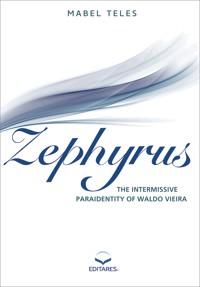
The E-book Zephyrus: The Intermissive Paraidentity of Waldo Vieira aims to present and analyse the evolutionary trajectory of the researcher Waldo Vieira (1932 - 2014), medical doctor, odontologist,lexicographer and proposer of the sciences conscientiology and projectiology, considering his retrolives and intermissive periods, like a brief multiexistential biography. The launching point of the analysis is the consciex known by the sobriquet Zephyrus, the designation by which Vieira has been recognized in the extraphysical dimensions since Antiquity.
Sie lesen das E-Book in den Legimi-Apps auf:
Seitenzahl: 316
Veröffentlichungsjahr: 2019
Das E-Book (TTS) können Sie hören im Abo „Legimi Premium” in Legimi-Apps auf:
Ähnliche

















Zephyrus – The Intermissive Paraidentity of Waldo Vieira
Original title in Portuguese: Zéfiro – A Paraidentidade Intermissiva de Waldo Vieira
Copyright © 2018 – Editares International Association
The authorial rights of this edition were graciously granted by the author to Editares.
The opinions expressed in this book are those of the author and do not necessarily represent the position of Editares.
ISBN: 978-85-8477-105-9
Translation: Maria Helena Balthazar, Rui Ferreira and Sergio Fernandes.
Revision: Igor Cabral, Jeffrey Lloyd and Juliana Nicolau.
Proofreading: Adriana Faria de Escalada and Ana Firmato.
Cover: Luciano Mello.
EDITARESINTERNATIONAL ASSOCIATION
Av. Felipe Wandscheer, 6200, sala 107, Cognópolis
Foz do Iguaçu, PR – Brasil – CEP 85856-530
Tel/Fax: 45 2102 1407
E-mail: [email protected]
Website: www.editares.org
ABOUT THE AUTHOR
Mabel Teles is a professor, a graduate in social communication, and specialist in the didactics of higher education with a master’s degree in business administration.
She encountered conscientiology in 1993 and, since 1994, has been a teacher and researcher, with international experience in the United States and Europe.
Author of the book Prophylaxis against Consciential Manipulation, several articles and verbetes of the Encyclopaedia of Conscientiology, she is currently a volunteer at UNIESCON, a conscientiocentric institution constituted by authors of conscientiological works.
SUMMARY
ABOUT THE AUTHOR
NOTE FOR THE ENGLISH LANGUAGE E-BOOK EDITION
ACKNOWLEDGEMENTS
INTRODUCTION
Section I
SERIEXIOLOGY
01. Presentation
02. Intermissive Paraidentity
03.Onomastics: The Origin of the NameZephyrus
04. Consecutive Personalities Of Zephyrus
05. Waldo Vieira: The resoma of Zephyrus in the 20th Century
Section II
INTERMISSIOLOGY
06. The Year 1100: A Glimpse of the Reurbex
07. Paraprovenance: Zephyrus’ Extraphysical Base
08. Interassistantial Interdimensional Communication
09. Resomatology: from Preresomatics to Rebirth in Monte Carmelo
10. The Role of Resomatic Attractor in the Conscientiological Maxiproexis
Section III
PROFILOGY
11. Paracastology: The Circle of Extraphysical Friendships
12. Zephyrus under the Optics of Conscientiometry
13. Prospectology: Reurbex on the African Continent
14. Final Considerations
BIBLIOGRAPHIC REFERENCES
GENERAL INDEX
GEOGRAPHIC INDEX
ONOMASTIC INDEX
COGNOPOLIS, THE CITY OF KNOWLEDGE
CONSCIENTIOCENTRIC INSTITUTIONS (ICS)
NOTE FOR THE ENGLISH LANGUAGE E-BOOK EDITION
The book that the reader has in their hands is the English language translation of the 1st edition published in the Portuguese, in 2014, by the publisher Editares.
The work presents the evolutionary trajectory of Brazilian researcher Waldo Vieira (1932-2015), proposer of the science conscientiology, and takes into consideration his past lives and intermissive periods. The guiding thread of the narrative lies in the study of the consciex Zephyrus, the designation Vieira has been known by in the extraphysical dimensions since Antiquity.
The book was primarily conceived through the compilation and analysis of content from 19 interviews with the researcher, carried out between 20 May 2011 to 7 October 2011, and later from 3 February 2012 to 25 May 2012. In the work’s Introduction the reader will find the full details and considerations of the research methodology applied in this study.
At the time of publication of the 1st Brazilian edition (2014), Vieira was still an intraphysical consciousness, and therefore, the verbal tense of the text’s narrative is in the present indicative. Vieira died on July 2, 2015, in Foz do Iguaçu, PR, Brazil, after experiencing a cerebrovascular accident (CVA) in the brainstem.
I wish to thank the helpful contribution of volunteers Maria Helena Balthazar, Rui Ferreira and Sergio Fernandes, responsible for the English language translation, and Igor Cabral, Jeffrey Lloyd, Juliana Nicolau and Ana Firmato, responsible for the revision.
The author
ACKNOWLEDGEMENTS
I wish to express here my gratitude to the consciousnesses that helped me in the elaboration of this book.
Firstly, my sincere thanks to my friend Paulo Andre Norberto, who provided me with a lead role in this research, and supported me in every stage of the work.
To the researcher Waldo Vieira, a cosmoethical example of interassistantial renunciation expressed in his self-availability in sharing his consciential microuniverse and personal evolutionary trajectory, the principal objects of the analysis of this consciential gestation.
To my evolutionary duo,Flávio Buononato, for the companionship, support, and enriching suggestions. And to Amaury Pontieri, for his support in the research.
To the invaluable team of volunteer-researchers: Eduardo Azevedo, Juliana Medeiros, Karla Ulman, Melissa Wisnieski, Patricia Pialarissi, Renata Pialarissi and Stefani Sabetzki.
To Cristiane Ferraro, John Paulo CostaandJulio Almeida for their revisions, heterocriticisms, suggestions, and insights extracted from conversations with this researcher.
To conscientiologists Djalma Fonseca, for his technical advice as a researcher of the School of Salerno, Laurentino Afonso in the areas of Etymology, Ancient History and Bibliology, and Laura Sanchez in the field of translation.
To researchers Alexandre Nonato, Dulce Daou, Luciana Ribeiro and Marina Thomaz for their timely contributions.
To Ruth Rocha, Sonia Siqueira Paranhos, Jarbas Paranhos, Nara Oliveira, Everton Santos, William Kunz and Selma Prata for providing biographical data and photographic material of Waldo Vieira.
To the volunteers of Editares, in particular, the expert revisers Erotides Louly, Helena Araújo and Ninarosa Manfroi, and Sandra Tornieri, the publisher responsible for producing this work.
To the book cover artist Luciano Melo, for the excellent work. To the team at Epígrafe, especially Ernani Brito, Rosemary Salles and Daniel Serzanink.
And, finally, a special thanks to the extraphysical helpers, for their tireless support and opportune inspirations.
INTRODUCTION
The book Zephyrus: The Intermissive Paraidentity of Waldo Vieira aims to present and analyse the evolutionary trajectory of the researcher Waldo Vieira (1932 - 2014), medical doctor, odontologist, lexicographer and proposer of the sciences conscientiology and projectiology, considering his retrolives and intermissive periods, like a brief multiexistential biography. The launching point of the analysis is the consciex known by the sobriquet Zephyrus, the designation by which Vieira has been recognized in the extraphysical dimensions since Antiquity.
The invitation to work on this project came to me in 2011 through the conscientiologist friend Paulo André Norberto, who at that time was interested in gathering historical material about specific nuances of Vieira.
Among the various research possibilities mooted at the time, was the study of the consciex named Zephyrus, Vieira’s intermissive extra identity or paraidentity, due to the originality and uniqueness of this theme in the intraphysical dimension, after it was publicly proposed by him in November 2008.
After Vieira’s consent on such task, Norberto started to address the work, inviting me to assume the leadership of the research, which resulted in the present publication.
Despite not hesitating to accept the proposal, I experienced an ambiguous satisfaction in that moment.
On the one hand, I felt motivated to investigate aspects of the evolutionary, multiexistential, multidimensional trajectory of the consciousness responsible for the intraphysical gathering intermissivists engaged in the development of the science conscientiology, one who received, in this current human life, the name Waldo Vieira.
That is, to research Zephyrus’ holobiography would allow me a better understanding regarding the traits, temperament, principles held and the trajectory travelled by this consciousness until now.
More than that, through the study of Zephyrus as a guinea-pig, I would have the opportunity to enter the extraphysical backstage of Evolutiology, comprehending some of the orienting pillars of the Interassistantial Multidimensional Maximechanism, in which he lucidly participates.
On the other hand, I immediately glimpsed some challenges. Firstly, this would be the first work published in the genre of holobiographic research, embracing the past lives and intermissive periods of the protagonist, and therefore, without methodological precedence or references capable to serve as support or orientation.
Several questions came to my mind: Which methods would I use to compile Zephyrus’ retroexperiences? Which criteria would I apply to define the structure and contents of the book? How would I elaborate an intelligible and didactical text, taking into account the different consciential states (intraphysical, extraphysical and projected), epochs and retrosomas experienced by the central character throughout the work?
This is the way I found to solve such research doubts.
Vieira’s retrocognitions or self-biographic holomemory constituted the main source of data for this research. To gather such information, Conscientiology researchers and I held 19 interviews with the researcher, in the period from 20 May 2011 to 7 October 2011, and later on, from 3 February 2012 to 5 May 2012, all of them filmed, resulting in 41 hours and 49 minutes of recordings.
Encounters were fortnightly, on Fridays, in the Tertuliarium at the Center of Higher Studies of Conscientiology (CEAEC), in Foz do Iguaçu, PR. Later on, the recording’s contents were transcribed by a team of conscientiological volunteers, allowing the detailed study of the subject and later elaboration of the book.
Other data related to Zephyrus was derived from conscientiological tertulias and minitertulias delivered by Vieira at CEAEC, and also from some rare bibliographical sources, mainly from the Spiritist area.
Historiographical research substantiated the socio, political, cultural and political context of the biographed’s retrolives. Data from the present existence together with interviews from Vieira and access to some of his personal documents through a couple, researchers Nara Oliveira and Everton Santos.
Through a judicious analysis of the material gathered, I chose the subjects considered as the base for the comprehension of the guinea-pig personality, taking into consideration 2 aspects: (1) the objective of highlightingthe protagonist, amongst the whirl of experiences narrated, and (2) the consistence of Vieira’s retrocognitive content, discarding vague and unspecific memories. The structure of the work was born from there.
In the first section, Seriexiology, I opted to attend to 4 principle propositions, namely: (1) to present the subject in itself, demarking the Zephyrus-Vieira connection; (2) to conceptualize the neoverpon intermissive paraidentity, explicitly noting Zephyrus’ case study, the book’s primary research objective; (3) to emphasize, among the retrolives remembered and divulged by Vieira, those more remarkable and priority that had decisive holokarmic repercussions in his Personal Evolutionary Register (PER); and, finally, (4) to present a short biography of the researcher, the current resoma of Zephyrus. Whenever possible, I sought to describe such facts and parafacts with a certain chronological continuity, in order to give meaning and order to dispersed retrocognitive information.
In the second section, Intermissiology, I approached some experiences of the consciex Zephyrus, mainly related to his last 2 intermissive periods, prioritizing the parafacts capable of clarifying his evolutionary role within the context of the reurbex, and particularly, in the extraphysical rapproachment of consciexes committed to activities related to the science conscientiology.
In the third part of this work, Profilology, I sought to analyse the protagonist’s consciential profile, through two specialties, namely: para-sociometry and conscientiometry.
In chapter Paracastology: The Circle of Extraphysical Friendships, I describe the set of more active and public helper consciexes involved in the activities developed by the researcher and intermissivists at Cognopolis Foz do Iguaçu, today, and whose roots, in most cases, are tracable back to Zephyrus’ past.
From the analysis of the quality of parabonds established and para-friendships cultivated until now, it is possible for us to comprehend a little more about Zephyrus’ sense of the priority, mainly regarding his choices related to social and parasocial conviviality.
In the chapter Zephyrus from a Conscientiometric Perspective I present traits and consciential attributes I consider fundamental in the structure of the personality of this consciousness. This gives rise, through observation and hypothetic inferences, to vestiges of his possible level of conscientiality and place in the Evolutionary Scale of Consciousnesses.
Beyond this, in the biographical narrative’s game of evolutionary mirrors, dissecting the attributes of a certain guinea-pig allows the reader to compare the biographed with themselves. This is according to the presupposition that biographies suggest that which is universal embedded in the particularities of a determined subject. Through biographies one sees general human nature, certain particular individuals and, ultimately, one’s own individuality (Vilas Boas, 2002).
Thus, throughout the entire work, and mainly in this section of the book, it is possible for the reader to seek in Zephyrus’ profile self-identifying aspects, and also possible absent traits (absentraits), that is, strongtraits to be developed in the seriexiological future.
Finally, in Prospectivology: The Reurbex on the African Continent, I present some hypotheses regarding Zephyrus’ and the conscientiological intermissivists group’s future, before ending the work in the Chapter Final Considerations.
In this gescon it was necessary to describe the consciex in different consciential states and epochs. To facilitate the reader’s comprehension regarding the chronemic and proxemic context of the narrative presented, I opted to refer to Zephyrus, when necessary, using 4 expressions:
1. Zephyrus. Relates to the consciousness in itself, independent on the dimension or stage of the narratives in which it appears.
2. Consciex Zephyrus. Relates to the period in which Zephyrus was in some of his intermissive periods, in the extraphysical dimension.
3. Conscin Zephyrus or resomated Zephyrus. Relates to a retrolife of Zephyrus, in which we do not know the name used by him.
4. Waldo Vieira or simply Vieira. In relation to Zephyrus’ current resoma.
All research presents some level of intrinsic limitation due to the methodological process itself. In this work 3 research limitations are highlighted, for example:
1. Memoriology. The priority source of information reported stems from Vieira’s retrocognitive contents. Thus, possible inexactness and mnemonic gaps permeate the text, mainly in relation to dates and the chronological timeline of the retrofacts recalled by the researcher and portrayed here.
Moreover, the retrocognitive memory, despite in certain cases providing the possibility to relive the past act in its full completeness, also passes through the process where the past experiences are remade, rebuilt and rethought, based on current ideas. No matter how authentic the remembering of a certain retrofact may be, the perception and interpretation of that very same occurrence, today, differ from the original, because individuals evolve, naturally recycling the way they face the self-experiences.
It is also important to highlight the reseracher’s natural retrocognitive gaps regarding self-retroexperiences, allowing me to narrate only a portion of his evolutionary journey.
2. Historical record. It was not always possible to form a comparison between the researcher’s retrolives and the socio-economic-political-cultural environment of the epoch remembered, due to a lack of historic records, mainly from the most remote periods. In addition to that the fact that a large part of the research narrates the protagonist’s paraexperiences, naturally making a factual counterpoint impossible.
3. Interpretation. Every biographic text portrays the biographed through the biographer’s eyes (Vilas Boas, 2002). Even if the latter follows rigorous scientific methodology in reporting the character, basing the narrative on a vast range of documented material, historic writing, and consequently, the biographies, become “truths interpreted” by the author, because they in themselves carry the impressions, values, visions of world and the cognitive level of who wrote them (Vilas Boas, 2002). Scientific neutrality is a utopia.
In this research I sought to support myself, prioritarily, on Vieira’s narratives, in order to maintain a constant source. However, at no time, did I wish to sustain the dream of scientific impartiality, so well preconized by certain materialistic researchers.
In this way, when constructing the text, I did not disconsider the self-cognition accumulated regarding the science conscientiology, derived from more than two decades of conscientiological volunteering, teaching and research.
Nor did I discard my considerations regarding the biographed, gathered over these same two decades, and more intensely since 2003, when I moved residence to the city of Foz do Iguaçu and started to have daily contact with him during activities developed at the CEAEC campus.
Thus, in this book the reader should not expect the author’s total impartiality regarding the object of research, even because this would be something unfeasible from a methodological point of view.
Following the same line plotted by biographer Alexandre Nonato, in the work JK and the Backstage of the Construction of Brasilia (2010), my intent here was to be as sincere and as frank as possible regarding my personal positionings and opinions, freely expressing my points of view and illations in the contexts considered pertinent.
In certain passages, for example, I present conjectures and propose inferences regarding the subject discussed. The intent, often, was to evidence certain evolutionary presuppositions implicit in the text, which could, if I stuck to only describing the fact or parafact, pass unnoticed.
In other circumstances, my intention was to share questions and hypothesis regarding the subject exposed, leaving it evident, when necessary, personal research doubts, while at the same time, instigating the readers’ mentalsomas.
Despite this work primarily being a study case, the ideal is for a self-critical reader to hover over Vieira’s person, however, seeking from the example analyzed, possible theorical clarifying aids regarding the evolutionary process inherent to each and every consciousness.
The value of a guinea-pig conscin is based on the cosmoethical content brought. Human personalities pass.The examples remain.
The cosmoethical exercise of intelligent refutation lies with the researcher-readers of this book, in accordance with the application of the Principle of Disbelief:
DON’T BELIEVE IN ANYTHING, NOT EVEN THE IDEAS PRESENTED HERE. RESEARCH, REFLECT, REFUTE AND HAVE YOUR OWN EXPERIENCES.
Concluding, I hope the present work contributes to clarifying, at least, part of the extraphysical approaches of the conscientiological maxiproexis, helping in the recovery of cons of already resomated intermissivists and of those who will resomate in due course.
Section I
SERIEXIOLOGY
01. Presentation
In one of thehundreds out-of-body experiences hadbyVieiraduringthe 1980s, the researcher saw himself projected inthe town squareofhis hometown, Monte Carmelo, in Minas Gerais. As usual, the role-based helper, a consciex knownby the nicknameTaoMao,accompanied himduring theunfolding ofextracorporealevents.
In that para-environment the presence of various consciexes was observed, these former citizens of the region were reunited at this extraphysical event.
At first Vieira did not understand the reason for why he was there,nor for the warm welcome given by the consciexes. After all, not all those present were contemporaries from his present life, that is, some had lived in the region of Monte Carmelo prior to his resoma, in 1932. Others were already adults during his childhood. So, what would be the reason for such affability and friendliness from these consciousnesses?
The answer to that question came suddenly when the researcher realized that the invitation to the extraphysical meeting had not been addressed only to the conscin Waldo, but also to the consciex Zephyrus. This was very familiar amongst the group since ancient times, including past lives in common in Greece and China, and also in the intermissive period, prior to the current life of Vieira. Zephyrus primarily participated in interassistantial activities in the communex called Ascension, located in the city of Patrocinio, MG, in which many of the consciexes present were assisted, some even during the resoma stage, in regions of Monte Carmelo.
This parafactoutlines, albeitsuperficially, the seriexiological interdimensional plot in whicha lucidconscin isinsertedin relation to their extra-identity.Under these conditions,the intermissiveparaidentityinsinuates itself into and influencesthe conscin’s interdimensionaldaily life, sponsoringthe amendmentof this currentlifewith preterit lives, particularly those relatedto the intermissiveperiods.
Thus, hasbeen Vieira’s existence, from the period in which he acquiredself-awarenessregarding hispersonal extra-identity, while a preadolescent. Theinformation reachedhimthrough the commentsof a knownmedium whoreceived a psychographedmessageon the subject, and also duringSpiritist deobsessionsessionsattended,where a certainconsciex mentioned hisidentity through in psychophonic dialogue.With time the boy’s parapsychismintensified,and he couldpersonally confirmthisparareality, through extraphysicalmeetingswithhelpers,during experiences of the phenomenon of conscious projection.
Vieirakept thispersonalextra-identity a secretfor decades. Very fewpeople, even in hisfamily, knew ofthisparafact, one who did though wasthe mediumChicoXavier(Francisco de PaulaCândidoXavier, 1910-2002).He received the information throughpsychographedmessages fromhis spiritual guide,Emmanuel, even beforeVieirastarted workingwith the mediumin theSpiritistMovementin 1955.
Withthis revelation, Emmanuel, in some way,tried toelucidateXavieras to theextraphysicalreality of the one who would come tobehis companion in assistantial worksfor nearly one decade.
Severalfactors ledthe researcher tomask hisintermissive paraidentity for so long. First of all, Vieiraaccessedthe parafact while still veryyoung, in the preparatory phaseof his proexis. Therefore, in a periodof life in which it had not yetbeenpossible for him to accumulate enough experiences ortheoricalachievements, capable ofleading him topublicly assume andsustain theextra-identity.
In fact, whowould have believed a teenager from the MinasGerais countryside who said he was Zephyrus? Zephyrus was one of thespirits who communicated toAllanKardec (Hippolyte LéonDenizardRivail, 1804-1869), the founder of Spiritism, which is also known as Kardecist Spiritism. Thisauthor’s hypothesisis thatthe boywould have beenjudged, at the minimum, as overlypretentious, if not, a lunatic.
Moreover, it is also possible to consider: from the pointof view ofinterassistantiality, what would have been the effectsor benefitsof such an expositioninthat environmentand at that evolutionary moment? Probably, none. Or, on the contrary, the consequencescould have beendisastrous, consideringthe dogmatic,spiritist environment in which theboy wasinsertedsince infancy.
Evenafter leaving theKardecist Movementin 1966and becoming an independent researcher, Vieirachose to maintaintheparaidentity a secret. He did not see a sufficiently mature interlocutor audience, capable ofassimilating the information in arationaland productiveway, according to the PrincipleofDisbelief.
Indeed,according toCommunicology, a determinedverponshould only bedisseminatedin the presence ofa critical mass able to understand itin an evolutionary constructive way. Otherwise, the ideal is towait for the momentandexistentialcontingenciesmore opportuneandpromising. Thus, onlyin old age, when already livingat the Centerfor the Higher Studies ofConscientiology(CEAEC in Portuguese) in Foz doIguaçu, Parana, Brazil, did the researchermake publichis personalintermissive paraidentity.
Despite theself-imposedsecrecy, the effects ofself-awarenessregarding this parafactdid not take long to have an impact inthe researcher’s intraconscientiality. Early onhe assumed the self-responsibility regarding the social and parasocial roleexercised, as he reports:
When I knewI wasZephyrus, my responsibilitiesincreasedand I prioritizedthe development of self-paraperceptibility. SoI did not needany externalinducementtodevelop my self-parapsychism. Theextra-identitywas reason enough.In addition, I organized my lifetocosmoethicallyhonorthis condition. I put the claritask above all. I learned earlyto livenaturally withtwo identities: one civil, human, and one an intermissiveextra-identity.After 14years of age I already had an idea of the basic“plot” of my proexis. At this ageI already knewwhat I should doin this life(Vieira).
In the next chapters, we will begin the study of Zephyrus, presenting possible origins of this name, and also some retrolives of this consciousness, including his most recent resoma.
But prior to that, to ground the basic guiding argument of this work, the neoverpon of an intermissive paraidentity will be conceptualized.
02. Intermissive Paraidentity
An intermissive paraidentity or extra-identity is of that lucid consciex who acts lucidly in prolonged interassistantial tasks in the extraphysical dimension or during intermissive period. They generally haveanother name or parasocialpresentation, whether a male or female para-appearance, which is different from the identitiesassumedinintraphysical lives, both in the distant past as well the more recent, successive ones. (Vieira, 2013).
The intermissive paraidentity results from working as a self-aware consciex in favor of others, along evolution. The accumulation of polykarmic services increases the popularity of the consciousness among those assisted, spontaneously generating, among them, a paraname or paranickname capable of identifying the consciousness. Hence, an intermissive paraidentity or extra-identity is born.
Therefore, aparaidentity iscreated, in a centrifugal manner in relation to the assister, via the established circle ofsocial and parasocialrelations, although it dependsdirectly onthebalance of the Personal Evolutionary Register (PER).
In some cases, the para-epithetcoined by those assistedis the same that the consciex had in some past intraphysical life, from the pointof view of the group’s actuation. Thus,theassistedtendtoidentify theassistantwith thesame name as theretro-life in which the interassistantialprocesseswere more intense, refined, comprehensiveand lasting. Thisis the case with the extra-identitystudiedin this book.
Such a facthighlights thesurvival of consciousnessupon the discarding ofthesoma, andthe relevance of the quality of intraphysical lives during the consciex’s intermissibility and viceversa.
They alsoreveal themultidimensional effectsoffriendshipscultivatedover evolutionary experiences. Legitimatefriendshipsare perpetuatedin time andspace,independent of thedimensionin which the consciousnessesmanifest themselves. No one loses anyone and like attracts like.
At this pointof the analysis, it is important to deepenthe role playedby thename itself in the construction of the personal and social identityof a specificconsciousness,and in the structuring of the extra-identity orintermissiveparaidentity.
According to Ziff, apud Bourdieu (2006, p.186), a name itself “is a fixed point in a world that moves” i.e., it designates the same object in any possible universe, both in different states of the same social field and in different environments of the same evolutionary moment. Therefore,it is aboutconstant andlastingsocial identity, capable ofguaranteeingthe individualityof a particularconsciousness in all areasin which theyintervene as anagent.
Thisnominalconstancyaffects notonlythe social universein which a personinteracts, but also inthe designated individual themselves, assuring the identityin the senseof a self-identity.
The name itself is a visible attestation of its carrier, and the foundation of the totality of the consciousness’ successive manifestations, over time and space, in many societies the most sacred duties for oneself and for evolutionary colleagues, in general, are taken as obligations with the name itself (Bourdieu, 2006).
Despite the name not being able to describe characteristics nor convey, sensu stricto, information about the object which it names, in sensu lato it is capable of transcending its symbolic, representative function, to be intertwined, in certain circumstances, with the designated individual’s social role.
Obviously thisoccursmore explicitlyinparticularcontingencieswhere a determined consciousnesshas, over time, establishedsignificantsocial interactions, greatlyinfluencingthe group’s membersin specific areas.
In the eyesof these individualsthe mere mentionof the evolutionarycolleague’s name may capture andevokenot onlytheir individualityitself(Intraconscientiology), but alsothe residual balanceorfruitsof what that individualapplied and sharedininterconscientialrelations(Interconscientiology).
This is the case with a healthy intermissive paraidentity spontaneously born among members of communexes due to the natural, functional necessity to name and individualize the extraphysical assistantial leaders with the greatest significance and influence in the Sociexes.
From the pointof view ofAlternatology, the extra-identityindicates thenatural, alternating,and on-goingrapport between the intermissiveperiods of determinedconsciousness(intermissive self-relay orextraphysicalcontinuity), andalsobetween the intermissionsandintraphysicalexperiences (intraphysical self-relay), which can be experiencedby individualswith reasonablemultidimensional self-awareness.
For purposesof analysis and study, here are 7 characteristics, nuancesandpeculiaritiesof everyintermissiveparaidentity, listed infunctional order(Vieira, 2013, p3482):
1.Consciex: is the identityof the extraphysicalconsciousness.
2.Continuity of the realego:portraysthe true personality of the consciousness or their real paraidentity.
3. Hololucidity: expresses the consciexwhen it manifests itself throughmegacons.
4. Uninterrupted paraidentity:indicates the explicit, fixed, and enduring paraname across intermissions.
5. Paragenetics:realisticallyexpresses the holobiographyorthe results of the set ofmultiexistentialexperiences.
6.Parahumanity: indicates the situation of the consciex inthe service of parahumanity.
7.Evolutionaryfixation: allows a multiexistential self-relay andlucidsubsumption tothe evolutionary maximechanism.
Identification of a possible personal extra-identity, orof another, bya conscinis a difficult andcomplex conditionto achieve, predominantlydue to thetranscendent,extraphysicalcharacter of the theme.
Theintraphysicalrestrictionusuallyinhibitsthe experience of paraphenomenaessential in the recovery of the intermissivememory, such as,for example, the phenomena ofretrocognitionandlucidprojection.
This explains thealmost absoluteignorance and subsequentcrassomissions on the topicby thevast majority ofconscins and, or currentlines of knowledge, whetherScience, Philosophy, Religion, or Parapsychology.
Even amongconscientiological researchers, the subject only officiallyappeared for debatein the public arena inNovember 9, 2008, morethan two decadesafterthe proposalof the science Conscientiology,through the entry Extra-identity, written by theorganizer of theEncyclopedia of Conscientiology, by WaldoVieira.
That is, it was necessary to wait for the parapsychic and cognitive maturation of the conscientiological intermissivist conscins, in order toreach a critical massable to understand, assimilate andexperience moretranscendentconcepts, withrationality, logicanddiscernment, without running therisk ofslippinginto folklore,legend,superstition, and generalizedmysticism.
An extra-identity is a transverpon that challenges the theorical cognition of neophilic scholars, and requires effort in research, debates, criticisms, and rebuttals.
The personal extra-identity is not recognized for nothing, in an egoic way. In general, the information is accessed by a conscin due to the needs of the current maxiproexis in which it is inserted.
If the informationis important in an intergroupcontext, with opportunities to reverberateinfavor of third parties, theextraphysical helpersthemselves are able tofacilitate access to the same. It is concluded thatdespite theintrinsicindividuality of anintermissiveparaidentity, it is treated as a cosmoethical and polykarmicneoverpon, in which the conscinis a lucidand active minipiece in the evolutionary maximechanism.
Differentinterassistantialandinterdimensionaldevices mayreveala particular person’s paraidentity. Of these, an intermissive self-retro-cognitionisthe mostpersuasiveand self-evidential phenomena, due to thedirect accessto one’s holomemory, without intermediaries.
Yet, enthusiasm for the extra-identity may also stem from those assisted intra or extraphysicals, who identify the conscin as being the same assistantial consciex known in a past intermissive period.
Assumption of an intermissive self-paraidentity requires a reasonable level of consciential maturity from the person, in order to know how to cosmoethically coexist with the onus and bonus of such a position.
An intermissive paraidentity reverberates in every area of the consciential manifestation, like an irradiating evolutionary core, equal to, for example, these 12 effects listed by topic in alphabetical order:
01.Agglutinatiology.The abilityto bring togetherdifferentconscientialprofilesto achieve a common project;
02.Self-stigmatization. Assumption of a healthy,evolutionary self-stigma, for the rest of the conscin’s intraphysical life. Theintermissiveself-paraidentity is undismissible.
03.Self-responsibility.Maximization ofself-responsibility in the face of assistantialcommitments.
04. Self-retrocognition. Potentialization of healthy self-retrocognitions.
05.Cosmoethicology. The maximum, theoretical and practical, refining of the Personal Code of Cosmoethics (CPC), in all the injunctions and multidimensional experiences, seeking to match, in intraphysical life, the evolutionary level of intermissive self-paraidentity.
06.Equilibriology.The potentialization ofinward balanceandthosenic rectitude.
07. Extraphysicology. The urbi et orbi valorization of the self-paraprovenance to the detriment of conditionings, the Zeitgeist, public opinions and intraphysical values.
08.Interdimensiology.Lucidexperience of interdimensionality,primarily acting in the intraphysicaldimension,from thesocial identityadopted in thathuman life, but also inextraphysicalcommunities, whenprojected outof the bodyand assuming, in these circumstances, the intermissive paraidentity.
09.Paracastology.Maximumengagement withtheteamexofrole-based helpers, co-authorsorcoadjutants ofgroup maxiproexis.
10.Paraperceptiology. Thenatural imposition of the development of self-parapsychism in a new soma, in order to increasethe recuperation ofmegacons.
11.Prioriology.Evolutionaryprioritization taken to its ultimateconsequences, discarding the steamrollerof useless thingsof human lifeand the dispensableself-mimesis.
12.Claritask. Emphasis on the assistantial works of the clarification task (claritask) as opposed to the consolation task (consoltask).
From the viewpoint of Evolutiology, due to the multidimensional nature of the theme, bearing an extra-identity is the natural path to attain the evolutionary plateaus of the semiconsciex and self-critical teleguided.
In the universe ofInterassistiology, one of the priority issues regardingthe conjunctureof bearing anintermissiveidentityisthe repercussionof the assistance given, capable ofgaining the appreciation ofconsciousnessesleading the evolution of this planet (Serenissimi; Free Consciexes), who are gratefulto the assistant for the help given, evenin certain occasions, to evolutionarycolleagues close tothem.
When reading the following chapters, the ideal is to keep this premise in mind. This will provide a better understand of the circle of interconsciential relations of the intermissive paraidentity studied in this work.
03.Onomastics: The Origin of the NameZephyrus
In general, there is a lot of folkloreandlegendsurroundingthe true originof thename of the consciex Zephyrus.
TheEtymology ofthe termZephyrusis from theLatin, meaning “west wind”, and this derived from the Greek Zephyros, meaning “northwest windgenerallyviolentor rainy; god whopersonifies it”. That is, for the Greeks, Zephyrusisthe mythologicalpersonification of thewestwind.
From a metaphorical point of view,the symbolismof wind iscomplex andtakes multiple facets. On the one hand,the wind, as an elemental forceof nature, isviolentandblind, symbolizing instability andfickleness. On the other, it has been considered,since antiquity, as a synonym forblowing, soul, spirit,or a spiritualinflux ofdivine origin(Brandão, 1986, p. 270).
In the Bible, the wind is calledthespiritof God that moved uponthe primordial waters. In Psalm104:4, winds areconsidered divine messengers, equivalentto angels. It wasa wind,for example, thatblowingwith energy, broughtto the Apostles,in the formof a tongue of fire,the thirdperson of the Trinity(Brandão, 1986, p. 270).
As aninstrumentof divine powerwinds vivify, punish, and teach, beingcapable oftranslatingcelestialemotions, from themosttender to fiery and violentwrath.
InGreek mythology, the winds wererestlessand turbulentdeities, storedat great costin deepcavesin the AeolianIslands.
They were distinguishedas4differentpersonifications: AquilonorBoreas, the north wind; ZephyrusorFavonio, the west wind; NotusorAuster, the south wind;andfinallyEuro, the east wind.
Also according toGreekmythology, Zephyruswas the son ofEosandAstreu, and brother ofBoreasandNotus(Brandão, 1986). Prior to beingin love with thequeenof springand flowers, Chloris, known toRomans as Flora, Zephyruswas a stormy wind, similar toBoreas, who used accustomed touse violence toabductthe wife.
Regarding thisdarkestpartof the mythof the godZephyrus, it is said thathe competedwith thegod Apollo for the loveof Hyacinthus, a young,handsome,andathleticSpartanprince.
Apollobecame the lover of the young man, making Zephyruscrazy withjealousy. Once, catching them bysurprisepracticing discus throwing,Zephyrusblew a strong gust ofwind diverting the discus from its course and hitting the headof Hyacinthus. Upon thedeath of the young man, Apollo created the flower of the same name(Bulnfinch, 2002, p.84).
The poetJohnKeats(1795-1821), apud Bulnfinch(2002, p.84), mentionsthismythologicalpassagein his book Endymion(1818), whendescribingwatchers of quoit-pitchers:
Or they might watch the quoit-pitchers, intent On either side; pitying the sad death Of Hyacinthus, when the cruel breath Of Zephyrus slew him,—Zephyrus penitent, Who now, ere Phoebus mounts the firmament, Fondles the flower amid the sobbing rain.
However, with time, to conquer his newloverChloris, Zephyrusbegan toblowgently, becomingthus the wind of lovers.
JohnMilton(1608-1674), apudBulnfinch(2002, p. 215), an English poet, alludedto Zephyrus’ love ofChlorisin his workParadiseLost (1667), when describingAdam,awake,contemplatingEvestillasleep:
… As through unquiet rest: he on his side Leaning half-rais’d, with looks of cordial Love Hung over her enamour’d, and beheld Beautie, which whether waking or asleep, Shot forth peculiar graces; then with voice Milde, as when Zephyrus on Flora breathes, Her hand soft touching, whisperd thus. Awake My fairest, my espous’d, my latest found, Heav’ns last best gift, my ever new delight, Awake, the morning shines, and the fresh field Calls us.
As the westwindwith a gentle, yet powerful, breeze, Zephyrussoftenedthe climateof Greeceand Rome




