


Erhalten Sie Zugang zu diesem und mehr als 300000 Büchern ab EUR 5,99 monatlich.
- Herausgeber: epubli
- Kategorie: Gesellschafts- und Liebesromane
- Sprache: Englisch
Here are 101 comics you should definitely consider reading if you haven't already done so already. Everything from Black Hole to Tintin in Tibet, Paper Girls to Preacher, Batman to Superman, The Fantastic Four to X-Men, Invincible to Irredeemable, When the Wind Blows to Ghost World. These are an essential comics and graphic novels that any fan of the genre should read.
Sie lesen das E-Book in den Legimi-Apps auf:
Seitenzahl: 441
Veröffentlichungsjahr: 2023
Das E-Book (TTS) können Sie hören im Abo „Legimi Premium” in Legimi-Apps auf:
0,0
Bewertungen werden von Nutzern von Legimi sowie anderen Partner-Webseiten vergeben.
Legimi prüft nicht, ob Rezensionen von Nutzern stammen, die den betreffenden Titel tatsächlich gekauft oder gelesen/gehört haben. Wir entfernen aber gefälschte Rezensionen.
Ähnliche




















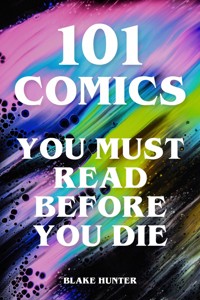
101 Comics You Must Read Before You Die
Blake Hunter© Copyright 2023 Blake Hunter
-
ContentsIntroduction101 Comics You Must Read Before You DieINTRODUCTIONHere
are 101 comics you should definitely consider reading if you haven't
already done so. Everything from Black Hole to Tintin in Tibet, Paper
Girls to Preacher. The choices that follow are of course subjective and
reflect my own personal tastes. If a comic is missing here it doesn't
mean it wasn't a great comic or isn't deserving of a place but simply
means I didn't have room for it! Fantastic comics I didn't find room
for include Chew, Monstress, The Invisibles, Maus, Superman:
Birthright, Transmetropolitan, and many others. Hopefully though there
should still be plenty in this book worthy of discussion and perhaps
even some comics that you haven't read yet. So, without further delay,
let's begin our list of 101 comics you must read before you die...101 COMICS YOU MUST READ BEFORE YOU DIEALIENS: OUTBREAK by Mark VerheidenAliens:
Outbreak was by Mark Verheiden and Mark Nelson and first published in
comic form in 1988. This is the obvious place to start with Alien
comics. The story is set ten years after the events of James Cameron's
Aliens and is essentially a sequel to that film. As the comic was
written well before Alien 3 appeared, Hicks and Newt are central
characters with Ripley mentioned but not part of the story. The names
Newt and Hicks were later ludicrously changed to "Billie" and "Wilks"
because these characters were killed off in Alien 3 and Dark Horse
wanted continuity with the film series.The original Outbreak
was not coloured and had atmospheric black and white art. Outbreak
begins with a 'Ten Years Later...' blurb. Newt is now a young woman
being held in some sort of high tech institution facility and plagued
by nightmares about her encounter with the alien creatures on Acheron -
the bleak planet colony where everyone apart from her was wiped out.
Corporal Hicks, one of only three survivors from Aliens with Newt and
Ripley, is also having nightmares.Hicks is in jail on drunk and
disorderly charges and with his acid scarred face he's had a tough time
since he got back from Acheron. Everyone is eager to keep Hicks at arms
length for fear of what he might have contracted from the aliens. Hicks
is released though by some high ranking government officials after a
junked freighter brings back one of the aliens before it is scuttled -
the alien still managing to kill some 'Coast Guard' employees who
worked getting rid of derelict ships in orbit. A character named Orona
tells Hicks that they have course trajectories from the destroyed ship
and now know where the alien homeworld is. "You seek redemption," Orona
tells Hicks. "I seek specimens." Hicks is asked to lead a mission to
the alien homeworld and decides he will rescue Newt first and take her
with him.What Hicks doesn't know is that a ruthless and
powerful company known as Bionational intends to be the first to get
hold of the alien creatures for biological weapons purposes.
Bionational secretly launches its own ship to stop Hicks and the
government mission at all costs. The company has also got hold of an
officer from the freighter that brought an alien back to Earth after
intercepting his escape pod. He is now in a medical lab being monitored
with one of the facehuggers attached to him. As if all of this wasn't
enough, a sinister cult group has somehow gained an image of the alien
creature and begun to worship it. They are also very eager to make
contact with the aliens at any cost.Outbreak is a good read on
the whole. It's dark and complex, the black and white art is very
effective and at over 157 pages it will keep you occupied for a few
days. The story here is far more inventive and interesting than the one
used for Alien 3 and it does make you wonder why they made that film
with such a basic story when there were endless ideas for the Alien
series floating around. Ripley is not in this one for some reason
(although she returned in later comics) but the story uses Hicks and
Newt in a competent way, both fleshing the characters out in new
directions and still giving them the baggage of Cameron's Aliens.We
get an ambitious complicated plot in Outbreak where no one can be
trusted - least of all governments and powerful companies. The comic
picks up on the first two Alien films and assumes you know them well
with flashback scenes for Newt and Hicks and much more about the origin
of the aliens and how they may have been released from their natural
environment to wreak havoc in the universe like a virus. I'm sure many
would prefer this sort of backstory for the aliens over the one Ridley
Scott explored in Prometheus and Alien: Covenant. The concept that the
aliens are a mysterious unfathomable species from a bleak and
mysterious planet is simply more compelling. They weren't created by
anyone. They just exist.Outbreak is quite gruesome at times and
the aliens are certainly well drawn and brought to life - with some
great drawings of the Alien Queen in particular. The story contains
some nice ideas and touches too like the way that television is now
reduced to a ray that taps into your retina and automatically changes
when you want to look at something new. With so many channels,
television became something new and uncontrollable dominated by
religious groups - like the cult group that worships the alien.The
story is about the redemption of Hicks and the general hubris of man in
believing that he can somehow control the alien creatures to use for
profit. Humans believe technology has allowed them to evolve beyond
hunter and prey but they are of course very wrong and all hell breaks
loose in a variety of ways. The character of Newt is quite nicely
developed in the story. Hicks rescues her when the asylum is about to
wipe her memory because if she doesn't remember Acheron then the
sacrifice of that mission will only reside in him.In this story
humans are just as bad as the aliens and tend to deserve whatever comes
around to them. It is quite interesting that the book is just as
concerned with political conspiracy and corporate ethics as alien
carnage and fleshes out the background themes that were present but
never completely dealt with in the first two Alien films. This is a
strong comic, if perhaps a little dense at times. Once or twice one
does struggle slightly to remember exactly who is who. The black and
white (in the original edition) art is surprisingly effective, we get a
trip to the alien homeworld, much speculation on the aliens' origins
and nature, plus the beginning of what might possibly be the end for
planet Earth.ALIENS Vs PREDATOR OMNIBUS VOLUME ONE by VariousAliens
Vs Predator Omnibus Volume 1 is a 2007 compilation by Dark Horse of the
comic series of the same name and collects issues that date back as far
as the late eighties. The Alien and Predator film franchises may have
petered out sooner than expected but the memorable creations of HR
Giger and Stan Winston got a new lease of life in comics when someone
had the clever idea of pitting them against one another in the most
anticipated monster smackdown since King Kong fought Godzilla. I think
the stories in the Aliens continuation comics were more interesting and
inventive than the screenplays for the last couple of Alien films and
the Aliens Vs Predator comic - on the evidence here - is also a lot
better than the two very forgettable Aliens Vs Predator films we were
served up a few years back. This was an obvious case of a decent comic
not really working as a film for some reason and the main storyline in
this graphic novel is far more engaging and compelling than the one
used in the big screen incarnation. This is a fairly large book (over
400 pages) and made up of several different stories that are for the
most part enjoyable and never dull. Some of these are only a
couple of issues long and the most salient part of the collection is
the title story at the start of the book. It begins on Ryushi, a far
distant planet that has only just recently been colonised by humans.
Ryushi is a sun baked desert planet with nineteen hours of daylight and
run by the Chigusa Corporation (this comic derives from that period of
history when America was paranoid that Japan was on the verge of
becoming the greatest economic superpower in the world and would
probably run just about everything in the future - including space).
The smallish colony on the arid planet is made up mostly of ranchers
and cowboy types who raise quadrupedal ungulates called rhynth
(basically alien cows I suppose) for export. It's a lucrative business
apparently and Ryushi looks a lot like a landscape in a Western film
albeit one with two suns and mountains that have a strange pink hue. What
the Chigusa Corporation and the colonists on the planet don't know is
though that Ryushi has been used by the Predators as a hunting ground
for many centuries. We learn that the Predators have been traversing
the galaxy and seeding planets with Alien eggs in order to give them
lethal and challenging game reserves worthy of their legendary and
ruthless hunting abilities. These Predators do need to find some new
hobbies I think. They should try staying in one night with a cup of tea
and relaxing. One of the planets they seed Alien eggs on (via a remote
control shuttle of some sort that lands undetected by the colony
sensors in the desert) is Ryushi. When the Alien eggs infect one of the
rhynth (the alien cows in case you've forgotten already) it becomes a
host for an Alien Queen. Carnage quickly ensues and the planet
soon has a virtually unstoppable infestation of Aliens. The only sure
defence against the Aliens is probably to be on a different planet.
When the Predators show up to hunt the Aliens the human colonists are
now caught in the middle of this vicious interstellar skirmish and a
three way battle breaks out. But the Predators were unaware that an
Alien Queen was left here by their shuttle and they might have bitten
off more than they can chew just for once. They may even need some
human assistance despite their natural inclination to hunt us for
sport. The art in Aliens Vs Predator is not always spellbinding but
this is an entertaining enough comic that fans of these famous
cinematic characters and comics in general should enjoy. There are
different artists and writers involved as you work your way through and
so unfortunately the collection never really has the same atmosphere
throughout and often feels quite different from one story to the next.
Sometimes the art is slightly random in its structure and then
elsewhere it will be very traditional like an old fashioned weekly
comic. I thought the art in the Aliens individual comic titles was
better to be honest but are some striking and enjoyable flourishes
here. The central character here (and essentially the
Sigourney weaver of the comic) is Machiko Noguchi, the Chigusa
Corporation's administrator. She begins the story as the corporate boss
in a business suit, completely detached and aloof from the planet and
workers she has been sent to preside over. Noguchi can't seem to put
her stamp on Ryushi and make any connection to the ranchers but all of
this changes when the Aliens and Predators arrive. Noguchi helps to
save the life of a Predator named Broken Tusk and is given the mark of
his clan out of respect. She becomes an action heroine. So the
Predators now treat her with respect and she becomes like an adopted
Predator, living with them and becoming a part of their hunting
expeditions. Noguchi has a story arc that makes Halo Jones
look like Thora Hird. Further story arcs involve the investigation of
the loss of the colony on Ryushi by soldiers from Earth and a stand-off
with the Predators results with Noguchi caught in the middle between
her adopted race and her true species. The comic is not Alan Moore n
terms of subtext and depth but it does quite a nice job of introducing
some interesting themes about loyalty and what it means to be human.
The art in the first part of the story seems very old fashioned (it
becomes much glossier and more modern feeling in later arcs) but I
never really disliked any of it. There is a nice splash page in
particular of a desert scene on the colony, the two suns high in the
sky and the skeleton of a rhynth sitting on rocks. Some of the
architecture of the colony is a nice riff on James Cameron's Aliens.
The Aliens vs Predator action - when it finally arrives - is a lot of
fun. The Predator shuttle making its ay through the atmosphere
of the colony to deliver its deadly payload it is done in an
entertaining three panel down the page format with splodgy yellow
vapour trails adding a pleasantly psychedelic tint to the page. The sun
baked location (in contrast to the cold metallic spaceships and dark
corridors of the films) One of the things I actually liked most of all
here was a black and white prologue of the Predators leaving Alien eggs
on a planet (where the curious wildlife soons falls victim to the
facehuggers) and then returning to hunt Aliens in what appears to be a
giant swamp. They even have what looks to be a younger
Predator with them being taught the rules of the hunt. The whole
sequence (which lasts for several pages) is juxtaposed with bored
computer programmers on Ryushi sitting in a control bored and pondering
how their job is one that anyone could do. They don't really feel alive
or do something that gets their heart pumping and go into something of
a rant against technology. One of the most interesting things about
this comic I think is the way that it provides more background to the
Predators and their traditions. They might be intergalactic serial
killers who live to kill things but the comic always makes them seem
quite noble with their own codes and sense of honour. They are a
warrior society where everything revolves around hunting prowess and
being the strongest and most determined. One of the best stories here
simply involves a Predator hunt and features little or no dialogue.
Aliens Vs Predator Omnibus Volume 1 is an entertaining read if you are
a fan of the characters. It isn't as gruesome as you might expect
although the language is occasionally a little crude and might be
unsuitable for younger readers. ALL STAR SUPERMAN by Grant MorrisonAll
Star Superman is a collected comic series by Grant Morrison and Frank
Quitely. This is an attempt to do something slightly new with the
character and present him in a more vulnerable and human light.
Superman is the most famous of all superheroes but some feel that the
character is constricted by the fact that he is essentially an Earth
bound God and indestructible. It's sometimes difficult to generate a
sense of struggle and danger for Superman in the way that one can with
characters like Batman and Daredevil, even Spider-Man. A notable
exception was the Death of Superman arc in the weekly comics where
Superman died (he was reborn in the end of course) preventing a
rampaging alien monster known as Doomsday from trashing Metropolis. All
Star Superman is not bound by the continuity of the weekly stories and
has an interesting and relatively bold (if episodic) premise sort of
along these lines too. In the book Superman saves a team of
sun exploring astronauts working for P.R.O.J.E.C.T. from a monstrous
Lex Luthor clone and is left with even greater powers - a bioelectric
aura he can project. However, this was all planned by Luthor as the
final demise of the Man of Steel. Superman is now overwhelmed with
yellow star radiation and while it has made him even more powerful he
is told by eccentric super scientist Dr Quintum that it is also killing
him and that he now has a year to live. Superman must now put his
affairs in order and decide what to do with this knowledge. He keeps it
a secret from the world at large but decides that he will tell Lois
Lane and reveal that Clark Kent is Superman so he can spend his
remaining time with her (in the comics he'd already told her that he
was Superman but this is a stand alone story arc that does its own
thing). Meanwhile, a time traveller from the future named Samson tells
Supeman that before he died he completed twelve mythical tasks like
Hercules. Ka-El soon his hands full with all manner of problems
involving Black Kryptonite, Bizarro world, Jimmy Olsen, Lex Luthor,
Supermen from the future, and more besides.This is an
imaginative comic but not quite a great one. One slight reservation I
did have was with the art. It is striking at times but it has a glossy,
blocky computer artificial feel that reminded me somewhat of that
terrible The Dark Knight Strikes Again sequel by Frank Miller. The art
and (especially) the story here is far superior but this particular
style of art is not my favourite by any means. Superman is drawn to
look very unrealistically comic book with a bulky body and a huge
superhero chin. It's effective at times and there are some spectacular
panels but I prefer comic art that is less alternate world surreal and
slightly more down to earth or conventional comic book. It is
quite interesting though the way that characters are interpreted in
different ways visually and the contrast adds a layer of extra
interest. Lois Lane is very period supermodel femme fatale and drawn in
a different style to Superman. I actually think it's one of the better
depictions of Lois Lane in the Superman graphic novels I've read
recently. While this is not your typical Superman story and it
eventually becomes incredibly strange (even a little circuitous and
confusing), what the author does well here is to present Superman/Clark
Kent and the familiar supporting characters in a fashion that we
recognise from the other incarnations of this property. This is still
the Superman we know but just in a very different situation to the ones
we usually see him in. If this was a film it would be called "high
concept" for the central premise. We assume that Superman is immortal
so the conceit of having him face up to death and the time he has left
creates some interesting places for the story to go.There is
some inventive stuff here that makes for some enjoyable panels and
scenes. A wonderful splash page of Superman's lonely ice frosted
Antarctic Fortress of Solitude where he takes Lois Lane to reveal he is
Superman and that he is dying. There is a widescreen feeling to All
Star Superman at times that works very well. They have dinner in a
restored stateroom of the Titanic and Lois is rather wary of him at
first because he has new powers and is acting strangely. When he
reveals he is Superman for the fist time she refuses to believe him and
suspects it might be a prank. A natural reaction perhaps but Lois Lane
must be a bit slow to have spent all that time Clark Kent and never
realised that he's Superman without the glasses. I suppose it's only a
comic. One of the twists here is that Superman gives Lois the
temporary powers of a Kryptonian so that she can experience what it is
like to be Superman (or Superwoman in her case). They fight side by
side and travel from the surface of the moon to the depths of the
ocean. This section is generally well done and explores the humanity of
Superman. He might be an alien named Ka-El but he's also a bumbling
mild-mannered reporter named Clark Kent. They are one in the same and
both a part of him. What I liked about the Fortress of Solitude section
and the Lois/Clark relationship here was that it stressed how lonely
and difficult it must be for Superman to be the only one of his kind on
the planet and have to keep his secret to himself. No one could truly
understand what it was like to be him - until Lois. His act brings them
closer together and makes him feel like less of an outcast.I
liked the fact that there was a distinction between Superman and Clark
Kent (sort of like Christopher Reeve did in the films) as the weekly
Superman comics I use to collect just had Clark Kent as cool and
collected as Superman so there was no real difference between them. The
episodic structure means this is a collection of stories but they are
all relatively interesting even if the book does run the slight risk of
disappearing up its own yellow star when it becomes more complicated.
The depiction of Lex Luthor is excellent in Al Star Superman. He is
incredibly clever, ruthless and dangerous just as Luthor should be. There
is a good story here where Luthor is in prison for his crime and Clark
Kent goes to interview him. I also liked the brief origin of Superman
we get and the flashbacks to the young Clark Kent in Smallville where
he is visited by Supermen of the future (it's a long story). This is an
affectionate and thoughtful riff on the Superman legend if not quite
the classic comic that some have suggested. There are certainly many
nice little touches though that I did enjoy. Like Superman having a key
to his Fortress of Solitude but the key being so heavy that only he can
pick it up. The irony of the thing that gave him his powers also being
the thing that might kill him is also a nice conceit I think. Perhaps
the greatest moment in the book comes when Superman takes to the air
and we get a wonderful two page spread of him in flight. This taps into
the mythic nature of Superman and the iconic status of the character. ARKHAM ASYLUM by Grant MorrisonArkham
Asylum is by Grant Morrison (writer) and Dave McKean (art) and was
first published in 1989. This is one of the more acclaimed of the
Batman comics for its somewhat avant-garde and impressionistic approach
but it will not be for everyone and those expecting a traditional
Batman story with spandex clad fisticuffs and a square jawed hero who
is completely sure of himself will probably come away disappointed. The
book is deliberately dreamlike and strange and a reaction to the gritty
and realistic (as far as comics are ever very realistic) eighties
reinventions of Batman by Frank Miller in particular. The
story has Arkham Asylum (the spooky Gothic institution that houses the
insane criminals of Gotham City) being apparently taken over by the
nutty patients who live there. Commissioner Gordon alerts Batman to
this worrying development and tells him that, furthermore, the super
villain patients have declared that if Batman does not go to Arkham and
meet with them in person they will kill the staff members they are now
holding hostage. In order to hasten Batman's arrival, the most
notorious inmate "The Joker" kills one of the guards and then prepares
a challenge for when the Dark Knight arrives. Batman will have
one hour in the labyrinthine dark and shadowy asylum to escape before
one of his rogues gallery is sent to hunt him down. But Joker cuts down
this time frame under pressure from the other villains in the
institution and Batman soon starts to have encounters with some of his
most famous and disturbing old foes. More than that though, he starts
to question his own sanity and feel as if he is partly responsible for
Arkham. He has been feeding them dark souls down the years afterall and
his own schizophrenic nature and psychosis could be interpreted as
being every bit as bizarre as the colourful and deranged characters he
is constantly catching and sending to Arkham. The story also
includes a parallel origin of Arkham and the history of the asylum's
founder - Amadeus Arkham. Amadeus Arkham ended up as a very mad and
dangerous patient in his own asylum and we will learn all about his
dark history. Batman: Arkham Asylum is unavoidably pretentious at the
best of times but an interesting attempt to do something slightly
different with the famous hero and present both him and some of the
more famous characters in the Batman universe in a different light. We
are used to seeing Batman as a very driven and focused character, a
dominant one. Here he is stripped of those qualities and rather
confused and frozen. Trapped in Arkham and forced to question the
nature of himself and his enemies. He dresses up as a giant freakish
bat and haunts the night, clambering over rooftops and roaming through
alleyways. He's not exactly the picture of sanity himself is he? The
book is very surreal and seems to take a lot of inspiration from Alice
in Wonderland. It's very allegorical and symbolic and Batman is like a
fuzzy never quite distinct shadow who floats through the asylum as
nightmarish depictions of some of the villains flit in and out of the
story. The book is designed to look as if we are witnessing a strange
bizarre dream and the art is very trippy and off kilter in a fashion
that tends to divide readers. You'll either admire it or find it
off-putting. The bonkers pastel style of McKean takes some getting used
to but once you do settle in the atmosphere and weird aura of the story
you do start to appreciate it more and more as you progress through the
comic. One thing that the artist does well here I think is to give us a
very startling and scary depiction The Joker. He draws him in a very
manic and horror funfair way and the Joker art here was a big
inspiration to Christopher Nolan and Heath Ledger when they made the
film The Dark Knight. The Joker's smudged makeup and altogether
ghoulish appearance. There is a fair amount of Jungian
psychology, metaphor and symbolism in the story and I did like the way
the symbol of the bat was used in the backstory in particular. There is
a bit of Norman Bates in here too I think. It doesn't feel terribly and
completely out of the ordinary to delve into the relationship between
Batman and his crazed enemies - see how alike they are and what
qualities they (but might have to hold in check in the case of Batman)
- but Arkham Asylum is always interesting and sometimes captivating
with the strange but glossy art that is like a nightmare or dream that
always remains slightly ephemeral. What the style does do is give one
the impression that we are witness the wispy frazzled fragments of a
story and don't quite have everything at our recall, just in the way
that dreams are remembered as fleeting fragments of things that you can
never quite seem to piece together or fully remember. This is an
effective approach and the artistic style makes perfect sense for this.
The story is tightly woven and it is impressive the way that
Arkham becomes like a character in the story. It is depicted as being
like a huge cathedral or abbey inside. Almost anachronistic and a place
steeped in madness where almost anyone would struggle to retain their
sanity even if they had any in the first place. Batman's fear -
encouraged by the wily Joker - is that Arkham might be his true home.
Perhaps he belongs in there with all the other lost souls. I feel like
I've seen this type of thing done many times with Batman (I remember a
DC Batman Annual that was almost identical) but one would presume that
it was slightly more fresh back in 1989 when the comic made its first
appearance. You get encounters with a few of the other rogues
in the roster of Batman villains here although none are of the
traditional swinging from alleyways, gas bombs, and punch outs. The
depiction of Two-Face is excellent. He has been given a tarot deck and
dice by one of the therapists in order to show him that he doesn't need
his coin (which when flipped decides if he is going to be nice or
nasty). Two-Face though is now more insane and troubled than ever and
can't even make the most basic decision for himself. If he had to
choose the cereal in the supermarket he would honestly be there for
weeks just staring at the Weetabix and Coco Pops. There are encounters
with Clayface and Killer Croc (which is one of the more violent ones)
and Batman also meets a very disturbed incarnation of the Mad Hatter.
Morrison gives the Hatter's obsession with Alice in Wonderland a dark
and modern twist. While you are sometimes in danger of
submerging into the stylistic gloom and sinking and sometimes yearn for
Batman to snap out of it and just karate kick or punch someone in the
face or something I did like the backstory they provide for the founder
of the asylum and Dr Charles Cavendish (Arkham's administrator and one
of the hostages) is used in a pivotal and interesting way in the story.
All of the major characters (including Two Face) are given memorable
lines and panels at key moments. There is some grisly imagery in the
book and its more surreal and dense approach makes it unsuitable for
younger readers but if you are a fan of Batman and looking for
something slightly different then this is certainly worth a look. It
isn't an insubstantial read in terms of pages but I did find myself
wishing it had been a little longer though and a bit more fleshed out
in parts. These quibbles aside this is a striking and interesting
comic. ASTERIX AND CLEOPATRA by Goscinny and Uderzo Asterix
and Cleopatra is the sixth book in the classic Asterix series by
Goscinny and Uderzo and was first published in Pilote magazine in 1963.
The book, which gently spoofs the 1963 Elizabeth Taylor film Cleopatra,
is one of the most popular and famous in the series and begins in
Cleopatra's lavish palace at Alexandria. Julius Caesar is present and
irritates Cleopatra when he declares that Egypt is a decadent nation
only fit to serve under the Romans. When Cleopatra reminds him that
Egyptians built the pyramids and great temples, Caesar is unimpressed
and jokes that all they do now is wait for the annual flooding of the
Nile. This is the last straw for a furious Cleopatra who announces that
in order to prove that the Egyptians are still a great people they will
build a magnificent palace for Caesar in Alexandria in just three
months. An amused Caesar replies that if this unlikely feat is
accomplished he will indeed admit that Egypt is still a great nation. Cleopatra
immediately summons Edifis, the best architect in Alexandria ('Which
isn't saying much,' admits Cleopatra!), and informs him that he has
only three months to build a great palace for Caesar. If he succeeds he
will be covered in gold and if he fails he will be thrown to the
crocodiles. Edifis is unsurprisingly rather unhappy at this new
assignment as it appears to be an impossible task requiring almost
supernatural powers. But then he remembers somebody who might be able
to help. None other than his old friend Getafix, the wise druid who
lives in the Gaulish village that continues to defy Roman rule. When
Edifis travels to the village he receives a warm welcome and Getafix
tells him he would be delighted to help as he'd wanted to visit
Alexandria again anyway to look up something in the library. Asterix
and Obelix (of course) will go too as they all seek to help Cleopatra
put one over on Caesar and stop Edifis from being thrown to the
crocodiles.Asterix in Cleopatra has just about everything you
could ask from an Asterix book. The story is fun and clever, the art is
superb, some great characters are introduced, and the book is
consistently amusing and entertaining. The opening pages immediately
set up the task that our heroes will be charged with and I love the way
we move from Cleopatra's magnificent palace to the Gaulish village
where it's snowing and Asterix and Getafix are playing a game of dice
in a cosy hut with a log fire roaring away in the background. The
speech by Chief Vitalstatistix as the party prepares to leave is great
too. 'You, my friends, are to represent the spirit of Gaul on the banks
of the Nile! Show yourselves true-born Gauls, by Toutatis, and may the
sky never fall on your heads!' Some lovely art here of ships at sea and
a classic encounter with the incompetent Barbe Rouge inspired pirates
who always seem to end up scuttling their ship. 'One more classical
remark from you and I'll make you eat your wooden leg!' There
are many memorable moments in the book with all the jokes and some
wonderful panels that catch the eye. A lovely lighthouse at night panel
('A tower to guide ships?' ponders Obelix. 'These Egyptians are
crazy!') and a great illustration when they approach Alexandria in
their sailing ship. Some good visual jokes too when Getafix, Asterix
and Obelix visit Edifis at his own (very shoddy and wonky) house and
realise he really is a terrible architect. Uderzo's art is a delight in
Asterix and Cleopatra and he really makes the most of the location with
wonderful interiors and great landscape panels. I really love the
panels here when Getafix, Obelix and Asterix are locked inside a
pyramid by forces working for Edifis's arch rival Artifis, becoming
trapped in the maze like corridors. 'I am very much afraid this might
be the end our adventures, by Belenos!' admits Getafix. This section
includes something very rare indeed when Getafix, for once, allows
Obelix (who fell in the magic potion as a baby) to drink some magic
potion in order to break down a heavy door deep within the pyramid.We
learn here how the Sphinx lost its nose (in typical Asterix style) and
there are some nice twists and turns in the story when Caesar tries to
interfere in the process. I liked Cleopatra's food taster too, this
character providing some good panels, and there is a clever bit when
our heroes are framed by a poison laced cake being sent to Cleopatra in
their name and Getafix must act quickly with one of his potions. It's
great fun to see Getafix have a larger than usual role in the story and
he has some good moments here. 'These pyramids built by the Egyptians
as tombs constitute one of the wonders of the world!' Getafix tells
Obelix as they gaze out at them. 'Magnificent! From the summit of these
pyramids twenty centuries look down upon us!" Cleopatra is a
lot of fun in the book too and - with her famous nose and range of
elaborate costumes - is given a lot of personality and some nice lines.
I loved Cleopatra's visit to the building site, on a giant throne like
a gold Sphinx being pulled by dozens of slaves. 'Oh, don't stop! I'm
just paying a quiet visit. Incognito. Do go on!' It's a slight shame
the old cover (with the legend 'THE GREATEST STORY EVER DRAWN - 14
litres of Indian Ink, 30 brushes, 62 pencils, 1 hard pencil. 27
erasers, 1984 sheets of paper, 16 typewriter ribbons, 2 typewriters,
366 pints of beer went into this creation!') seems to have been phased
out but, overall, Asterix and Cleopatra is an excellent entry deserving
of its fame and reputation and sits proudly at the Asterix top table
with the very best entries in the series. The story is good, the jokes
are funny and the art is superb. Definitely one of the best books in
the Asterix series and highly recommended for readers of all ages.ASTERIX IN SWITZERLAND by Goscinny and Uderzo Asterix
in Switzerland is the sixteenth book and first appeared in 1970. The
story revolves around a crooked and decadent Roman Governor named
Varius Flavus who has been doing some rather creative accountancy,
embezzling the taxes for himself and sending only a token amount to
Rome. However, he has some explaining to do when Quaestor Vexatius
Sinusitus arrives from Rome to look at his books and is appalled by the
debauched manner in which Flavus lives and runs his affairs. Flavus
knows he will be ruined if the Quaestor examines his finances and so
poisons him with a bowl of vegetable soup the clean living guest
orders. The bedridden and ill Quaestor is now at the mercy of Flavus
who deliberately brings in incompetent doctors to lessen his chances of
survival.The Quaestor decides his only option is to get a
secret message to Getafix, the famous druid of the Gauls, in the hope
that Getafix can cure him. 'I'm always bound to help sick people,' says
Getafix when told his services are required. 'Even Romans.' With
Asterix and Obelix, he travels to see the bedridden Quaestor and
correctly deduces that he has been poisoned on purpose and that Flavus
(who is obviously very unhappy to see Gauls arrive) was the culprit. To
save him from Flavus, Getafix says that Quaestor Sinusitus must stay in
the Gaul village under his care and then declares that only a potion
containing a flower called the silver star can save his life. The
flower only grows in the mountains of Helvetia (Switzerland) and
Asterix and Obelix are dispatched to go and find it. Flavus must stop
them at all costs and sends a warning to his (equally corrupt) Swiss
based colleague Curious Odus to halt them at the border...Out
of the Asterix books I've read since picking them up again this is by
far the best one. The introduction to Varius Flavus was inspired by
Fellini's Satyricon and depicts him at one of his 'orgies' where
everyone is lying around smeared in food and a visible odour wafts past
as flames crackle and portly dancing girls put on a show. People eat
with their hands and you can see a woman with a red mask whipping a man
she is sitting on top of! I'd honestly forgotten Asterix books could
ever be this dark and risque. When the Quaestor is poisoned we see him
in bed looking a zombie shade of green as the wicked Flavus waits for
him to die. What I really liked about this story was the high and
deadly drama of Roman backstabbing and deceit used as a backdrop with
Asterix and Obelix's mission a vitally important one because they have
to save the life of an innocent person.I liked the way that
Getafix quickly gathered what was going on between these Romans but
kept it to himself in order to save the Quaestor from Flavus and of
course it was refreshing too to see the Gauls make a friend out of a
Roman for a change. Asterix in Switzerland has a nice comic contrast
between the depraved gluttony of the Romans and the straight-laced
Swiss who infuriate the former with their habit of tidying up all the
time. 'And as for their mania for cleanliness! An orgy is supposed to
be dirty! Stop mopping that floor by Jupiter!' There are some
surprisingly adult moments in the story with the sado-masochistic
Romans literally covered in melted cheese and then demanding - as part
of a game - that someone be whipped for losing their piece of bread in
it! Naturally, there are plenty of jokes about clocks and also banks -
with a memorable section where Asterix and Obelix hide in a bank vault.Athough
this volume is darker than most (if not all?) Asterix stories there is
still the usual quota of humour right from the beginning with Chief
Vitalstatistix firing his shieldbearers for dropping him one too many
times and giving the job to a reluctant Asterix and Obelix. Their
disparity in height leads to Obelix carrying Vitalstatistix on his
shield alone with one hand like a waiter with a tray of drinks! The art
seems to be especially good in Asterix in Switzerland with the flame
lit food orgies of Varius Flavus with his strange Fellini inspired
guests, panels at night with a yellow moon (the one of Getafix tending
to the Quaestor in a horse drawn cart is wonderful), a comic panel
depicting 'chariotway services' where Asterix and Obelix stop off for
some boar, the panels depicting the 'United Tribes Building' and
Asterix and Obelix evading Romans in tall grass to cross the border and
looking down across a lake to a small town.There are various
panels of ships and shenanigans on the water and - best of all - the
last section of the book takes us high in the mountains with an
increasingly ice-capped backdrop as the search for the rare flower
continues with the Romans in hot pursuit. There is some good stuff in
the final third and the last pages acknowledge one of the central
messages in Asterix about how each new adventure enriches their
knowledge and experience and teaches them (and perhaps us) something
about other cultures.Asterix in Switzerland is a level above
the Asterix books I've read since dipping back into them. It seems a
tad more ambitious and also subtle - an example being the absence of
the comical pirates who are always running into Asterix and Obelix and
having their ship sunk. Instead of them featuring in the book via the
usual comic panels they are instead mentioned by Quaestor Sinusitus in
a great joke when he arrives to see Flavus and Flavus tells him he must
be tired after his journey. 'Yes, I am tired,' comes the reply. 'It was
a long journey and we were even attacked by pirates on the crossing.
Luckily they started arguing with each other and scuttled their own
ship.' It's little moments like this - that enjoyably play on our
knowledge of the series - that make Asterix in Switzerland a delight.ASTERIX THE GAUL by Goscinny and Uderzo The
year is 50 B.C. and Gaul is now entirely occupied by the invincible and
mighty Romans. Well, hold on a minute, not entirely. One small village
of indomitable (and completely mad) Gauls still defiantly - even
nonchalantly - holds out against the bemused invaders and life is
certainly never easy or dull for the unfortunate Roman legionaries who
garrison the surrounding fortified military camps of Totorum, Aquarium,
Laudanum and Compendium. Asterix the Gaul is the first book in the
famous and often wonderful comic strip series by René Goscinny
(stories) and Albert Uderzo (illustrations) and was serially published
in 1959 before later appearing in album form in 1961. In this
first ever Asterix adventure Centurion Crismus Bonus - head of the
Roman garrison at the fortified camp of Compendium - is determined to
find out the answer to a very puzzling question. Why have they swept
all before them in irresistible fashion in countless countries but
failed miserably to defeat and capture a solitary and sleepy village by
the coast in Gaul? What is the secret of these pesky Gauls? The secret
of course is the mysterious magic potion brewed by their venerable
druid Getafix. The potion gives them superhuman strength and the
ability to bash up countless Romans without hardly breaking a sweat.
The Romans learn of the existence of the potion and decide they must
get hold of the secret at all costs. Various schemes ensue. A Roman
legionary named Caliguliminix is (with shades of the later Asterix and
the Roman Agent) disguised as a Gaul to infiltrate the village, Getafix
is kidnapped etc. Will the Gauls prevail? With decades worth of books
and stories still to come I think it's fair to say that they have a
good chance. Asterix the Gaul pleasantly sets the template for
the long series of adventures that would follow and introduces us to
numerous characters (and the little village) that would remain a
fixture throughout the decades. The shrewd and cunning Asterix - a most
diminutive but noble hero! - and his boar munching best friend, the
burly Obelix. Obelix is more of a background character here though and
yet to assume his near equal billing status (he even had his name on a
few books instead of Asterix in the end). Asterix is broader and more
"comic book" than Tintin and often seems simplistic on the face of it,
never seeming to deviate too much from the staple elements. But
look closer and there is much clever and subtle material. The riffs on
real historical events and characters, the cultural references
(Fellini, James Bond, Laurel & Hardy etc), even an ecological
message. In The Mansions of the Gods, Asterix and Getafix walk in the
forest among the trees and wonder if the forest will even be there one
day as logging and civilisation spreads its tentacles. Getafix tells
Asterix that all they can do is enjoy the forest and what time they
have. Asterix is a comic farce and big, bold and colourful but it can
be surprisingly poignant and strange (man being whipped during the
'cheese orgy' scene in Asterix in Switzerland!) Perhaps the most genius
element is the historical time period. Albert Uderzo's Roman and
Gaulish interiors in particular remain fantastic. Aside from
one blurry page in the earlier English language versions (this was
redrawn by Albert Uderzo's brother Marcel in 1970 and appears in a post
2004 English language version, the drawings noticeably different),
Goscinny and Uderzo hit the ground running sooner here than Herge did
with Tintin and Asterix the Gaul is as colourful and amusing as many of
the adventures that followed. The one difference I think is that many
of the characters are not quite fully formed yet. Cacofonix the bard is
not yet banished from the great coda banquet (a running joke) and
Fulliautomatix the blacksmith seems different (and is bashing metal
with his hands rather than a hammer). This is because Uderzo constantly
refined his drawings to make them better and characters changed in
appearance somewhat. Another difference here actually is the
way everyone is juiced up on magic potion all the time and running
around the village like superheroes. In later adventures they tended to
only be given the potion by Getafix when Romans were about to attack.
Getafix the wise druid is one of the most wonderful characters in the
world of Asterix. He's like a cross between Gandalf and a hippy. He's
slightly different here but not alarmingly so. He seems more of a
rustic character who might actually live in the woods rather than the
unfeasibly cosy and snug hut he would later reside in, pacing up and
down pondering new potions as his shadow loomed on flickering walls and
a fire crackled away in the background. Getafix cuts mistletoe with his
golden sickle (it MUST be a golden sickle!) to use for his potions.
There are other ingredients of course but the potion remains a secret.
Amusing moment here when Getafix adds a lobster to the potion cauldron,
not because it is an ingredient but merely because he thinks it
improves the flavour. We see some of his other potions too and
they have some very unusual and surreal effects. The secret of the
potion is lost in the 'mists of time'. Getafix (Panoramix in the French
version) is a humanist and provides moral guidance in the village. He
is like everyone's wise grandfather. The Gauls might be near
invulnerable with their potion but they are a superstitious bunch and
greatly fear the day when the sky might fall on their heads! The
various twists and Roman bashing capers in Asterix the Gaul will not of
course seem quite so fresh if one has not read the books in sequence
and you come to this later but it stacks up fairly well in the Asterix
collection considering it was the first book. The art is not yet
perfected but it's still colourful and entertaining and full of
personality. The surreal flourishes are enjoyable and
Caliguliminix proves a relatively amusing character as he goes
undercover in the village and is rumbled by a fake tache. His reactions
to the superhuman Gauls as he wanders around are fun and he supplies a
crafty sob story as a ruse to getting his hands on some potion for the
Romans. We also of course get our first appearance by Julius Caesar
here. He's drawn to look rather James Coburn, angular and
distinguished. The depiction of Caesar in Asterix is interesting and
clever. Although he has rages and plots against the Gauls he
is not a merciless dictator or ever made to look completely foolish for
too long. He even shows kindness and generosity when the Gauls perform
a deed he considers to be noble. The most important thing is that
remains more than a one dimensional character and a worthy opponent for
Asterix and the Gauls. Asterix the Gaul is a solid and fun first
adventure for our yellow pigtailed hero and serves as a wonderful
blueprint for the series that followed in its wake. AT THE MOUNTAINS OF MADNESS by INJ Culbard This
is a 2012 graphic novel adaptation by INJ Culbard of HP Lovecraft's
classic chiller At the Mountains of Madness (which first appeared in
1936). At the Mountains of Madness is one of Lovecraft's most famous
and enduring stories and remains hugely influential. It's a nice idea
to turn it into a graphic novel and it works relatively well for the
most part. The story is set in the lonely windswept interior of the
Antarctic plateau and told by Professor William Dyer - a geologist from
Miskatonic University. Dyer's terrible tale is a warning to a planned
scientific expedition of Antarctica not to travel to this frozen
outpost and follow in his footsteps. He led a team of scholars
from Miskatonic University there to extract geological and biological
specimens but what they found was so horrifying that his official
report had to be censored. Ancient pre-human alien life forms, a lost
city, biological engineers who dissect humans for experimentation,
creatures so indescribably hideous that one look at them would lead to
insanity, and giant, er, penguins. Generally, Lovecraft's pantheon of
Elder Things and his rather bleak take on the universe. A vast random
indifferent place without any spiritual meaning where man is
inconsequential. Dyer and his team have barely hit the ice when their
dogs start to act strangely and bark all the time. Strange blob
creatures millions of years old are found in a cave and this will
merely be the tip of the (ahem) iceberg. "I could not help feeling that
they were evil things - mountains of madness whose farther slopes
looked out over some accursed ultimate abyss..." The art here
is pitched somewhere in between Alan Moore's The League of
Extraordinary Gentlemen and Tintin. Some might find it a trifle
cartoonish to convey the full dread of the story but I personally
enjoyed the use of Herge's clear line style and found the art crisp and
effective. Culbard has adapted Sherlock Holmes stories into the graphic
novel format and is adept at period pieces and conveying a certain old
fashioned Boy's Own aura. This spirit of adventure is enjoyable here
and still present despite the darkness of the story. At times, some of
the art reminds one of Tintin in Tibet although Professor Dyer and his
team have a far stranger time of it than Tintin and Captain Haddock. A
Yeti would be the very least of their problems. I really like
the illustrations of the expedition ship on ice crusted waters and some
of the other panels here. Old sea planes across a yellow sky, the
lights from a torch spearing the gloom of old caves, the vast expanse
of white nothingness that surrounds the barren location. The novella
takes its time to build suspense and curiosity and the graphic novel
does the same too, slowly revealing more and more. Some knowledge of
Lovecraft and Cthulhu Mythos might be an advantage but I don't think
it's by any means essential. It doesn't matter if you don't know a
shoggoth from Noel Edmonds. Think of this as an old fashioned horror
yarn along the lines of The Thing From Another World although Lovecraft
will not give you quite what you expect when it comes to the
conventions of these types of stories. He has a more clinical
and detached personality and it adds to the general intrigue. Some of
the nuance of the story is lost but I think this was a noble attempt to
translate the story into a comic. Does Culbert's ligne claire style
detract from the oppressive atmosphere that this story is supposed to
generate? Unavoidably it does a little (this is a story that is best
left in your imagination) but there are some excellent spooky dark cave
and shadowy corridor panels and the snow bound setting is always sort
of creepy too even in this form. The characters don't have a huge
amount of detail in their faces but, like Herge, Culbert gives them
personality and the background detail is often impressive. Stone walls,
the shadows and wings of a plane, old books on a shelf in dimly lit
study. I'm not an expert on the source material but I have
read it a couple of times and the comic seems to stick to the original
story is a faithful way and also use a lot of Lovecraft's text. There
is no reinvention here which is just as well really as it would have
been irritating I think if they'd changed anything too much. What
Culbert does do is shave the book down to its core premise and play up
the sense of adventure (soon to turn nightmarish of course), taking us
back to a time when polar science was much more of an unknown quantity
and there was much that had never been explored. Lovecraft's more
archaic flourishes are negated and excised and his far out story is
obviously more accessible in this format. This should be a companion
piece I feel. Read the novella first and then the graphic novel later. There
is a nice HG Wells Conan Doyle steampunk feel to the graphic novel with
the very Victorian looking characters and their old ships and
scientific equipment. I love the retro bookends too with the tiny
isolated figures in the frozen wilderness. It looks like a scene from a
fairy story but is of course very deceiving. The art in the last part
of the book as the discoveries of the expedition become ever greater is
very impressive at times. Subterranean panels are excellent although
the reveal of creatures while fun can perhaps never be completely
satisfactory as Lovecraft's creatures are best to imagine for yourself
rather than see rendered through another imagination. Mind-twisting
terror is obviously much harder to convey in a comic than a novel. I
wouldn't have minded a bit more shock value here at times though. At
the Mountains of Madness is ultimately a good solid comic though with
some impressive art and is one of the better "classic adaptation"
graphic novels I've read. Lovecraft obsessives will find more to
nitpick than casual readers but this is an attractive and well designed
book and a decent read. THE BALLAD OF HALO JONES by Alan MooreThe
Ballad of Halo Jones was a science fiction comic strip that first
appeared in the weekly British publication 2000 AD in 1984. It was
written by Alan Moore and drawn by Ian Gibson. The strip - which
revolves around an ordinary 50th-century woman named Halo Jones (who
frequently seems to end up in extraordinary situations) became much
loved for its mixture of sadness and humour, social commentary,
imagination and, of course, everywoman central character Halo, who
constantly dreams of a better life. TThe Complete Ballad of
Halo Jones collects together all of Halo's adventures, which are spilt
into three books. Although there were supposed to be nine Halo Jones
books and only three were ever finished, this still feels like a
complete story with a beginning, a middle and an end. The story spans
ten years in the life of Halo and begins with her as a teenager living
in 'The Hoop' - a hi-tech slum floating near Manhattan in the Atlantic
Ocean. The Hoop is a place used to dump the unemployed so they can't
annoy rich people, the inhabitants of The Hoop living on a state
provided credit card system in this overcrowded, jobless, and often
dangerous place. Halo lives with her friends Rodice, Ludy and Brinna
and yearns to leave one day.The first book drops you straight
into this futuristic world without much explanation but you soon get
into the story and start to pick up the slang, rules and technology
that drives The Hoop. Book One largely revolves around Halo and Rodice
having to venture out into the walkways and public areas of The Hoop to
do some shopping. Going out to shop in The Hoop is a rather stressful
and sometimes dangerous experience for Halo and her friends ('I can't
take a shopping expedition! I just can't! Please, let an algae
satellite crash on my head right now...') and this first book has some
wonderful comic elements as we follow their trip. I loved some of the
weapons Moore invents for the inhabitants of The Hoop. Rodice has a
'Zenade' - which is essentially a hand grenade that makes people
incapable of anything but meditation, intuition and complete
non-aggression! There is a fantastic series of panels here where she
accidentally drops one and comes over all 'zen' herself when it
explodes. Rodice also has a 'Sputstick' - which makes people
violently vomit when activated but once again it backfires on her in
comic fashion. This first book is full of imagination and quickly
becomes great fun (later chapters take a darker tone). In The Hoop
there are strange teenage cult groups, a zombie police force and Halo
has a robot dog called Toby. Book One is funny with very likeable
characters and some excellent visual jokes. There is a wonderful
prologue to Book Two over several pages. In the far distant future, a
teacher is telling his students (all in little futuristic pods!) all
about a legendary character from a long time ago named Halo Jones and
trying to sift fact from fiction. 




