


66,99 €
Mehr erfahren.
- Herausgeber: John Wiley & Sons
- Kategorie: Wissenschaft und neue Technologien
- Sprache: Englisch
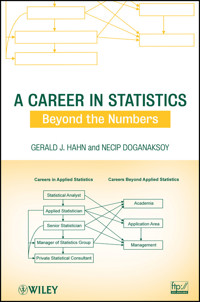
A valuable guide to a successful career as a statistician A Career in Statistics: Beyond the Numbers prepares readers for careers in statistics by emphasizing essential concepts and practices beyond the technical tools provided in standard courses and texts. This insider's guide from internationally recognized applied statisticians helps readers decide whether a career in statistics is right for them, provides hands-on guidance on how to prepare for such a career, and shows how to succeed on the job. The book provides non-technical guidance for a successful career. The authors' extensive industrial experience is supplemented by insights from contributing authors from government and academia, Carol Joyce Blumberg, Leonard M. Gaines, Lynne B. Hare, William Q. Meeker, and Josef Schmee. Following an introductory chapter that provides an overview of the field, the authors discuss the various dimensions of a career in applied statistics in three succinct parts: * The Work of a Statistician describes the day-to-day activities of applied statisticians in business and industry, official government, and various other application areas, highlighting the work environment and major on-the-job challenges * Preparing for a Successful Career in Statistics describes the personal traits that characterize successful statisticians, the education that they need to acquire, and approaches for securing the right job * Building a Successful Career as a Statistician offers practical guidance for addressing key challenges that statisticians face on the job, such as project initiation and execution, effective communication, publicizing successes, ethical considerations, and gathering good data; alternative career paths are also described The book concludes with an in-depth examination of careers for statisticians in academia as well as tips to help them stay on top of their field throughout their careers. Each chapter includes thought-provoking discussion questions and a Major Takeaways section that outlines key concepts. Real-world examples illustrate key points, and an FTP site provides additional information on selected topics. A Career in Statistics is an invaluable guide for individuals who are considering or have decided on a career in statistics as well as for statisticians already on the job who want to accelerate their path to success. It also serves as a suitable book for courses on statistical consulting, statistical practice, and statistics in the workplace at the undergraduate and graduate levels.
Sie lesen das E-Book in den Legimi-Apps auf:
Seitenzahl: 660
Veröffentlichungsjahr: 2012
Ähnliche


















Contents
Cover
Half Title page
Title page
Copyright page
Dedication
Preface
Discussion Outline
Target Audience
Our Sources
Other Features
An Invitation
Acknowledgments
Chapter 1: Prologue: A Career in Statistics
1.1 About this Chapter
1.2 What is Statistics?
1.3 Who is a Statistician?
1.4 Who Employs Statisticians?
1.5 The Statistical Thought Process and What Makes it Special
1.6 Many Skills Required
1.7 Beyond The Workplace
1.8 Some Downsides of a Career in Statistics
1.9 The Excitement of a Career in Statistics
1.10 Embarking on a Career in Statistics
1.11 Accreditation
1.12 Professional Societies
1.13 a Preview
1.14 Further Reading
1.15 Major Takeaways
Discussion Questions
Part I: The Work of A Statistician
Chapter 2: What Statisticians Do in Business and Industry
2.1 About this Chapter
2.2 Manufactured Product Applications
2.3 Service Business Applications
2.4 Process Improvement
2.5 Further-Applications
2.6 Major Takeaways
Discussion Questions
Chapter 3: What Statisticians Engaged in Official Government Statistics Do
3.1 About this Chapter
3.2 The Scope of Official Statistics
3.3 Examples of The Work
3.4 Challenges of The Work
3.5 Research Opportunities
3.6 Some Major Employers in the U.S. Federal Government
3.7 Required Credentials
3.8 Integration of U.S. Government Statistical Activities
3.9 Local Official Government Statistics Activities
3.10 Government Statisticians Outside The United States
3.11 Compensation and Other Considerations
3.12 Sources of Further Information
3.13 Major Takeaways
Discussion Questions
Chapter 4: What Statisticians Do: Some Other Application Areas
4.1 About This Chapter
4.2 Regulatory Activities
4.3 Health
4.4 National Defense
4.5 Other Scientific Research
4.6 Social and Behavioral Sciences
4.7 Teaching (In Nonacademic Settings)
4.8 Some Further Institutes for Research in the United States
4.9 Major Takeaways
Discussion Questions
Chapter 5: The Work Environment and on-the-Job Challenges
5.1 About this Chapter
5.2 Receptiveness to Statistics and Statisticians
5.3 Where do Statisticians Fit into the Organization?
5.4 Two Modes of Operation
5.5 Grading Systems
5.6 Globalization
5.7 Hail to Our Managers!
5.8 Some Challenges
5.9 Women in Statistics
5.10 MAJOR TAKEAWAYS
Discussion Questions
Part II: Preparing for A Successful Career in Statistics
Chapter 6: Characteristics of Successful Statisticians
6.1 About This Chapter
6.2 Analytical and Technical Skills
6.3 Communication and Interpersonal Skills
6.4 Ability to Size Up Problems and See the “Big Picture”
6.5 Flexibility
6.6 a Proactive Mindset
6.7 Persistence
6.8 A Realistic Attitude
6.9 Enthusiasm and Appropriate Self-Confidence
6.10 Ability to Prioritize, Manage Time, and Cope with Stress
6.11 Team Skills
6.12 Leadership Skills
6.13 Ability to Properly Apply and Adapt Knowledge
6.14 Passion For Lifelong Learning
6.15 Further Reading
6.16 As Others See It
6.17 Major Takeaways
Discussion Questions
Chapter 7: Education for Success
7.1 About This Chapter
7.2 The Statistics Advanced Placement Course and Other High School Programs
7.3 Degrees in Statistics: The Numbers
7.4 How Far To Go: Bachelor’S, Master’s, Or Ph.D. Degree?
7.5 Selecting the Right School and Program
7.6 Statistical Education: Setting the Foundations
7.7 Coursework in Statistics
7.8 Statistical Computing and Software
7.9 Some Other Recommendations
7.10 Internships and University Consulting
7.11 Entering Statistics from Other Fields
7.12 Further Resources
7.13 Concluding Comment: The Limits of Formal Statistical Education
7.14 As Others See It
7.15 Major Takeaways
Discussion Questions
Chapter 8: Getting the Right Job
8.1 About This Chapter
8.2 Defining Career Goals
8.3 Identifying Opportunities
8.4 RéSumé Writing
8.5 The Job Interview
8.6 Follow-Up
8.7 Providing References
8.8 Some Further Hints
8.9 Assessing Job Offers
8.10 Major Takeaways
Discussion Questions
Part III: Building A Successful Career as A Statistician
Chapter 9: On-the-Job Strategies: Project Initiation and Execution
9.1 About This Chapter
9.2 Project Initiation
9.3 Project Execution
9.4 As Others See It
9.5 Major Takeaways
Discussion Questions
Chapter 10: On-the-Job Strategies: Communication, Publicizing, and Ethics
10.1 About This Chapter
10.2 Communication, Communication, Communication
10.3 Publicizing Statistics (And Statisticians)
10.4 Ethical Considerations
10.5 Major Takeaways
Discussion Questions
Chapter 11: Getting Good Data: A key Challenge
11.1 About this Chapter
11.2 Designed Experiments
11.3 Census and Random Sampling Studies of Human and Other Populations
11.4 Systems Development Studies
11.5 Observational Studies
11.6 Hints for Getting the Right Data
11.7 A Process for Data Gathering
11.8 Major Takeaways
Discussion Questions
Chapter 12: Career Paths
12.1 About This Chapter
12.2 Some Roles for Applied Statisticians
12.3 Other Major Roles to which Applied Statisticians Might Aspire
12.4 Some Career Paths
12.5 More on Statistical Leadership
12.6 Contributions Beyond the Workplace
12.7 Some More Career Examples
12.8 Putting It All Together
12.9 Major Takeaways
Discussion Questions
Part IV: Further Perspectives: Careers in Academia and Professional Development
Chapter 13: Careers in Academia
13.1 About This Chapter
13.2 What Statisticians in Academia do: An Overview
13.3 Types of Positions
13.4 Location within the Institution
13.5 More on Tenure
13.6 Life Beyond Tenure
13.7 Teaching Challenges
13.8 Research Challenges
13.9 Consulting Challenges
13.10 Administrative Service Challenges
13.11 Professional Service Challenges
13.12 More on the Academic Environment
13.13 Training to Become An Academic Statistician
13.14 Career Paths
13.15 Downsides of a Career as an Academic Statistician
13.16 Bright Sides of a Career as an Academic Statistician
13.17 A Career as a Statistician in Academia: A Summary Comparison
13.18 Major Takeaways
Discussion Questions
Chapter 14: Maintaining the Momentum
14.1 About This Chapter
14.2 Some Internet Resources
14.3 Formal Education
14.4 Technical and Professional Journals
14.5 Technical Conferences
14.6 Future Opportunity Areas
14.7 Major Takeaways
Discussion Questions
References
Index
A CAREER IN STATISTICS
Copyright © 2011 by John Wiley & Sons, Inc. All rights reserved.
Published by John Wiley & Sons, Inc., Hoboken, New Jersey.Published simultaneously in Canada
No part of this publication may be reproduced, stored in a retrieval system, or transmitted in any form or by any means, electronic, mechanical, photocopying, recording, scanning, or otherwise, except as permitted under Section 107 or 108 of the 1976 United States Copyright Act, without either the prior written permission of the Publisher, or authorization through payment of the appropriate per-copy fee to the Copyright Clearance Center, Inc., 222 Rosewood Drive, Danvers, MA 01923, (978) 750-8400, fax (978) 750-4470, or on the web at www.copyright.com. Requests to the Publisher for permission should be addressed to the Permissions Department, John Wiley & Sons, Inc., 111 River Street, Hoboken, NJ 07030, (201) 748-6011, fax (201) 748-6008, or online at http://www.wiley.com/go/permission.
Limit of Liability/Disclaimer of Warranty: While the publisher and author have used their best efforts in preparing this book, they make no representations or warranties with respect to the accuracy or completeness of the contents of this book and specifically disclaim any implied warranties of merchantability or fitness for a particular purpose. No warranty may be created or extended by sales representatives or written sales materials. The advice and strategies contained herein may not be suitable for your situation. You should consult with a professional where appropriate. Neither the publisher nor author shall be liable for any loss of profit or any other commercial damages, including but not limited to special, incidental, consequential, or other damages.
For general information on our other products and services or for technical support, please contact our Customer Care Department within the United States at (800) 762-2974, outside the United States at (317) 572-3993 or fax (317) 572-4002.
Wiley also publishes its books in a variety of electronic formats. Some content that appears in print may not be available in electronic formats. For more information about Wiley products, visit our web site at www.wiley.com.
Library of Congress Cataloging-in-Publication Data:
Hahn, Gerald J.A career in statistics / Gerald J. Hahn, Necip Doganaksoy.p. cm.Summary: “This book serves as an excellent companion to its predecessor, The Role of Statistics in Business and Industry. In this volume, the authors help readers decide whether a career in statistics is appropriate for them and what to expect once in it. They provide insights into the work environment and how students and entry-level statisticians can best prepare themselves to succeed, offering hints for success in training, career paths, and lifelong learning. This book is a must-have for anyone considering a career in statistics, as well as for faculty who prepare students for such a career”– Provided by publisher.Includes bibliographical references and index.ISBN 978-0-470-40441-6 (pbk.)1. Mathematical statistics. 2. Commercial statistics. 3. Statistics–Vocational guidance. 4. Statisticians-Vocational guidance. I. Doganaksoy, Necip, 1960- II. Title.QA276.17.H34 2011519.5023–dc222011008253
To Bea, Adrienne and Lou, Susan and John, Judy and Ben, and Zachary, Eli, Leah, Sam, and Eliza.
—G.J.H.
To my parents Sami and Mediha Doganaksoy, my wife Reyhan, and my children Hakan and Levent.
—N.D.
PREFACE
Many years ago, we decided on a career in statistics. It turned out to be one of the two best decisions we ever made (second, of course, only to our choices of spouses). In this book, we try to impart our enthusiasm for statistics1 and help readers determine whether a career in statistics is for them, tell them what to expect, and provide hints for their success. We call upon our (and others’) extensive practical experience to give important career guidance that goes beyond the technical tools discussed in most courses and texts on statistics.
This book complements The Role of Statistics in Business and Industry (Wiley, 2008). Our earlier book described how statistical concepts and methods help companies to improve performance and to address problems in a wide range of operations involving products and services. In this volume, we broaden our horizon to include all application areas of statistics and focus on helping readers build successful careers.
DISCUSSION OUTLINE
We begin with a prologue chapter that lays the foundation for a career in statistics and provides an overview of the field. The bulk of the book is organized into four parts:
Part I
: The Work of a Statistician.
Part II
: Preparing for a Successful Career in Statistics.
Part III
: Building a Successful Career as a Statistician.
Part IV
: Further Perspectives: Careers in Academia and Professional Development.
We conclude with two more chapters (Part IV). The first of these provides an in-depth examination of careers for statisticians in academia. The last chapter describes ways statisticians can stay on top of their field throughout their careers and ensure their continued effectiveness.
Each chapter concludes with a summary of “major takeaways” and a series of discussion questions. Most of these questions do not have “right” or “wrong” answers; instead, they are aimed at provoking the reader to think through the broader implications of the subject. We indicate with an asterisk those questions that do not require any past statistical training. Some of those that do are designed to challenge more advanced students.
TARGET AUDIENCE
This book should be of high interest to those around the world who
Have decided on a career in statistics and would like to prepare themselves in the best possible manner.
Have been intrigued by statistics, perhaps after taking an introductory course in high school or college, are considering a career in statistics, and would like to know more of what it is all about.
Are starting on their first jobs as statisticians and want to be more effective—or have been on the job for a while and want to accelerate their paths to success.
The book lends itself well as a text or supplementary text for
A course in statistical consulting.
A seminar course dealing with career opportunities, especially in mathematics and/or statistics.
An independent study course preparing students for the workplace.
It is also suited, together with The Role of Statistics in Business and Industry (also soft-cover), for a course on statistical practice that provides aspiring statisticians insights, typically not provided in other courses, to help them succeed in their careers.
In addition, the book can serve as a supplementary text for a variety of courses to complement more technical material, for example, in conjunction with a second course on statistical methods directed at statistics majors.
Some might acquire this book to help them decide whether or not they would like to make statistics their careers. Once so decided, our comments will help them plot a path through college and beyond. And upon completion of their formal education, it should assist them in building a successful career—with the confidence of knowing at least some of the things to expect in an uncertain world.
Finally, this book can help teachers and counselors in both high schools and colleges direct and guide students who may be suited for careers as statisticians.
We assume in some of the discussion that readers have had a one-semester introductory course in statistics, but we do not require any knowledge beyond this—even though many readers will have such added knowledge.
OUR SOURCES
This book leverages insights gained during our combined 75 years of experience as applied statisticians—including, for one of us, managing a corporate statistics group for 28 years. Much of our work has been in the United States. We have, however, recently witnessed and participated in the globalization of many of our activities. We also have some academic experience gained on sabbaticals and as adjunct professors.
To broaden the scope further, we have invited five contributing authors with wide experience in academia and/or government to write two chapters and to provide us their inputs and perspectives on the others. They are
Carol Joyce Blumberg, Mathematical Statistician, U.S. Energy Information Administration and Professor Emerita of Mathematics and Statistics, Winona State University.
Leonard M. Gaines, Program Research Specialist, Empire State Development, New York State (Chapter 3).
Lynne B. Hare, Principal, Statistical Strategies, LLC; Director (retired), Applied Statistics, Kraft Foods; and former Chief, Statistical Engineering Division, National Institute of Standards and Technology.
William Q. Meeker, Distinguished Professor, Statistics Department, Iowa State University (Chapter 13).
Josef Schmee, K.B. Sharpe Professor of Management (emeritus), Union College (Chapter 13).
We also allow readers to avail themselves of diverse viewpoints by
Soliciting comments from 24 eminent statisticians on the traits that they regard as most important for success and on the key advice that they would give to aspiring statisticians. Their responses, appearing at the end of three chapters, reiterate or amplify points that we make and add further insights.
Liberally quoting others, typically from previously published or presented materials; such quotes introduce many of the book’s sections.
Inviting numerous colleagues to read and critically comment on earlier drafts (see “Acknowledgments”).
Providing extensive references and suggesting web sites
2
to which readers can turn for further elaboration and viewpoints.
OTHER FEATURES
We consider topics that are rarely discussed in other books. A few examples are the downsides (as well as the excitement) of a career in statistics; the important role that our managers play in our careers; women in statistics; what courses to take; assessing job offers; a comprehensive comparison of a career as a statistician in academia versus one in business and industry and in official government statistics; different ways statisticians become involved in projects; criteria for project selection, the “elevator speech”; and a critical assessment of the yearly Joint Statistical Meetings. We also place heavy emphasis on the statistician’s role in getting the right data—a fundamental subject that is often brushed aside, under the assumption that the needed data are just there (which is infrequently the case).
We use examples based on our and the contributing authors’ experience to illustrate important points, and at times use the language of the workplace. Some typical examples are the use of such terms as added value, bottom line, and payoff. This should help prepare readers for the jargon that they can expect to encounter during the course of their careers.3
With the increasing role of globalization, more and more students throughout the world will be considering statistics as a career. We take a global perspective by, for example, including a section on government statistics outside the United States and discussing effective communication in a global environment.
Wiley has created an ftp site for our book.4 This provides further details on selected topics, as noted in individual chapters. We will also post on this site thoughts that occur to us after this book goes into production (as well as relevant new links and publications), errors and corrections (hopefully few), and reader comments (hopefully many).
AN INVITATION
In our continuing search for improvement (in possibly future editions and, in the meantime, for posting on the book’s ftp site), we invite and welcome reader comments and suggestions. We can be reached at [email protected] and [email protected].
Gerald J. HahnNecip Doganaksoy
Schenectady, New York
1 We reserve for a future volume a discussion of our enthusiasm for our spouses.
2 All web sites were in working condition at the time that this manuscript was in production for publication (April 2011); some may, undoubtedly, not stand the test of time.
3 The serious reader is referred to Dilbert™ cartoons as the ultimate guide.
4ftp://ftp.wiley.com/public/sci_tech_med/career_statistics.
ACKNOWLEDGMENTS
We have benefited greatly from the critical assessments and helpful inputs of numerous colleagues, friends, and (even) relatives and we thank them all for their interest and contributions.
This book would not have been possible without the work of contributing authors Carol Joyce Blumberg, Leonard Gaines, Lynne Hare, William Q. Meeker, and Josef Schmee.
We were also most fortunate to have received detailed and highly useful inputs on extensive parts of the manuscript from Rich Allen, Michael Chernick, Ron Fecso, and Gipsie Ranney.
Many others provided us valuable comments. We thank Christine Anderson Cook, Tom Boardman, Christy Chuang-Stein, Cynthia Clark, Keith Crank, Len Cook, George Domingo, John Espy, Cathy Furlong, Martha Gardner, Adrienne Hahn, Bea Hahn, Judy Hahn, Ted Hardwicke, Bill Hill, Roger Hoerl, Bob Hogg, Yili Hong, Ronald Iman, Ron Kenett, Tim Keyes, John Kovar, Diane Lambert, Jerry Lawless, Vincent Lee, Ramon Leon, Alson Look, Juanita Lott, Fang Liu, Bill Makuch, Harry Martz, Diane Michelson, David Moore, Carolyn Morgan, Sally Morton, Vijay Nair, Lloyd Nelson, Margaret Nemeth, Barry Nussbaum, William Parr, Charles Pfeiffer, Antonio Possolo, Charles Sampson, Nozer Singpurwalla, Edward Spar, Bob Starbuck, Stan Strauss, Katherine Wallman, Ron Wasserstein, and Joanne Wendelberger for their contributions.
We thank Jackie Palmieri and Steve Quigley, our editors at Wiley, and their colleagues for their encouragement and help.
We also greatly appreciate the unwavering support and encouragement by Necip’s Manager at GE, Roger Hoerl.
Finally, we thank our wives, Bea Hahn and Reyhan Doganaksoy, for their continued encouragement, strong support, and remarkable perseverance over the many hours we spent in writing this book.
CHAPTER 1
PROLOGUE: A CAREER IN STATISTICS
1.1 ABOUT THIS CHAPTER
We begin this introductory chapter with a brief examination of what is statistics, who is a statistician, and who employs statisticians. We then comment on the statistical thought process and what makes it special, the many skills required to be a successful statistician, and the role of statistics beyond the workplace. We provide “equal time” to presenting some downsides of a career in statistics and counter this with a brief summary of the excitement of such a career. We then indicate some alternative paths for embarking on a career in statistics, comment on ongoing efforts for accreditation, and review professional societies for statisticians. We conclude the chapter with a preview of what is to follow.
1.2 WHAT IS STATISTICS?
The rational basis for change is data. Data means statistical methods.
—W. Hunter
Some informal definitions of statistics, provided by various well-known statisticians, are
The science of learning from (or making sense out of) data (J. Kettenring).
The theory and methods of extracting information from observational data for solving real-world problems (C.R. Rao).
The science of uncertainty (D.J. Hand).
The quintessential interdisciplinary science (S. McNulty).
The art of telling a story with data (L. Gaines).
We prefer the preceding over the more formal definitions found online,1 such as statistics is “the science that deals with the collection, classification, analysis, and interpretation of numerical facts or data, and that, by use of mathematical theories of probability, imposes order and regularity on aggregates of more or less disparate elements.” And we note that Brown and Kass (2009) devote a 19-page article (including discussion) to an in-depth examination of “What is Statistics?”
Statistics has applicability in almost all areas of human endeavor. To take just a few examples:
Economists need to understand statistical concepts to make predictions.
Psychologists need to be able to interpret empirical relationships between variables.
Business executives need to appreciate the role of uncertainty in decision making.
Biologists need to understand that the reactions of organisms to stimuli are not deterministic and that there will be variation among individuals.
Design engineers need to know how to conduct statistically valid experiments to develop the best possible products.
We also note with interest that in 2010 Britain joined other countries in asking their statisticians to develop a “happiness index” to be added to their existing national household survey.
The diversity of applications is further illustrated by the 24 sections of the American Statistical Association (ASA) as of the end of 2010. These include those that deal with biopharmaceutical applications, business and economics, defense and national security, education, environmental applications, epidemiology, government, health policy, marketing, physical and engineering sciences, quality and productivity, social statistics, and sports.2
We will defer discussing specifics to the next three chapters, but note that Tanur et al. (1972) and Peck et al. (2006) provide 15 and 25 (different) articles, respectively, that demonstrate the use of statistics in a wide variety of application areas.
Some areas of application have taken on lives of their own. Thus, biostatistics is the application of statistics to the analysis of biological and medical data. Going even further, actuarial science—the application of mathematical and statistical methods to assess insurance risk—has become a separate profession.
Statisticians at a particular point in their careers are commonly engaged in one or a few of these application areas. It is, however, not unusual for individuals to become involved in an appreciable number of such areas during the course of their careers.
1.3 WHO IS A STATISTICIAN?
Professional statisticians are trained in statistics and actively use statistics and statistical concepts and thinking in much of their work.
The ASA now has a program of accreditation for its members (Section 1.11) and such programs exist in various other countries. The ASA accreditation program has high requirements (e.g., 5 years of documented experience in practicing statistics) and is completely voluntary. We anticipate that there will be many statisticians in the United States, especially until accreditation becomes popular, who have not been formally accredited.
Moreover, what constitutes as adequate education in statistics to qualify an individual to be a statistician is highly job dependent (and somewhat controversial), although there are some communalities (Section 7.4). Thus, to simplify matters, we will just assume statisticians to be those who regard themselves as such.
One does not have to be a statistician to use statistics. The use of statistical methods by nonstatisticians—whom we will refer to as “practitioners”—is at an all-time high and will likely continue to increase. This places additional responsibilities on statisticians. We shall return to these topics at various junctures throughout this book.
1.4 WHO EMPLOYS STATISTICIANS?
Data are widely available; what is scarce is the ability to extract wisdom from them.
—Hal Varian (2010)
A simple, and perhaps somewhat exaggerated, answer to the question “who employs statisticians?” is “essentially all large and some medium-sized, and even small, organizations.” Somewhat arbitrarily, we categorize employers of statisticians as follows:
Business and industry that manufacture products and/or provide services (Chapter 2).
(Mostly government) agencies engaged in gathering, analyzing, and reporting official statistics or in related statistical activities (Chapter 3).
Organizations involved in various other application areas, including those engaged in regulatory activities, health, national defense, other scientific research, and the social and behavioral sciences. Employers include government, research institutes, and universities (Chapter 4).
Self-employed (typically private statistical consultants). Discussion of these is postponed to Chapter 12 since this is a role unlikely to be taken by statisticians early in their careers.
Academia (Chapter 13).
The ASA estimates that its membership is broken down approximately as follows:
47%: Business, industry, nonprofit (other than government and academia), self-employed, or other.
42%: Academia.
11%: Government (national, state, provincial, or local).
3
In any case, like other professionals, statisticians work for customers who benefit from their work. These customers might be direct, such as a client who has commissioned specific work, or indirect, such as users of the Consumer Price Index or students in a professor’s class.
1.5 THE STATISTICAL THOUGHT PROCESS AND WHAT MAKES IT SPECIAL4
1.5.1 The Scientific Method
Almost 500 years ago, during the reign of Queen Elizabeth I, Sir Francis Bacon, an English philosopher, lawyer, and statesman, addressing the Royal Society, proposed a new way to gain increased understanding of nature. Instead of drawing conclusions from their own preconceived notions, religion, or other traditional sources stemming from Aristotelian thinking, scientists should engage themselves in observation and experience. He didn’ t take the idea much further than that, but others built on it, and, a few centuries later, it led to the formal development of the scientific method.
Basically, the scientific method calls for starting with a conjecture about the state of nature, cause and effect relationships, or differences among phenomena (e.g., animal typing by physical characteristics, medical treatment differences, or rates of differently induced chemical reactions). We then make observations, that is, gather data, in order to confirm or deny that conjecture. This must be done in such a way that the results are reproducible by others. Thus, we build knowledge about the state of the universe by confirming or denying conjectures.
All of this may not sound like rocket science today, but at the time it was truly revolutionary, and the results have been spectacular. The scientific method has, for example, guided the increase of crop yields to help feed starving populations. It has led medical researchers to understand the causes of diseases and find cures. And it has resulted in electrical engineers learning how to produce microchips efficiently in mass quantities, allowing access to such modern technologies as laptop computers, the Internet, computer-based controls, and safety mechanisms in planes and automobiles.
The applicability of the scientific method is, moreover, not limited to the hard sciences, such as chemistry and physics. Our understanding of sociology and psychology and other social or human sciences has relied on its use as well. The list of beneficial applications is endless. It seems safe to say that the overwhelming majority of advances in human civilization have taken place as a consequence of the application of the scientific method.
1.5.2 Where Statistics Fits In
But what does this have to do with statistics and the way statisticians think?
Put simply, we assert that statisticians, in many ways, might be considered gatekeepers of the scientific method. There are good reasons for this lofty claim. After all, a key factor in any scientific endeavor is a concern for obtaining unbiased results with a wide range of applicability.
In many, or even most, situations, it is impractical or even impossible to enumerate completely an entire population. Thus, you need to develop precise and accurate estimates from a well-selected sample. Say, for example, that we want to characterize the mean weight of salmon in a lake. You can’t get all the salmon in the lake and weigh them—but you can take an appropriately selected sample and use its mean weight as an estimate of the mean weight of all salmon in the lake. But to draw correct conclusions, you must concern yourself with the representativeness (as well as the size) of the sample. Does it, for instance, include only farmed or only Northern Pacific salmon? If so, the estimate is clearly biased with regard to determining the lake’s entire salmon population and applies only to the limited portion of the population under examination. So, when statisticians are called upon to propose a sampling study, they ask all sorts of (both) broad and specific questions, which may perhaps initially seem impertinent, and then use the answers to help develop a plan that is maximally informative under the circumstances. When the results of the study become available, statisticians then quantify the uncertainty in the findings and provide warnings about the generality of the results. And this is where the gatekeeper status comes in.
Of course, statistics and statistical thinking are more complicated than that. Many studies are observational, and others involve designed experiments (Section 11.2). But because statistics—in light of its reliance on scientific sampling—is, in a large part, the science of making decisions under uncertainty introduced by the sampling process, and because sampling applies to almost all intellectual scientific pursuits, one could assert that statistics is relevant to just about every discipline.
1.5.3 A Peek into How Statisticians Work
It All Starts with the Theory. Statistics, just as other scientific disciplines, has theoretical components, many of which have roots in mathematics. Theoretical statisticians conduct important work in developing new methods, improving on existing ones, and coming up with novel ways to address applied problems. Expanding the theory is essential to the health and well-being of the field and requires strong mathematical skills. Most statisticians receive training in basic statistical theory and rely on such theory in applications—many of which are not straightforward textbook situations—and in understanding the basic assumptions underlying the methods that they are using (even though they are generally not conducting research in theoretical statistics).
A Traditional View. Applied statisticians work primarily on using statistics to address issues in other disciplines, generally at the behest of what we will refer to as “problem owners.” These may be administrators, economists, engineers, scientists, social scientists, or others, who are typically leaders or representatives of a larger project team.
In the past, problem owners often came to statisticians with a fait accompli; that is, they had already conducted a study and gathered data, and wanted to know what it all meant. In response, statisticians typically asked questions about the study objectives, the data gathering process, the measurement methods, and so on. This was often followed by the unenviable task of sorting through the data structure, and then the data themselves, attempting to extract meaningful findings. Sometimes, this was not possible, resulting in much wasted effort. This unfortunate situation was a consequence of a frequently held misunderstanding (often furthered by what was taught in school) of statisticians as merely appliers of a series of tools to evaluate already collected data—as opposed to being purveyors of the scientific method who concern themselves with the entire problem and the gathering of the appropriate information to address it.
A Collaborative Step-by-Step Approach. A much preferred alternative route for statisticians’ participation—and one that, fortunately, is becoming increasingly prevalent—is that of collaboration. Effective collaboration takes the form of close involvement by the statistician with, and as part of, the project team from the beginning to the end of the project. In this context, the statistician is an advocate, working to assure unassailable results and aiding in the discovery process.
Contrary to popular opinion, discovery is not a one-time event. Instead, it is an iterative process progressing from synthesis to analysis to the next synthesis and the next analysis, and so on, all the while building knowledge and leading to scientific advances. Project objectives are reviewed and shared initially with all stakeholders, including the statistician, who then typically proposes sampling, data gathering, or experimentation strategies. These need to take into consideration such matters as sources of variation to be overcome and the precision and accuracy of the measurement process—in addition to numerous practical considerations, such as time, financial, and facility constraints.
Team members then review the statistician’s proposed plan with regard to its feasibility, ability to meet objectives, expense, and various operational details—based on their own technical backgrounds and roles in the project. In this manner, the combined knowledge of the team is thrust at the problem and effectively utilized. This may lead to the statistician modifying the plan and the conduct of an initial “pilot study” to test out the recommended approach.
At the end of the study, and often at strategic times during its execution, the statistician conducts appropriate analyses to extract information from the data. And it doesn’t end there; the entire team, statistician included, is typically involved in reporting the results to management in a readily understandable manner, quantifying benefits, explaining limitations, conducting follow-up investigations, and implementing the findings.
We discuss the need for statisticians to be proactive team members throughout this book, and especially in Chapters 5 and 9.
Gaining a Common Understanding. Statisticians strive to ensure that there is a common understanding by all involved—and most importantly by management—of the problem to be addressed and of objectives and strategies. If there is lack of agreement on these, then the team members are likely to be working at cross purposes, impairing the likelihood of success. So, in the initial discussions, the statistician strives to ensure that all involved are moving in the same direction. Do we agree on the project objectives and guidelines, including the time schedule? Do all the stakeholders see eye to eye? Do we have approval from oversight agencies, if any?
Recognition of Variability. Statisticians, perhaps more than most others, think about variation and its impact on the findings of the study. They strive to understand the overall process and especially the sources of variability.
The data gathering needs to be planned so as to apply as broadly as possible to the population or process of interest, as illustrated by the salmon sampling problem. Are the data truly representative of the population or process of interest and will all known relevant sources of variation be taken into account? And, consistent with the scientific method, can we expect the results to be reproducible?
In short, the statistician seeks to ensure that, despite the underlying variability and the study limitations, the right amount of the right kind of data will be acquired. We will return to this important topic in Chapter 11.
Statistical Thinking. The recognition of variability has, in turn, led to the concept of statistical thinking. In contrast to deterministic thinking, statistical thinking recognizes that
All work occurs in a system of interconnected processes.
Variation exists in all processes.
Using data to understand and reduce variation is key to success.
Statistical thinking has especially broad applicability in situations in which there is an opportunity to reduce variation, rework, and waste and improve quality and productivity. And, even though our comments have been in terms of industrial settings, statistical thinking applies to all areas of application of statistics. See Britz et al. (2000) and Hoerl and Snee (2001) for further discussion.
1.6 MANY SKILLS REQUIRED
Many students are attracted to statistics because they like and are good at mathematics. Mathematical ability—supplemented by sound statistical training—though certainly a necessary requirement for a successful statistician is far from being a sufficient one.5
Successful statisticians need to be skilled in many areas. We summarize some of these briefly in this section and provide further elaboration throughout the book, especially in Chapters 6 and 7.
1.6.1 Interpersonal Skills
Numerous interpersonal skills, starting with ability to communicate effectively, are essential for a successful career in statistics.
1.6.2 Knowledge in Related Technical Fields
Statisticians need to be comfortable with computers and computer software. Those working in business and industrial settings, especially, need to be trained in operations research/management science/decision theory and be knowledgeable in various statistics-related methods developed by engineers and computer scientists, such as artificial intelligence, knowledge discovery in databases and data mining, and neural networks.
1.6.3 Application Area Knowledge
Statistics does not exist in a vacuum. It is employed in many different areas. To be credible, statisticians need to be familiar with the application areas in which they are involved. Having a minor, or even an undergraduate degree, in the field in which you hope to be employed will provide you an important advantage.6 Many statisticians learn about their chosen application area on the job, but the more prepared they are to get up to speed rapidly, the better.
1.7 BEYOND THE WORKPLACE
1.7.1 Impact on One’s Thinking
Statistics is more than a career. It is a way of looking at situations that pervade our daily lives. Statisticians tend to think in terms of probabilities and variation, search for the data that might support specific contentions, and assess their validity. This is why some claim that statisticians—perhaps like scientists, engineers, and lawyers—are more rational (and possibly less emotional) in their lives—or, at least, their reasoning—than many in other fields.
In assessing the safety of different forms of travel, for example, statisticians might estimate the probabilities associated with each of the alternatives, such as flying commercially, driving, taking a bus, or taking a train, based upon available data, and then tailor the results to their specific situations (such as driving skill and road conditions).
Training in statistics also gets one to look critically at studies reported in the media. Many, statisticians enjoy leisurely discussions of the potential pitfalls of such studies with colleagues, friends, neighbors, and family.
With an appreciation for statistics, there comes a passion for procuring as much useful data as possible before making a decision. In purchasing a car, we may avidly—some might say obsessively—seek data on repair frequency to guide our selection. Statisticians typically do not salt their meals before tasting them. You are unlikely to hear a statistician (or a mathematician) say something like “This object is perfectly round!” If told that a particular community has over 300 days of sunshine yearly, a statistician might assert that this statement has little meaning without a definition of exactly how a “day of sunshine” is defined and measured. And only a statistician, when told that a bird in the hand is better than two in the bush, might respond, perhaps somewhat facetiously, with “that depends upon the probability that you can capture the two birds in the bush and your risk function (what, for example, if the proverbial birds are actually your pair of shoes?).”
1.7.2 Promoting Statistical Literacy
Our society is flooded by statistics and claims based thereon, often by advocates who may be more interested in making a point than in a valid and fair assessment of the data upon which their claim is based. A key mistake, for example, is to infer causation from association (Section 11.5.1).
A responsibility of statisticians is to promote statistical literacy among the general public. This means, in general, helping others become more aware of the uses and misuses of statistics, and, in particular, pointing out the fallacies of claims or studies of questionable validity.
A number of books have pointed the way—even though sometimes in a somewhat negative manner—following in the steps of the classic How to Lie with Statistics (Huff, 1954), and with equally intriguing titles including Best (2001, 2004), Hooke (1983), and Levitt and Dubner (2005, 2009). We report on our experiences in teaching a short course on statistical literacy targeted at adults in Hahn et al. (2009).
1.8 SOME DOWNSIDES OF A CAREER IN STATISTICS
If it moves, it’s biology; if it stinks, it’s chemistry; if it doesn’t work, it’s physics; if it puts you to sleep, it’s statistics.
—Anonymous student
There must be some downsides associated with being a professional statistician. What are they?
Start with the name and the general perception. Let’s face it—the public’s image of a statistician, though generally improving, is not in the same league as that of an astronaut, biotechnologist, or physicist. Statisticians are associated with “statistics”—and statistics are often regarded as boring or deceptive or both. It will not take long for you to hear the worn quote that Mark Twain attributed to Benjamin Disraeli that there are “three kinds of lies: lies, damn lies, and statistics,” or the story about the chap who became a statistician because he did not have the personality to be an accountant.
Initial negative impressions are furthered by the often less than exciting introductory statistics course that many have taken in college. Such courses may have focused on the mechanics of the calculations-or the mathematical theory, at the expense of demonstrating the broad applicability of statistical concepts. The ASA and many colleagues are working hard to help make introductory courses more appealing and to place greater emphasis on statistical concepts and statistical thinking. There has been important progress in recent years, including the publication of some down-to-earth introductory texts and the introduction in the United States of the Advanced Placement (AP) course in statistics for high school students (Section 7.2). As in any subject, knowledgeable, enthusiastic instructors are essential; see Section 13.7.1 for further discussion.
Another concern is that, under some organizational structures, statisticians are viewed as “outsiders.” This can make them vulnerable to budget cuts and undermine their effectiveness. It is one further reason why we advocate throughout this book that statisticians strive to become proactive participants and team members in the activities in which they are involved.
Because the value of statistics is not universally recognized, many statisticians, especially early in their careers, spend much time marketing themselves and the added value they provide—often in a “soft sell” mode. This can be unappealing to those who prefer to focus on their technical work and development.
1.9 THE EXCITEMENT OF A CAREER IN STATISTICS
A degree in statistics is one of the top degrees to have in terms of getting good and secure jobs. On top of that, it offers many opportunities for a challenging and rewarding career.
—Sarah Needleman
The downsides of statistics as a profession warranted mention. But the perception may be changing. Lynne Hare reports “In years past, I used to get nerd-associations with statistics. Now I get mostly awe. Wow, you can understand that stuff? And you make money doing it? ‘Yup,’ I say. ‘Not many people can do it, the demand is high, and I can make a bundle.’” This viewpoint (also expressed in the January 2009 Wall Street Journal article by Sarah Needleman cited at the beginning of this section) has been reinforced by recent articles in such publications as the New York Times (2009) and the Washington Post (2009). We have, in fact, found it highly gratifying to note the increased recognition that statistics has been accorded over the course of our careers.
We remain convinced that for many the negatives of our profession are far overshadowed by the excitement, opportunities, and challenges. We wake up, at least most days, eager to face the challenges of our jobs—a key criterion in selecting a career. Some of the reasons that statistics continues to excite us are
The
diversity
of problems in which we become involved. As per our earlier discussion, statistics deals with just about everything. Or quoting a comment attributed to the famed statistician John Tukey, “the best thing about being a statistician is that you get to play in everyone’s backyard. In an age of specialization, we might be the remaining scientific generalists.” Most statisticians eventually focus on one or a few application areas, at least for a while—but even within these there is much diversity.
The
intellectual challenge
of the work. Statisticians have been called data detectives (and, as per Section 1.5.2, gatekeepers of the scientific method). Problems are rarely clear-cut, and often part of our challenge is to define “the real problem.” There is ample opportunity to be imaginative.
The
importance
to our employer and often to society of what we do.
The opportunity to
interact
with a wide variety of interesting people with different professional and personal backgrounds.
It should be no surprise, therefore, that CareerCast.com rated statistics as #4 in its 2011 best jobs ratings (of 200 jobs).7
1.10 EMBARKING ON A CAREER IN STATISTICS
1.10.1 Some Alternative Paths
Individuals with a variety of backgrounds choose careers in statistics. These range from people interested in the field from early on and others originally trained in mathematics seeking an applications oriented career to those whose work has led to an appreciation of the importance and excitement of statistics and the opportunities it provides.
Here are a few examples:
Eliza enjoyed mathematics in high school. She decided early on to be a mathematics major in college. However, she did not want to go into teaching and was always driven by practical problems. Her high school mathematics teacher suggested she take the AP course in statistics. She became fascinated by the many areas in which statistics could be applied and decided to minor in statistics in college. Eventually, she decided that statistics provided the opportunity to combine her mathematics skills with her interest in real-world problems. So she enrolled as a Ph.D. student in the subject, specialized in biostatistics, took added coursework in biology and other sciences, and upon graduation accepted a job with a pharmaceutical company.
Juan majored in electrical engineering as an undergraduate. He took an introductory course in statistics and was fascinated by its many applications. At the end of his junior year, he took a summer internship in the research and development division of a semiconductor company. He worked closely with the division statistician who helped him plan a test program to assess a proposed new transistor fabrication process and analyze the results. These experiences made him decide to obtain a master’s degree in statistics. Upon graduation, he returned to the semiconductor company as a statistician.
Boris held an undergraduate degree in psychology with the career goal of going into human resources. On his first job with a large company, he became heavily involved in a study to gain a better understanding of characteristics of job applicants that could predict on-the-job success. Working with a statistician, he came to appreciate the statistical intricacies of conducting such a study and the many ways in which statistics can help organizations to be successful. He enrolled in a part-time program in statistics at a local university. This eventually led Boris to a master’s degree in statistics, a career shift, and a position with a government agency responsible for conducting statistical surveys.
Leah had a Ph.D. in chemistry; she had taken a couple of statistics courses. Upon graduation, she took a job with a large brewery. With some guidance from her former statistics professor, she became engaged in planning and analyzing a statistically based test to help ensure that a proposed new brew would consistently meet customer taste criteria. After a while, people began to come to her for help on statistical problems. Over a period of years, Leah became heavily engaged in the self-study of statistics and took a few courses at a local college. She started attending statistical conferences and taking short courses on selected topics, such as the design of experiments. Eventually, her knowledge matched that of a master’s degree graduate in statistics. When the company set up a Six Sigma program, she was chosen to become a technically oriented black belt and was responsible for teaching the statistics part of the training program to her fellow employees. Eventually, she was officially designated the company statistician.
8
1.10.2 How We Got to be Statisticians
And how did we become statisticians? We hasten to say that neither approach is suggested as an ideal, or even a recommended, path.
Gerry Hahn As an undergraduate, I commuted to the School of Business at the City College of New York (now Baruch College). I was studying to be an accountant, like the majority of students there. But my (unofficial) mentor (2 years older than me) advised me otherwise. “Do something different and more imaginative,” he suggested. (He became a successful stockbroker). Besides, there was then an oversupply of accountants; entry job accountants typically earned $55 per week (in 1950). Statisticians were making at least $60!
So I took an introductory course in statistics and found it most interesting. I decided to major in statistics, and after graduation enrolled in Columbia University’s School of Business, where I received a master’s degree in statistics.
An advantage of living in New York City was that, while still going to school, I was able to get hands-on experience working in the market research department of an advertising agency (the now defunct Biow Company). One of my tasks was to help evaluate the effectiveness of different advertising methods in the then hot emerging field of television. In one study, we polled a random sample of New Yorkers to assess the relationship between people’s recollection of advertising messages and their product use. The results were reported by the New York Times (the only time in my career that I made the Times).
Shortly thereafter, I was drafted into the U.S. Army (the Korean War ended while I was in basic training). I was assigned to the Chemical Corps and was stationed at Dugway Proving Ground in the Utah desert. I became involved in analyzing field test data to assess the impact of chemical weapons under different environmental conditions. This experience got me interested in more physically based applications of statistics. I was also recruited to teach an introductory statistics course on base.
Returning from duty and still wearing my army uniform (I had made it to the lofty rank of corporal), I stopped off in Schenectady, NY, to interview at GE. It was the company’s patriotic duty not to turn me down. So began a 46-year career with the company! While working at GE, I was able to extend my technical knowledge in statistics, via a summer stint at Virginia Tech, a master’s degree in mathematics at Union College, and, finally in 1971, a Ph.D. in operations research and statistics from Rensselaer Polytechnic Institute.
Looking back, my entrance into statistics was more a fortunate set of circumstances than a planned strategy. A significant deficiency, for which I have tried to compensate with subsequent courses and spare time reading, was my relatively limited training in the sciences.
P.S. One of my three daughters, despite the bad example set by her father, received her bachelor’s degree in statistics at the School of Agriculture at Cornell University, followed by a master’s degree from the School of Public Health at the University of California in Berkeley. She went to work at the March of Dimes and, subsequently, the Medical School of the University of California in San Francisco (UCSF). This provided an entry into the field of epidemiology, in which, after a number of years of part-time study, she received a Ph.D. degree from Berkeley. As a faculty member at UCSF, she is currently working on studies of HIV/AIDS (especially in Africa) and of the homeless.
Necip Doganaksoy I did my undergraduate study at the Management Department of the Middle East Technical University in Ankara, Turkey, graduating in 1983. As part of a traditionally strong science and engineering school, the curriculum was heayily loaded with courses on quantitative topics. I was drawn to these since I liked applied mathematics and also wanted to learn more about computer applications, which were rapidly being integrated into my courses.
After an introductory course on probability and statistics, I went on to take elective courses on topics such as econometrics, forecasting, and operations research. During my senior year, I took a course on statistical quality control that was taught by a professor who had recently received his Ph.D. in statistics at Union College in Schenectady. This course was my first exposure to the industrial applications of statistics and I found it fascinating.
One feature of the course was the additional reading material handed out by the instructor. These papers carried titles such as “Coefficient of Determination Exposed!” and “How Abnormal is Normality?” Compared to the orderly textbooks to which I had been accustomed, these papers raised some thought-provoking issues about the applications of statistics. I was destined to meet the author, Gerry Hahn, a few years later and to become his colleague.
I became increasingly interested in advanced study in statistics. A graduate degree in statistics would most likely lead me toward an academic career. Employment at a government agency would have been another possibility, but between the two, the academic path seemed more appealing to me at the time. In contrast, opportunities in statistics in the business and industrial sector in Turkey were limited.
I decided to follow the lead of my professor and apply to Union College for graduate study. Union College, at the time, had a graduate program in applied statistics and operations research. One of its major purposes was to serve the large GE engineering and scientific community in Schenectady. In addition to its own small full-time faculty, statisticians from (what is now) the GE Global Research Center were actively involved with the program, teaching courses and guiding graduate students. This program provided a nice balance between applications and theory, and suited me well.
My first 2 years at Union were very intense and led to a master’s degree. In addition to the regular coursework, I undertook an aggressive study program to further my background in mathematics. As a consequence of my association with the adjunct faculty, I also became interested in industrial and engineering applications of statistics. While working on my dissertation, I started an internship with the GE Statistics Program. I became a full-time member of the group in 1990 after finishing my Ph.D. Given GE’s diverse business interests, I wanted to have the opportunity to work on a wide array of projects and benefit from the experienced statisticians in the group. This required me to abandon, at least for the time being (20+ years and still counting), my plans to go into academia.
P.S. One is never too young to get started. My two young sons are already being presented with play situations to develop their statistical thinking skills, even though their true passions are space travel and driving a school bus. We will update their progress in future editions of this book.
1.10.3 Some Further Insights
In an article in Amstat News9 (2009a), five statisticians (four of whom are in academia) respond to a variety of challenging questions starting with “what or who inspired you to be a statistician?” Amstat News and the ASA’s Statisticians in the News web site10 periodically feature articles on the careers of successful statisticians. For example, see Brace and Bose (2010). The story of Jim Goodnight—one statistician who made it big—is portrayed in Sidebar 1.1.
SIDEBAR 1.1A GOOD ROLE MODEL
Jim Goodnight, a Fellow of ASA, holds a Ph.D. degree in statistics from North Carolina State University and was a faculty member there from 1972 to 1976. In 1976, he confounded the SAS Institute, with fellow statistician John Sall and others, to analyze agricultural research data. Today, SAS is a world-renowned software giant, with over 10,000 employees and $2.3 billion in revenues in 2009. The company culture has received much acclaim and made various “Best Places to Work” lists. Goodnight was #33 on the Forbes Magazine list of the 400 richest Americans in 2009 and has become renowned for his philanthropy.
Once in statistics, there are again different paths to success. We discuss some of these in Section 12.4.
1.11 ACCREDITATION
Unlike some other professions, including actuarial science, there was no formal program of accreditation or certification of statisticians in the United States for many years. In 2009–2010, however, the ASA Board of Directors endorsed a program of individual accreditation for its members and for testing procedures for its implementation; see Amstat News (2009b) and Johnston (2010).
The general criteria for accreditation11 include
An advanced degree in statistics or a related quantitative field with sufficient concentration in statistics.
At least 5 years of documented experience in the practice of statistics.
Evidence that the applicant’s work as an applied statistician is of high quality,
Effective communication skills.
Adherence to the ASA’s “Ethical Guidelines for Statistical Practice” (Section 10.4).
An ongoing record of professional growth.
At least two supporting letters from persons of substantial stature who have firsthand knowledge of the work and skills of the applicant.
Once granted, accreditation is for 5 years, after which it may be renewed.
In announcing this program, (then) ASA President Sally Morton emphasized that it is voluntary, and not the same as certification, which, in other professions, may be required before one can practice and which may require taking an exam.
Other countries that offer accreditation programs through their statistical societies include Australia, Canada (Gibbs and Reid, 2009), and the United Kingdom (Lee, 2008).
1.12 PROFESSIONAL SOCIETIES
There are numerous professional societies worldwide that provide guidance to aspiring statisticians and opportunities to stay abreast, grow professionally, and network with others throughout their careers.
The mainstream organization of professional statisticians in the United States is the approximately 18,000-member American Statistical Association. There is also a much smaller (about 3000-member) Institute of Mathematical Statistics (IMS), made up principally of academicians.
Many other countries have their own statistical associations, such as the Royal Statistical Society (of the United Kingdom), the New Zealand Statistical Association, the Swedish Statistical Association, and the Statistical Society of Canada. There are also regional organizations for statisticians, such as the European Network of Business and Industrial Statisticians. The International Statistical Institute (ISI) is a global organization, founded in 1885, with 2000 elected members from more than 133 countries “who are internationally recognized as the definitive leaders in the field of statistics.” Election to membership is based on an individual’s professional achievements. In addition, there are many more statisticians that are involved in ISI through its seven sections. ISI activities, such as its World Statistics Congress and other meetings, are open to all.
Statisticians, especially in business and industry, might also be active in closely related organizations, such as the American Society for Quality and its Statistics Division,12 the Institute for Operations Research and the Management Sciences, and the Decision Sciences Institute, or more specialized groups such as the International Biometrics Society.
Others might belong to the mainline organization in their fields of application, such as the American Association for Public Opinion Research, the American Chemical Society, the American Economics Association, the American Educational Research Association, the Institute of Electrical and Electronics Engineers, and the Society for Clinical Trials.
We discuss some ways in which statisticians avail themselves of professional societies and their offerings in Sections 14.4 and 14.5.
1.13 A PREVIEW
Is a career in statistics right for you? If so, what can you expect, how can you be best prepared, and what are some things you need to know to succeed? Our goal is to help you answer these questions.
We have organized the book into three major parts, plus this introductory chapter and two supplementary chapters (Part IV). The three parts deal with
Part I: The Work of a Statistician.
Part II: Preparing for a Successful Career in Statistics.
Part III: Building a Successful Career as a Statistician.
In Part I, we describe what statisticians do in business and industry (Chapter 2), in gathering, analyzing, and reporting official government statistics (Chapter 3), and in a variety of other application areas (Chapter 4). We then comment on the general environment in which statisticians work and the challenges that they face on the job (Chapter 5).
We begin Part II with a discussion of the essential personal traits of a successful statistician (Chapter 6). We then describe the technical knowledge that aspiring statisticians need to acquire in their education (Chapter 7) and suggest strategies for getting the right job (Chapter 8).
In Part III, we provide guidance on how to succeed on the job. We propose on-the-job strategies dealing with project initiation and execution (Chapter 9) and consider communication, publicizing, and ethical considerations (Chapter 10). The statistician’s all-important, and frequently underappreciated, role in getting good data is then presented (Chapter 11). We conclude this part of the book by describing alternative career paths for statisticians (Chapter 12).
Our major focus in the preceding chapters is on a career in applied statistics.13 Many of our comments also apply to statisticians in academia. Academia, however, also has some distinct characteristics of its own. In the first chapter of Part IV (Chapter 13), we describe these characteristics and extend our discussion from the earlier chapters to the academic world.
In the final chapter (Chapter 14), we stress the importance of maintaining momentum through lifelong learning and indicate some ways statisticians continue to stay abreast and move ahead.
1.14 FURTHER READING
The Amstat News provides a wealth of further information on a monthly basis. This includes the results of periodic salary surveys, such as those for business, industry, and government statisticians by Dias et al. (2009) and for statisticians in academia by Crank (2010a, 2011). The publication’s Member Spotlight series is also of strong interest to aspiring statisticians.
Various other publications and web sites—including that of the ASA—provide further information (Section 14.2).
1.15 MAJOR TAKEAWAYS
Statistics has been broadly defined as “the science of learning from data.” It has applicability in almost all fields of human endeavor.
Professional statisticians are trained in statistics and actively use statistics and statistical concepts and thinking in much of their work.
The chief employers of statisticians are business and industry; government and other agencies engaged in gathering, analyzing, and reporting official statistics; and academia. Organizations involved in various other under takings, such as social science research, also employ statisticians. Other statisticians are self-employed, typically working as private statistical consultants.




