



1,49 €
Mehr erfahren.
- Herausgeber: No Exit Press
- Kategorie: Krimi
- Sprache: Englisch
The First Nick Sharman Thriller Nick Sharman is nobody's favourite person. Ex-cop, ex-doper, invalided out of the Met after a stray bullet in the foot saved him from an investigation into the missing evidence from a drugs haul. The cops don't like him. The villains don't like him. Sharman is unemployable. So he's hired himself an office and set up shop as a private investigator in his south London patch. Divorces and debt-collecting were what he expected. What he gets is Patsy Bright, young, pretty and missing. Her father wants her back. She's a good girl, a model, and only a little bit into drugs. With Sharman's connections it should be a piece of cake. Only when he comes to with a split head, a pocketful of planted heroin, a dead girl and two policemen acting on a tip-off, does Sharman realise this case is different. And serious. And personal.
Das E-Book können Sie in Legimi-Apps oder einer beliebigen App lesen, die das folgende Format unterstützen:
Veröffentlichungsjahr: 2013
Ähnliche
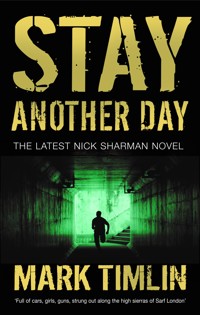






‘A pure pulp vision closer to Spillane than Chandler. The Sharman books are bloody romances of the South London badlands’ - John Williams
Nick Sharman is nobody's favourite person. Ex-cop, ex-doper, invalided out of the Met after a stray bullet in the foot saved him from an investigation into the missing evidence from a drugs haul.The cops don't like him. The villains don't like him. Sharman is unemployable. So he's hired himself an office and set up shop as a private investigator in his south London manor.
Divorces and debt-collecting were what he expected. What he gets is Patsy Bright, young, pretty and missing. Her father wants her back. She's a good girl, a model, and only a little bit into drugs. With Sharman's connections it should be a piece of cake.
But when he comes to; with a split head, a pocketful of planted heroin, a dead girl and two policemen acting on a tip-off, Sharman realises this case is different.
And serious.
And personal.
Mark Timlin is the creator of South London’s premier private detective, Nick Sharman. Born in Cheltenham on 15th June 1944 (at the local borstal requisitioned by the Royal Navy for the use of the WRNS as a maternity home), within nine days he was back in London with his mother and grandmother dodging V2 rockets, and spending most days under the kitchen table in the family’s Kilburn home. When Timlin was seven, the family relocated to Tulse Hill in south London where he was later educated at the Strand Grammar School in nearby Brixton Hill. As a young adult, Timlin tried a panoply of various jobs: a forklift truck driver, mini cab driver, skateboard manufacturer, roadie for T-Rex and The Who (giving him a healthy sampling of the excesses of the era - which he was later to put to good fictional use). It wasn’t until 1985, faced with another period on the dole, that Timlin decided to add ‘novelist’ to his ever expanding CV.A Good Year For The Roses (1988) was Timlin’s answer to the hardboiled noir of 1940s America, uprooted lock, stock and barrel to the dingy back streets of 1980’s south London. Nick Sharman, a down-at-heel ex-copper with a gunshot wound in his foot, is opening his own private investigation business in a shop front close to Tulse Hill station when he is hired to track down a teenage runaway named Patsy Bright. Timlin’s love of vintage cars is reflected in the vehicle that Sharman drives - a shiny E-Type Jaguar, which comes to a sticky end during a particularly frenetic car chase. Combining humour with brutal violence, Timlin’s breezy writing style tapped into the rich tradition of British gangster films such as Get Carter (1971) and The Long Good Friday (1980) with Sharman himself very much a modern take on the quintessentially American Philip Marlowe-style ‘tec, which mirrors the author’s love of Raymond Chandler, Ross McDonald, Richard Stark, John D. McDonald et al. More Sharman books followed, with The Turnaround (1991) being chosen to launch Sharman’s television career in 1995, in a one-off pilot starring Clive Owen. Alas, caught in the crossfire of media hysteria concerning screen violence following the tragic Dunblane massacre in March 1996, the series proper was eventually shunted to a late time slot, only managing four more episodes before the plug was pulled. Latterly though, it has enjoyed re-showings and a welcome reappraisal. Other notable Sharman books include Pretend We’re Dead (1994) and Quick Before They Catch Us (1999) which dealt with the hot topic of racism in the Asian community, in both London and Manchester. All The Empty Places (2000) saw Sharman dealing with the problems of a girlfriend, when a thuggish ex-flame of hers promised violent retribution, and had the surprising plot turn of Sharman leaving the country to live on a Caribbean island. After a long break Stay Another Day (2010) sees the return of Sharman to London when his daughter is in danger.Answers From The Grave (2004) is a long (for Timlin) stand-alone novel about a criminal family in south London where Sharman makes a guest appearance. Timlin’s nom-de-plumes include Jim Ballantyne, Martin Milk, Tony Williams and (most recently) Lee Martin for his more mainstream novel Gangsters Wives (2007). This may have explored the female side of gangland violence, but it still offered the same copious amounts of sex and violence so prodigiously displayed in the author’s previous more male-dominated offerings.
A GOOD YEAR FOR THE ROSES
‘The king of the British hard-boiled thriller’ – Times
‘A pure pulp vision closer to Spillane than Chandler. The Sharman books are bloody romances of the South London badlands’ – John Williams
‘It is possible that South London contains some law abiding citizens in conventional relationships but they make no appearance in Timlin's immoral, wildly enjoyable books’ – Times
‘Full of cars, girls, guns, strung out along the high sierras of Brixton and Battersea, the Elephant and the North Peckham Estate, all those jewels in the crown they call Sarf London’ – Arena
‘As British as a used condom in a fogbound London taxi…’ – Observer
‘The plot races along like a salsa dancer – a guilty pleasure…’ – Guardian Unlimited
‘Definitely one of the best’ – Time Out
‘Reverberates like a gunshot’ – Irish Times
‘Brit-pulp's tough guy prize goes to work on Mark Timlin's Nick Sharman’ – Evening Standard
‘The most impressive aspect of Timlin's compressed style is the constant juxaposition of the witty and the tense . . . Brilliantly conveys the dereliction and moral emptiness of the London underworld’ – Sunday Times
‘Grips like a pair of regulation handcuffs’ – Guardian
‘The mean streets of South London need their heroes tough. Private eye Nick Sharman fits the bill’ – Telegraph
Other books by Mark Timlin
Romeo's Tune 1990
Gun Street Girl 1990
Take the A-Train 1991
The Turnaround 1992
Zip Gun Boogie 1992
Hearts of Stone 1992
Falls the Shadow 1993
Ashes by Now 1993
Pretend We're Dead 1994
Paint It Black 1995
Find My Way Home 1996
Sharman and Other Filth (short stories) 1996
A Street That Rhymed with 3 AM 1997
Dead Flowers 1998
Quick Before They Catch Us 1999
All the Empty Places 2000
OTHERS
I Spied a Pale Horse 1999
Answers from the Grave 2004
as TONY WILLIAMS
Valin's Raiders 1994
Blue on Blue 1999
as JIM BALLANTYNE
The Torturer 1995
as MARTIN MILK
That Saturday 1996
as LEE MARTIN
Gangsters Wives 2007
The Lipstick Killers 2009
A GOOD YEAR FOR THE ROSES
MARK TIMLIN
NO EXIT PRESS
The first one's for Mum
I woke last night from the dream of roses again. It was the same recessing nightmare I've come to know so well.
I lay in the dark with my eyes open, and felt the cold sweat drying on my body. As before, whilst I tried to fall asleep again, my mind went back to those few dreadful days last summer.
Table of Contents
Preface
Chapter One
Chapter Two
Chapter Three
Chapter Four
Chapter Five
Chapter Six
Chapter Seven
Chapter Eight
Chapter Nine
Chapter 10
Chapter Eleven
Chapter Twelve
Chapter Thirteen
Chapter Fourteen
Chapter Fifteen
Chapter Sixteen
Chapter Seventeen
Chapter Eighteen
Chapter Nineteen
Chapter Twenty One
Chapter Twenty Two
Chapter Twenty Three
Chapter Twenty Four
Chapter Twenty Five
Chapter Twenty Six
Chapter Twenty Seven
Chapter Twenty Eight
Chapter Twenty Nine
Chapter Thirty
Chapter Thirty One
Chapter Thirty Two
Chapter Thirty Three
Chapter One
I opened for business on a chilly morning, in a cool August, in a cold and wet, forgettable summer. The headlines in the newspapers told me that there had been a radiation leak at Sellafield Nuclear Re-Processing Plant, Beirut had been bombed for the third successive day, a fourteen year old girl had been raped and left for dead in Clapham, and England had lost in the final test at Edgbaston. It must have been someone's birthday, or someone's wedding anniversary. Somebody had cause to celebrate. But the Lord Mayor didn't come down and cut a pink ribbon for me. I didn't notice the earth move.
I unlocked my office and looked around the room furnished by a second hand commercial furniture company, slumped down in a second hand typist's chair and propped my foot in the open drawer of a second hand desk. My foot was sore. I'd been shot through it by a bullet from a .38 calibre Colt Detective Special two years previously. Ultimately that slug of lead had brought me to where I was sitting. Although I had made virtually a 100% recovery from the injury, I still limped slightly when the weather was wet or cold, and as I said, it had been both that year. It felt good to take the weight off my old wound. I wasn't a walking miracle.
Starting a new venture left me with a certain feeling of anti-climax. But then I felt anti-climax every morning when I woke up.
I was resting on an overdraft that resembled the national debt of a small South American country, like more successful men rest on their laurels. I was in my peak earning years and worth less than zero.
The office I had rented was situated in a cul-de-sac leading to a railway station deep in South London. I had been born and bred in the area and when I was a baby, my mother had taken me for long walks across the grounds of a riding school which was now a council estate where two thousand souls lived. She'd bought our vegetables from a market garden where a used car lot now stood.
The city had eaten into the suburbs like a giant cancer and gobbled up the little communities one by one. Digesting them into a sprawling mass of shopping precincts, slum flats and rows of houses stretching from the river for mile upon soulless mile. The few remaining green areas surrounded by concrete and brick like a wagon train encircled by Apaches.
To most people, that little manor in which I'd put my roots down again was just an insignificant name on the map, a place they drove through to reach the inner city or out to the green hills of Southern England. The South Circular road cut through Tulse Hill like a wire through mouldy cheese. On one side of the road lived the have-nots, on the other the have-lesses. The sign-posts pointing out were a constant reminder that things could be better.
It hadn't always been like that of course. It used to be a genteel area, full of elderly ladies sipping coffee together in tiny cafes, served by young girls in smart uniforms. Now it had slipped down the charts and was full of shops selling greasy take-away food or cut price furniture. The ladies had died or moved down the line to Surrey. The girls were married now and lived on the council estate. Things had gone full circle. After my short period away, I'd returned to the kebabs and chop suey and litter on the pavements. I'd cashed in my chance of a ticket out again.
The single shop front I sat in had previously housed a coal-merchants. It was in a hundred year old terrace of buildings that were dark with soot from the railway. The narrow windows of the flats above the shops looked over towards the rutted car park next to the station. The whole block was about due for demolition and it showed.
The interior of the shop consisted of a large, high ceilinged outer office. On one wall was set a cranky old gas fire with broken elements, mounted in the middle of a cracked, brown tile fireplace. The front of the office was almost filled with a plate glass window which allowed me a panoramic view of the street outside. Separated from the window by a slat of white painted wood was a narrow door with a pane of frosted glass set into it at head height. The wall opposite the window held another similar door that led into a smaller, windowless inside room, bare but for a stained stone sink with one dripping cold water tap. A further door led out into a tiny, muddy, high walled yard which contained nothing but an outside toilet. I'd congratulated myself on getting fixed up with premises that featured all mod-cons. But it was cheap and the penthouse could come later. I'd painted the interior of the whole place white and fitted some shelves to hold a selection of leather-bound law books which I hoped looked authoritative and business-like. On the day I'd picked up the keys and checked around my new establishment, a big, old cat had come stalking by to suss me out. He was black and white in colour with a ripped ear and a wall eye that appeared to gaze off into the distance behind my shoulder when he looked at me. I'd thrown him a few scraps from the cheeseburger I'd bought for my lunch. He gobbled them down and came back for more. So much had vanished from my life over the previous months that there seemed no harm in feeding him with the left-overs from the take-out food that made up most of my diet. Cod and chips was his favourite, closely followed by chicken tikka from the tandoori.
I didn't want any long term relationship, so I just called him Gat and refused to pet or stroke him. I think we were both satisfied with the arrangement. When he came to be fed we just sat on opposite sides of his bowl and scowled at each other.
At least having an animal around the place was a good excuse for me to talk to myself without being taken away for treatment. I'd had enough of that to last a lifetime.
So I formed a tenuous kind of attachment to Cat. It was a start and about as far as I was prepared to go for a while.
I hadn't got dressed up for my big day, I was wearing a yellow cotton polo shirt and old blue jeans with soft Italian moccasin shoes. No jacket. I'd been up half the night wandering about the place, putting the finish to the decor, besides, I didn't have a shoulder holster to hide. Not yet anyway.
As a thought, I'd put a tiny advertisement in the local paper that week, just my name, address and telephone number, plus a simple description of my new profession. ‘Discreet investigations’ it read. I'd received no mail yet, not anything addressed to me anyhow. Just a circular giving me the chance to win a new Volvo and someone ordering half a hundred-weight of smokeless fuel. By ten to eleven boredom had set in and I was really beginning to feel like a cold bottle of beer. I thought about knocking up a sign saying I was in the boozer in case anyone was interested.
Suddenly the sun broke through the clouds. It shone down across the roofs of the buildings on the opposite side of the street and directly through my window into my eyes. The room turned primrose colour and I could feel the chill lift from the skin on the back of my hands. The light was bright and piercing.
I was mulling over those thoughts in my mind with my eyes closed against the glare, enjoying the warmth of the sun on my face, when a dark shadow fell across me. Someone was standing in the open doorway. I squinted upwards and saw the outline of a man in the opening. His face and body were silhouetted by the sun shining over his shoulder. I felt a shiver run down my spine for a moment, as if someone had walked over the place my grave would be one day. Then he moved towards me and I shifted my position on my chair slightly, so that I could see him clearly.
He was tall, over six foot and aged somewhere in his mid-fifties, I guessed. He reminded me of Burt Lancaster going to seed, with sharp handsome features beginning to fade under a coating of excess flesh over his cheekbones. He was pale under a tan, giving his face a yellow, unhealthy look. His hair was thick and newly barbered, with grey speckles salting the youthful style.
He was wearing a smart navy blue suit of conservative cut, a white shirt with a red tie and a pair of polished black, lace-up shoes. In his right hand he carried a black brief-case with chrome locks that sparkled in the sunlight. He looked like the managing director of a successful advertising agency, or a top consultant at a private hospital, or the VAT man.
Chapter Two
‘Is your name Sharman?’ the man demanded with rather more vehemence than I thought was really necessary. ‘I want to talk to you.’
His accent was basic London town, but the nice part.
‘Good morning,’ I said politely. ‘Do sit down.’
I nodded at one of the two metal chairs facing my desk. He looked at them as if he'd never seen such items of furniture before, and with a moment's hesitation pulled one towards him and sat. I got the feeling he would like to have wiped it down with his hankie before he did so. He fixed me with the sort of look usually reserved for something that has crawled out of a side salad.
‘Are you a registered private detective?’ he asked.
‘Registered with whom?’ I asked back.
‘Well, you have to register with someone, don't you?’ he asked with a puzzled look.
It was my turn to look puzzled. ‘I don't know what you mean,’ I said.
‘That's what you do isn't it, investigations?’ He pulled a scrap of newspaper from his jacket pocket and tapped my advertisement.
I began to understand. A little late perhaps, but I was out of practice.
‘Yes,’ I said, ‘that's what I do, but this is not Los Angeles. In London you don't need a licence to undertake investigative work.’
‘I didn't know that,’ he said. ‘Have you got any qualifications?’ Christ, I thought, he wants to see my ‘0’ Level certificates. And then said aloud, ‘I used to be a policeman, ten years on the force.’
‘You're too young to be retired. Why did you leave?’ he asked almost accusingly.
‘I resigned for personal reasons,’ I said. ‘If it's any of your business.’
‘It'll be my business if I'm paying you to work for me,’ he said. I shrugged.
‘And there's me convinced you were the VAT man.’
Things were beginning to look up. I pulled a shorthand pad and pen from the top drawer of my desk and placed them neatly in front of me. I opened the pad to a fresh page and said,
‘Let's start at the beginning. What's your name?’
‘Bright, George Bright,’ he replied.
‘Address, telephone number?’
He gave me the information.
‘All right, Mr Bright,’ I said. ‘Tell me what the problem is.’
‘It's my daughter Patricia. She's missing,’ he said.
Sitting there with him in that stuffy little room reminded me of the beginning of one of those 1950s black and white detective films that are transmitted in the afternoon, or late at night on TV. I liked it.
‘Tell me the whole story,’ I invited.
I made myself comfortable as he began. He started slowly, thinking back.
‘Two months ago, two months exactly today, Patsy went out for the evening. She left after we'd eaten dinner. She made a salad for us both. A prawn salad,’ he looked as if he could still taste it. ‘She came and said goodbye as I was watching TV in the library.’ I made a mental note that this guy didn't live in a council maisonette. ‘She told me she was off to visit a friend,’ he continued.
‘Where?’ I asked.
‘In Brixton. I told her to be careful. That's no place for a young girl, alone at night. She promised me she wouldn't be late and she'd catch a cab home.’
‘Why didn't you offer to pick her up?’
He gave me a pained look. ‘You're joking, she's a very independent girl.’
Obviously, I thought.
‘But she never showed up,’ I said.
‘No.’
‘When did you begin to get worried?’
‘When I went to wake her up the next morning and realised her bed hadn't been slept in.’
‘So you didn't wait up?’ I asked. I think he took it as an accusation.
‘I had no reason to,’ he replied quickly. ‘Patsy was a trustworthy girl. A little vague sometimes. But if she told me she was going to be home, there was no reason for me to believe she wouldn't.’
‘Did she often stay out all night?’ I asked.
‘No, never; well only if she'd arranged it with me beforehand. A party or something like that. But I always knew.’
‘Who was she visiting that night?’ I asked.
‘What?’
‘You said she was off to see a friend,’ I said patiently. ‘Who was it?’
‘I don't know,’ he was almost squirming in his seat.
‘No idea?’ I probed.
‘She didn't like to be tied down to anything definite about her movements,’ he explained. ‘I told you she was a little vague. Most of the time it was on purpose.’ His whole attitude hinted at countless arguments about people and places.
‘But you always knew if she was going to come home or not?’ I asked.
‘Yes.’ He sounded more definite. I decided to believe him.
‘Did she have a boyfriend?’ I changed my line of questioning slightly.
‘No, she wasn't keen on boys,’ he sounded rather defensive at the question.
Fair enough, I thought, you should know. But I scribbled a notation on my pad.
‘So it was a girlfriend or girlfriends,’ I said.
‘I suppose so.’
‘You don't seem too sure, Mr Bright,’ I said.
‘I'm not sure about anything. I sit at night and try to work out if she knew she wouldn't be back. It's been so difficult to cope with her since my wife died. I've tried to do my best -’ He didn't finish the sentence, just lapsed into silence and slipped lower down into his chair. ‘Then I got this.’ He plunged his hand into his inside jacket pocket and produced his wallet. It was black leather, expensive, well worn and fat. He opened it on his knee and removed an envelope. From the envelope he slid out a sheet of folded paper. He leant over and placed the paper in the centre of my desk in front of me. I picked up the paper and unfolded it carefully. It had obviously been read many times. The few words were written in black ballpoint. The handwriting was stylish yet somehow immature. It read:
Dear Daddy,
Don't worry, I'm fine. I need some time
to myself to sort a few things out. I'll be
in touch soon.
Love
Patsy
I sat holding the letter in my hand.
‘When did this arrive?’ I asked.
‘About a week after she left,’ he replied.
‘Is it her writing?’
‘Yes.’
‘Where was it posted?’
‘Stockwell.’
‘Well there you are,’ I said. ‘She'll be back soon. I don't think I can be of much use. We'll both be wasting our time.’
‘Let me be the judge of that,’ he said.
‘I assume you've been to the police,’ I said after a moment's silence. He gave me a piercing look from under his eyebrows.
‘Of course I have. They filled in all the bloody forms, and that was that. They don't seem to care. She's just a kid,’ he added, as if it meant anything.
‘How old is she, Mr Bright?’ I asked.
‘Eighteen.’
‘When?’
‘Last March, March 24th.’
‘So she's an adult in the eyes of the law.’
‘What the hell does that mean?’ He interrupted in a high-pitched, strangled kind of voice. ‘She could be dead.’
‘It means she can come and go as she pleases,’ I replied calmly. ‘The police are too busy to spend a lot of time on cases like this, unless suspicious circumstances are suspected. And you've got this note.’ I tapped the paper on the desk to underline the point.
‘Fuck the note and the police,’ he shouted. Then continued in a more subdued tone, ‘Will you look for her too?’
I tapped the letter on the desk again.
‘You have shown this to the police, haven't you?’
‘Yes of course.’ He dismissed my question with a savage, spastic movement of his hand.
‘It's the Salvation Army they'll send you to,’ I said.
‘Or a private detective,’ he finished my sentence for me.
The words hung around like unwelcome guests in the warm air of my office.
‘When did you inform the police?’ I asked.
‘The day after I discovered she was missing,’ he replied. ‘I last saw her on the Sunday evening. On Monday I waited for her at home all day. By late afternoon I was desperate. I hadn't heard a word. No ‘phone call, nothing. I went out and drove the streets looking for her.’
‘But you didn't know where to look,’ I interrupted.
‘I didn't care, I just drove around for hours. Then I went back to the house and sat up all night hoping she'd come back or get in touch at least. She didn't. So the next morning, Tuesday, I went to the police.’
‘Where?’ I hated to ask.
‘Brixton.’
‘That makes sense I suppose. Who did you see there?’
‘A detective sergeant. Reid is his name. I've got his card in here.’ He lifted his wallet.
‘I might have guessed,’ I said, and felt the cold chill again.
‘Do you know him then?’ Bright asked.
‘Just slightly,’ I replied.
Chapter Three
‘What's wrong with him? You don't seem keen I must say. He looked a bit of a hard case to me; is he?’ asked George.
‘He's a hard case alright,’ I replied. ‘It was partly due to him that I left the force.’
‘Why?’
‘He shot me,’ I pointed at my foot that was resting on the open desk drawer again. ‘In my bloody foot.’
George Bright looked at me as if he wished that John Reid had shot me in the head. Sometimes I wished he had too. Especially on long dark nights when sleep wouldn't come and the ghosts of my past mistakes circled my bed and haunted my thoughts.
I didn't like the look one bit. He stared at me as if trying to say something without words. Suddenly it dawned on me.
‘What is she into Mr Bright?’ I asked. ‘Something a bit iffy? Thieving? Drugs?’
He didn't answer right away. Then he said, ‘I'm not sure. I found some stuff when I looked into her room.’
‘What stuff?’
‘A box hidden in her wardrobe. Here, you look.’
It was his briefcase. It was a small, shallow, black lacquered box with a hinged lid and a tiny brass lock. It looked quite valuable.
‘It was hidden under some sweaters,’ Bright volunteered.
‘Was it locked?’ I asked, for something to say.
‘No,’ he replied.
I opened it. There was nothing special inside. Just the usual dope smoker's stash. Rizla papers, some broken up cigarettes. Silk Cut king size, I noticed, my old brand. Various ripped up business cards advertising mini-cab firms and Indian restaurants, a scalpel and some tweezers. It was all depressingly familiar to me, I'd had something similar myself for years, until I'd quit. At the bottom of the box, wrapped in silver foil was a lump of hash. Black, pungent smelling, about the size of an Oxo cube.
‘It's really no big deal, George,’ I said, using his Christian name for the first time. ‘It's hardly reefer madness. Everyone has a go at this at one time or another.’ He looked shocked. ‘Well nearly everybody,’ I added. ‘Did you tell the police you found this in her room?’ I asked as I sat fiddling with the box and it's contents.
‘No,’ he replied.
‘Not very wise was it? They might have shown more interest if you had.’ I gave him back the box and he put it carefully in his jacket pocket.
My instincts told me to shut George Bright out, to close him down and send him packing. Instead I kept asking questions about his daughter.
‘How did she get to wherever she was going? Did she drive?’ It would be easier to locate her if there was a car sitting somewhere parked on the street.
‘No, she never learned,’ he replied. ‘I promised her a car for her next birthday, but she didn't seem to be interested.’
‘Was she picked up then?’
‘I don't think so. The library is at the back of the house, you see. But no-one called for her. I know that,’ he added as an afterthought.
‘But someone could have been waiting?’
‘Yes, I suppose so.’
‘Have you asked your neighbours if they saw anything?’
‘I haven't mentioned it to my neighbours,’ he replied.
‘Why not?’ I asked.
‘It's none of their business.’
‘But they might have seen something.’
‘I doubt it,’ he said.
‘Are you worried what they might think?’
He didn't answer. ‘Well are you? Because it doesn't matter what people think.’
He looked at me in a disgusted manner. ‘Of course it matters. The world runs on money and what other people think.’
There was no answer to that.
I changed my tack again.
‘Do you fancy a drink?’ I asked, already halfway to my feet.
He looked at me incredulously.
‘Be serious Sharman,’ he said. ‘This is important.’
‘I am being serious. We can talk in the pub. It'll be quiet at this time.’ I said. ‘Come on, you look as if you could use one.’ George got up from his seat reluctantly and I ushered him out of the office.
As I closed the door behind us, I looked at Cat who had been listening to our conversation all the time. I shrugged at him and he seemed to shrug back before continuing the vital task of cleaning his torn ear with a damp paw.
George Bright and I walked across the road and through the door of the pub. The bar smelled of beer and old cigarettes, as all bars do when they first open. I suddenly wanted a new cigarette, but fought back the craving.
‘What'll you have?’ I asked.
‘Anything, I don't mind,’ he answered.
I walked over to the counter and ordered two bottles of cold Heineken and looked around the room. There were just a few early drinkers in. I nodded to Hilary and Hubert, a pair of regulars who often popped in for a quick one after their trip to the local supermarket. They were both bottle brunettes and invariably wore matching black outfits. They were perched on their stools at the bar like a couple of gay old crows on a barn fence pecking at two gin and tonics.
I steered George over to an empty table, and we sat in silence for a while sipping our drinks. From the state of his face, he certainly looked as if he needed a livener. With me it was inevitable. I was drinking too much lately. I decided to cut down. Maybe tomorrow.
‘Are you going to help me?’ George finally asked.
‘I don't know,’ I replied. ‘When I left the Met. my wife left me. She got almost everything. So I'm starting again. I came into this business because it's what I know. I was a copper for a long time. I've never done anything else. But I'm not a policeman any more, not a real one. What I'll be doing for the main part is working for solicitors and finance firms, serving court orders and other legal papers. Tracing missing relations and looking for people who haven't paid their HP, or nicked the video from Granada Rentals.
‘I put that ad in the paper for my own satisfaction. Just to prove to myself that I existed again. I've been away for a while. Out of circulation.’
I'm glad to say that George was discreet enough not to ask where I'd been. He might not have liked the answer.
‘You see,’ I continued, ‘it's a nice little service industry, tracing missing people and debt collecting.’
‘But my Patsy's a missing person,’ George interrupted.
‘I appreciate that,’ I said. ‘But it's a bit different. I'm not exactly going to blend in with her age group. What I'm talking about is going through the voter's register or checking out newspaper files. A bit of surveillance. A few words in the right ears and no trouble. This is different. There's a definite drug connection, and I can't afford to get mixed up in that sort of thing. Besides the last mob I want to meet again are the Brixton old bill.’
‘Too dangerous?’ he asked with a sneer.
‘There's more than one kind of danger,’ I replied. ‘For instance, when I was stationed at Brixton, I worked for a while on the drugs squad, undercover. Well, I got too fond of the merchandise. That's another reason I left the job.’
‘You were taking drugs when you were a copper?’ asked George.
‘The police aren't saints, if you cut them they bleed like anybody else,’ I replied.
‘Christ, you're a right one. But at least you know about drugs, don't you? It could help if Patsy's got involved.’
Who was he kidding? Of course she was involved. I kept a straight face and said. ‘I know too bloody much about them, besides that was a while ago. Two weeks can be a lifetime when you mess with dope.’
‘But you're looking for work aren't you?’
‘Yes, and I'm expensive.’
‘How much?’
‘Two hundred pounds a day, plus expenses and mileage.’
‘You'll be in the upper tax level in no time,’ said George drily. I don't think he was impressed.
‘Not really,’ I said. ‘Most of my work will be pro rata. An hour here and there. As you can tell from the fact that I'm sitting here with you shooting the breeze. I'm not exactly overworked. Besides I'm broke.’
George leant over the table.
‘Listen, you're my last chance,’ he said. ‘Help me please. Here, look.’ He picked up his briefcase which he had brought into the pub with him. He placed it on the table and opened it up. He produced a large brown envelope and extracted a photograph which he placed in front of me.
‘That is Patsy,’ he said proudly.
The photograph was an 8” X 10” head and shoulder professional shot of an extremely attractive young blonde girl.
‘She was going to be a model,’ he said.
He didn't seem to realise that he was speaking in the past tense. I looked at the photo for a while. The subject reminded me of my own daughter, Judith. Although Judith was ten years younger, the likeness was uncanny. Judith always told me that when she grew up she would be a film star.
‘Look on the back,’ George said.
A piece of white paper had been stuck on the reverse side of the photograph. On it was typed Patricia Bright's vital statistics. Everything from her birthday to her glove size.
‘I've got a couple of dozen here,’ said George, tapping the envelope. ‘You can use them, and I've got money too. I'm not a poor man.’ He said with a certain dignity. He produced his cheque book, which he opened and placed on the table in front of him. We looked at everything but each other. Then I noticed that he was crying.
Although I was not fond of the man, I felt intensely sorry for him.
‘Alright,’ I said, ‘I give in. I'll tell you what, give me a kite for a hundred quid and I'll take a look round. I'll talk to the police and get back to you after the weekend, is that alright?’
George pulled out his handkerchief and dabbed at his eyes. I was always a sucker for a hard luck story. Besides, I knew how I'd feel if Judith had disappeared.
‘Thank you,’ said George. He fumbled around in his briefcase for a pen and wrote a cheque out for the amount agreed, tore it out of the book and slid it in front of me.
‘I'll have the box back, too,’ I said.
He retrieved it from his pocket and passed it to me.
‘What do you do, George?’ I asked, leaning back in my chair. ‘For a living I mean.’
‘Leisure,’ he replied. ‘I'm in the leisure business. Juke boxes and fruit machines. I'm well known in the trade. I've got a showroom in Herne Hill. I'd better give you my card.’
He produced a printed card from his pocket like a magician. I put it in the envelope with the photographs, then carelessly pushed the cheque into the back pocket of my jeans.




