


3,99 €
Mehr erfahren.
- Herausgeber: Steven Boone
- Kategorie: Gesellschafts- und Liebesromane
- Sprache: Englisch
This award-winning book is the story of a seventeen year old girl, diagnosed with a deadly cancer. She grows stronger as she faces life's most difficult tests and is an irresistible heroine. Her story is miraculous despite her failure to find a cure. This book grabs readers by the heart and sweeps them along.
Das E-Book können Sie in Legimi-Apps oder einer beliebigen App lesen, die das folgende Format unterstützen:
Veröffentlichungsjahr: 2020
Ähnliche



















Praise forA Heart Traced in Sand
“A touching testimony to the power of a father’s love for his daughter. Sensitively written, poignant, and inspiring.”
Jack Heinowitz, PhDAuthor of Pregnant Fathersand Fathering Right from the Start
“Naomi’s short life is an inspiration to all of us. She lived fully and left behind an indelible trail that will fill the heart and soul of any person who steps on it.”
Malidoma SoméAuthor of The Healing Wisdom of Africaand Of Water and the Spirit
A Heart Traced in Sand
A Heart Traced in Sand
Reflections on a Daughter’s Struggle for Life
Steven Boone
Santa Fe, New Mexico
Twin-Flames Publishing
P.O. Box 23503
Santa Fe, NM 87502
Editors: Ellen Kleiner, Ann Mason
Cover design: Steven Boone
Back cover photo: Jill Martin
Copyright © 2001 by Steven Boone
All rights reserved. No part of this book may be reproduced in any form whatsoever without written permission from the publisher, except for brief quotations embodied in literary articles or reviews.
A Heart Traced in Sand is factually true except that some names have been altered to protect the privacy of individuals.
Publisher’s Cataloging-in-Publication Data
Boone, Steven, 1952-
A heart traced in sand : reflections on a daughter’s struggle for life/ Steven Boone. -- 1st ed.
p. cm.
Includes bibliographical references.
LCCN: 00-193266
ISBN: 0 9706046-0-2
1. Boone, Naomi. 2. Ewing’s sarcoma--Patients--New Mexico--Biography. 3. Ewing’s sarcoma--Patients--Family relationships.
4. Tumors in children--Patients--New Mexico--Biography.
5. Cancer--Religious aspects.
1. Title.
RC280.B6B66 2001 362.1’989299471’0092
QB101-200120
That the pure light may banish the darkness of despair
In appreciation . . .
I am particularly grateful to the many, many people who stood firmly by Naomi during her struggle. I regret that space does not permit mention of everyone’s name, but I feel I must especially acknowledge my wife Jean. Also, our daughter Sarah; Naomi’s mother Kathleen; my physician cousins David and Ben Boone, and the doctors and staff in Dallas, Texas; my mother and father, Richard and Chloris Boone; Jean’s parents, Charles and Mary Tobias; Naomi’s teacher and friend, Barbara Miller; teen chums Alexis Diaz and Adella Garcia; Gary Myers; the “healing team” in Santa Barbara, California; Jill Martin, who took priceless photographs; Ann, Ben, Ben Jr., Emma, and Carrie Brode, who gave Naomi a home away from home; my brother Brent and his family, with whom she also lived; Andrei, “the Russian healer” Peggy Myers, who gave her time and talent to help edit; and the many people who were with Naomi in spirit, and prayed.
The poem appearing on pages 204–205, from A Splintered Mirror: Chinese Poetry from the Democracy Movement, is reprinted by permission of North Point Press, a division of Farrar, Straus and Giroux, LLC. Translation copyright © 1991 by Donald Finkel.
CONTENTS
Preface
1. Spirit Unfolding
2. Twisted Fate
3. Dallas
4. Court of the Good King and Queen
5. Spirit over Matter
6. New York
7. Daniel in the Lions’ Den
8. Just Let Go
9. Life Is So Beautiful
10. The Maelstrom
11. Santa Barbara
12. Deep Waters
13. The Art of Living
14. The Invisible Bond
15. The Logos
16. Hope for a Miracle
17. Song from the Mountaintops
18. Andrei
19. As Your Faith Is
20. A Place to Live
21. Fire Tests the Gold
22. The Light in the Tunnel
23. Not Burned by Fire
24. Candles in the Night
25. Wings of Spirit
Notes
“The same wind that uproots the trees,makes the grasses shine.”Rumi
PREFACE
When this book began, it was meant to be an exclamation of joy at the miracles that happen in life when we have faith. I wished to share the glad tidings of “spirit over matter,” which I had witnessed firsthand. That was when my eighteen-year-old daughter, Naomi, seemed to be winning her long-shot battle against Ewing’s sarcoma, a rare cancer that had been diagnosed in its late stages, already having metastasized into her lungs from her hip. At the time, we believed prayer and faith would provide us the extra power needed to beat Naomi’s poor odds and claim an astounding victory. But our confidence was dealt a devastating blow, for it was discovered that although Naomi’s cancer had been knocked down, it still had strength, and to our terrible dismay, it came back. Eventually it took her life, and at the same time completely tested my faith and beliefs, leaving a different picture than I had envisioned as the subject of this book.
When the tide turned against Naomi and it became clear that the triumph we had prayed for might not occur, a grand picture of the human soul remained, portraying even more vividly spirit’s victory over matter. For the pain and loss Naomi was experiencing did not destroy her love of life; rather, they enhanced it. Even during gruesome chemotherapy treatments, she wrote in her diary: “Life is so beautiful, I cherish it and want to be able to see every part of it.”
So profound was her depth of feeling for life, that just two days before her death she said to a friend, “I love my body, it has been so good to me.” Only by Naomi’s connectedness to eternal God could her soul soar above her painful last moments, enabling her to look tenderly at her stricken body and with some of her last breaths say, “I love you.”
The further I went in writing this book, the more I realized that God had heard our every prayer and had watched over each moment of our struggle, as is evident in the remarkable occurrences that appear in these chapters. The description of events follows the orientation of my own soul, yet is open to any number of inspirational interpretations. In addition to these experiences, you will read about my effort to make sense of the mystery of life while learning how hardships help define us. Finally, a mystical dialogue about faith ensues, drawing from the fertile fields of dreams, the writings of holy texts, and my perceptions of the spiritual aspect of Naomi in her fight to live.
Each chapter begins with a quotation from Naomi. It is a privilege to share intimately Naomi’s experiences as well as her writings that they may serve as inspiration to others.
SPIRIT UNFOLDING
I know I am surrounded by spirits, and that is the feeling of the Lord.
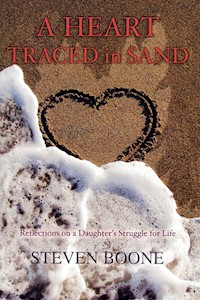
As a heart traced in sand upon the shore vanishes under the onrushing waves of a fathomless ocean, the hand of God swept over my precious nineteen-year-old daughter Naomi, and she disappeared, leaving me with only memories. Although we had been linked tightly by bonds of flesh and spirit, the flesh was now broken but the tie between our spirits remained.
When I arrived at her side, Naomi was still in her bed, where she had died an hour earlier, wearing a red and blue T-shirt and khaki shorts. The oxygen equipment attached to her face for the last week was gone, and gazing at her through my tears, I sought to understand an expression I had never before seen on her face. The signs of her terrible two-year struggle with cancer were lifted, and it was as if I were beholding a person who had just drowned in an ocean of light. Although the vestiges of youth were still in her face, I also glimpsed an ancient knowledge in her, as if she had finally discovered a lofty secret she had been longing to know. At the corners of her closed eyes, she seemed to be smiling.
Although unaware of it at the time, I now realize God had prepared me for a catastrophe years before in a dream that has haunted and mystified me ever since. While on vacation at a resort in Bend, Oregon, I awoke one morning and tried to understand the astonishing occurrences of my sleep, rehearsing this dream:
It was just getting dark one late autumn evening, and the last light seemed to hang in the air. I was alone, lying on my back on a short platform in an open clearing in the woods. Looking up at the sky through the bare limbs of trees, I suddenly saw a hawk fly by. Then I heard the roar of wings beating the air, and abruptly from my right, just above the treetops, a great flock of birds passed swiftly in front of me and disappeared to my left. My spirit and senses were completely awakened by this fabulous orchestration of nature, and I found myself praying, “Oh, God, give me a sign!” That instant, as if in response to my plea, in the darkening sky I saw an incandescent shooting star. I was now at rapt attention.
Next, I was aware of a man riding on a horse close to where I lay. His dog came over and licked my hand in a friendly way. Then I heard the beat of horses’ hoofs, and in the next instant the rider on horseback appeared before me—an Indian warrior in superb condition and wearing only a leather breechcloth. He was bareback upon a mighty chestnut-red stallion that was fully alert to his every command. There was nothing tenuous about horse and rider; they were all purpose and power. Reaching back in one steady motion, the warrior drew an arrow from his quiver, placed it in his bow, effortlessly drew back his bowstring, and released it. At that moment, I realized I was not alone on the platform, for lying next to me was a child. In a split second, the arrow whizzed by me and struck the youngster’s heart! Link
I thought of escaping . . . Then I awoke with a gasp, feeling startled and deeply hurt.
Numerous times I pondered my dream, even going over it in psychoanalysis. It seemed a vision of beauty and power, but what puzzled me was the warrior’s arrow sent into the child’s open and defenseless heart. I began to think it was perhaps a sign for my childhood to end and my adult warrior self to emerge. To help myself understand the powerful symbolic imagery, I made a large painting of a warrior holding an arrow in a drawn bowstring. Not until Naomi was suddenly diagnosed with advanced cancer did I gradually comprehend that the dream might have signified future events in not only my life but also my child’s. Fortunately, I did not witness dying. Maybe, I thought, the dream did not foretell death but rather the transfer of power.
When I first met the woman who would be Naomi’s mother, we exchanged greetings on a winter morning at the mailbox in front of the downtown Santa Fe Post Office. I could not have guessed then what she would mean to me—that from the two of us, Naomi would come into the world and forever our souls would be linked. I was almost intuitively drawn to this woman. We engaged easily, and I liked her openness and easy laughter as she stood in front of me wearing a yellow ski jacket, her auburn hair tucked into a red knit cap. Something else drew me to her as well, which at the time I hardly understood. I glimpsed a maiden standing on an uneven precipice, in danger of falling, and instinctively I reached out to hold her, perhaps because I too have an ambient personality, and had at times in my life stood perilously on a precipice.
Kathleen spoke fluent Spanish, which she had learned while growing up in the Canal Zone of Panama, and now at the age of thirty was unemployed. I was twenty-seven and a budding artist, fresh out of art college. My artistic soul was attracted to her because she had an enigmatic, childlike presence and seemed full of contradictions: she was fragile and stubborn, hopeful and lost, friendly yet distant. And there was always that awesome precipice she stood upon.
After we married and she became pregnant, Kathleen began rising at dawn to light a candle and call angels to visit the being growing inside of her. I prayed for our unborn child, dedicating it to God, asking that it be made praiseworthy and grow and develop under divine guidance.
We chose to have a home birth attended by a local doctor who worked in tandem with a midwife. Then we thought about naming our child; for a boy we agreed on Jason, and for a girl, Naomi, because I liked the strong vowels strung together. In my heart I felt slightly more yearning for a daughter than a son, but looked happily toward the arrival of either. Considering the pregnancy a period of spiritual attainment, Kathleen and I both joyfully anticipated the birth.
Around 4:30 on the morning of January 11, 1980, I woke up to see Kathleen sitting on the edge of our bed. “Steven,” she said, “I’m having contractions. I think the baby is coming. Please call the midwife.” I called, and she arrived at 5:00 A.M., followed two hours later by the doctor. By then, soothing music was coming from the record player, and as I held Kathleen’s hand, she groaned in exertion. After six hours of labor, our baby emerged and gave a little cry.
The midwife clamped the umbilical cord, and I cut it. Then the doctor pronounced Naomi a healthy child. Looking at her remarkable little red body, I was elated. Kathleen, exhausted, smiled and put her to her breast to nurse.
From the start, Naomi was a constant source of wonder and delight to us. We all slept in the same bed the first year. As a toddler, she was an easy child, robust and healthy, with straight blonde hair, and when she turned three, I bought her a little easel and crayons, and was surprised how eagerly she drew. Gripping a crayon tightly in her small fist, she expressed herself confidently, sometimes covering entire sheets of paper with colorful marks from top to bottom and side to side. Soon, recognizable forms emerged—smiling figures with outstretched stick arms arose from the ground, sometimes with a radiant sun above them. Other times, a small figure appeared inside a larger one; both smiling. Flowers grew up from green earth toward the stretching rays of the sun. Hearts were everywhere, even on balloons drifting up in the air. She once drew a house in a field with raindrops falling from the sky, smoke coming from the chimney, and people in all the windows. Her fits of creativity came in short, fervent, fluid bursts of unconstrained freedom, while I spent more protracted hours trying to master my expressions. Sometimes we worked side by side, both at our easels, and at other times she sat on my lap as I painted. Eventually, unable to support the family as an artist, I took a job as a waiter, and also established a landscaping business. Whenever I could, I returned to my artwork.
Naomi, age two, making art
Link
Even now, I don’t entirely understand the terrible circumstances that befell our marriage. When Naomi was two and a half years old, shortly after being weaned, Kathleen began suffering from food allergies, and we started arguing. As emotions heated up, exacerbated by youth and poverty, I was surprised to learn that Kathleen had previously suffered from mental illness. The Bahá’í religion, to which I have belonged since age twenty, discourages divorce, instead advocating patience, reconciliation, and harmony. After a year of turmoil in the household, however, when Kathleen said she wanted a divorce, I decided not to oppose her wish.
Although only three and a half years old, Naomi sensed something was wrong when I moved out of the house and she began spending time with Kathleen and me separately. During the divorce and thereafter, Kathleen’s mental condition steadily deteriorated. She was suspicious of individuals close to her, talked to herself and to imaginary people, and complained of hidden bombs and intricate conspiracies targeting her. It was painful to see her coming apart, especially in front of Naomi, now four years old. Since the court had granted me full custody, Naomi remained under my care, but still spent time with her mother until Kathleen was sent to a mental hospital. I took solace in the thought that Naomi was protected somewhat by her innocence and her inability to understand the tragic aspect of her mother’s illness.
As time passed, Naomi’s relationship with her mother became a delicate matter, especially since Kathleen exhibited unpredictable behaviors and returned intermittently to the state mental institution. I taught Naomi to look on her with compassion and to remember how loving she had been before becoming ill. Even so, their relationship never regained its earlier peacefulness.
I began taking Naomi to a psychologist twice a week. Chama Ruiz was in her mid-thirties, with short, dark hair and olive skin. The centerpiece of her office was a shallow box filled with sand, and a shelf nearby held small items such as play figures, miniature dolls, knickknacks, and tiny tools. Naomi spent her time on the floor arranging scenes in the sand from objects she picked off the shelf, while Chama watched and sometimes engaged her in conversation about what she was doing. One day when I arrived at the end of a session, Chama showed me Naomi’s sand scene and said, “This is very powerful.” Two small mirrors stood facing each other in the sand, with a play figure of a child between them. The light reflecting back and forth off the mirrors flashed brilliantly, creating an endless field of light around the little toy figure set in the middle. Indeed, for its simplicity and boldness alone, it seemed a masterful display for a four year old.
Then it came time to find a kindergarten for Naomi. While visiting the local Waldorf school, I met Naomi’s future teacher and my future wife, Jean Tobias, a dark-haired, green-eyed woman with a heartwarming smile. Standing alone, dressed simply in a yellow cotton blouse and blue cotton skirt, she seemed poised and eager to greet us. It was love at first sight for me as my pulse quickened and I wanted to know this quiet, refined woman better. Soon my fondness for Jean grew stronger, and after we began dating, when I dropped Naomi off at kindergarten in the morning and saw her, I would slip a love poem into her hand before leaving. The Bahá’í Faith discourages casual intimate relationships, instead endorsing committed unions that lead to strong families, and I knew I wanted to remarry.
Months later, when I was thirty-three years old and Jean was thirty-six, I asked her to marry me. She accepted, so in August 1985, Naomi had a mother figure again whom she could look up to. Jean did important little things with her, such as playing make-believe and rubbing her back while singing to her at bedtime. I, meanwhile, continued operating my landscaping business, now with ten employees, while Jean taught and eventually started her own kindergarten. Although I enjoyed landscaping, I felt as though some part of me was waiting to come to expression in the world, and knew that eventually I would have to honor myself completely by allowing my artistic talent to unfold. In the meantime, I prayed it would not be lost.
In November 1986, our daughter Sarah was born, after which Jean quit teaching to stay at home. About the same time, I realized my dream. With Jean’s support, I sold my landscaping business and became a full-time artist, retailing my paintings out of an art district studio. Initially, I worked at my still lifes and landscapes in the back of the studio, displaying the framed art on partition walls up front. The next year, we bought six acres of land on the outskirts of Santa Fe, and built a home with open views of three mountain ranges. Also, I moved into a larger gallery, hired sales-people, and showed other artists’ work along with my own.
Naomi continued at the Waldorf school which, by its sensitivity to the cycles of nature and the stages of maturity in the children’s souls, steadily encouraged her creative temperament. By sixth grade, she was bringing home scores of drawings and watercolor paintings, including abstract exercises involving primary colors, and simpler studies in only two colors. At Halloween, she covered a sheet of white paper with yellow paint and, while it was still wet, used her brush dipped in red to create a smiling orange pumpkin face with orange rays of happiness extending outward over the edges. At home, she used crayons, often drawing interior scenes, such as a princess in a long dress standing at a mirror in her room, with paintings adorning the walls and a table with flowers nearby. She readily let her imagination flow in her art and loved including the details that represent the personality of our lives. It was as if the purity of her soul flowed easily into the world this way.
According to custom at the Waldorf school, the senior eighth grade students begin the year by presenting roses to each child entering the first grade. The event, called the rose ceremony, is held outdoors with parents present. The year that Sarah began first grade, Naomi, in the eighth grade, handed her a rose. It could not have been arranged any better, I thought.
Waldorf education differs from that of the public schools in other ways as well, not the least of which is that year after year, teachers remain with their class. From second thru eighth grade, Naomi’s teacher was Barbara Miller, a lively, middle-aged woman with a friendly disposition. Over the years, Mrs. Miller had become quite familiar with Naomi, understanding her strengths and weaknesses, as well as her family background. When finally she penned her last teacher evaluation at the time of Naomi’s graduation from the school, she wrote:
What a journey Naomi and Mrs. Miller have been on for the last seven years! I think Naomi is well on her way in life; she is ready for some interesting and exciting changes.
Naomi is a courageous, talented, and adventurous young lady. She is fearless in some areas of her life and can win almost anyone’s heart. She has a sense of safety and trust in life; and yet, she has had some incredible challenges at a young age. Naomi is ready for expanding, developing, and expressing herself in new ways.
Naomi had certainly proved her readiness to accept challenges. By the end of eighth grade she was an advanced skier, accustomed to the expert slopes. Also, she had come to love reading, and read avidly at a mature level. She did not seem to care much for fashion or flirting with boys but loved children, which made her the favorite babysitter among our neighbors.
Perhaps her greatest challenge was her relationship with her mother, who at this point had been in and out of the state mental institution for years. When Kathleen was not in the hospital, she lived in an apartment in Santa Fe, where often she was extremely disconcerted and barely able to function. Nonetheless, she demanded to see Naomi at least once a week, and called her frequently. Over time, a pattern began to emerge after Naomi’s Sunday afternoon visits with her mother: the following Monday she would fall ill.
I worried about the effect Kathleen’s illness was having on Naomi. At times I thought it might be her fate to take on her mother’s unbalanced state. Then again, I felt that she must face what life dealt her, and that with sufficient inner strength she could forge her own way in her relationship with her mom. Anytime I noticed that Naomi did not have a sufficient ego barrier to protect herself from the turbulence in Kathleen’s mind, I stayed with them.
What mattered most to me was stated clearly in the Bahá’í writings where Bahá’u’lláh said:
O Son of Spirit!
My first counsel is this: Possess a pure, kindly and radiant heart, that thine may be a sovereignty ancient, imperishable and everlasting.1
At that time, who could have known how, in a few short years, Naomi would have to use the courage and fearlessness Mrs. Miller spoke of to face a challenge so fierce that she would lose her sense of safety and trust in life, but then find an inner strength to express her love in ways that would indeed win the hearts of everyone who knew her.
TWISTED FATE
Life is so beautiful. I cherish it and want to be able to see every part of it.
When Naomi began high school, she loved the excitement of joining a big institution with over 500 freshman. Immediately she joined the cross-country team and the German club, later adding track and field, and the ski club to her extracurricular activities. With her long, beautiful legs she especially loved running alongside her teammates to build stamina and strength. Never failing to show up for daily practice, she looked forward to weekend track meets. Her devotion to her coach and teammates continued to grow, and at the state cross-country meet that year, she placed ninth out of more than one hundred competitors.
Committed to advancing her creative abilities, Naomi transferred into an art class taught by Gary Myers, whose excitement about art extended beyond the classroom walls. Mr. Myers often mentored talented youngsters, personally encouraging them to pursue their creative goals. The friendship that began between student and teacher would deepen and last beyond Naomi’s graduation.
Naomi, age fifteen, an avid track and field runner
Link
By the second semester of her sophomore year, Naomi was driving to school in a used Toyota Jean had given her. In art classes, as part of her exercises, she used oil paints to copy old master prints onto canvas. On weekends she often helped at my gallery, and seemed to love selecting the placement of objects for exhibition. Fascinated by interior design, she thought of pursuing a career in it.
Santa Fe is packed with art galleries, and often artists’ shows of new work in various galleries begin with a public reception known as an “opening.” Naomi frequently accompanied me to openings, where we admired art together and mingled with the art community.
Socially, it seemed the only crowd of kids she hung out with was the track team—the focus of her school activities. Her old Waldorf friends had drifted apart, and the only one she maintained regular contact with was Alex Diaz, a quiet youngster from Puerto Rico, who was now being home schooled. The two met regularly and enjoyed weekend sleep-overs.




